
IN CONVERSATION WITH JOÃO GUILHERME
interview by LEANDRO DA SILVA
JOÃO GUILHERME has spent most of his life in front of the camera. From his early work as a child actor to a growing body of roles in cinema and streaming, he has gradually expanded the possibilities of what he can do on screen. Today, that means choosing projects that challenge him, exploring different sides of himself and becoming increasingly involved in the creative process behind his work. From playing hacker Daniel Nascimento in O Rei da Internet to Jonas in the dystopian Corrida dos Bichos and Juliano Tchula in the upcoming film about Marília Mendonça, João is entering a new phase of his career, one driven by curiosity, ambition and a desire to keep discovering new possibilities within his craft.
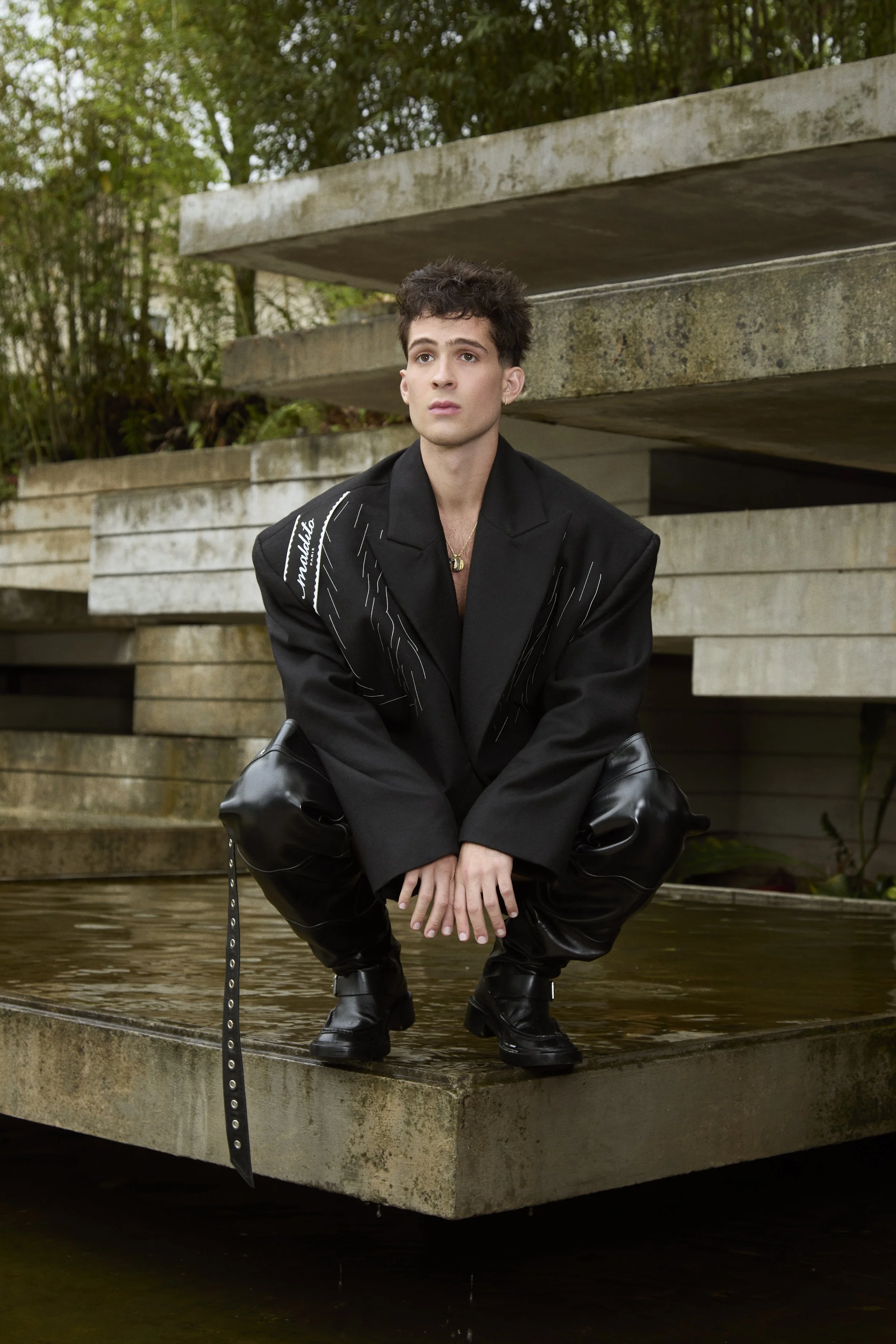
You started acting at the age of seven and grew professionally in front of the cameras. Looking at your journey today, what has changed in the way you relate to exposure and to your work itself?
Today, I think my work is done with much more passion than when I was very young. Back then, there was a lot of passion and excitement because everything was new. It’s easier to be in love at the beginning of a relationship, right?
Today, I’ve completely fallen in love with my work again, but in a much more mature way. It’s less about the moment and new experiences and more about truly valuing what I have and what I do. I love life on set and the relationships I create there, including the relationship I create with myself every time I play a character.
Exposure is different. When I was around 13, I thought I had to expose everything in my life to keep the audience interested. As an adult, I understand that fame is a consequence of the work. Today, I avoid exposure that isn’t related to my work or to something constructive. My name is my company, in a way, and I don’t want it associated with small gossip when there are so many meaningful things we could be talking about. I’m a more reserved person than I would even like to be, but I’m not going to force myself to expose things I don’t want to.
In O Rei da Internet, you play Daniel Nascimento and you’re also an associate producer. What sparked your interest in this story, and how did this dual perspective, as an actor and producer, influence your relationship with the project?
It was my first time as a producer, and being involved in that way brought me much closer to the project. Cinema is a huge machine, with many different areas and pieces working together.
I’ve always been very interested in costume, characterisation and photography. I love understanding how the exterior reflects what is happening inside a character. I spoke with Daniel and wanted to contribute not only as an actor, but also to the way his character was built.
Being part of the decisions and understanding what was happening around me was very valuable to me. I want to be increasingly involved in my projects because there is something very special about understanding the whole process, not just my part in front of the camera.
There is something particularly complex about portraying a real person who is alive and will be able to watch your interpretation. Did this bring a different sense of responsibility to you as an actor?
It’s different when you’re doing a biopic about a famous singer, an idol or a phenomenon. Everyone knows that person’s mannerisms, their appearance, the way they dress and the different phases of their life. There’s a much greater commitment from both the production and the actor because you’re dealing with something people already know so well.
With Daniel, there wasn’t as much material, so I had more freedom. I spoke to him to understand who he was as a boy, what he felt, whether being called ugly or being mocked affected him, and when vanity started to appear as he gained power and money.
I think what happens on the inside shapes what we see on the outside. When Daniel saw me, he said, “João, it feels like you embodied my 15-year-old self.” His family was also surprised by how much I resembled him. That was very meaningful to me.
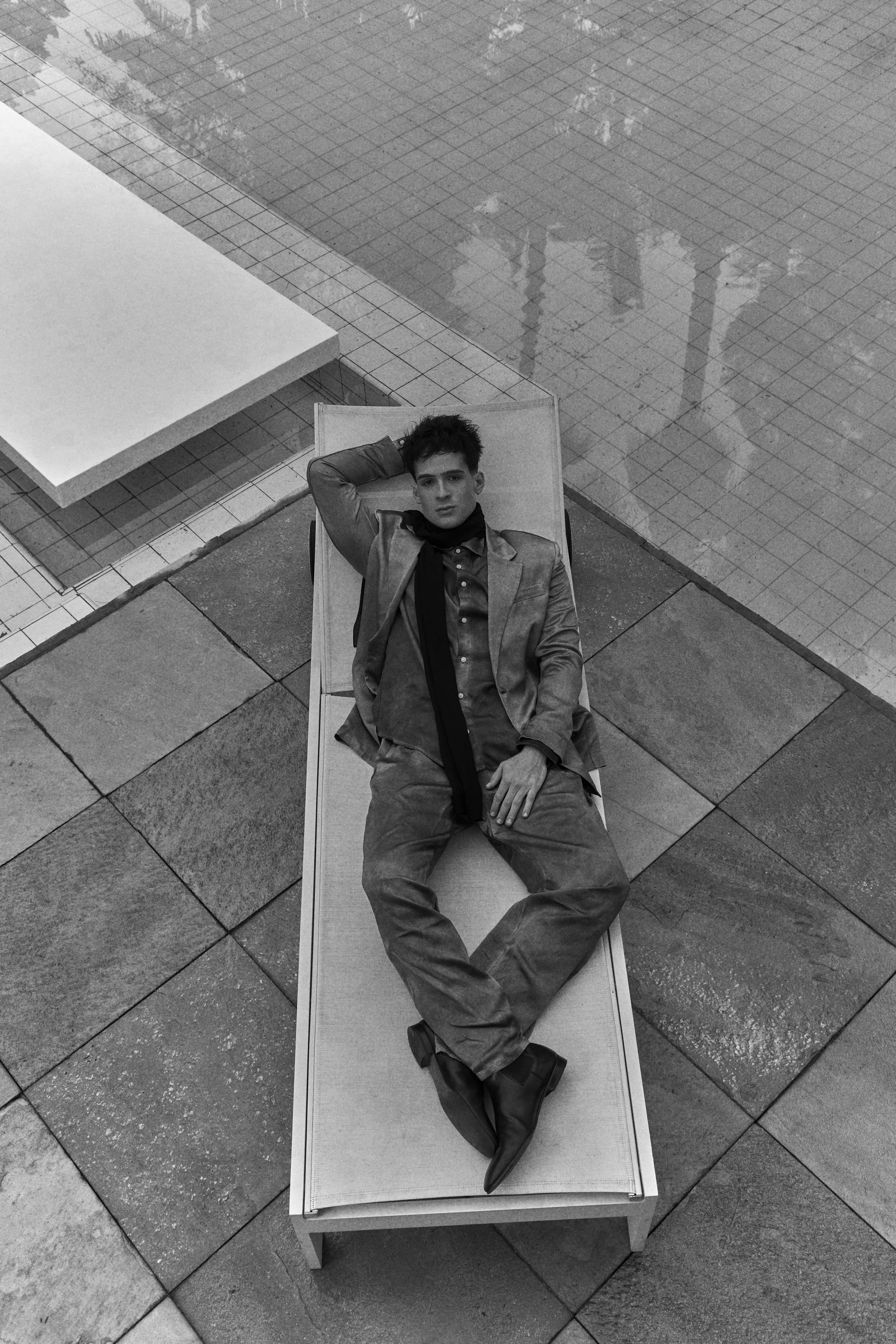
Social media allows people to build and control their own image in a very particular way. At the same time, there is constant exposure. For you, does this possibility of constructing your own image represent more freedom, or can it also become a form of confinement?
I think it’s much more of an imprisonment. People are becoming increasingly vain and frustrated. The internet gives us the freedom to express ourselves through our personality, music, clothes and appearance, but it also creates constant comparison.
People look at an influencer or a model and think, “Why am I not like that?” without considering that their lives are completely different. It creates a lot of comparison, and with that comes a lot of frustration.
In Corrida dos Bichos, you play Jonas, a young man who sees the competition as an opportunity to transform his life, within a dystopian universe created by Ernesto Solis. What was it like to build this character and find your way into the role within such a particular universe?
I’m fascinated by universes. I love stories with heroes, wizards and mystical elements, worlds that have their own rules, connections and entire societies behind them.
The universe of Corrida dos Bichos is very sad because it feels like a possible future for humanity. It reflects what can happen as we continue to deteriorate as a society.
Ernesto Solis is the creator of this universe, and Fernando Meirelles is our main director, who was with us for most of the process. The film focuses on the race and the exploitation around it, but there are many other social commentaries within the story.
Presenting an entire universe in one film is difficult. I hope that, if the audience responds well, we can explore these characters, their relationships and the social dynamics of this world even further.
Fernando Meirelles is one of the Brazilian filmmakers with the greatest international recognition. What was it like for you to be part of Corrida dos Bichos under the direction of someone with such a remarkable trajectory in cinema?
It was a very important turning point for me. The relationship between a director and an actor is very powerful because of what a director can bring out of you.
Fernando was very spontaneous, and every time he said, “OK, great, let’s keep going,” I felt something inside me. As actors, we constantly doubt ourselves. Sometimes we need someone from the outside to tell us that what we’re doing is working.
I remember thinking, “Wow, this guy is seeing me through his lens.” It gave me the opportunity to show what I have inside. The whole team was incredibly professional and dedicated. They weren’t there to flatter me; they were there to make a good film.
The film about Marília Mendonça has already begun filming, telling the story of one of Brazil’s most important voices and songwriters, whose death in a plane crash caused profound grief across the country. You play Juliano Tchula, who had an important role in her journey. What does it mean to you to be part of a project connected to someone whose life and work remain so present in Brazil’s collective memory?
It’s an honour for me. I’ve been a fan of Marília since I was very young. My sisters introduced me to her music when we were children, and I remember watching the videos she recorded singing at home and posted online. I followed her from those early videos through her first album and DVD.
I only met her once, so I wasn’t close to her personally. But she was an artist who was part of my life and my growth. I listened to her music through different relationships and different moments in my life. She knew how to tell stories and move people with her voice, talent and light.
What interests me most is showing how she became Marília, her struggle to make people in the sertanejo industry believe in her, her determination and the way she challenged beauty standards in a sexist environment.
For me, it’s a beautiful tribute to an artist who left an enormous void. There was no goodbye, and I hope this film can keep her story alive in cinema and in people’s hearts.
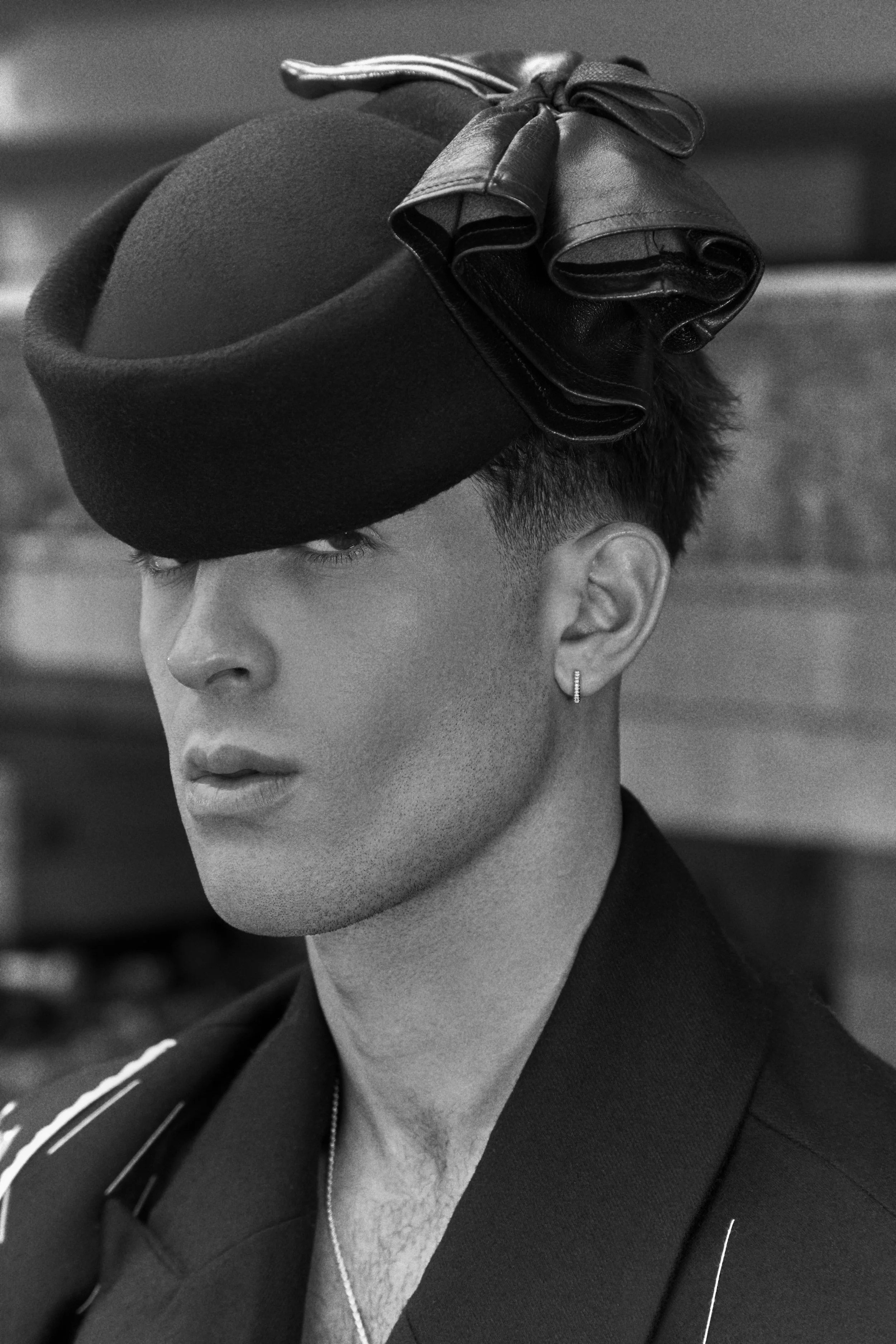
Growing up in a family so connected to music and Brazilian popular culture certainly placed different references around you. What place do these references occupy in the way you have built your own journey?
Art was always present in my family. My grandmother was a theatre actress and also worked in film, and my grandfather was a musician. My uncle Pedro Lucas was the vocalist and guitarist of Restart for many years.
I grew up in São Paulo surrounded by buildings, but my family introduced me to another side of the city, where people were completely devoted to art. They worked with places like Teatro Oficina, and I grew up seeing these different artistic universes.
I think that made me very connected to my feelings and to the people around me. Art creates spaces where there is freedom and less prejudice, and being around that as a child taught me to look at people differently.
I don’t work professionally with music, but I live music. I feel very close to it because of that connection with my inner world and my desire to express feelings. I would love for my children to grow up surrounded by music, art and people who know how to see beauty in small things.
Today, with a career that spans cinema, television and streaming, what has become indispensable to you in a project that perhaps would not have been as important to you when you were starting your career?
Today, I care much more about who I’m working with. I want to understand the production company, the director, what they’ve done before and why they chose me.
I want to read the whole script, know who the main people are and understand the project as a whole. Is the director choosing me specifically, or do they simply want a familiar face for the leading role? Those things matter to me.
The role can also be extremely demanding. You can spend two months working twelve-hour days, preparing for the next day and giving everything to a character. It’s almost like being a performance athlete.
I want to know that the dedication is worth it. Where do we get all of that from? It doesn’t come from a book. It comes from inside us.
What still sparks your curiosity as an actor? Is there any territory within acting that you feel like exploring in the coming years?
Acting itself will always be a challenge, and I like being challenged. I look for projects that are different from my profile, even though that can be difficult because people often don’t see me that way.
I want to work with people who believe in me and show the audience that I’m not just one thing. When you grow up as a child actor, people can have a very specific image of you.
When I leave my comfort zone, I feel much more involved. There is always a moment of self-doubt, but overcoming it and delivering the work makes me believe even more that I can get where I want to go, through dedication, focus and work.
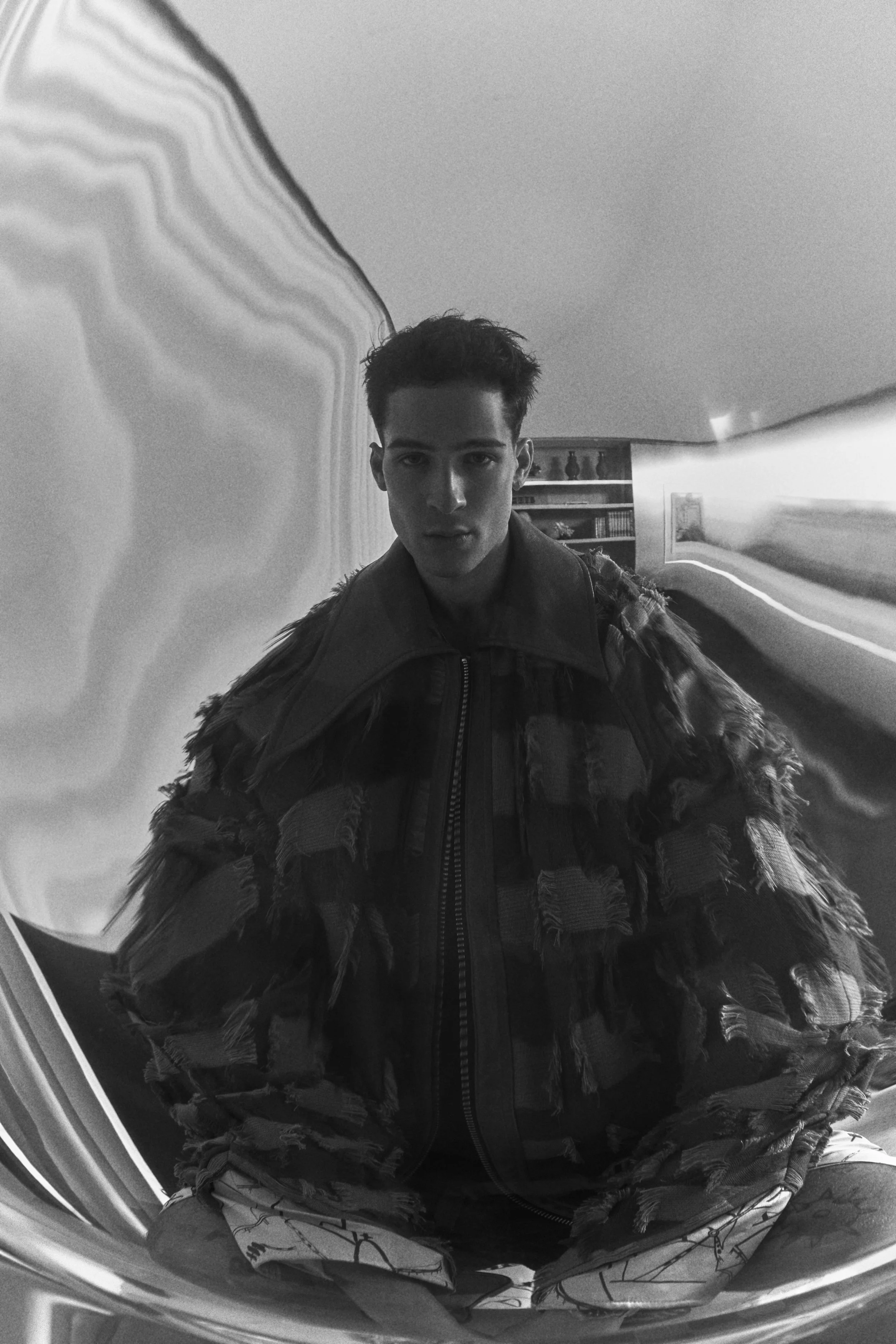
TEAM CREDITS:
talent JOÃO GUILHERME
photography RICARDO ABRAHAO
styling RODRIGO POLACK
hair GUSTASHA HELLENA
makeup ICTOR
production HEMERSON FABIANO
JOÃO GUILHERME'S producer MARIANA BELLO
photography assistant JOZZUU
styling assistant JOÃO BELTRAN
retouching VICTOR WAGNER
editor TIMI LETONJA
interview LEANDRO DA SILVA
cover design ARTHUR ROELOFFZEN
