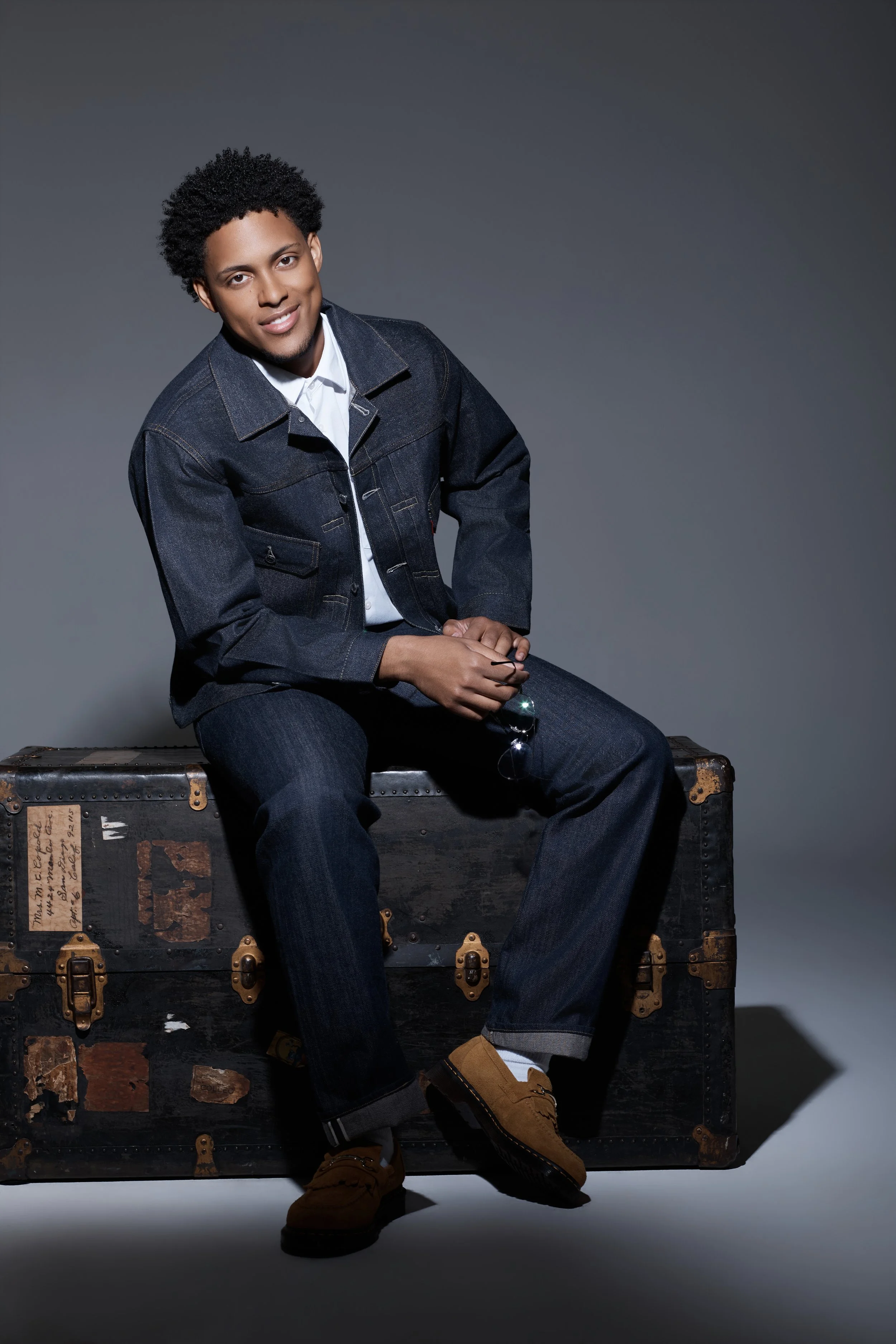
interview by JANA LETONJA
Kai Parham is stepping into the spotlight with what promises to be a breakout role in Prime Video’s highly anticipated new series The Greatest, executive produced by Michael B. Jordan and executive producer/showrunner Ben Watkins. The series explores Muhammad Ali beyond the legend, examining the boxer as a son, husband, father and brother, with Kai starring as Ali’s younger brother and closest confidant, Rudy Clay, later known as Rahaman Ali. For Kai, whose previous credits include Colin in Black & White and Vows, the role represents a major career moment, and the opportunity to introduce audiences to the remarkable man who spent much of his life standing beside “The Greatest.”
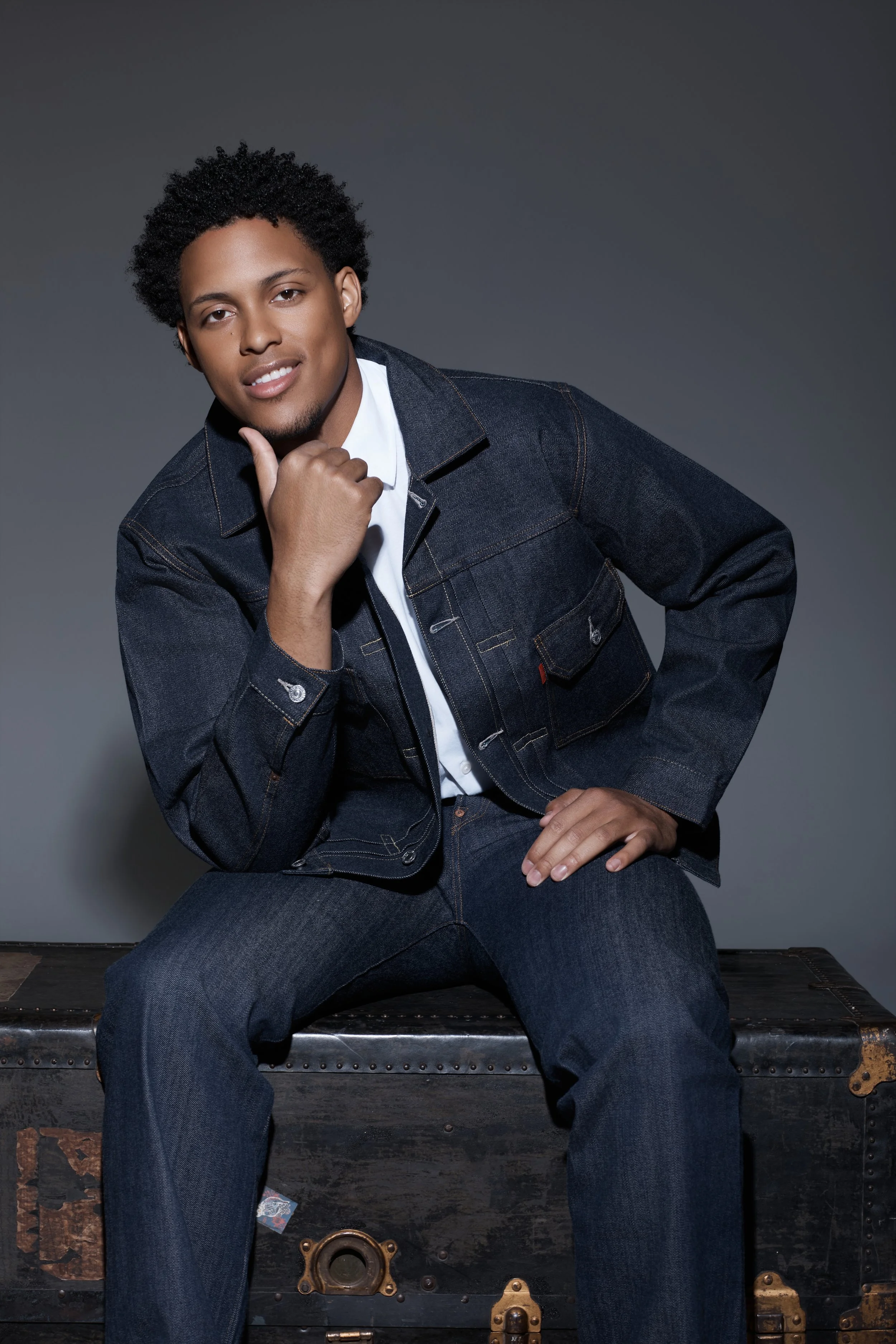
photography by ROWAN DALY
This is a huge role at a pivotal moment in your career. Take me back to finding out you had been cast as Rudy Clay. Where were you, and what went through your mind when you realized this was actually happening?
Finding out I had been cast was one of those moments where you have to take a second to let everything sink in. You work toward opportunities like this, but when one actually comes along, especially a role connected to someone as important as Muhammad Ali, it feels surreal. I was excited, grateful, and ready to get to work. I also understood pretty quickly that this was bigger than just landing a role. It was an opportunity to tell a story that people may not know as well, and I wanted to make the most of it.
Everyone knows Muhammad Ali, but far fewer people know the full story of his brother, Rudy Clay, later Rahaman Ali. What was the first thing you learned about Rudy that made you think, “People need to know this man”?
What stood out to me was how much of Rudy's story exists alongside Muhammad's, even though he wasn't the one receiving the same level of attention. He was his brother, his friend, and someone who shared so much of his life with him. I think there's something powerful about learning more about the people who stand beside someone the world considers extraordinary. Rudy had his own experiences, his own ambitions, and his own story. I hope audiences come away understanding that he was much more than just Muhammad Ali's younger brother.
When you’re portraying a real person rather than a fictional character, there is a different kind of responsibility. How did you approach honoring Rudy without simply trying to imitate him?
For me, it started with research and trying to understand who Rudy was as a person. When you're playing someone who actually lived, you want to be respectful of their story, but you also have to find a way to bring that person to life rather than simply recreate what you see or read. I focused on understanding his relationships, his circumstances, and what might have motivated him. I wanted to approach him with honesty and make choices that felt human. Ultimately, I hope the performance honors his legacy while allowing audiences to connect with him emotionally.
Rudy wasn’t merely Muhammad Ali’s brother, he was a professional heavyweight boxer in his own right. How important was it to you that audiences see him as an individual with his own ambitions and identity?
That was incredibly important to me. It's easy to define someone by their relationship to a famous person, but Rudy had his own identity and his own relationship with boxing. He wasn't simply standing in Muhammad's shadow. He had his own experiences as a fighter and his own place in that world. I wanted audiences to appreciate that distinction and recognize Rudy as an individual. His relationship with Muhammad is a huge part of the story, but it doesn't tell the whole story of who he was.
What kind of physical preparation did you undergo to convincingly portray a professional boxer, and what did that process teach you about the mentality of fighters?
The physical preparation required discipline and a willingness to push myself. Boxing is about so much more than what you see when two people step into the ring. There's technique, conditioning, timing, and a tremendous amount of mental focus involved. You begin to appreciate how much work goes into making those movements look natural and effortless. The process also taught me that discipline is something you have to practice consistently. You can't expect to show up one day and have everything figured out. You have to put in the work, stay focused, and be willing to learn.
Ali was one of the most charismatic and recognizable people of the 20th century, but The Greatest also explores the person behind that public image. Does seeing him through Rudy’s eyes reveal a Muhammad Ali that audiences may not expect?
I think it gives audiences an opportunity to see a more personal side of him. The world knew Muhammad Ali as a champion, an incredible personality, and someone who could command the attention of an entire room. But to Rudy, he was also his brother. He was someone he grew up with, shared experiences with, and knew outside of the spotlight. I think that perspective is really special because it reminds us that even the most iconic people in history are still human beings with families and relationships that shape who they are. Seeing Muhammad through Rudy's eyes allows us to explore that side of him.
Michael B. Jordan has obviously built a major connection to boxing on screen through the Creed films. What was it like having him involved as an executive producer on a project where boxing is again such an important part of the storytelling?
Michael B. Jordan has brought so much energy and commitment to the world of boxing through his work, so having him involved in a project like this is exciting. What's special about The Greatest is that boxing is an important part of the story, but the series also goes beyond the sport to explore the people and relationships behind the legacy. Being part of a project with people who understand how much physical and emotional commitment these stories require is something I really appreciate. It's an opportunity to learn and be part of something meaningful.
Before The Greatest, audiences may have seen you in Colin in Black & White or Vows. What did this role demand from you as an actor that you had never been asked to do before?
This role challenged me to approach a character with a real history and a connection to one of the most recognizable figures in the world. That comes with a different level of responsibility because you're not just creating someone from your imagination. You're helping bring a real person's story to a new audience. It also required me to think about the physical side of the performance and how that could inform the emotional side. Every role teaches you something, but this one pushed me to think more deeply about research, preparation, and the importance of the people you're representing.
There is an interesting parallel here. You’re portraying a man who spent much of his life beside someone whose fame became enormous, while this series could dramatically change your own visibility overnight. Has playing Rudy affected the way you think about fame and success as your own career begins to take off?
It has definitely given me something to think about. Rudy's story is a reminder that a person's value isn't determined by how much attention they receive. You can have an important impact on the people around you without the entire world knowing your name. As an actor, of course I want to continue growing, take on exciting projects, and reach more people through my work. But I also want to stay grounded and remember why I started doing this in the first place. Fame can change your circumstances, but I think it's important to know who you are outside of that and stay connected to the people and values that matter to you.
Outside of acting, what keeps you fulfilled, both creatively and personally?
I think it's important to have things in your life that keep you connected to yourself outside of your career. Acting is something I'm passionate about, and I love the opportunity to keep learning and exploring different parts of myself through the work. Outside of that, spending time with the people who matter to me and making room for new experiences helps me stay grounded. I'm still figuring things out and growing, both personally and professionally, and I want to keep that sense of curiosity. I never want to feel like I've stopped learning or discovering something new about myself.