
IN CONVERSATION WITH KAT COIRO
interview by JANA LETONJA
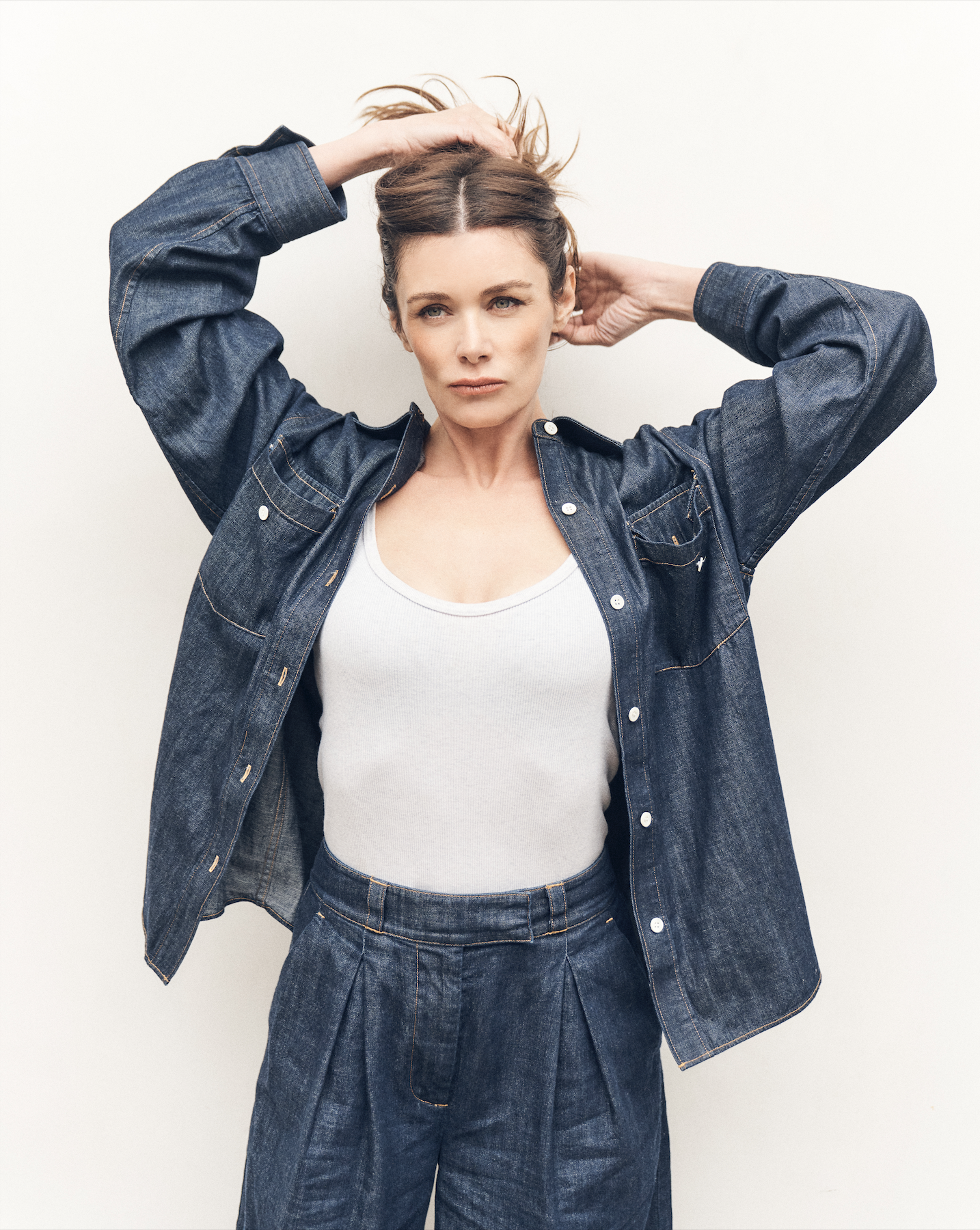
Emmy and DGA-nominated director and producer Kat Coiro has built a career defined by versatility, bold storytelling, and a deeply personal creative perspective. From directing acclaimed series like She-Hulk and Matlock to crafting intimate independent and big studio films like Marry Me, she moves seamlessly between scale and genre. Now, she returns to her Italian roots with Universal Pictures’ romantic comedy You, Me & Tuscany, a vibrant story of love, identity, and cultural collision set against the backdrop of the Italian countryside. With a journey that spans indie filmmaking, global influences, and advocacy for sustainability and female representation in Hollywood, Kat continues to shape a dynamic and impactful path behind the camera.
You, Me & Tuscany feels both romantic and deeply personal. What inspired you to tell this story now?
I love to tell stories that nurture joy and foster human connection. This movie will bring audiences back to the theatres for a shared experience. They will put down their phones, forget about their problems, laugh, interact, escape and leave the theatre feeling that maybe it’s time to step outside of their comfort zones, take a leap of faith and believe in the power of love. Sure, this is romantic, but it’s also deeply personal in terms of the work I want to put out into the universe. I know there’s a place for art that reflects the dark and cynical side of human nature, but there’s an equally important place for art that reminds us to be curious, to follow our passions and to lead with love and hope. Too often, this kind of bright-eyed filmmaking is looked down upon or marginalised, but I think it’s important to fight for the light and to make optimism contagious.
The film draws from your Italian roots. How did your own background influence the tone and themes?
One of my north stars for this project was making a film that resonated with Italians. Too often, I see American movies that plop our aesthetics, worldview and culture in front of some glorious Italian backdrops without really acknowledging the place. It feels almost exploitative. I wanted every frame of this movie to feel authentic and to be infused with the history and vibrancy of Italy and, more specifically, Tuscany. I wanted Tuscany to be a character.
I hired my long-time collaborator, Elena Albanese, who is an Italian production designer with a background in Italian art. I tried to cast Tuscans whenever possible. In fact, Lorenzo De Moor and Marco Calvani are both from the same Tuscan village outside of Florence. We hired chef Stefano Giusmondi of the Osteria di Maccarese to craft the on-camera food, and he would stand next to me at the monitor, doing literal chef’s kisses when he was happy with what he saw. I interrogated the cast and crew about every sandwich, line and joke to make sure that we weren’t playing into tired stereotypes. I listened to their feedback and incorporated their ideas into the fabric of the film. My AD, Franco Basaglia, had a thing against the trope of Americans riding around on Vespas, so, although we have a Topolino, a Maserati, an ape and a Fiat, we don’t have any main characters scootering around. When Anna first meets La Famiglia, the toast was written by actress Stella Pecolla after we had a discussion about bona fide Italian family toasts. If I’m going to shoot in a foreign country, then I’m going to listen to the citizens and draw upon their experience to enrich the film. For the audience and for my ancestors.
What excited you most about working with Halle Bailey and Regé-Jean Page?
Halle and Regé ‘s chemistry is electric. My job was to fan their natural spark, born of authenticity, mutual respect, dedication to craft, beauty inside and out, and turn it into a raging inferno by giving them a safe space to listen, play and connect. Nobody but Halle could play a character who breaks into a villa and lies to a nonna and still comes across as 100% charming. To me, she’s the new Sandra Bullock or Julia Roberts. And nobody but Regé could bring the disarming charm of old School Hugh Grant while also making that vineyard scene so damn iconic.
Romantic comedies are experiencing a resurgence. What do you think audiences are craving from the genre today?
The COVID and post-COVID years have been a time of intense isolation. I think audiences are ready to have shared experiences again, and there is nothing that brings people together faster than laughter. I want intergenerational families and groups of friends and dates to feel like they got the chance to go on a vacation together. I want them to hoot and holler at the screen. I want them to get caught up in the Tuscan sunrises. This isn’t passive viewing, it’s interactive. It’s no secret that some of the most uplifting rom-coms in history were made during times of intense world conflict. Philadelphia Story and His Girl Friday were made during WW2, Roman Holiday was produced during the Korean War. The Apartment came out just as the Vietnam War was intensifying. When people are faced with pain and anguish, they need a reprieve. I sincerely hope that this movie can counter a brutal world with a little touch of beauty.
How did you approach balancing humour, romance, and emotional depth in the film?
Some rom-coms lean more heavily into the rom or into the com, but I’m really proud of how balanced this film is, equal parts swoon and hilarity. It started with a unique and energetic script by Ryan and Kristin Engle, was enhanced by all-star producers Will Packer and Johanna Byers, who fought for authenticity every step of the way and by amazing studio partners at Universal, who constantly challenged the comedy. To this sauce we added my in-depth collaboration with an incredible cast and crew who brought moments of magic, pathos and many, many jokes.
Just when you get teary-eyed, we will zing you. Just when things feel light and breezy, we hit you with some raw emotion. If it starts to get too earnest, just wait for that undercut of comedy. Look, that’s how life is. Life isn’t a genre; it’s a jumble of ups and downs. You laugh hardest after a good cry, you love the most after you’ve lost everything. At its heart, this is a journey of self-discovery about a woman falling in love with a man, a family, a place, but, most importantly, with herself. That emotional through-line and Halle’s incredible performance allowed us to get away with a lot of whimsy and downright ridiculousness.
Having worked across both indie films and major studio projects, how does your process shift between the two?
I’ve worked on indie films, studio films, pilots, episodic television, short films and commercials, and my process has always been exactly the same.
Overcommunicate, I have a very elaborate note system that I share with my whole team so that everyone is always on the same page. Collaborate with the best of the best. Listen. Create a joyful set that allows for playfulness but also upholds a strict work ethic. Try to spend more time shooting than you do driving trucks around. Be responsible. People sometimes believe that when your budgets get bigger, your problems go away, but this is a fallacy. Every film that gets made is a small miracle. If it actually touches people and reaches an audience, then it’s a huge miracle. Every project at every level has its challenges. To be a director in any medium, you must be simultaneously rigid and open, prepared and loose, visionary and collaborative, energetic and calm, playful and authoritative. I also consider being fit - physically, mentally, emotionally and spiritually - a part of my job. I have to inspire confidence, and that doesn’t change if I’m leading a group of 3 or 300.
You began your career with micro-budget films like And While We Were Here. How did those early experiences shape you as a filmmaker?
I draw on my micro-budget directing and producing experiences every day that I’m on set. It has helped me to be decisive, to prioritise, and to be able to move quickly when needed. When I was cutting my teeth with very little time, money or resources, I had to learn every job, from writing and producing to Ad-ing and location scouting, from dog wrangling to costume designing, from shooting on a 5D to working craftily. I have done every job. This doesn’t mean that I’m an expert at everything, but it does mean that you can’t pull one over on me. I know how it all works. I’m involved in every level of filmmaking. I often think of my job as akin to being the conductor of an orchestra. I don’t have to play everything perfectly, but I need to know the fundamentals of how every instrument operates and be able to communicate so that everyone can play in perfect harmony and bring their A-Game.
You’ve directed across television and film. What do you find most creatively fulfilling about each medium?
My love of working with actors transcends all mediums. Because I trained and started my career as an actor, I have massive respect for the bravery it takes to put yourself out there, to be vulnerable, to show your face even when you feel bad, to have a project ride on your shoulders, to be a conduit for all of humanity’s emotions. There are jobs that are more physically taxing and jobs that have longer hours, but I think being an actor is the hardest job on set because it is so forward-facing and the stakes are so high. I am most creatively fulfilled when I have set the stage for actors to feel comfortable expressing themselves, when they trust the process, and when they can relax and play.
As a female director in a still male-dominated industry, what challenges have you faced and how have you navigated them?
I thought the United States was bad, but when I went to Italy, I met people who’ve been working for their whole lives in the industry and have never even been in the vicinity of a female director. A lot of the Italian women, cast and crew, expressed their gratitude at having me at the helm. They stated that the set felt more communicative and more nurturing than what they were used to. The actresses appreciated the female gaze, and that felt great. To have such a positive experience, to be an ambassador for women, setting the stage to empower more women to direct and to support other women, feels like a win.
In terms of challenges along the way, I am a mother. When I first started, I hid my motherhood. Now I have the opportunity to foster sets that celebrate those who choose to be moms. Halle has one baby, our producer Johanna has two, I have three, our production designer has four and on and on. The children were welcome on set, and we shared stories and never once did it slow us down. In fact, it made us want to work harder and better so we could leave a legacy of excellence to our kids.
In terms of sexism, I have chosen to ignore it. If I had focused on micro-aggressions, disrespect and condescension at the beginning of my trajectory, it would have been a full-time job that distracted me from honing my craft and building my career. I love working with men, and some of my absolute favourite collaborators are men. But the ones who aren’t secure in themselves, the ones who resent my very existence, the ones who genuinely believe that if I didn’t have this job then they might be further along in their own careers, the ones who never, ever want to be told what to do by a woman, the ones who mansplain and discount and discredit, these are the men that I simply ignore. I know that while I soar, they will be grounded with resentment, which is their choice and, quite frankly, has nothing to do with me. I’ve got bigger fish to fry.
You’re also a DGA mentor for female directors. What advice do you give to emerging filmmakers today?
Learn a million skills and have as many irons in the fire as you can mentally sustain. If there are no good scripts, write one. If you’re having trouble attaching talent, take an acting class and act in your own work. Assemble your friends and make them your collaborators. Learn together. Make short films. Explore, experiment and fail. Failure is the best training ground. One of the themes of ‘You, Me & Tuscany’ is that sometimes falling on your face and messing up leads you to the right place. In artistic endeavours, we are often caught up in being successful and establishing our genius, but this is incredibly restrictive. You can’t practice an instrument without hitting the wrong notes a hundred times. You can’t learn to paint without making a mess, and you can’t play a sport without sustaining some injuries. And yet in filmmaking, we feel we have to come out of the gate perfect. Perfection is the enemy of good. One of the gifts of obscurity, in which we all dwell at the beginning, is the ability to try and try again so that when you finally have eyes on you, you are ready. Play, be curious and be fearless.
Sustainability is a major focus for you through the #LightsCameraPlastic initiative. How can the industry continue to evolve in that space?
I have always been a proponent of sustainability on-screen; I began swapping plastics for reusables while shooting Marry Me. When the opportunity came to connect with non-profit Habits of Waste on their initiative, Lights, Camera, Plastic, I jumped at it, since our vision was so aligned. I set out to control what I, as a director, could directly influence, what is seen on screen. When I partnered with Habits of Waste, we talked a lot about smoking, how, when it became marginalised in popular culture, people smoked less in real life. The idea behind #LightsCameraPlastic is similar: to eradicate waste on screen, especially single-use plastic, and the people will follow. I implemented Lights, Camera, Plastic on She Hulk, with support from amazing advocate Mark Ruffalo, on the Spiderwick Chronicles, on Matlock and now on You, Me & Tuscany. Simply having conversations with the writers, crews and casts changes how people look at disposability and empowers them to make better choices. It spreads from not shooting waste, which also happens to be aesthetically disgusting, to creating less garbage on set, to recycling sets, to composting and all the way up the chain to using electric generators.
I like to call #LightsCameraPlastic the gateway to larger sustainable practices. It’s really heartening to me that in the five years between Marry Me and You, Me & Tuscany, huge strides have been made in our industry. The studios now have an incredible green team. At Universal, we have the Greenlight initiative, and there is a lot of support for sustainable filmmaking on screen and behind the scenes. I encourage all filmmakers at every level to challenge themselves to do better. Even if your environmentalism isn’t perfect, do something small and inspire the people around you to make better choices. I think a lot of environmental apathy comes from a lack of self-esteem. We feel that the problems are too big, that we are powerless, so we do nothing. Just do one little thing every day and watch how it grows.
Do you feel that advocacy and storytelling intersect in your work?
I don’t think lecturing works. I don’t want to tell stories that convince people to act or behave in a certain way. I’m into escapist storytelling, so I try to hide the spinach in the brownie. Sure, I like to model a better, more beautiful, more verdant world on screen that steers our thoughts away from consumerism and disposability. I like themes that focus on simplicity and love, and I hope that my storytelling inspires people to want to live their best lives and leave the world a little better than it was when they found it, but I don’t want to tell anyone how to live their lives, and I never want to shame them. I just want to show that an idealised world is possible and that we should all be empowered to make choices that support rather than denigrate humanity.
How do you stay creatively inspired after working across so many different formats and stories?
I’m always looking for fresh perspectives, new characters and inspiring settings. One of the things that drew me instantly to the script of You, Me & Tuscany, besides my desire to shoot the hell out of the Italian countryside, was Anna’s character. I remembered being a young woman in my early twenties who was an absolute hot mess, but was also unapologetic and knew on some level that by leaning into my chaos and trusting my instincts, I was going to come out stronger and cooler on the other side. I challenge you to show me a badass middle-aged woman who wasn’t a bit of a chaos-demon-disaster in her early years. Women need to see themselves portrayed on screen in new ways. That kind of singular character is what draws me to most of my projects. In the pilot of Matlock, it was Kathy Bates’ character who was an older woman who felt invisible and then used her invisibility to achieve her goals. In She-Hulk, it was the idea of a woman who could go through life without feeling fear in a dark alley. What a novel concept. One of the reasons I can’t be pinned down to a particular genre or format is that I follow the great characters wherever they lead me.
Looking ahead, what kinds of stories are you most excited to tell next?
I want to tell theatrically worthy stories that are epic in scope even if they are thematically intimate. I want to create environments that allow actors to play and crews to flourish. I want to listen to my audience. I want to shoot in places that beg the camera to do a 360. In fact, I just read a sprawling, romantic film that is set partially in Europe so maybe I’ll be bringing my singular brand of joy and hope to the Netherlands sometime soon.
TEAM CREDITS
talent KAT COIRO
photography SHAYAN ASGHARNIA
editorial director and interview JANA LETONJA
