
interview by JANA LETONJA
With a captivating screen presence and a strong foundation in classical theatre, Kelley Curran has emerged as one of the compelling talents to watch in contemporary television. Best known for her portrayal of the ambitious and complex Enid in HBO’s acclaimed period drama The Gilded Age, she has brought depth and intrigue to a character navigating the rigid social hierarchies of 19th-century New York. Following her standout performance, she has been promoted to series regular for the highly anticipated new season, which just premiered, with an expanded storyline alongside the legendary Christine Baranski. From her early days performing Shakespeare and touring with The Acting Company to appearing on Broadway opposite Kevin Kline in Present Laughter, Kelley has built a career defined by dedication, versatility, and a passion for storytelling. As she steps into an exciting new chapter, she reflects on her artistic journey, the evolution of her character, the relationship between fashion and identity, and what lies ahead.
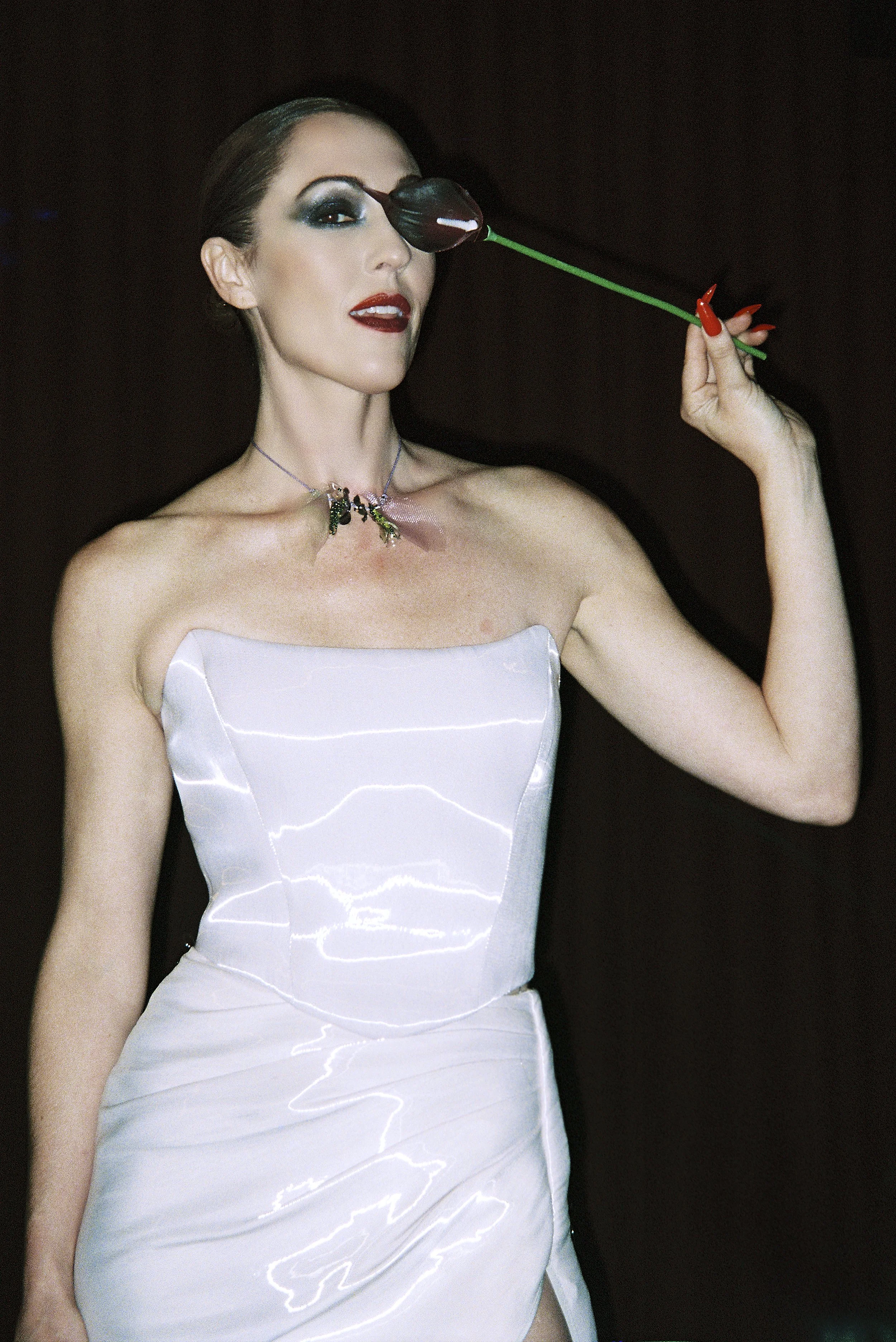
top and bottom KATE BARTON
shoes CHARLES & KEITH
tights WOLFORD
choker CAROLINE ZIMBALIST
You began your career in theatre, studying at Fordham University and performing with The Acting Company. What initially drew you to acting, and how did those early experiences shape your approach to the craft?
I grew up watching classic Hollywood films from the 1930s and 40s. All the other kids my age were probably watching Ghostbusters and I was fan girl-ing over Barbara Stanwyck and Gene Kelly. You can imagine how popular I was. But I think those films planted a very early seed, and as I began to act for more than just my parents in my living room, as I began to train as an actor, it dawned on me that my attraction to this craft was more than me having been seduced by the glamour and grandiosity of those films. It’s a craft that combines so many aspects of life that I find endlessly exciting to explore — language, poetry, the body, rhythm, human behavior and psychology. I mean, hand me a Shakespeare play, put me in a movement class, sit me down in a writer’s room, I’m in heaven.
Your stage career has included classical theatre, Shakespeare, and Broadway productions. What does performing in front of a live audience offer you that working on screen cannot?
There’s a listening that has to happen on stage that becomes multi-sensory. Each night a new audience is invited into the space to hear a story, and each night this particular group is hearing it, together, for the first time. The audience becomes an essential part of how the story unfolds in the theatre, and they must be listened to with as much presence and attentiveness as you listen to your fellow actors. Working on camera, you can certainly still feel when the air in the room shifts amongst the crew when the work is alive, when impactful moments are happening, but everyone on the crew still has jobs to attend to every second. In live theatre, when the air shifts in the room, there is a wrapt attention on the story, and the audience is allowed to dwell in that presence. It can be an incredible communal experience.
Your portrayal of Enid in The Gilded Age has become one of the show’s most intriguing character journeys. What initially attracted you to her, and how has your understanding of her motivations changed since you first stepped into the role?
I loved this messy character from the first moment I read the audition sides. I just thought, “Who is this woman? Why is she so resentful and fabulous? What is motivating this behavior?” I knew that whoever got this role was going to have a juicy time of it as an actor. And her trajectory as a character on the show has been almost unparalleled, rivaled only perhaps by Jack Trotter who is a kind of masculine counterpart to how the American dream could manifest for people in The Gilded Age.
When the show started and Enid was only known by her maiden name, Turner, because she was working downstairs, her motivation was very clear. Her expectations for her life were not meeting up with her reality and she needed to change that. She knew she had more to offer the world and she was desperate to prove it, and so she made desperate decisions. As the seasons went on and she secured her place in this high society world of New York, her motivations changed. One of the most thrilling things about this season is getting to play this character finally thriving, finally secure in her place and her offerings, no longer apologizing for her past or trying to hide her background, but rather relishing just how far she’s come.
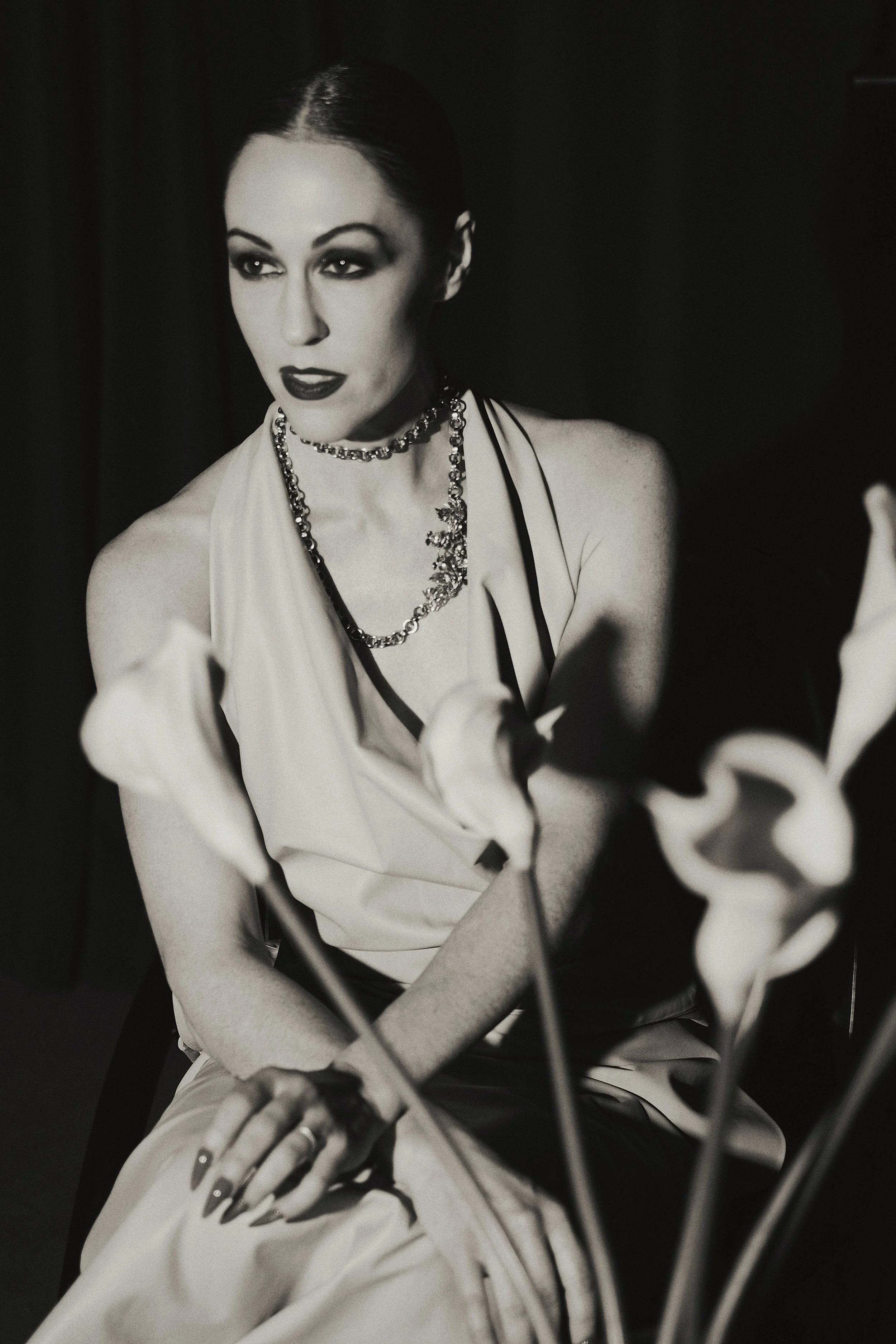
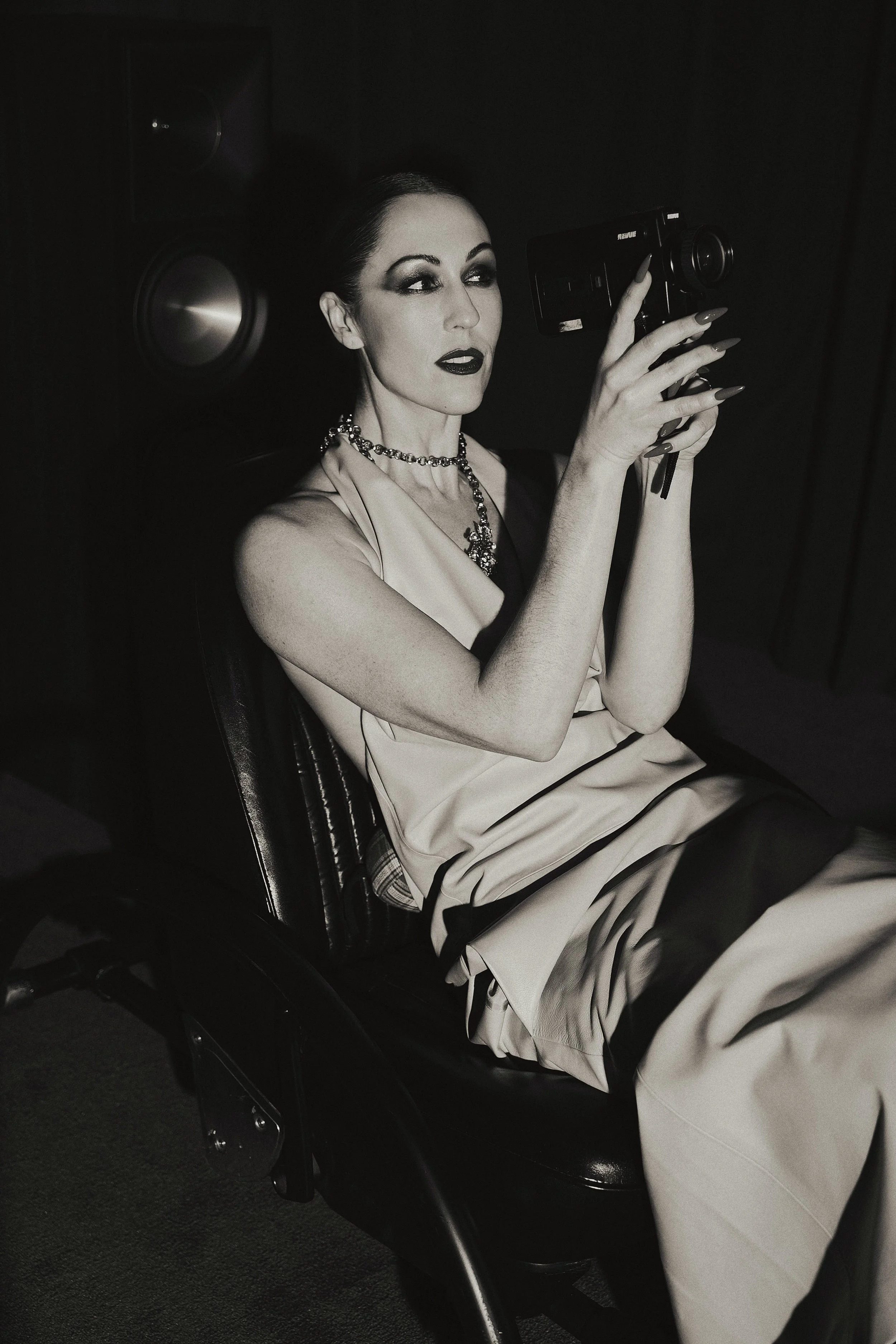
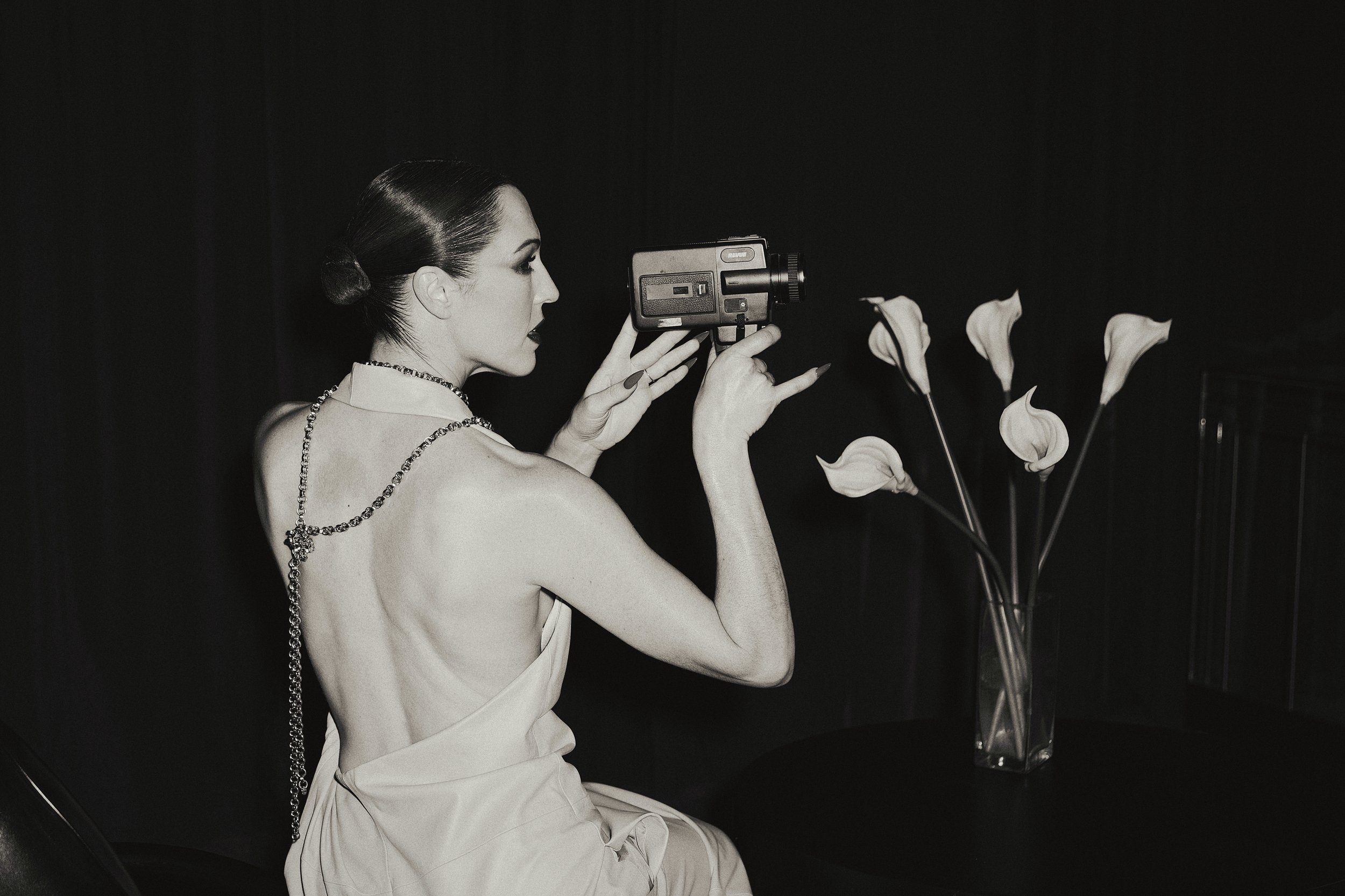
dress GIADA
tights WOLFORD
shoes CHARLES AND KEITH
necklace KEREN WOLF
You’ve been promoted to series regular, marking an exciting milestone in your journey with The Gilded Age. What did that recognition mean to you, and how has having more time to explore Enid’s character influenced your performance?
The landscape of this show is broad and deep. It’s a real tapestry of extraordinarily rich characters, so to have the writers and creative team continue to invest in me as Enid, a character who essentially reinvents herself every season, is a tremendous gift. I mean, frankly, just to be in an ensemble with so many absolute titans of stage and screen, and to get to stand shoulder to shoulder, or go toe to toe, barb for barb, with them in a scene is the dreamiest thing of all time. It’s been a tremendous privilege to develop these relationships together for over 6 years and 4 seasons now, on set and off.
I knew in season one when I started working with Blake Ritson, who plays Oscar van Rhijn, that our characters had a potent dynamic together, and having that dynamic come into full bloom this season, so many years later, has just been pure delight. I was cast on this show in the fall of 2019, and over the last 7 years this cast and crew have become central to my community in New York and in this industry. At this point, my character can throw one look across the dinner table at Bertha or Mamie Fish or Mrs. Astor and it’s simply loaded because the history is so deep. We also all go to bat for each other, and take a lot of good care of each other. It makes the set a very joyful place to be, even when you’re spending 17 hours in a corset.
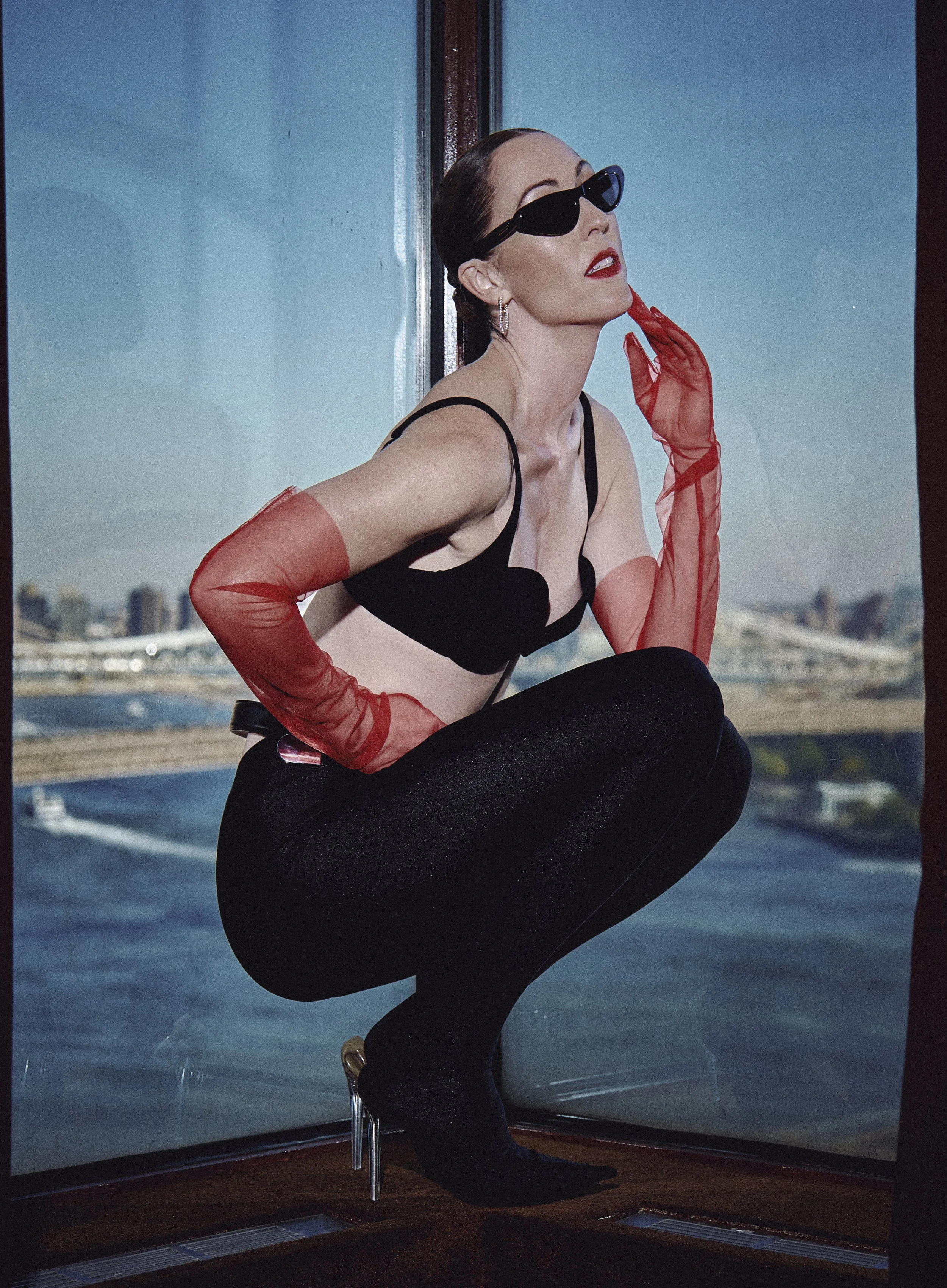
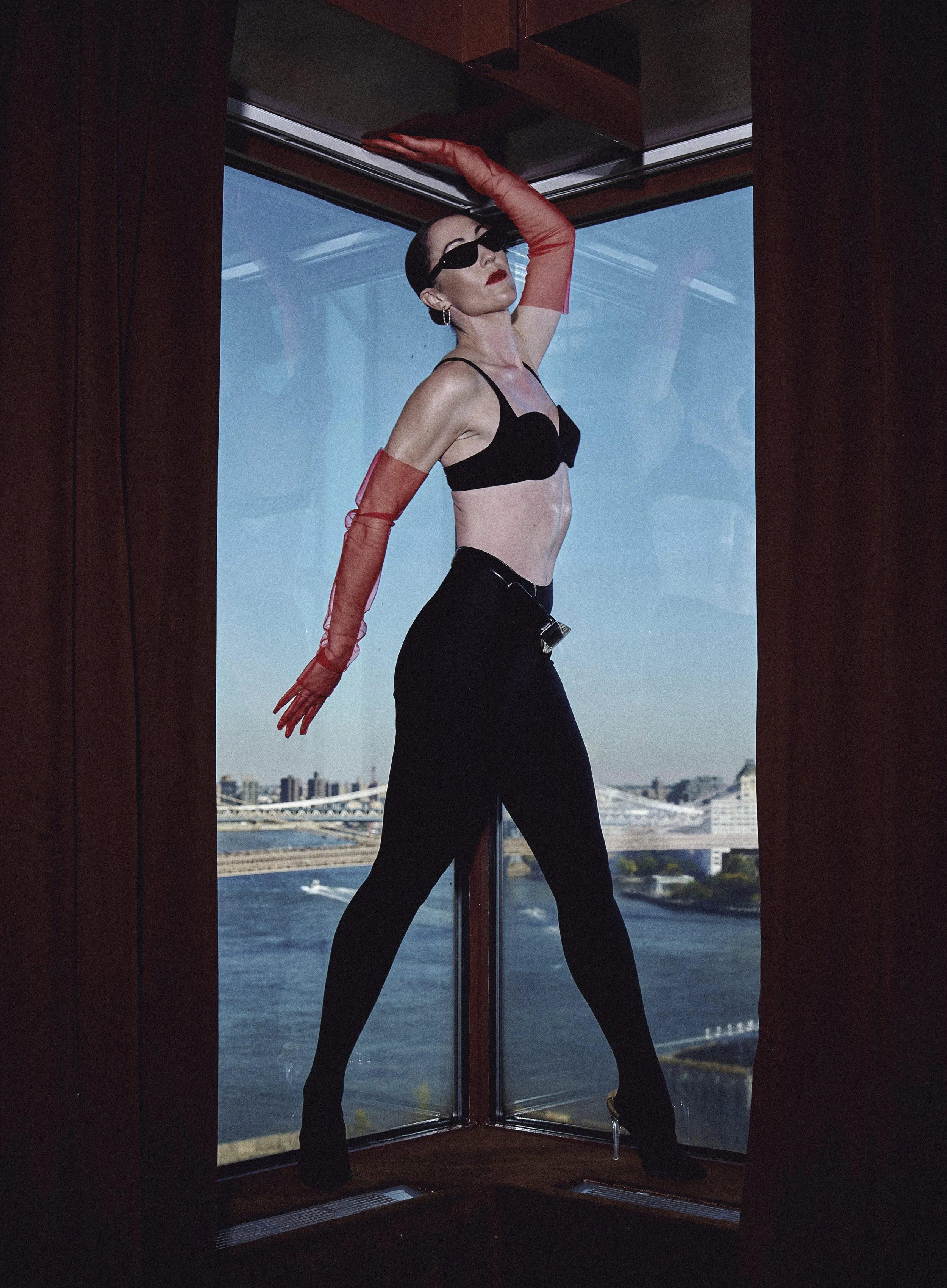
sunglasses BOTTEGA VENETA
bra MIU MIU
leggings and shoes KATE BARTON
belt KHAITE
earrings SWAROVSKI
gloves MISS CIRCLE
The Gilded Age explores power, wealth, class, and the changing position of women in society. Which of these themes resonates most strongly with you, and how do they inform your interpretation of Enid?
The changing position of women in society is always at the front of my mind when telling this story. Men had all the power in the traditional sense, but women were shaping the culture in tremendously subversive ways. When you think of Edith Wharton, Ida B. Wells, Madam C.J. Walker, Clara Barton, Nelly Bly, to name a very few, you begin to feel how this period gave birth to the suffragette movement and ushered in a very long, hard fight for equality as citizens under the law that continues to this very day. I feel the seeds of that fight very strongly in Enid, in her deep desire for influence and power, in her tenacity and resolve, and her absolute certainty that she has something larger to contribute to the world she moves through.
Enid is a character who often divides audiences, yet her determination makes her fascinating to watch. How do you approach portraying someone whose actions may be difficult to sympathize with while still revealing her humanity?
I can’t judge Enid. It’s simply not my job to do so. I know she’s divisive, and I love that as a character she elicits a visceral response in people, for better or worse. But with each new script and each new scene, I just have to keep asking myself why is she behaving the way she behaves, what is motivating her, and I have to ask those questions without judgment. It’s a tremendous exercise in empathy when a character behaves in a way you would not, and Enid certainly does, but the more I seek to understand that behavior, the more empathy I have for her. I think for a long time she’s been deeply lonely, and desperate, not just to survive but to thrive, and her humanity is revealed to me in those flashes of desperation, or this season, in her long-awaited moments of success and joy.
Fashion plays an essential role in The Gilded Age, communicating wealth, ambition, and social status. Has working on the series changed your appreciation for clothing as a form of storytelling?
The design and craftsmanship of the costumes on this show is uncompromising. Sublime. I often tell our designer, Kasia Walicka-Maimone, that I learn as much about my character in my fittings as I do poring over the scripts. Enid uses her wardrobe as a tool to shape her life and its direction. She knows when she’s performing for Old Money, and those looks then are often conservative and demure, and she knows when she’s pushing new boundaries, and taking the best instincts of the new money crowd to move the conversation forward sartorially. Watching these costumes come into reality, from the design, to the build, and then finally to set, where we all move through the world in them and they shape our choices and realities, it’s given me a whole new appreciation for sartorial craftsmanship and intentionality in clothing.
Acting can involve long periods of uncertainty followed by moments of intense visibility. What have you learned about resilience, patience, and trusting your instincts throughout your career?
My career has really been built brick by brick. I’ve learned to trust that foundation, and to trust the timing of my life. Whether I’m in the midst of a hyper glamorous press run for HBO, or whether I’m sending audition tapes into what can feel like an abyss, I try to trust in those cycles of visibility and solitude. I’m by no means immune to disappointment or anxiety, but I do think resilience can be built like a muscle. You keep working it, and nourishing yourself by building a life you love no matter what’s happening in your career. There’s a steadiness to be found when you prioritize the work itself over the visibility of the work. To me, being an actor is a vocation. It’s the best way I understand how to communicate in the world, how to seek joy, how to connect with my own humanity and with others’ in the short time we’re here. Keeping the channel open to the instincts that move me is the most important thing I can do every day as an artist, whether my work is being witnessed or not.
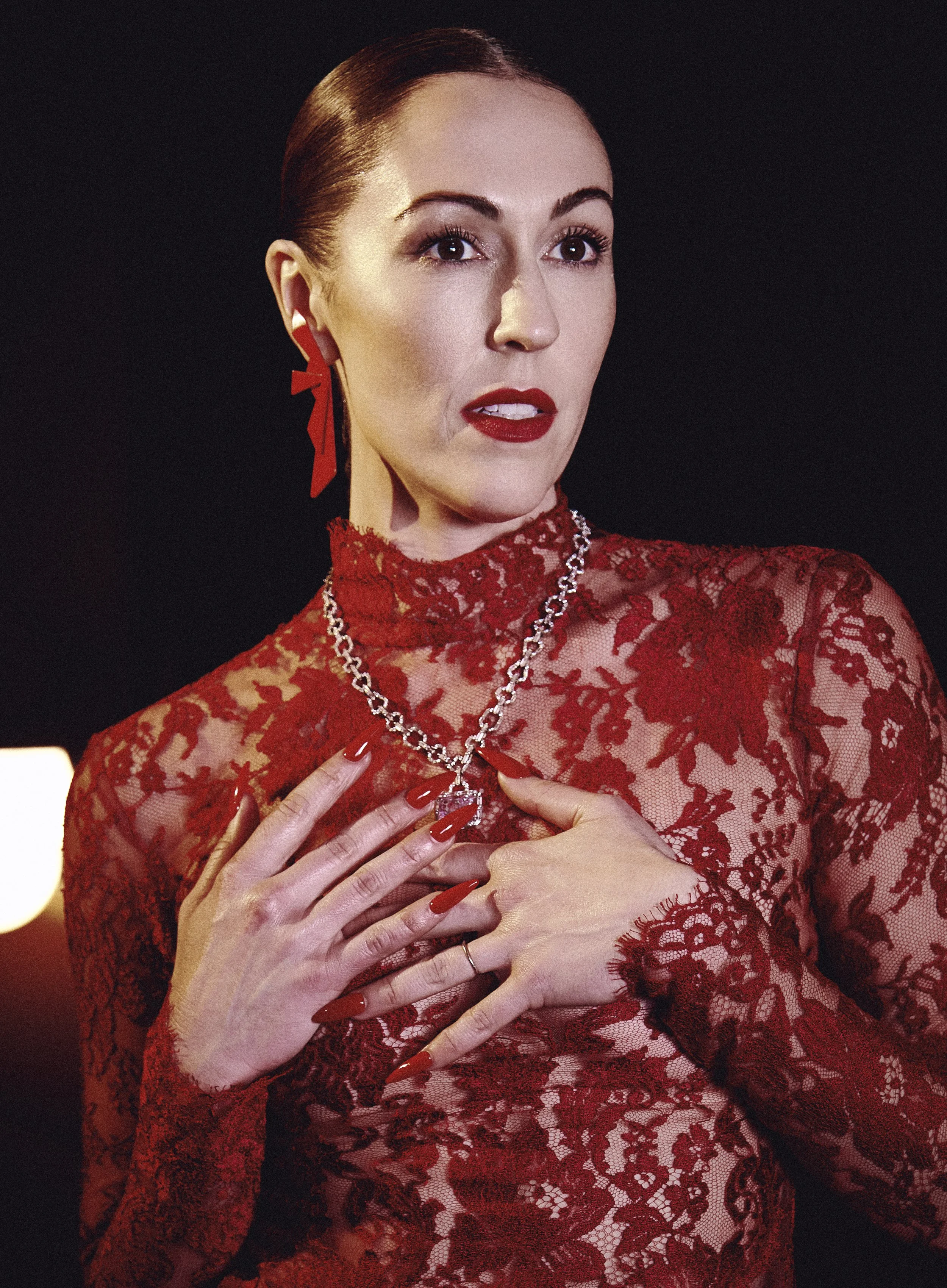
top FRANÇOISE
shoes ANDRÉ ASSOUS
earrings KEREN WOLF
necklace NICKHO REY
With The Gilded Age bringing you greater international recognition, are there particular genres, filmmakers, or types of characters you would love to explore next?
More than a specific genre or type of character I want to play, there are so many people I’d like to work with. There’s a long list of folks whose work moves me, like Sharon Horgan, Chloé Zhao, Ava DuVernay, Emma Thompson, Vince Gilligan, Lee Sung Jin, Greta Gerwig, John Turturro. The goal is to work with people who will ask me to go to the farthest reaches of my imagination and theirs, and then ask me to go even farther, whether in a comedy, western, action, thriller, period drama, or on stage. That said, after playing Enid Winterton for so many years, it would be nice to play a character who’s a real sweetheart.
As you enter this exciting new phase of your career, what does success mean to you today, and what kind of artistic journey would you like to create for yourself in the years ahead?
My metric for success hasn’t changed much over the years. My vision of what’s possible has expanded in wildly joyful ways since I began down this path, but my ultimate metric for success has remained fairly steady. Beyond making a living, my ultimate metric for success is finding joy in collaboration, and cultivating the respect of my peers in the process. In that sense I’ve been extraordinarily blessed to have nurtured a community of actors, writers, artists and creatives of all sorts through the years, people who shore me up, invite me into their worlds, ask me to take great creative leaps with them, and keep me present through the highs and lows. We do none of this alone. That’s the best part.
TEAM CREDITS:
talent KELLEY CURRAN
photography MYNXII WHITE
styling EMILY BOGNER
hair STEVIE ROSALIE
makeup OLHA OSTAPCHUK
nails CYNTHIA
photography assistant JESSICA BRICE
styling assistant MADISON PARUOLO
editor TIMI LETONJA
editorial director and interview JANA LETONJA
