
IN CONVERSATION WITH KOJI YANAI
interview by TIMOTEJ LETONJA
From boardroom leadership at Fast Retailing to producing acclaimed cinema (Perfect Days), Koji Yanai has steadily expanded his cultural footprint. Now, as a founding partner of the Displacement Film Fund — launched in collaboration with Cate Blanchett, UNHCR, and the Hubert Bals Fund — he is helping reshape how stories of forced displacement are told on screen.
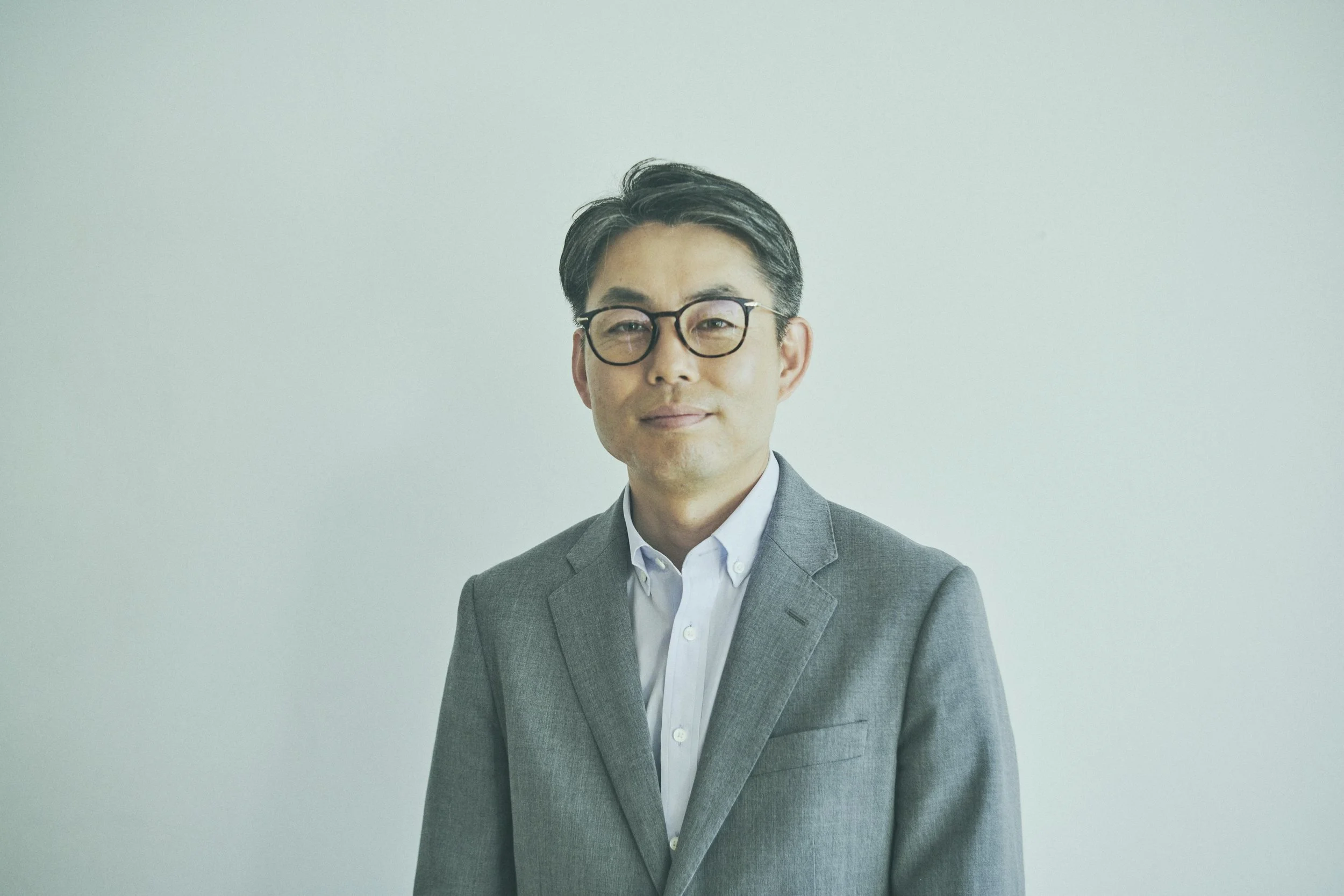
image courtesy of DISPLACEMENT FILM FUND
You are listed as one of the founding partners of the Displacement Film Fund, whose first slate of short films had its world premiere at IFFR 2026. How did the idea evolve from concept to partnership with Cate Blanchett, UNHCR and the Hubert Bals Fund?
The Global Refugee Forum, which convenes every four years, brings together representatives from governments, private-sector organisations, displaced people, and civil society under the leadership of UNHCR. Japan served as a co‑chair in 2023, and UNIQLO was invited to speak as a representative of the private sector, which is why I attended the Forum that year.
On the evening before the event, a dinner was organised where each table was asked to discuss concrete ways to contribute to displacement‑related issues. At my table were people from the film industry, including Ke Huy Quan. Our conversation centred on how stories about displaced people often focus solely on suffering and hardship. Yet if more of their compelling personal stories were shared, there could be far greater empathy and understanding. Just as Ke Huy Quan himself once experienced displacement, many actors, directors, or screenwriters have also gone through displacement. We tend to use the term “displaced people” as if it defines a person entirely, but many had been experts or professionals in their home countries before being displaced.
By the end of the discussion, our table reached a shared commitment: that we wanted to contribute to displacement issues through film. From there, we continued remote meetings across time zones, gained support from the International Film Festival Rotterdam, and ultimately turned this idea into what is now the Displacement Film Fund.
The fund supports films that respond intimately to experiences of displacement and identity. What do you think cinema uniquely offers to these conversations that other media do not?
Addressing refugee issues requires us to implement concrete support measures and continue activities that lead to meaningful, long‑term solutions. At the same time, we believe it is equally important to help a wide audience understand the challenges involved. Film is a medium with the power to move people through storytelling. In that sense, we see it as a highly effective tool for conveying their stories broadly and in a way that resonates with audiences.
The Displacement Film Fund awards production grants of €100,000 to each project and prioritises filmmakers with lived experience or a history of authentic storytelling. What was the rationale behind this specific structure and focus?
The reason we provide €100,000 grants and focus specifically on short films is to lower the barriers for both those offering support and those receiving it. Producing a feature-length film requires a significantly longer production timeline, larger budgets, and a higher level of complexity. In contrast, short films allow projects to be launched more quickly and enable filmmakers to work with greater agility.
There is also a structural shift in the film industry, where audiences increasingly have less time to spend on watching full-length films. Short-form work has a higher chance of being viewed by a wider audience.
Furthermore, film serves as an effective mirror for social issues. Short films can condense and communicate issues and lived experiences occurring simultaneously across different regions of the world, offering multiple perspectives within a concise format. We believe that this structure makes the Displacement Film Fund particularly well suited to capturing the realities of displacement as they unfold in diverse locations and sharing them in a timely way.
In the IFFR 2026 world premiere slate, films such as Allies in Exile (Syrian filmmakers documenting waiting and asylum) and Sense of Water (an Iranian writer confronting language and belonging) foreground nuanced human experiences of displacement. How do these thematic nodes align with the wider mission you envision for the fund and for global audiences?
These works align perfectly with the mission we envision for the fund. The five short films in this year’s slate approach displacement from entirely different angles and points of view, demonstrating that the term “displaced people” encompasses a far wider and more complex set of human experiences than a single label can convey. The diversity of these films reflects the multiplicity of displacement realities unfolding across the world today. In that sense, the selection strongly resonates with our commitment to supporting a broad spectrum of experiences of displaced people and ensuring that these varied stories reach global audiences.
The pilot fund was announced at the Global Refugee Forum and premiered films at IFFR in partnership with institutions like UNHCR. How do high-profile cultural platforms like IFFR help shape global narratives about forced displacement and migration?
We view the showcasing of these works through high-profile cultural platforms such as IFFR as extremely positive. When films are presented in influential spaces, the likelihood of global visibility increases, creating opportunities for coverage by outlets like Numéro—media that typically focus on fashion, music, and broader culture. By being highlighted at a festival like IFFR, these issues can reach audiences that may not have encountered them otherwise.
There is also significant value in the ability of such platforms to transcend borders, cultures, political views, and religious backgrounds. While a story may appear personal and specific at first glance, the underlying issues are often shared across other countries and regions. For example, the experiences of the women in “Super Afghan Gym” are connected to realities unfolding elsewhere in the world. What might initially seem like a niche narrative can evolve into a shared global conversation. This is precisely the kind of possibility that cultural platforms like IFFR make possible.
Do you see opportunities for collaborations between the Displacement Film Fund and fashion or sustainability platforms (such as UNIQLO’s ongoing social impact commitments)? If so, how?
We see significant value in exploring collaboration with the Displacement Film Fund. UNIQLO operates around 2,500 stores worldwide and communicates through a wide range of channels, including e-commerce and our owned media platforms. While “PEACE FOR ALL” is one example, we believe that, through clothing, we have the ability to create not only social impact but economic impact as well.
Your career spans board-level leadership at Fast Retailing, producing award-recognised cinema (Perfect Days) and now cultural philanthropy. How do you navigate these distinct spheres and maintain coherence in your leadership vision?
For me, all these activities are deeply connected. At the core is UNIQLO’s “MADE FOR ALL” philosophy, and I see myself as working on projects that ultimately serve all people. The “THE TOKYO TOILET” initiative, which inspired “PERFECT DAYS”, also centres on something universal—an everyday human act that everyone shares—so I don’t see any contradiction with UNIQLO’s values. Even when I dedicate my personal time or resources, the underlying spirit remains aligned with the principles that guide my work at UNIQLO. Because of that, moving between these different fields has never felt difficult, and maintaining a coherent vision comes naturally to me.
Looking at next steps: the Displacement Film Fund is currently a pilot scheme. What conditions or outcomes would signal to you that it should expand into a long-term legacy initiative?
Our purpose is to confront the fundamental challenge of displacement, and for that reason, I don’t believe there are specific conditions or performance indicators that determine the future of the fund. What makes this work complex is that the very reason we are engaged in it is because displacement exists. If displacement were to disappear, the need for this fund would naturally come to an end. Ideally, we hope for a world in which this project or the fund is no longer necessary—a world where no one is forced into displacement. That is the future we truly wish to see as soon as possible.
Finally, what advice would you offer emerging creatives particularly those whose voices challenge dominant cultural narratives about building a sustainable career in global cinema and storytelling?
What matters most is not following global trends or seeking external validation but taking the time to craft your own personal story with sincerity. The reason the five films resonate so deeply is that they are not driven by calculation—they each portray personal experiences and emotions with honesty. I believe that a love story written for just one person you truly care about can have far greater emotional impact than a script written for a million people. That is the spirit I hope emerging creatives will hold on to.