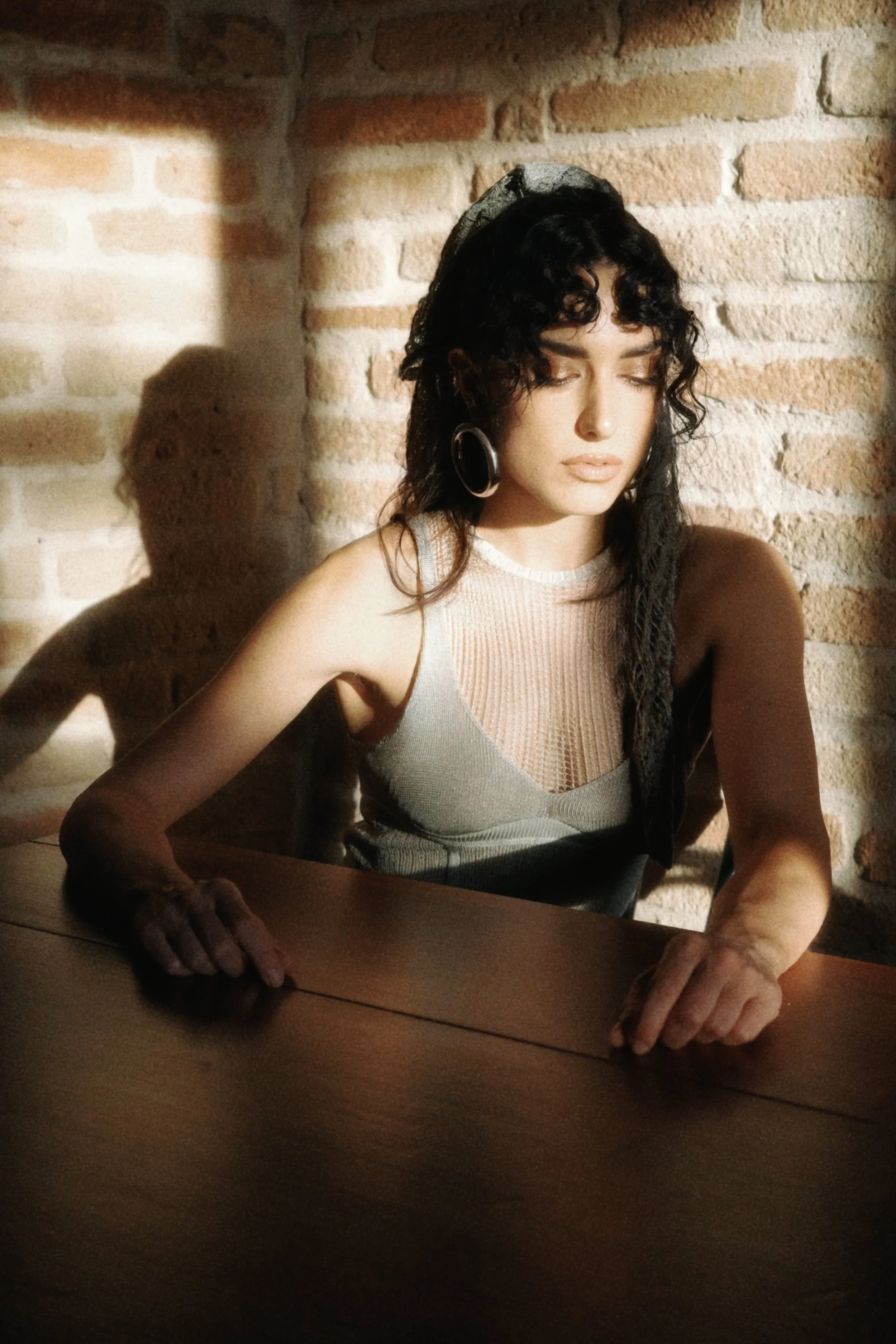
IN CONVERSATION WITH LA NIÑA
interview by JANA LETONJA
Naples-born artist and singer La Niña has emerged as one of Italy’s most compelling new voices, transforming the traditions and language of her hometown into music that feels visceral, contemporary and distinctly her own. Blending Neapolitan roots with pop, electronic and global influences, her acclaimed album Furèsta earned Italy’s prestigious Tenco Award for Best Album in Dialect and took her across Europe for a run of sold-out shows. Now, following the release of RÀRECHE, her first chapter with Sugar Music, a historic film score at the Venice Film Festival, and collaborations spanning ETRO to Bvlgari, La Niña is bringing her intensely cathartic live presence to the US for the first time while already looking toward what comes next.
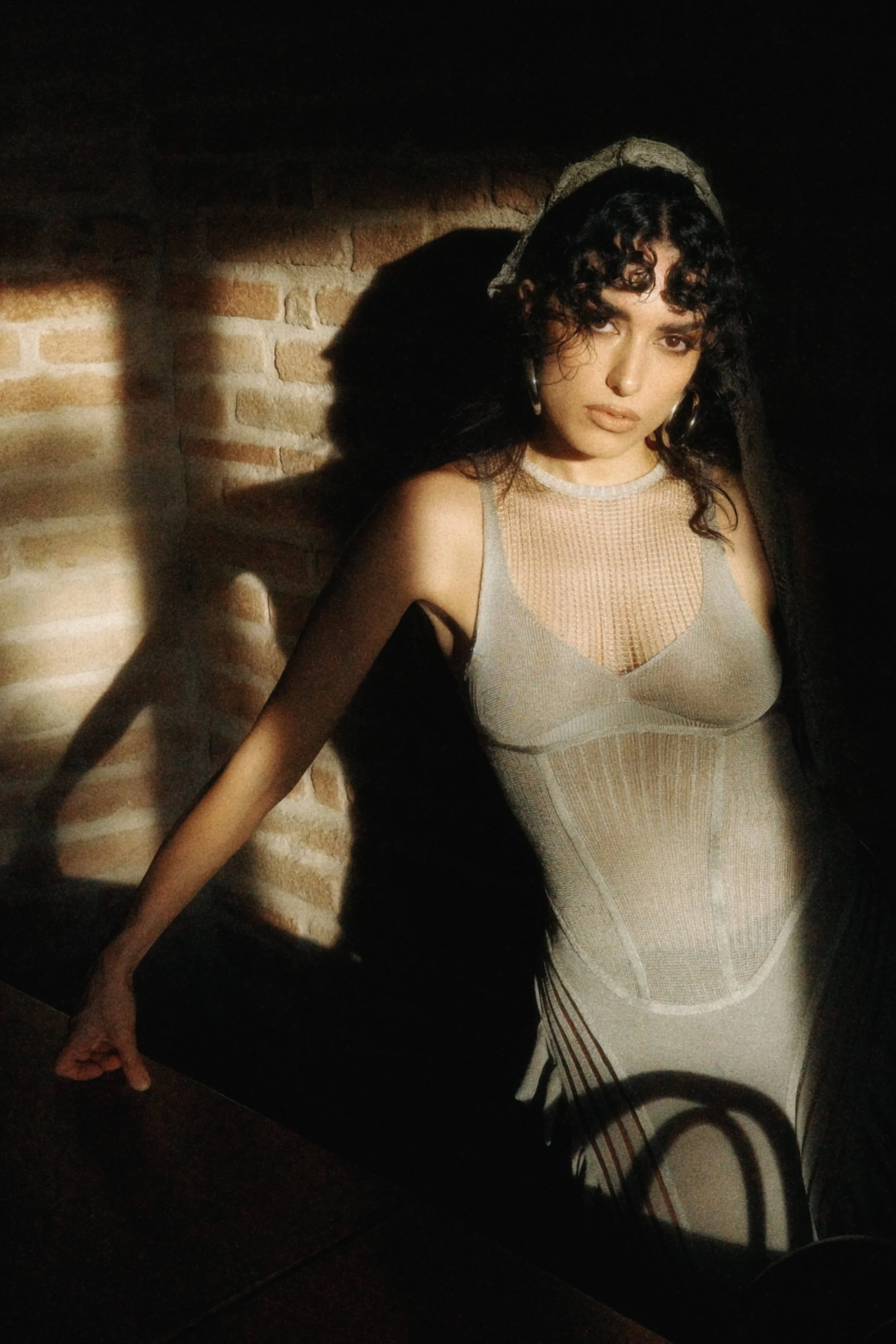
photography by ALFREDO MADDALUNO
You grew up in Naples, a city with such a strong musical and cultural identity. What parts of Naples do you think live most deeply inside your music?
Naples lives in my music less as a collection of references and more as a way of feeling. It taught me that beauty and threat can exist in the same place, sometimes in the same moment. There is chaos, tenderness, violence, humor, ritual, desire, death and celebration constantly touching each other. I think that tension is deeply present in what I make. Naples gave me a particular rhythm, but also a way of listening to the world, always from very close, with the body involved.
Your work draws on Neapolitan tradition without ever feeling nostalgic. How do you preserve that connection to the past while making something that belongs entirely to the present?
I don't really think of tradition as something that needs to be preserved. I think it needs to remain alive. If you put it behind glass, it becomes an object. If you allow it to contaminate the present, it can still breathe.
I study the past because I need certain sounds, instruments, voices and ways of making music to serve my own language. But I am not interested in reproducing them faithfully. I want to put them into friction with everything I am listening to now. Tradition, for me, is not a museum. It is a living organism that has to mutate.
You chose the name La Niña after the weather phenomenon, an unpredictable and powerful natural force. When you first encountered that idea, what made you recognize yourself in it?
I recognized something instinctive in it. La Niña is a natural phenomenon that changes the balance of things without asking permission. It is cyclical, unpredictable, sometimes destructive, and impossible to completely control.
But there is also something very personal about the name. La Niña means the girl, and I liked the idea of remaining connected to that first, almost primordial part of myself, the part that existed before I knew exactly who I was supposed to become.
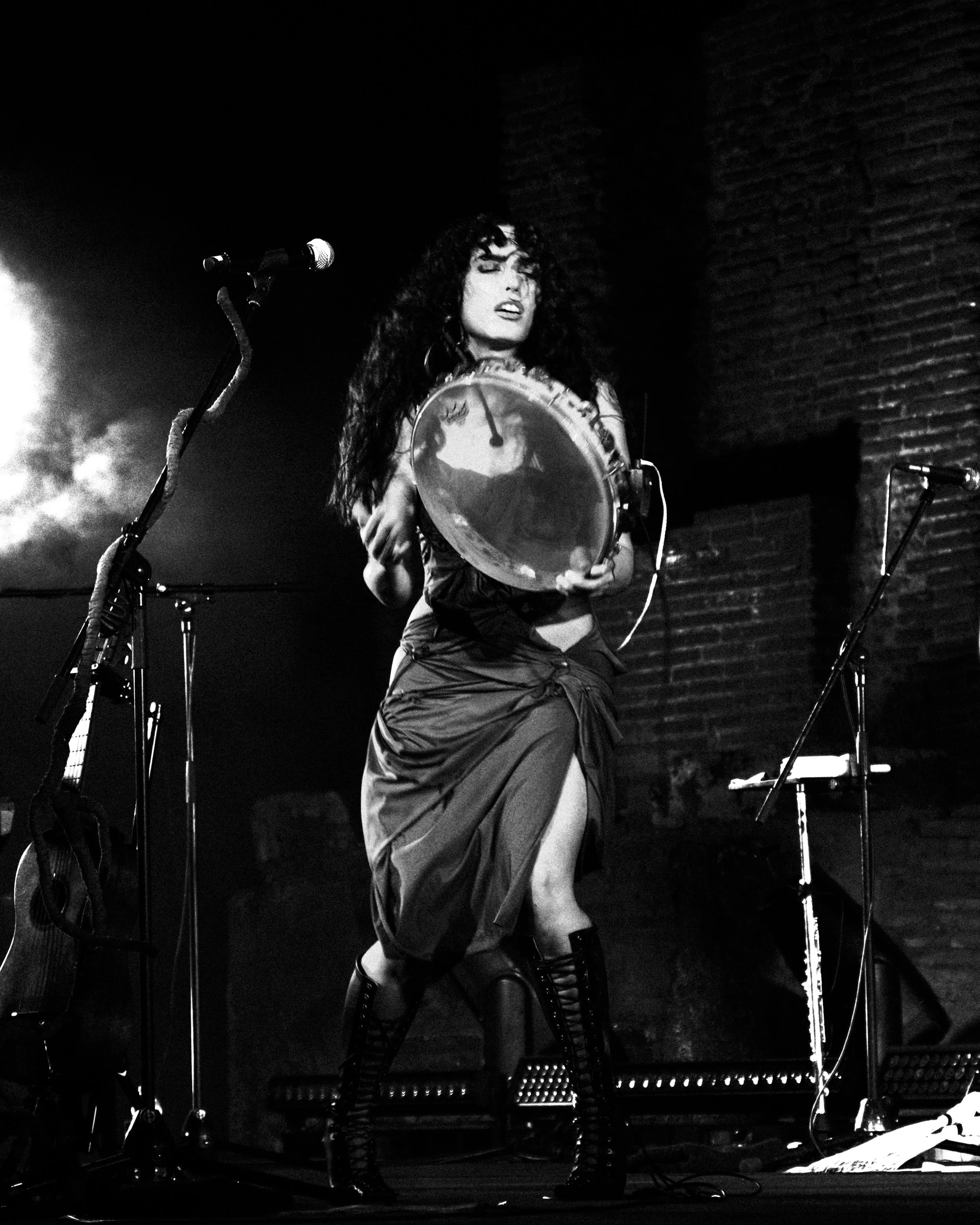
photography by ELEONORA ALBANO
Furèsta translates roughly to “wild” or “untamed.” What did being furesta mean to you when you made the record, and has that meaning changed since?
When I made Furèsta, being furesta meant allowing myself not to know. To stop trying to control every part of the process, and to trust instinct, contradiction and transformation.
I think the meaning has changed slightly now. At that time, being wild meant breaking away from certain structures. Today it feels more like protecting the space where I can remain unpredictable. Not becoming domesticated by my own success, by expectations, or even by the identity I have built around my music.
Furèsta won the Tenco Award for Best Album in Dialect. What did it mean to have work so rooted in your language and identity recognized on that level in Italy?
It was very meaningful because the language itself was at the center of the work. Neapolitan is not an aesthetic choice for me, it is the language in which certain things become possible that would not exist in the same way in another language.
The award felt like recognition not only of the record, but of the possibility of making something deeply local without making it smaller. I have always believed that the more precisely you speak from your own place, the further that voice can travel.
Singing in Neapolitan means that many listeners outside Italy may not understand every word, yet your music has connected with audiences across Europe. What do you think can be communicated through a voice even when language isn't shared?
A voice carries things that don't need translation. Breath, tension, vulnerability, rhythm, anger, tenderness. Before language becomes meaning, it is already a physical experience.
Sometimes I think not understanding every word can even create another kind of listening. You are forced to enter through the sound itself, rather than through its literal meaning. And perhaps that is why music can travel so far from where it was born.
Your live performances have often been described as cathartic. What happens to you emotionally when you step onstage? Is the person performing La Niña different from the person who walks offstage afterward?
There is definitely a threshold. Before going onstage, I can be very aware of myself, my body, my voice, everything that could go wrong. Then something shifts. I stop observing myself and become completely inside the music.
I don't think La Niña is another person, though. She is a part of me that becomes more visible. The person who walks offstage is still me, but often emptied out, almost physically lighter. A concert can feel like losing something and recovering something at the same time.
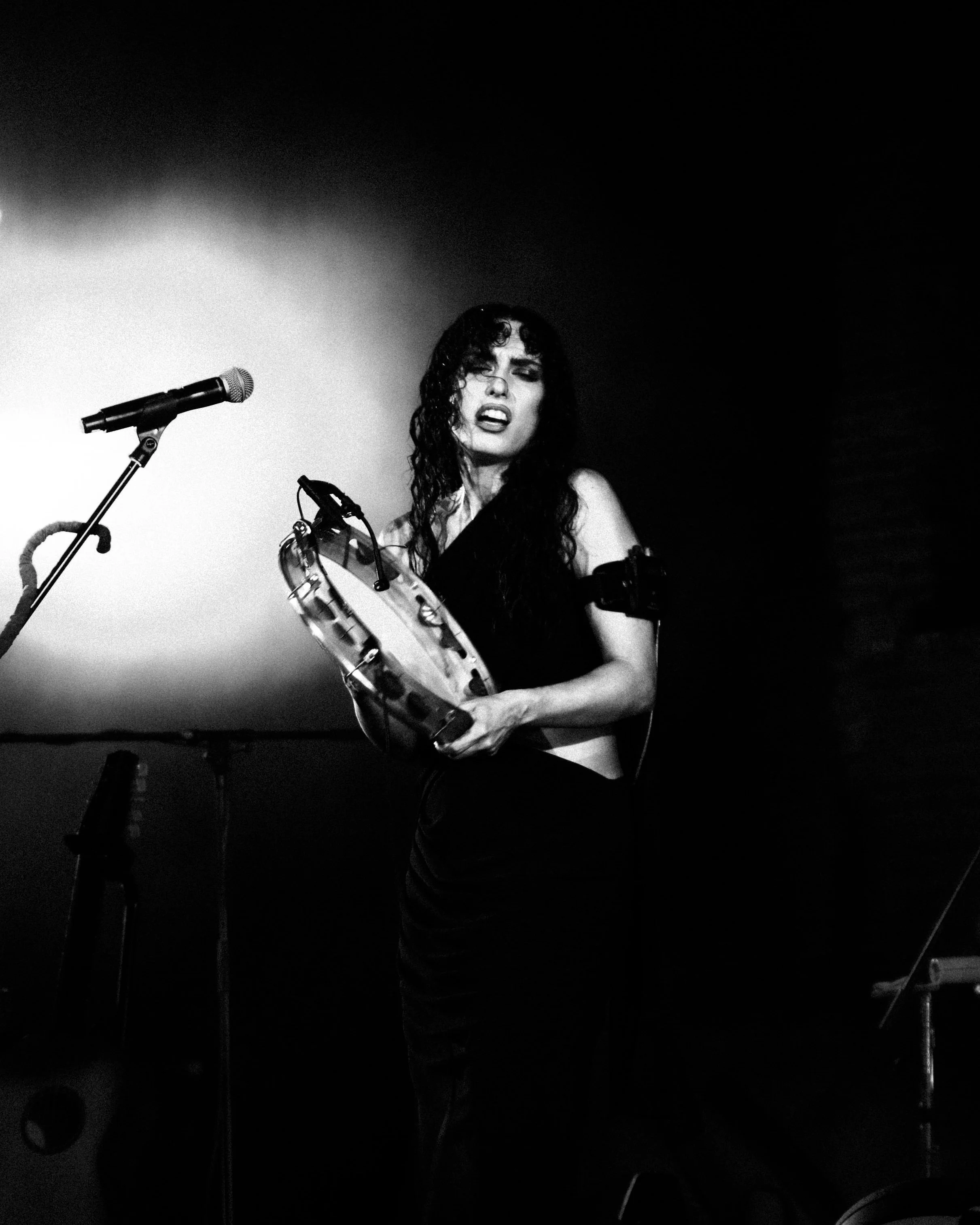
photography by ELEONORA ALBANO
You're now preparing to perform in the United States for the first time. What does arriving in America at this point in your career represent to you?
It feels meaningful that I am arriving there now, after having spent so much time building this music from Naples outward.
I don't feel that I am going to America to prove that the music can travel, it already has. I am going there to encounter a new audience, a different listening context, and to see what happens when this very specific language meets a place so far from where it was born.
There is something beautiful about that distance becoming smaller through a concert.
Ràreche marks the beginning of a new chapter for you. What does that song reveal about where La Niña is heading next?
Ràreche feels like a threshold. It comes from the same world I have been building, but it is less interested in explaining where I come from and more interested in asking where I can go.
I think the next chapter will be less about defining an identity and more about expanding it. I want to keep moving between worlds without having to choose one, the ancient and the contemporary, the Mediterranean and elsewhere, the intimate and the collective.
You recently scored Il fuoco che ti porti dentro, becoming the first Italian woman to score a film in the Venice Film Festival's main competition. How did composing for someone else's images change the way you thought about music and storytelling?
Cinema taught me a different kind of listening. When you write for your own music, the sound can lead the image. When you compose for a film, you have to listen to what the image is not saying.
I became very conscious of silence, of space, of restraint. I figured that sometimes the most powerful musical decision is not to add something, understanding even more clearly that music doesn't have to explain an emotion, it can create a space in which the emotion is allowed to exist in all its complexities and contradictions.
In the case of this specific work by Edoardo de Angelis, I wanted the music to make everyone feel the child that is never shown throughout the movie. Since you only get to see the adult world, I decided to tell the main character's childhood story through music.
Your visual identity feels inseparable from your music. When you're developing a new project, do you see its world, clothes, imagery, movement, atmosphere, as you're hearing the music?
For me, a record is not only a collection of songs, it has a body, like an actual one. Sometimes I know what that body looks like before I fully understand what the music is saying. The visual world helps me enter the music from another direction.
You're entering a period of firsts, your first US performances, a new musical chapter and a growing presence beyond Italy. What feels most exciting to you right now, and what still scares you?
What excites me most is the feeling that I don't know exactly what comes next. I have spent a lot of time building a language, and now I want to see what happens when I take it into places I haven't experienced yet. What scares me is probably the same thing that excites me, the loss of control. But I've learned that some of the most important things in my life have happened precisely in that hybrid space.
You've just wrapped Furèsta European tour after almost two years on the road, with two dates at the Pompeii excavations. What was it like performing at such a historic site?
Performing there was almost impossible to separate from the history of the place. Pompeii is a place where time feels physically present. You are performing in front of something that has survived centuries, and suddenly your own music feels very temporary, which is both humbling and beautiful.
Those concerts felt like a meeting between different layers of time. The music was happening in the present, but the place was carrying voices from thousands of years ago. I think that is one of the reasons it stayed with me so strongly.