
IN CONVERSATION WITH LLOYISO
interview by TIMOTEJ LETONJA
At a point where many artists are still trying to define themselves, Lloyiso is doing something far more difficult: letting go of the version of himself that once made sense. With Never Thought I Could, the South African singer moves beyond expectation and into something more personal, creating a body of work shaped by independence, uncertainty, and a refusal to dilute emotion for the sake of polish. He emerges as an artist less concerned with fitting into the industry, and more invested in building a world that reflects his own.
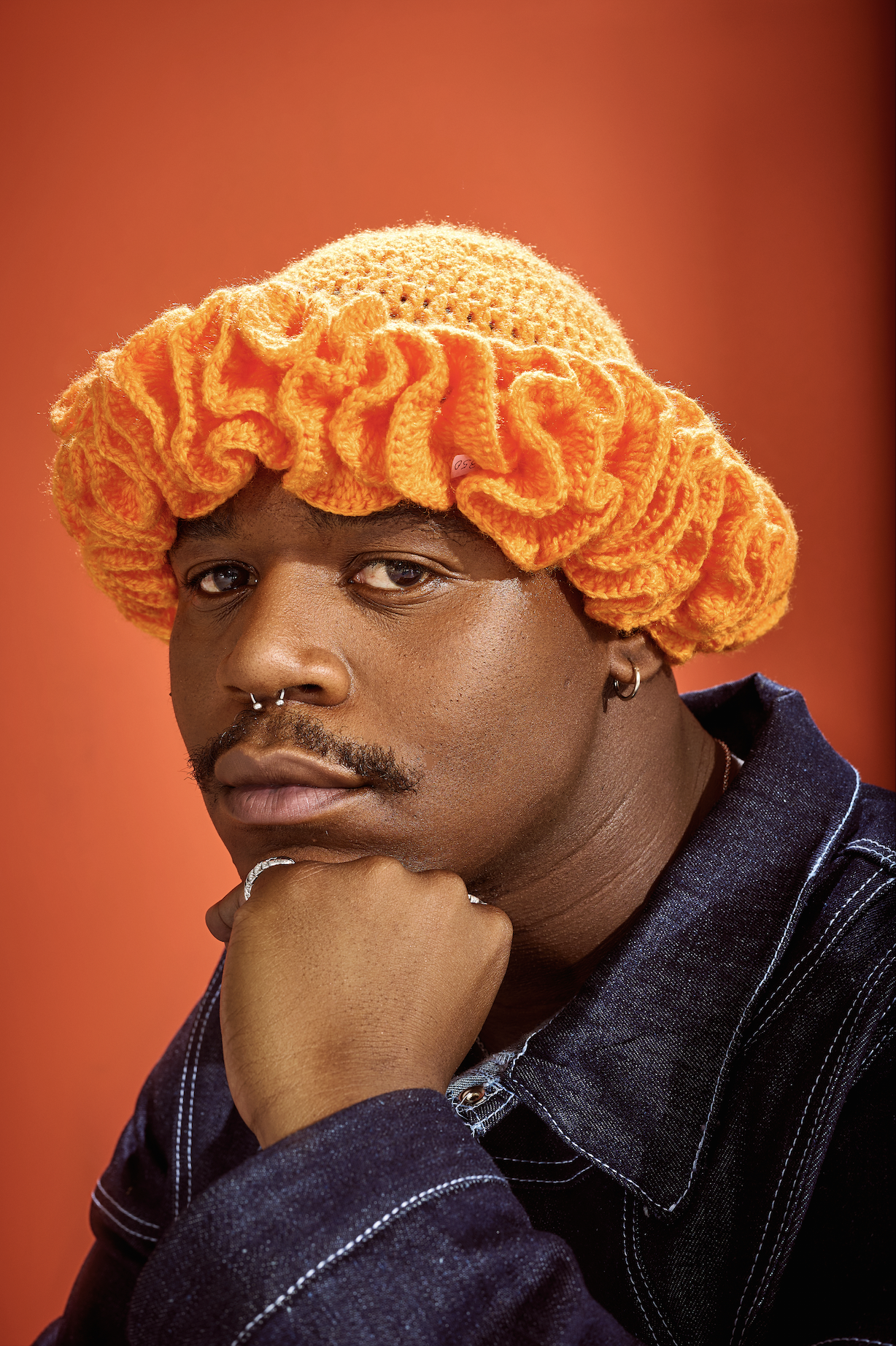
all images courtesy of PATTA
The title Never Thought I Could suggests disbelief turned into reality. What was the moment in your life that made you think: this is actually happening?
The Never Thought I Could moment is releasing this music. I never thought that I would be able to release these songs in the way that I’ve always dreamed of. The fact that this is actually happening still feels surreal to me. After being released from my previous label, I Never Thought I Could release these songs as an independent artist, especially not at this level, with this kind of intention and freedom. There was a moment where everything felt like it was falling apart, and yet somehow, it was aligning. The Empire team came into my life at the exact moment I needed belief again, and they helped me realise that sometimes things fall away so that something more honest can be built. That’s when it hit me, this isn’t just happening, it’s happening for me, and because I didn’t give up on myself.
You first entered public consciousness through Idols South Africa, but this album feels far removed from that chapter. Who is Lloyiso today that didn’t exist back then?
Lloyiso now is way more confident in his uniqueness in the world. Back then, I was still trying to understand where I fit, trying to meet expectations that weren’t fully mine. Now I understand that I was never meant to fit, I was meant to expand. I’ve come into a deeper awareness that my dream challenges the standard of what the music industry is today, and that’s not something to be afraid of. It’s taught me to trust myself more, to trust my instincts, and to trust that I’m not crazy for seeing something bigger for my life. The version of me now is not seeking permission anymore, he’s creating from a place of knowing.
Your journey from Uitenhage to signing with Republic Records in the U.S. is significant. How did that shift your mindset creatively and psychologically?
That journey changed everything for me. It shifted how I see my talent and what the capabilities of my talent actually are. Coming from Uitenhage, the dream can feel distant, almost like something reserved for other people. But stepping into those spaces showed me that the dream is real, and more importantly, it’s reachable. It made me aware of the power of manifestation, of speaking things into existence and believing in them even when there’s no evidence yet. Psychologically, it helped me silence those voices that say “it’s not possible.” Because once you experience it once, once you step into that reality, the rush never really leaves your body. You break a cycle of limitation, and something infinite opens up inside you. It’s like your soul wakes up and says, “there’s more.”
Was there a specific fear you had to confront while making this record?
The fear of being this vulnerable. Of being fully unapologetic in the words, in the production, and not hiding behind perfection or overproduction. There’s a certain nakedness in my vocals on this record that I had to come to terms with, allowing people to hear the cracks, the emotion, the truth without filters. And the biggest fear of all was: Will this music be accepted by the world at large? Will people understand it the way I feel it? But I had to let go of that. I had to choose honesty over approval. Because at the end of the day, this music is my truth, and that has to be enough.
Lost & Found deliberately refuses resolution—it stays in the lost phase. Why was it important not to offer closure?
Closure is something deeply personal. I’ve realised that I am, and always will be, the only person who can truly give that to myself. No one else can step into my internal world and resolve what I feel. That’s where the resolution actually lives, in accepting that truth. Lost & Found sits in that space intentionally, because sometimes we rush to closure just to feel okay, instead of actually sitting with what we’re going through. I wanted to honour the “lost” phase, because there’s honesty there. There’s growth there. And in accepting that no one can fully understand what I feel inside, I find a different kind of peace.
What does growth look like when it’s still incomplete?
Beautiful. Perfect, even in its imperfection. Growth is an unending evolution, and every version of you is exactly what it needs to be for that moment in time. There’s no final destination, just layers, lessons, and becoming. I’ve learned to appreciate the in-between, the unfinished parts, the moments where you’re still figuring it out. Because that’s where the real transformation happens. Growth doesn’t need to be complete to be meaningful, it just needs to be honest.
You move between R&B, Afro-pop, soul, and electronic collaborations. Is genre something you consciously navigate, or does it dissolve when you’re writing?
Genre doesn’t exist to me. When I’m writing, I’m not thinking about where the song fits, I’m thinking about what it feels like. The direction of the song reveals itself in the process, and I let it guide me instead of trying to control it. Music is emotion first, not category. So I allow myself to be fluid, to explore, to not be boxed in by expectations. The moment you start thinking about genre too much, you lose the purity of expression. And for me, that’s the most important thing, to feel free.
Working with Martin Garrix introduced you to a different audience. What did that collaboration teach you about scale and global pop language?
It taught me that simplicity is powerful. Being simple in the words and in the music can transcend more than something overly complex. There’s a universality in emotion that doesn’t need to be over-explained. Working on that level showed me how music can travel, how it can reach people who don’t even speak the same language as you, but still feel exactly what you’re saying. It made me understand that global pop language is really about connection, not perfection. It’s about creating something that people can step into and make their own.
If this album were a visual world, texture, colour, silhouette, what would it look like? It would look like the tallest mountain in the world, completely on fire, during a storm. There’s chaos, intensity, and danger, but also something powerful and alive. The textures would be rough, almost untouchable, but there would be moments of light breaking through. The colors would be deep, burning reds, dark blues, flashes of white lightning. It’s a world that feels overwhelming, but also transformative. Like something is being destroyed and created at the same time.
When people listen to Never Thought I Could, what do you hope they feel in their most private moments?
I hope they feel seen. I hope they feel heard in the parts of themselves they don’t always show the world. And most importantly, I hope they feel healed, even if it’s just a small piece of healing. I want the music to sit with them in their quiet moments, to remind them that they’re not alone in what they’re feeling. That their emotions are valid, that their journey matters. If someone can walk away from this album feeling a little lighter, a little more understood, then I’ve done what I came here to do.