
IN CONVERSATION WITH MADI WEBB
interview by JANA LETONJA
Digital fashion and lifestyle creator Madi Webb is redefining what it means to show up online—with bold maximalist style, unfiltered storytelling, and a deeply engaged community of over 3 million followers. Known for turning Coachella into her own content playground, Madi is returning this year with fully custom-designed looks from emerging and established designers, bringing a fresh, high-fashion edge to festival dressing. But beyond the outfits, Madi’s influence lies in her honesty. From body image and finances to identity and relationships, she’s built a platform that resonates because it refuses to perform perfection. Whether she’s breaking down her Coachella Olympics, talking financial literacy, or reshaping what visibility looks like for modern women, Madi is as intentional as she is impactful.
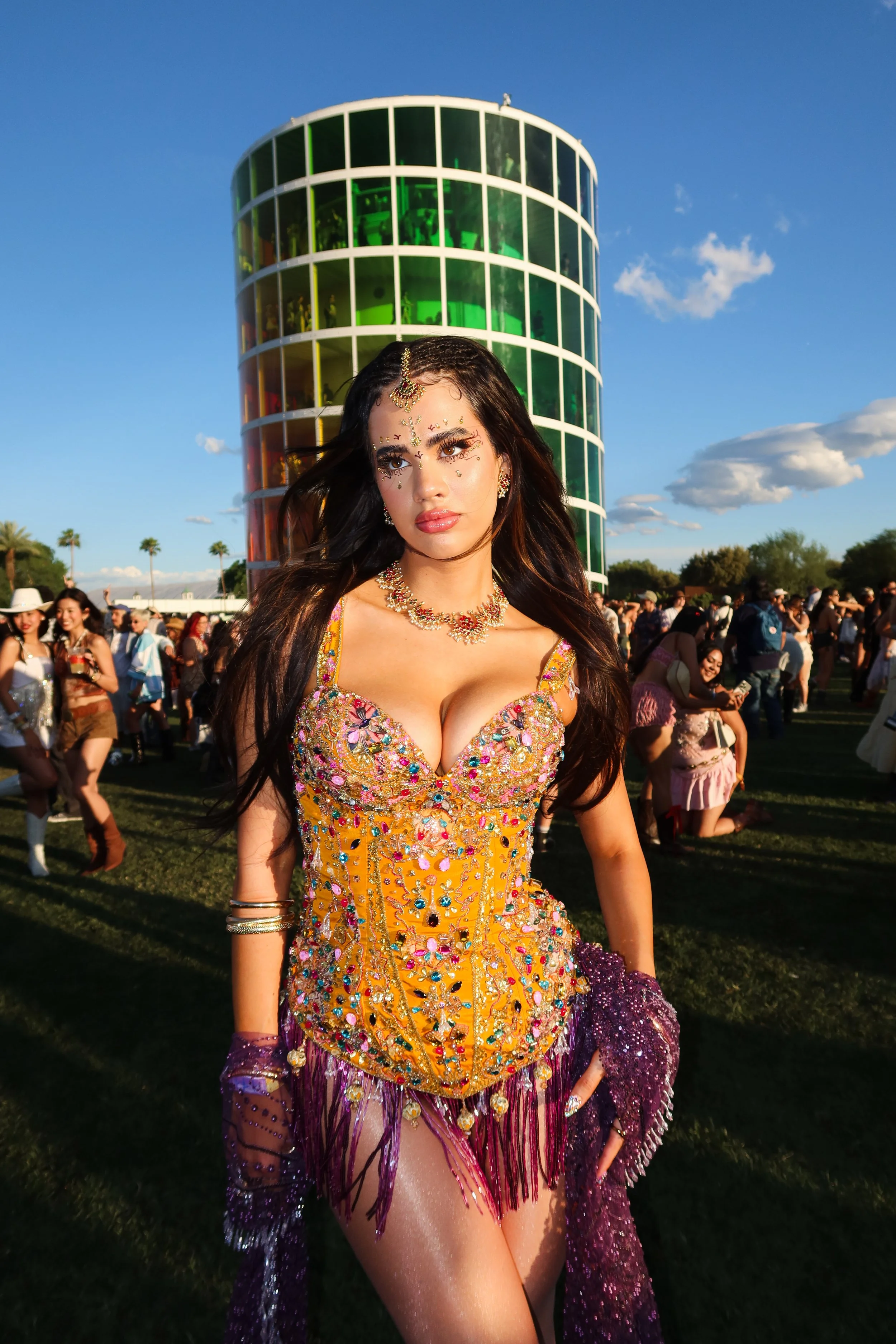
Coachella has become such a defining moment for your content. How do you approach it each year?
Every year, my goal is simple: do better than I did the year before. I treat Coachella like a case study. I take notes, I analyse what worked and what didn’t, and I refine my approach. But beyond the creative, I also approach it as a major business opportunity. It’s a moment to generate revenue through brand partnerships, but just as importantly, it’s a chance to expand my audience, bring new eyes to my platform, and show a deeper, more dynamic side of who I am. There’s already so much built-in attention around the event, so I’m very intentional about leveraging that momentum in a way that grows both my brand and my community.
You’re creating fully custom looks this year. What excites you about collaborating with designers like Tabbe and Sajda?
I love fashion, and I love design, but I’m not someone who can physically create garments myself. What excites me about working with designers is getting to live in that creative ideation space. I get to dream up concepts and then collaborate with incredibly talented people who can bring those ideas to life. Working with smaller or emerging designers is especially meaningful to me because it’s mutually beneficial. I get to create something unique and expressive, and they get more visibility and opportunities to grow their business. Ideally, it’s a win for all of us.
How would you describe your Coachella style evolution?
It really started with wanting to wear a sari to Coachella. I hadn’t personally seen it done at the time, and I was looking for a way to incorporate my heritage into my content in a way that felt intentional. From there, it evolved into using fashion as a form of expression and storytelling. The next major moment was creating a custom piece that said “fuck the patriarchy,” which aligned with the conversations I had just started having online about womanhood and societal conditioning. Since then, my style at Coachella has become more conceptual and more personal. It’s less about trends and more about identity, beliefs, and storytelling through fashion.
What makes a Coachella outfit feel “you”?
For me, it’s about representing different parts of who I am. Each look is intentional and reflects a different side of my identity. One day might highlight my heritage, another might lean into my hyper-feminine, playful side, and another might be more political or edgy. I love using fashion as a way to explore those different dimensions. When an outfit feels like an honest expression of a part of me, that’s when it feels right.
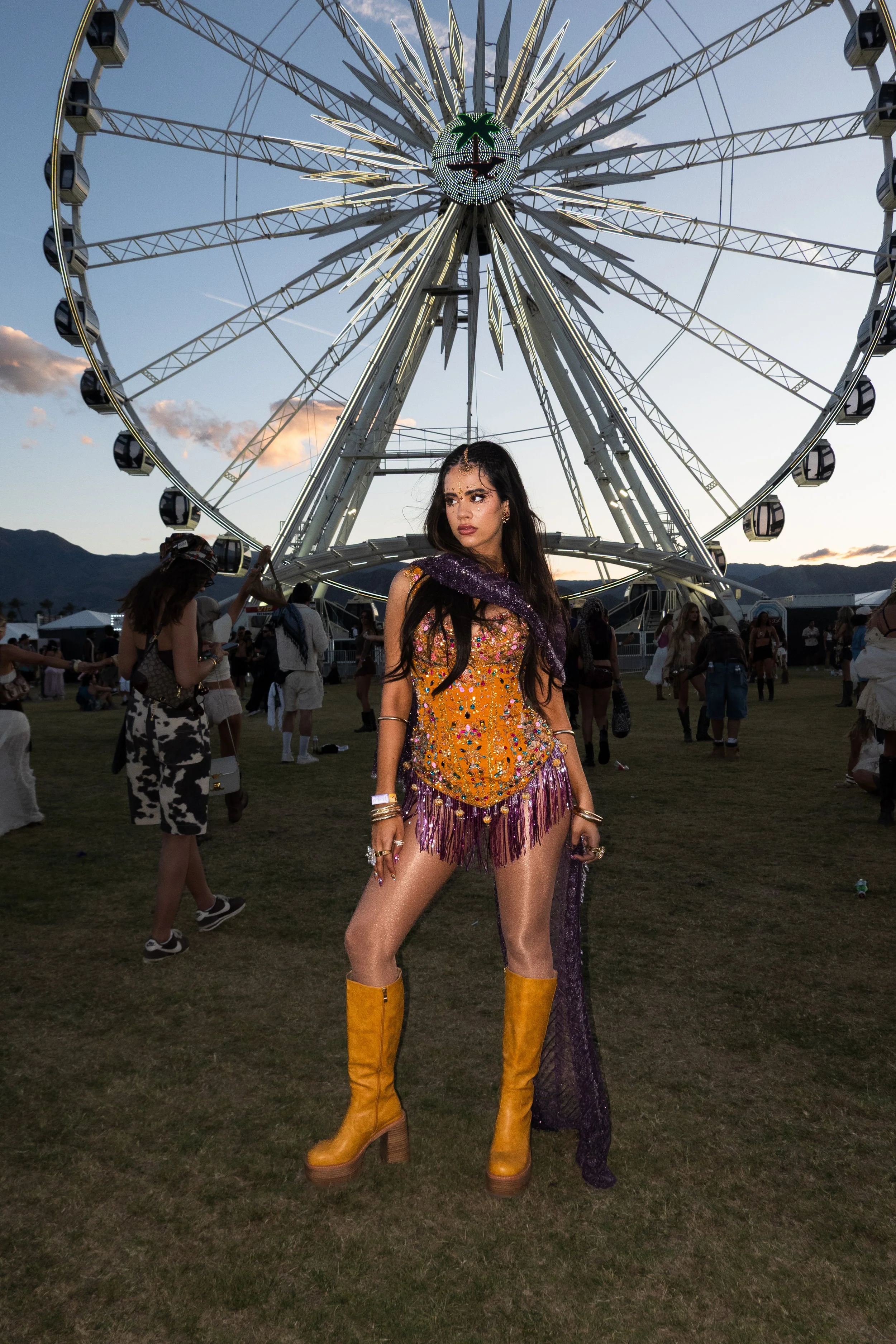
You’ve adopted the term Coachella Olympics. What does that look like behind the scenes?
I definitely didn’t invent that term, and it’s usually used in a negative way to describe competition between influencers. I actually think it’s funny to flip it and not take it so seriously. For me, I’m not competing with anyone else. The only person I’m trying to outperform is myself from the year before. If I feel like I showed up better, executed better, or had more fun than last year, then I’ve won. I also genuinely admire what other creators are doing. I think there’s a lot of creativity and talent in this space, and I don’t see that as competition. I see it as inspiration.
What have you learned about content creation from those high-pressure, high-reward moments?
I’ve learned to give it everything I have, but also not attach my worth to the outcome. Some content will perform incredibly well, and some won’t. That’s part of it. All you can do is put your best into it. I’ve also learned to zoom out and appreciate how unique this career is. Getting to call this work is something I don’t take lightly. And you truly never know who is watching. Even if something doesn’t go viral, the right person could still see it, and it could lead to a huge opportunity. That perspective has helped me stay grounded and consistent.
Your style leans maximalist in a minimalist era. Why is that important to you?
I don’t consciously think about it in terms of trends or eras. I’m just being myself. I’ve always been expressive, bold, and a little extra, even in environments where I was told to tone it down. That’s just who I am. Now I have the resources to fully bring those ideas to life. I’m not trying to fit into what’s popular or expected. I’m just creating from a place that feels authentic to me.
How has your relationship with fashion evolved throughout your time on the internet?
It’s evolved a lot. I’ve always loved fashion, but I haven’t always felt confident in it. For a long time, I tried to follow trends or emulate what I thought was “cool,” and it never fully clicked for me. Over the past year and a half, I’ve really focused on developing my own sense of style. That means wearing what actually feels like me, even if it doesn’t align with what’s trending. That shift is what finally made me feel confident. Now, fashion feels like a form of self-expression instead of something I’m trying to get right.
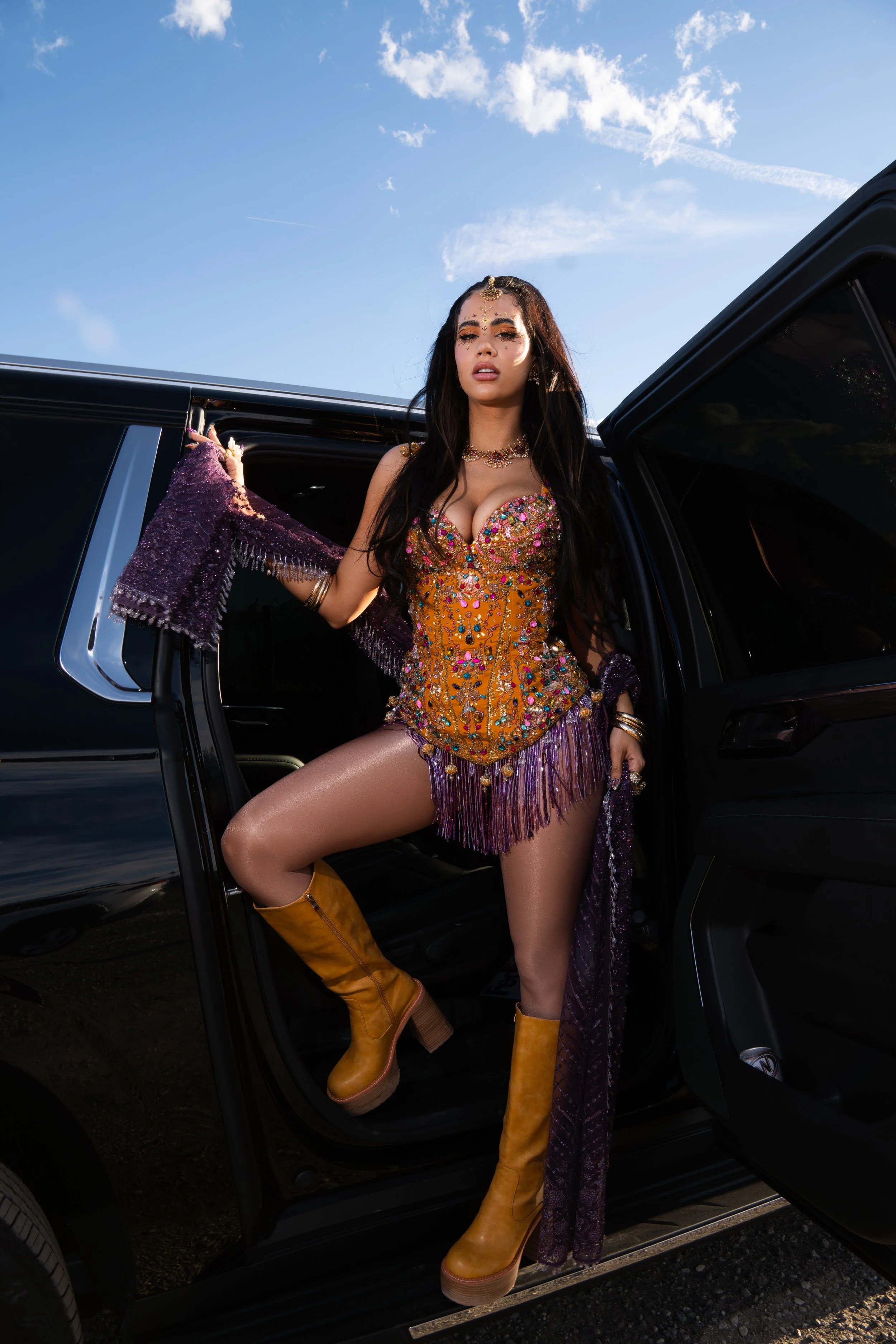
You’re very open about your identity and experiences. How do you decide what to share online?
I have a rule for myself. I don’t speak from a wound, I speak from a scar. If I’m actively going through something and haven’t processed it yet, I keep that private. I think it’s more valuable to share once I have clarity and perspective, so I can actually offer something helpful to others. But I’m very open about my past, my mistakes, and the beliefs I’ve outgrown, because I’m secure in who I am now. I don’t feel shame around that. I see it as part of my growth.
With everything you do—fashion, content, podcasts—what continues to drive and inspire you?
I genuinely feel like I’m just getting started. Social media has never been the end goal for me, it’s been the entry point. It’s what gave me a voice, an audience, and the ability to create opportunities for myself. But my vision is much bigger. I want to build businesses, write books, create music, and explore as much as I can within the arts and entertainment space. What drives me is the idea that I get to shape my own path. And more broadly, I think platforms like this have created unprecedented opportunities, especially for women, to build something independently and on their own terms. That’s incredibly motivating to me.
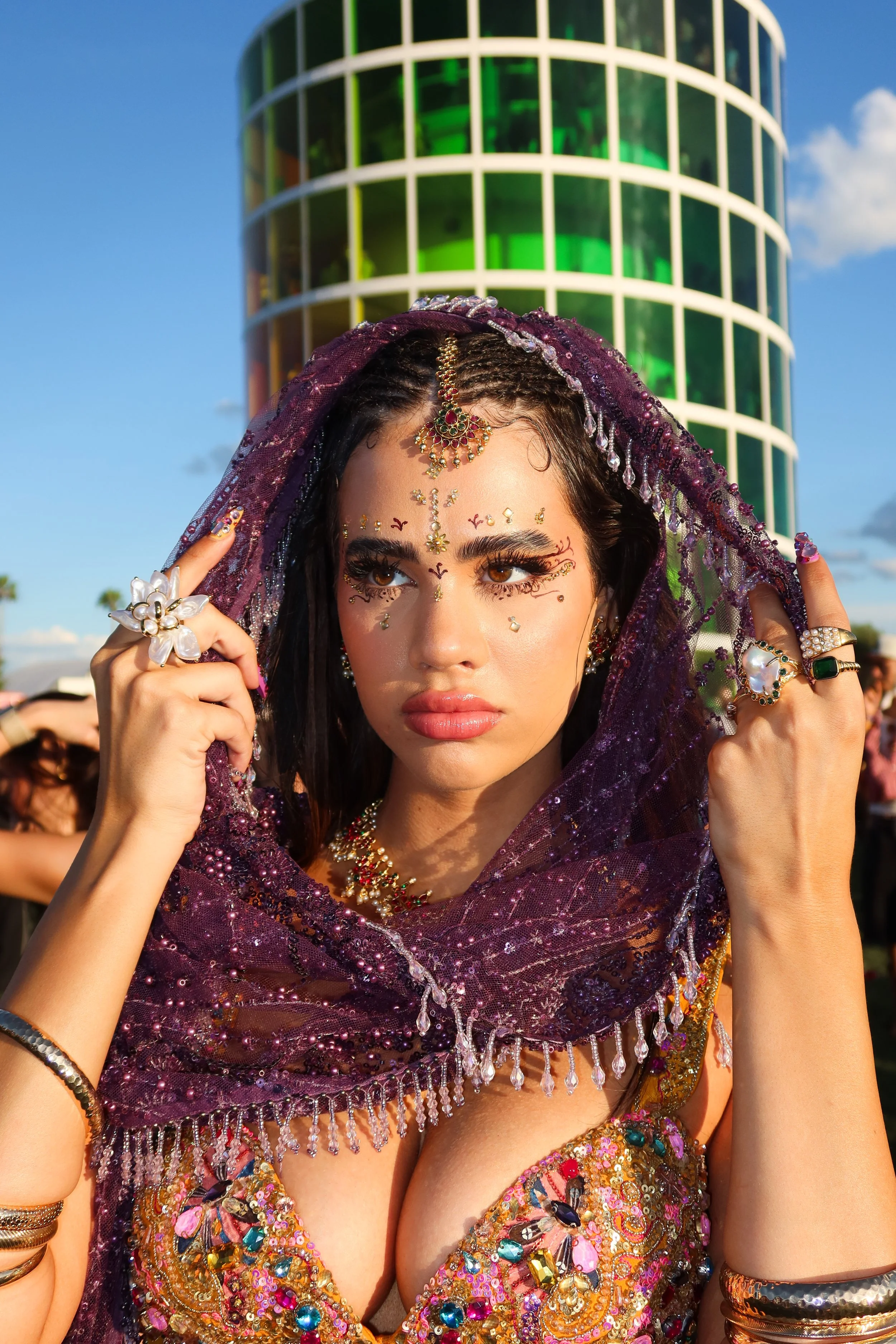
TEAM CREDITS
talent MADI WEBB
photography RENEE DEVILLA
editorial director and interview JANA LETONJA
