
IN CONVERSATION WITH MADISON PANKEY
interview by JANA LETONJA
Actress Madison Pankey’s work spans independent film, theater, and emerging prestige cinema. She stars in the lead role of FAST, the latest feature from acclaimed filmmaker Rob Tregenza, which premieres at New York’s Museum of Modern Art. A Harvard University graduate with a double degree in History of Science and in Theater, Dance & Media, Madison originally planned to become an astronaut before discovering that her true passion was storytelling. Her diverse background—including training at Yale’s Summer Conservatory for Actors, collegiate cheerleading, backpacking on the Appalachian Trail, and experience in puppetry, clowning, and improvisation—brings a distinctive physicality and emotional depth to her performances. With FAST marking an exciting new chapter in her career, Madison is quickly establishing herself as one of independent cinema’s rising talents.
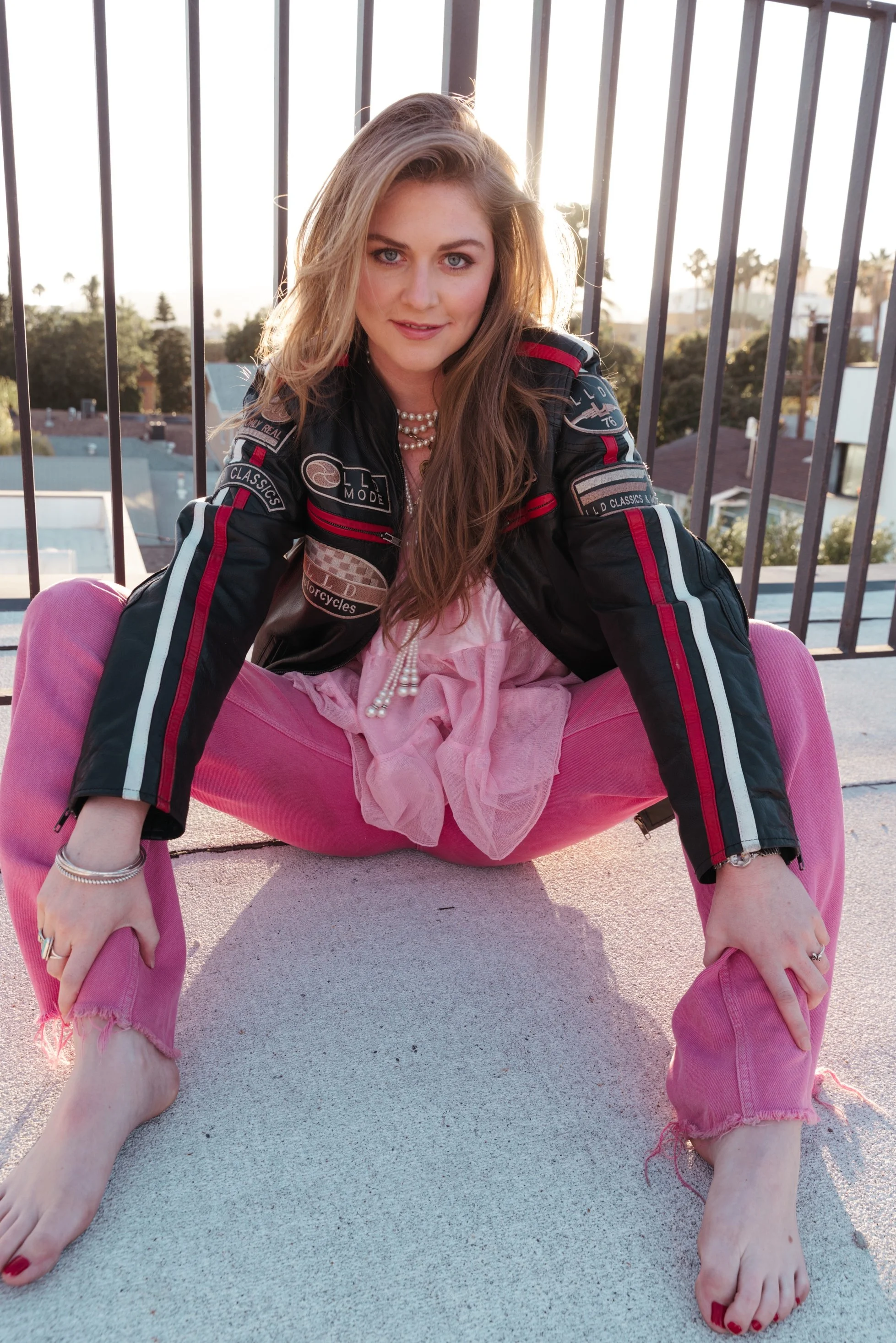
We’ll be seeing you in FAST. What first attracted you to the script and this character?
The moment I read Sterling’s character description, I knew her. It’s as if parts of her were already in me. She’s been down on her luck, yet she’s not afraid to reinvent herself. I feel like that’s been a central theme in my own life. I’ve tried so many different paths, and I’m still perfecting the art of the pivot. Also, getting to drive a race car was a huge selling point.
FAST is premiering at the Museum of Modern Art in New York. What does that milestone mean to you?
It wasn’t even a dream I knew I could have. It’s bigger than anything I imagined. In college, I developed a profound appreciation for the work of performance artists like Marina Abramović, Adrian Piper, and Linda Montano. I even had the chance to study under Tania Bruguera, whose work explores politics and power. I was drawn to these performance artists who literally put their bodies on the line. There’s something beautiful about seeing how far the human body and spirit can be pushed, and that’s something I try to explore in my own acting. To now be part of a film premiering at MoMA, the same institution that has celebrated these artists I so deeply admire, is incredibly humbling.
How would you describe the film to audiences without giving too much away?
Rob Tregenza, our director, describes it as “a slow event about going fast.” I think that’s exactly right. FAST was shot on 35mm film in the mountains and small towns of Virginia, which gives it a beautiful texture and warmth. Underneath the racing, it’s really about relationships, longing, and reinvention. There are layers and allusions woven throughout the film, and ultimately, yes, there is some pretty incredible racing.
Your role required you to learn how to drive a vintage Lotus 51-C. How challenging, and exciting, was that experience?
I first got behind the wheel of the Lotus in a motel parking lot with a group of traveling electrical linemen watching, a totally normal way to learn to drive a racecar. Stewart Bartley, who owns and races the car, walked me through everything beforehand, but nothing prepares you for how it feels. The racecar’s gearbox is much less forgiving than the transmission of a typical road car, and the clutch requires an extraordinary amount of force to get to the floor. I’d get a great leg work out every day I was behind the wheel. Because the Lotus is an open wheel car, we also had to worry about rocks and debris being kicked up at me while driving, so goggles were a must. And to top it all off, the Lotus is a gorgeous, vintage race car that I didn’t want to screw up. If something were to happen, we couldn’t fix it. So, it was a delicate balance of aggression and precision. When I got to drive on an open track for the first time, I didn’t have to act at all. I was genuinely thrilled. Stewart kept reminding me “Eyes up, look where you want it to go.” It was great advice both for racing and for life.
Your performances often portray women navigating high-pressure situations. What draws you to those kinds of stories?
The women I’ve had the privilege to play so far have all been very real to me. They have real lives with real problems, and they are each looking for a better life. I’ve had to reinvent myself more than once, so I’m drawn to women who are doing the same. I love playing women that have both grit and grace, because I aspire to hold both of those myself.
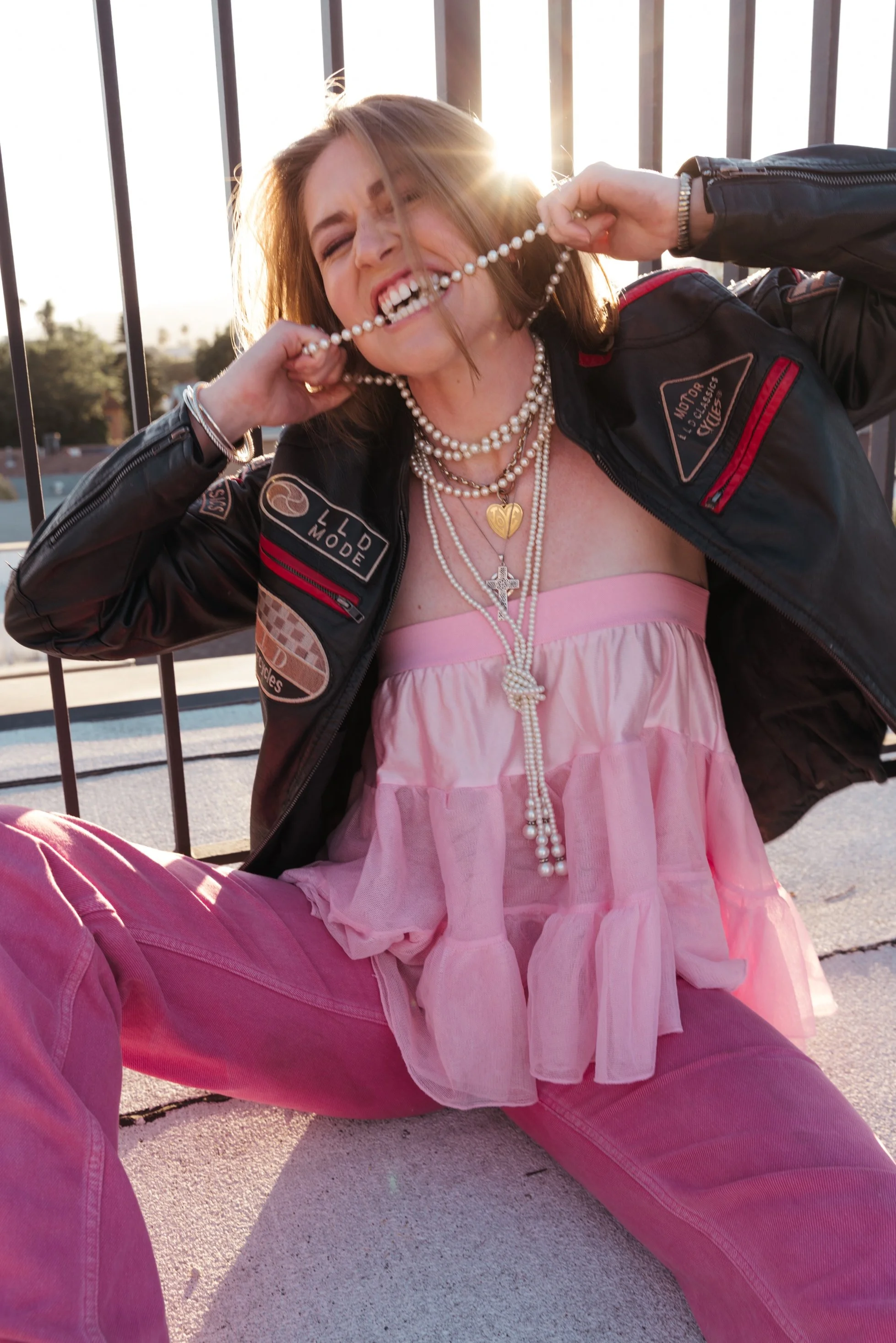
You originally planned to study astrophysics and become an astronaut. At what point did you realize acting was your true calling?
I think a part of me always knew, but it wasn’t until college that I fully discovered it. When I was four years old, I made a deal with my mom. I could be a cheerleader if I promised to be a doctor. I was a kid, I agreed to anything. Later in high school, I became fascinated with space and decided I wanted to be an astronaut. For my 17th birthday, I was given a telescope that I spent much of my senior year exploring the night sky with. So, when I started college, I was on the astrophysics path. It wasn’t until my junior spring of college that I even took an acting class at the recommendation of a professor. Our first assignment was to prepare a monologue. I spent most of that assignment researching what a monologue even was. Preparing that first monologue is really when something just clicked.
The reason I loved space and astrophysics so much is because of the feeling you get when looking up at the night sky, imagining all the people before you and after you are seeing the same stars as you. Space has always made me feel very small, but in a comforting way that makes me feel more human. When preparing that first monologue and analyzing the humanity behind my character, I felt like for the first time I was exploring the human condition. All the same feelings I have when looking at the sky, I experience when acting. I couldn’t get enough of it.
Do you think your scientific background still influences the way you approach storytelling and character work?
Absolutely. My favorite part of lab work was always the write-up and then the presentation afterward. There's this story from high school that sums it up better than anything I could explain abstractly. We did a project for the Georgia State Science Fair, and we just never heard back. Other kids at our school found out they won and moved on to state. We heard nothing. My dad told me to lose gracefully and let it go, so I did. Then months later, completely out of nowhere, one of my teammates gets a text saying there's a booth with our name on it at state. Turns out we'd won regionals, and nobody told us. A paperwork error by the school system. We had a couple hours to get there, the project still had every mistake from the first round baked into it, and we had to just show up and sell it. That's storytelling to me. I don’t think you’ll ever reach a “perfect” version, but you can find the throughline. There’s truth in the imperfections.
You have degrees in both science and theater from Harvard. How have those two worlds complemented one another throughout your career?
I don’t separate the two. Science taught me the how of life, and theater taught me the why. My science background has given me the gift of investigation that I use when approaching a story. My theater and science courses also informed each other. I loved bringing both disciplines into the same conversation, using James Baldwin’s The Creative Process to explore the role of science in uncovering society’s flaws, examining Adrian Piper’s The Mythic Being alongside the evolution of midwifery into gynecology and the ways we control and define the body. I want to navigate the stories of science, art, and society that influence one another.
You’ve trained in puppetry, clowning, and improvisation. How have those disciplines shaped your work as an actor?
All three require a lot of vulnerability and an openness to failure that I didn’t necessarily have beforehand. Sometimes an idea I had built up in my head would not work once on stage. I had a really great improv teacher, Remo Airaldi, who always wanted us to fail. But, he meant it constructively. Failure is actually quite beautiful because it redirects you and informs your next decision. It gets you one step closer to the thing that will work. There is also a huge emphasis on play and freedom in all three disciplines. I can’t do my job if I’m afraid of looking silly. Fail often and fail graciously.
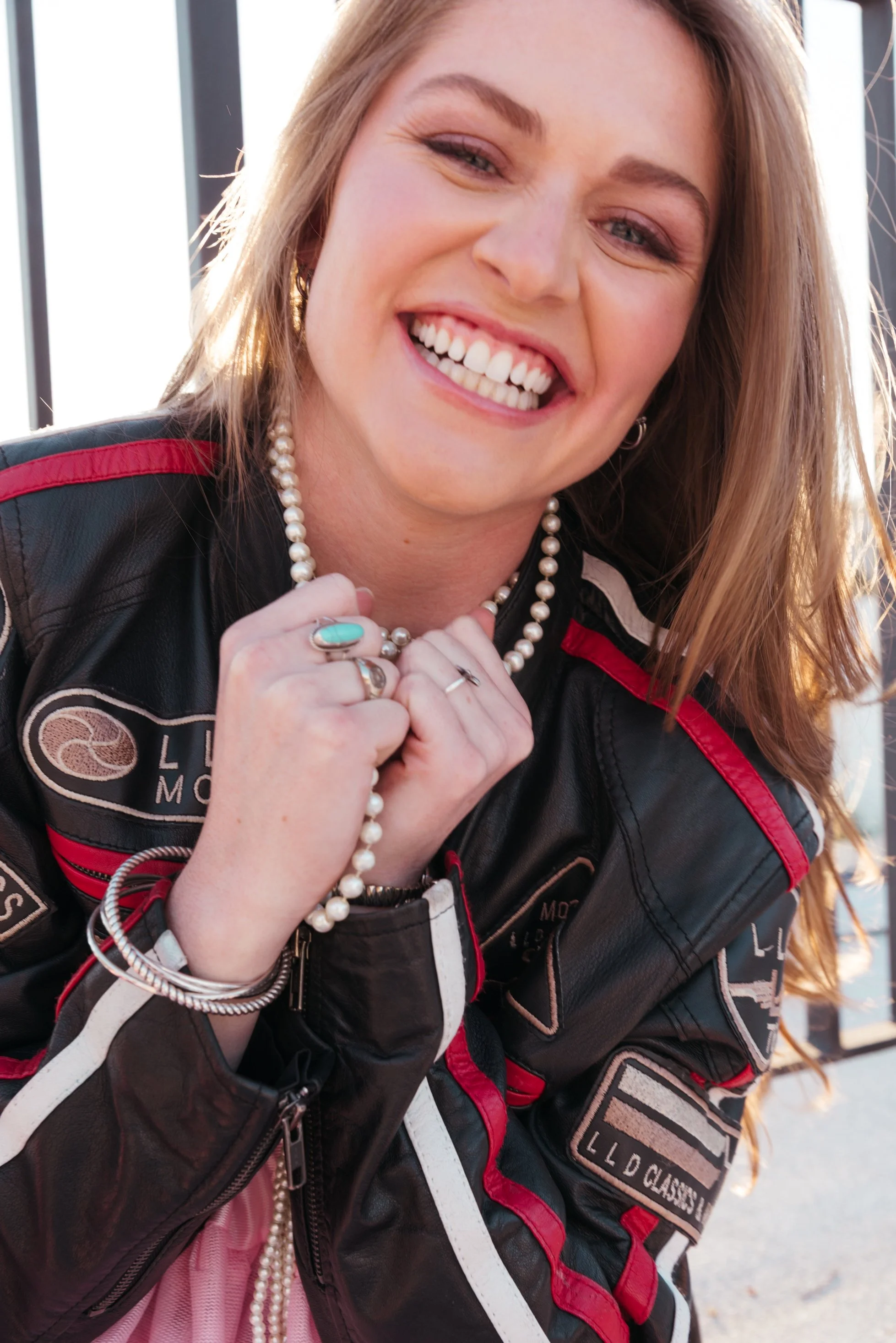
As a former collegiate cheerleader and Appalachian Trail backpacking guide, how important is physicality in your performances?
I spent much of my childhood playing sports, and I spent a lot of hours in the gym and with coaches to get better. Physical prep has always been the way I approach anything. In high school, I tore my ACL and had surgery, and a few days later I was on crutches at a football game cheering because I wanted to be with my team. It’s the same thing with acting. You commit fully. With backpacking too, it’s one foot in front of the other while on the trail, but most of the work happens before you even start walking. It’s not just the physicality of the character, but it’s the preparation beforehand that has really worked for me.
You describe storytelling as “a form of love.” What does that philosophy mean to you?
“I love you” is probably the most used phrase in my vocabulary. I say it every day to my friends, parents, brothers, and myself. Love is a commitment, a connection to something often without reason. I was once told the most important love in your life is not romantic love, but the love you find for yourself. Storytelling gives me the capacity to shine that inner light outward. It’s looking hard at what makes us human and deciding it’s worth being gentle about it.
What inspires you creatively when you’re not working on a film?
Clothes. I have always found solace in the things I put on my body, and I get a lot of my confidence from it. Even as a kid, I loved making my own accessories. During recess, I sold duct-tape bow ties in the era of duct-tape everything. In high school, I used to dress up for standardized tests and finals and I’d always say, “dress well, test well.” Which I still believe to be true. My clothes are an extension of who I am. Fashion lets me explore different versions of myself before I even step foot onto a set. In a way, I get to try on characters every day.
What kinds of stories or characters are you hoping to explore next?
I’d love to continue playing women who surprise people. smart, resilient, and a little unconventional. I’m especially drawn to women that are chasing the impossible. Whether playing a racecar driver, an astronaut, or someone quietly rebuilding their life, I’m interested in women that choose to be brave, just like the women I know in real life. I’d also love to continue working with filmmakers who aren’t afraid to take risks and try something extraordinary.
TEAM CREDITS:
photography KELLY BALCH
hair and makeup AARON BARRY
