
IN CONVERSATION WITH MARCEL WANDERS
interview by JANA LETONJA
Marcel Wanders has spent decades redefining the language of contemporary design with a practice that blends craftsmanship, fantasy, and cultural storytelling. From the iconic Knotted Chair to collaborations with brands such as Alessi, Baccarat, Flos, Louis Vuitton, and Moooi, which he co-founded in 2001, the Dutch designer has built one of the most recognizable and influential creative legacies in the world. Working across product design, interiors, hospitality, and art direction, Wanders has consistently challenged minimalism with a more emotional, theatrical, and human-centered vision. With a career spanning major museum retrospectives, global hotel and residential projects, and a long list of industry honors, he remains a singular voice in design — one driven by imagination, beauty, and the belief that objects should tell stories.
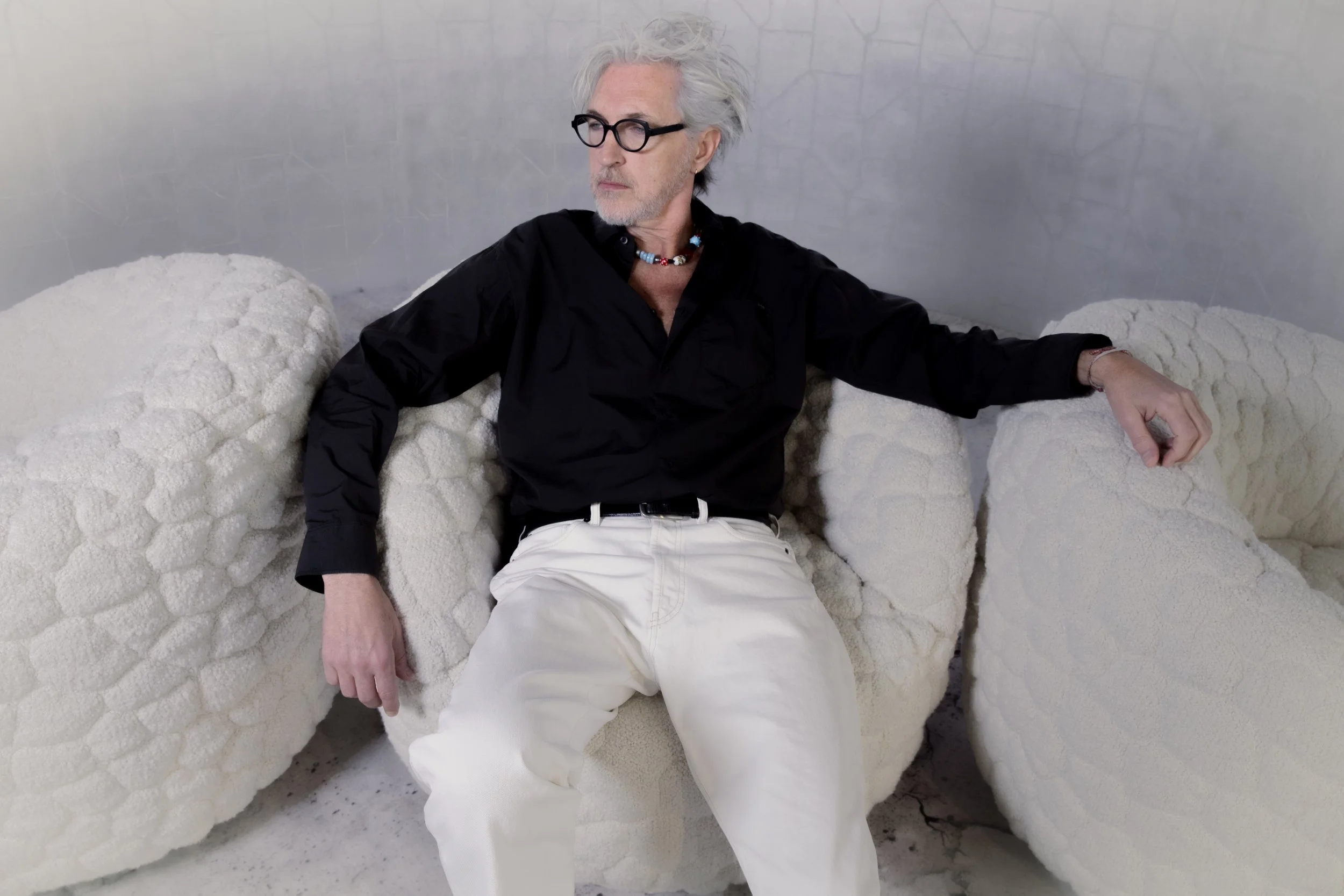
Right from the genesis of his career, Marcel Wanders has rejected the cold, sterile perfection of industrial modernism to pursue a deeply rooted humanistic fundamental. Operating consciously as an "anti-modern" designer, he refuses to let his work be dictated by mere technical opportunities or restricted by a singular moment in time. Instead of chasing a detached concept of "timelessness," Wanders focuses on a deep "interest in looking backwards and forwards," creating an inclusive design that speaks to both the emotional and rational layers of people.
"From the very early days, I have always appreciated the idea of imperfection," he reflects, defining his work as "not perfectly dead, but imperfectly alive." Rejecting the idea that design should be an elitist language, Wanders emphasizes that his practice aims for universal connection, "the language that I'm speaking is my work and it's not meant for a few, it's meant for all." The secret lies in moving past the pure materiality of the tool to focus on its psychological and sensory resonance.
"We design a chair or a hammer, but that hammer or that chair will never reach your brain—and that's a good thing, you don't want the hammer in your skull." What truly matters is the immaterial experience generated, merging the strikingly visual with the deeply emotional to spark a collective dialogue.
"What we know of it, what we hear of it, what we see of it, what we feel of it, that is what we are really making. We are making the communication, we are making the conversation." Ultimately, his enduring creative philosophy is driven by a simple four-part mandate, to always create "something to say, something to see, something to feel, something to know."
The creation of the famous Knotted Chair in 1996, crafted by intertwining carbon and aramid fibers through macramé, was a deliberate statement of intent. Marcel Wanders knew from the very beginning that this piece would shake the foundations of industrial design, challenging the flat, two-dimensional way companies utilized lightweight materials at the time.
"Let’s say I knew," he admits, recalling the incredible momentum generated in Milan. The chair became the physical manifesto of his anti-modern philosophy, a piece born to spark an unmediated dialogue with the audience, "I’m making work to be in conversation with the world, and the work has to prove that I'm right. That's basically what my work has to do—I'm just talking, and then the work has to prove that I'm not bullshit." Despite its legendary status, Wanders embraces its intentionally raw and naive nature "in its imperfection, it's like no other—it's really a bit of a clumsy piece." Today, he looks back at that milestone wit affection and a touch of irony, comparing it to an unforgettable hit.
"For me, the Nutella is not so special as for other people, but for a lot of people the Nutella is the first sign of a change."
To Marcel Wanders, dogmatic minimalism is a form of creative and emotional stinginess. He fiercely deconstructs the "less is more" ethos, arguing that design should naturally embrace generosity, fantasy, and love.
"Why would I give less if I can give more? Why would I be stingy? I’m Dutch, but I’m not stingy. I’m generous, and I want a generous type of design." With his signature wit, he targets the lazy predictability of modern corporate architecture, where studios gather to uninspiringly decide to paint a new project entirely in white, "Yeah, I mean, fantasy. When was the last time you read that word in the context of design?" For Wanders, humanity's greatest beauty lies precisely in our wonderfully poetic irrationality—manifested in our habits of dancing or bringing a dead tree into our homes in December. "We are absolutely silly animals, and that’s beautiful—that’s the most beautiful part of us. It’s not that we’re so smart." Ultimately, he believes our deepest connections are reserved for things that transcend utility, defining the true essence of design as an emotional act, "Things you don't care about need to be functional, and the things you care about most are not functional. Everything that design is about functionality, it is not art—it is about love."
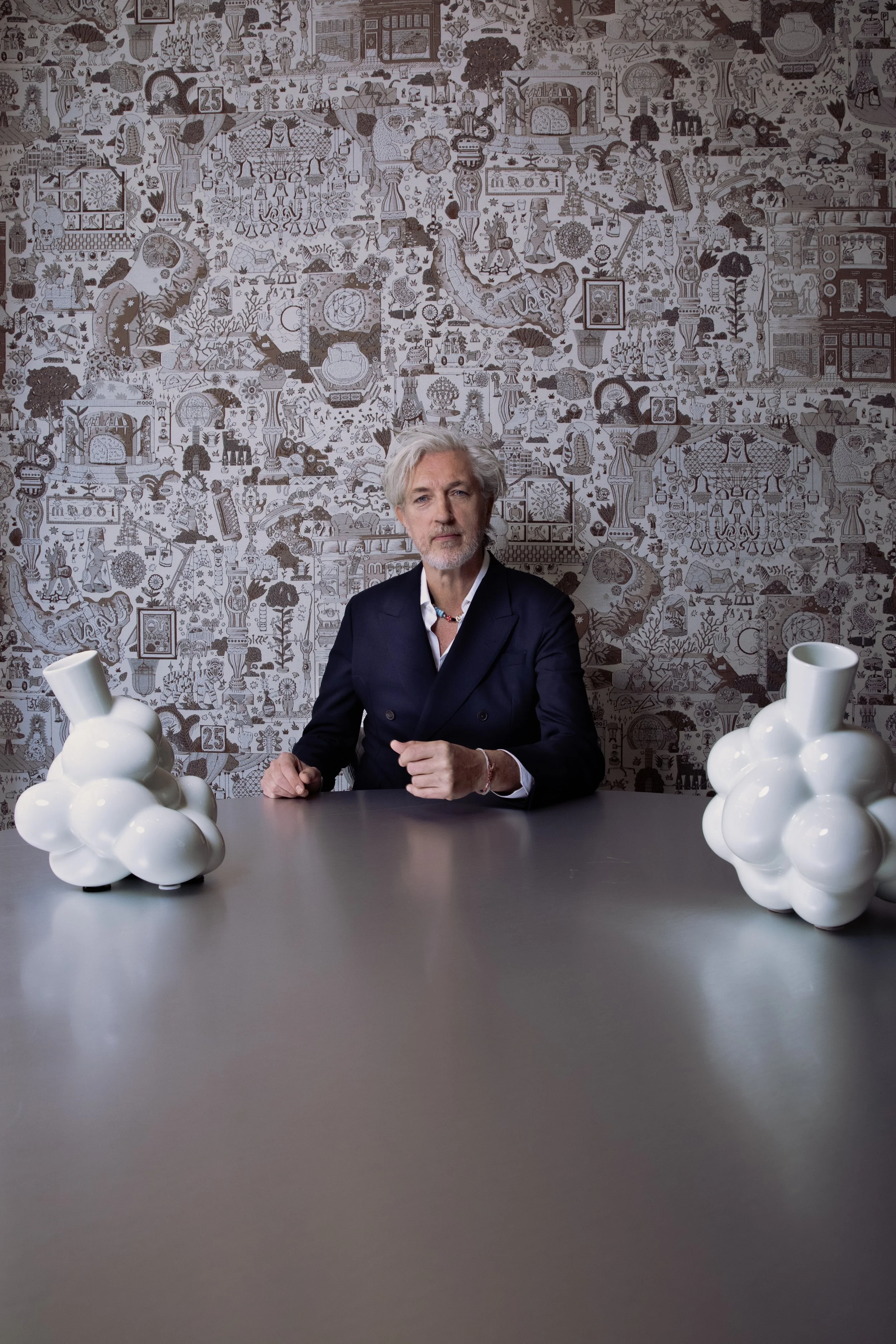
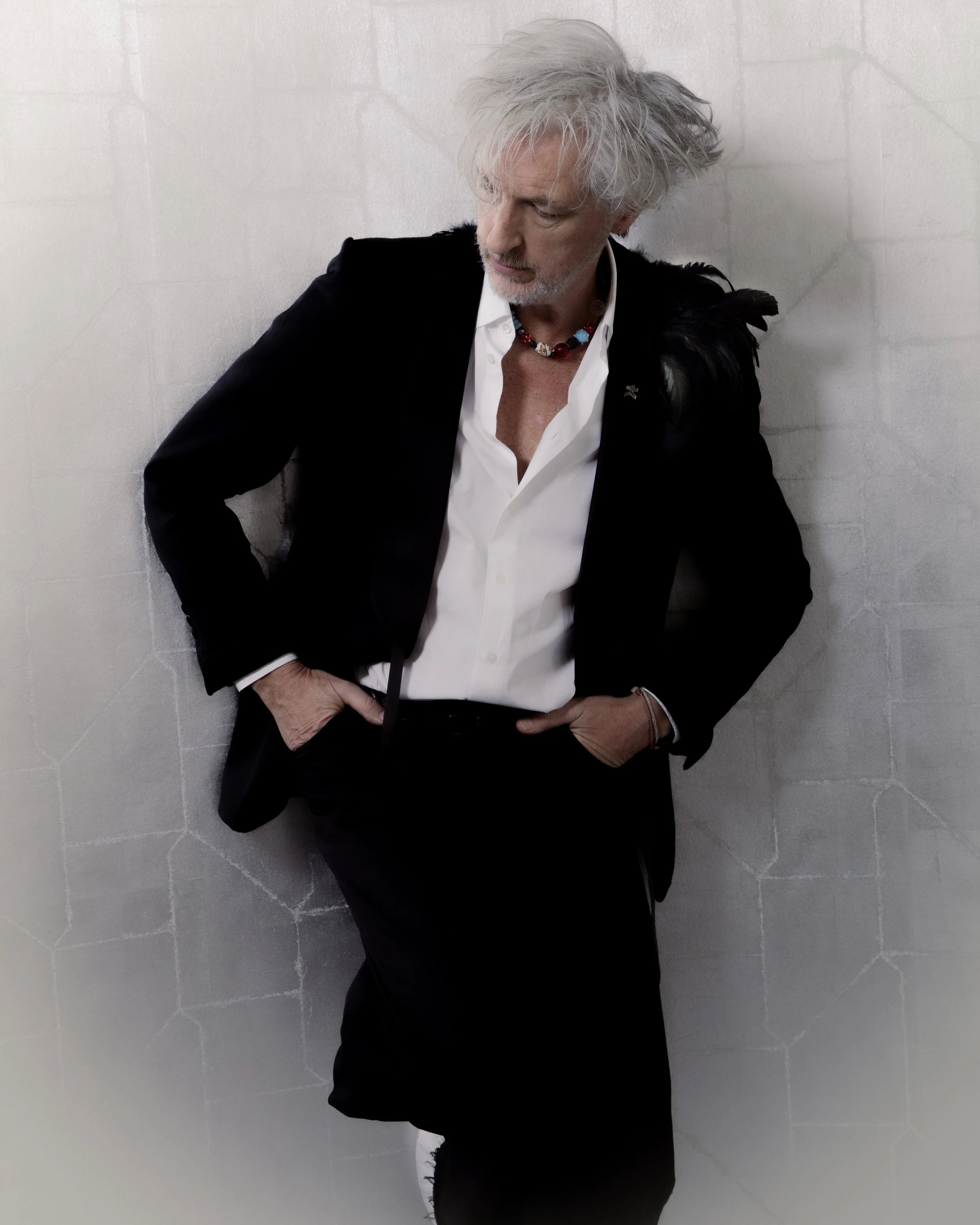
full look PAUL SMITH
Marcel Wanders categorically rejects any attempt at labeling or compartmentalization, viewing his creative practice as an omnivorous journey. "People can try to put me in a small box, but that doesn't mean I'm gonna go in there. I just don't fit in that box, I'm too big." Among all creative layers, psychology remains the most crucial. To design without deeply loving or understanding the human soul is entirely meaningless to him. "If you don't have an understanding of the psyche of people, what do you wanna do for them? If you don't know who they are, or you have no love for them, why even try?"
This profound need for human connection traces back to his childhood, spent creating little sculptures from broken workshop scraps for his visiting aunts. "I think I got hooked to the idea that I could make things and be loved and seen." This childhood instinct blossomed into a fundamental philosophy, a brilliantly designed object must function exactly like a perfect gift. A true gift acts as a bridge of profound empathy between two souls, celebrating who they are simultaneously. "A good gift is the celebration of a relationship. You are seen, and I show who I am." Without this foundational empathy and love for the audience, the entire process loses its worth. "If you don't see your audience, if you don't try to understand them, if you don't love them—why bother? If I don't like them, I don't work for them. That's the point."
To Marcel Wanders, narration never develops along a single, linear track, but configures itself as a rich, multidimensional matrix. An object truly acquires meaning when it is able to communicate on multiple layers simultaneously. "There’s a visual story going on, there’s another story going on, there’s a rational story going on, there’s an emotional story going on. The fact that I’m telling multiple stories in different ways allows people to connect to it."
Wanders demystifies the idea that value resides in the intrinsic, untouchable purity of a narrative, shifting the focus entirely to the receiver’s experience. "The value is never in the story. The value is in the appreciation of the story and in the meaning." The designer recognizes that different audiences interact with objects following entirely distinct sensory and psychological logics. Highly visual people, for instance, naturally project their own identity into the aesthetics of a piece, "They love the color, they love the material expression because basically, that's what visual people do. They put it next to them and then they say, 'Do I look good?'" To illustrate this variety of behaviors, Wanders resorts to the effective analogy of buying a car—where some instinctively slam the door to test its solidity, others delicately stroke the steering wheel, and a few just need to read the technical sheet. The designer's ultimate task is to satisfy each of these distinct needs without taking any shortcuts. "The storytelling for all of them has to be different, and you have to do all of it. You can't be lazy. You can't do one story."
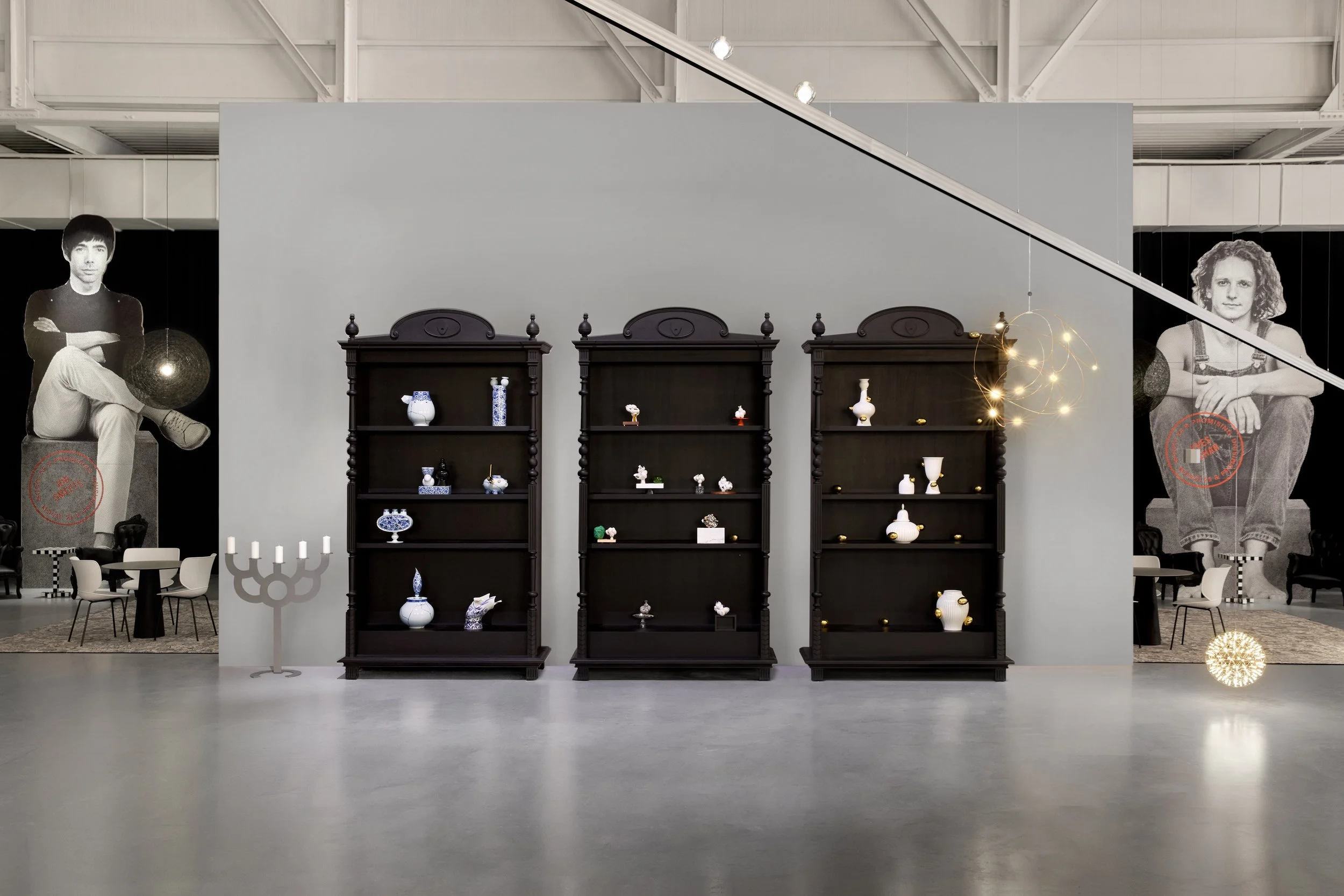
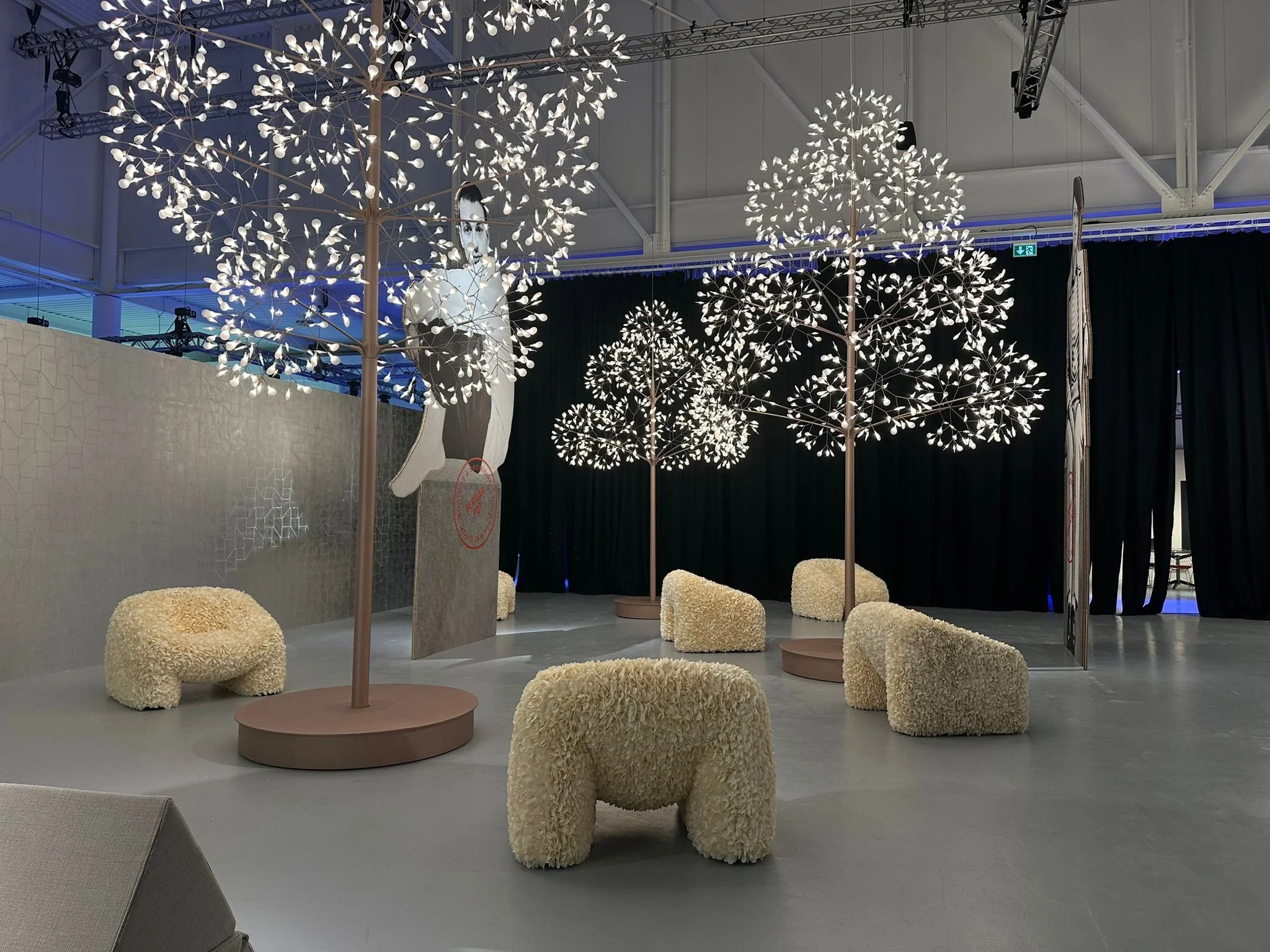
His brand Moooi was born out of a profound sense of institutional frustration and a desire to take direct, uncompromising responsibility for the culture of design. Marcel Wanders founded the brand to bypass the creative caution and deep-seated fears of traditional manufacturers, who were often too scared to invest in radical, avant-garde visions. "I founded Moooi because there's me, and nobody wanted to make my work—they were too scared." However, what began as a personal outlet quickly transformed into a much broader generational mission aimed at scuttling the blockages of the traditional industrial system. "Nobody wants to make the work of a lot, a lot, a lot of young designers. And so Moooi does."
Under his leadership, the brand evolved into a fearless incubator and a safe haven for experimental ideas that the classic industry would have inevitably normalized, toned down, or outright rejected. Wanders proudly claims the historically crucial role the brand has played as an uncompromised launching pad for the great icons of the contemporary scene. "Moooi has always done the works of a lot of young designers that have made their first work with us." Reflecting on the monumental debuts of these extraordinary figures, he concludes, "Whether we talk about Bertjan Pot, Maarten Baas or Nika Zupanc... all of them, they made their first seminal work with Moooi."
According to Marcel Wanders, the creative tension between functional requirements and fantasy should not be experienced as a conflict, but as the search for a perfect geometric alignment. Pure creativity needs self-imposed rules and boundaries so as not to disperse into a vacuum. "If you have no vision, then creativity goes whatever. It's like water." Far from suffocating art, these structural restrictions become the ideal tool to fuel it. The designer admits to enthusiastically welcoming internal contradictions within a project- "I enjoy opposites in one design. I like it—it's not everybody, but I like it and I love." Instead of simplifying the constraints of a brief, Wanders tends to intentionally layer them, pursuing a complex synthesis that can simultaneously satisfy multiple rational and poetic demands. A work is truly finished when it manages to be both the practical answer to a necessity and the fulfillment of a deep desire, reaching the point where it is "fulfilling five dreams, ten dreams." To visualize this delicate balancing process, he resorts to a fascinating astronomical metaphor, "I look at my designs, and I've seen a star—a three-dimensional sphere with points, and all these points are like gravitational concepts. If you can master seeing all these at the same time and creating something that perfectly fits there, you build a star."
To Marcel Wanders, interior architecture demands a profound cognitive paradigm shift, entirely separate from the logic of product design. It alters how human beings fundamentally experiment with physical environments. "You don't look at a thing and walk around it and think around it—you step into it and you think in it." To explain the structural divergence between the two realms, Wanders utilizes a vivid, microscopic metaphor, while a product is like hair that, once washed, must converge into a single, synthetically clean line, interior design thrives on a rich, multi-layered ecosystem of organized chaos.
"With the product design, that [oneness] is important. For interior design, it's chaos—not chaos, but it's like full of life and full of excitement. There’s a lot of ideas going on." This intrinsic vitality is the exact reason he chooses to focus almost entirely on public hospitality, explicitly rejecting private home commissions due to their lack of collective reach: "I’ve hardly did any homes with people because I can't share it with people. I don't like to do it. I want an audience." An immersive, signature space ultimately acts as a visceral force of nature. "Trust me, you can't escape space. If the space is exceptional, you can't escape it—you will feel it, you will feel it.
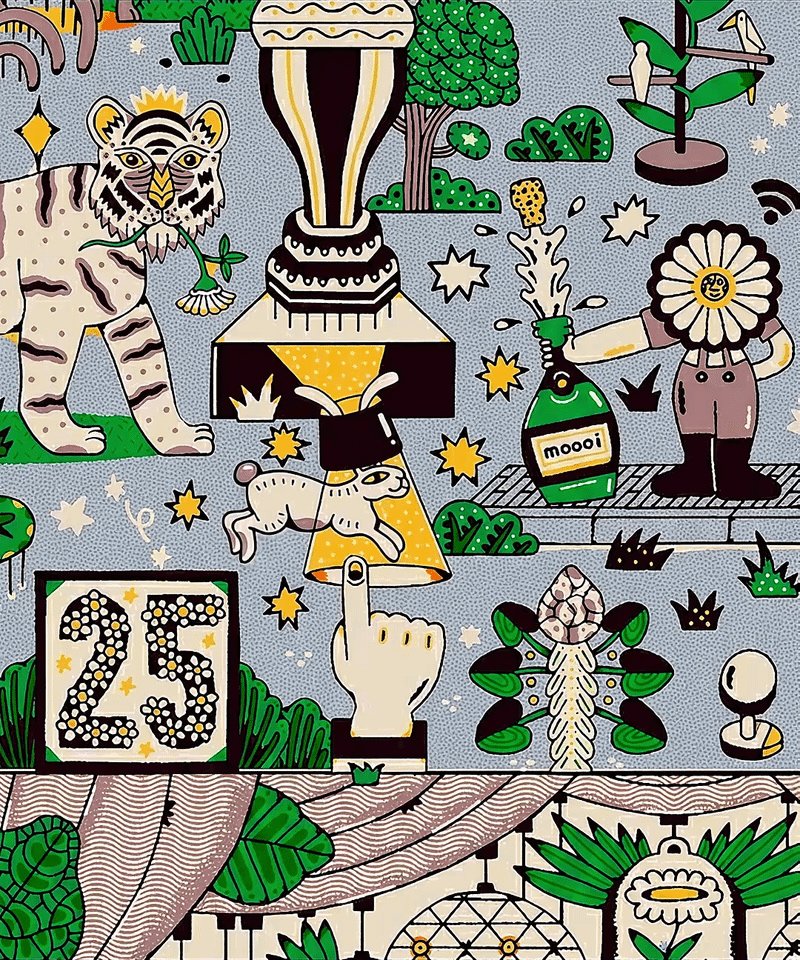
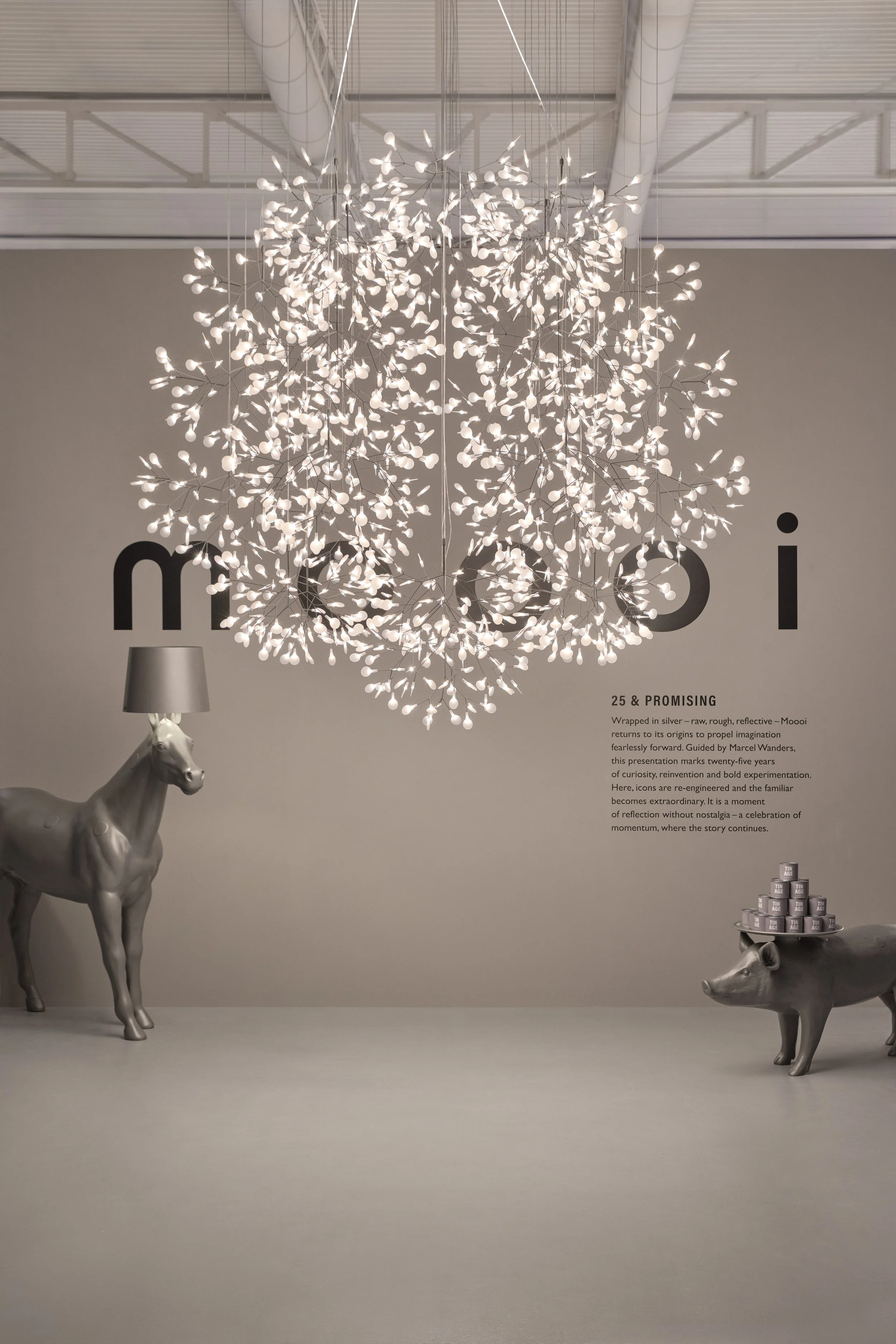
For Marcel Wanders, art direction is not a recent chapter or a novel deviation in his practice, but an enduring cornerstone he has championed for a quarter of a century, fundamentally intertwined with the history of Moooi. In his worldview, different structural scales of design share the exact same intellectual core. "Whether you design a company, a product, or an interior, I think they’re all the same typologies of things. You have an audience, you have a quest, a vision, and a creativity that leads us there." However, shifting your gaze from the blueprint of a single product to managing the overarching identity of a brand demands a unique layer of psychological responsibility. When collaborating with historic global heritage houses, an individual product can afford to be an unexpected outlier or a playful exception to the brand's rule. Conversely, assuming the comprehensive stewardship of a corporate entity leaves no room for fragmented concepts or easy escapes. "If you really design the company, now you can’t escape anymore—now you really have to design that personality." The final goal shifts toward shaping a singular, uncompromised, and monolithic cultural presence. "If you’re designing a company, you decide what the company is and means. The company is one. It’s not one and a half—it’s ONE."
In an industrial landscape dominated by the frenzy of digital visibility and hyper-accelerated timelines, Marcel Wanders claims a conscious, deliberate creative slowness. He entirely refuses to bend his work to the short-term rhythms imposed by online algorithms. "You live in a world where the next digital deadline is two seconds later. Yeah, it's not my world, I'll take my time." This independent attitude stems from a precise historical awareness, linked to the ecological awakening of his early years. "The Club of Rome was in the '70s, I was just born. So I was born with the urgency of understanding that the world was a beautiful place that needed care fundamentally."
From this background emerged a fundamental mathematical triad that guides his every design line, aimed at generating the maximum cultural and emotional value with the least possible material waste. "We want as much, for as long, for the least. That's fundamental to every design that I do. These three are fundamental: everything as much as possible, for as long as possible, for as least as possible." The ultimate goal of design must be the creation of durable goods capable of turning into cross-generational heirlooms.
"Why waste the world if it's not even for value? We have to make sure that the things that we make, we can just enjoy them for a long time, that we don't throw them, but we give them to the next generation." For Wanders, the speed of the creative journey must always match the magnitude of the objective. Short-term goals require fast execution, but systemic impact demands endurance. "If you have the vision from here to the end of the street, you have to be fast. But if you have a vision that leads you to the moon, you're not in a hurry." Swapping frantic sprints for deep persistence, he compares his career to a test of pure endurance, "A big vision doesn't need sprints, it needs a Marathon. And a Marathon you're never in a hurry because you'll die in a Marathon. You just are consistently pushing without ever being in a hurry." This artistic sovereignty leaves him wholly unbothered by the haste of competitors, concluding with a striking irony on the vanity of racing. "If someone else has reached earlier, if you go to the moon, that doesn't make so much of a difference. I mean, the Americans thought so, but it's fine."
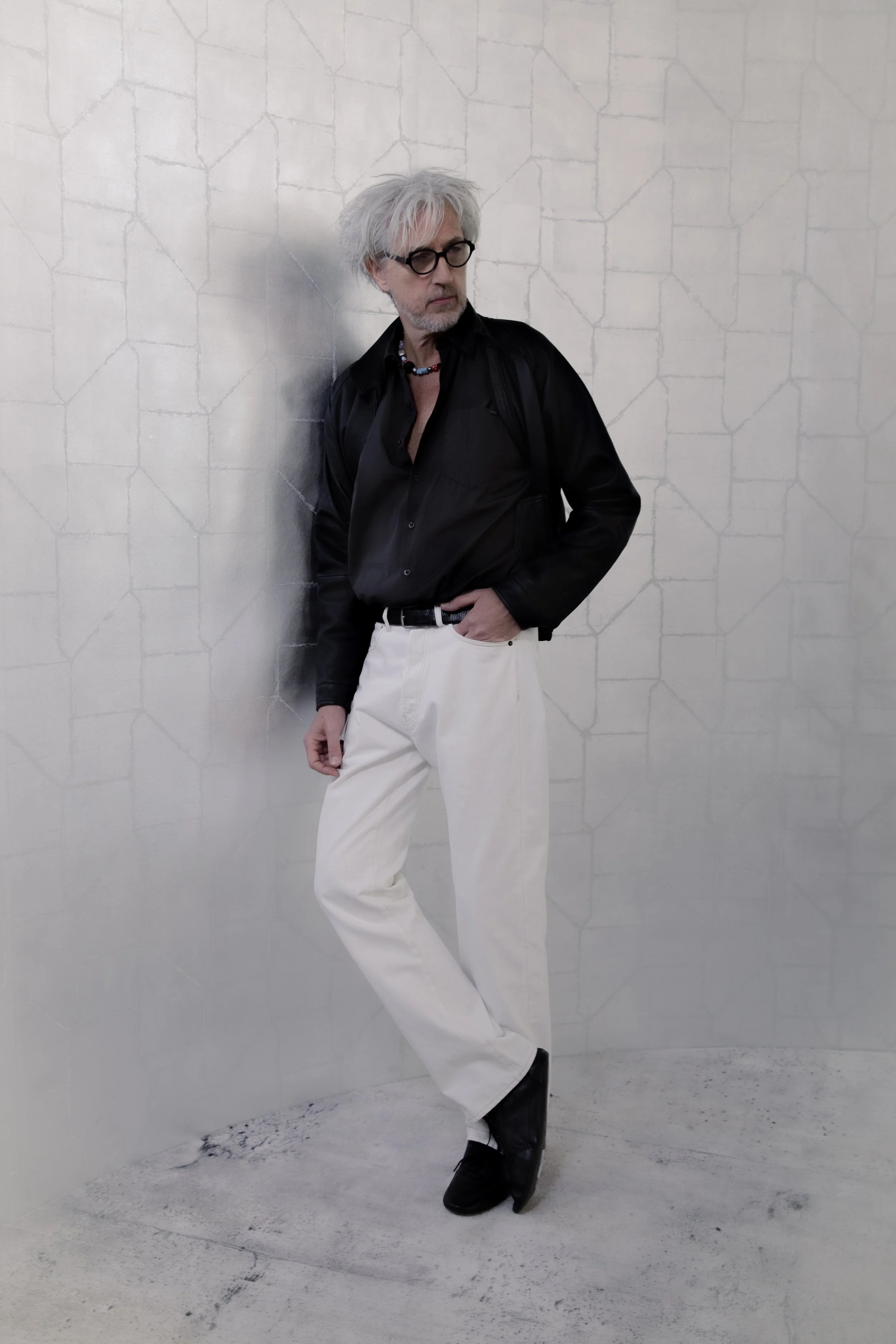
full look PRADA
Marcel Wanders delivers a profound, alternative manifesto on ecological responsibility, shifting the focus from rigid engineering metrics to emotional durability. He dismisses superficial efficiency trends as an inadequate response to global urgency. "There is a lot of trash to me that is not even valuable. It will try to be a little bit efficient here, efficient there, and it will try to be better for a bit." True environmental guilt does not stem from material usage itself, but from a lack of meaning. To him, the core solution lies in design excellence and artistic accountability, "Design fundamentally is better than all the other crap we're having. If there's designers that care, and they put their name on the stuff, they care."
To crystallize this philosophy, Wanders shares a moving anecdote about the legacy of legendary French oceanographer Jacques Cousteau, whose grandson noted that he always lived by one single maxim: "'People will always defend what they love.'" This revelation completely redefines his approach to environmental activism. By replacing cold rationalism with visceral affection, the ultimate ecological mission becomes a matter of creating cross-generational treasures that people genuinely love and protect. "If we can make things that people will buy and they really love for longer, we do an amazing first ecological step."
Instead of joining the chorus of creative anxiety surrounding Artificial Intelligence, Marcel Wanders welcomes it as a profound philosophical mirror. To him, the rise of AI is not a threat to human ingenuity, but a catalyst for a contemporary renaissance of humanism and spiritual awakening. "There’s this fear of artificial intelligence, and I woxuld love to develop the real opportunity that lies behind it. Artificial intelligence basically is an invitation for us to become more human." By automating raw intelligence, AI forces us to reclaim our monopoly on poetry, hands-on creation, and emotional nuance. He maps this onto cognitive history through a brilliant music analogy: subverting the acoustic guitar with the electric one didn't destroy music, it redefined it. Similarly, AI challenges us to discover a deeper cognitive layer. "First it was intelligence, then they became artificial intelligence, so now we have to develop human intelligence, and that's a very different thing as what we think it is."
Ultimately, AI highlights the beautiful limitations of algorithmic logic when compared to human chaos. "I'm calling this spirit that we live in the contemporary renaissance of humanism. We have to start understanding who we are cause we are not the rational beings we thought we were. We are way more interesting than that." While an algorithm can flawlessly mimic a pattern, it cannot replicate the soul of true creation. Wanders looks to the future with absolute creative optimism, ready to explore what lies beyond automated logic. "With AI, now we have a different thing. We have really to understand humanity like who are we. Because we are clearly not these rational beings, and maybe we have to also start embracing who we really are." This realization marks the beginning of an exciting new chapter. "Our intelligence works very differently, and with our hands and like building stuff, and with coming up with ideas and poetry or music. I mean, AI can copy it, but it’s a different thing. I think we will be able to do other things than we do today, and we will find them and I will be happy to be part of that journey. It’s gonna be great fun."
TEAM CREDITS:
talent MARCEL WANDERS
location MOOOI
creative direction & writer MICHELLE CONSOLI
photography MAURICIO DUMONT
photography assistant PAOLO GRIVET TALOCIA
make-up LISA LIONELLO
styling assistant NOEMI SANTI
production TOnDO.lab
