
IN CONVERSATION WITH MOON CHOI
Moon Choi is an actress of extraordinary precision and emotional intelligence, one whose work transcends borders, languages, and mediums. In Bedford Park, Stephanie Ahn’s quietly devastating new film premiering in US Competition at Sundance, Moon delivers a deeply nuanced performance as a Korean American woman reckoning with trauma, intimacy, and survival. Also serving as a producer on the film, she brings a rare authorship to the project, shaping its vision both on and off screen. With an acclaimed body of work spanning Bong Joon-ho’s Okja, award-winning Korean cinema, and major international stage productions, including the upcoming US premiere of The Cherry Orchard, she continues to define herself as one of the most intellectually rigorous and emotionally resonant artists working today.
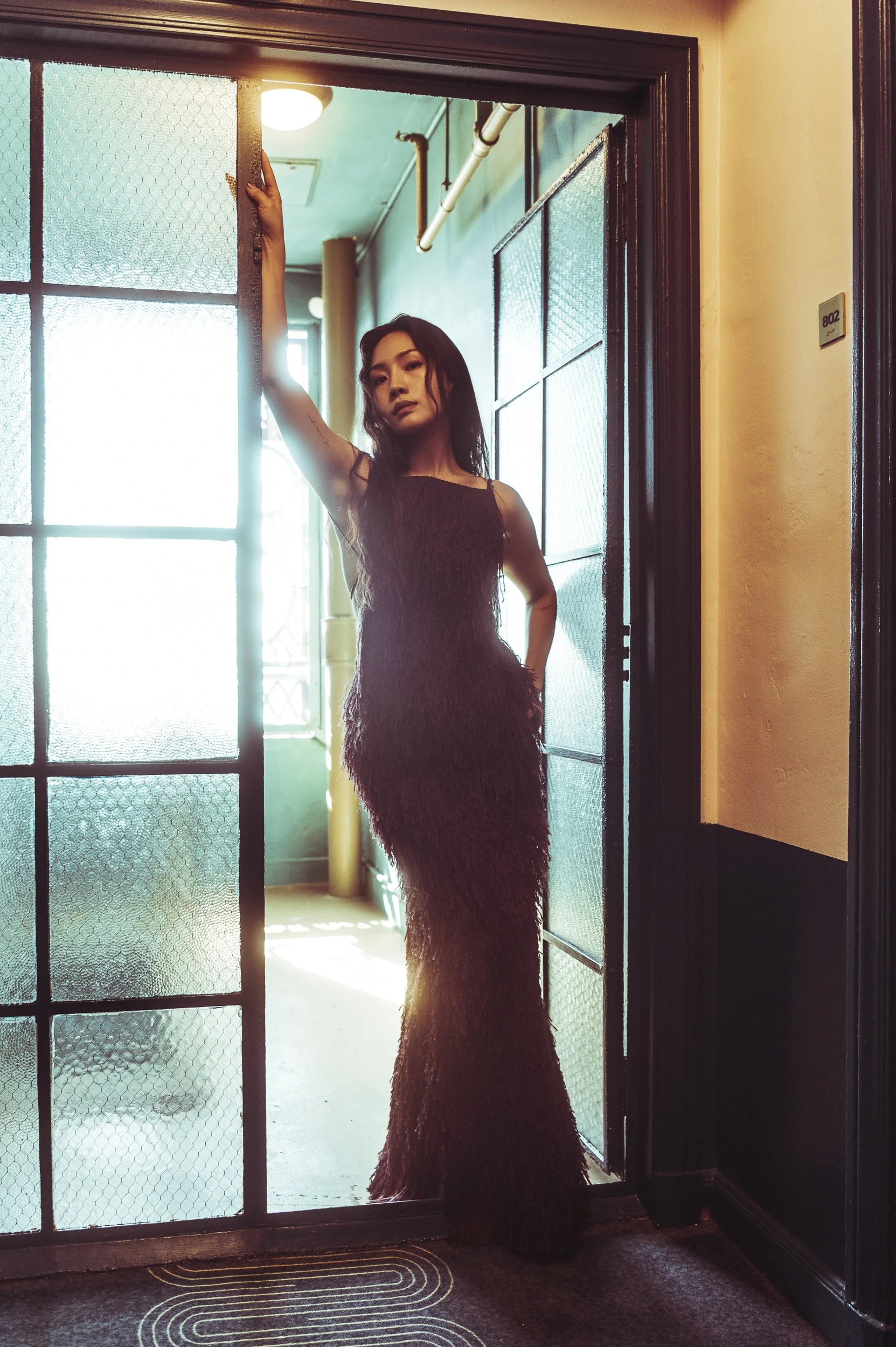
full look CALVIN KLEIN COLLECTION
Bedford Park is an intimate and emotionally demanding film. What first drew you to Audrey’s story?
Audrey feels conflict from her identity as a Korean American daughter who is obliged to live up to her parents’ expectations, when in actuality, all she wants in her life is to have an ownership of her adulthood, away from her childhood trauma. I am more drawn to characters who face challenges, whether small or big, because the fight often shapes the intriguing transformation I can navigate as an actor.
How did you approach portraying trauma without allowing it to define the character entirely?
I delved into the trauma part early in preparation, but I try not to be conscious of it as we approach filming. After I’ve done my research, writing journals and discussing with my director, l feel confident that I can start building layers on top of that so that I can avoid being dominated by the trauma part of her character. I believe in “Less is More,” but you kind of have to check the boxes and fill in the blanks first to achieve that.
This project marks a significant step for you as both actor and producer. How did producing shape your relationship to the role?
Since the film took 7 years to be made, it was natural for me to talk to Stephanie and producers constantly during those years. After already working on it with Stephanie for 7 years, in 2023, I brought in my incredible co-actor, Son Sukku to play the part of Eli alongside me. Looking back, I think I was lucky to have had such a long period of preparation as an actor and a filmmaker gathering the sources, discussing creative decisions with my director, and casting co-actors whom I trusted the most. It felt all very natural to be a producer and actor simultaneously and I was never self-conscious of putting on both hats. I guess each role as a producer and an actor reciprocated one another and formed a special relationship in making this film.
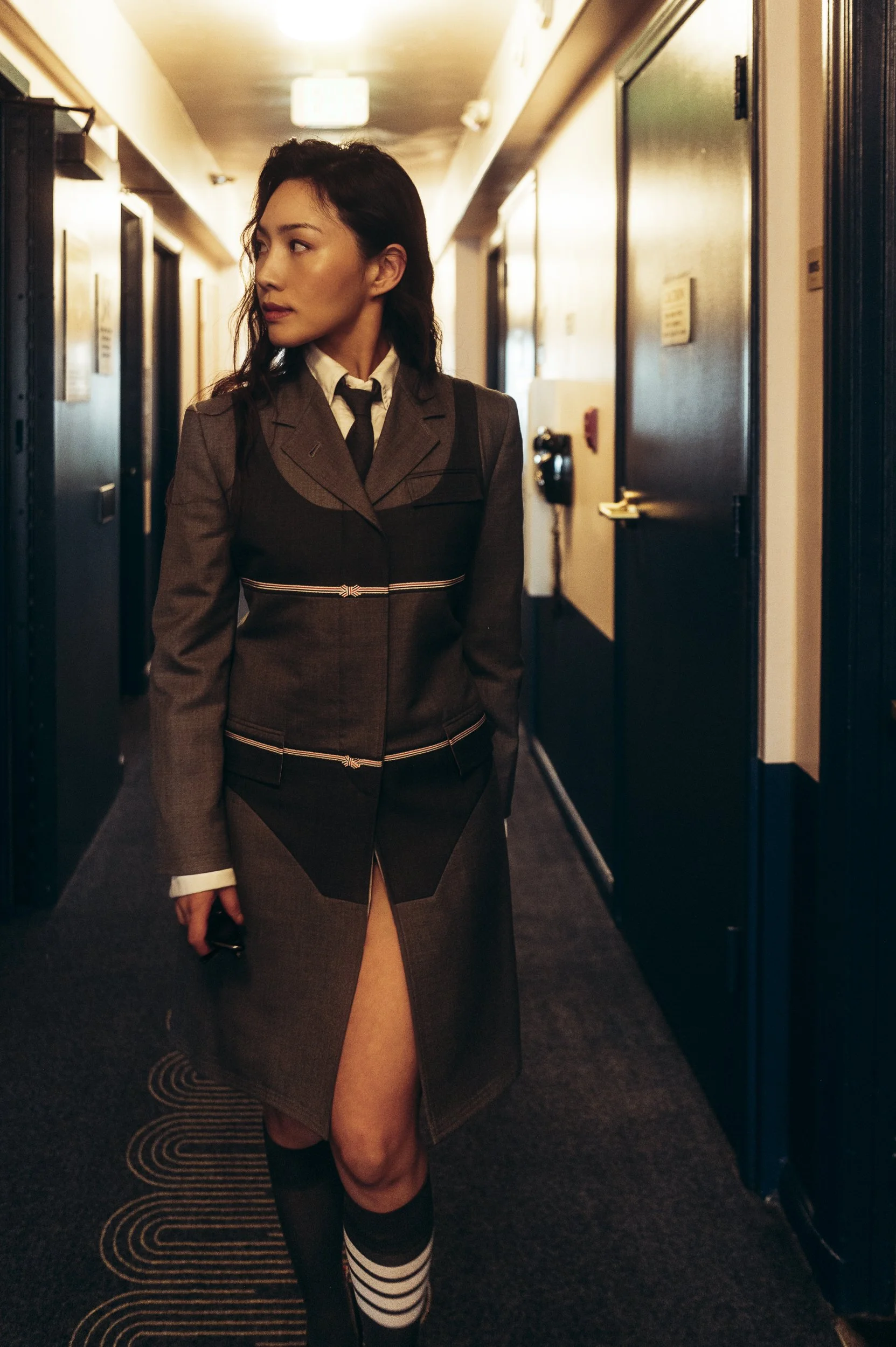
full look THOM BROWNE
The film explores silence, memory, and survival. How did you work with what remains unspoken?
It really makes it harder when your character doesn’t express her thoughts out loud. But silences and scene descriptions have always been the fun part for me. You don’t have the answers, but you get the clues. I like having these clues to play with and lay out options for on-set improvs with my director. Talking to my director Stephanie Ahn for quite a long span of time about Audrey’s psychological state and her unspoken yearnings really helped shape those unspoken moments as well.
You’ve portrayed activists, poets’ allies, women in transformation, and now a survivor of abuse. What kinds of stories feel most urgent to you now?
A woman who fights to remain as her true self always fascinates me. Whether it be a period drama, a comedy or a musical, I would love to continue to embody characters that do not compromise and stay truthful to how different she is from the rest of the world. I think there is a beauty in seeing a woman of any race or age brave enough to embrace the way she is away from a societal construct. And I think any story that explores her journey to remain truthful to her unique looks, values or dreams will always have its story to be heard by universal audience.
Anarchist from Colony was a defining moment in your career. How do you reflect on that role today?
Kaneko Fumiko was a historical figure who hadn’t been appreciated or even known to the public before the film came out in 2017. She was the first feminist activist in Japan who spoke out the equal rights for women under the Japanese imperialism in 1920s, and an anarchist who fought for Korean independence until she left the world too soon at the age of 23 in her prison cell in Tokyo. She was posthumously awarded the Order of Merit for National Foundation by the South Korean government a year after the film’s release in 2018, thanks to the nationwide support from the Korean audience who learned about her fight after the film was released and critically acclaimed. I mean, nothing will make me more proud than having the privilege to play this character. Apart from so many life lessons she’s taught me through the years of preparation, filming and meeting the audience, she definitely taught me to keep going because what I do can contribute something to the world.
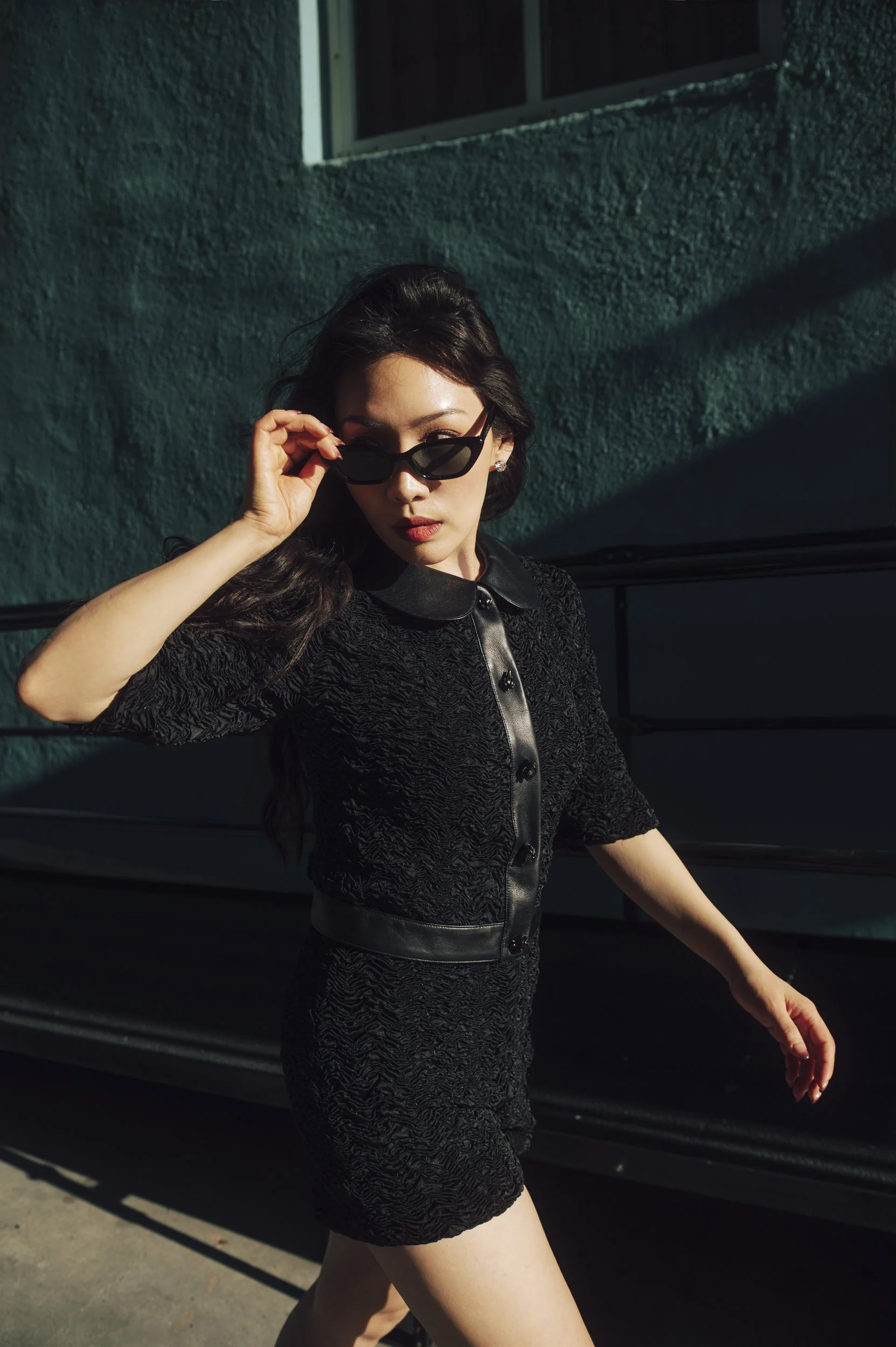
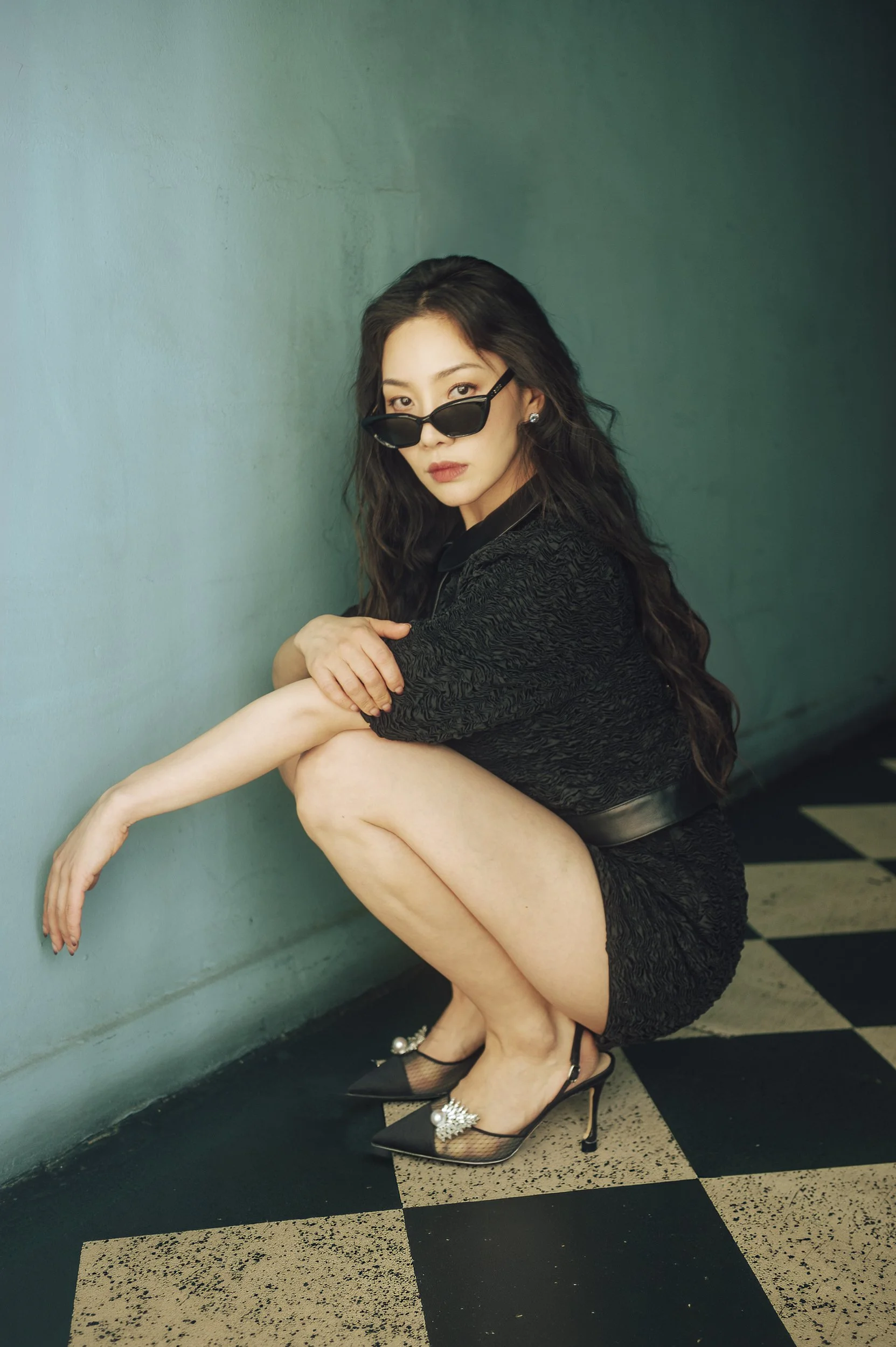
top and skirt CONTESSA MILLS
shoes ALENA VELLE
glasses TALENT’S OWN
jewellery NADRI
The Cherry Orchard has already traveled internationally and now arrives in the US. How has the production evolved through its global journey?
Theatre is amazing because it almost feels like it’s a living creature itself. It changes, evolves, and breathes with the audience and therefore, is never, if it is a decent piece of theatre, stale. ‘The Cherry Orchard’ is an amazing experience of a live theatre because we build the entire house on stage wherever we go. The extraordinary cast of 10 actors live in the house for 2 and a half hours and the audience gets to watch them drink, sleep, bicker and cry. Now, after crossing the Indian ocean from our last stage in Singapore, our house has arrived in Adelaide, Australia. Every show is different because every audience in each country is different. It lives and dies as the show opens and closes each night.
Beyond acting, you write, direct, and have published your own literary work. How do these disciplines inform one another?
Other than acting, all the other disciplines kind of came into my world coincidentally, or unconsciously. I’ve always loved to write growing up, so I kept on writing, which led me to publish my first book in 2023. Because I liked writing screenplays, I had a chance to direct one of my existing short scripts in 2021. Being a writer and a director gave me a whole new perspective in filmmaking and storytelling so I’d love to have these channels open for my future inspirations as well.
You studied journalism and literature before fully committing to acting. How has that academic foundation shaped your artistic instincts?
As an actor, I am expected to read screenplays or plays all the time. I think the fact that I’ve had to read a vast amount of literary works in college really helped me become a critical reader, so when I read new projects I feel confident that I’ll have a decent interpretation of that piece of work. I believe that an actor should always be an attentive learner to other subjects of studies because you never know who your next character will be. You want to know that you are constantly drawing new paths in your map of human studies.
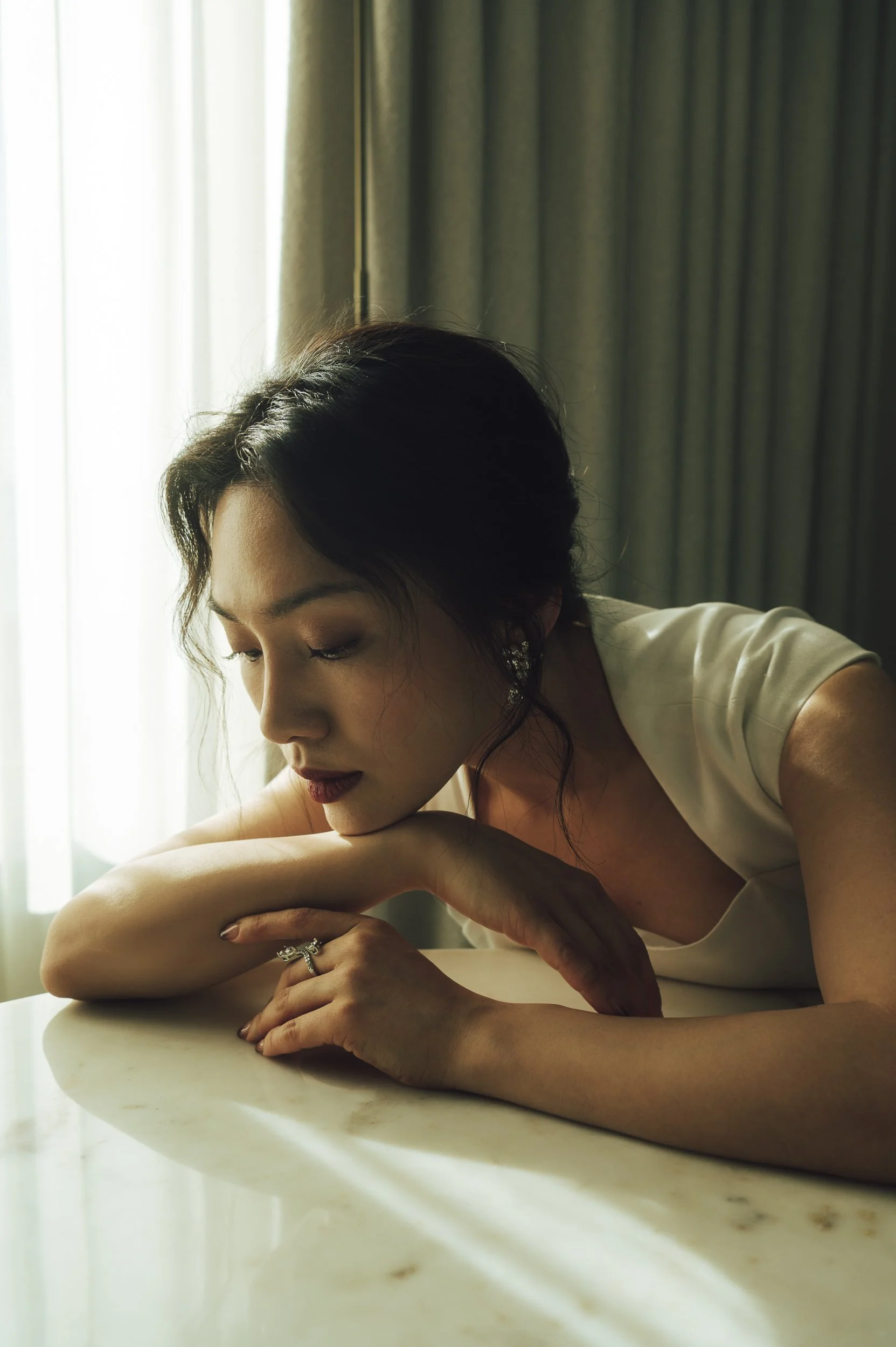
dress DO LONG
jewellery NADRI
As an artist working across cultures, how do you navigate visibility, responsibility, and representation?
That’s an interesting question. When I’m working in Korea, I don’t face these types of questions because everyone around me is Korean, who speaks and performs in Korean. When I step outside, I become “an actress from Korea” and I do feel that responsibilities arise as how I speak and collaborate might affect representation of a female Asian artist. On one hand, I am happy to be the representative of the Korean film and culture. On the other hand, I constantly discuss with my agents and managers as to play roles that are not necessarily pigeonholed to represent Korean or Asian. My goal right now is to navigate through these factors that identify who I am, but also to be freed from who I am. I don’t consider it to be a dilemma, though. It really is an interesting time for an international actor to expand one’s journey.
What does creative authorship mean to you at this stage of your career?
For me, authorship isn’t about control, it’s about contribution. I strongly believe that best creative decisions come from collaboration and some of the most powerful and original works are made from listening to other creatives, writers, directors and fellow actors, and challenging them respectfully. I think I’ve learned that from working with some of the most amazing Korean actors over the years, seeing them listen to others and reflect their input in the work. Being able to genuinely listen to others is an extraordinary talent in itself.
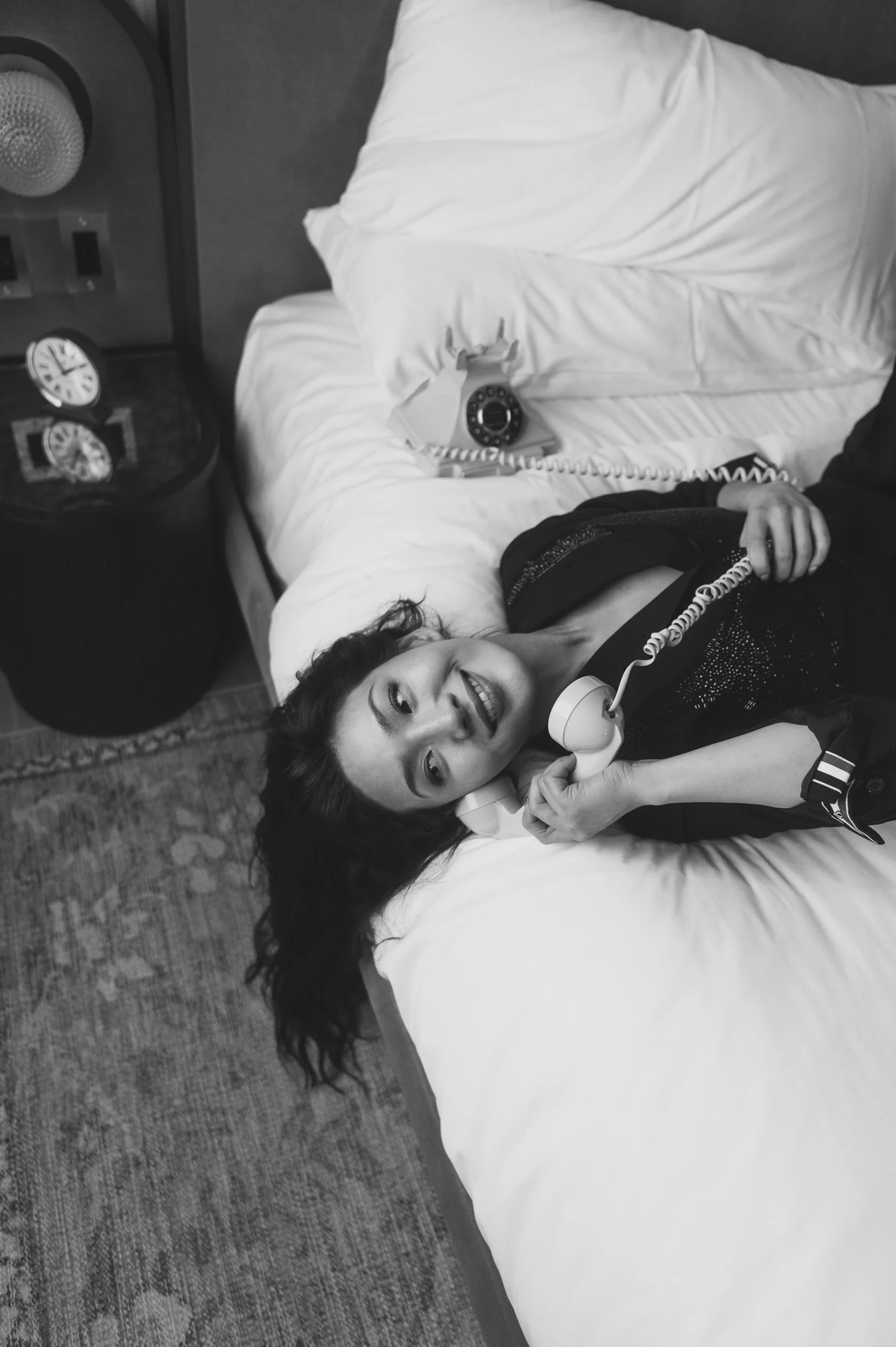
full look THOM BROWNE
TEAM CREDITS:
talent MOON CHOI
photography RETO STERCHI
styling JASON REMBERT
makeup TAMMY YI at TRACEY MATTINGLY AGENCY
hair DANIEL SUNGHOON KIM at OPUS BEAUTY
styling assistant WILTON WHITE
editor TIMOTEJ LETONJA
editorial director & interview JANA LETONJA
location THE GEORGIAN HOTEL