
IN CONVERSATION WITH NICOLAI NØRREGAARD
interview by TIMOTEJ LETONJA
Nicolai Nørregaard is the head chef and co-owner of Kadeau, with restaurants in Copenhagen and Bornholm. Raised in Bornholm, a small Danish Island in the Baltic Sea, he developed a very special appreciation for seasonal, local ingredients through his grandfather, who grew vegetables, caught seafood, and preserved food for the winter.
What was it about Bornholm that made you want to build the restaurant around it?
One of the main reasons is that, geographically, Bornholm is very different from the rest of Denmark. It has a variety of microclimates. The island is divided by two tectonic plates, so the southern part is more sand, meadow, forest, wetlands, and fields, while the north is more dramatic, with exposed granite, rocky landscapes, and hills.
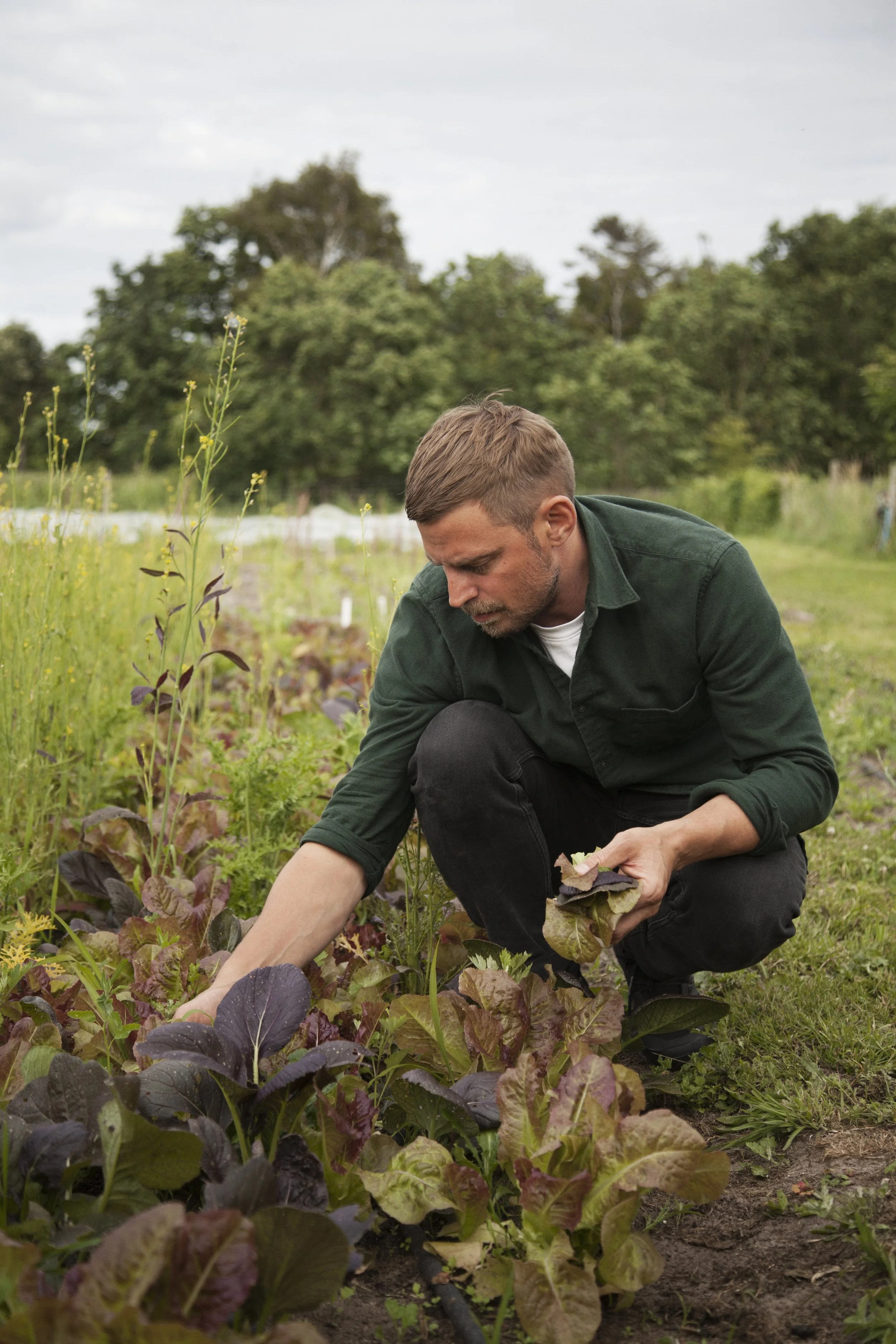
The land is also very lush, so a lot grows in abundance. From a forager’s perspective, it’s very interesting because you have very specific areas for different herbs and plants within a small area. You have all sorts of Scandinavian nature in one little spot. The climate is different too. Because Bornholm is surrounded by sea and made of rock, spring arrives maybe two weeks later than the rest of Denmark, but once the rock and sea warm up, they hold the heat longer. So we have a longer summer and more sun, which means plants like mulberries, figs, and peaches thrive there.
Bornholm is also known for its craft, especially ceramics and glassblowing. My dad was a ceramicist, and the guy we work with is one of his childhood friends, whom I’ve known since I was a kid. So it made sense to bring these traditions into the restaurant, together with the early days of the Nordic movement. Everything just made sense.
Do you think people outside the island already appreciate what Bornholm has to offer, or is it something they haven’t really discovered?
That’s a good question. If there’s one thing Bornholm is known for, apart from kage, it’s smoked fish. It’s a massive tradition here, with smokehouses all over the island. We used to have around 50 bigger smokehouses; now there are only eight, mostly run as restaurants. Another very traditional dish is salt-fried herring. It’s salted herring that’s rinsed, pan-fried in rye flour, and served on rye bread with pork fat, caramelized onions, pickled beetroot, and mustard. It’s a very traditional Bornholm open-faced sandwich. A lot of tourists try it and find it’s an acquired taste - it’s very, very salty. But I love it. We always eat it at Christmas.
I’m the same. I like things very salty or very acidic, which is where a lot of restaurants fall short for me. You’ve now received your third Michelin star. With all this attention and success, what is the ambition now? Where do you want to take the restaurant?
To be honest, I’m not sure yet. I’m still in the wake of the third star. It’s something we’ve been working towards, although Michelin was never the primary goal. If you want to move forward and make things better every day, though, it inevitably becomes part of the goal. Once I got one star, I wanted two, and then, of course, three. But it was never about getting three stars just to get three stars. We do things differently from classic three-star restaurants. It’s very sharp, but also very casual. We want it to be calm, nice, and not too fancy or snobby. I thought we were on the right path to the third star, but I expected it to be a longer journey. Now I get this question all the time: “You made it, so what now?”
For me, one thing is certain: I don’t want to go into maintenance mode. What drives me is changing the menus, creativity, pushing things forward, and changing the dining room twice a year. I want to continue doing that. At some point, maybe I want to move the restaurant, find a new space, and start again. That’s something that drives me. Next year, we’ll have been on the island for 20 years.
We’re continuing to develop our gardens, growing them and producing more ourselves. I still have tons of things to do. And I know that having a successful restaurant in such a tough industry, especially in Denmark, is not easy. It’s a small country with so many good restaurants. Every restaurant thrives in the summer because there are so many tourists, but winter is different and more difficult. So we’ll see how it goes, but we’ll continue trying to be successful and get attention, because that’s also what fills the seats.
At Kadeau, you’re planning a winter menu while the summer is still happening in service. What’s the hardest thing to get right when you’re preserving food for the winter, when of course many things aren’t growing?
Over the years, we’ve learned which techniques work and which don’t. A lot of the knowledge comes through trial and error. The toughest part is definitely when we want to try something new.
If we find a new ingredient or want to try a new technique, we have to do it while the fruit, herb, or plant is available. Once we figure out whether it works, we have to wait another year before we can produce it again, because we need to preserve it for a while before we know if it works. By then, the season is already gone. So we need a lot of patience. It’s definitely the hardest thing for me because I don’t have a lot of patience. Otherwise, it’s something we’ve been doing for so many years that we know what to do and what to work with.


What do you think people misunderstand about Nordic food when they come to your restaurant?
I think we’re definitely a Nordic restaurant, but not the classic Nordic restaurant, or at least not what Nordic restaurants used to be. When we started, Nordic cooking was very pared down and raw, which was nice back then. Now I prefer more depth, complexity, and flavor. In that sense, we’re not that kind of Nordic restaurant anymore. But I think people know what it is now.
When you started working with Bornholm as such an important part of the food at Kadeau, did you already know what you wanted the identity to be, or did that develop over time?
It definitely developed over the years. We knew we wanted to work in the Nordic way, using what’s around us rather than importing things from Southern Europe. But I wanted to narrow it down to a specific island rather than a whole region. I didn’t really know what that meant in the beginning. It developed through the ingredients, techniques, flavors, and people we worked with. My cooking is quite personal and distinct, and I’m very proud that it has become recognizable. It hasn’t evolved as much in the last five years as it did in the five before that. We know most of the ingredients now and have tried most techniques, so it’s settling a bit, which is nice.
When you’re building a menu, are there any dishes or ingredients that always have to be there?
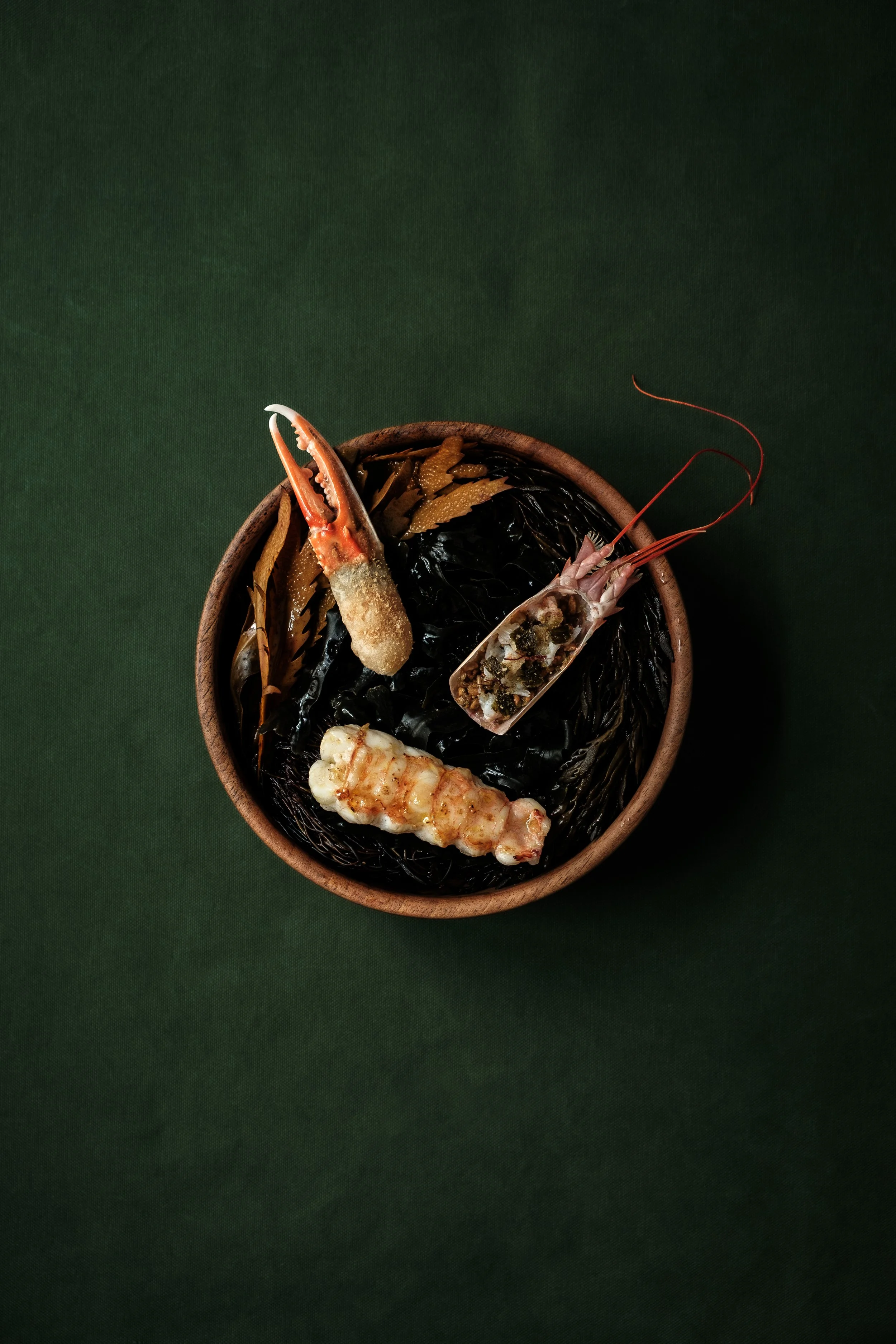
Definitely. Certain flavor profiles keep coming back. We always have salmon, and usually raw shrimp, often paired with a cream because I find that combination extremely nice. Repeating ingredients, flavors, or combinations also sharpens our identity. Not to copy them, but to bring them further, to the next menu in a slightly different way. I want the development to happen at a good pace, so when people come back, they recognize the restaurant but also feel that they’re seeing something new.
That idea of something new also extends to the setting. When you change the menu, you change the interior, the plates, paintings, even the colors of the walls. Can you tell me more about that?
It’s about changing the scenery so the restaurant feels fresh. It’s the same as with the menu: changing things puts energy into the restaurant, not only for the guests but for us as well. It started with the ‘Growing’ and ‘Preservation’ seasons. We decided to make those seasons more distinct, changing the menu twice a year and introducing new additions to the ceramics and cutlery. Then we extended that creativity to the walls. We started working with a gallery and decided to change the artworks with the seasons. During the Preservation Season, the artworks are made specifically for the restaurant. We bring the artists to the island, where they see the gardens and nature, eat at the restaurant, and take inspiration from that. So it’s also based on the island. We change the colors to fit the artworks and bring in some new energy.

If you had to describe the vibe of Kadeau in just a few words, what would you say?
The most important thing is that everyone is having a good time. If you don’t have happy staff, you’re not going to have happy guests because it will come through. We work hard, but it’s a great environment. There’s no screaming or shouting. It’s important to get rid of toxicity. If there’s anything, we talk about it. It’s an open forum, almost like one big family. I know it’s a cliché, but it is a bit like that, and it shines through to the guests.
During research trips, are there any cultures outside Denmark that really inspire you when it comes to food?
A couple of years ago, we went to Peru and spent time with the Central team, getting to know their historical approach to food, growing, and preserving flavors in their part of the world. That was extremely inspiring, and there were a lot of things I could relate to. It really blew my mind. I think culture is extremely interesting, and I definitely want to explore more. I’m going back for the 50 Best this year, so hopefully I’ll have some time to look around. Peru is definitely high on my list, but these long trips take time to plan, and you need the time to actually go. When you work in a creative field, your schedule is always changing.
