
interview by JANA LETONJA
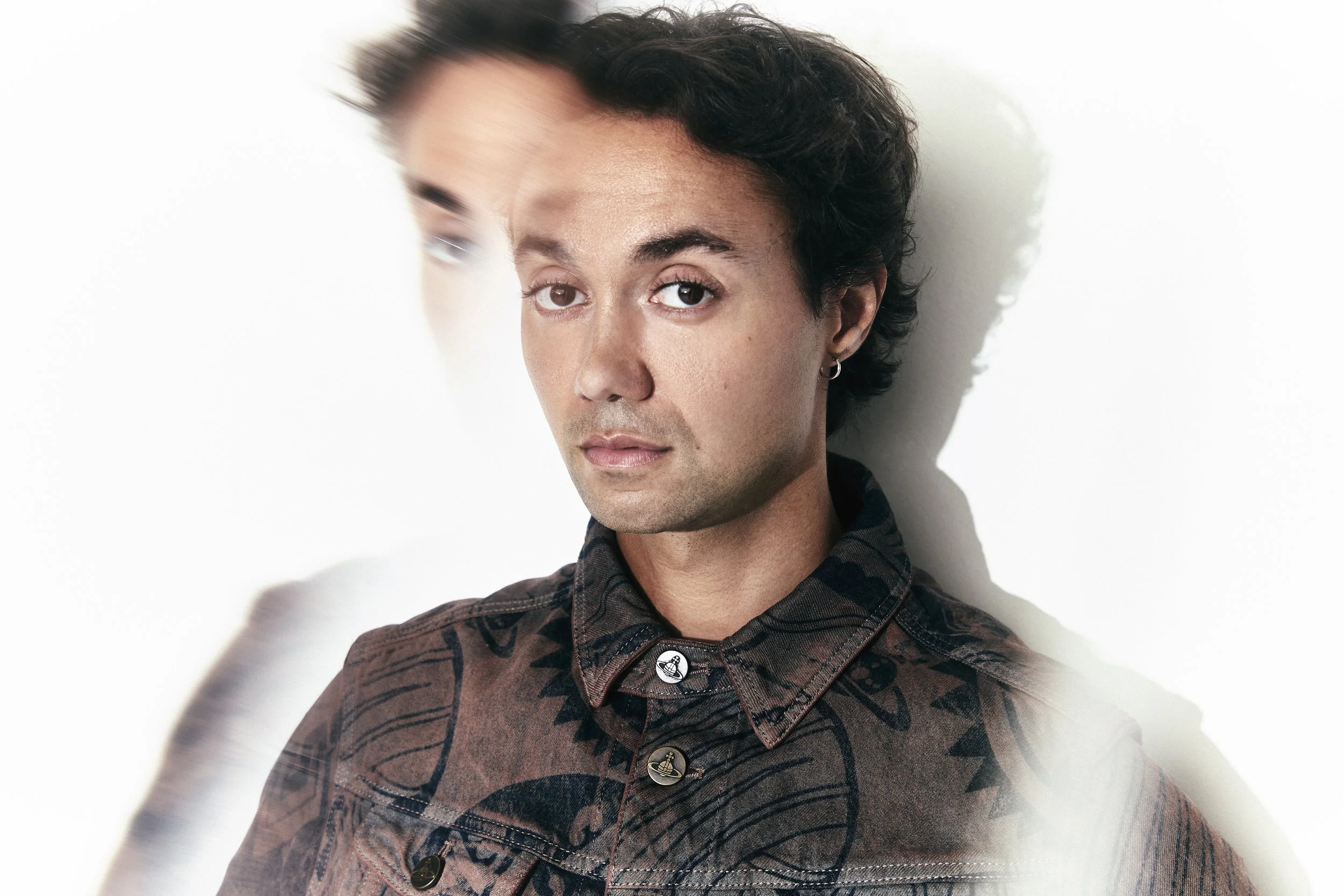
With a magnetic presence and an instinct for characters who exist somewhere between vulnerability and danger, Oliver Cudbill is an emerging talent worth watching. This November, he steps into the shadowy world of Honey, the highly anticipated Killing Eve prequel. Set against the tension and intrigue of East Berlin in 1982, the six-part BBC spy thriller, written by Extraordinary creator Emma Moran, sees Oliver take on the role of Stefan Weiss. A graduate of LAMDA, where he trained on the prestigious Genesis Foundation Scholarship, he has already built an impressive theatrical résumé, performing at the Almeida, Shakespeare’s Globe and the Young Vic, alongside screen appearances in My Lady Jane and a surprising venture into the world of Baldur’s Gate III.
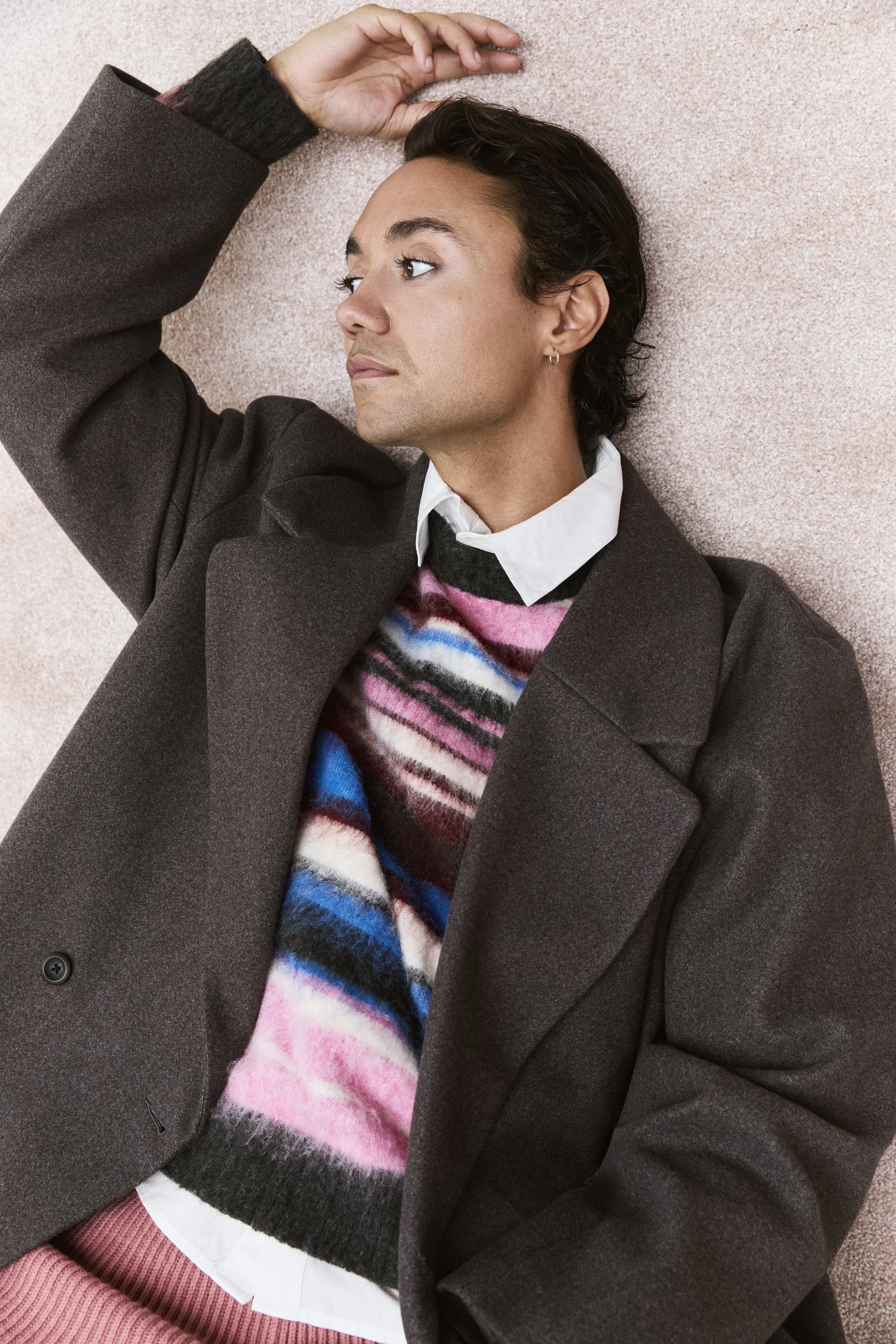
You’re starring in Honey, one of the BBC’s most anticipated dramas of the year. Does this feel like a turning point in your career, or do you try not to think about things in those terms?
I think I just feel incredibly grateful to be part of it. That's honestly what I've thought about more than anything. I'd applied to university and was seven weeks into a PGCE at Cambridge. I was halfway through writing an essay when I suddenly got a call from my agent telling me I'd got the part. On Halloween, of all days. I remember thinking, if this is some elaborate trick or treat, this really isn't funny.
By the next day, my parents were helping me move out and, shortly afterwards, I was on my way to Lithuania with an enormous suitcase.
I remember my first day of filming so vividly. Toby MacDonald, our lead director, asked me to run out of the laundrette because Stefan simply couldn't bring himself to speak to Tomas. As I ran out, I suddenly became aware of everything around me. All these cameras, the supporting artists, this extraordinary set, all there for Stefan's first scene. And I just started crying as I ran. I remember thinking, “I can’t believe I'm doing this.”
Toby came over afterwards and said, "Wow, I really felt the emotion of Stefan. That was brilliant. Can you do it again?" And I said, "I can do that as many times as you want." I was just completely overwhelmed with gratitude to be there. I think that's what I'll remember more than anything. So, whether it's a turning point or not, I don't know. But it's certainly something I'll never forget.
Honey takes us into the world of espionage in 1982 East Berlin, a city defined by secrets, surveillance and divided identities. What was it about this particular world that first drew you in?
I think this experience spoke to me on a deeply personal level. Growing up in the Midlands as a queer, brown, mixed-race kid in the noughties, I definitely know what it feels like to be paranoid. To be constantly aware of how you're perceived, how you're behaving and whether you're drawing attention to yourself.
I think anyone who has grown up feeling different from the people around them will recognise that instinct to try to become as invisible as possible. There were certainly times at school when that was all I wanted. Not to be noticed. Not to stand out. I remember being told at primary school to "Go back to your own country” or “Go back to where you came from.” And I'd think, “But my house is literally opposite the playground. Can’t you see it? That is home.”
But those experiences do something to you. You develop an extraordinary ability to read people and situations. You become almost chameleonic, constantly adapting yourself, trying to understand how you can be liked, accepted or simply left alone. Ultimately, to survive.
Survival has been a huge part of my life, and although the circumstances are obviously very different, that psychological experience felt incredibly familiar when I began exploring Stefan's world. What I found particularly fascinating is that Stefan isn't ashamed of who he is. He knows he's gay. He accepts himself. His family, in the backstory we developed, are incredibly supportive and loving. But he understands that being himself in private and being himself publicly are two very different things.
We explored a world of underground parties, gatherings hidden behind the rather absurd veneer of church events, and these little pockets of freedom where people could express themselves. But that's hardly the same thing as being able to embrace your identity openly in the world around you, is it?
And I think that's an important distinction.
Stefan is absolutely true to himself. But he's also acutely aware of the world he's living in, and what being visible might cost him. What I love about him is that he's never entirely surrendered to that fear. He's still romantic, optimistic and determined to experience the joys of life. He's not asking for permission to be who he is. He's trying to find a way to live as that person. I found that incredibly moving. It was an emotional process. One I’m grateful for.
What did you find most fascinating about stepping into his psychology?
I remember receiving the script and immediately being struck by two things. The first was his character description, "Think golden retriever." He's an idealistic romantic who adores black-market Western VHS tapes. The cheesier the rom-com, the better. And the second was a line in a scene with Marta, where he's desperately trying to work out whether Tomas might be gay. It's something along the lines of, "Do you think he could be? I mean, I know he's definitely not, but sometimes he does this thing when he stands..." I just thought, “Oh my God. This is actually me.”
I swear I've had that exact conversation with my best friend, probably over a takeaway at two in the morning, after a night out, saying, "No, babe, I really think he could be. This is the one." It's that wonderful, rare feeling when you read your character in the audition script and recognise them instantly thinking, “I can speak for this person with more truth than anyone else. I truly believe it.” I think that’s only ever happened a handful of times in my years of auditioning so far.
My grandma calls me "Ever-the-optimist", and I recognised so much of that in Stefan. But what's fascinating about him is that beneath all that optimism, he's actually quite frightened of intimacy.
We talked a lot about the fact that he can spend months admiring someone from afar, imagining an entire relationship, but the moment he has an opportunity to make it real, he can completely retreat.
I think sometimes he's safer in his imagination than he is in reality.
He adores Western romantic comedies, these extraordinary stories where love conquers everything, but his own reality makes something as simple as approaching a man enormously complicated. And I think it's important to distinguish that fear from shame about who he is. I don't think Stefan is searching for his identity. He knows who he is, and he's remarkably true to himself. What he's searching for is the freedom to share that identity with somebody else.
Marta is so important because she's the one person with whom he can completely unravel. He doesn't have to perform or protect himself. She's his best friend, his confidante, almost his family. What I adore about Stefan is that he keeps trying, despite all of this. He takes risks. He’s wildly impulsive. He's sometimes spectacularly naive. And, frankly, I think I'm guilty of all three. But there's something very moving about someone who continues to choose hope when the world has given him so many reasons not to.
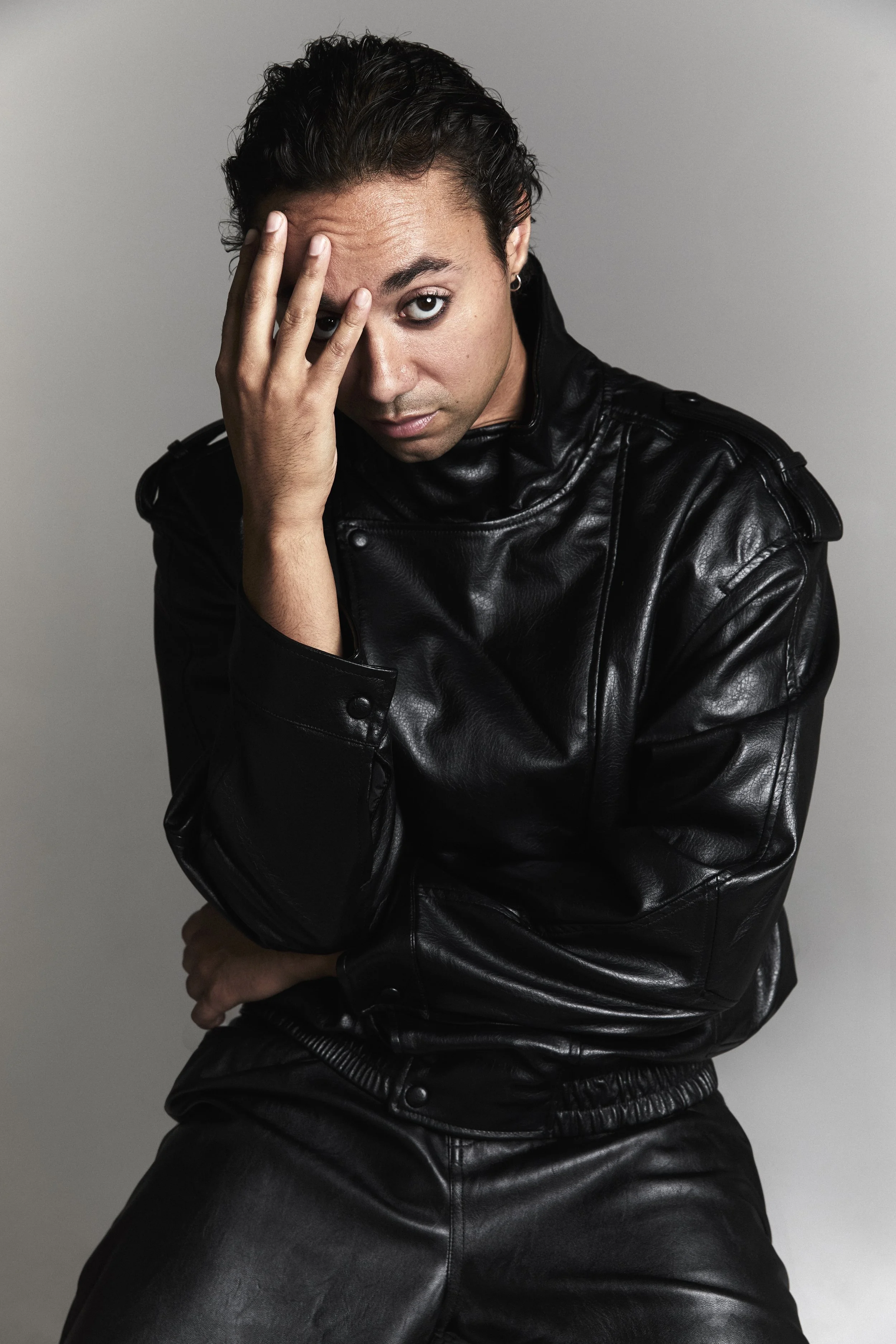
The series exists within the universe of Killing Eve, a show celebrated for its complex characters, dark humour and unconventional approach to the spy genre. Did you feel the weight of that legacy, or did Honey feel like an entirely new world to explore?
I think the brilliant Emma Moran takes care of much of that complexity in her writing. She has this extraordinary ability to juxtapose genres and find humour, sensitivity and truth in situations that, on paper, shouldn't necessarily sit comfortably together. One moment something is incredibly funny, and the next it can become quite frightening or deeply moving. I love that unpredictability.
For me, Honey felt like its own world to explore. Yes, it exists within the same universe, but it has a very distinct identity and a different emotional landscape. I think what makes Emma's writing so exciting is that she allows characters to be contradictory. They're not necessarily one thing or another. They can be ridiculous, vulnerable, selfish, courageous and deeply human, sometimes all in the same scene, and as an actor, that's an absolute gift.
Espionage is fundamentally about performance: concealing your intentions, adopting identities, becoming someone else. Did playing a character in this world change the way you think about acting itself?
The irony is that espionage is almost entirely irrelevant to Stefan's everyday life. He's completely unaware of what Marta is really up to. As far as he's concerned, she's a waitress with this wonderfully glamorous life, meeting handsome men all the time. Poor her. Meanwhile, he's the one leading a double life.
At work, he's constantly navigating how much he reveals about his sexuality, his heritage and his personal life. He's an urban designer who genuinely believes in the power of architecture to create spaces for people to come together, yet he lives in a society where he can't always freely inhabit those spaces as himself. I find that quite heartbreaking.
And then he comes home to Marta, closes the door and finally gets to take off the mask. But I think what's important is that Stefan isn't necessarily pretending to be somebody else because he doesn't know who he is. He knows exactly who he is. He's adapting because he understands the consequences of being seen. I think that's something I connected with immediately. That feeling of having different versions of yourself for different environments. The instinct to read a room, to judge what feels safe to reveal and what might be better left unsaid. And the extraordinary relief of being with someone who allows you to be entirely yourself.
As an actor, you’re constantly stepping into other people’s identities. When you’re not working, how would you describe your own sense of identity? Is it something you’ve always felt certain about?
I think identity is such an interesting thing, isn't it? It's not tangible, and I don't necessarily believe it's fixed. I certainly feel much more comfortable with who I am now than I did when I was younger. But there's also something about my younger self that I sometimes miss. I think I was even more fearless than I am now.
When you're young, you sometimes have this wonderful ability to throw yourself into something without thinking too much about the consequences. As you get older, you become more conscious of expectations, responsibilities and what other people might think. I think part of growing up, for me, has been learning how to find some of that fearlessness again, but in a slightly more considered way.
I'm also trying to make more choices simply because they make me happy. Whether that's nourishing my soul with a really good book, giving myself space to be creative or deciding that something isn't right for me, even when it might look wonderful on paper. I think you can spend so much of your life trying to become the person you think you're supposed to be, only to realise that the most liberating thing is allowing yourself to be who you actually are. And hopefully, continuing to discover who that is.
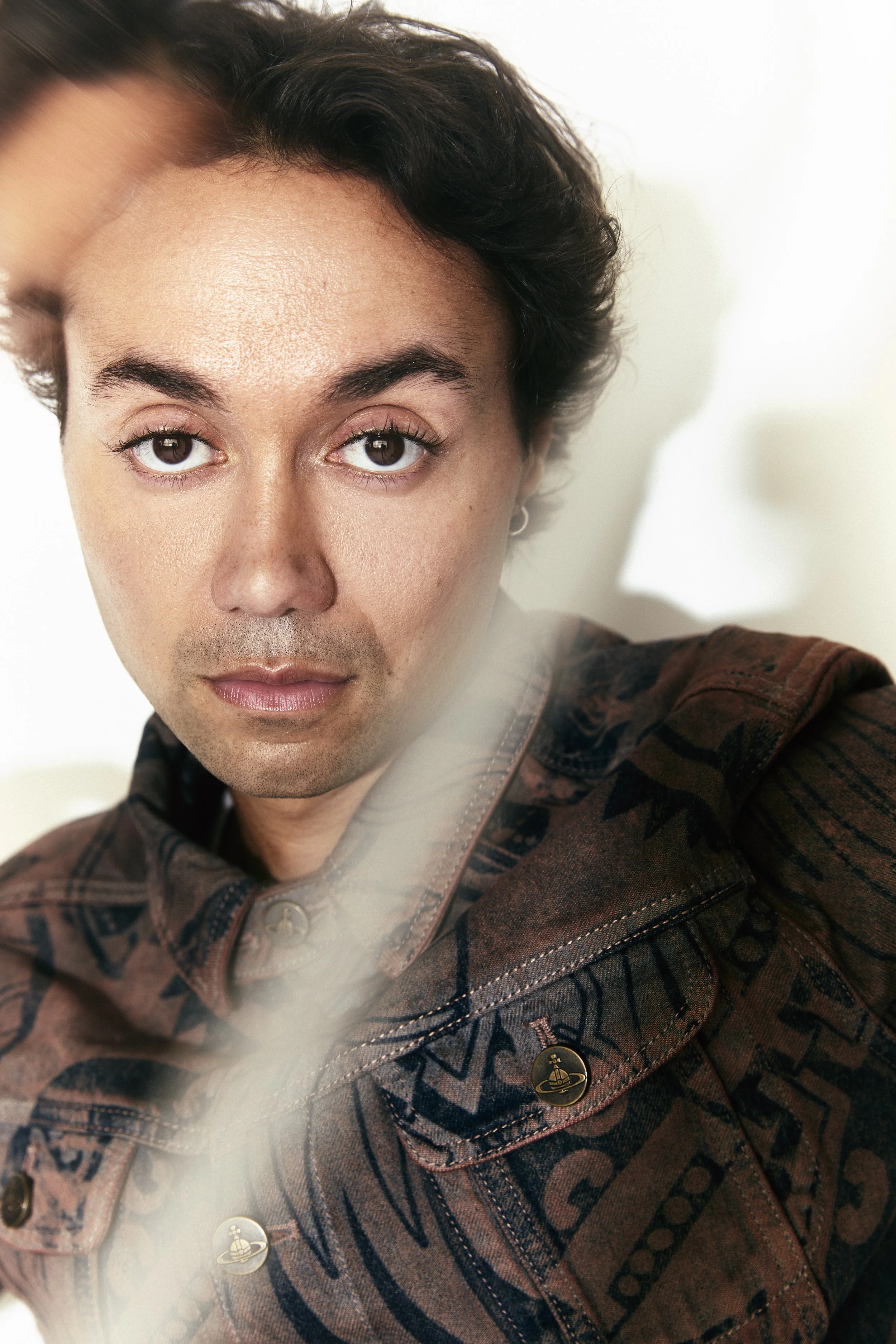
Fashion can be another form of storytelling. What’s your relationship with clothes, and how much does what you wear reflect the person you are or the person you want to become?
Fashion is incredibly powerful. It tells a story whether you intend it to or not. Even choosing not to participate in fashion is a choice. You're still communicating something.
I love the fact that clothes can be an opportunity to express yourself, to show the world who you are, or perhaps to challenge an expectation of who society thinks you ought to be. It's one of the things I love about art generally. You have the opportunity to make a statement, to challenge something or perhaps even change the way somebody sees the world.
With Stefan, I found his relationship with clothes particularly interesting because I don't think he's necessarily trying to be an anti-conformist. He's quite elegant, actually. Understated, considered and confident in his own taste. But there's certainly a difference between how he presents himself professionally and how he allows himself to be at home.
I think clothes can offer us a kind of freedom. Sometimes they allow us to say something about ourselves that we might not yet have the courage to say aloud. I can see that happening, now, all the time. I love that.
There’s often a tension between wanting to be seen and wanting to remain mysterious, particularly as a young actor. How do you navigate the idea of visibility, both professionally and personally?That's something I find myself thinking about a lot. I think honesty and authenticity are incredibly important to me. But equally, there's something magical about maintaining an element of mystery as an actor. You want people to be able to imagine you as somebody else. I think there's real value in leaving room for that imagination.
Some of the actors I admire most have managed to maintain a remarkable sense of privacy. Their work speaks for them, and there's something incredibly compelling about that. But I often question how easy that is nowadays, particularly with the extraordinary rise of social media. There's this growing expectation that actors should also be public personalities, that visibility is somehow becoming part of the currency of working. I find that really interesting, because those aren't necessarily the same skills, are they? I think ultimately I'd like to find a balance. To be open and honest about the things that matter to me, while remembering that not every part of my life needs to belong to everybody else.
I suppose I'm still working that one out.
You trained at LAMDA on the Genesis Foundation Scholarship. Looking back, what did that experience teach you about yourself beyond the technical discipline of acting?
LAMDA was an invaluable experience. It demands only 100% you. You're sometimes doing sixty-hour weeks, going in at weekends, rehearsing, preparing, learning, constantly being pushed beyond what you think you're capable of. I remember reaching third year and almost becoming numb to the idea of being tired. The training really makes you feel like an athlete. You develop an extraordinary amount of stamina, discipline and resilience.
Receiving the Genesis Foundation Scholarship was such an honour because it meant I could devote myself entirely to the training without having to work at weekends. I never took that for granted. But I think one of the greatest things LAMDA gave me was a genuine curiosity about the craft. I remember before having any drama school training, I'd sometimes look at a script and think, “Right, what am I going to do with this?"
After graduating drama school, I'd look at one and think, "Oh God, where do I even begin? How much time have I got?" You suddenly realise just how much there is to explore.
Some of my teachers are people I still keep in touch with today, and I still work through auditions with them. That relationship with learning doesn't really stop when you leave. I think that's the greatest gift the training gave me. The understanding that you're never really finished. You never reach a result. There’s always something more to discover. That’s why we do it.
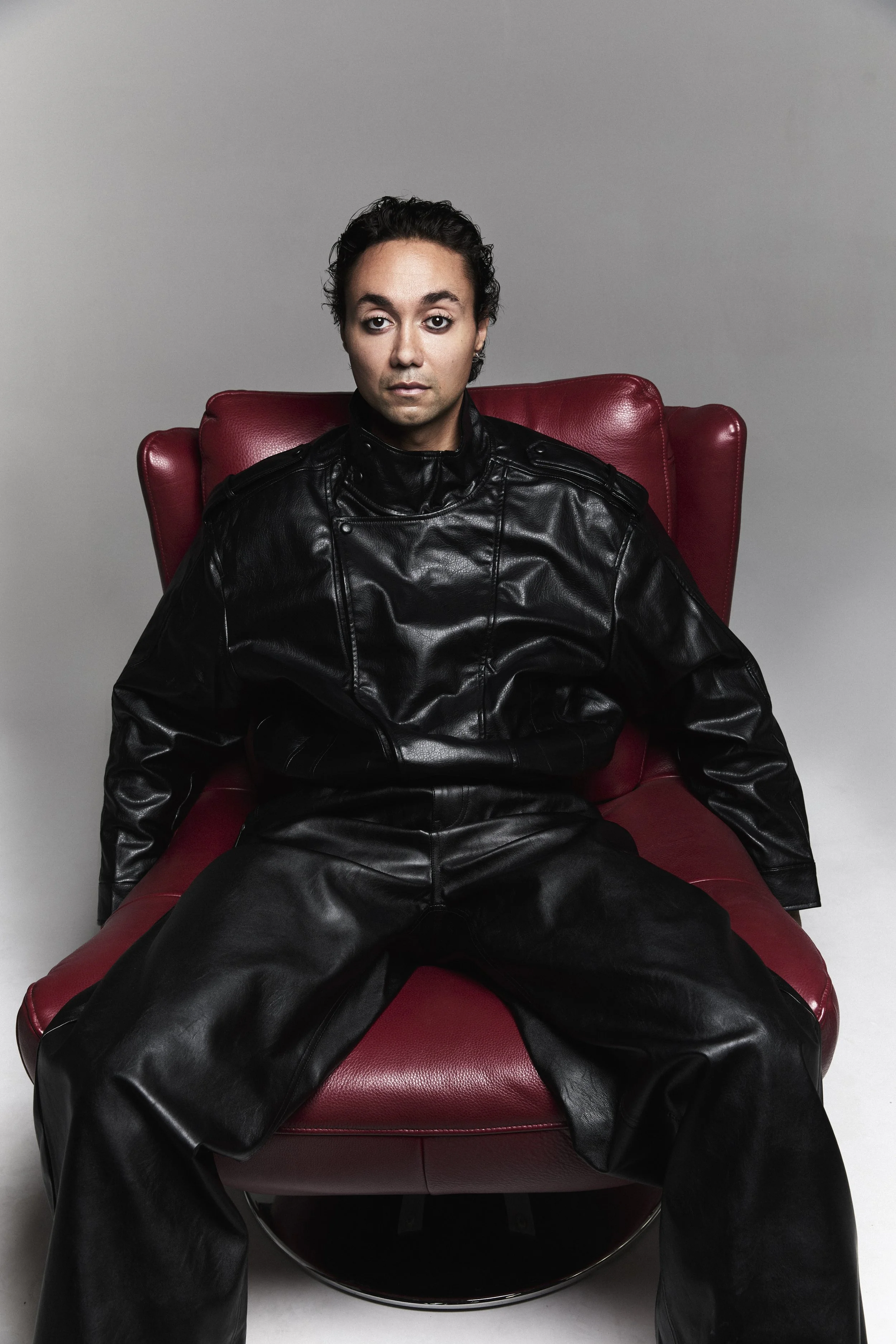
You’ve performed in productions ranging from King Lear at the Almeida to Much Ado About Nothing at Shakespeare’s Globe and Spring Awakening at the Young Vic. What does theatre give you that working in front of a camera doesn’t?
I'm so grateful to have worked in theatre. It teaches you resilience, perseverance and the extraordinary power of repetition. But ultimately, I think the fundamental thing we're searching for as actors is truth, and that translates across every medium. Whether you're on stage or in front of a camera, the only thing you ever really have is the present moment in front of you.
I think what's particularly magical about theatre is that you get to experience that moment over and over again, and yet it's never quite the same. You can perform a play a hundred times, but every night is different. The audience is different, your fellow actors might give you something unexpected, or you might suddenly discover something about a scene that you've never noticed before. There's something wonderful about the fact that you can spend weeks rehearsing and exploring a character, and then still be surprised by them on the hundredth performance. I think that's the magic of it for me.
What are you most curious about outside of acting right now? Is there another creative discipline you’d love to explore?
I'd love to write more. I think creating your own work is incredibly important, particularly as an actor. So many actors spend years waiting for that perfect role, and I think a lot of us have probably felt that the exact part we want to play simply hasn't been written yet. Which invites the rather obvious question, “Why don't you write it?” I think there's something empowering about that. There's only one you. Be brave. Believe it. The world needs it.
At this stage of your career, with Honey about to introduce you to a much wider audience, what excites you most about the unknown? And what kind of artist do you hope to become?
I think the most exciting and terrifying thing about pursuing a career like this is that you genuinely never know what's around the corner. One minute you're writing an essay at university, and the next you're on a plane to Lithuania with your life packed into a suitcase.
I've spent years trying to become more comfortable with that uncertainty. The more I manage to stay in the present moment, the happier I am. It's taken a lot of practice, and I’m definitely still working on it.
As for the kind of artist I hope to become, I think I just want to remain curious. Brave enough to take risks, open enough to keep learning, and never so concerned with where my career is going that I forget why I wanted to do this in the first place. I want to tell stories that make people feel something. That perhaps make us feel a little less alone. Growing up, I saw very little of myself reflected on screen, whether that was people who looked like me or whose experiences felt familiar to my own. The industry still has a long way to go. I hope we continue in making braver work, and telling stories that perhaps haven't always been given the space they deserve.
I think there's something quite extraordinary about having spent years of your life learning how to navigate different versions of yourself, and then being given the opportunity to play someone who knows exactly who he is, but lives in a world where expressing that openly takes an enormous amount of courage. That's something I find incredibly meaningful about Stefan. He's true to himself, even when the world around him makes that difficult. And I hope I never lose that part of myself that ran out of a laundrette on my first day of filming and couldn't quite believe he was there. I think that would be a lovely thing to hold on to.
TEAM CREDITS:
photography DAVID REISS
styling WAY PERRY
grooming HANNAH WYNNE
