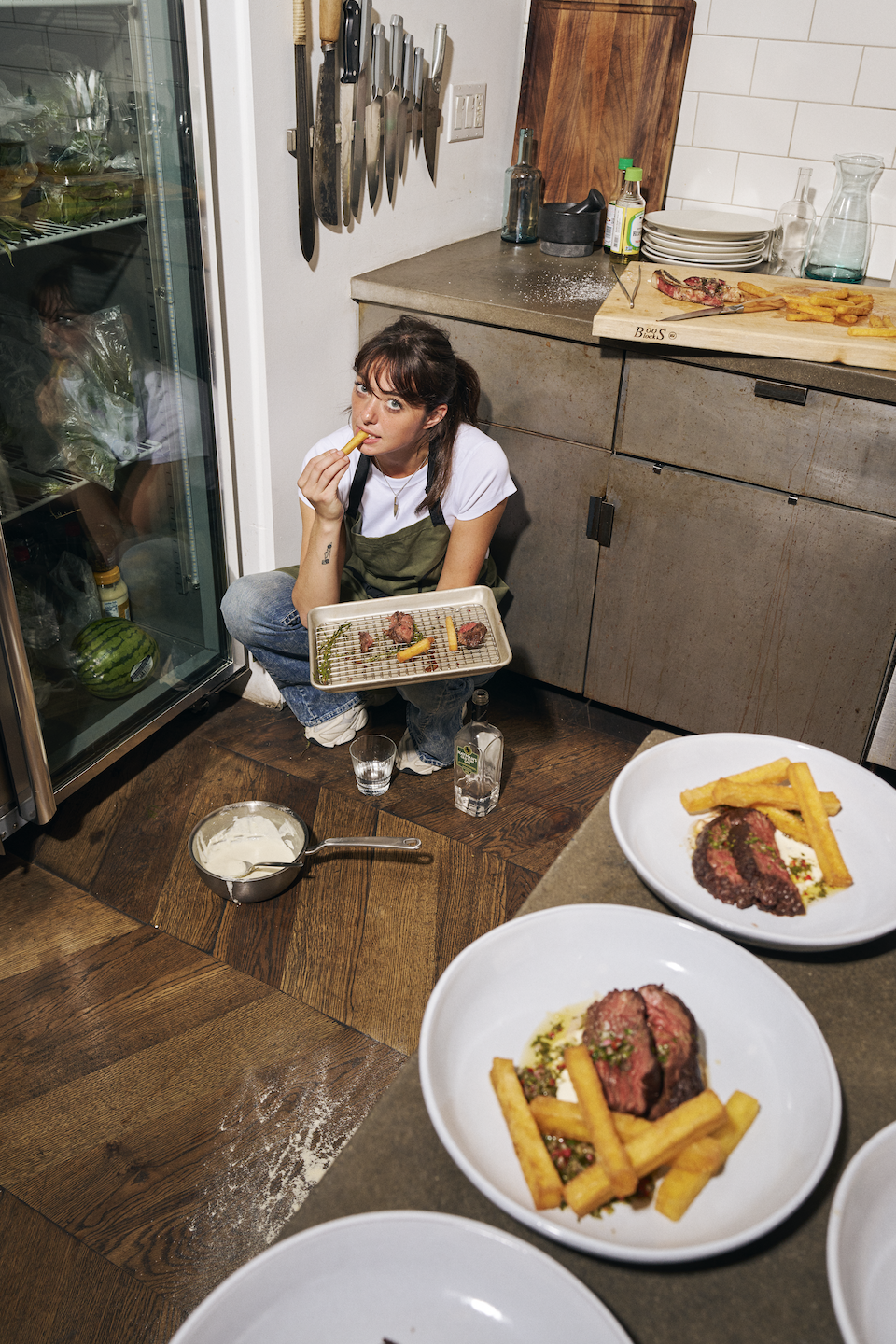
IN CONVERSATION WITH OLIVIA TIEDEMANN
interview by JANA LETONJA
Olivia Tiedemann is redefining what it means to be a modern chef. After training in professional kitchens and working as a private chef in the Hamptons, she built an audience of millions by pairing elevated cooking with cinematic visuals and a razor-sharp sense of humor. But behind the viral recipes lies a far more personal story. In her debut cookbook, Eat (Like) the Rich, Olivia reflects on the journey that shaped her, from discovering her love for cooking as a teenager to the devastating loss of her sense of taste after contracting COVID-19, and the long road back to the kitchen. More than a cookbook, it’s a celebration of resilience, creativity and finding joy in food again.
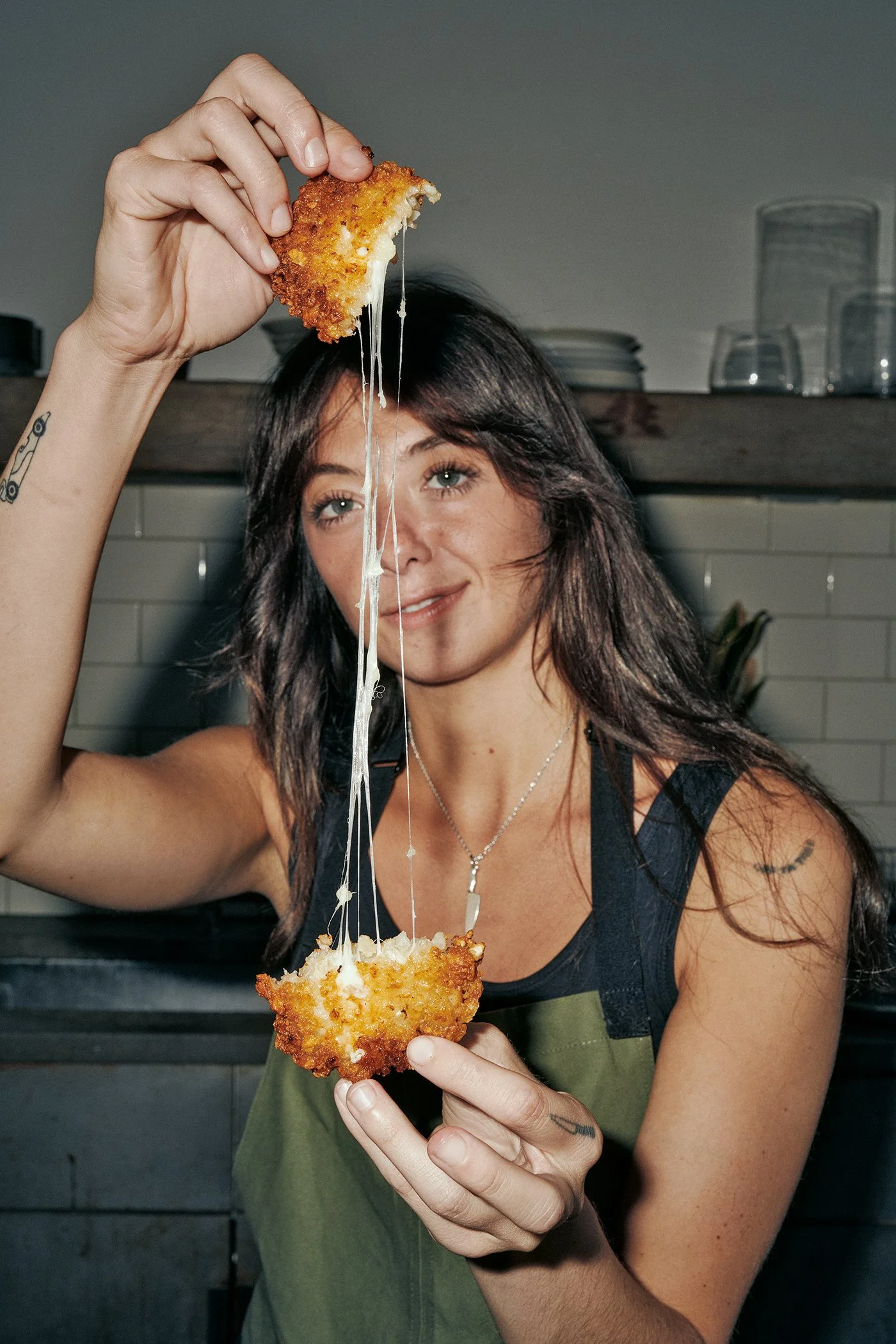
photography by MARCUS NILSSON
Eat (Like) the Rich is much more than a cookbook. At what point did you realize this story needed to be told?
Eat (Like) the Rich is a little bit more than a cookbook to me and I think tells a little bit of an untold story. Working in kitchens is quite literally the back of house, behind the scenes. Long hours, a perfect breeding ground for bad habits, and an often times toxic work culture that rewards suffering. I really wanted to include something in this book that might connect to people living that same experience. It can be an isolating one, an uninspiring one, a pretty fucking bleak one. It’s hard to do something you really love at the cost of every other part of your life. I wanted to validate that experience and also share that you can at any point change direction. I see you, and you can do whatever the hell you want.
You first fell in love with cooking while working as a food runner. Do you remember the moment you knew the kitchen was where you belonged?
I started working in restaurants and got connected with Chef Tristen Epps, who really sealed the deal for me. I was blown away by how focused and meticulous he was in the kitchen, and he was nice enough to teach me little things while I stalked him around trying to pick up any and every lesson he had to offer. I wasn’t allowed to touch the food as a runner, but he encouraged me to go to cooking school. That’s really all he had to say for me to work my ass off and get the training I needed.
Losing your sense of taste for nearly a year must have been incredibly difficult. How did that experience change your relationship with food?
Yeah, that sucked. I hate how cheesy this sounds, but it’s like you don’t know what you’ve got until it’s gone. I’d put everything into this path, and I had no idea if I would ever be able to taste again. But it did force me to look outside myself and take things a little slower. I worked on a movie set as a production assistant, and it brought my stress levels down significantly, which was a silver lining. It’s definitely made everything that came after the fact that much more insane.
Your career has taken you from restaurant kitchens to private cheffing and now to millions of followers online. Which chapter has taught you the most?
I learned a lot in restaurant kitchens. A lot of cool and a lot of toxic stuff. There are some of trade-offs to restaurant life. I’ve been severely depressed while pursuing this career, just trying to move faster and faster and striving for perfection. Every chapter has taught me something different, but in this one I have to combine everything I’ve learned and multi-task in a different way. I don’t work in a vacuum anymore, I’m rarely focusing on one thing. I’m cooking, yes, but I’m also serving the food, doing the dishes, maintaining relationships with clients, while also filming and editing and listening to an audience. It’s requiring a different level of creativity across the board.
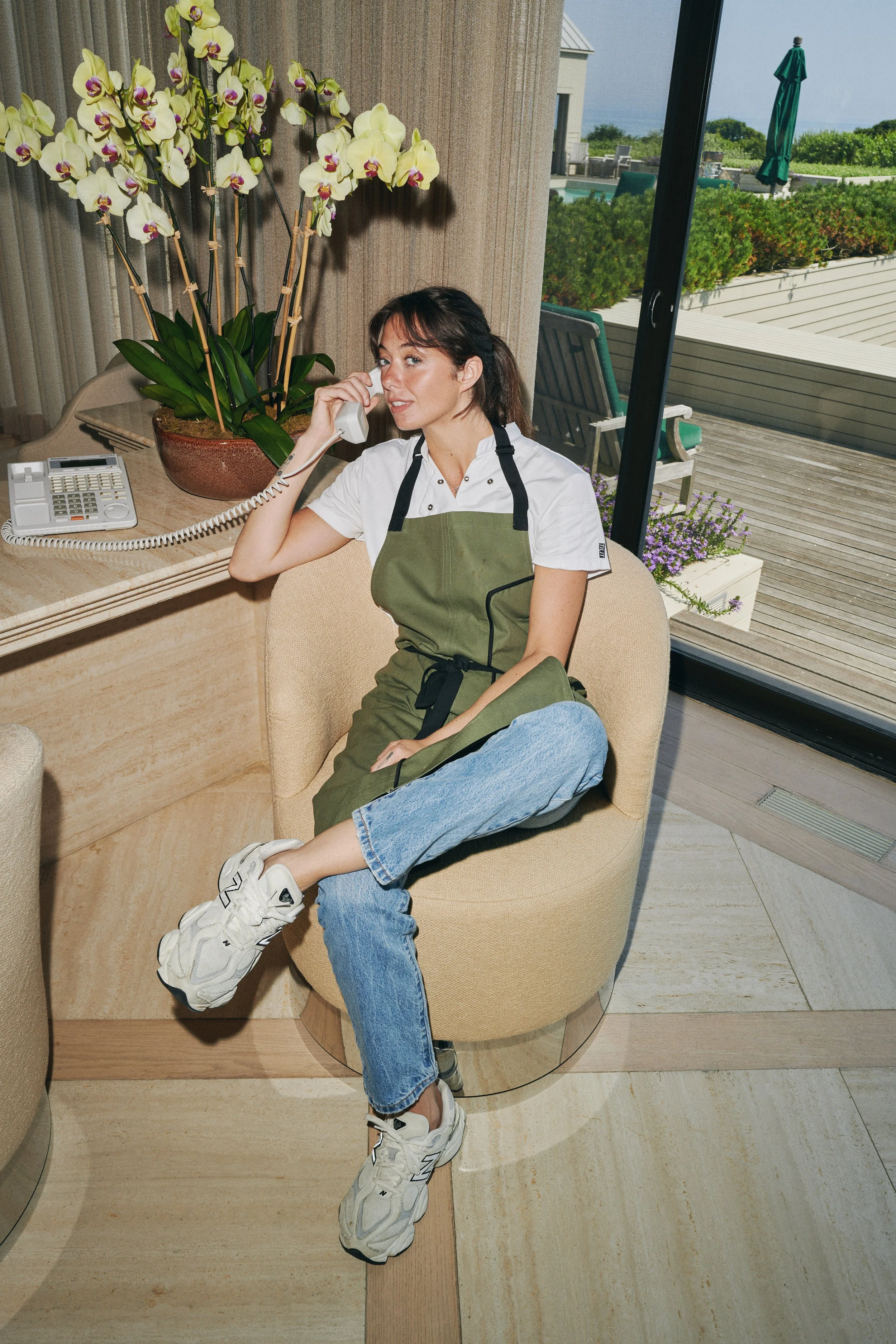
You have a very distinctive voice online—equal parts luxury, humor and honesty. How naturally did that style develop?
I don’t know. I just try to be authentic, and somehow these people find it entertaining. When I first started private cheffing, I acted like a perfect angel for my client so I was nervous at first for her to see how I presented myself online, but thank god she thought it was funny and became my biggest supporter and #1 fan.
Food content has become incredibly polished, but yours never feels intimidating. Is accessibility something you consciously think about?
Definitely. That’s the main point of my book. I know the recipes might look fancy and advanced, but they’re doable. You don’t have to be ultra-wealthy or a classically trained chef to make good food or to eat like you’re rich. It’s mostly about having few good tools, quality ingredients, and giving a damn.
As a private chef, you’ve cooked for people with extraordinary access and resources. What did that world teach you about luxury and hospitality?
There’s a certain level of refinery you have to understand to work as a private chef. It’s a slower lifestyle, a more personable job, in a beautiful setting. It’s just calmer. You’re not sweating your ass off at the back of the kitchen cooking for faceless customers. The hospitality piece is different. You might have a dinner for 10 and one person is gluten free, one is vegan, one is allergic to dairy or eggs or something you find in literally every dish, and you have to come up with an entrée that can work for everyone. Some people might think that is super annoying, but I think it’s a fun challenge. Plus, just because you have access and resources doesn’t mean you don’t love the classics. Some of my simplest recipes are the ones my clients love the most.
The title Eat (Like) the Rich is playful and provocative. What does it mean to you?
So many people think you need to be wealthy to experience restaurant quality food right in your home, which is just not true. And obviously, “like” is in parenthesis for a reason. I didn’t go to college, never wanted to, I didn’t graduate from high school, I just started working. I’ve been working since. I always wanted to live life by my rules, and I’ve done just that. I think it’s worked out pretty nicely so far.
How do you balance creating food that looks beautiful with food that people genuinely want to cook and eat?
I think taste is obviously paramount, and that’s the harder part. You really have to be an active participant in every step of the process, trying things along the way, not just when it’s all said and done. Making it look beautiful is the fun part. Growing up, I loved sculpting, painting, and visual/tactile art. Getting to incorporate that visually creative side of myself into my work is pretty sick.
Social media often rewards speed and trends. How do you stay true to your own creative instincts in such a fast-moving space?
When I feel too caught up in trying to be creative, that’s when I know I have to take a step back and do something totally different. Go to the movies, hang out with friends, find inspiration from just experiencing life rather than trying to force it.
Beyond recipes, what do you hope readers take away after closing Eat (Like) the Rich?
You’ll figure it out. If you know what you want to do, do it and tell anyone who doubts you to f*** off. As long as it’s sort of legal, of course. As for the kitchen, ask questions, shop locally, don’t be afraid to try something new. Live a little, you know?