
interview by LEANDRO DA SILVA
Pabllo Vittar has spent the past decade helping redefine Brazilian pop. As one of the world's most prominent drag artists, she has helped bring the genre to audiences far beyond Brazil while building a career that seamlessly blends music, fashion and performance. Now, as she prepares to release Lost in Lust—her seventh studio album and first project entirely in English and Spanish—she enters a new creative chapter.
In conversation, she discusses the inspiration behind the record, the evolution of Brazilian pop, artistic freedom, visual storytelling, staying connected to her roots, and why, after a decade in the spotlight, making music is ultimately about finding joy.
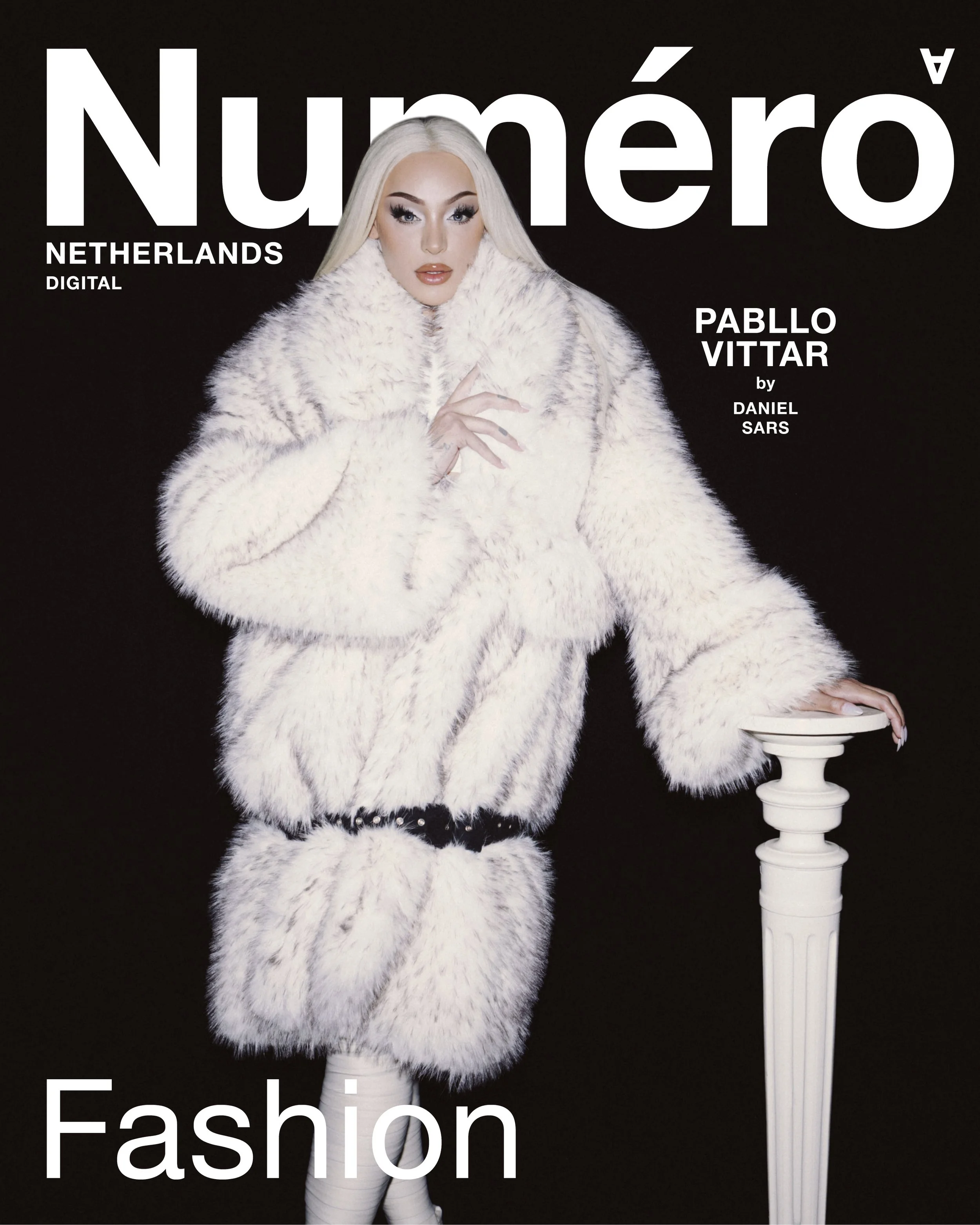
Over the past decade, Brazilian pop has reached new audiences both in Brazil and abroad, and your career has been at the centre of that evolution. How do you see your role in shaping and developing the genre?
I feel very honoured to be part of this generation of Brazilian pop artists who have been changing the landscape. I've always been a huge fan of pop music and of the artists who made pop.
When I was a kid, I listened to artists like Kelly Key, Wanessa Camargo and SNZ. I always loved that style of pop that blends international influences with Brazilian music. Growing up with artists like Britney Spears while also embracing Brazilian pop from the 2000s really shaped my taste.
When I started my career, there were already incredible artists like Anitta and Ludmilla paving the way. So when I arrived, it was amazing to be welcomed and embraced by those artists who had already become references themselves.
I truly believe we're making, and have made, a real revolution through music. It's beautiful to witness.
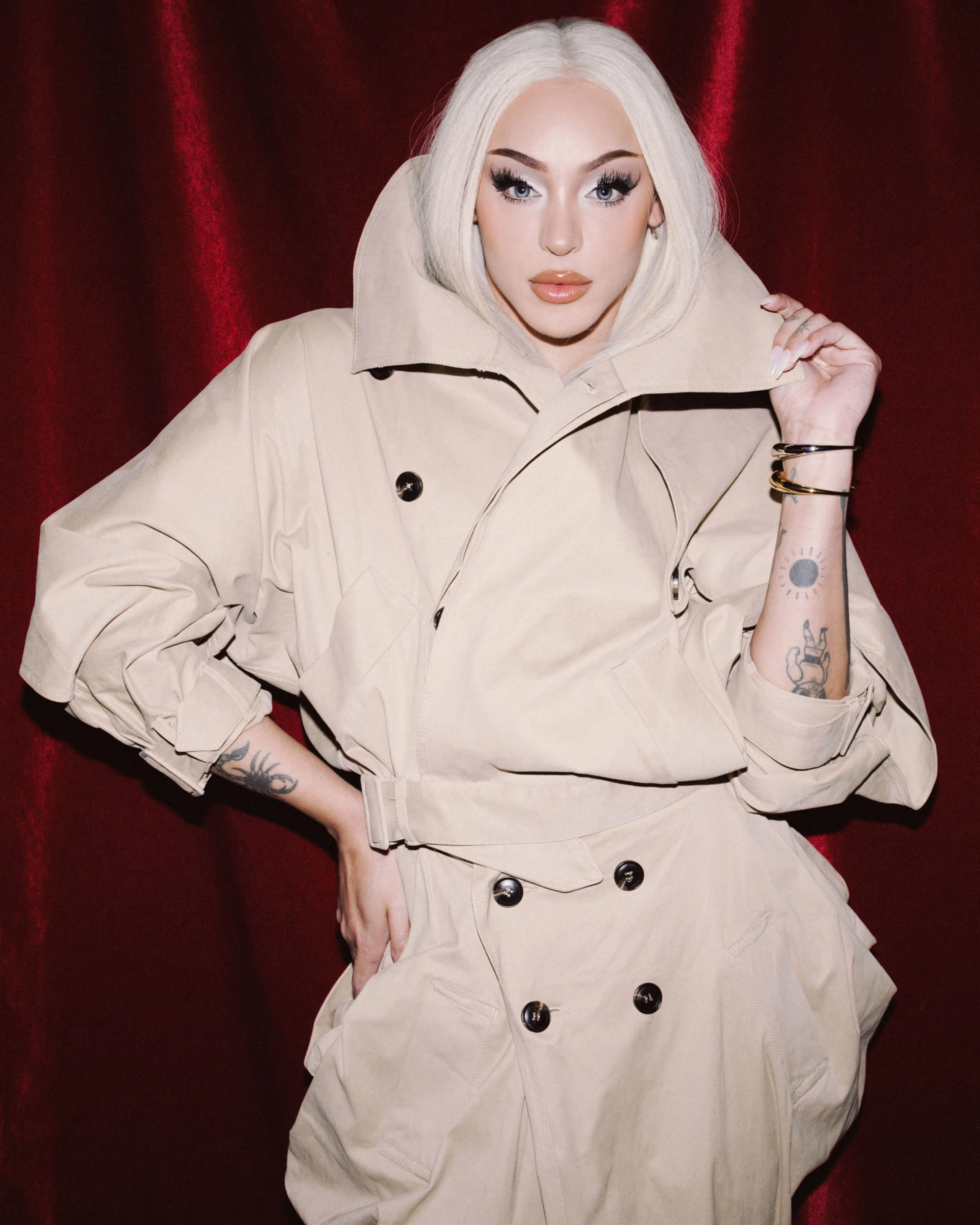
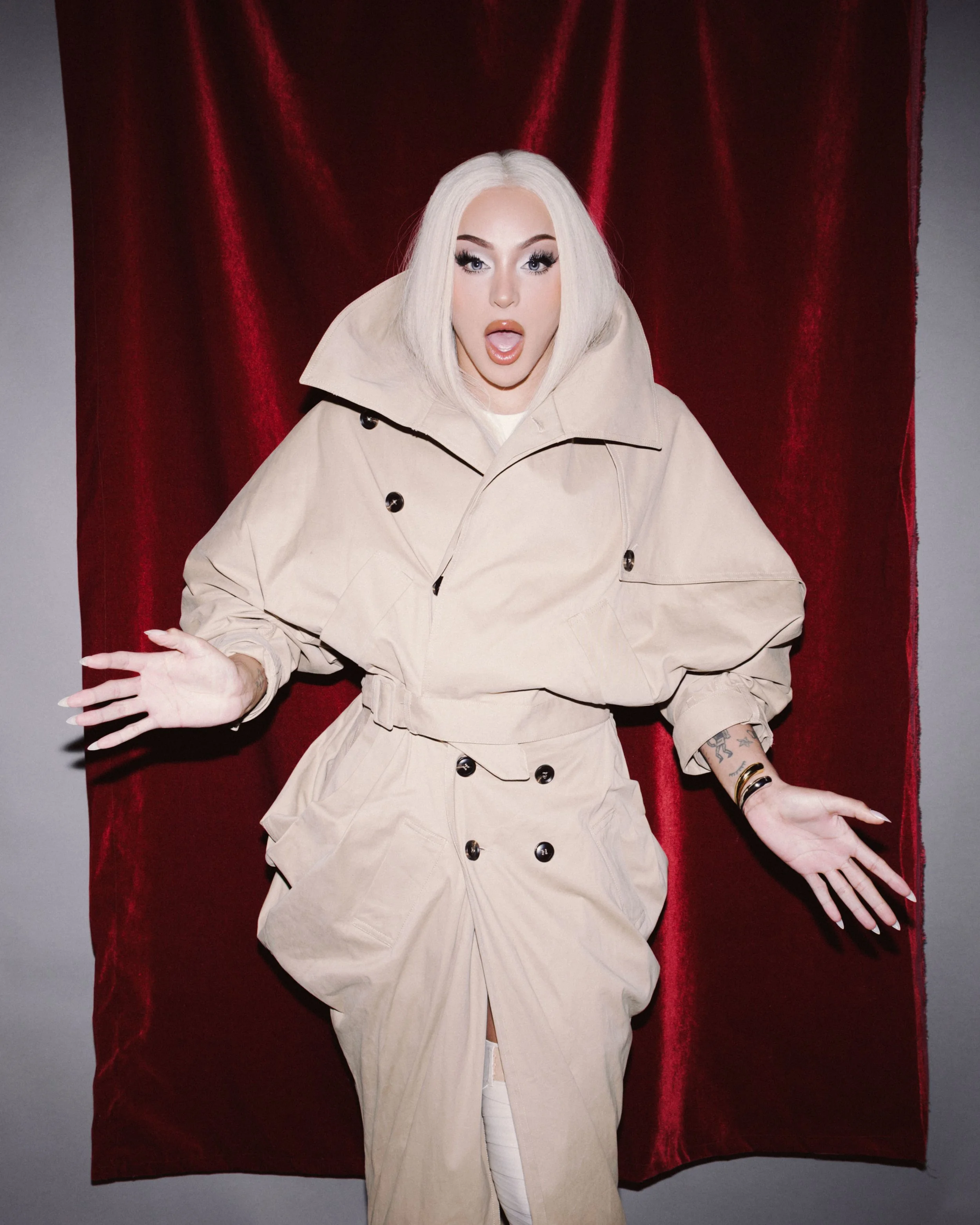
jacket and skirt MAITREPIERRE
jewellery MAM JEWELRY
Your work exists at the intersection of music, fashion and performance. Where does a new project usually begin for you?
It always starts with the imagery. I create a whole world in my mind before anything else. That's where I figure out how I want the music and the story to come together. That's exactly how the album I'm releasing this year began.
First came the visual universe. Once I had that clear in my head, I went into the studio and explained to the producers what I was imagining. When they brought me the first productions, I immediately knew, "This is it."
From there, we move on to songwriting, then visuals, and everything else follows. It all begins in my imagination.
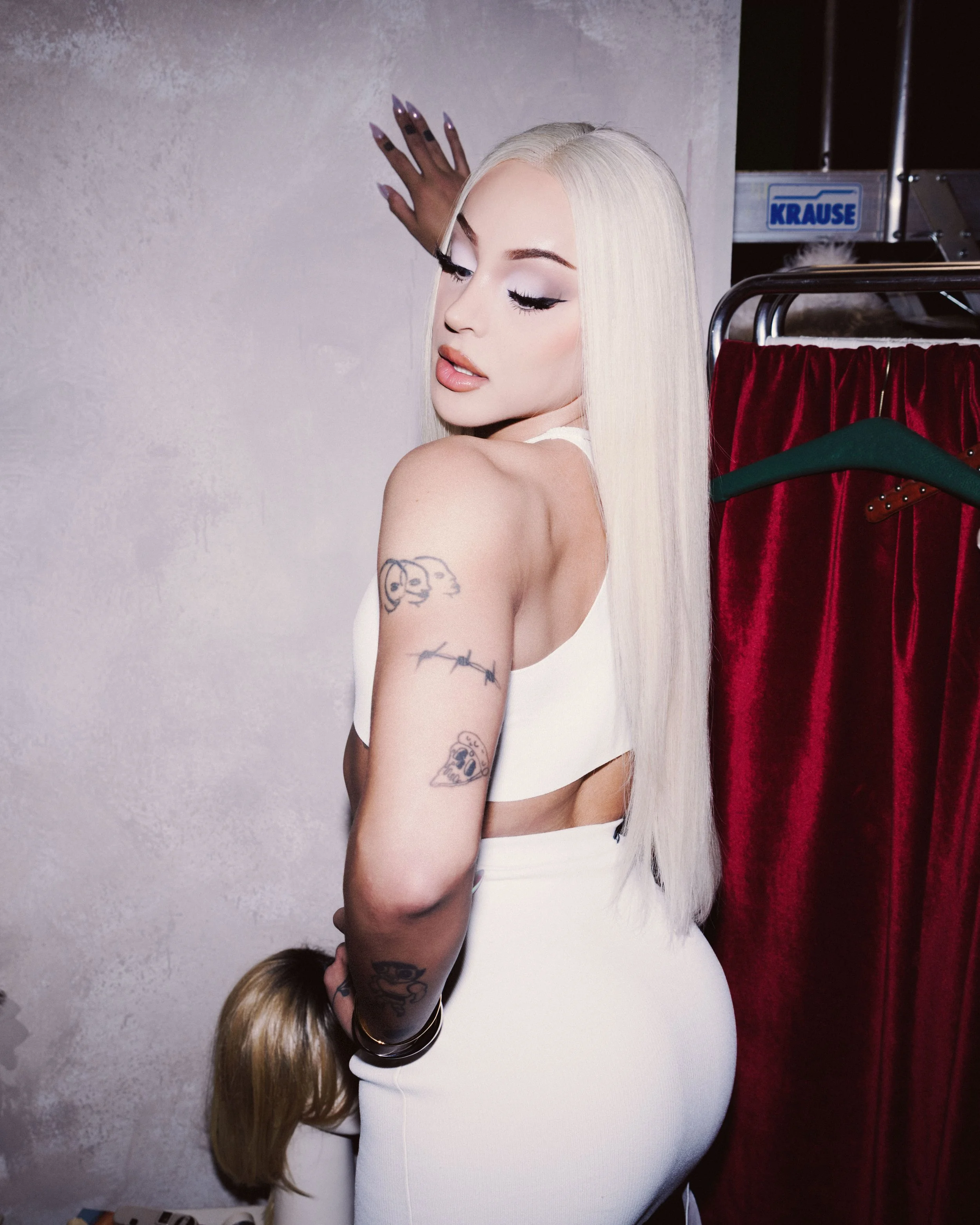
top and skirt BOYAROVSKAYA
bracelets MAM JEWELRY
Once that first idea starts taking shape, how do you know it has the potential to become a full album?
When the songs are finished. For this new album, Lost in Lust, which will be my first project entirely in English and Spanish and my seventh studio album, I imagined a world where I could explore both the good and the bad things I've experienced throughout these ten years of my career.
The positive side of fame, the difficult side of fame, heartbreak, people's intentions— not only towards me, but towards what I represent. Music became the way I wanted to tell those stories.
Once all the songs are written, we start selecting which ones truly belong together and fit the album's narrative. For this project, that process felt very natural because everyone I worked with on songwriting and production is part of the LGBTQIA+ community. It made communication incredibly easy because we all understood eachother.
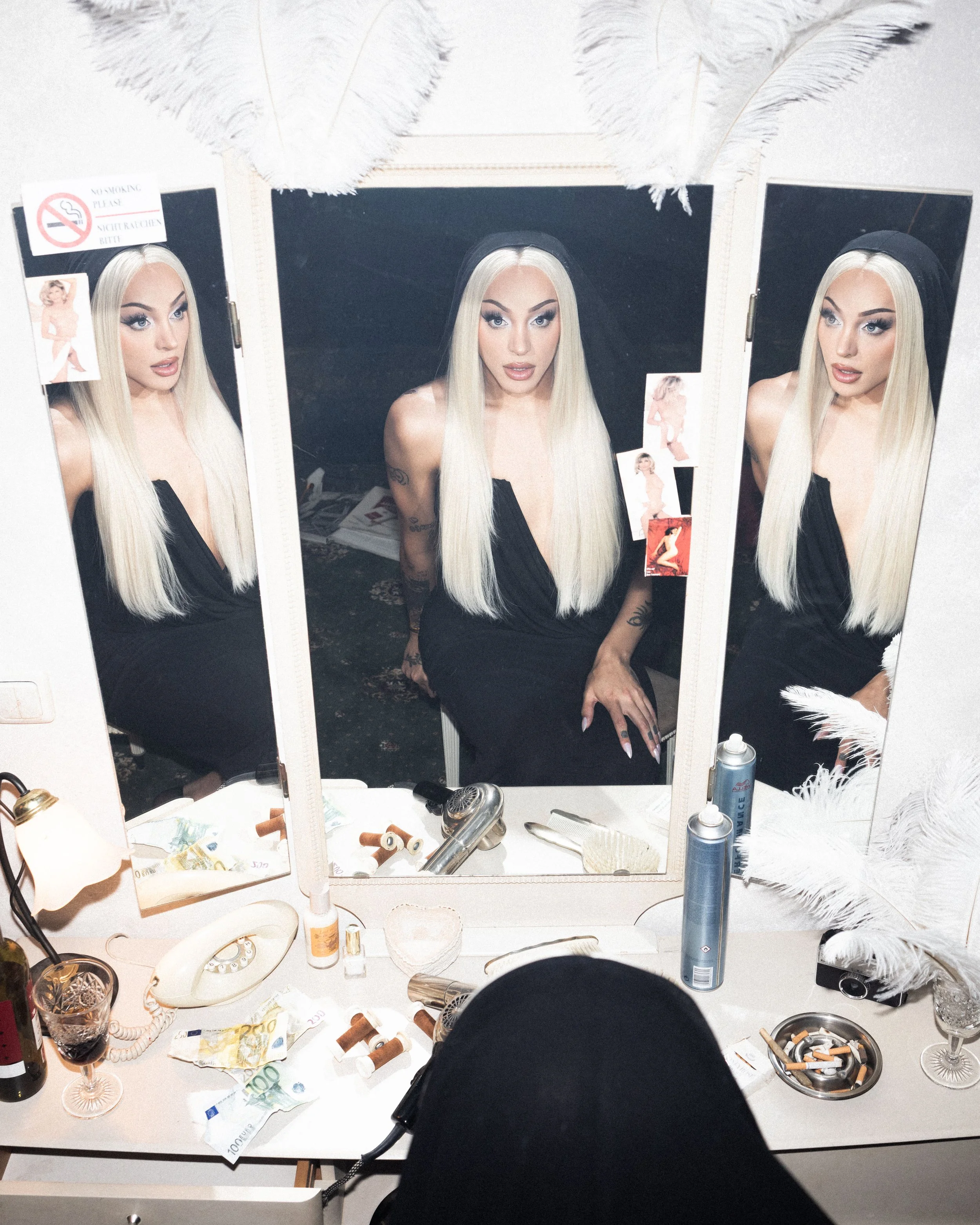
dress EGON LAB
Your visual identity is just as distinctive as your music. How involved are you in shaping each era, from styling and visual identity to music videos and live performances?
I'm involved in everything. I think that's very important because it's not only about expressing the truth; it's about showing everything that exists behind the music.
Music isn't just music. There's a visual language, a story and a narrative. I'm constantly talking with the people directing the visuals, creating the new imagery, the stylists, the hair team, everyone involved.
It's important that we're always on the same page and fully aligned with what the music is trying to say.
When you're away from the stage, how do you reconnect with the person behind the artist?
It's actually quite difficult. Right now, for example, I've been travelling for several days. It's like leaving a concert or a party: you get home, but it's hard to fall asleep because the adrenaline is still so high.
For me, it's exactly the same. It takes a few days for everything I've experienced to settle. I reconnect by spending time with my family, my mum and my friends. I go back to the countryside of Minas Gerais and step away from all the chaos of São Paulo and Rio.
Since I already live so much of that world, when I'm off stage I don't want to think about makeup or anything connected to the universe of Pabllo Vittar. I just want to be Phabullo.
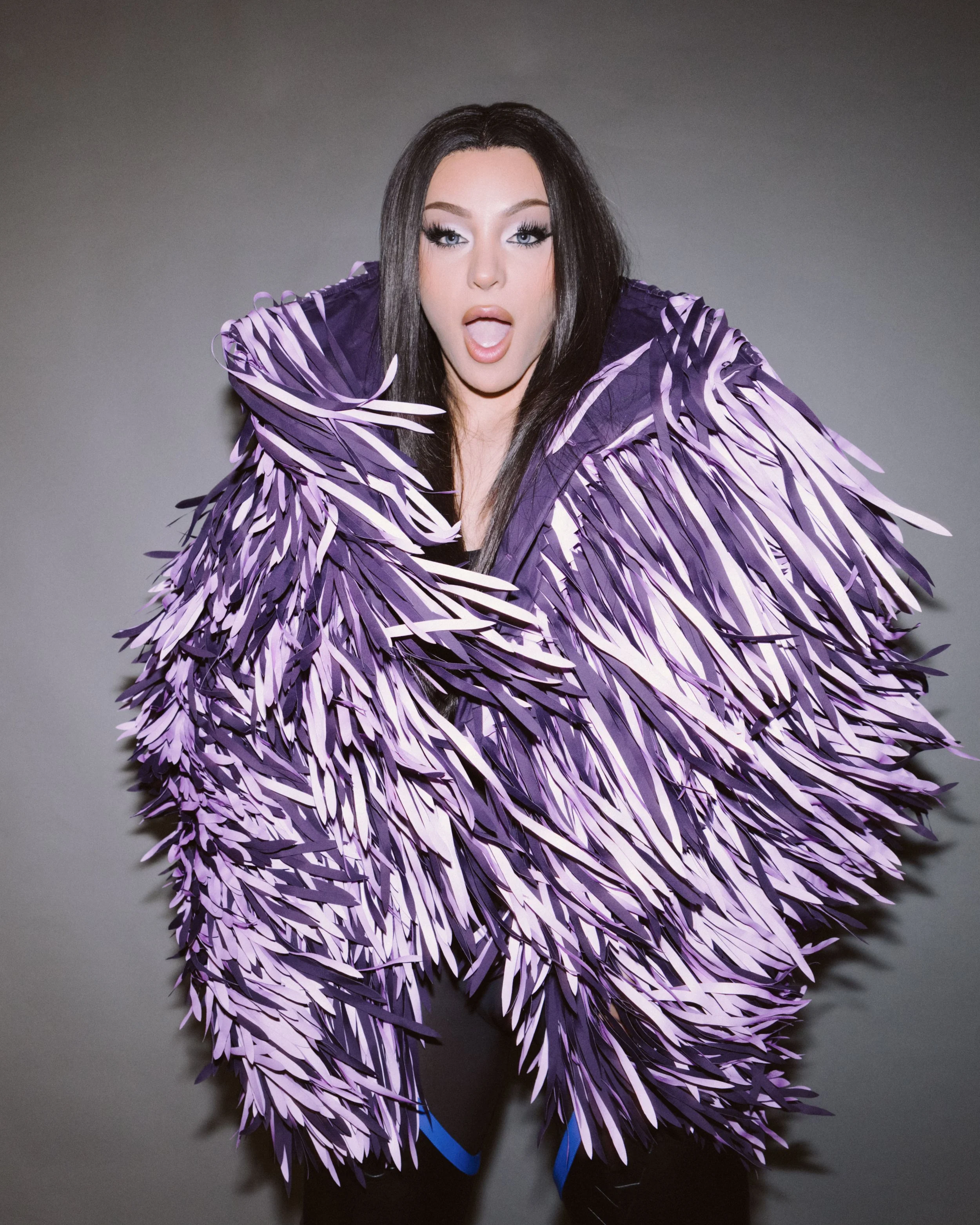
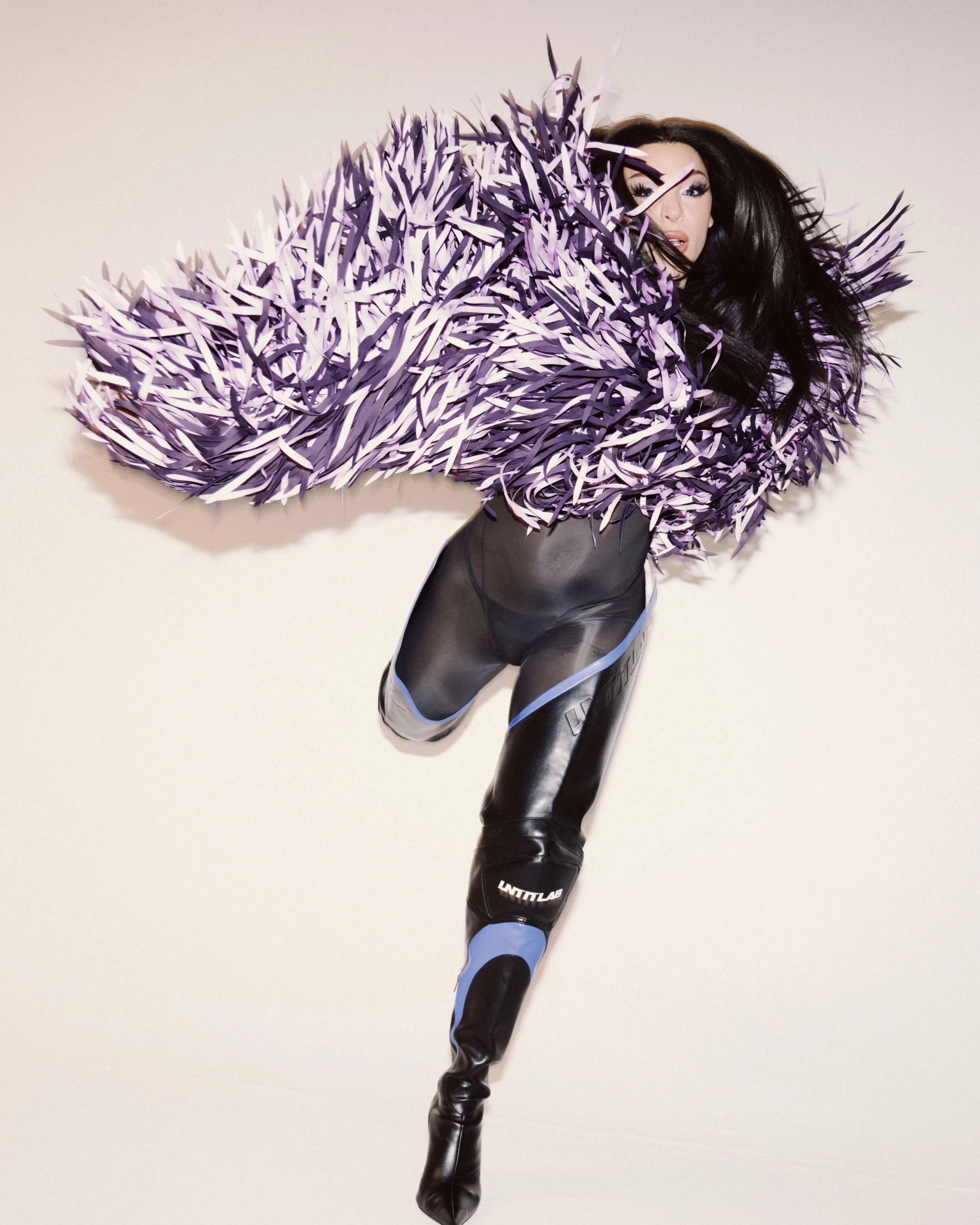
coat MAITREPIERRE
catsuit SCANDALE
shoes UNTITLAB
You've collaborated with artists from many different musical worlds. What makes you say yes to a collaboration, and what do you hope to learn from those creative exchanges?
I love collaborating with friends and with artists I'm genuinely a fan of. I always hope to learn something, whether it's about songwriting, production or simply bringing something positive back into my own work.
I don't like collaborations that are just about recording your part separately and releasing the song. I've done that before: someone records in their country, I record somewhere else, we release the song, send each other a kiss, and that's it.
But what I really enjoy is being together, going into the studio, writing together and sharing that creative time. I learn so much by seeing how other people work.
You often speak about freedom and individual expression. How have those ideas evolved for you over the years, both as an artist and as a person?
Those beliefs are still incredibly strong. I'll always stand for freedom and for people being their true selves. There was a time when I tried very hard to hide who I was, and that's a very painful way to live.
Being a pop artist and a drag queen has given me the opportunity to express myself in so many different ways without being afraid to try new things.
People often ask why I don't do this or that, but I always choose what genuinely feels right to me. I try to stay as true as possible to my own thoughts.
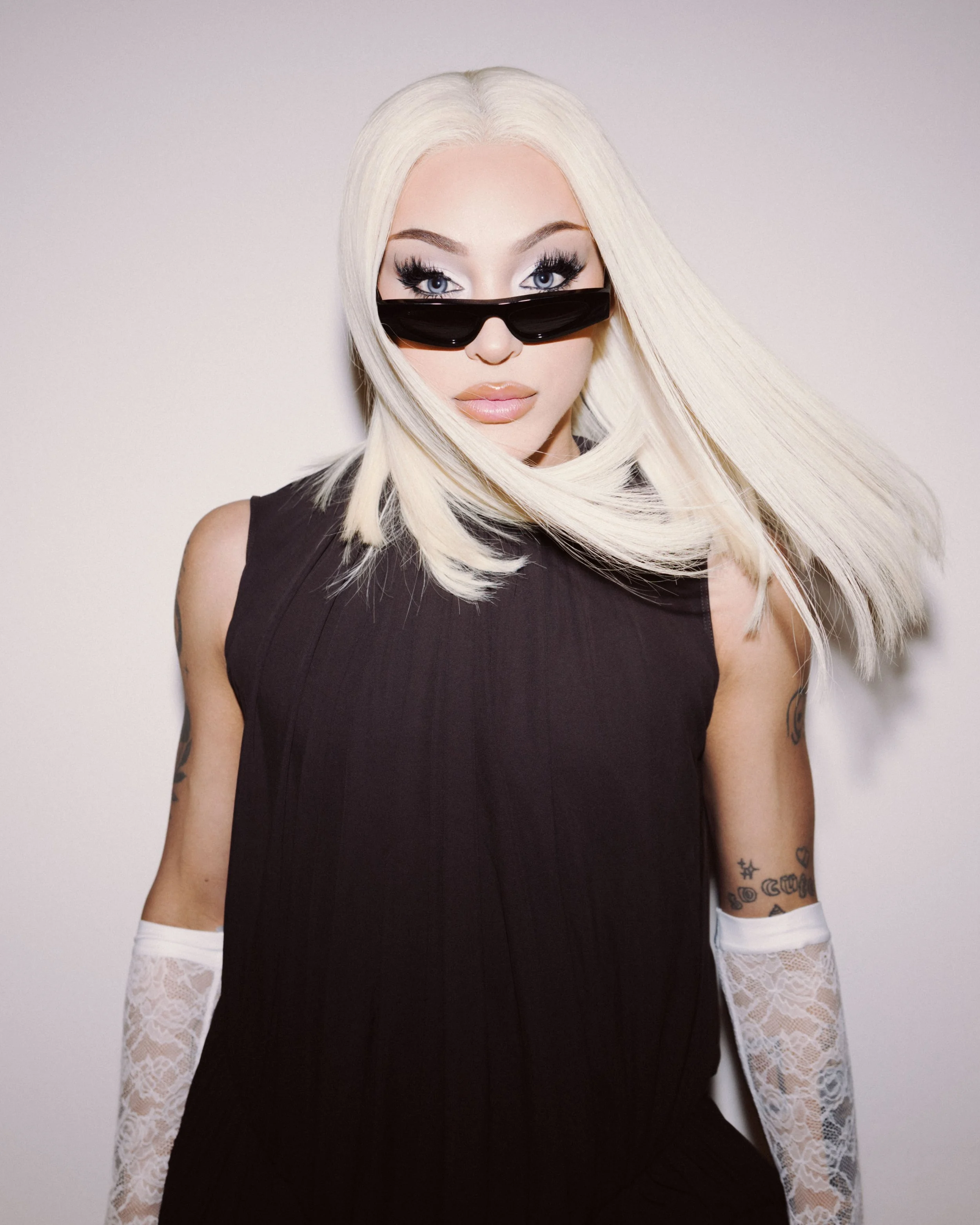
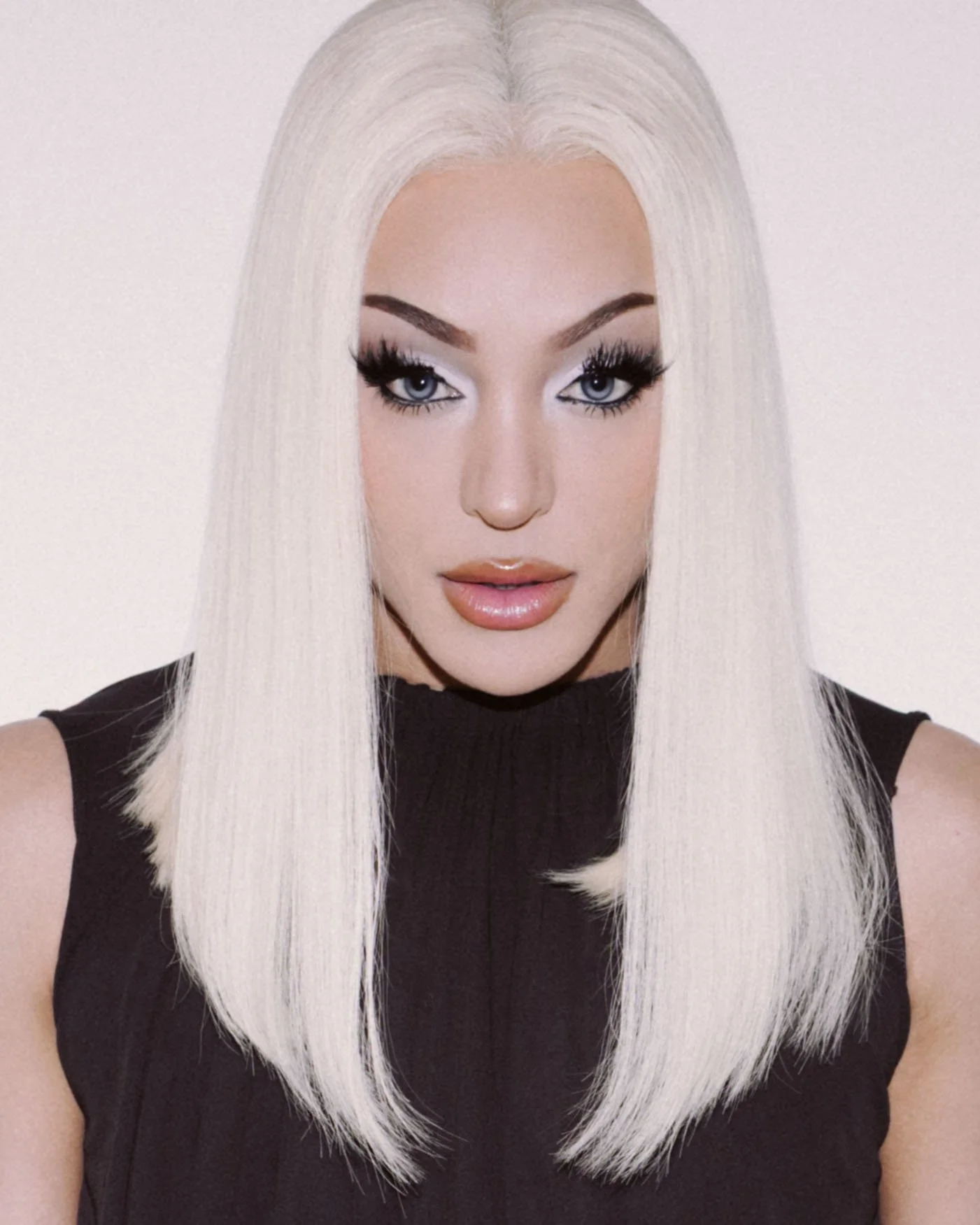
dress ALAIN PAUL
gloves SCANDALE
sunglasses GUCCI
Your music has reached audiences around the world without losing its roots in Brazilian culture. How do you preserve that authenticity as your career continues to grow internationally?
By staying connected to the music I grew up with, supporting those artists and continuing to perform in the places where I was raised—places that welcomed me from the very beginning.
Many of my fans from the LGBTQIA+ community come from those places, and they look at my journey and think, "Pabllo came from here, and look where she is now. Maybe I can do it too."
That connection is incredibly important, not just for my music, but to strengthen that bond and show the next generation that it's possible. I'm not the rule.
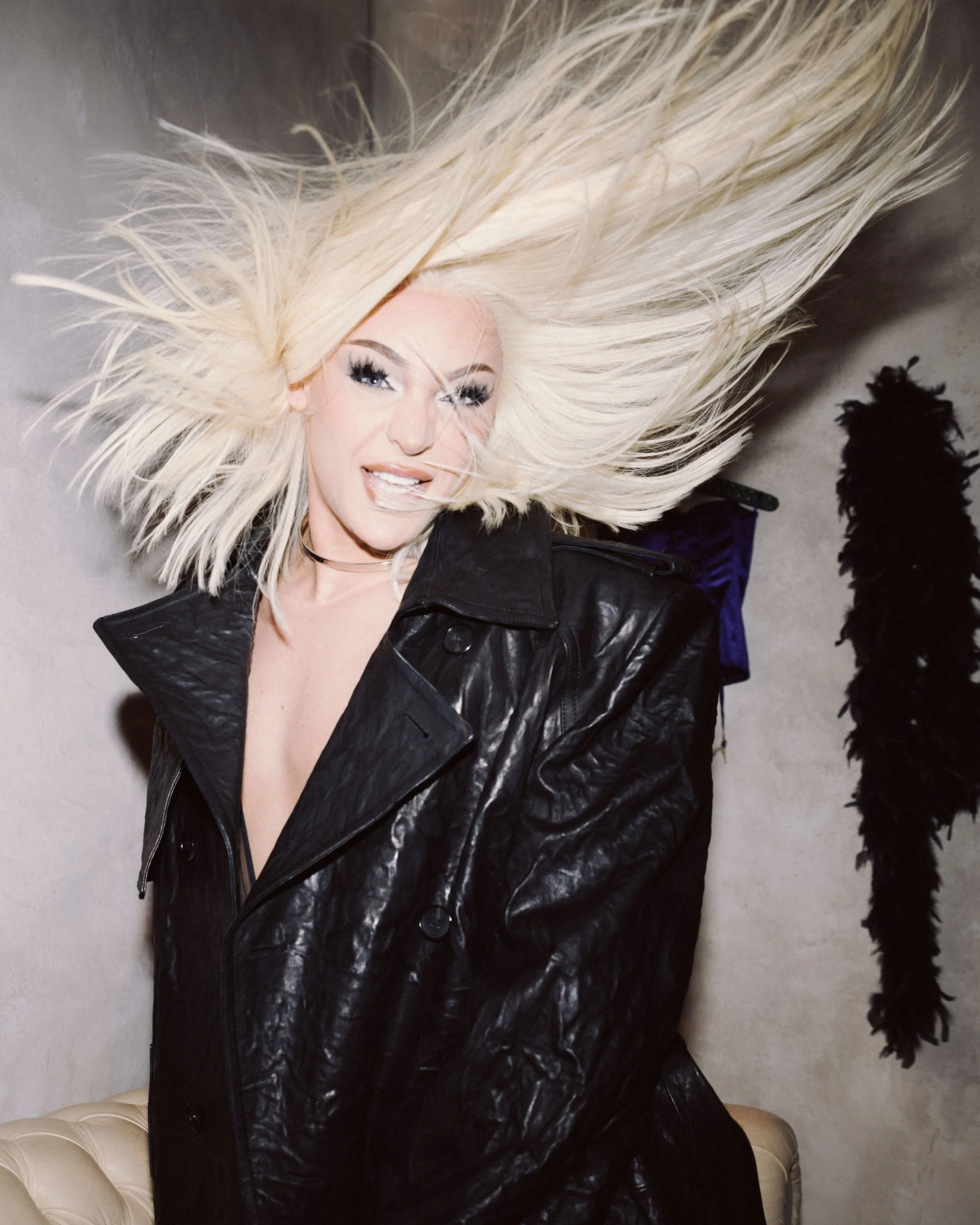
trench coat JUUN J
necklace MAM JEWELRY
Your journey has inspired countless people to embrace who they are. What does Pride represent to you today?
For me, Pride is about much more than simply being proud of who you are—that's the starting point. Pride means having the courage to do what you truly want and not being afraid. Most importantly, it means not being afraid to say no.
Many LGBTQIA+ people end up accepting situations they don't really want because they're afraid another opportunity may never come.
So Pride is also about choosing what truly adds value to your life. That's what being proud of yourself really means. It's about respecting yourself.
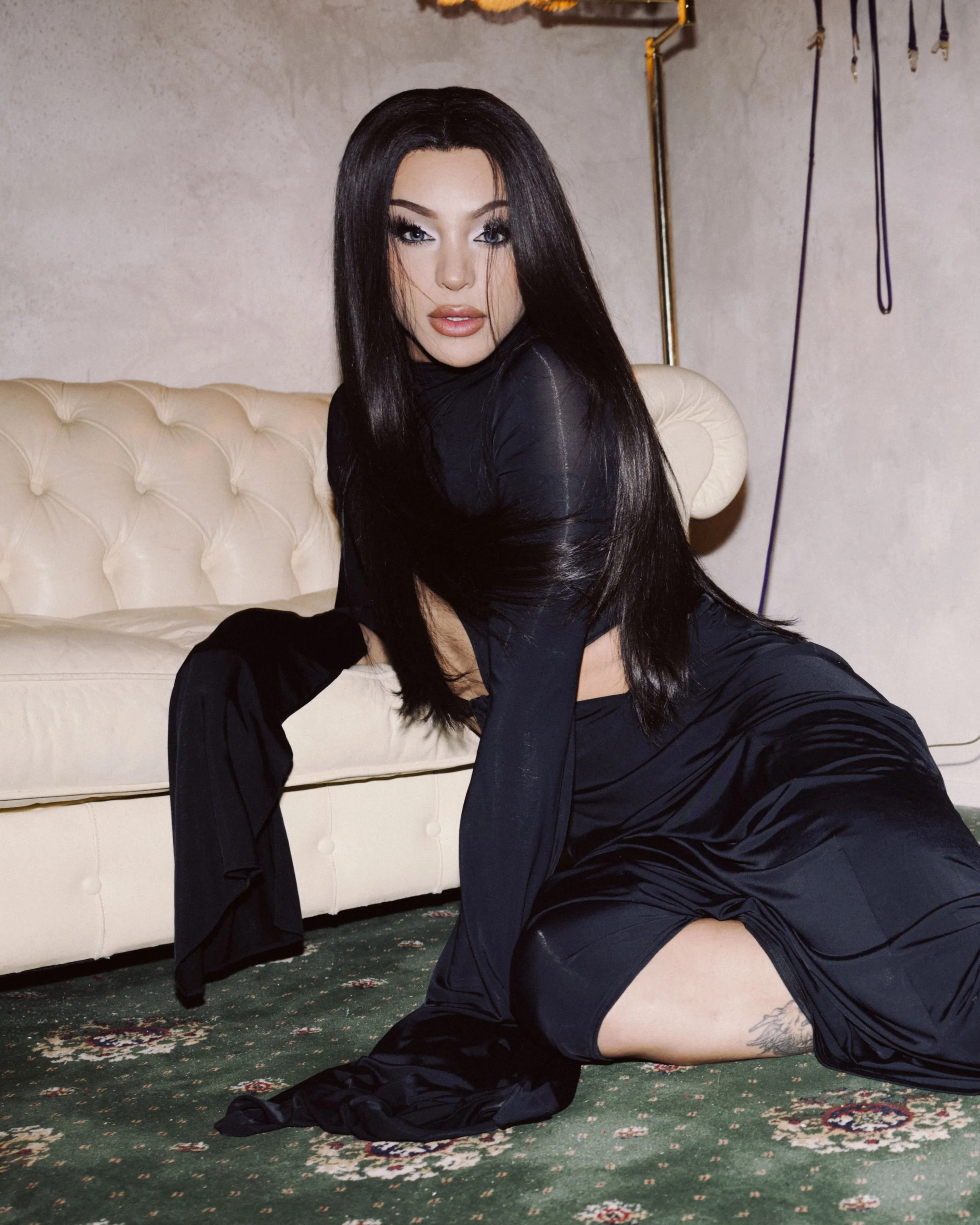
dress BOYAROVSKAYA
Every artist reaches a point where they feel the need to say something new.What's inspiring you creatively in this new chapter of your career?
These past ten years of my career. That's what this new album is about. I'm talking about everything I've seen and experienced, bringing my own life into both the music and the visuals. I hope fans connect with what we're trying to express through this project.
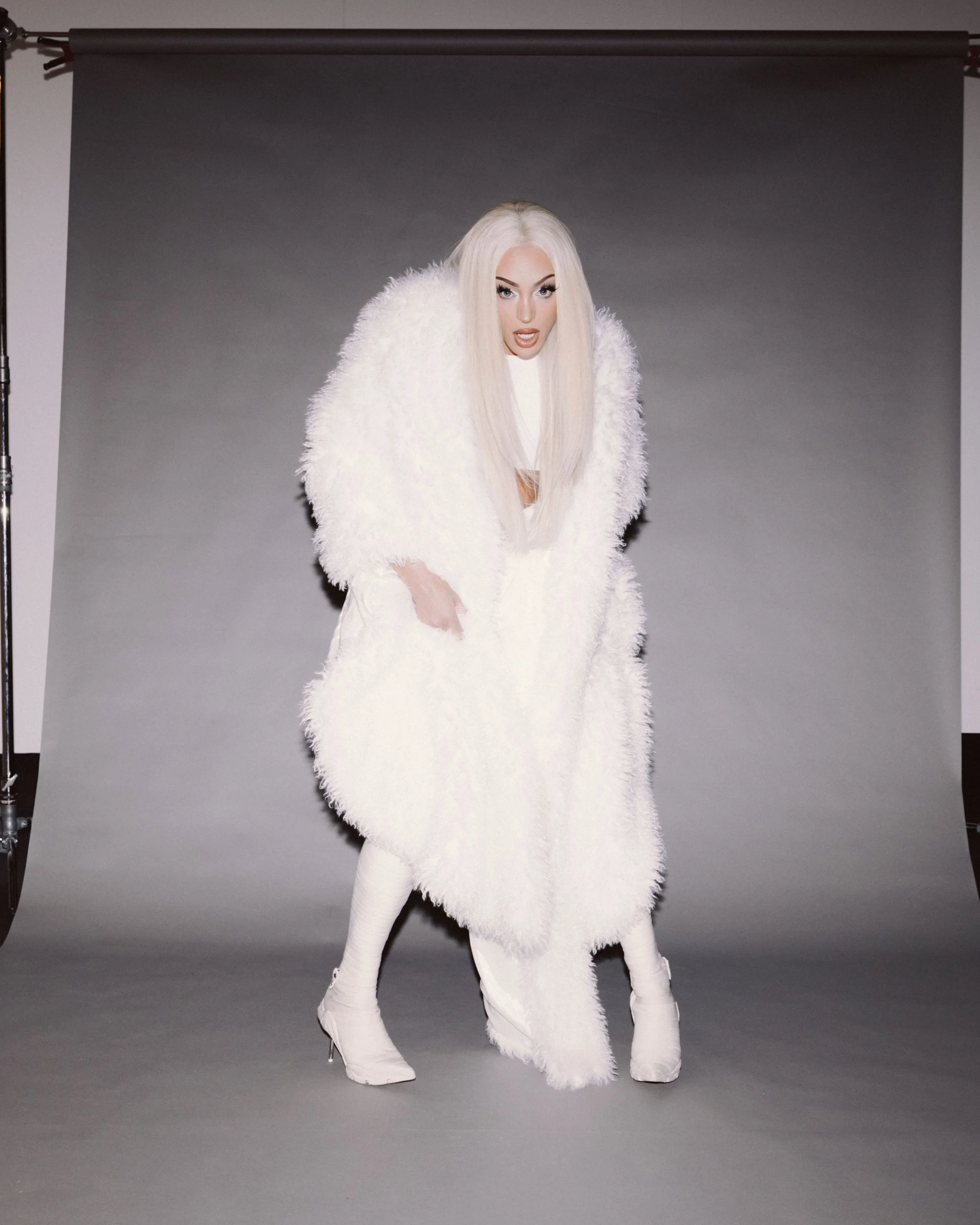
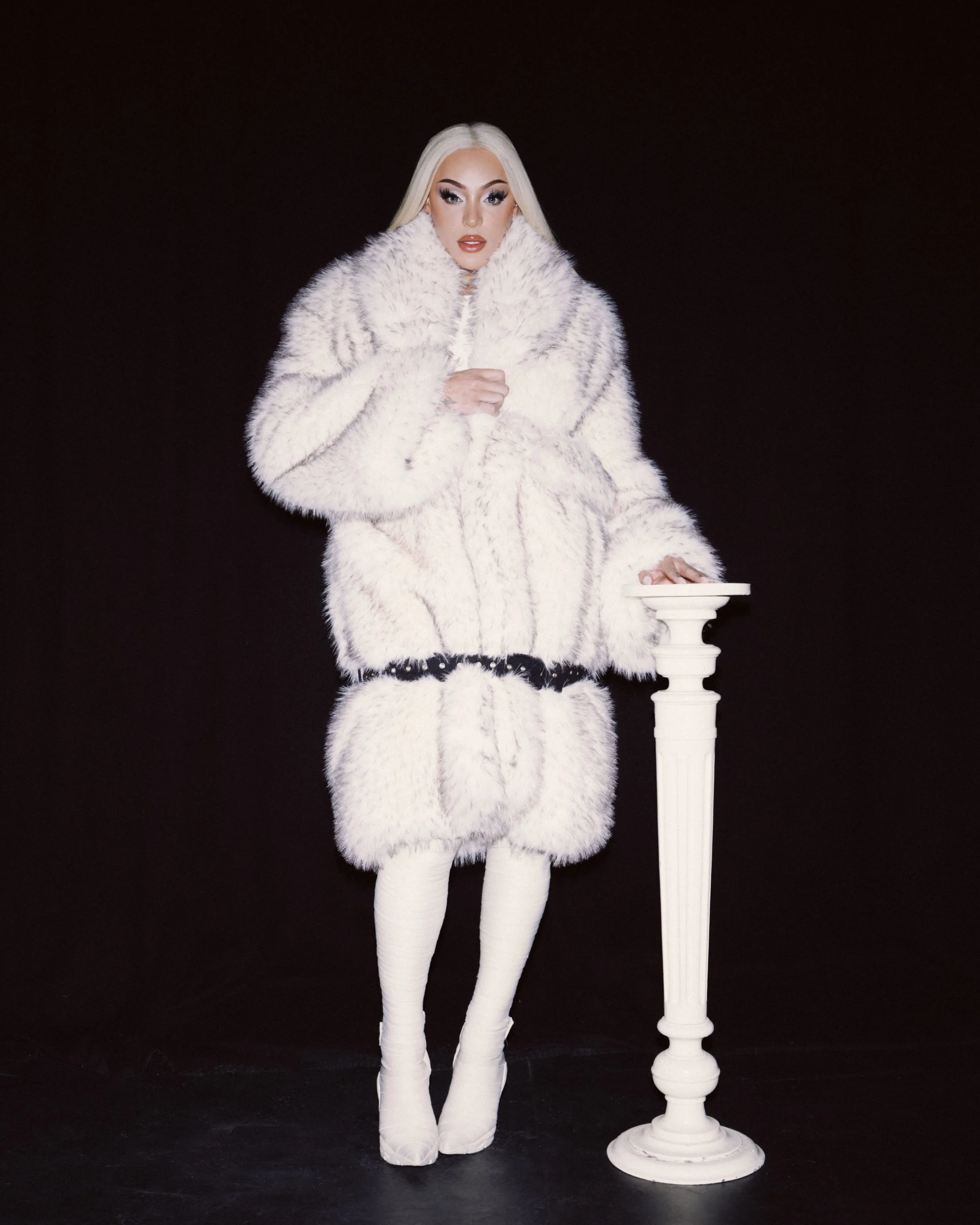
coat PRESSIAT
shoes ROMBAUT
Looking ahead, what do you hope this new chapter brings you creatively?
I always have high expectations, but I'm also very grounded. I know that for people in our community, everything is much harder. At this point, I simply want to enjoy myself.
Over these past ten years, I've done so many things under pressure. Now, at 32 years old, with ten years in my career and my seventh album on the way, I value my happiness above everything else. I want to enjoy making music.
I want to feel good. I want to have fun performing these songs so the audience can feel that positive energy coming from me. Just like it was at the beginning, without expectations.
I hope this project reaches people all around the world and makes them feel the same way I feel right now: completely comfortable being themselves.
TEAM CREDITS:
talent PABLLO VITTAR
photography DANIEL SARS
styling JOY SINANIAN
hair THEREZA BROWN
nails NATALYA CLEMENTS
set design GINI GROOTENBOER
fashion coordination JEANLUC FAVRE
styling assistants CAMILLE HUGUENIN and NASTYA BEZSONOVA
production TIMOTHY HOENSON
editor TIMI LETONJA
interview LEANDRO DA SILVA
cover design ARTHUR ROELOFFZEN
