
IN CONVERSATION WITH POPPY LIU
interview by JANA LETONJA
Poppy Liu is continuing her breakout rise with a standout year across both film and television, cementing herself as one of the most exciting and magnetic performers working today. Currently, she stars in I Love Boosters, the highly anticipated new feature from visionary filmmaker Boots Riley, which premiered at SXSW ahead of its release on 22nd May. Sharing the screen with an ensemble cast including Keke Palmer, Naomi Ackie, LaKeith Stanfield, and Demi Moore, Poppy continues to expand a career already filled with acclaimed performances in series such as Hacks, The Afterparty, American Born Chinese, and Netflix’s His & Hers. With her scene-stealing humour, emotional intelligence, and effortlessly distinctive presence, Poppy is entering a defining moment both creatively and culturally.
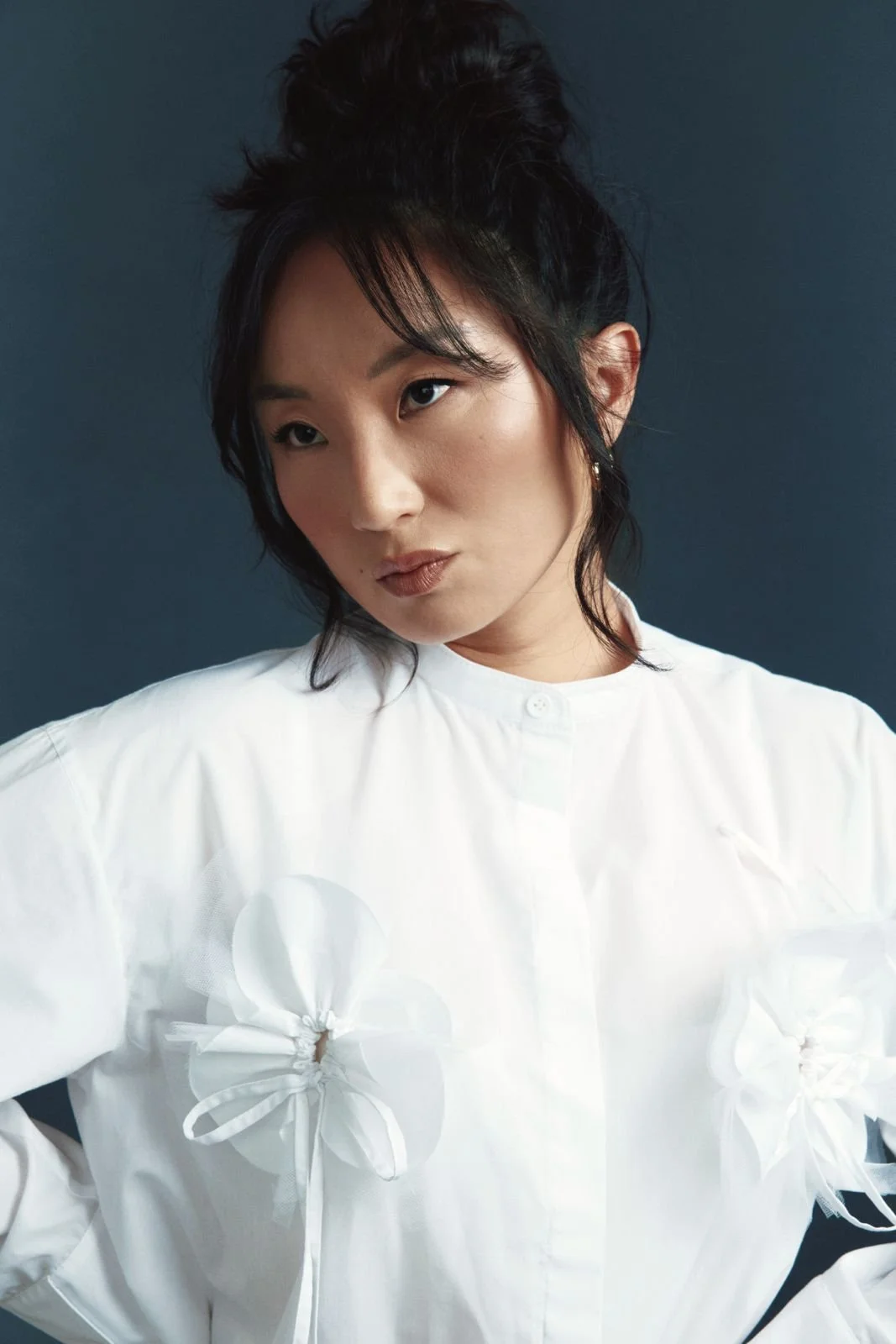
I Love Boosters has such an incredible cast and creative team. What initially drew you to the project?
Aside from the fact that Boots is a director I have always wanted to work with, I Love Boosters was the best, most original script I had read all year. Class solidarity themes wrapped in maximalist, outrageous fashion in a totally nuts surrealist world? I was practically frothing at the mouth to be part of it.
What was it like collaborating with Boots Riley, whose work always feels so original and politically charged?
I have so much respect for Boots, he is a master at using art as a political mouthpiece. He is a real artist, as in someone unafraid to challenge the status quo and question the world around him. I hate when artists and filmmakers say, “their art isn’t political.” Everything is political. The entire social makeup of the world is political, and you are always engaging with it, whether you are conscious of it or not. Boots has a genius way of balancing social commentary with entertainment, and the result is something of a Trojan horse.
What excited you most about your character in the film?
Jianhu is one of my favourite characters I’ve ever gotten to play. When I first talked to Boots about the character, he told me her name is based on a Chinese revolutionary who is referred to as Jianhu Nuxia, “The Woman Knight of Mirror Lake,” who was executed after a failed uprising against the Qing Dynasty and is heralded as a feminist martyr and national heroine in China. In a way, she is a very uncomplicated character. Her objective is crystal clear from the moment she appears on screen, and she never once wavers from her goal, which is to improve the working conditions of the Fushi factory workers back in China. She is entirely action-oriented; she never gets existential or stalled by questioning her motives or her means, she just blazes ahead by any means necessary.
Premiering at SXSW feels significant for a film like this. What did that moment mean to you?
SXSW was my first major film festival, and it was so fun. I have mostly done TV or straight-to-streamer projects, so I had never been to any major film festival before. I really liked being surrounded by film people. I didn’t go to film school; my performance background is largely in experimental and physical theatre, so it is awesome and novel to me to nerd out with people about films. Let it be known, I’m in my cinephile era.
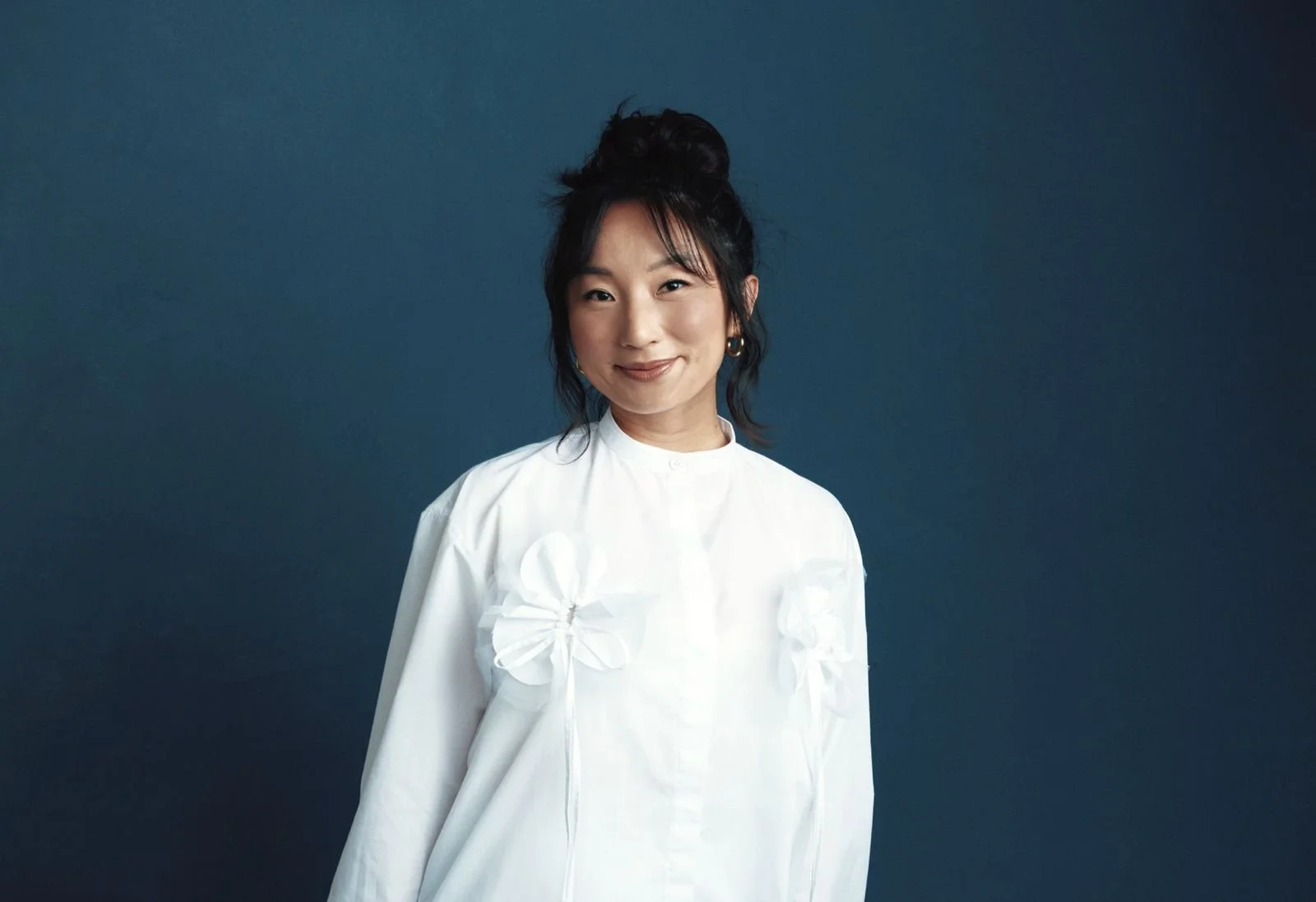
You’re also returning as Kiki in Hacks. Why do you think audiences have connected so deeply with that character?
Kiki has an effervescent lightness and self-confidence. She isn’t burdened by the self-doubt a lot of the other characters struggle with. She also isn’t intimidated by Deborah at all, which I think is something Deborah respects and likes about her. A lot of the characters circle around Deborah’s gravitational pull, and while Kiki does in the world of Hacks, I imagine working for Deborah is definitely not her only gig. And even if she lost the gig, she would still be just fine.
What has playing Kiki taught you about comedy and timing?
I have never thought of myself as a comedian, and kind of still don’t. And I could definitely never ever be a standup, it looks like one of the hardest jobs out there, and I really don’t have the stamina for it. In Hacks, the writing is so good, and the comedy is so baked into the script that I mostly just have to play any given scene with earnestness and let the writing do the work. As far as comedic timing, I don’t know if I’ve ever thought about it in those terms. I’m kind of just a silly guy who loves a good laugh and is always hehe-ing and haha-ing off somewhere, so I think if I am feeling entertained and internally making myself laugh it is a pretty good barometer.
Knowing this upcoming season will be the show’s final chapter, how emotional has returning to the series been?
It definitely felt like the end of an era. We all trauma-bonded during Covid. Filming season 1, the entire set was essentially covered in Saran Wrap, and we were all the first people any of us had been around in months. Since then, so much life has happened, and the world is entirely different. I equate it to graduating from high school. I’m just in a different place now, but Hacks has been a constant thread through all of it. I’m not on set a ton. Kiki kind of pops in and out, she is like the sprinkle on top of the meal, not the meal itself), so the series coming to an end felt more like a symbolic chapter closing and I didn’t think I would be that emotional, but when Rosie, our first AD who has also been there since season 1 as much of the crew has, called a series wrap on me and Lucia, Jen and Paul came over to group hug me I immediately burst into tears.
Comedy and vulnerability often coexist in your performances. How do you balance those two energies?
I think maybe that’s just a little bit of who I am. I wear every emotion on my sleeve, I’m the embodiment of that meme that is like “I want to be mysterious, but unfortunately, this is my personality”, and it’s Nanalan dressed in a bumblebee outfit prancing through a garden. I think in order to be Nanalan embodied (me), there is an inherent irreverence and silliness, but also sensitivity. Like, if you see Nanalan, you’re like what a goof, but also, this guy needs to be handled with care. That’s kind of me.
How important is authenticity and individuality to you as a performer?
It’s everything. Every character I play is ultimately an extension of myself. Sometimes it’s closer to who I actually am, and sometimes I have to stretch quite far to reach this other person. But it still has to be connected to me. I’m not a blank canvas, no person is. The starting point is me in my current form, and the tools I have to work with are all of my lived experiences, all of the joy and grief and wonder and heartbreak I have ever experienced, coupled with the bravery of my imagination. That’s what infuses a performance with spirit and also why AI can never replace art and the creative process. Even if it manages to get close, there will always be something missing, and that is the human spirit.
How do you stay creatively grounded while navigating growing visibility in Hollywood?
The publicity and the glamour side of Hollywood is just another performance. I never mistake it for my real life. It’s kind of like how you need to have ways to shake off a character and come back to yourself at the end of a long day, it’s the same with the Hollywood of it all. I think it also helps that I really consider myself to be unperceivable, whether that’s true or not and to what extent I don’t really know, but when I’m back home and back to my own little life, it just feels like “ah yes little old me doing my little old thingies” and everything feels the same as it always has and I really cherish that.
What kinds of stories do you hope to help bring to screen moving forward?
There are two things I’m working on right now that feel very much in the direction of the stories I hope to keep telling. One is with my friend Jess X. Snow. We worked together years ago on a short film, Safe Among Stars, which is on Criterion Channel right now and are reuniting to make a feature film about a supernatural horror romance between a modern-day Chinese American and a ghost from the Chinese Exclusion era. The second project I’m very excited about is a Chinese American western about Ah Toy, the first documented Chinese American sex worker turned brothel madam and business mogul during the gold rush period, which I’m developing with my friends Kit Yan and Melissa Li.
Looking ahead, what excites you most about the next phase of your career?
I’m excited to do more indie films, I’m excited to work with friends and aligned creatives, I’m excited to deep dive into character-driven stories and explore new genres. I Love Boosters is the absolute perfect bridge into the next phase of my career, and what a high bar it has set.
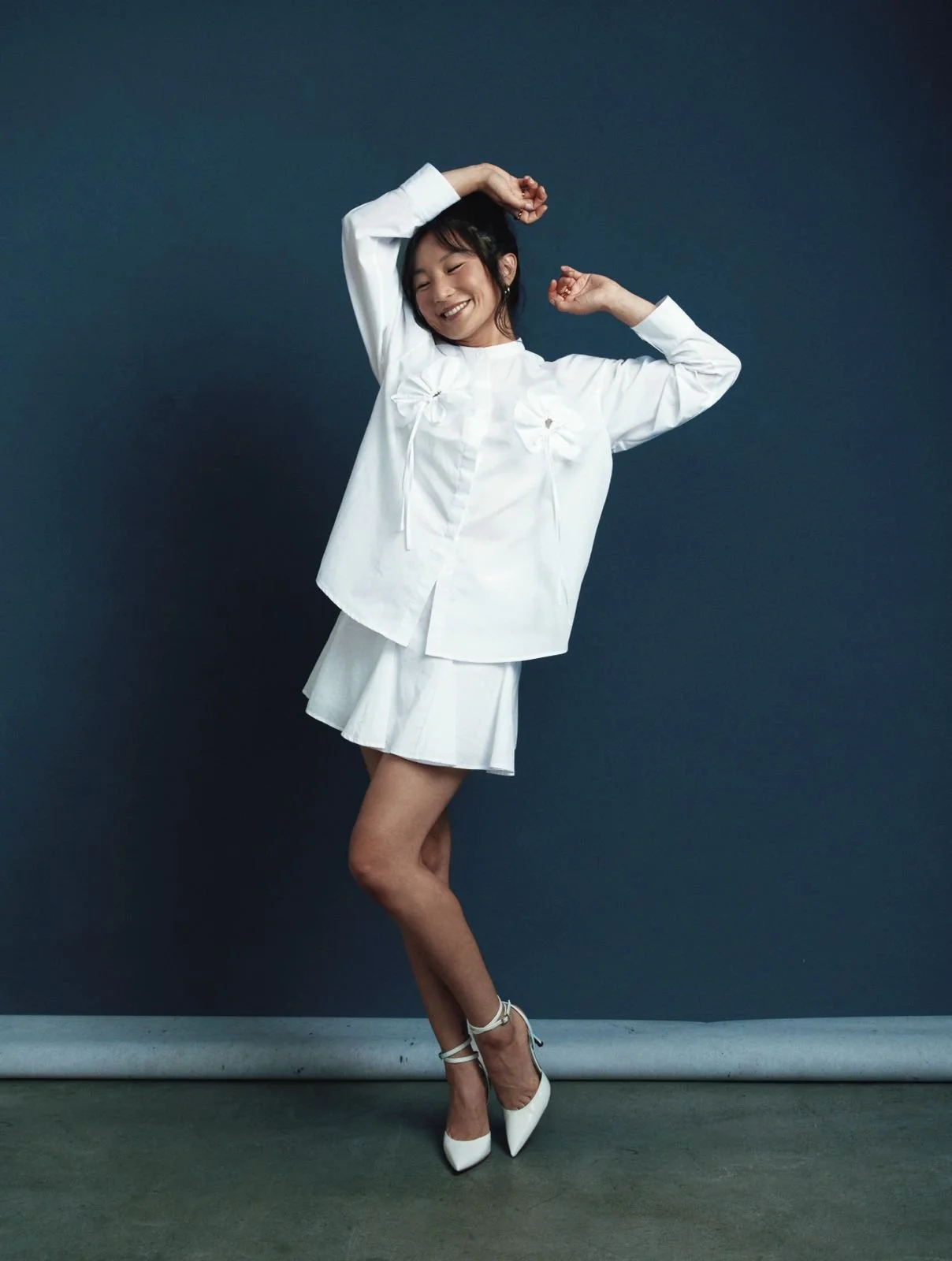
TEAM CREDITS:
photography SELA SHILONI
