
IN CONVERSATION WITH RAFAEL CAGALI
interview by TIMOTEJ LETONJA
Born in São Paulo and now working in the UK, Rafael Cagali builds his cooking on a balance of memory and technique. At Da Terra, his approach resists clear definition, moving between influences without settling into one. The result is a cuisine that feels unexpected and personal, where each dish begins with the ingredient and is built around how best to turn it into an unforgettable dish.
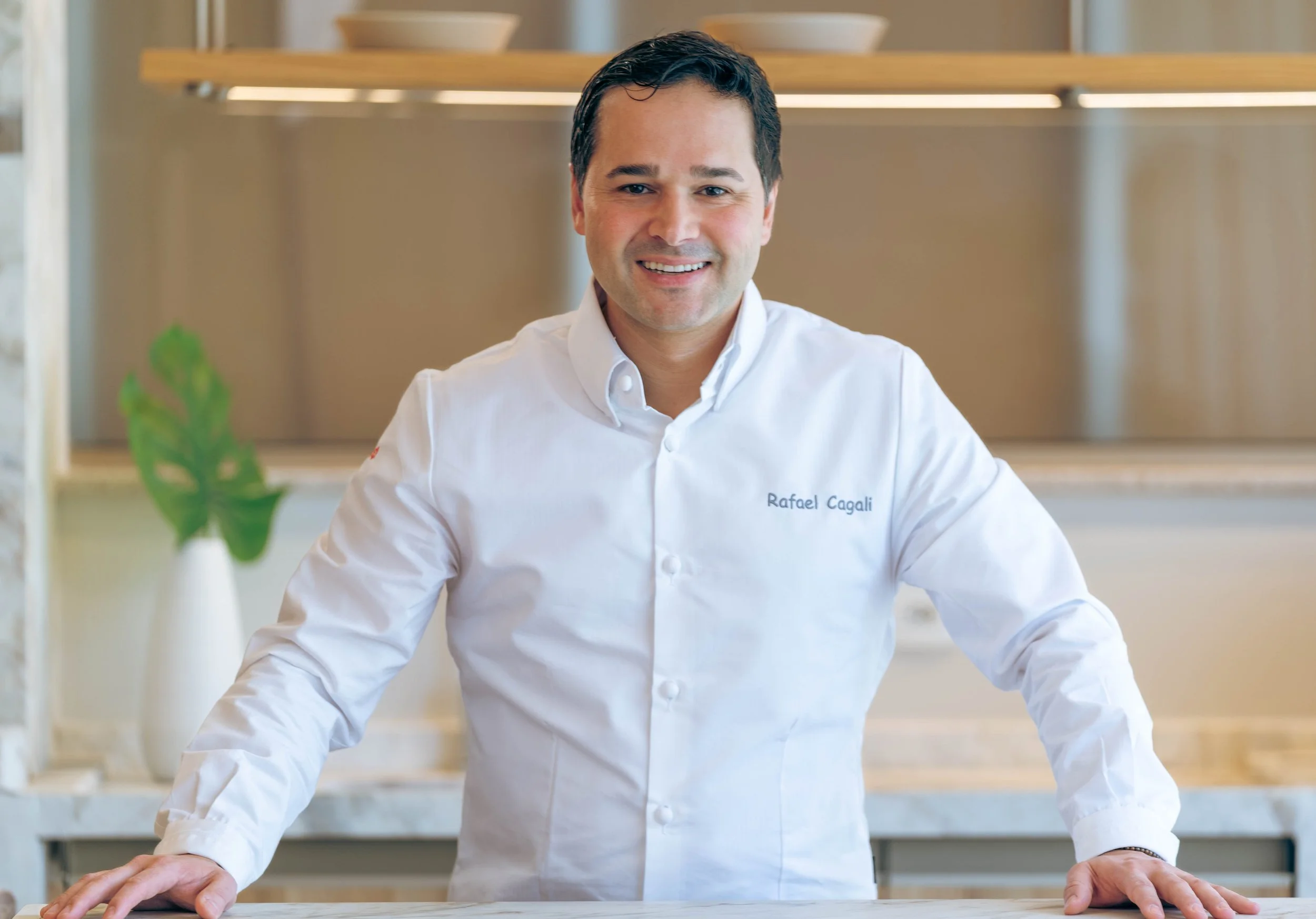
all images courtesy of DA TERRA
You were born in São Paulo and raised around your family’s “per-kilo” restaurants. How did those early experiences shape your relationship with food today?
Food has always been central to my life, as you say, because my family was in the business. The food I eat today is very different to what I grew up with, because I can’t access a lot of Brazilian ingredients in the UK, but when I go home and my mother cooks for me, there’s nothing quite like it. I still have so much nostalgia and love for the food of my childhood, and I am glad that my family raised me in a way where food was so important.
Before becoming a chef, you studied economics. Was there a moment when you realized cooking was more than just a temporary job?
It didn’t happen in just one moment, it happened gradually. I was working in a brasserie while I was studying, and I fell in love over time. Every service was different, I loved the challenge of it. It felt more hands-on than my degree. And I was lucky that the chef I was working for was very encouraging, so it felt like the perfect path for me.
Moving from Brazil to London was a major shift. What did that transition teach you not only about cooking, but about yourself?
Yes, it was a huge change for me. Going that far away from my family to a completely different environment was hard. I had to learn to be very independent, I had to grow up quickly. I spent a lot of time alone when I first moved here, and it taught me to listen to my own instincts, both in the kitchen and in life.
Your heritage blends Brazilian and Italian roots. How do those identities coexist on the plate?
I don’t feel bound by working to geographical limits on the plate. Things don’t have to be strictly Italian or strictly Brazilian, or strictly Spanish (I trained in Spain as well). I can use techniques from one, flavours from another in the same dish, because these identities coexist within me. For me, it’s about creating a dish that is well-balanced, rather than one you can immediately define by its provenance.
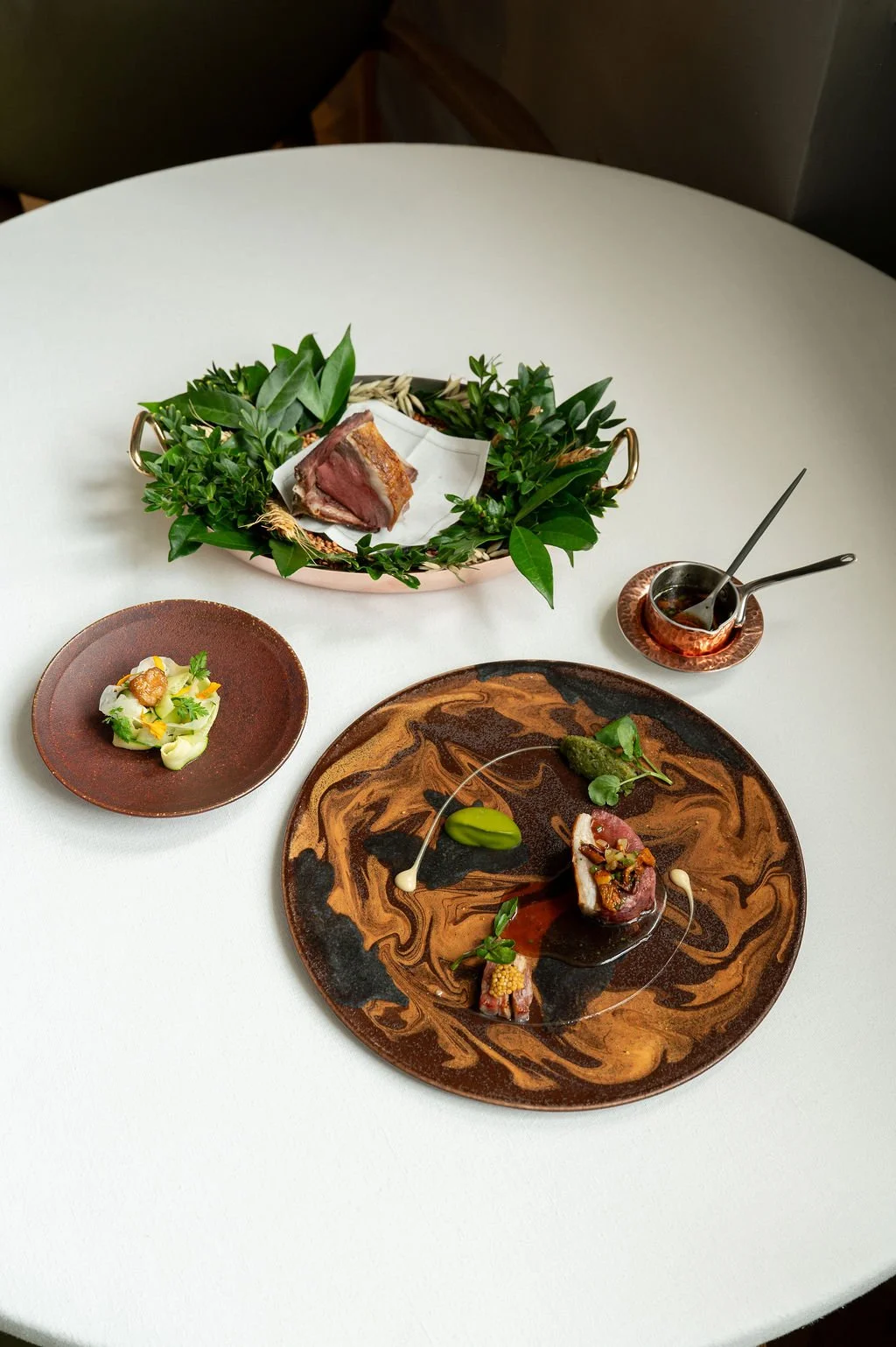
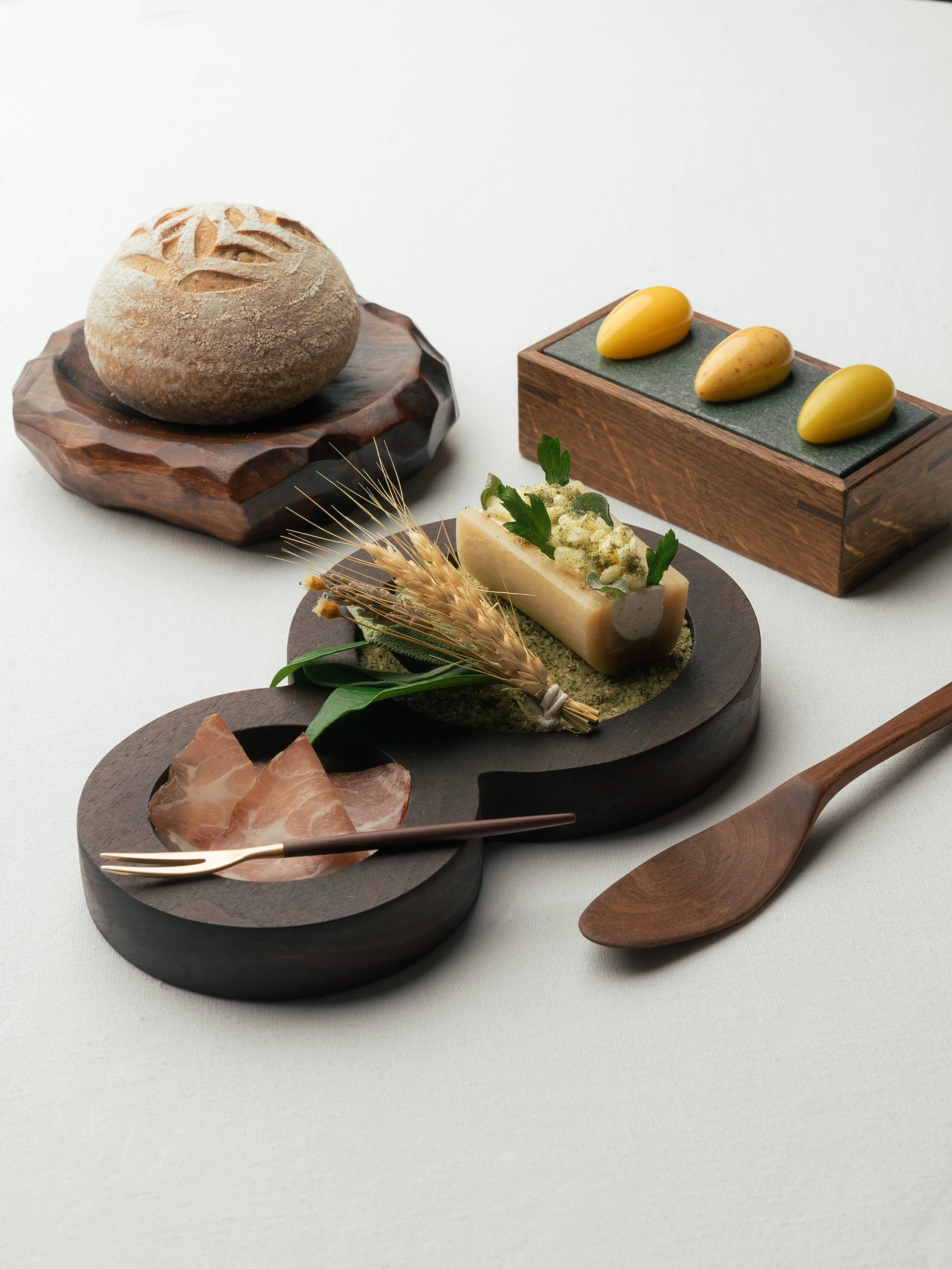
You worked with some of the most influential chefs in Europe from Martin Berasategui to Quique Dacosta and Heston Blumenthal. Which experience fundamentally changed the way you think about food?
They all did. The way I think about food is constantly updating, and each new professional experience I had was fundamental to who I am today and how I cook. Working with Heston was definitely an important one for me, because that analytical approach has stayed over time, in the way I put together the elements on the plate and think about textures and temperatures, for example.
Da Terra means “from the earth.” What does that phrase represent to you beyond the literal meaning?
It’s about our roots, whether that’s our heritage, the knowledge we have inherited, or the earth itself and our relationship with nature. It’s a great name because it means the same in both Portuguese and Italian.
Your menu combines Brazilian nostalgia with European fine-dining technique. How do you maintain authenticity while working in such a refined culinary format?
Authenticity is such a difficult concept to pin down. Brazil is a vast country, and the food that feels authentic to me will be different from the food that feels authentic to someone from another region. I’m not setting out just to represent Brazil in my restaurant, it would never be fully representative of such a big country. It’s more about representing my own personal cuisine. Having been raised in Brazil there are Brazilian elements in it, but not only. Besides, it would never be possible to be completely authentic because I don’t want to import fish over from Brazil; that’s not the ethos I work with. I will always prefer British suppliers because there are great ingredients on my doorstep. Why would I make the food travel if I don’t have to?
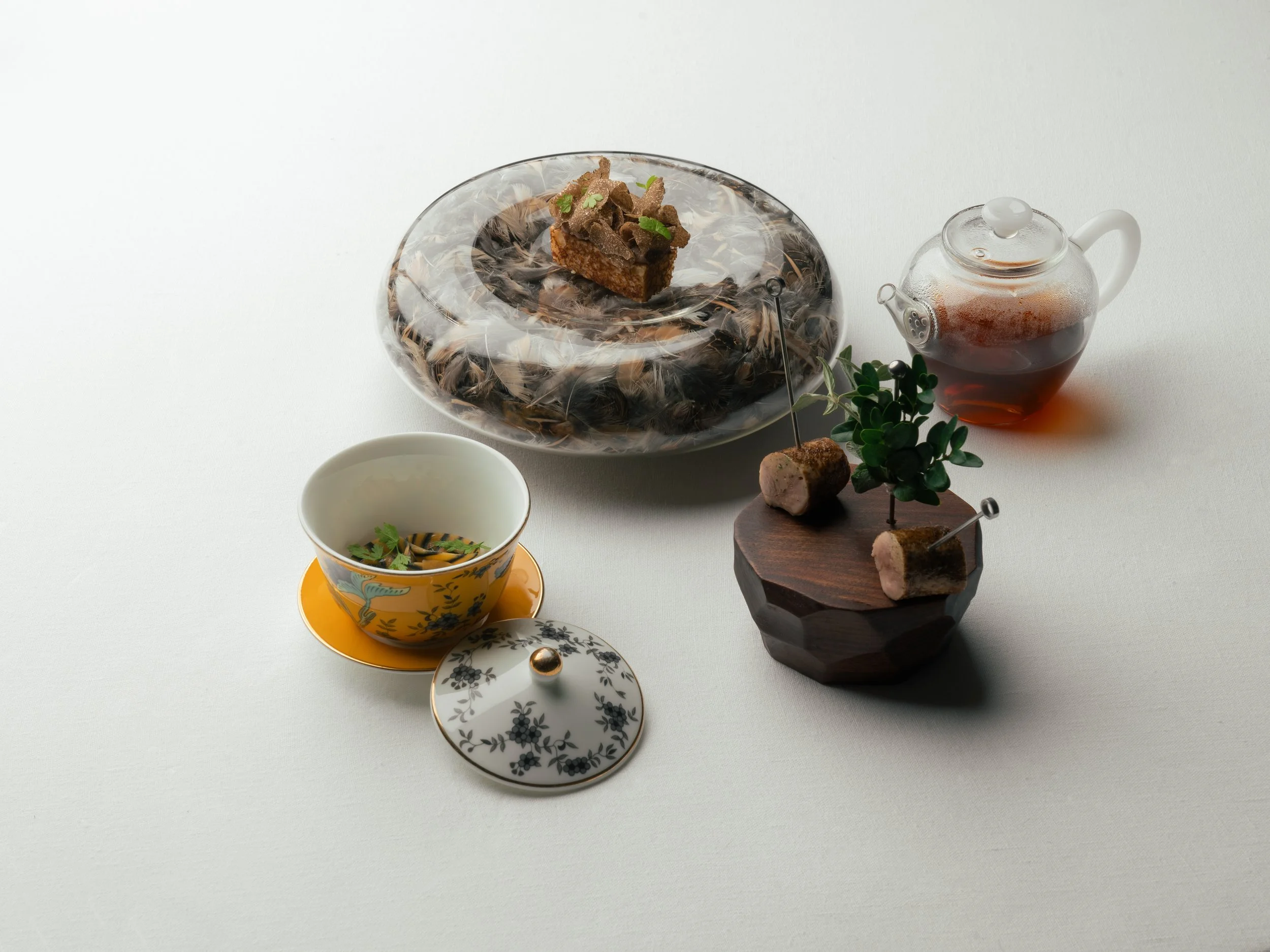
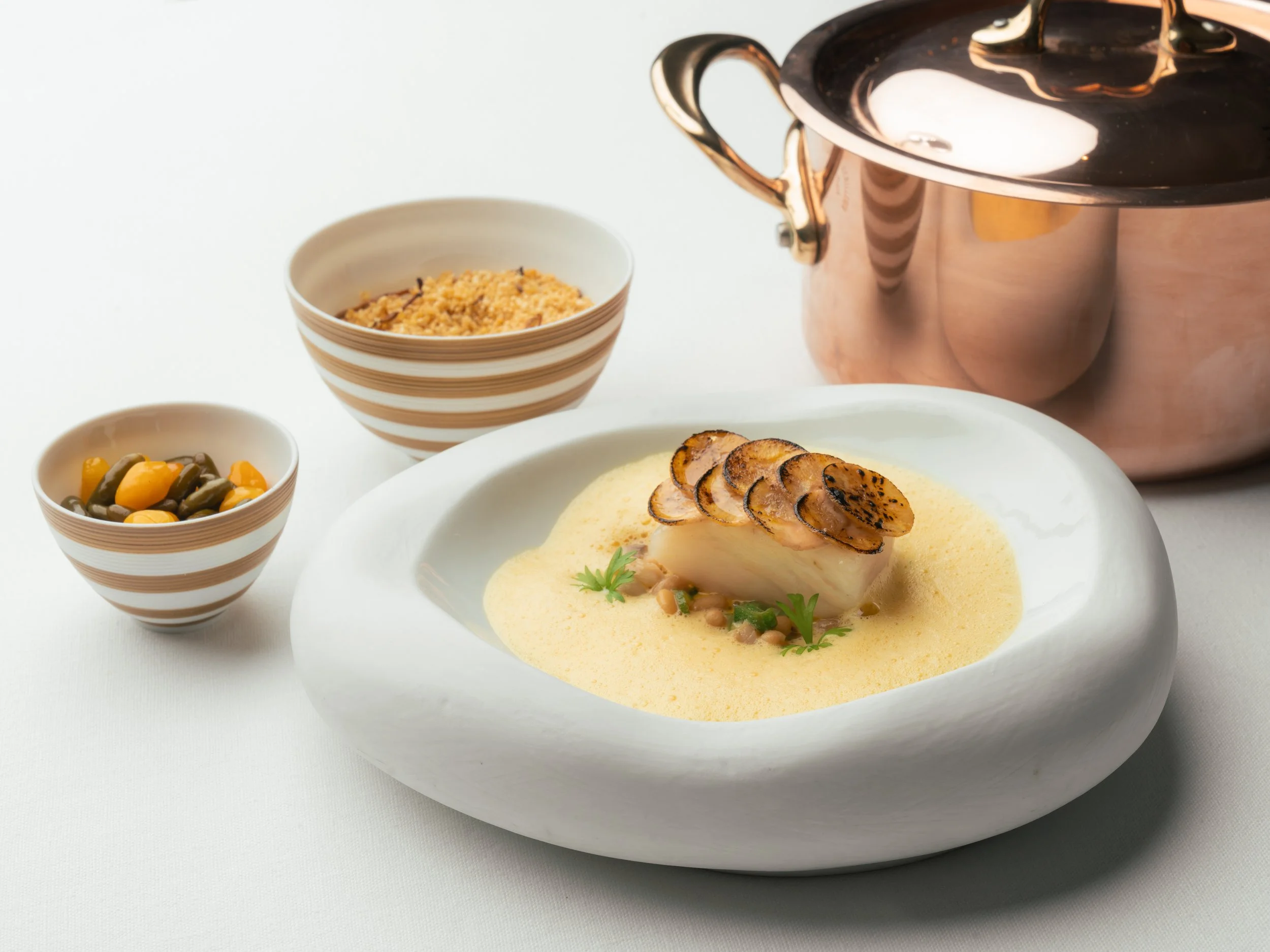
The restaurant received two Michelin stars within just a few years of opening. Did that recognition change the way you approach creativity in the kitchen?
Not really. I am immensely grateful for the recognition and it means a great deal to me and the team, but I think when it comes to creativity, you have to focus on what works for you and not let awards put you on a path that isn’t your own. The two stars encourage me to be consistent (although admittedly that’s always been a big focus of mine) but beyond that, I try to keep finding new inspirations in my travels, in the quiet moments, because that’s where I’ve always found it.
Where do ideas for new dishes usually begin for you: memory, ingredient, technique, or emotion?
Usually it begins with the ingredient for me. If something beautiful comes in, especially something seasonal, that’s where the idea starts. From there I think about what techniques will highlight it best and what flavours will support it without overpowering it. Sometimes a memory or dish I’ve had before influences the direction, but the ingredient tends to lead the process.
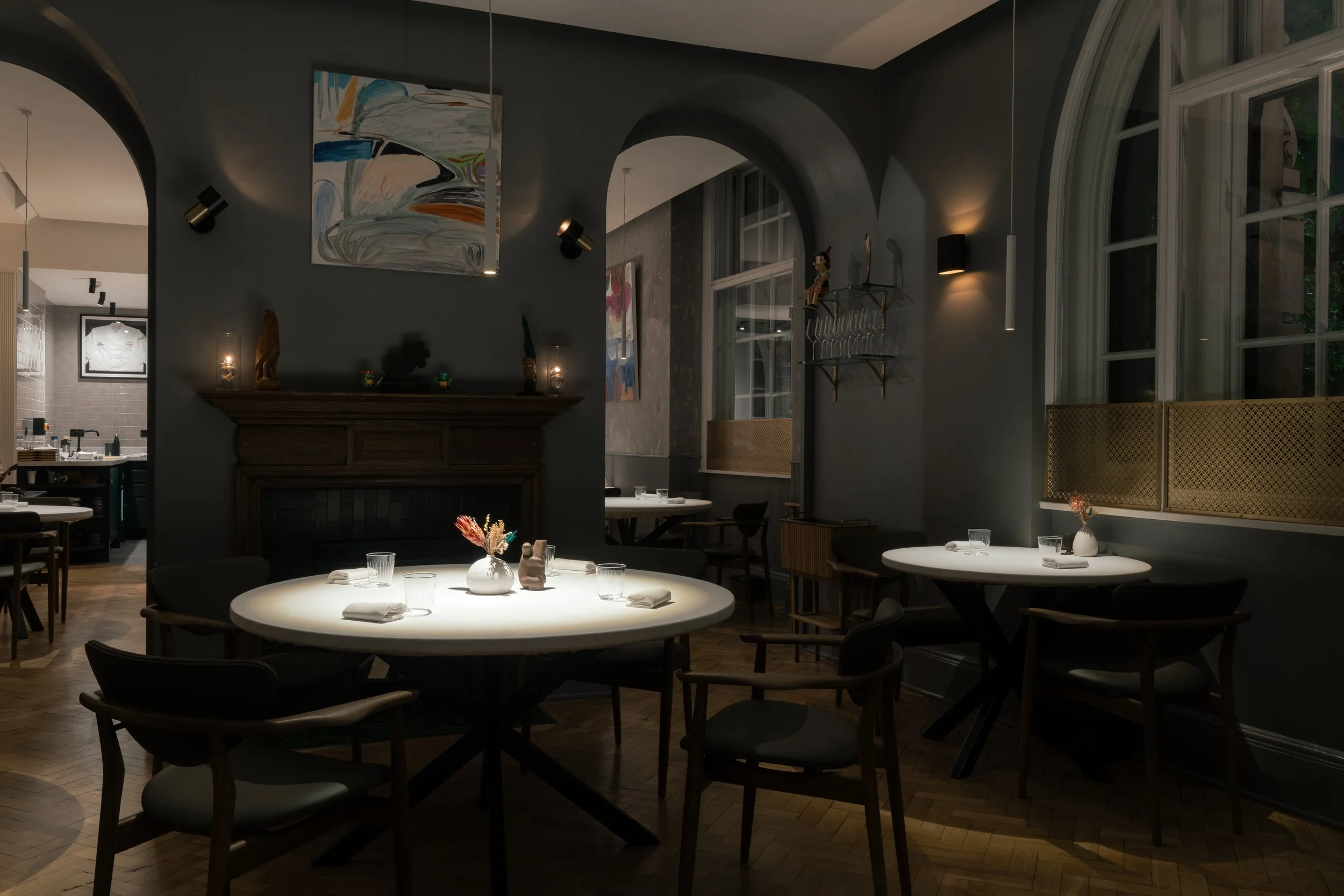
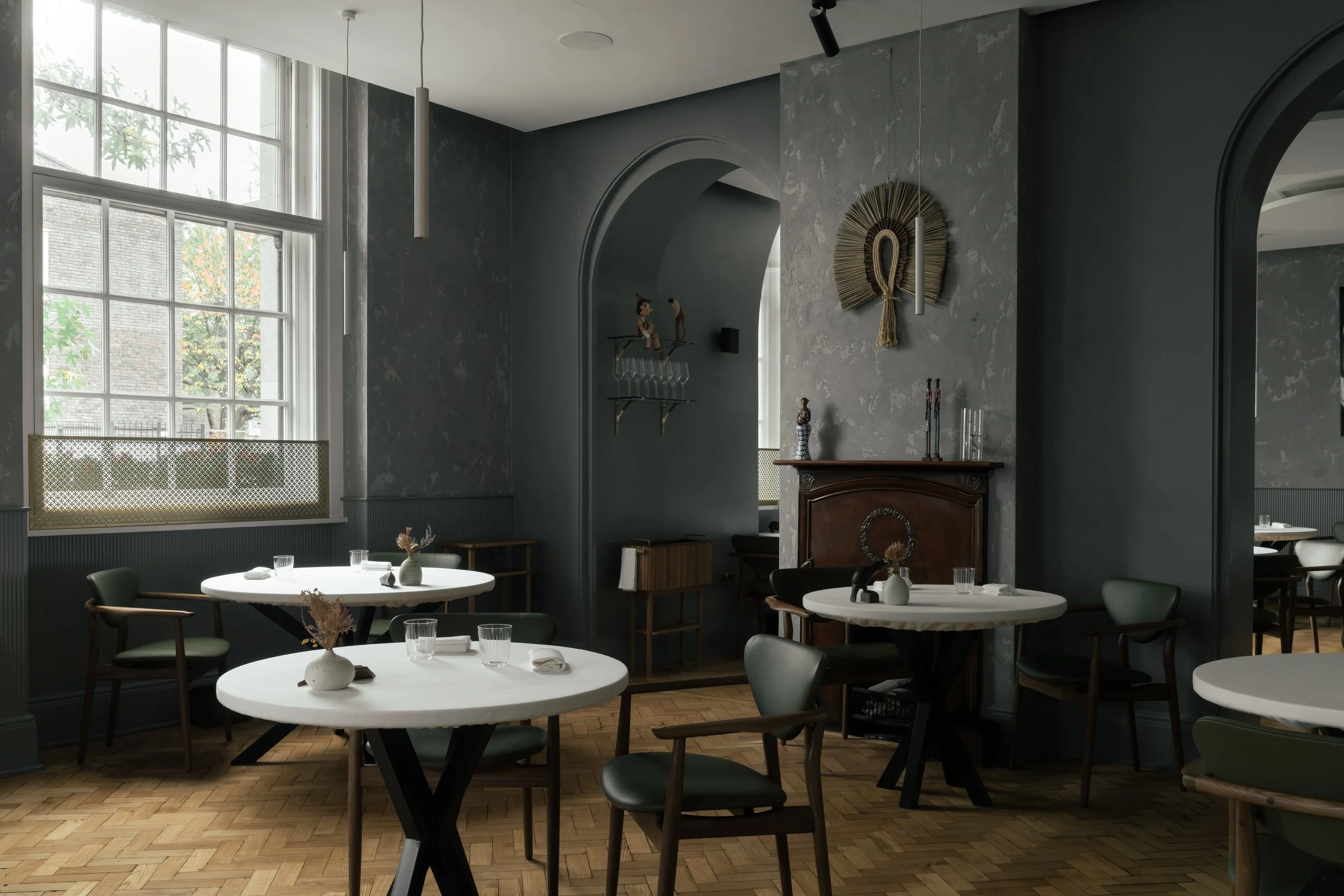
You run Da Terra alongside Charlie Lee, your partner in life and business. How does that dynamic influence the atmosphere of the restaurant?
Having Charlie in the restaurant with me means that the foundation of our work is guided by mutual love and respect. Of course, there are moments of friction - it’s impossible to work and live together and not clash occasionally - but most of the time, he brings so much laughter and lightness into the restaurant. The whole team feels it, and it’s reflected in them too. Something we’re particularly proud of is creating a space where everyone can be completely themselves. It wasn’t always the case that it was easy to be openly gay in kitchens, so we’re really happy that members of the team feel that they can share that part of themselves with us.
The restaurant emphasises a strong connection between kitchen and dining room. Why is that interaction so important to you?
I have never believed that there’s a hierarchy between kitchen and dining room. Of course, the food on the plate is essential to the restaurant experience, but just as essential is the warmth of the service and the interactions you have with the team. At Da Terra, both chefs and front of house deliver the dishes to the guests, and I think this really helps the kitchen team step into the shoes of the front of house and understand how fundamental that part of the experience is. And with such an open kitchen, even the environment makes us all feel a unique team.
London is one of the most diverse food cities in the world. How has the city shaped your cooking?
London was the place that I fell in love with cooking, it’s the reason I’m in this industry. It’s made me cook not just with technical precision, but with real love.
Do you feel that Brazilian cuisine is finally gaining global recognition in fine dining?
We’re definitely getting there. There are some amazing chefs in Brazil, like Rafa Costa, Luiz Filipe and Ivan Ralston, who are putting us on the map internationally, as well as chefs platforming the cuisine across the world. But I still think there’s room for more recognition, particularly as it’s such a vast country with really interesting regional cuisines. While my restaurant isn’t purely Brazilian, I am proud to share my heritage through elements in my food.
What does luxury in food mean to you today?
Luxury in food today isn’t just about ingredients like caviar or truffle. For me it’s about quality, care, and thoughtfulness in every part of the experience. It could be something very simple, but if the ingredients are exceptional, the cooking is precise, and the service makes the guest feel looked after, that feels luxurious. I think modern luxury is also about seasonality and provenance, knowing where ingredients come from and treating them with respect.
Outside the kitchen, what inspires you creatively - art, travel, music, or something else entirely?
I tend to find my creativity in quiet moments. Of course, travel and dining out are very helpful, but more often than not, it’s when I’m walking my dog on the weekend, in nature, that I really have space for my creativity to spark.
If someone could understand only one thing about your cooking after dining at Da Terra, what would you want that to be?
I want people to see that it’s fun, that it’s driven by a search for joy. I take my cooking extremely seriously, but it’s still supposed to be playful.