
IN CONVERSATION WITH RICKY GERVAIS
interview by TIMOTEJ LETONJA
words by ANOUK WOUDT
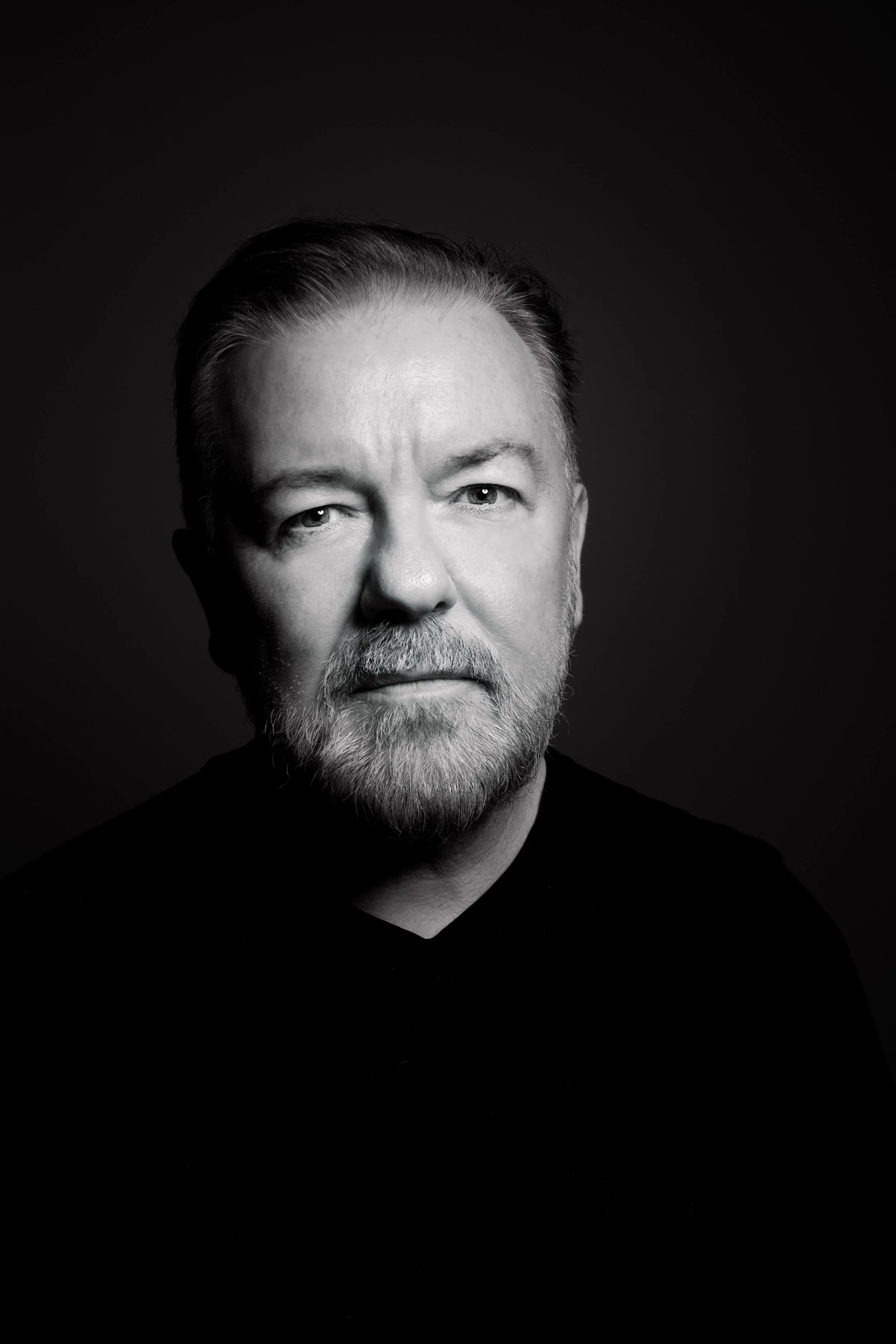
Starting his career over three decades ago, Ricky Gervais has since risen to become one of the biggest names in comedy. Across stand-up, television and film, he has built a reputation as an actor, writer, television producer and director, finding his stride in nearly every humorous format. Best known for creating and starring in The Officeand Extras, he is now turning his attention to animation with his upcoming series Alley Cats. Set to premiere on Netflix on 7 August, the series follows a group of feral cats from different walks of life as they navigate the chaos of everyday existence, marked by Gervais's wit and sharp social commentary.
all images courtesy of NETFLIX
You said Alley Cats began with a doodle of Gus. At what point did a sketch of a cat become a story about friendship, mortality and belonging?
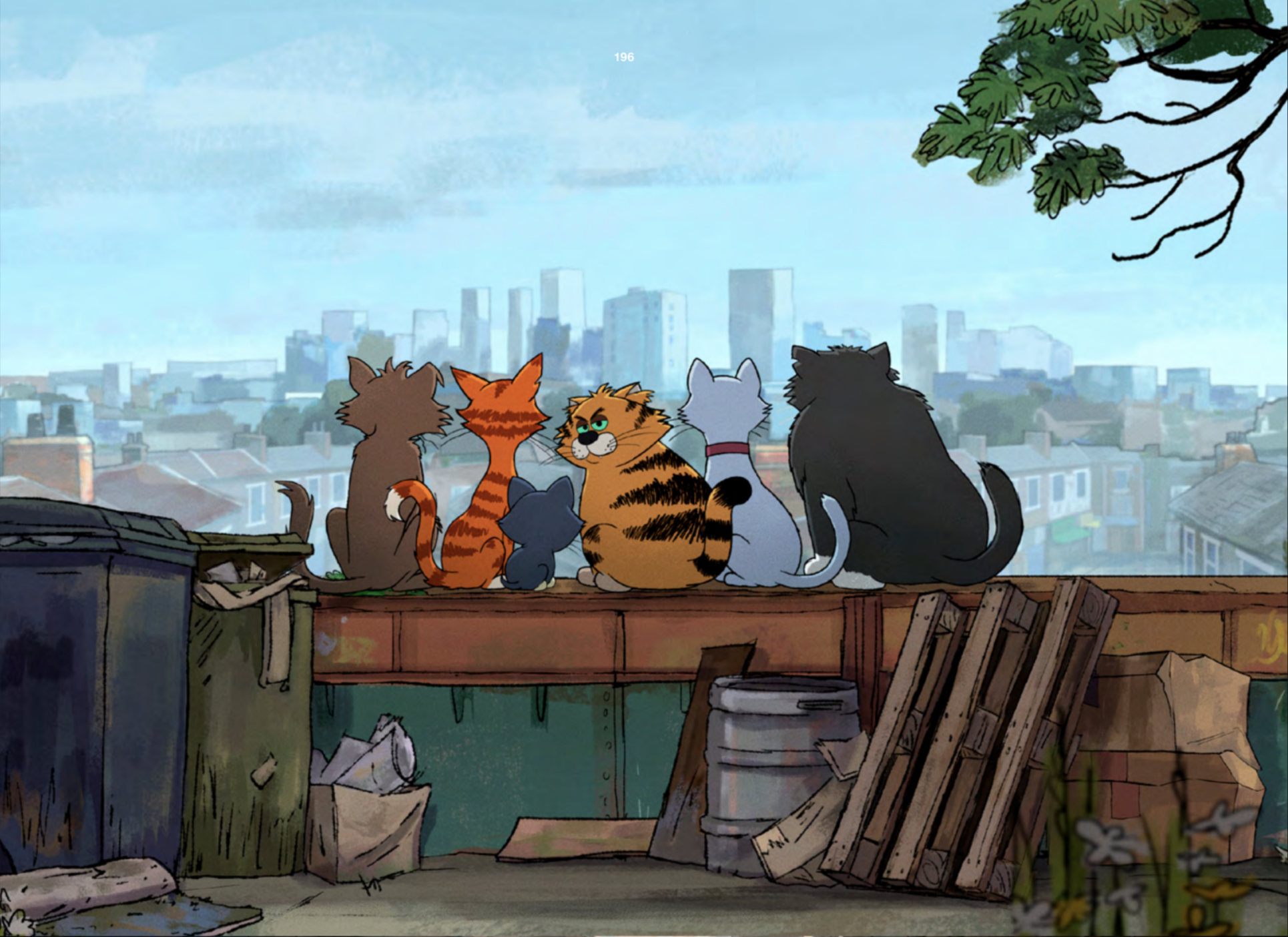
I've always loved animation, and I've always loved sitcoms, so I wanted to make an animated sitcom. And I thought cats would let me go further, because they're already punching up. So, I made them into a gang and put them in this cruel world. It just sort of built from there. I cast it before I wrote it, so I knew who would be playing each part, and then I created the cartoon around them. I knew I was going to be Gus, so I started creating around that.
Someone asked me why cats and not dogs, and that's because cats are just funnier. A cat thinks he's a lion, but he's one foot, whereas a dog is still a bit of a wolf, you know, but he always tries to please. Cats just don't care, which is funny in itself.
The show starts out very humorous, but there's also a lot of sadness. How did you balance that contrast between humour and mortality?
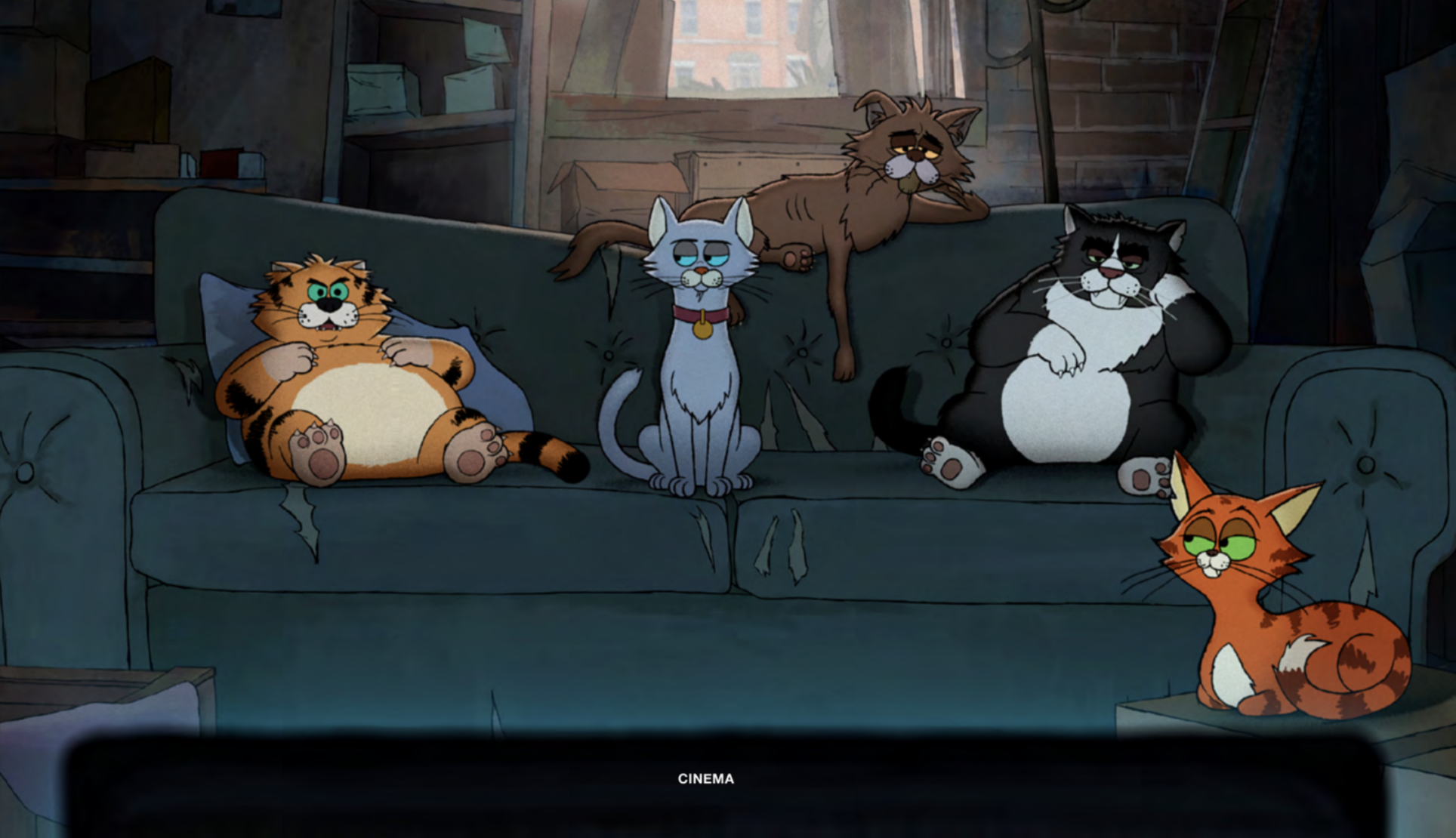
I wanted people to love these cats. That was the most important thing. Whatever they did, wherever they went, whatever they looked like, I wanted people to care for them. The humour comes naturally. A staple of comedy is a character trying to do something they're not equipped to do. These cats think they're kings — I actually wanted to call the show Kings of the Street originally — but there's irony in that already, because everything kills them. They're constantly in danger and they only live about 10 years if they're feral, so you also want people to love them quickly because they don't have long.
You've spent your career writing about outsiders and misfits as characters. What did making your protagonists cats in this particular project allow you to explore that human characters couldn't?
Misfits are often unseen, or when they are seen, they're not immediately accepted. I want to show that there's something underneath. Don't dismiss them. I did it with Kev in Derek and Brian in After Life, and with the cats, they're so small that they're unseen already. I made sure that they didn't really interact with humans in the show. The only surreal thing in the show is that these cats can talk, but outside that, it's not that fantastical. It's very normal and real, and they do things that cats do. There's no bigger outsider than a cat in a human world.
This is your first time creating an animated sitcom from scratch. What was the biggest creative challenge, and what did animation allow you to do that live action never could?
You find out little things like bicycles are tricky to animate, so we use a scooter instead. A car going around a bend is also way more complicated, so we made the road straight. But besides that, it was actually quite easy to get what I wanted on screen. I knew what the cats looked like. I knew who was doing it, the characters, the voices, and I wanted it to stay realistic — no cartoon sounds, no overdoing it.
We approached animation differently, though. Most are scripted, storyboarded, then recorded all separately. We instead did it all together in a room with the eight of us. It was cool because we could do a whole episode in an hour, and when you do an episode of a drama or a sitcom, it takes you a week. But we had like 80 minutes of material for each episode to cut down to 15. Now, if you can't get the best 15 minutes ever with 10 of the best comedians in the world out of that, then something's wrong. So, once we decided what it was, it was actually really easy.
The sitcom deals with mortality, but it never becomes overly sentimental. Why do you think comedy is such a powerful way of talking about life and death?
It's because it's a taboo subject and a human fear. And fear is funny. All emotions are funny because they can't be helped, it's imposed upon you. It's like someone hitting their head. It's funny because they didn't want it to happen. Taboo subjects are also my favourite thing to explore because it takes the audience to a place they haven't been before. People like seeing taboos, even if they don't know it. I like exploring humanity through comedy. People are scared of death, so let's talk about it. It's funny.
You've assembled many of your long-time collaborators in Alley Cats. What keeps bringing this particular group of performers back together project after project?
I know what they can do. I know I'm going to get what I want, so it's very reliable. And it's a real bonus because they're not just good actors, many of them are writers and directors in their own right. I'm getting extra for my money, really. They're all great to work with. They're brave as performers, and they've got no egos. Sometimes we keep going: "Is this too much? Is this too much?" And you push it and push it and push it until we find what works best together. It's great.
What is it about the world of Alley Cats that feels so creatively limitless to you?
People love these cats, so I'm not going to run out of plots, because I don't need plots. I can just have them go into the shops and chat about stuff. Another great thing about animation, of course, is that the cats don't age. And it's only 15 minutes. You can get in and out.
What about cats do you find the most fascinating?
The single most fascinating thing about cats is they are the only animals that domesticated themselves. Around 10,000 years ago in North Africa, probably Egypt, they just wandered into civilisation and said, "Feed me." You know, they don't meow in the wild. They know that humans like that. They invented their meow to get fed. They're incredible.
They can also jump six times their own height. Their purr is the frequency at which their bones and ligaments heal. They can heal themselves by purring. Every one of their senses is amazing: they can see in the dark, they can hear a moth at 50 yards. It's unbelievable.
More than 20 years after The Office, what do you understand about comedy and storytelling today that you did not understand when you first started creating your own shows or sitcoms?
It's hard to tell because I was already around 40 when I did my first sitcom, so I'd been studying comedy and sitcom for 30-odd years, really. But still, over the years, I've learned that in sitcom, character is king. When you write a novel or a film, there's a beginning, middle and end, but sitcom is all middle. So you've really got to love those characters, even the villains and the idiots.
Another thing is that the heroes have got to be flawed. In a drama, the hero is perfect. In a comedy, the hero isn't because he's got to be like us. There's nothing funny about perfect people. I learned that from Laurel and Hardy. I'm not sure what I've learned and what I just knew from watching TV all my life.
But I've also learned that there might be better writers than me, better directors than me, better actors than me, but most of them aren't willing to go as far as me. They're not willing to laugh about death. They're not willing to joke about taboo subjects in case they get in trouble. And I think, if it's a sitcom, the only thing that matters is that it's funny. You don't have to do virtue signalling. You don't have to worry about anything else. Just ask yourself, "Is this the funniest thing I can do?"
I just want to live and die by the sword. It either works or it doesn't. I can't do it someone else's way, so I'd rather fail my own way than succeed in someone else's.