
IN CONVERSATION WITH RODRIGO GARCIA
interview by MAREK BARTEK
At Salone del Mobile, where design often leans towards the polished and collectible, Rodrigo Garcia takes a different approach. Presented within Salone Raritas — the new platform for collectible design curated by Annalisa Rosso — his latest series, The Creation of Time, revisits the sundial not as an instrument to measure time, but as a point of reflection. Working across bronze, aluminium, and wood, Garcia treats design as something closer to philosophy than product. The pieces question time as a fixed system, proposing instead a more fluid, subjective experience. On view with Galeria Mercado Moderno (Booth 19), the series runs in Milan from 21–26 April, open daily from 9:30am to 6:30pm.
all images courtesy of RODRIGO GARCIA and AMEN
Your new series is titled The Creation of Time. You’ve said “time does not exist, we created it” — what does that idea look like once it becomes a physical object?
Borges described English as a very “physical” language and Spanish as a very “air” language. I’ve been thinking about that while walking through the Milano preview fairs — most designs are simply physical objects, just Matter. And then some are Energy.
When I walk through art or design fairs, I move quickly because almost everything feels like matter. Then suddenly, something holds energy — it hits differently and makes me stop. Usually, it’s a vintage or archaeological piece with a sense of life. It’s the same when you build a home: you turn a cold space into your own energy. You don’t need to be a designer to recognise that feeling when a place feels alive versus when it feels like a “Las Vegas hotel.” Think of La Colombe d’Or in France, the Kawai Kanjiro House in Kyoto, or the Bowery Hotel in New York — they hold energy, not matter.
It all comes down to the most important question in creation which is when a piece is ready? Whether it is a book, a movie, or a design piece, when is a piece ready to be packed and shipped to a fair like now to Salone Milano? For me it summarizes in when it feels like energy and not like matter. Getting there involves balance. You can sense when something leans too heavily masculine or feminine — and when that balance is achieved, when you can’t quite tell, that’s the ideal. A state of harmony. But it’s never fixed; homeostasis is a constant change. The Utopia of harmony in design, is never reached, but it is worth walking towards it.
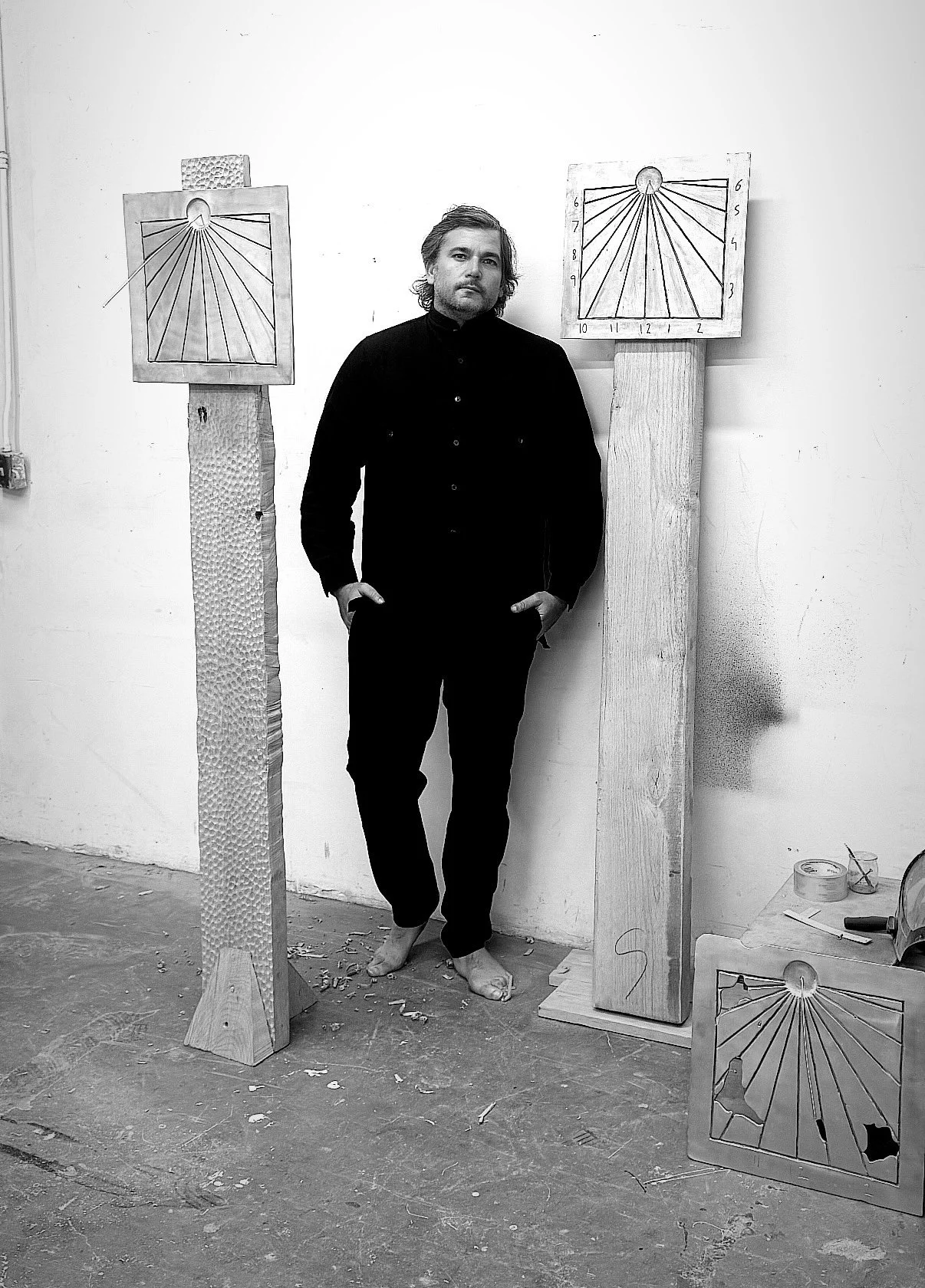
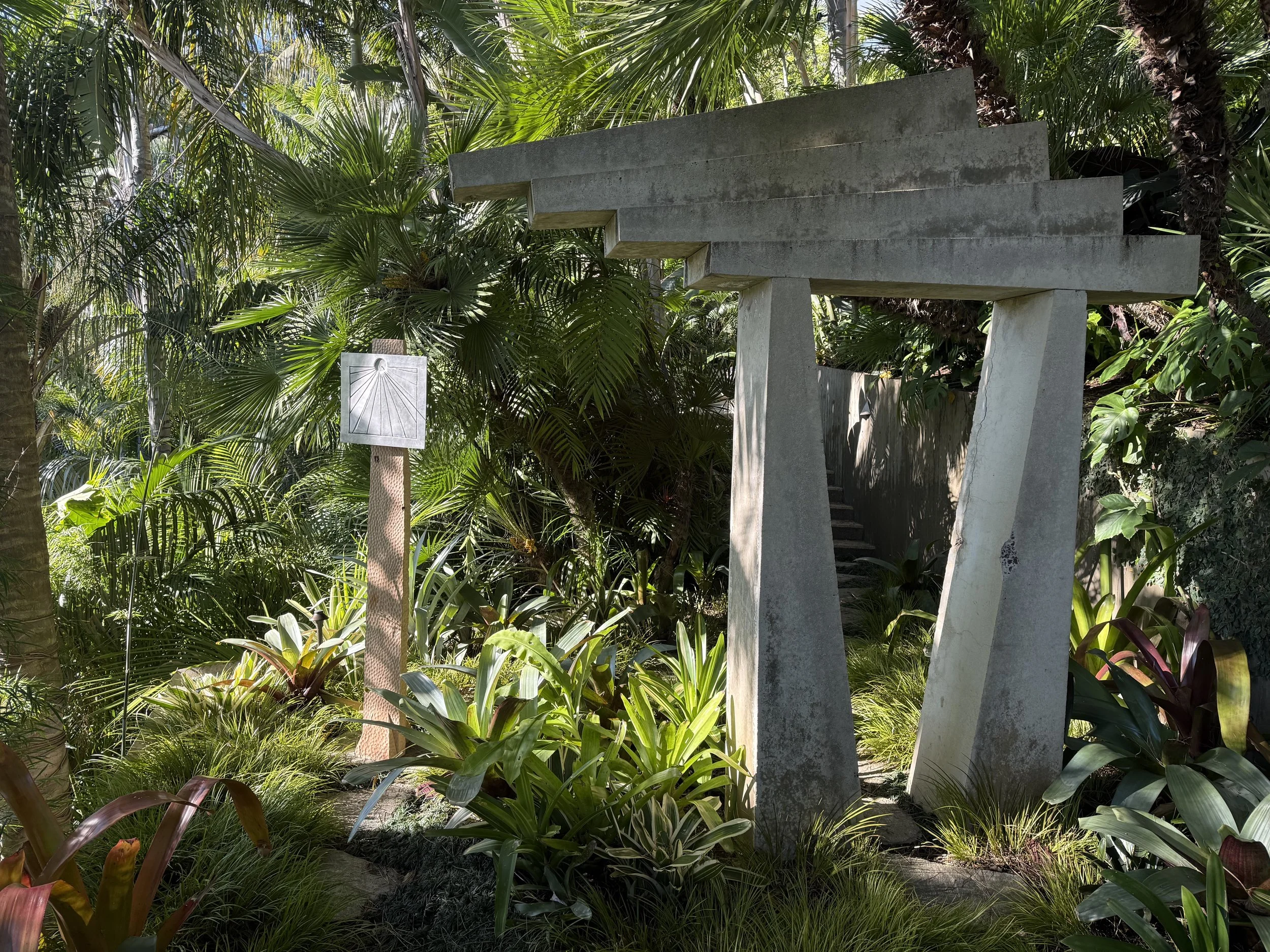
For certain environments, the metal sundials felt too masculine, so I introduced wood totem pedestals in Japanese Shou Sugi to rebalance them. For a moment, there was harmony. Beyond that, a piece needs to feel “atemporal” — something that could exist across eras. When I did the Light Sculptures with Kaminski, I liked hearing they could belong in a Dune-like future or an ancient Egyptian home. When those elements align — harmony, atemporality, and energy — the piece is ready. Then we can pack it.
Sundials are one of the oldest tools for measuring time. Why return to something so ancient now, in a moment defined by digital precision and speed?
Well exactly — because I am not creating sundials to measure time, they are meant to question our relationship with it. To question that obsession that everyone has now, being slaves to time. Reflecting on this feels more important than measuring it.
I travel constantly, and I see this obsession with time in some cities — it’s not healthy. This idea of “time equals money.” Time moves so differently in a small town like where I come from in Uruguay. A day there feels calm, slow. If I spend a month in New York, I feel like I’ve aged ten years.
To come back to your question, it’s also because the sundial actually measures real time — the time of nature, the time of the sun. Not the artificially imposed time created by civilisation to prioritise work hours or save electricity. In that sense, the ancestral sundial, measured through the shadows cast by the sun, feels more true than any digital technology.
You describe sundials as a kind of “Rosetta Stone” across civilisations. What was the moment that made you see them that way?
I have been obsessed with sundials for many years, especially the ones in Formentera, Ibiza, and Paris. Did you know Paris has around 120 sundials? My favourite is the Dalí sundial on Rue Saint-Jacques. What fascinates me is that they all share the same basic design — from that one in Paris to those in Egypt 3,500 years ago. Many things have changed, but the earth still takes 24 hours to rotate 360 degrees, so one hour remains 15 degrees.
Once you understand that, sundials become a kind of “Rosetta Stone” across civilisations. The longest shadow marks midday — the “12” — with the hours unfolding to either side. From there, you start to see a shared numerology across cultures. My brand and project AMEN has always been a search for a universal language, and for me, that idea is distilled in the sundial.
Sundials remind us that we created time — it’s a construct, not something that exists on its own. And that’s the starting point for questioning our relationship with time, which is ultimately our relationship with life. Across history, civilisations built sundials first to track seasons for agriculture, and then the hours of the day. Even obelisks, from Egypt to the Vatican, were originally used as timekeeping instruments.
There have been many systems of measuring time, but they all revolve around midday as the point of the longest shadow. In early Roman systems, an “hour” could vary — around 45 minutes in winter and up to 75 in summer. Imagine measuring time like that now.
Throughout this research, there have been many eureka moments. One of them is realising how so many civilisations understood sundials so precisely, while still questioning whether the earth was round.
The marking of “12” — midday, the longest shadow — appears across cultures, from ancient Egypt to Babylon. What does that shared approach tell you about how humans have understood time?
For me, sundials are the ultimate synthesis of cosmogenesis and constructive universalism. Just as mastering fire changed everything, mastering time allowed us to understand seasons and days — and that made a huge difference for survival not so long ago. The Romans, for example, used a less precise system than the Greeks, and when they took a sundial from them, it didn’t even work properly at their latitude. Even 200 years ago, the British advantage at sea came down to their ability to measure time with greater accuracy — down to seconds.
Around 3,500 years ago, both the ancient Egyptians and Babylonians introduced the duodecimal system, based on the number 12. That’s why we still have 12 months in a year, 24 hours in a day, and 60 minutes in an hour. During the French Revolution, they tried to shift to a base-10 system — but it didn’t last.
For me, sundials are not about measuring time, but about reflecting on our relationship with it. It feels like we first learned to master time, and now time has come to dominate us. We’ve become slaves to something we created. We all have the same hours, yet each culture — and each individual — experiences time differently. A day in my motherland Uruguay, or in Rio de Janeiro, feels completely different from a day in New York or London.
Some cultures, especially the U.S., are deeply shaped by the idea of productivity and what we extract from time. For me, the sundial is an invitation to question that relationship.
You call these works “Estudios” — studies — rather than finished pieces. What are you still trying to figure out through this series?
Making sundials is pure alchemy. Beyond materials and design — which is what architects come to Salone Milano for — what really matters is astronomy, and beyond that, the philosophy of time. Our relationship with it.
I call them Estudios because I’m still learning. I’m not an astronomer, and the more I ask, the more questions I have. I’ve worked with academic astronomers from the Observatorio de Montevideo and Observatorio Los Molinos, and even something as simple as calibrating the gnomon — the element that casts the shadow — opens new layers. It has to be adjusted to each location’s latitude and longitude, always facing north or south depending on the hemisphere. Then someone asked me: are you using magnetic or astronomical north? I hadn’t even heard of the second.
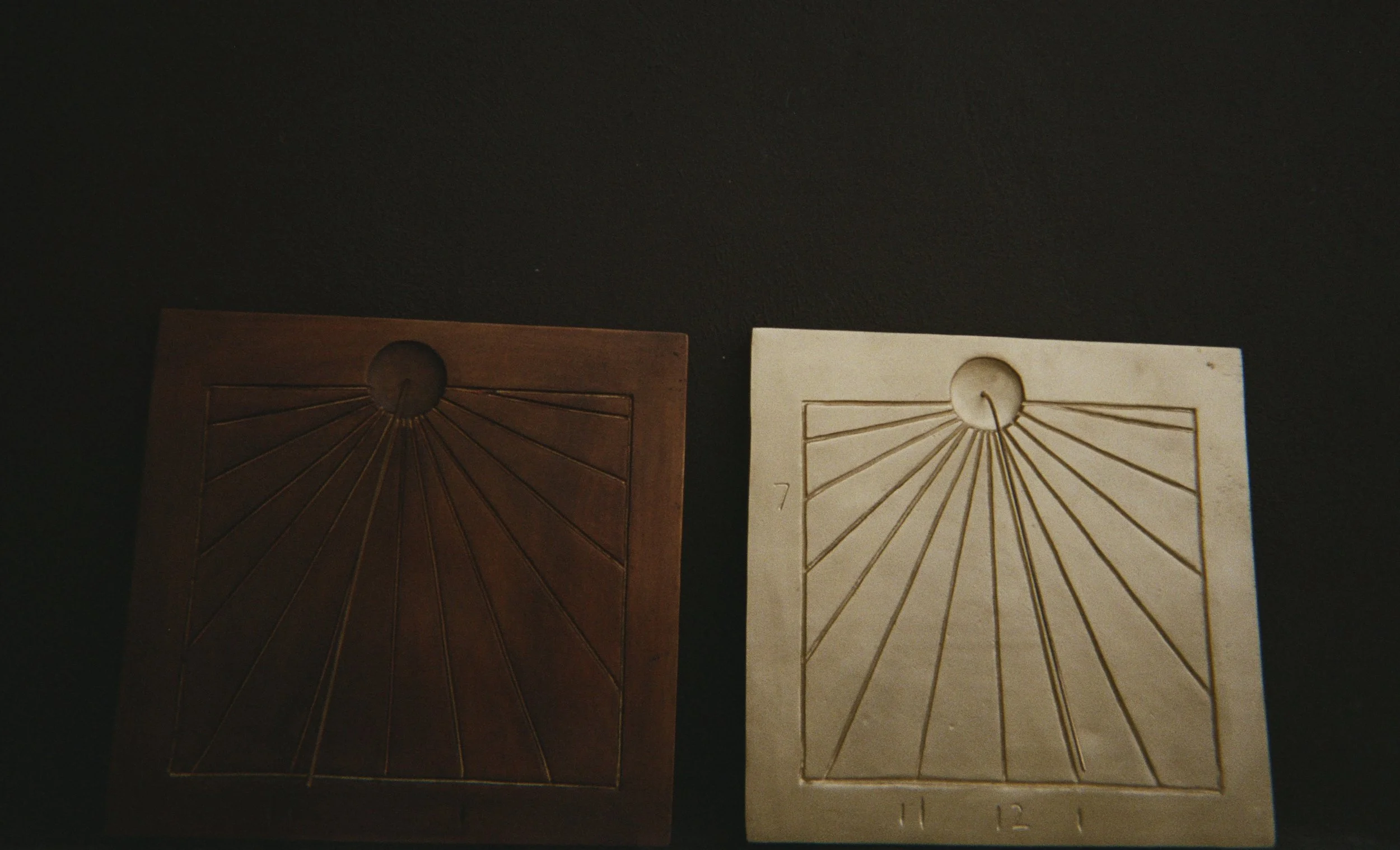
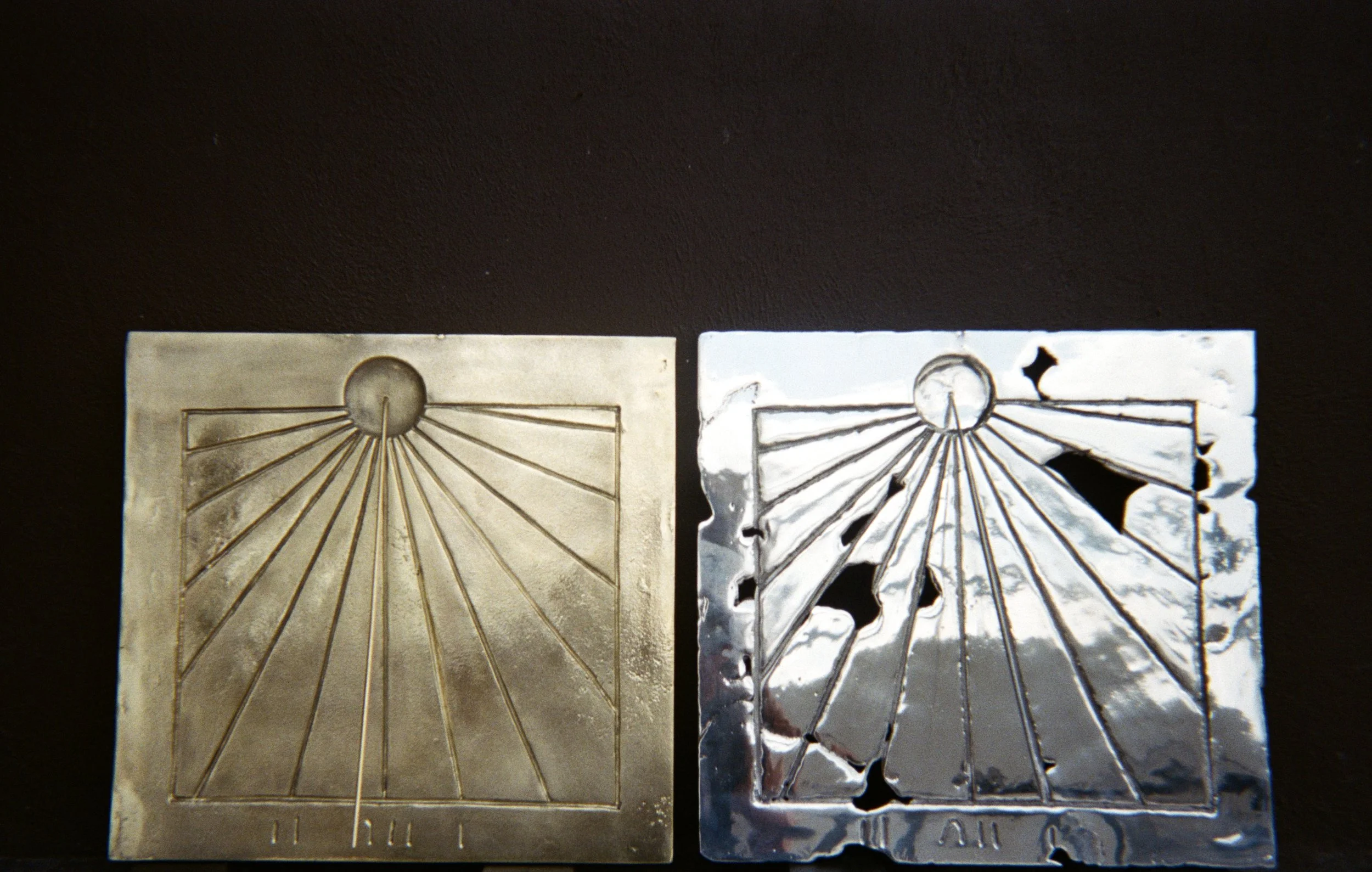
For Salone, I’m presenting Sundials 06 to 09 in bronze and aluminium, and I’m already working on the next exhibitions. I imagine around fifteen by the end of 2026, but likely closer to a hundred pieces before I move on. Each one is different — shaped by materials, location, and constraints. I’m constantly learning — from Korean ancient sundials to new materials — and living for those moments when everything aligns.
The works combine aluminium, bronze, wood, but also astronomy and mathematics. Where does the technical process end and the philosophical one begin — or are they inseparable for you?
Inseparable. That’s the difference between designing matter and designing energy — between something with soul and something without.
For me, design and philosophy always move together. In 2020, when I launched the Amen Chakras candles in France, I was excited to place them in a concept store in New York. But they arrived with broken porcelain, and a furious store owner. That failure led to something else: developing mushroom mycelium packaging, which became a manifesto for a plastic-free world. It grew into the Mushroom Conversations installation, later shown at Design Miami, Another Space in New York, and ArtRio.
Six years later, we’re still shipping those candles globally in mushroom packaging — all because of that accident. Amen is a small, independent project, and for something to be “Amen,” it needs that alignment of design and philosophy. If it doesn’t feel aligned in body, mind, and soul, it doesn’t exist.
Each piece becomes a statement. The mushroom packaging promotes a plastic-free future. The Light Sculptures with Kaminski raised awareness around intersexuality. The sundials question our relationship with time. Even the collaboration with the Picasso Museum wasn’t about selling a candle — it was about showing millions of visitors that alternatives to plastic exist.
Yesterday in Milan, an architect asked me to create a sundial for his home. He said he grew up with one in his grandmother’s garden — and wants his children to experience that same sense of wonder, and the same questions about our place in the cosmos.
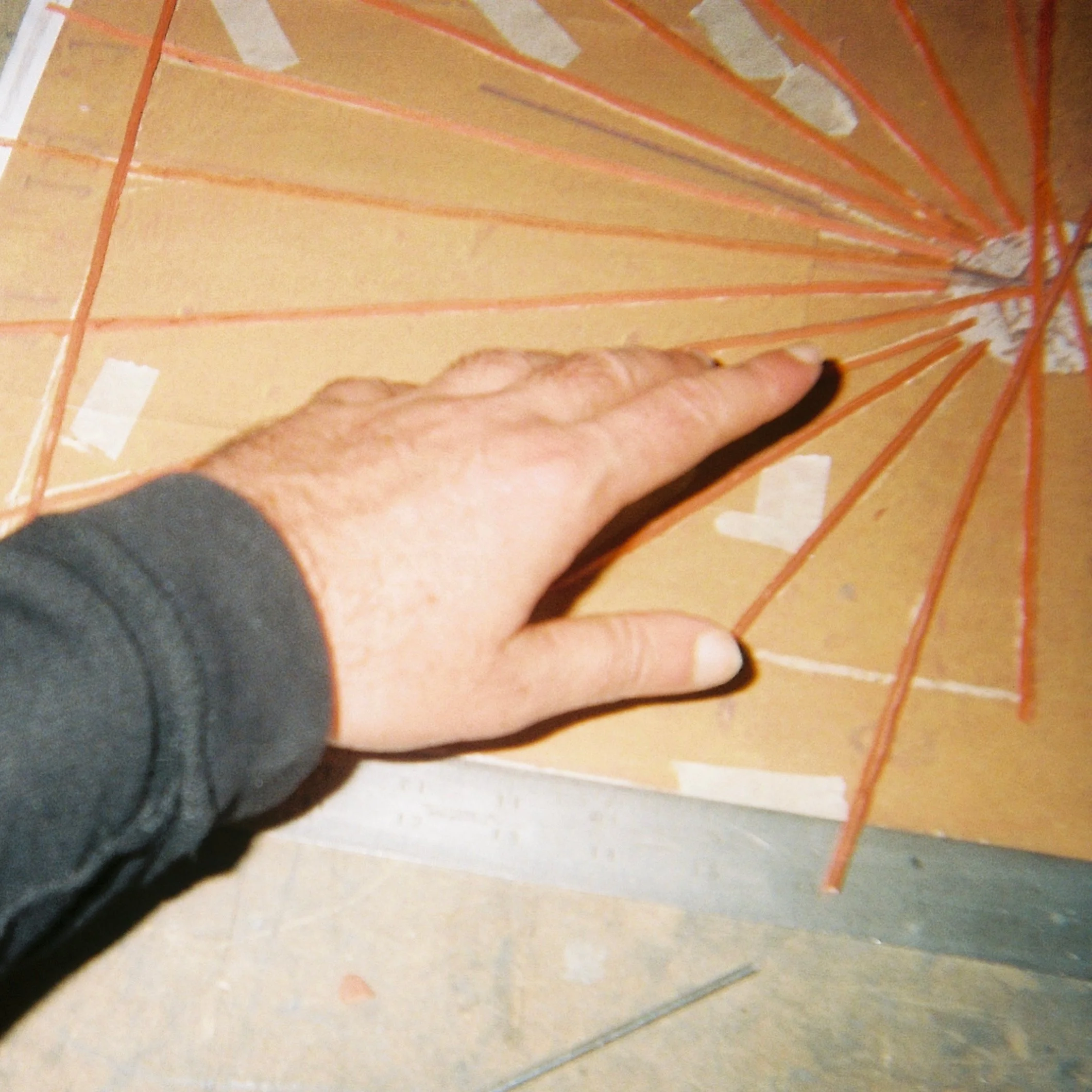
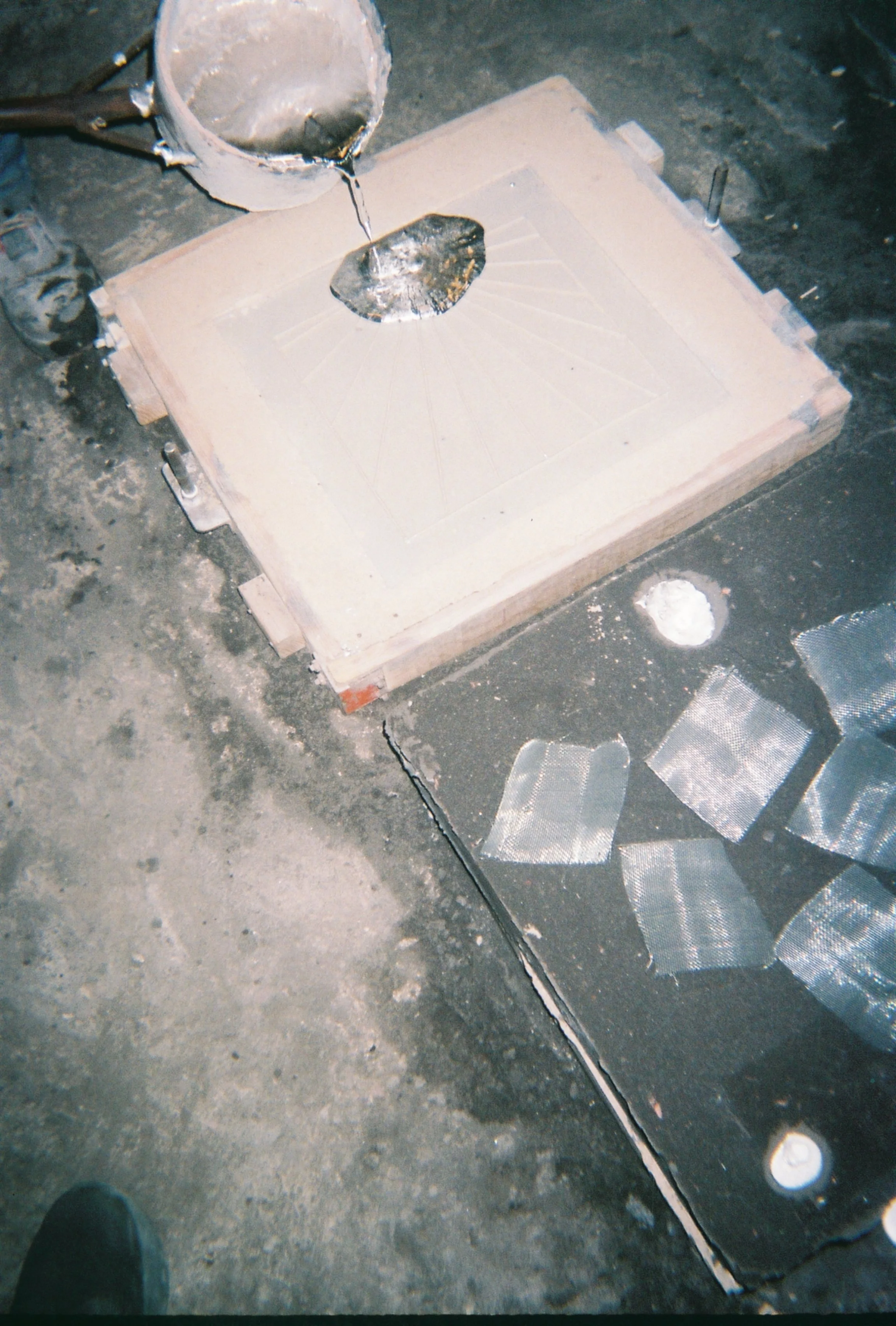
You describe making sundials as “pure alchemy.” What does that transformation actually involve in your studio?
The majority of things don’t begin in the studio. I don’t design objects, I design concepts. The alchemy usually starts while travelling — seeing something in Luxor, Mexico, or Japan, or even mid-flight. For some reason, my best ideas come on planes. Maybe it’s the stillness, or the fact that ideas come to you, not the other way around. I spend long flights in meditation — sometimes six hours straight — and there’s something about being in the air that heightens it. A kind of natural mystic state.
The process of creation feels sacred. Problems always reveal themselves for a reason, and those challenges lead to the work. I originally planned to make the first sundials in Japan, in ceramics, during an art residency. Instead, I ended up in Mexico, working in metal.
There’s a particular force in Mexico — intense, emotional, and alive. The craftsmanship is exceptional, and there’s a different relationship to making. It’s not driven by the “time equals money” mindset, but by the desire to create something meaningful. I’ve only felt that same approach in places like France and Japan. Elsewhere, it often becomes about efficiency and scale. So creating this first series of sundials in Mexico has been true alchemy — learning metal foundry during the day, and studying Mayan astronomy at night.
This series is presented in Milan at Salone Raritas — a space tied to design and collectible objects. Do you see these works as functional, sculptural, or something else entirely?
If you name it, you limit it. Water is still water whether it’s sold in a museum café or found in the desert — but the experience is completely different. You either connect with the energy of a piece, or you don’t. It’s that simple.
I don’t care much for classifications. They’re often made for commercial purposes, and there’s a tendency to over-intellectualise things that are actually very direct. Years ago, I worked with a highly respected collector and curator, and when I asked about her criteria, she said: “I like it or I don’t.” That stayed with me.
What I find interesting about sundials is how universal they are, yet how overlooked they’ve been for the past 200 years. Being here at Salone del Mobile, I’ve had requests from luxury watch magazines — and my first reaction was, “but I don’t make watches.” Then I realised, in a way, I do. At the same time, I met a history professor who wants to bring students here to study the history of sundials. That visit, more than anything, is what I’m most excited about this week.