
IN CONVERSATION WITH RODRIGO SANTORO
words and interview by LEANDRO DA SILVA
For more than three decades, Rodrigo Santoro has built a career that transcends borders, languages and genres. Yet the conversation that follows is less about the milestones of that journey than the philosophy that has shaped it. Reflecting on the purpose of art, the responsibility of portraying another human being, the importance of resisting stereotypes, the richness of cultural exchange, the passage of time, and the quiet transformation of fatherhood, Santoro reveals an understanding of acting that reaches far beyond performance. At a defining moment for Brazilian cinema on the world stage, his reflections offer not only the perspective of one of the country's most internationally acclaimed actors, but also that of an artist who continues to question, observe and evolve. Thoughtful, generous and deeply human, Santoro reminds us that great performances are not born from certainty, but from the willingness to listen, to remain curious, and to truly understand the human experience.

You have worked with filmmakers whose artistic voices could hardly be more different, from Walter Salles, Gabriel Mascaro and Daniel Rezende to Richard Curtis and Zack Snyder. Looking back, have those collaborations changed the way you recognise stories worth telling, or has the same instinct always guided your choices?
RODRIGO SANTORO
I have always been interested in working with artists who have different voices. Because I believe that, at the end of the day, we are shaped by the diversity of experiences we've had in our lives—the things we've seen and heard throughout our journey. Working with filmmakers who have different artistic voices only opens up the way I see things. I learn from them, and I like to expand my vision of the world, of cultures, and of human beings. We tend to be very stereotypical. The tendency is always to put things into boxes because it's easier for the mind to classify them. That's why I love working with artists who think differently and work differently. When I'm creating something, I feel like the process is a mosaic. Different pieces come together. Maybe I've seen something because I'm a great observer. I'm a big fan of observation. My work is very much based on observing people's behaviour. We portray people, and people behave in different ways. Let's say I'm sitting in a square, simply observing the world, and I see Leandro reading a newspaper. The way he turns the page. The way he reads. That behaviour becomes another colour on my palette. It's not a formula, but maybe, while creating a character later on, I'll remember that man in the square and the particular way he turned the page. That becomes another colour that combines with something else, just like mixing colours together to create a new one. My creative process works very much like that. It's based on many experiences I've had, and I try to be like a sponge—to absorb everything while suspending judgment. Because the moment you judge, you're already approaching something with preconceived ideas.
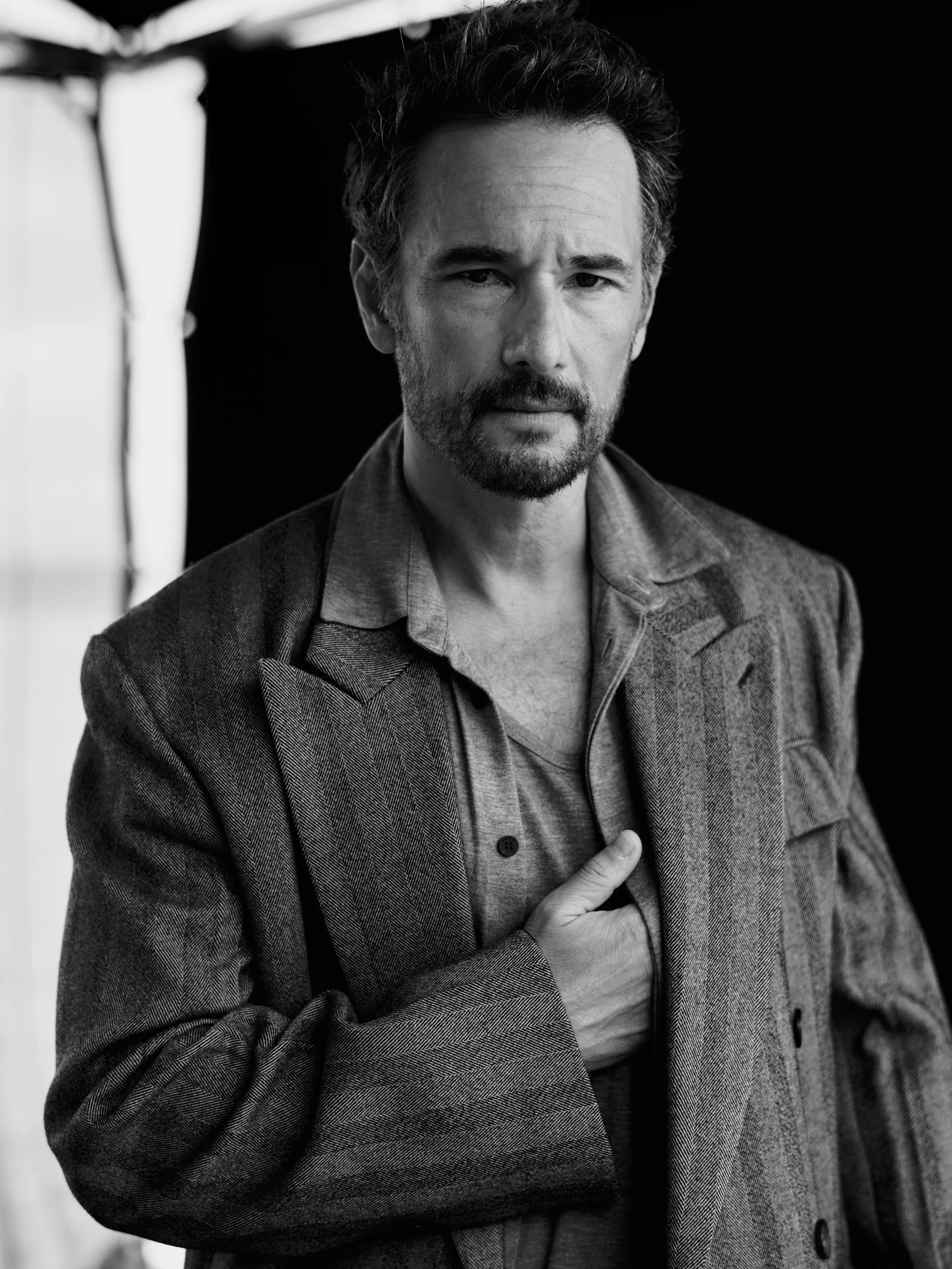
full look FERRAGAMO
Prejudice comes from an idea about something you don't really know because you've never come close enough to understand that reality. You might say, "I don't know about Leandro..." Well, you don't know, because you don't know him. So every time I'm going to play a character, I like to get as close as possible to that person's reality.
How they live. What's happening in their lives. They're human beings, so I need to get close and suspend what my mind immediately wants to conclude. Otherwise, if you let your mind lead the process, you'll probably fall into caricature. The mind tries to build something based only on assumptions. That's why I'm a huge fan of research.
Research is probably the most enjoyable part of the process for me. I get close. I research. I learn from people. I listen to them. I observe them. I try to stay, using the metaphor of driving a manual car, in neutral gear. Neutral. That's where I like to begin every creative process. Open. Ready to understand. Ready to listen. Listening is extremely important to me. Really listening. Allowing things to come to you naturally. Trying to comprehend. That's how I get as close as possible to the character while remaining respectful and, at the same time, trying to humanise them as much as possible. Otherwise, it becomes superficial like "He talks like this", "He walks like that." Then you're left only with form. There's no soul. I think my choices have always been guided by instinct. The themes are very important to me. For example, 7 Prisoners, which I did for Netflix a few years ago, is about deals with modern slavery. That's a social issue that I believe is extremely important to discuss. As artists, I think we need to produce thoughts. We need to suggest ideas that encourage people to reflect on who we are, why we suffer, and how we relate to one another. Cinema allows us to get closer to people. I'm watching Leandro's story on the screen, and I'm getting to know him better instead of simply looking at him from a distance and labelling him. It's a way of looking at ourselves with more empathy. Even if you don't like the movie, even if you hate the character.. It doesn't matter. If the character feels human, you begin to understand: "Wow... he's doing this because of that." That doesn't mean characters always need redemption or that they have to be good. Nobody is simply good or bad.
We're all a combination of many different things. Humanising people is one of the most important aspects of this work. So yes, my instinct guides me. It guides the themes that interest me and the characters I choose. Who is this character? What am I going to learn from them? That's what drives me.
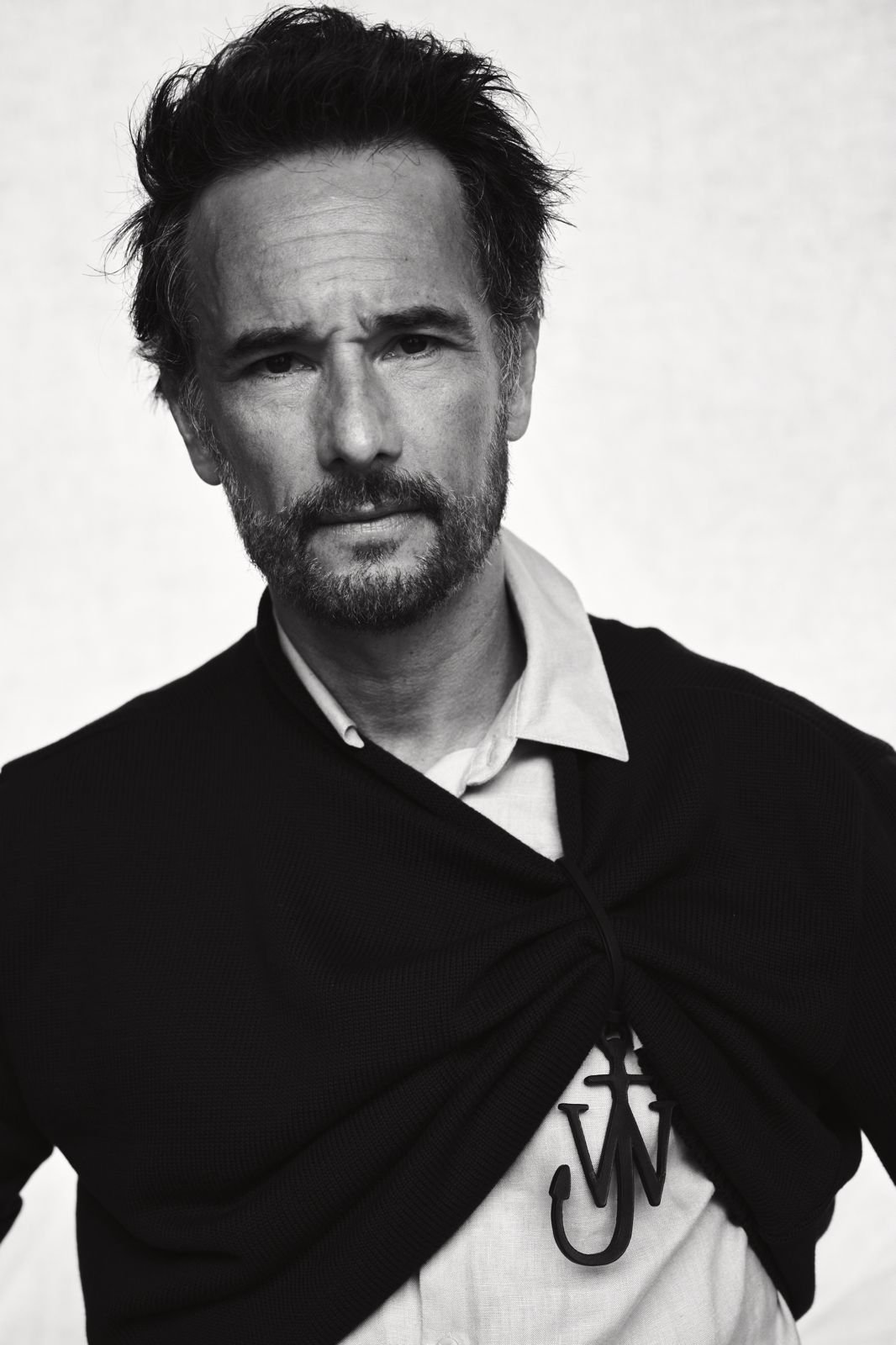
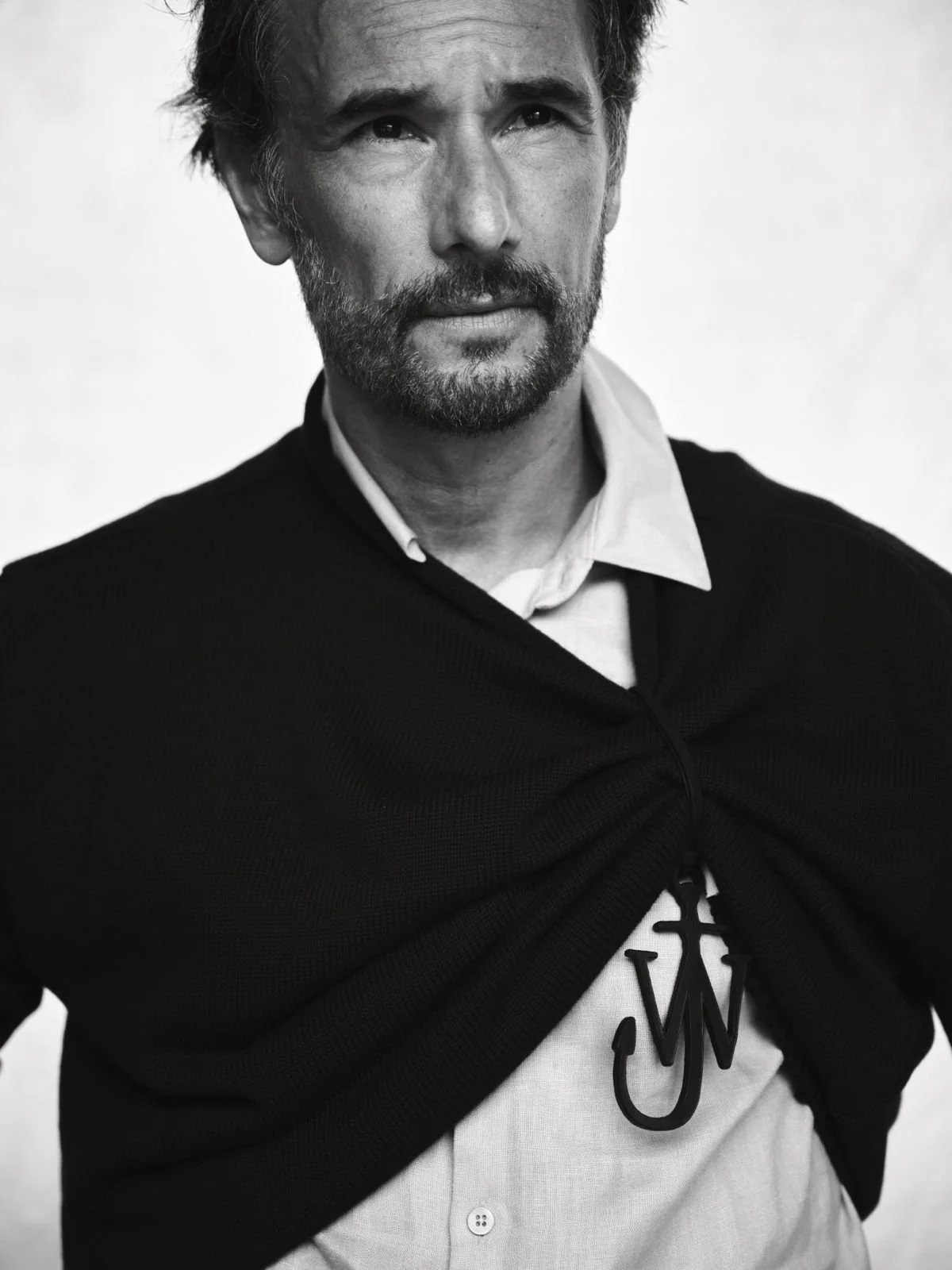
shirt and belt & BELT COHI
sweater JW ANDERSON
pants CARNAN
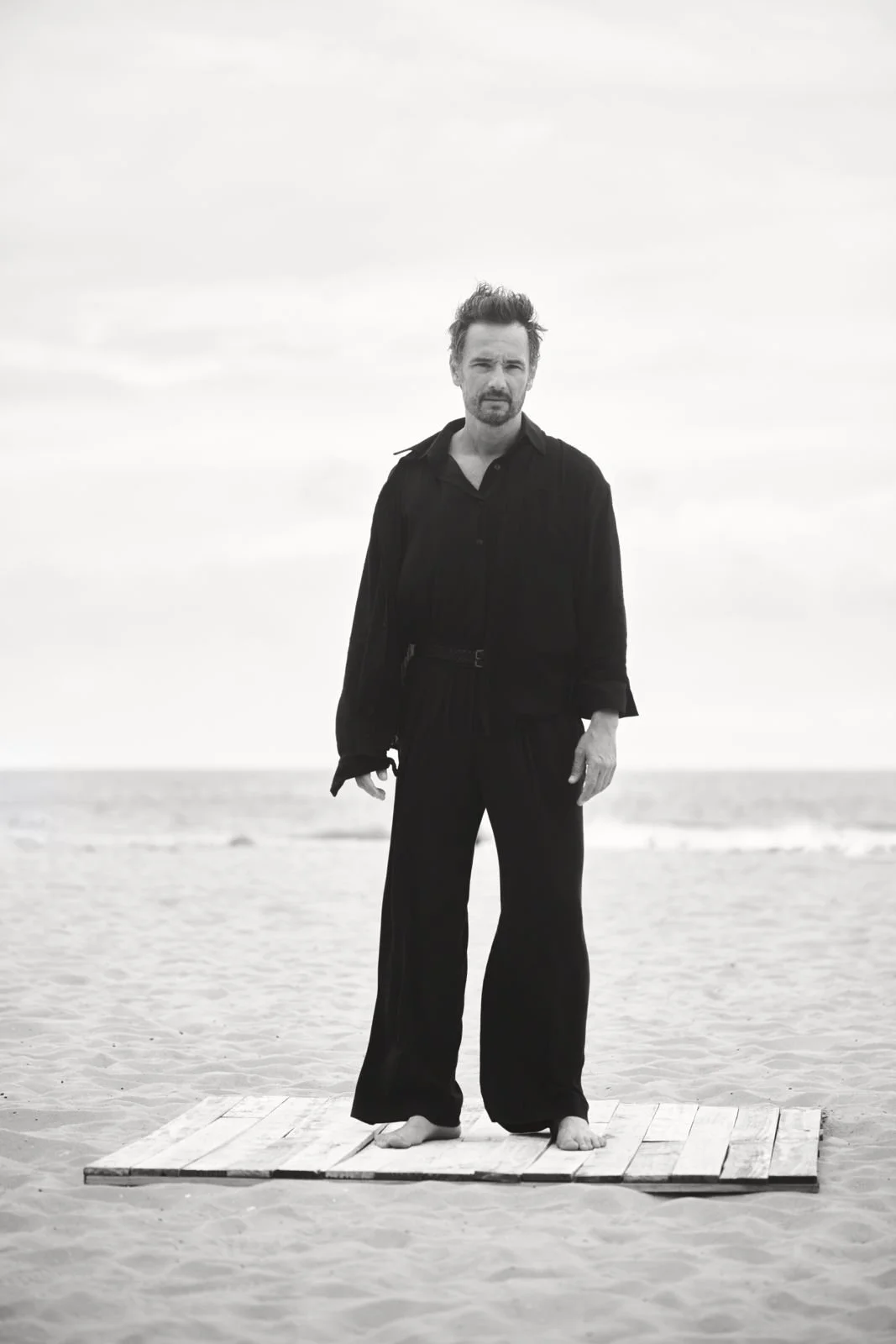
full look GAMMBA
LDS
Love Actually introduced your work to audiences around the world and marked an important chapter in your international career. Looking back, do you see it as a turning point, or did it simply arrive at the right moment in your journey?
RS
It was definitely a turning point in terms of international awareness and recognition. Love Actually was incredibly successful. Until today, every Christmas it's shown all over the world. It's one of people's favourite holiday films, and it's beautifully made. Richard Curtis, in my opinion, is a very unique artist with a distinctive voice. He's brilliant, deeply human, and I think that's one of the reasons the film resonates so strongly. It's a feel-good movie, but it's also smart and intelligent. It tells several stories that eventually connect, and it does so beautifully. So yes, Love Actually opened many doors internationally. I had already begun working abroad through films like Brainstorm, Behind the Sun, and Carandiru, which travelled to important festivals such as San Sebastián, Venice and Cannes. Those festivals allowed me to meet filmmakers, writers and producers from around the world. Then Love Actually came along, and suddenly I found myself doing a table read with Emma Thompson, Alan Rickman, Liam Neeson, Rowan Atkinson, Hugh Grant and so many incredible British actors I had admired for years. It felt surreal. In Brazil, we used to have a television program called Sessão da Tarde, where films like Love Actually were shown over and over again. I remember thinking, "What am I doing here?" It felt as if I had stepped inside one of those movies I grew up watching. The film became such a success that it completely changed the scale of my international career. Even today, people still recognise me because of it, especially around Christmas, and they always tell me how much they love the movie. I love it too. At one point there was even talk about making a sequel, but it never happened. Richard Curtis isn't writing films anymore; he's dedicated much more of his time to philanthropy. It would have been interesting to visit those characters after so many years, but maybe they're right not to do it. It's not easy to reunite everyone after all this time. Still, you never know.
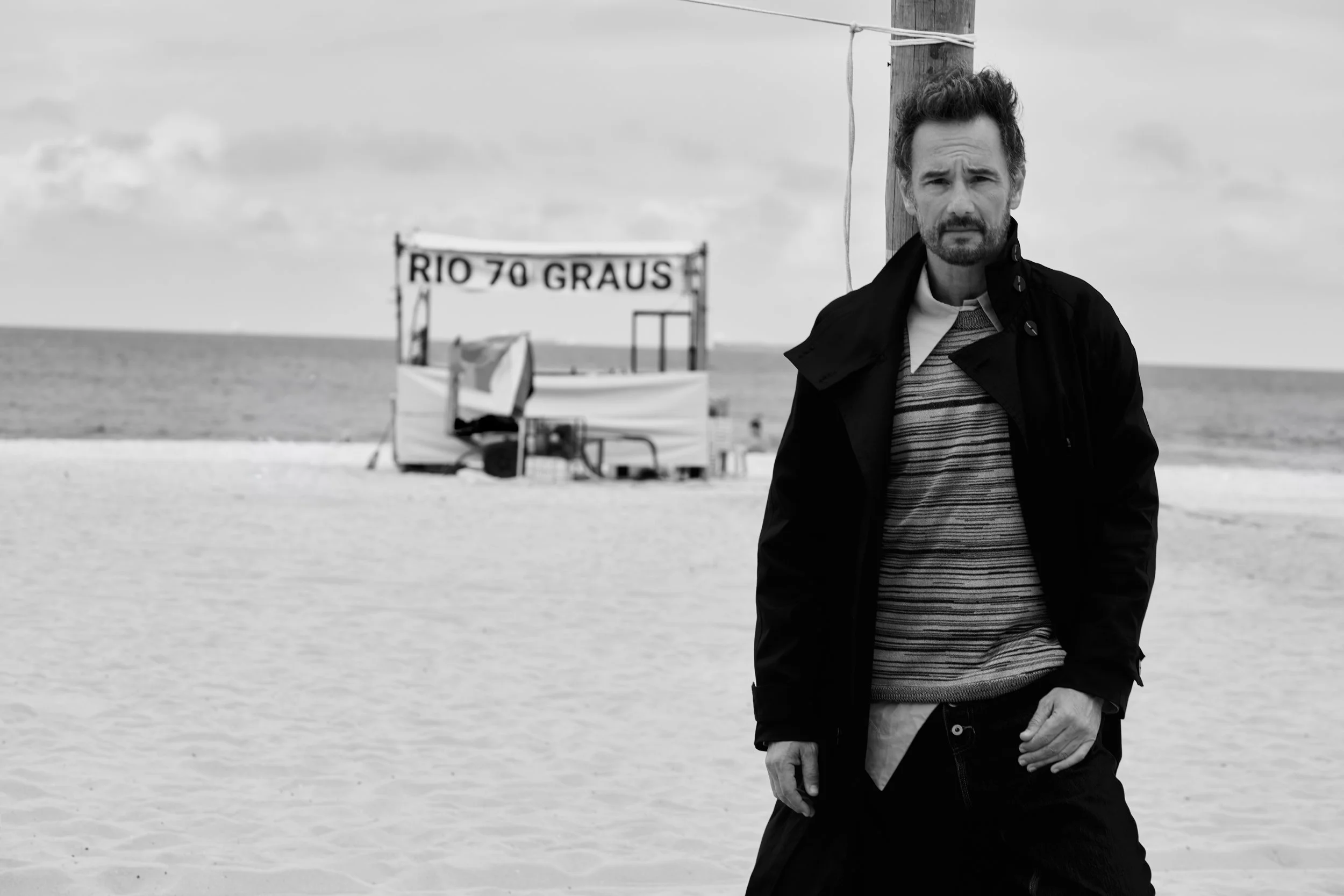
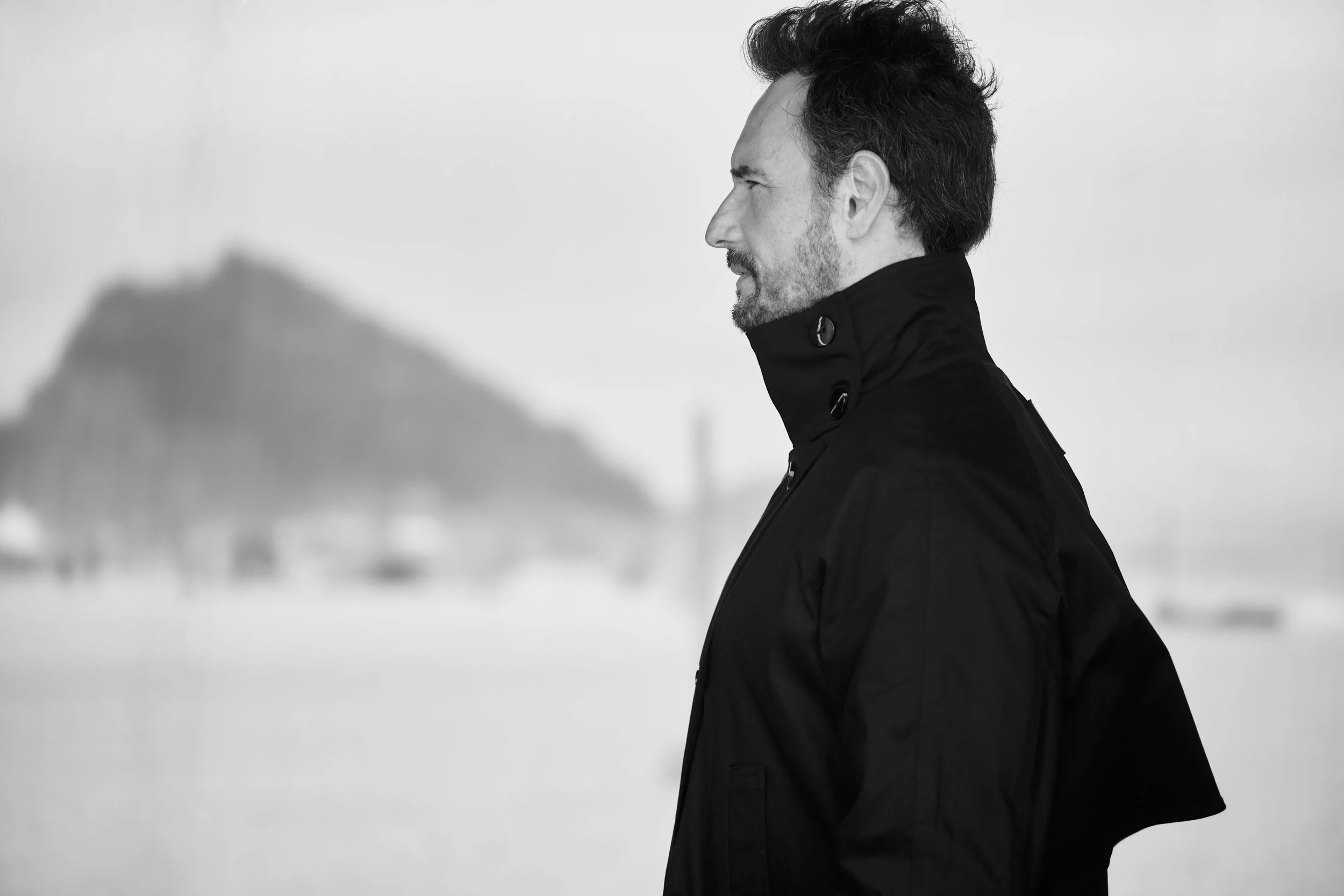
trench coat J.01
sweater HANDRED
shirt FRANCESCA
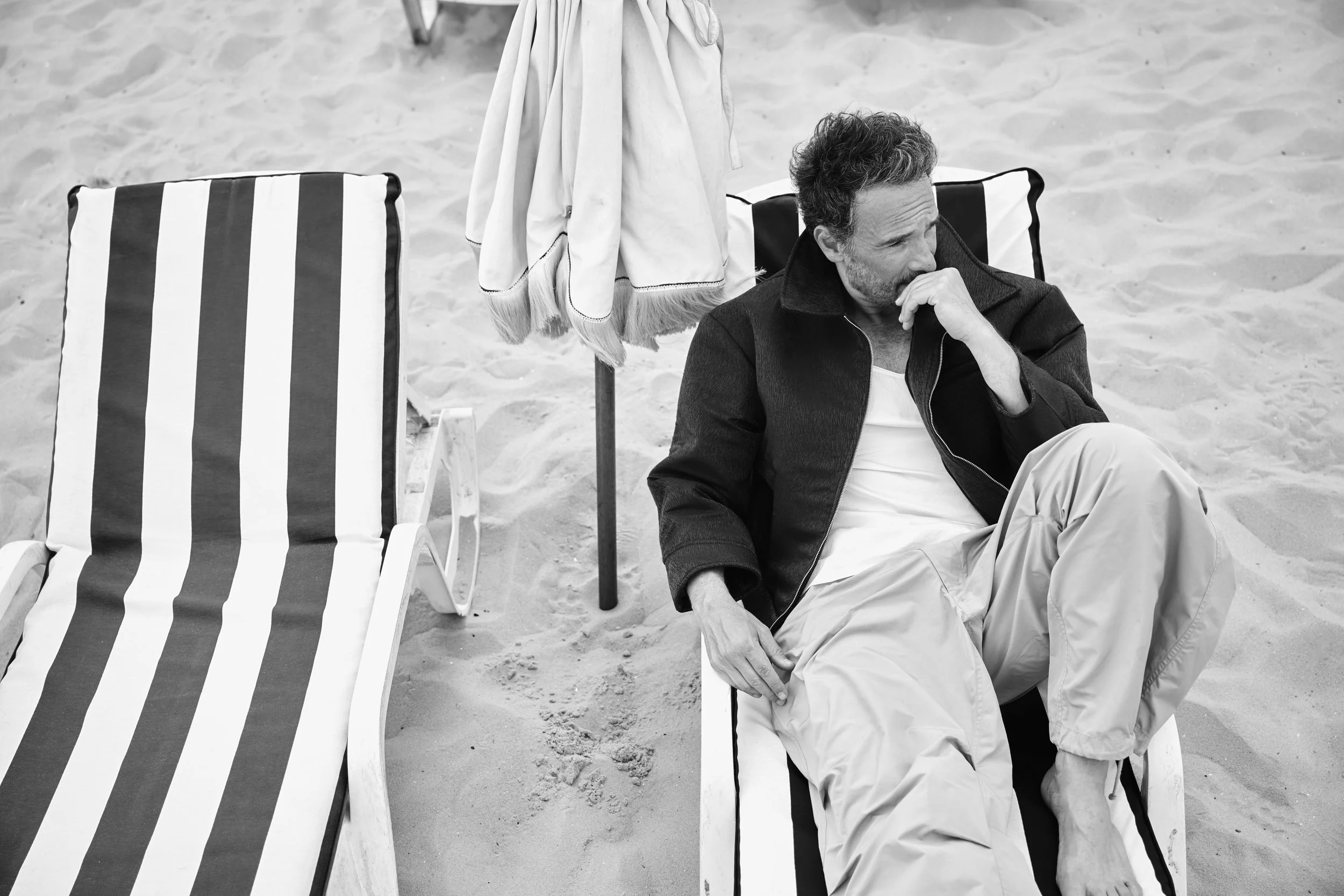
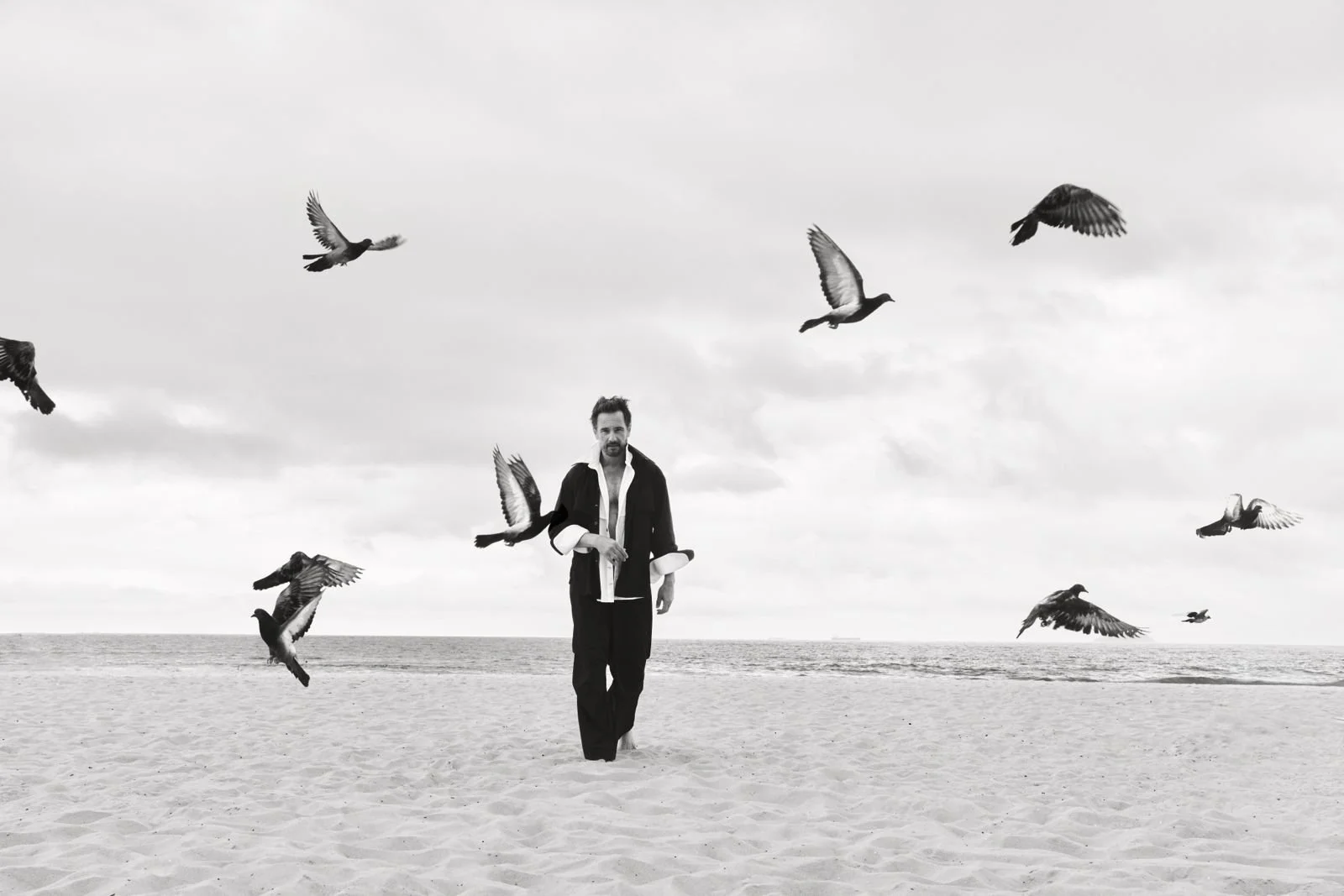
left
jacket NORMANDO
right
shirts TESWIM
pants GIORGIO ARMANI
LDS
Throughout your career, you have moved naturally between Brazilian cinema and international productions, each shaped by a different creative culture. How do you navigate these different worlds while remaining true to your own instincts as an actor?
RD
Working in different cultures and different languages—which was a challenge. The first one I had was Love Actually. That was the first film I did in a foreign language, back in 2003. So, more than twenty years ago. I find that working in different cultures and languages only expands my view of the world and of human beings. Like I was saying before, when I dive into a different culture, I learn how to put things into perspective, observe, and understand different ways of thinking and different ways of expressing yourself. Culture is the identity of a country, of a people, of a society. It's how we identify ourselves. It's how we tell the world who we are. So, diving into a culture is incredibly rich. You're living in Portugal, then you go to Amsterdam, and it's so different. At the end of the day, we're all human beings, and that's the beauty of it.
We connect on a deep human level, but the way we deal with things is very different because of culture. I find that fascinating, and it only helps me evolve—not only as an actor, but also as a human being. It expands the way I see things. It makes me more humble. It makes me appreciate things, respect things, and maybe see things I couldn't see before. Since Love Actually, which was the first experience, I've developed this relationship with working in different cultures. I later did a film that was half in Spanish and half in Russian. Learning Russian was a huge challenge. I never really learned the language; I learned my lines and understood what I was saying with the time that I had. I approached it almost like musicians do, creating a map, almost like reading a musical score. But the challenge of understanding that language and translating it into the way I acted taught me so much. I'm not saying this is mandatory for every artist, but I enjoy this kind of process. I like the opportunity to dive into different cultures and different languages and having to figure them out. When I finish a job and look back, it's not like a rational equation where I can say, "I learned this, this and that." But I catch myself thinking, "Wow... I wasn't like that before. I didn't think like that before." The word I find is expansion. It just expands me. It gives me some wisdom, I guess, about life and about people.
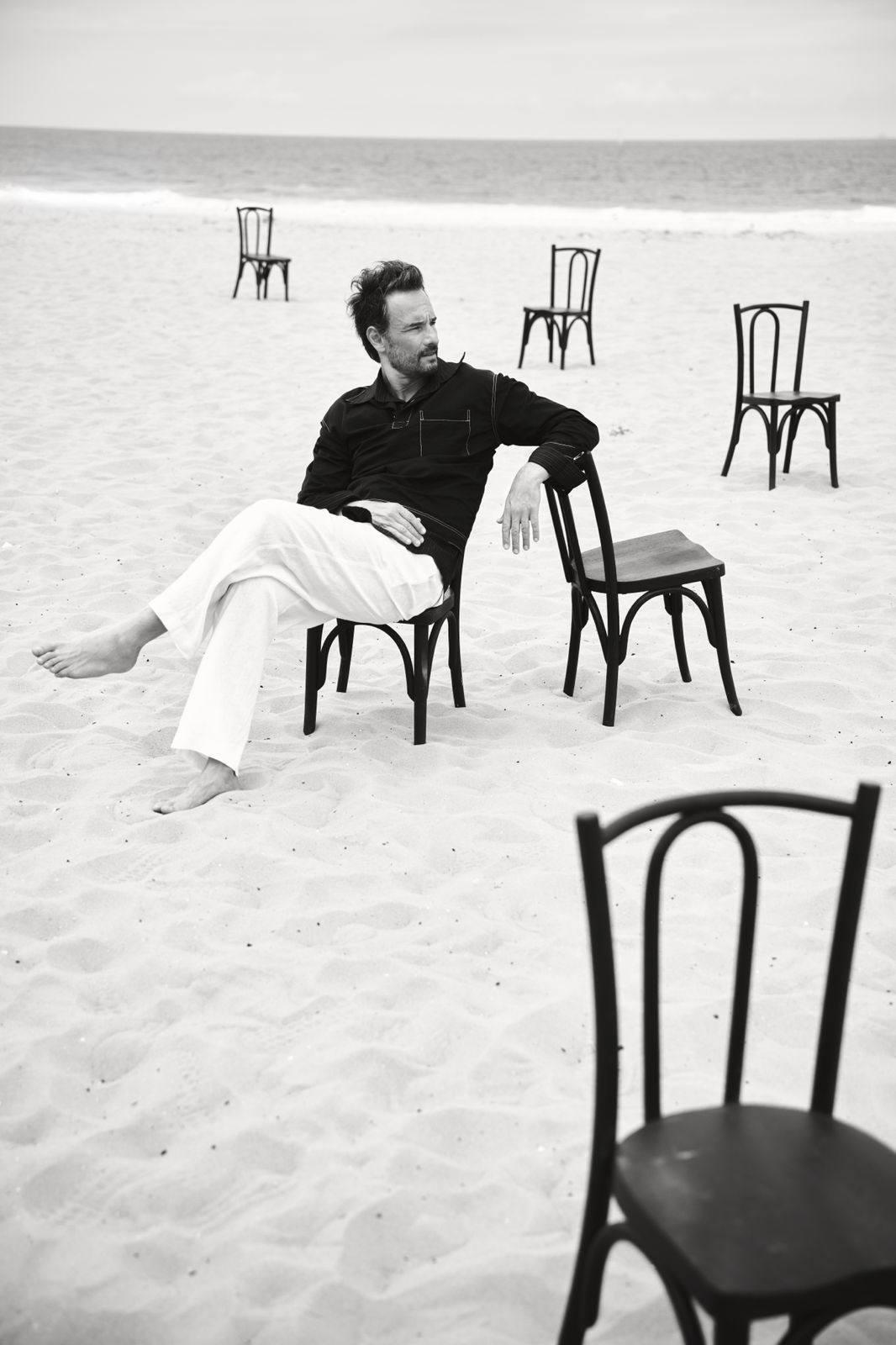
shirts ORI.RIO and CARNAN
pants GAMMBA
LDS
What you learn isn't only for the role or the character, but also for life.
RS
Yes, because the actor's tool is my body, my emotions, my psyche. Everything I use when I work is me. So that's also very challenging because you have to be able to separate yourself and say, "That's the character." That's one of the reasons I practice yoga. I've been practising for so long. I do lots of sports. Right now, I'm in love with tennis, which came very late in my life. I love doing sports, but beyond the health aspect, there's also mental health. It's very therapeutic for me. It helps me stay centred, deal with all those things, and then be able to relax and simply be a father to my two girls. I have to go back and forth between those worlds.
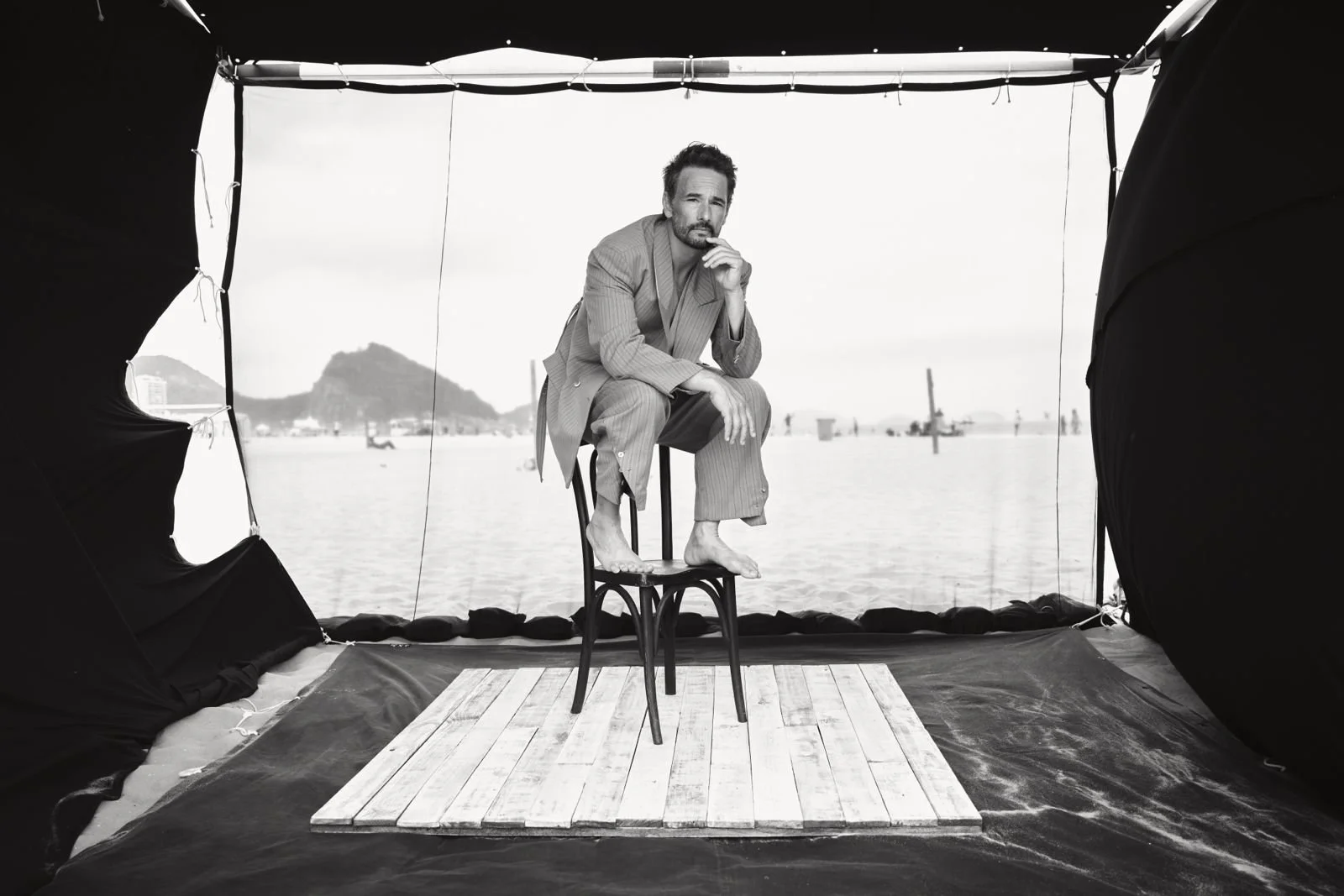
full look LUCAS LEÃO
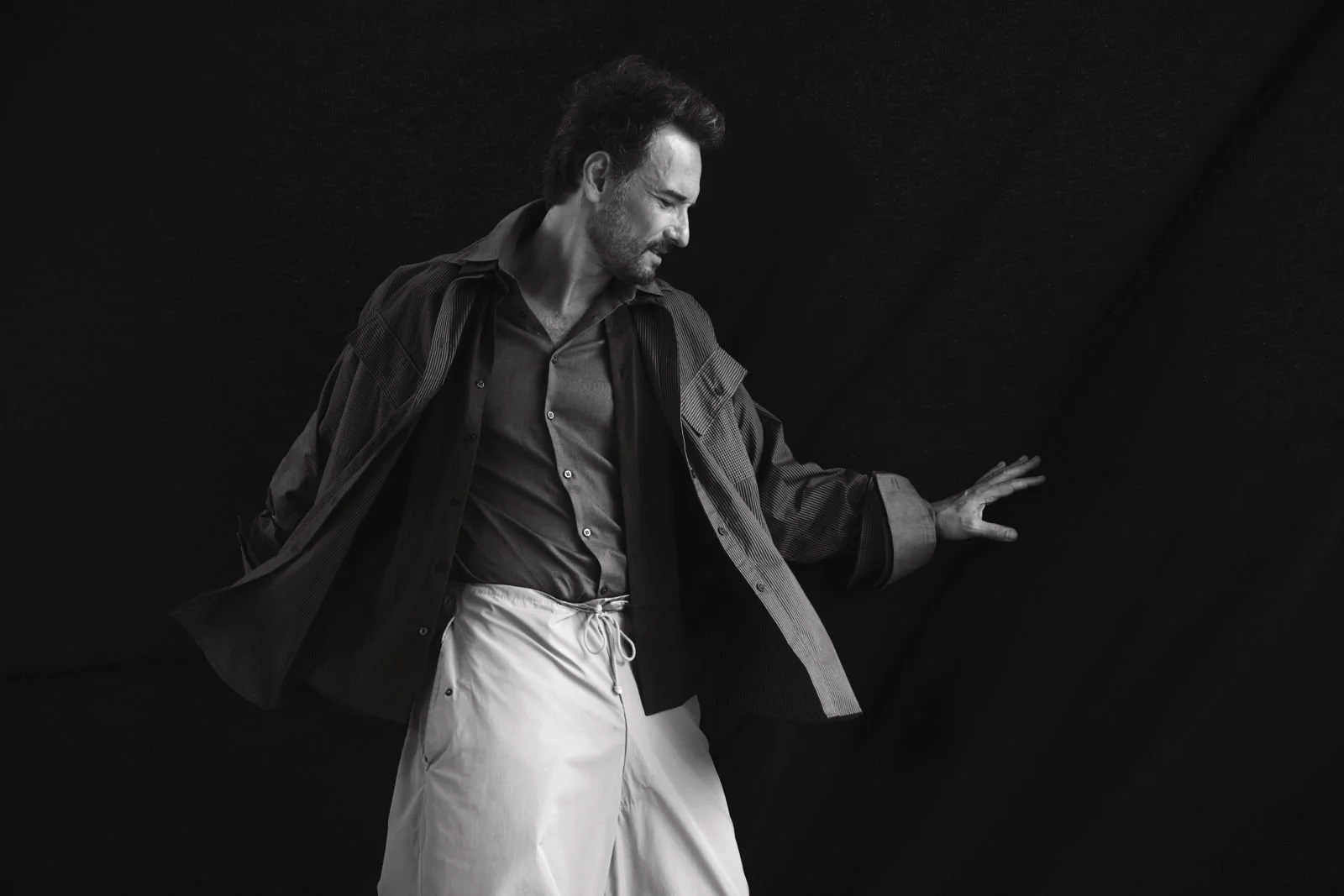
shirt COHÍ and J.01
pants SINGA
LDS
Every actor develops a personal ritual before stepping into a character. Over the years, what has become an essential part of yours?
RS
Every time is different. I like it to be different because I want to surprise myself during the process. I think it's very important to remain curious as an artist and not fall into an automatic formula where you already know exactly how you're going to do things. Life is too short to simply be efficient. I want to give it everything I have, and I want to reinvent myself. I want to surprise myself with something I didn't even know could come out of me, because those are the pearls—the most beautiful moments of the creative process. So, I don't really believe in formulas when it comes to art. There are,
however, certain things I always do at the beginning of a process. One of them is what I mentioned before: putting myself in a neutral state, like a manual car in neutral gear, where I can observe without judgment and simply remain open to observing and listening. I also like to feed myself with great literature, music, films, and art in general. Every time I'm beginning a creative process—or even while I'm in the middle of one— I like to surround myself with art. It doesn't have to be directly related to the character. For example, when I played João Saldanha, a soccer coach, in Brasil 70, it doesn’t mean I’m going to read only about football. I could read a novel or listen to a piece of music that inspired me emotionally. João Saldanha was incredibly eloquent and intelligent, so perhaps a song could evoke something that helped me understand him better. It doesn't have to be directly connected. My creative process operates on an unconscious level. I read a poem, hear a song, or see a work of art, and something moves me. The poem might have nothing to do with a football coach, but maybe there's a scene where my character is away from home, training the Brazilian national team, while his wife feels lonely raising their children, and the emotion I felt reading that poem helps me connect with what he's experiencing. It could even be something completely different. I might see a stray dog on the street that makes me feel something deeply, and later I'll remember that feeling while working on the character. That's why I don't follow a formula. What I always do is begin from a place of openness, ready to listen, ready to observe, and surrounded by art that inspires me. Those are the things I consistently return to at the beginning of every creative process.
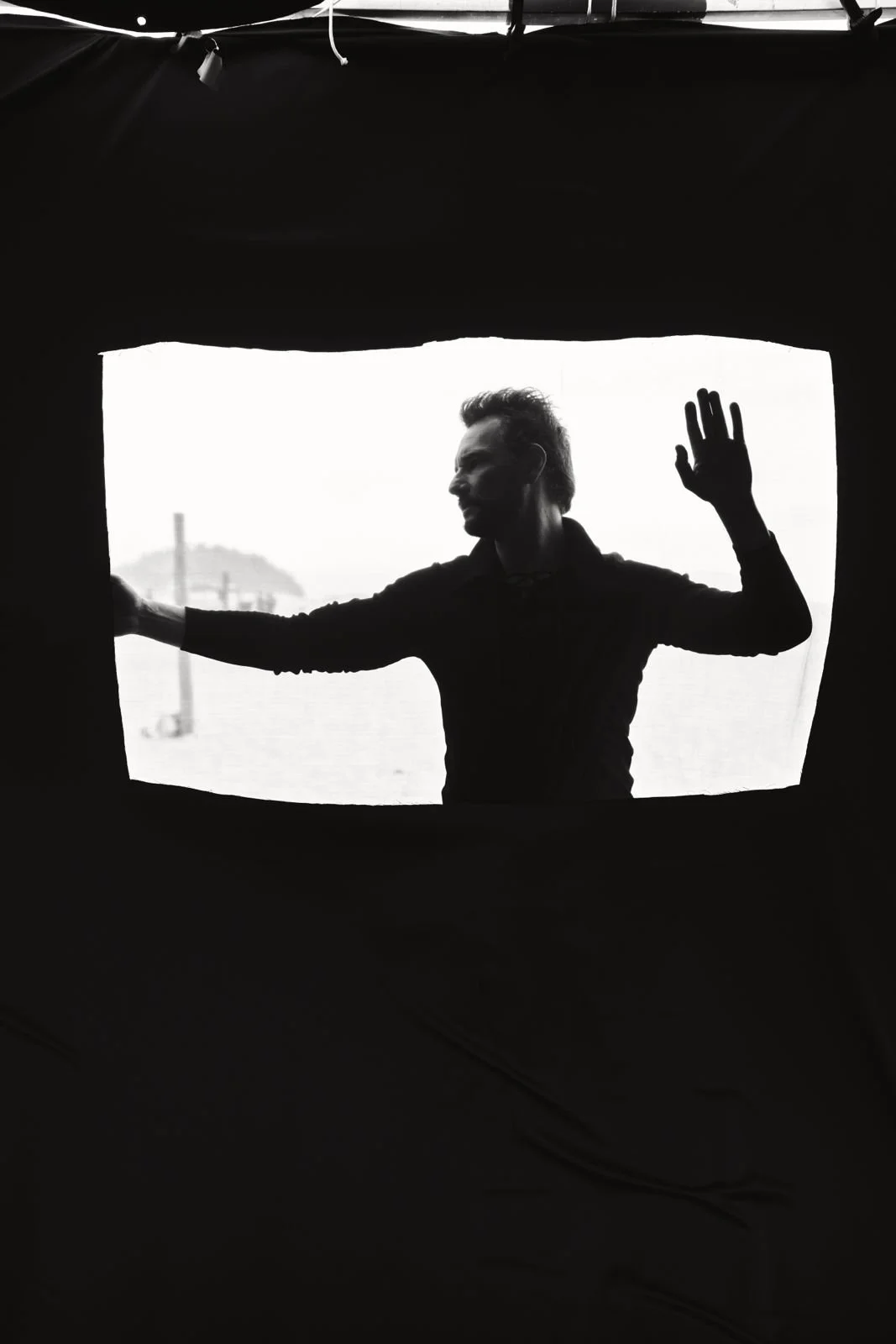
full look DOLCE & GABBANA
LDS
The Blue Trail has become one of the most celebrated Brazilian films of the year. Gabriel Mascaro has a very distinctive cinematic language. How did working with a filmmaker like Gabriel influence your creative process during production?
RS
Since I saw Gabriel's first film, Neon Bull, I was fascinated by his sensibility. I remember thinking, "Wow, this is so interesting. He has such a particular voice." I was intrigued by his work, and one day we finally met. We got along really well and said, "Let's find something to work on together." We spent about two or three years talking. He invited me to do Divine Love, but I was already working and couldn't do it. Then one day he called me and said, "I have a new script. It's called The Blue Trail, and I wrote a part specifically for you." It wasn't the protagonist, but I don't believe in small parts. Of course, a protagonist has a much longer journey, while a character with five or six scenes doesn't. But I believe in the essence of every character. As soon as I read the script, I was immediately moved by the story and by the themes it explored. The character was the opposite of the kind of masculinity we're used to seeing on screen. You see a man living on a boat, which is usually a symbol of freedom, but he's suffering because of a lost love. He's fragile, sensitive, and emotionally vulnerable. I loved that contradiction. Then there was the central theme of the film: how we treat elderly people in our society. How do we look at them? How do we deal with them? In that sense, I think The Blue Trail is an ode to freedom because it makes us reflect on ageing in a world where human beings are constantly measured by performance—by how much they produce and how young they remain. This seventy-five-year-old woman still has dreams. She wants to fly. She wants to discover a new purpose in life. Her life isn't over. We can't simply tell someone, "Now you should go to a nursing home." Life continues as long as we're alive. We all have the right to dream, to live our lives, to experience new things, and to discover new meanings. If you're seventy-eight years old and decide you want to learn how to paint, it's not too late. It will never be too late while you're alive and still able to dream. That's why I loved the screenplay so much. I thought the central theme was incredibly intelligent and beautifully told. The entire film was shot in the Amazon, but Gabriel deliberately chose not to shoot it in a wide cinematic format that would emphasise the beauty of the landscape. Instead, he used a square frame because the film isn't about the landscape—it's about the human landscape. At first you almost want the image to open up so you can see more of the river and the forest, but then you realise that's not the point. The point is those characters. Even that visual decision is so carefully thought out. I'm a huge admirer of Gabriel. I think he's a true filmmaker.
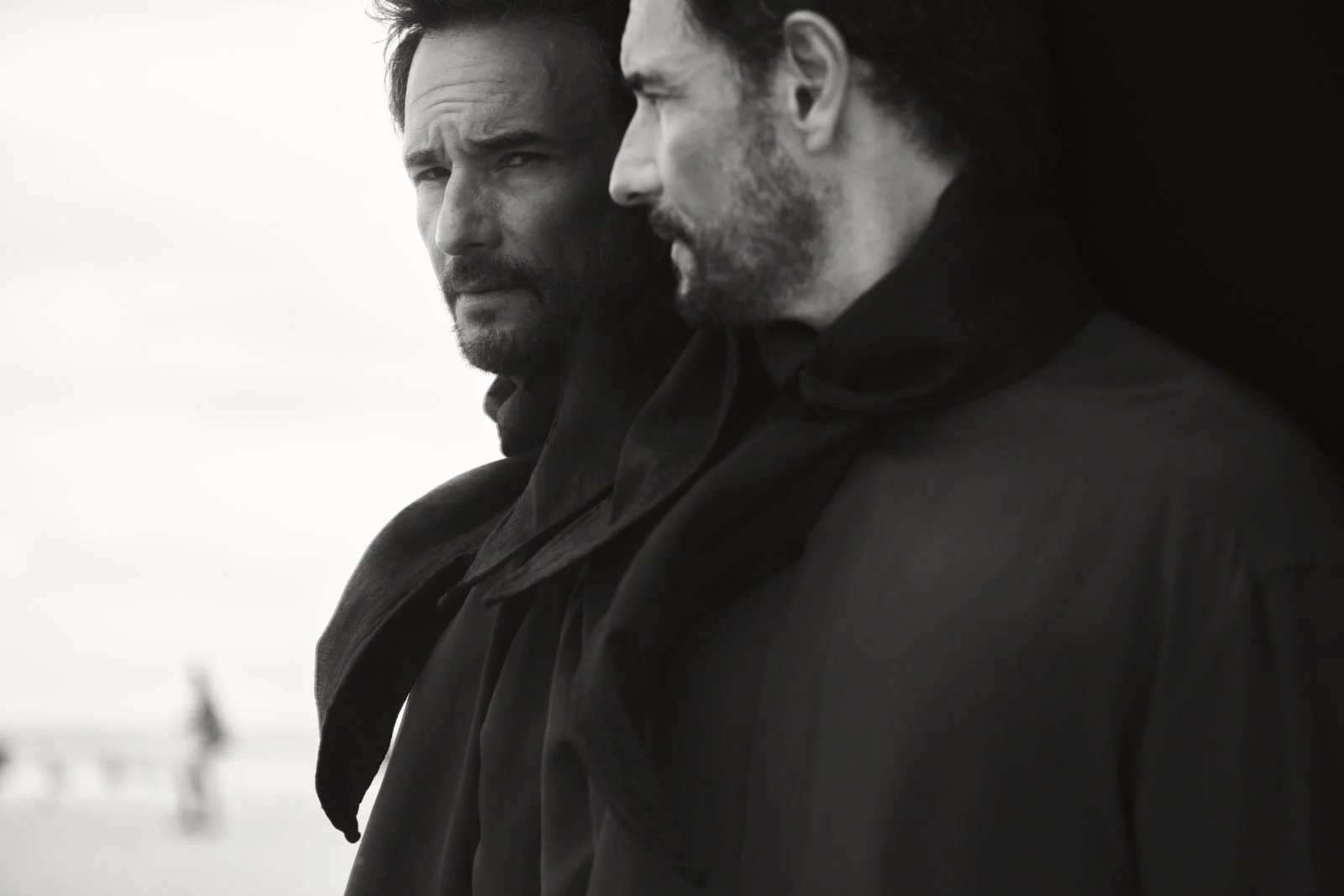
full look HANDRED
LDS
A Son of a Thousand Men is a deeply human story that explores fatherhood, belonging, and vulnerability with great sensitivity. Looking back, what does that film still represent to you today?
RS
It's been about two years since we shot the film. This film is based on a book by Walter Hugo Mãe. It was a very particular creative process because the book is pure poetry, and we had the enormous challenge of translating that poetry into cinema. That's always difficult because, when you read a book, you create your own film in your mind. In this case, Walter Hugo Mãe is such a brilliant writer. The way he writes is so beautiful that our biggest challenge was figuring out how to make Crisóstomo a real character. In the book, he speaks much more than he does in the film, so we had to adapt that and find the right way for him to express himself. This is a man who grew up isolated from society. He never learned how to communicate with people. He almost reminds me of Mowgli, the child raised by wolves. That image often came to my mind while I was preparing the character. Crisóstomo doesn't know how to communicate. He has to learn everything. He longs for fatherhood, he longs for affection, and all he really wants is to hug someone. But he doesn't know how to do that. He's afraid of it, yet all he wants is to belong. He's spent so much time alone, and that's all he's looking for. At the same time, the people in the village bully him. He's the outsider, the strange one. There are so many layers in this story, and Crisóstomo is almost a surreal character in the book. That became my biggest challenge because I kept asking myself, "How do I make him flesh and blood?" In the novel, he almost feels mythical, but in the film he had to become a real man who grew up alone in that little house. We had to preserve all the poetry while making him tangible and believable.
Finding his physicality became essential. He's a fisherman. He owns almost nothing. He lives under the sun every day. What does that body look like? How does he move? Most importantly, how does someone who never learned to communicate actually speak? What's his rhythm? What's his voice? Finding those details was what made him feel like a real person instead of a symbolic figure who had simply stepped out of a book. The film contains many metaphors and fantastical elements, but at its core he's a man who wants to become a father, and those people are real. That was one of the greatest challenges of my career, but also one of the most unforgettable and beautiful experiences I've ever had. Being in touch with Crisóstomo meant being in touch with the best part of ourselves—with love, empathy, innocence, and humility in its purest sense. He's not contaminated by society. He's like a grown man who still has the heart of a child and still believes in people. Connecting with that part of myself was a beautiful experience, and I learned so much from him.
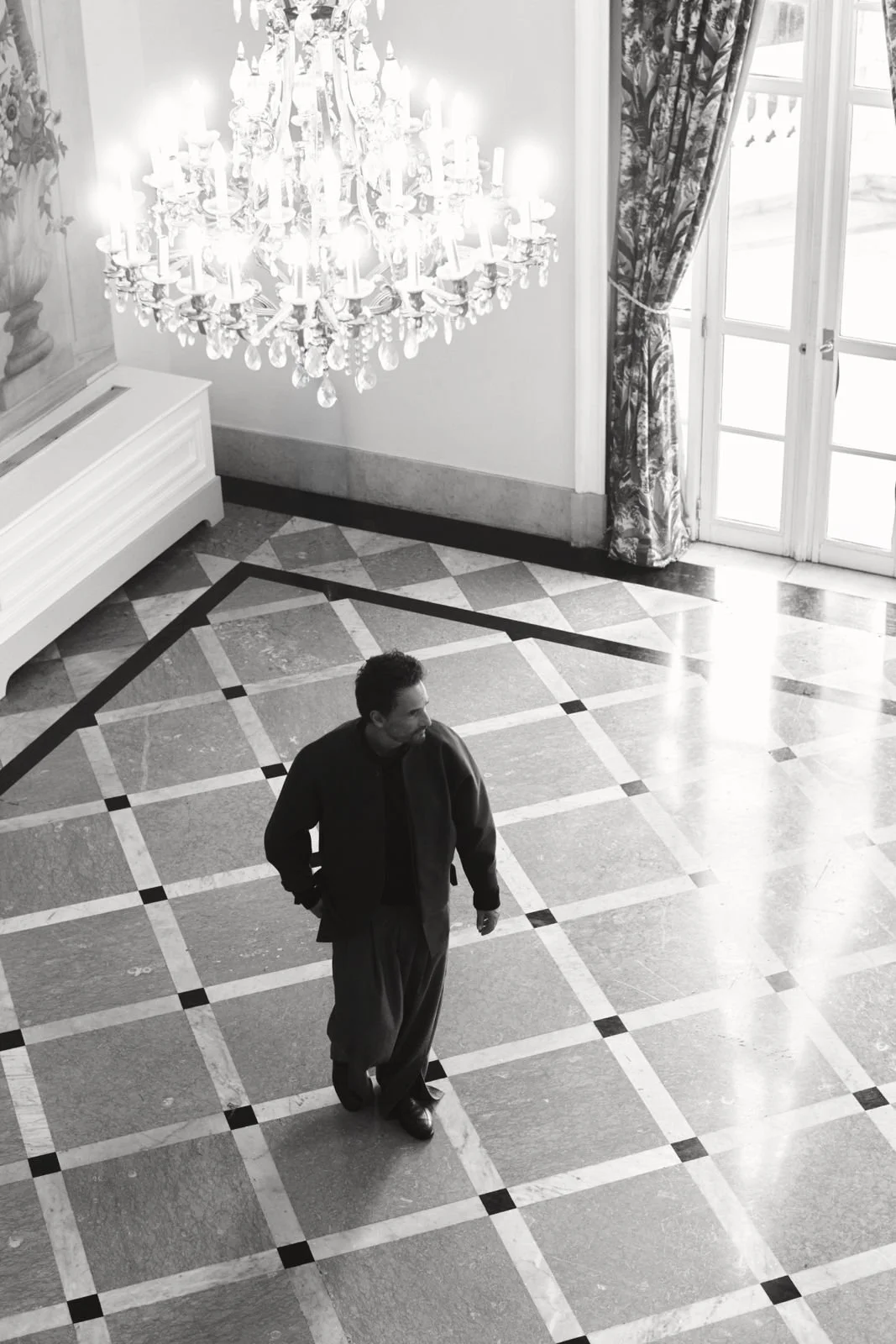
full look LUCAS LEÃO
LDS
This September, audiences around the world will discover Runner. In this English-language film, your character moves naturally between English, Portuguese, and Spanish. What did it mean to portray someone whose identity is also shaped through these different languages?
RS
I really enjoyed making it. The character was originally written as Spanish. Then they cast me and asked, "You speak Spanish, right?" I said, "I do. But how important is the character's nationality to the story? Does he have to be Spanish?" They said, "No, we can come up with his background." I had always wanted to speak Portuguese in a role. I'd done it once, very briefly, on Lost, but never in a substantial way. So I suggested, "What if his mother was Spanish—or maybe Mexican—and his father, whom we don't really know, was Brazilian or Portuguese?" The director said, "That's fine. Let's see how it flows." The script was originally written entirely in English and Spanish, but once we started shooting, I began improvising lines in Portuguese. Nobody on set understood what I was saying. I would just throw in a line naturally, and the director, Scott, would ask, "What did you just say?" I'd explain it to him, and he'd say, "I like it. Keep it." So every line my character speaks in Portuguese was improvised. After each take, they would ask me, "What did you say?" and I'd translate it. They'd joke, "Rodrigo, if you're lying to us..." and I'd say, "No, that's exactly what I said." When we recorded the ADR later, all those lines stayed in the film. The director felt they gave the character another layer. Suddenly, you couldn't immediately identify where he came from, and I really liked that ambiguity. What I also loved about this character is that he's not what he seems to be. At first he appears to be the classic villain who's stealing organs, but as the story unfolds, you understand why he's doing what he's doing. I love when a story challenges the audience's first impression. We tend to label people very quickly—"He's this," "She's that." Then suddenly the story turns, and you realise you were judging too soon. That's something I always find interesting because it makes people question themselves. Why did I react that way? Why do I feel differently now?
I think that's one of the responsibilities of an artist: to make people question themselves and think again. Besides that, Runner was also the most physically demanding action film I've ever made. I'd done action films before, like 300, but I'd never been so deeply involved in the action itself. The final fight sequence took us about a week to shoot, and I did all of it myself. There was a lot of choreography, a lot of preparation, and I had a great time. When I finally watched the finished film, I thought it really worked. It's entertaining, it surprises you, and it delivers exactly what it sets out to do. We shot it on Australia's Gold Coast, which I absolutely loved. I love surfing, so being surrounded by that nature made the whole experience even more special. Australia is an incredible place—very far away, but absolutely beautiful.
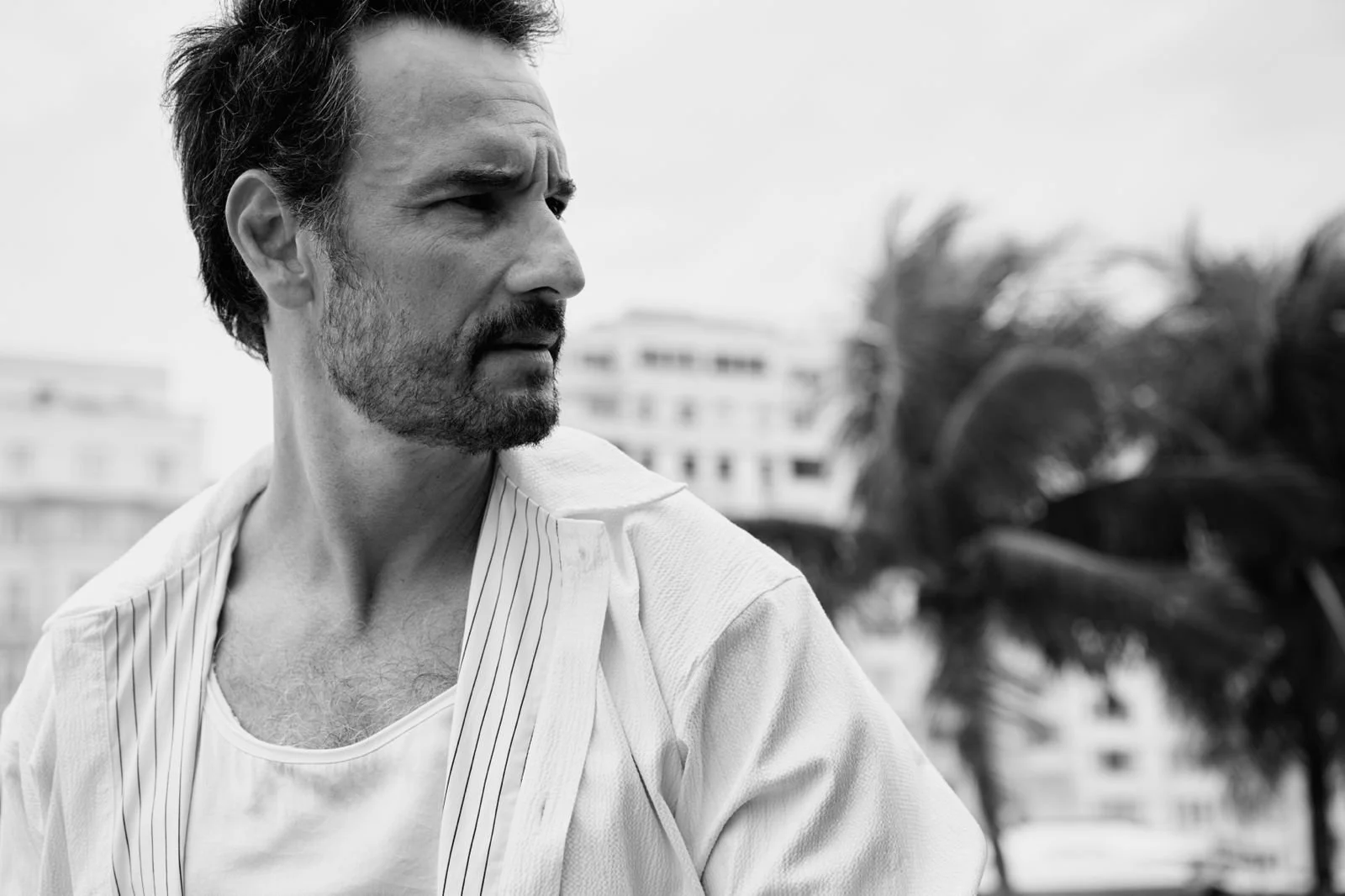
over shirt CARNAN
tank top MISCI
pants SINGA
LDS
Brazilian cinema is experiencing one of its strongest moments on the international stage. Having spent decades building a career between Brazil and Hollywood, what is it like to witness this new chapter for Brazilian cinema? Has your sense of responsibility as a Brazilian actor evolved along the way?
RS
It's interesting because when I first got to Hollywood, back in 2000 or 2001, it was a completely different world. There was no streaming. There was no globalisation like we know it today. Latin actors, like myself, were confined to a very narrow range of characters. I literally chose not to take some opportunities because I felt they were very stereotypical. Especially for Latin actors, the roles were usually the same. There was a lot of caricature. Those stereotypes still exist today, but back then they were much more common. Today, with globalisation, it's a completely different market. You can make a film in Brazil and, through streaming platforms, someone in Australia can watch it the same day. The market has completely changed. When I first arrived, it was very different, and I've witnessed that entire evolution—from the arrival of streaming to globalisation and the way the industry started looking beyond Hollywood. Suddenly, the world became interesting because people realised there was a huge market outside the United States. So I've had the opportunity to witness that whole transformation.
Going back to the moment Brazilian cinema is living now, I think Brazil is going through one of its strongest periods. I believe this is the result of a long process in which our film industry has been discovering its own identity and maturing. Brazilian cinema has reached a level of maturity that is now receiving recognition all over the world. We've always had Brazilian films at festivals like Cannes, Berlin and Venice, but what we're experiencing now is something I've never seen before. Last year, The Blue Trail won the Silver Bear. I'm Still Here won the Academy Award for Best International Feature Film. Then The Secret Agent arrived, and Wagner Moura and Kleber Mendonça Filho received major recognition. It's an extraordinary moment.
That said, it hasn't changed the way I approach my work or the responsibility I feel as an actor. That responsibility has always been there. I've always approached my work with respect, dedication and the desire to give one hundred percent of myself to every creative process, whether it's a supporting role or a leading role, whether it's a blockbuster or Shakespeare. My relationship with the work has always been the same. The responsibility I felt back in the day is exactly the same responsibility I feel today. And I think that's a good thing because I hope I never stop feeling nervous before starting a project. The day I stop feeling anxious or stop thinking, "This is important," then something is wrong. Experience shouldn't take that away from you. Every project brings a new challenge, and you never really know what's going to happen. You can't predict whether a film will work. Sometimes you give everything you have, and then you watch it and think, "Well... it didn't quite work." That's part of filmmaking. You have to believe in what you're doing, commit yourself completely, and always try to make the best film possible.
What I truly hope is that this isn't just a moment. I hope it lasts. I hope this recognition helps strengthen Brazilian cinema, Brazilian audiovisual production and Brazilian culture as a whole. I hope that in a few years we won't look back and say, "It was just a meteor. It passed." Brazil has an incredibly diverse culture. We have extraordinary talent and so many stories that deserve to be told around the world. The important thing now is to make our industry sustainable so it can continue growing. Brazil is an amazing country, and we need to recognise the strength of what we have and continue investing in it.
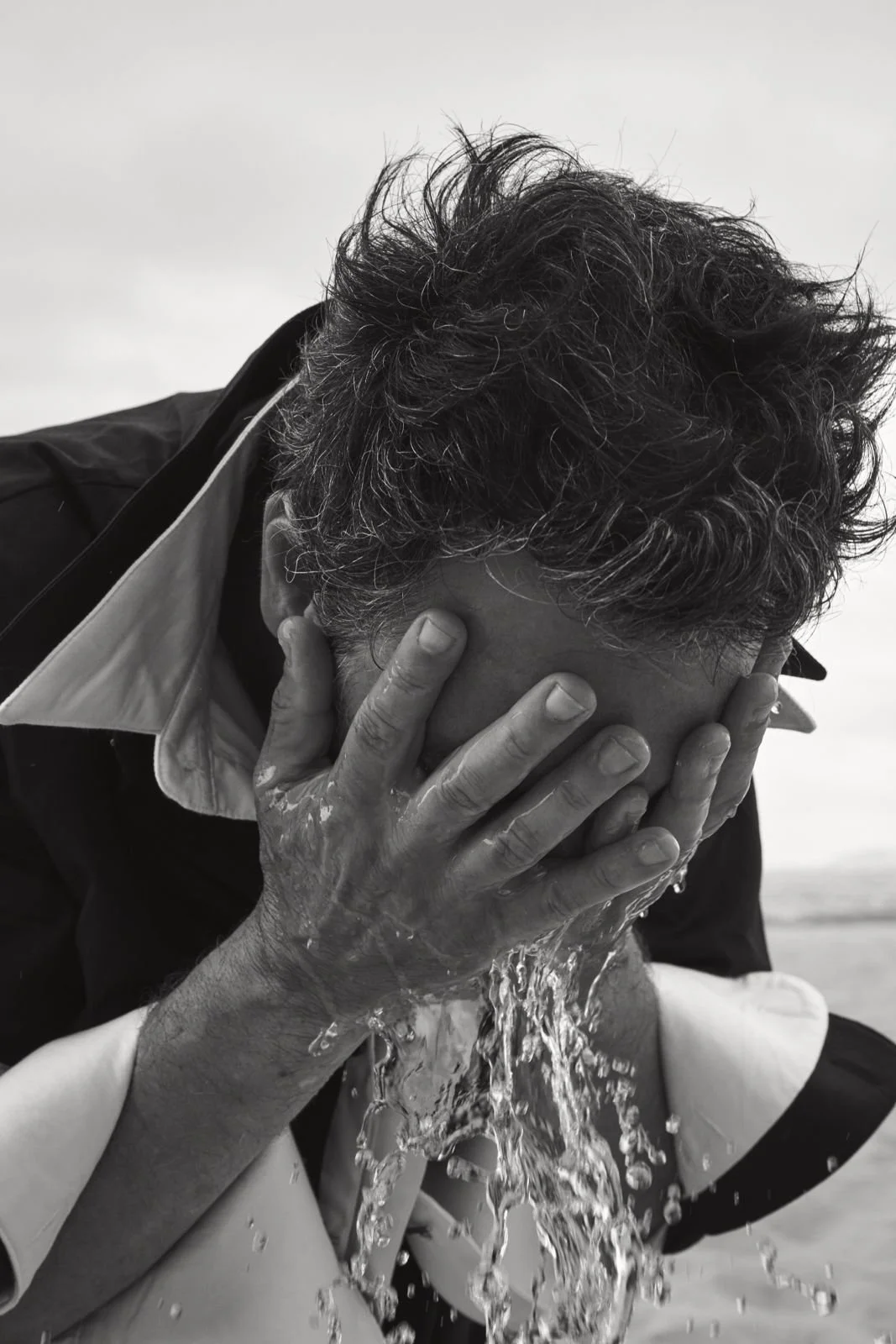
shirts TESWIM
pants GIORGIO ARMANI
LDS
2026 marks a particularly exciting chapter in your career, with major Brazilian and international projects reaching audiences within just a few months of each other. Does a year like this encourage you to pause and reflect on your journey, or is your attention already focused on the next story?
RS
That's a good question. I'm constantly reflecting on my journey in life, not only as an artist, but as a human being. I would say this year has been particularly special because I just turned fifty, which is still a bit of a taboo. I feel great, but reaching that age naturally makes you reflect. People ask you about it, and I've found myself looking back at these thirty-three years I've spent working as an artist. It's been a long journey, and I have been reflecting on the things I've done, the things I've learned, while also looking ahead. But, most importantly, I've been trying to focus on the present. That's probably my biggest exercise in life, something that comes from yoga, meditation and philosophy. It's an exercise because it's not easy, but I practice being in the moment and enjoying the moment. Of course, as an artist, I'm always thinking about the next adventure. I don't know what it will be yet. There are a few projects being discussed, but in this industry things can change very quickly. A project suddenly comes together, financing appears, a director joins, and everything starts moving. Over the years, I've learned how to navigate that uncertainty. At the same time, I've also learned to enjoy being more mature and to appreciate the simple things in life. Those are the most precious things, yet they're often the ones we overlook because we're so distracted or constantly thinking about what's coming next. We think, "Next month I'm going to travel somewhere, and that's going to be amazing." And it probably will be, but let it be amazing when you get there. Right now, you're here. Make this moment amazing. Otherwise, we're always living in the future or thinking about the past. That's the nature of the human mind. But once you become aware of that, you can work on being more present. That's something I've been practising for many years. I've been trying to apply mindfulness to my life.
It's difficult because of the nature of the human mind. But once you're aware of that, you can have moments when you simply think, "I'm sitting here right now. I can feel the weight of my body on this chair. I'm talking to Leandro right now." There are so many things that could cross my mind, but the only thing I have is this conversation I'm having right now. Making that a full experience—that's the joy. That's what we call happiness, because that's all there is. The rest—the plans we make, the regrets we have—can drive us crazy and make us anxious. Another day goes by, and we're already thinking about tomorrow instead of enjoying the present. Besides that, I'm also playing the most challenging and the most wonderful role of my life, which is being a father. There's no rehearsal for that. You can read books, people can give you advice, but you only learn through experience. I've tried to approach fatherhood the same way I approach my work: from a place of openness, listening to my daughters, understanding them, respecting who they are. Years ago, parenting was often about saying, "Do this. Don't do that." I don't think that came from a bad place. Parents were simply doing the best they could. But today we understand much more. We talk more. We recognise that our children are not extensions of ourselves. They're their own people, with their own identities and ways of seeing the world. So I try to listen. Instead of simply telling them what to do, I ask them how they feel. I try to guide them through my own experience and with love. Of course, you have to set limits and help them navigate life, but at the same time, it's a two-way relationship. I learn from them as much as they learn from me. Everything they teach me helps me become a better version of myself. It's complex, but it's also incredibly beautiful.
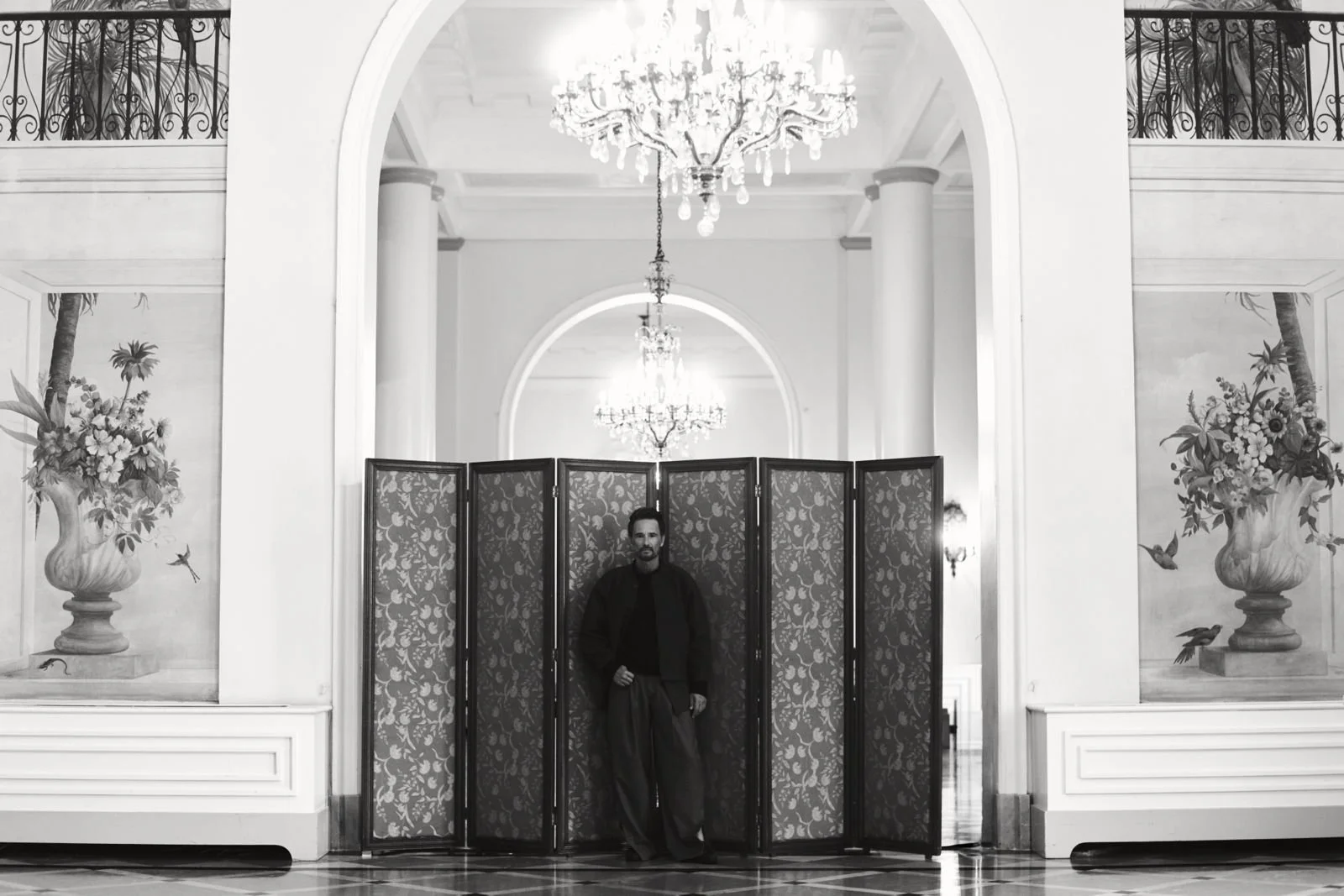
full look LUCAS LEÃO
TEAM CREDITS:
talent RODRIGO SANTORO
photography PEDRO MICELI
creative direction HUGO TEX
styling GUILHERME ALEF
makeup and hair JEANE SANTOS
photography assistants GUIDO DOWSLEY, GUILHERME FERRAZ & DOUGLAS MANHÃES
art assistant ALEXANDRE PAZ
props styling DAVID LEONARDO
fashion production LINCON CATTO
styling assistant NAI SILVEIRA
executive production PRISCILA KRUGER & LUCAS PETITDEMANGE
set production CLEYTON MACHADO
editor TIMI LETONJA
editorial directors JANA LETONJA & LEANDRO DA SILVA
interview LEANDRO DA SILVA
cover design ARTHUR ROELOFFZEN
