
interview by TIMI LETONJA and NIA TOPALOVA
RUARIDH MOLLICA is entering an exciting new chapter, with audiences now able to see him as THOMAS SHEPHERD in Marvel’s VISIONQUEST, the latest addition to the MCU, which premiered on Disney+ this October. Alongside the series, his work continues to span intimate independent films, theatre and larger-scale productions, from the upcoming feature Isle of Man to TOM FORD’s film adaptation of ANNE RICE’s Cry to Heaven. Known for performances rooted in vulnerability and emotional honesty, he brings the same curiosity and close observation to every role. Here, he reflects on identity, research, nature and the importance of staying grounded as his acting career continues to evolve.

For much of your career, you’ve gravitated towards intimate, character-driven stories that explore identity and human complexity. The MARVEL miniseries VisionQuest (2026) places you within one of the most expansive storytelling universes. Within a world that already has such a rich history, how do you carve out the space to make a character feel your own?
For me, the most important thing for my character happened when we were doing the screen test. I was doing it with PAUL BETTANY, and I was originally swapping between an English accent and an American accent. Paul turned around halfway through and was just like: “Why don’t you just do your own accent? Why don’t you just be Scottish?”
Then, it became part of my character, and my identity was based in my own identity. I feel like I always bring a little bit of my own self and personality. Especially as the show went on, the more I was myself as my character.
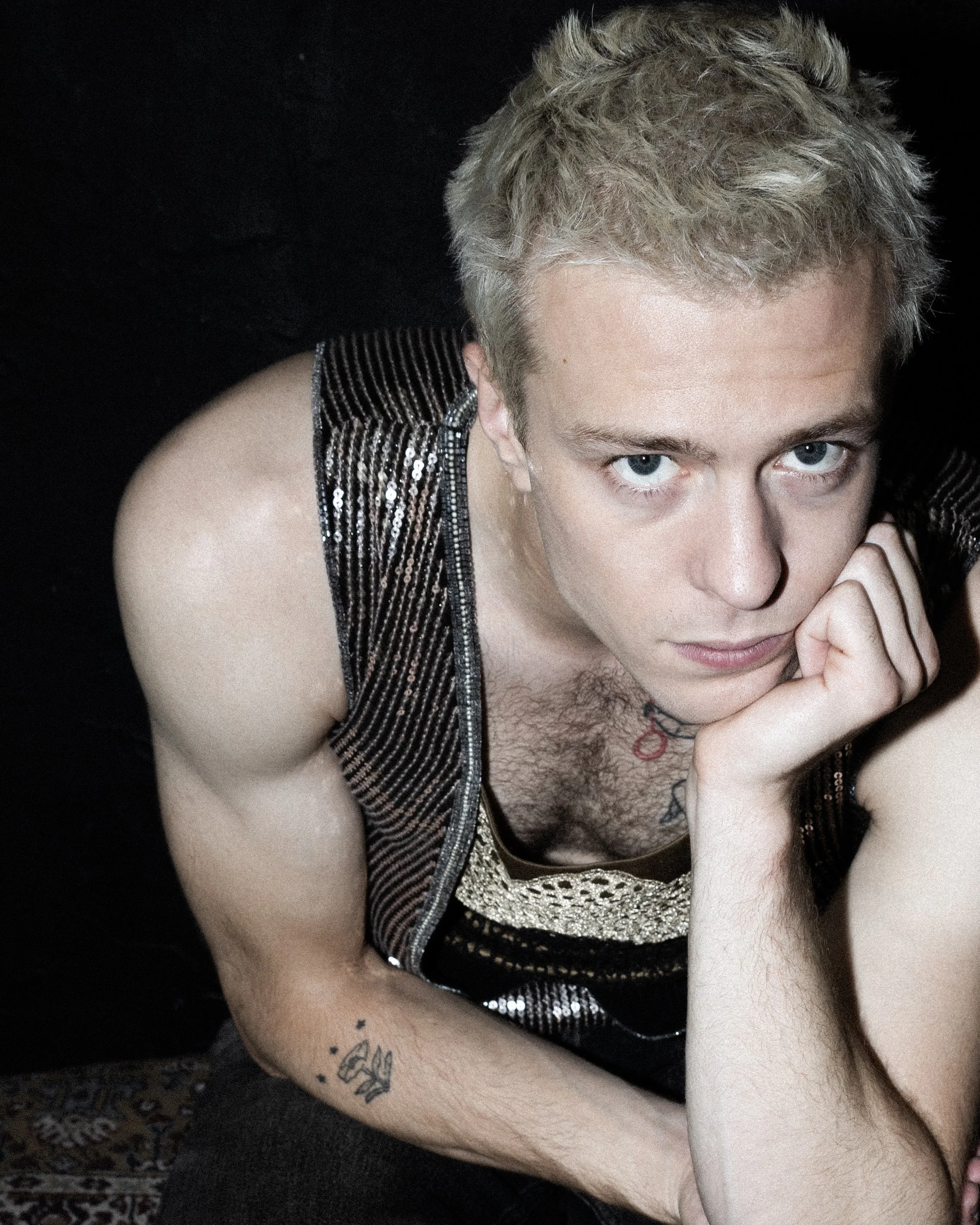
full look DIOR
From the vulnerability of Sebastian (2024) to the scale of VisionQuest and the intimacy of live theatre in Clarkston (2025), you’ve experienced very different types of storytelling. Is there one part of your creative process that never changes, no matter the project?
I honestly think it’s the research. It’s that part of getting so excited and obsessed in the lead-up to a job, where you’ve also got imposter syndrome, and you’re doing double the amount to get involved.
I was reading a lot of SAMUEL D. HUNTER’s plays, or with Sebastian, I was reading all the books that were referenced in the script. And for the MCU, I was going back and watching WandaVision (2021) and looking at everything, just immersing myself in it completely.
Then you start to find out where your personality, beliefs and traits align with a character, and you bring certain elements of the character that align with yourself together and blur that line, so things feel like they come from an authentic and real place.
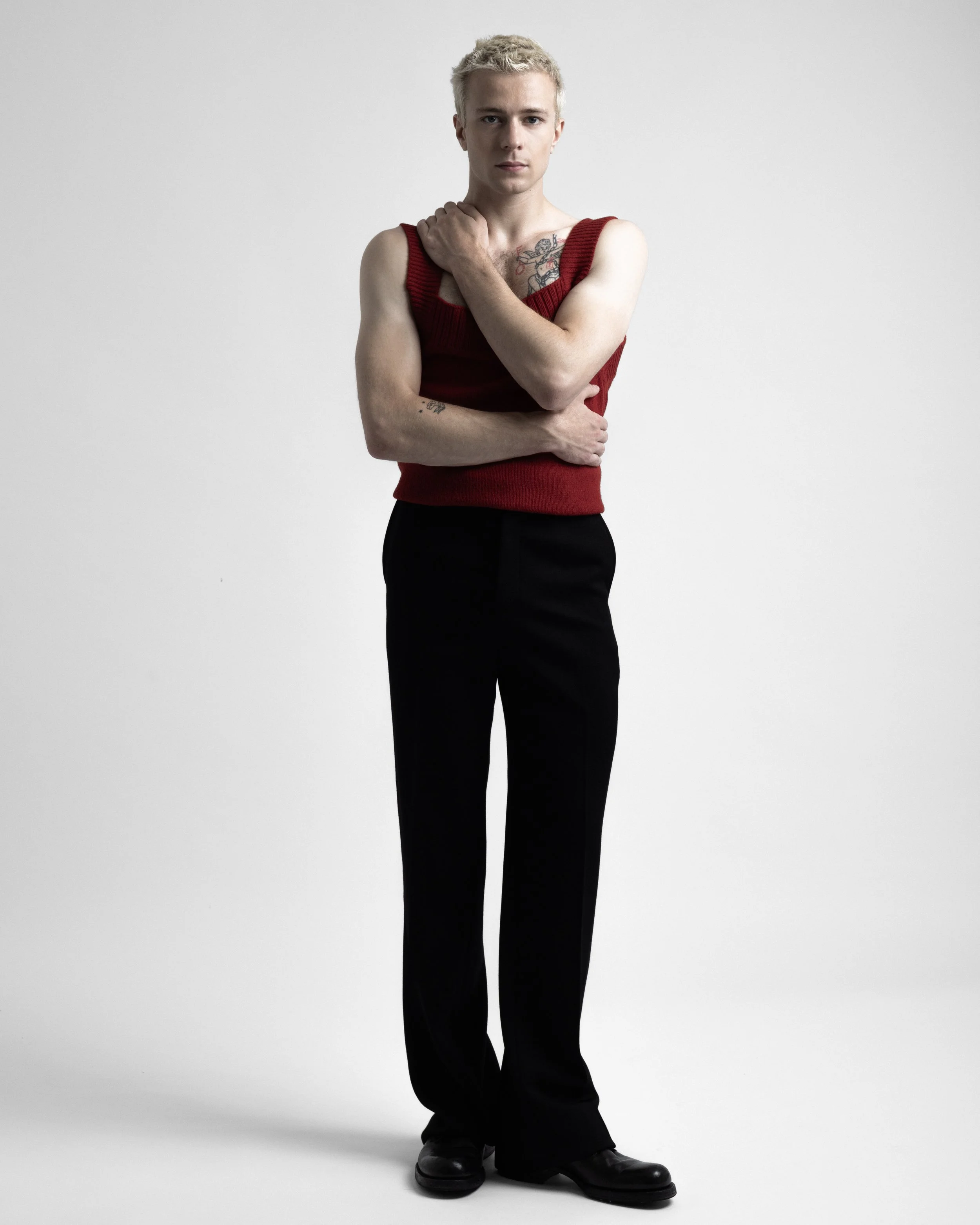
full look PRADA
Scotland’s distinctive landscapes have long inspired artists, writers and filmmakers as a place that encourages reflection. Growing up in this environment, do you think your relationship with nature has shaped the way you observe people and the world around you?
Whenever I go to the Highlands, and I’m just there amongst the heather and lochs, I do feel this powerful pull of generations and generations somewhere down the family line that existed there. And it does feel comforting in a way.
And I find, whenever there are moments of stress or anxiety in life, coming back to places where you have felt that in nature is a really good way to bring yourself back to real life and ground yourself.
Being between two places your whole life, you are sort of forced to identify the elements of home that exist within both and find the things that you’ve fallen in love with in the city where you live.
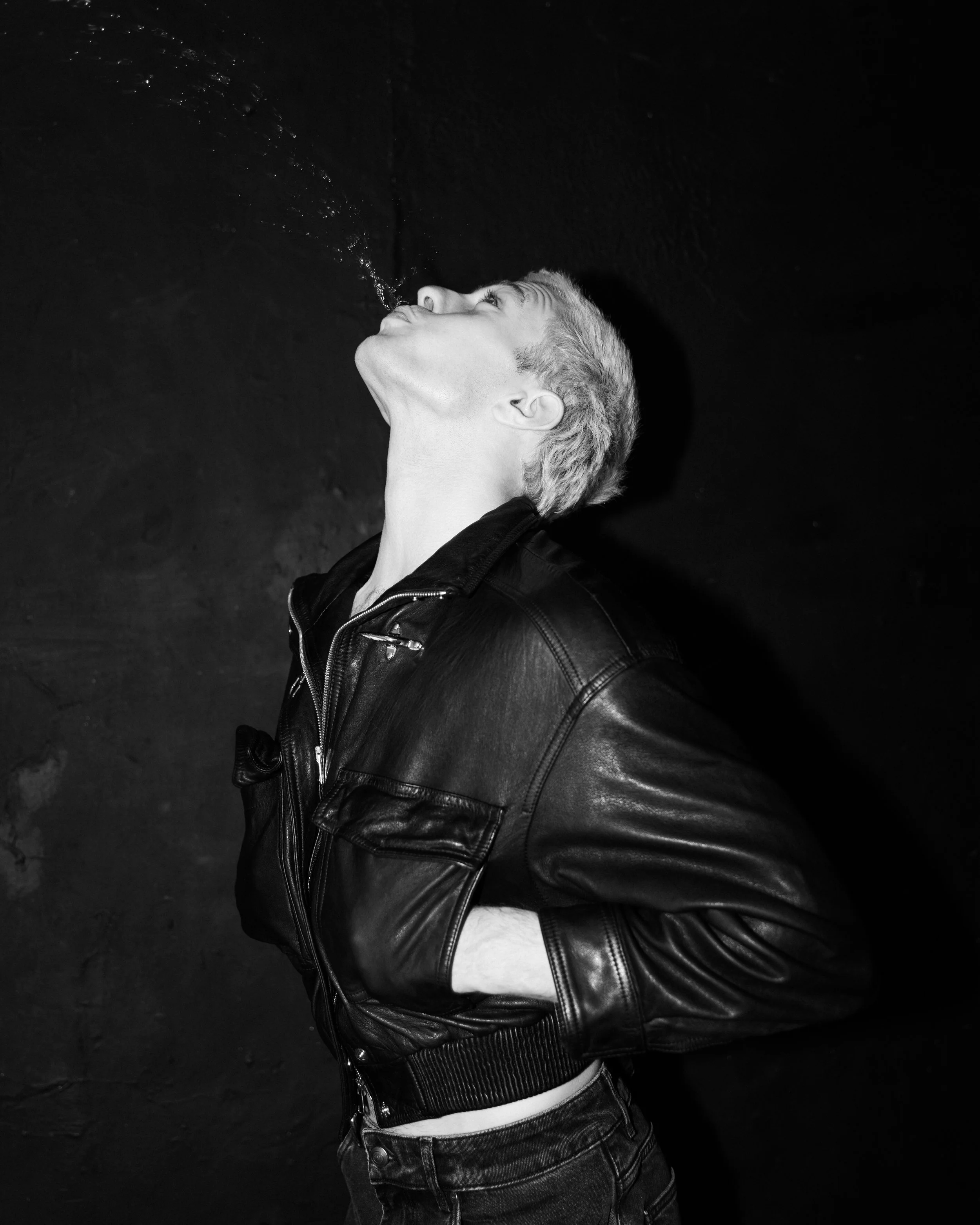
jacket and jeans FAY
Sebastian earned you a British Independent Film Awards Breakthrough Performance nomination and introduced your work to a much wider audience. Looking back now, do you think that film changed your relationship with risk as an actor?
Yeah, completely. At that point, I’d maybe done one episode of a TV show when I was 12 and a few adverts, one for Blackpool. And then I’d just done other stuff that was a lot less vulnerable, and I’d never been the lead in something before.
This film came along, and it was that feeling of jumping right into the deep end. And it was terrifying. I literally think it wasn’t until about halfway through the shoot that I actually thought I could do it.
And even just that level of vulnerability in a film, not only with the intimate scenes, but just in terms of displaying sexuality. I don’t think I’d even really come out publicly yet. So it was scary.
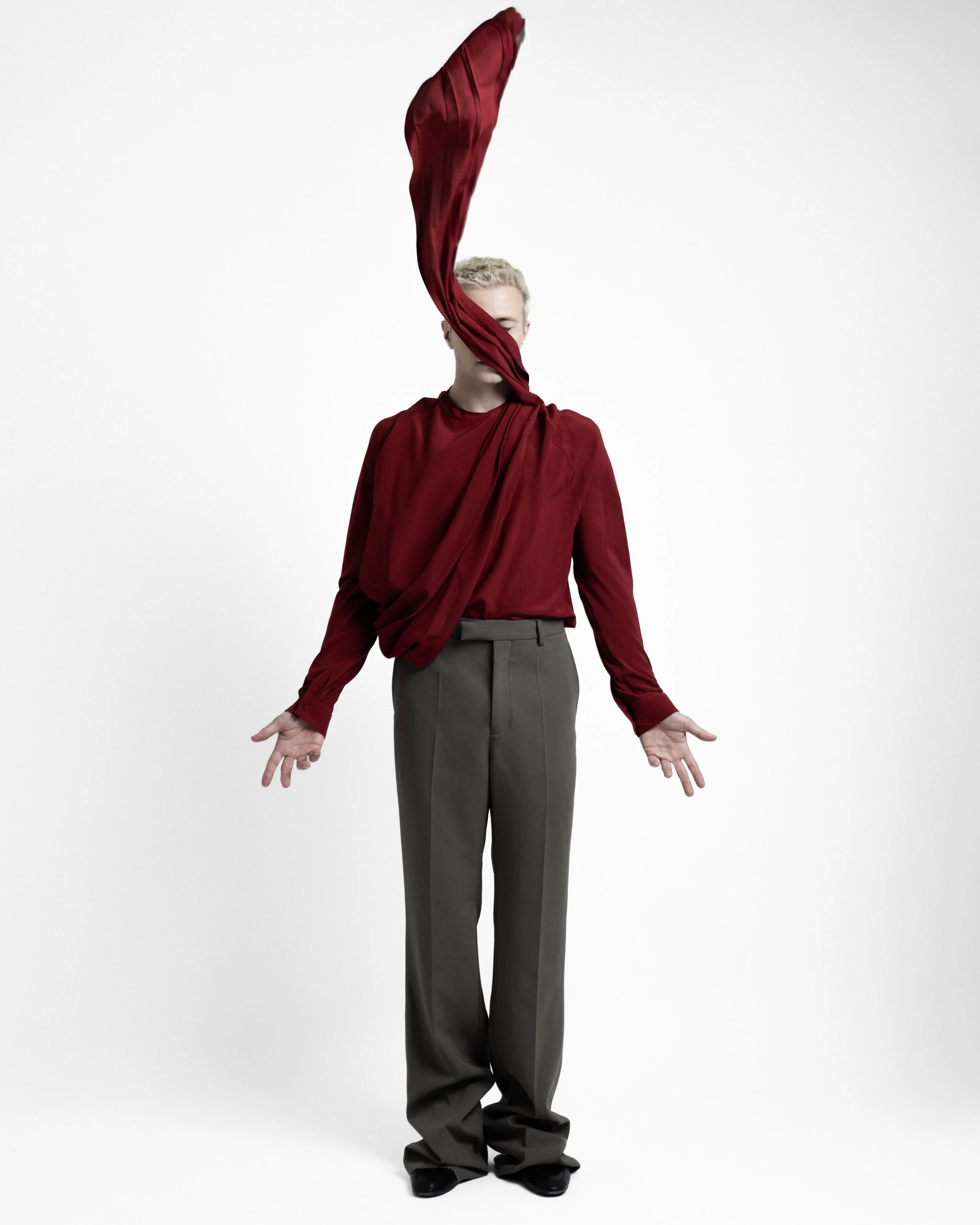
full look VALENTINO
Outside of acting, what continues to deepen your understanding of people and human behaviour, and how does that find its way into your work?
I love to go to local greasy spoon cafés here in London. They’re proper spots where everyone who’s up at the crack of dawn will go and get their full English or something.
I’ll go to these places by myself and have a big breakfast on a different day and just sit and talk to people and watch them, especially at pubs. I like to go to the oldest old-man pub I can find, with carpets that haven’t been changed since the 1940s, and just kind of be there.
I also love reading. I find it amazing. You can read a book that was written 100 years ago that explains feelings that you’re feeling now, or that someone you know is feeling, in such nuanced and detailed ways.
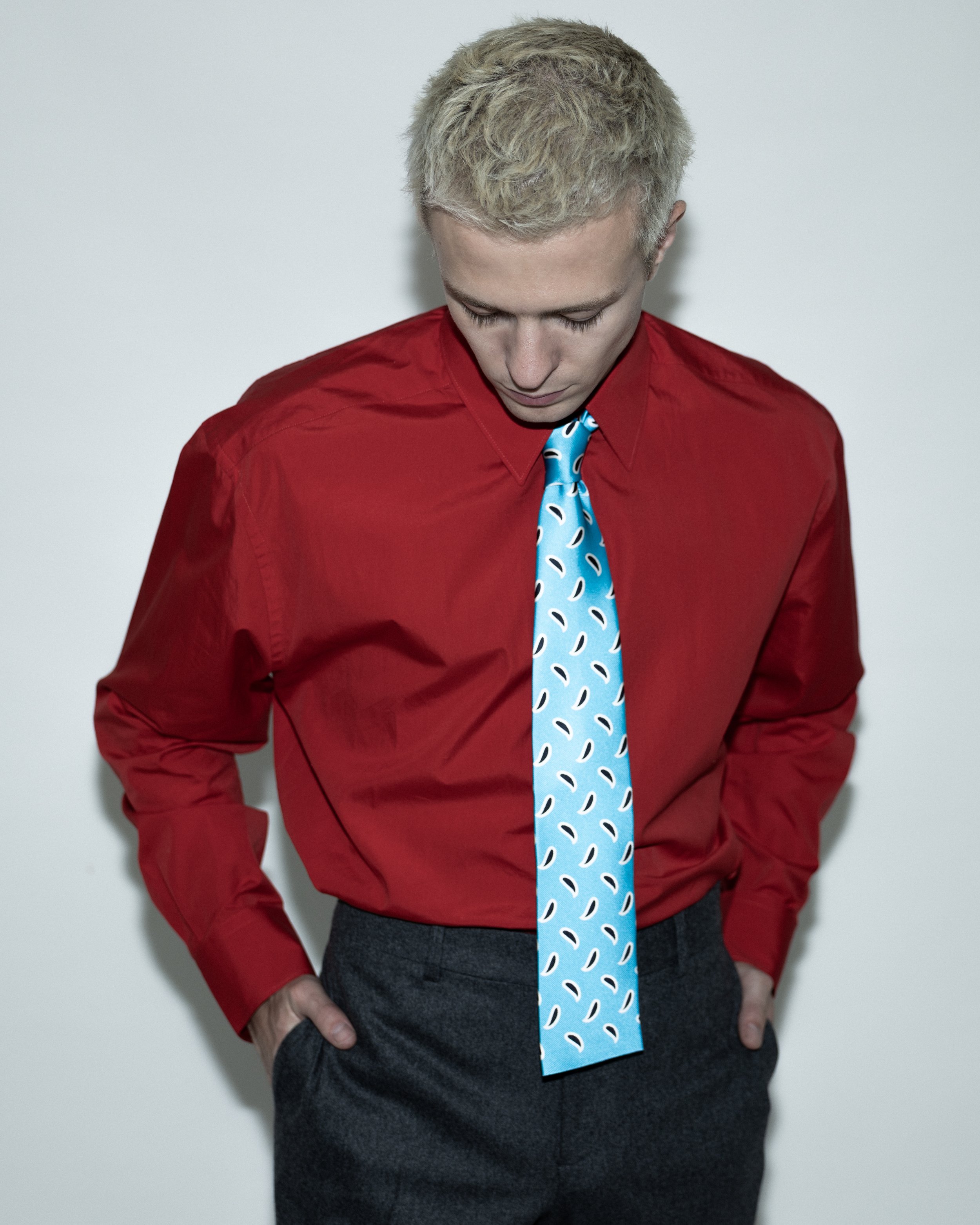
full look CELINE
I love reading as well. But I’m more of a movie watcher myself.
Yeah. Films do the same thing as well, completely. Like, going to a film festival, and especially watching the short film categories at a film festival, where you get to watch 12 short films in the space of an hour and a half, and you’re exposed to just so much life and powerful emotional storytelling of the best days of people’s lives and the worst days of people’s lives.
And I think that’s important. I think that’s why art is so important, right? They’re windows into lives that you couldn’t normally touch.
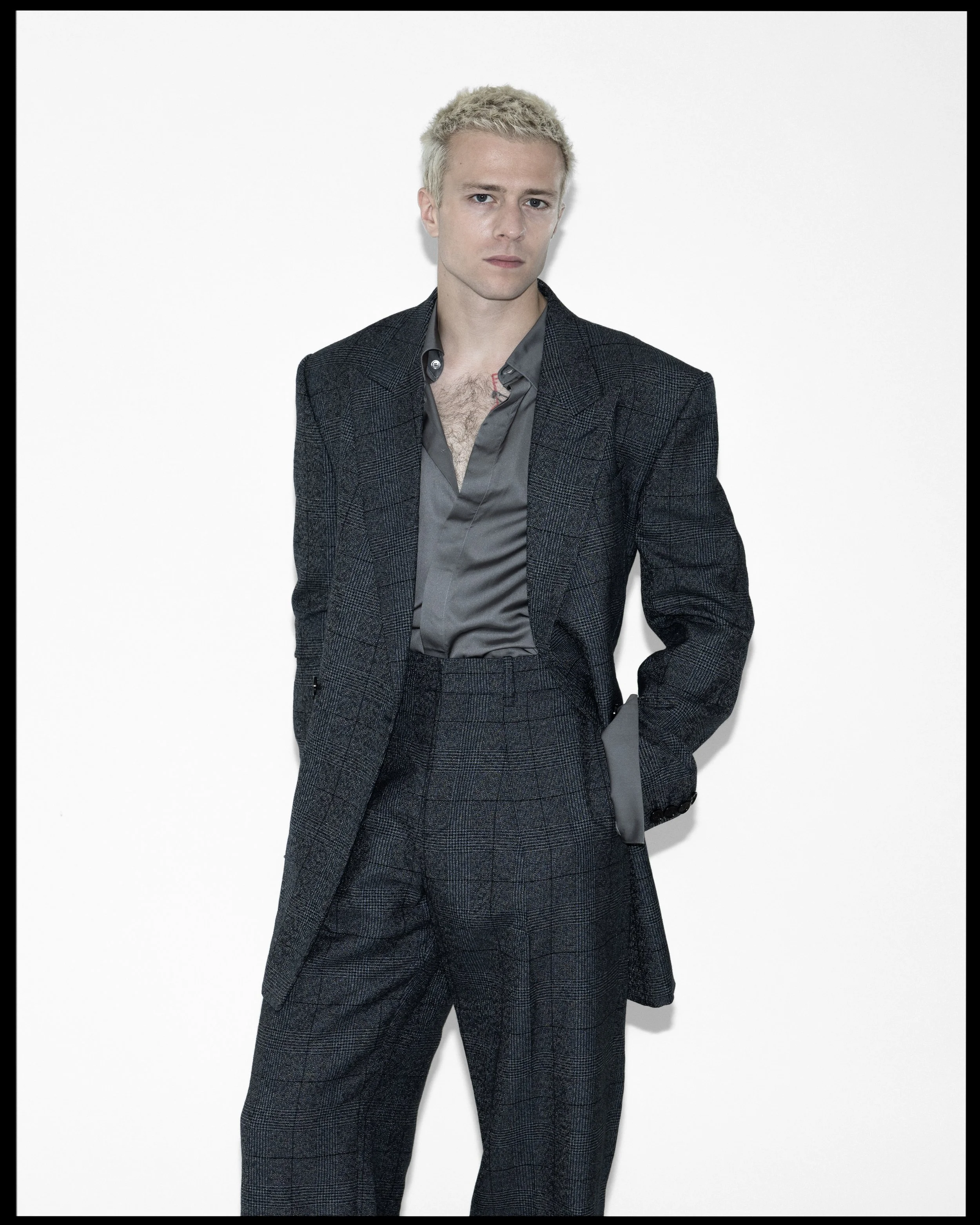
When REID CAROLIN’s Isle of Man came your way, beyond the scale of the production and the extraordinary creative team involved, what convinced you this was a story worth becoming part of?
I think at the time, hilariously, it wasn’t for a very deep reason. It was more because I had recently passed my full motorbike licence and gotten a motorbike. I’d been riding my motorbike all the time, using it as a way to escape to nature while living in such a big, bustling city. The film was all about motorbike racing. And it turned up in this perfect moment when I discovered this love for motorbikes.
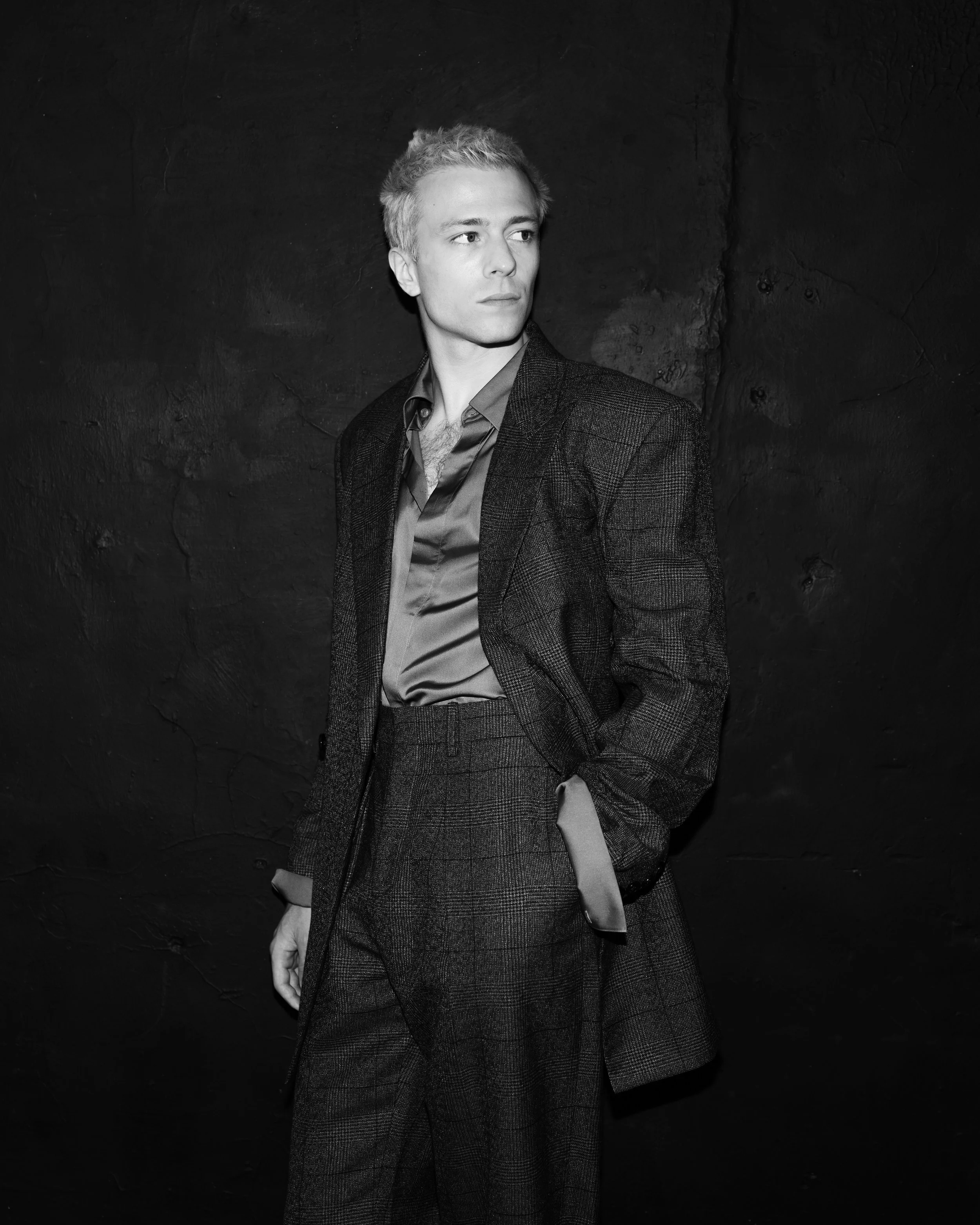
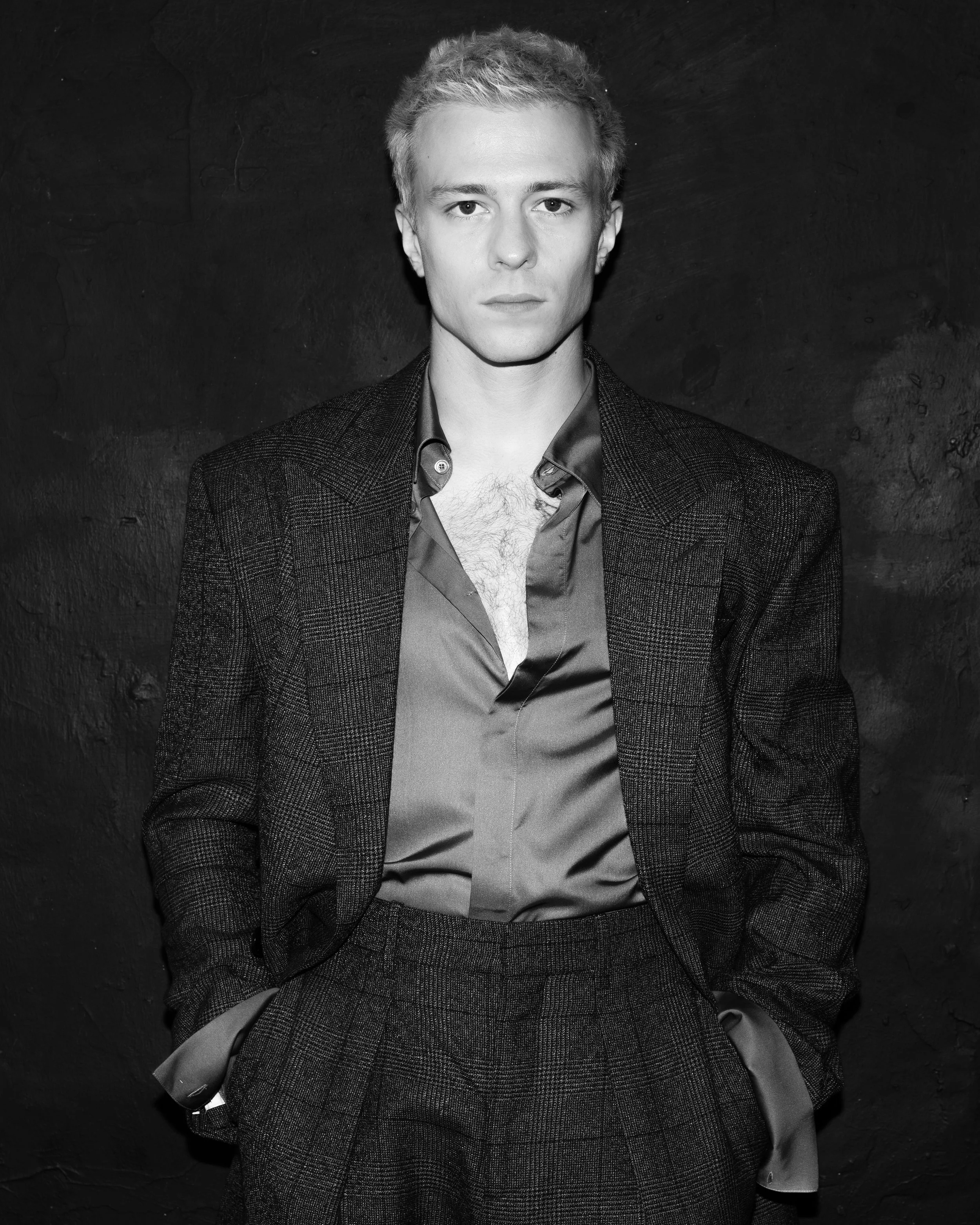
full look BURBERRY
Tom Ford has developed a beautiful cinematic language where visual precision often carries as much emotional weight as dialogue. As an actor, how does stepping into such a carefully constructed world influence the choices you make within a performance?
Yeah, it’s such an interesting question, because when you’re there, you can really feel his visual genius. He is so incredibly talented at creating the most beautiful scenes that are still deeply full of emotion, almost like a Renaissance painter.
He made sure we all had manicures because he wanted our hands to look beautiful too. Or even darkening my hair so that my face was really pale, and it was all a perfect contrast against the outfit I was wearing.
His attention to detail was incredible, especially to the fact that we’re all castrati. He wanted us all to raise our voices a little because castrati, obviously, never hit puberty. So that instantly impacts a performance. Being able to trust what you’re saying feels truthful when your voice is a pitch that is completely different — that influenced everything.
You’re entering a period where your career is expanding in multiple directions at once, bringing opportunities across independent cinema, theatre and major international productions. At a moment like this, how do you make sure your choices continue to be guided by curiosity rather than momentum?
It’s so true, because in the moments where momentum starts to build, there is this feeling of, like: Okay, this is the wave. This is the wave. We need to capitalise on this moment.
And I still believe that’s true, but I think it’s important to not sacrifice the quality of work you do for the sake of maximising an exciting moment in your career. And it’s a delicate line to walk. The only way to do it is by having a really strong team of people around you.
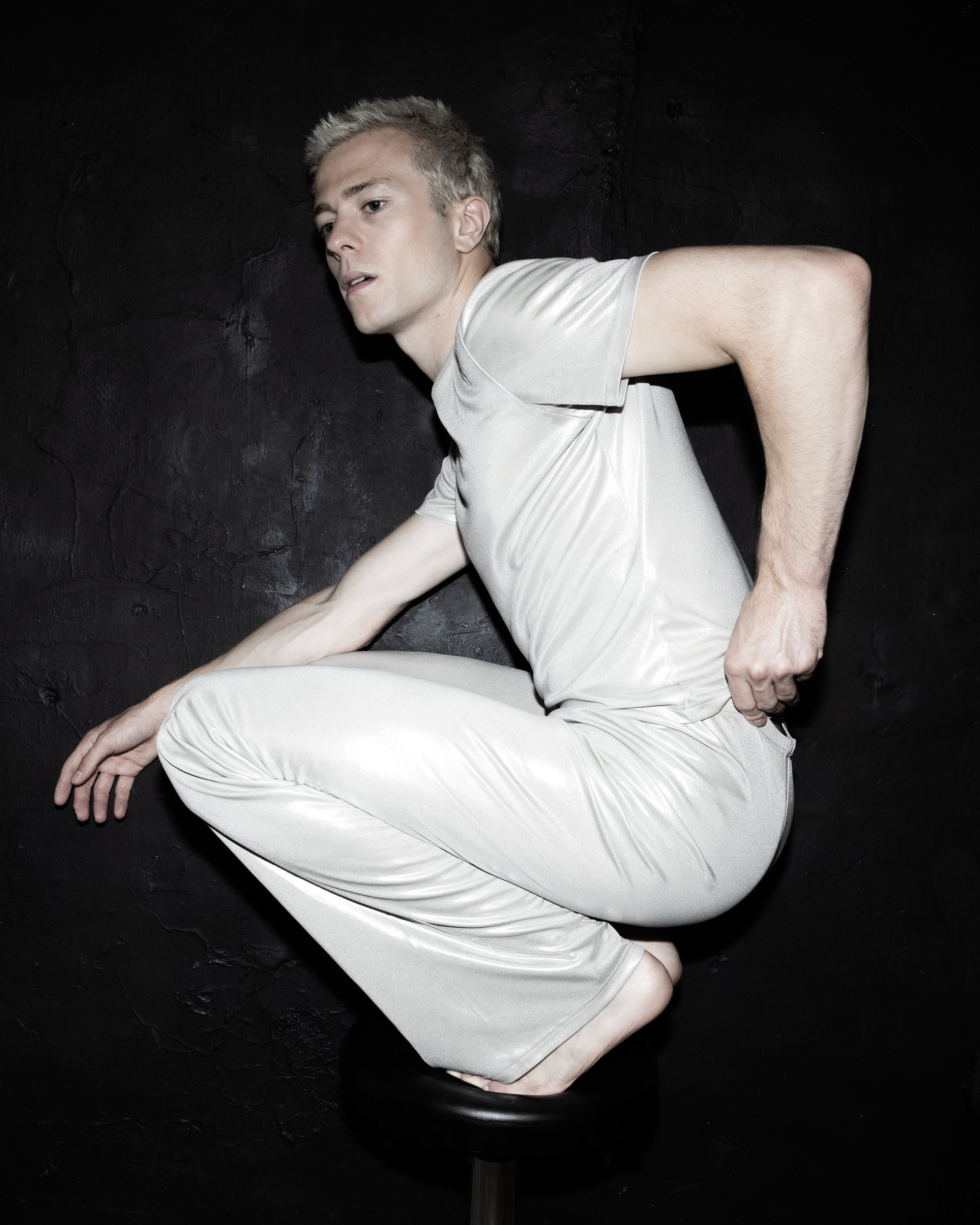
top and trousers GUCCI
Some places have a way of grounding us, especially in careers that are constantly in motion. Is there somewhere in nature that has this effect on you?
It’s actually been tied to getting a motorbike and having the ability to escape the concrete jungle of London, probably somewhere down in the Surrey National Landscapes, which is maybe an hour and a half drive from London.
Just finding these little pockets of forest or botanical gardens that are out of London and that exist as a place of breath and reflection. It’s funny how quickly you feel, stepping into these spaces, that you were holding so much stress and chaos within you. And how quickly it gets stripped away.
You’re working alongside names like BRAD PITT, CHANNING TATUM, EVE HEWSON, COLIN FIRTH and ISLA FISHER across two very different films. What’s been the biggest lesson you’ve taken from being surrounded by such icons?
Every time it’s been my first day, and I’ve been nervous, I’ve found that everyone I’ve spoken to has also been like: “Oh, don’t worry. I was so nervous on my first day last week too.” Regardless of what stage they are in their careers, everyone gets nervous on their first day. You’re joining a new group of new people, and you still have to prove yourself.
No matter where you end up in your career, I don’t think you can ever fully just sit back and think, “Oh, this’ll be a breeze.” You still have to turn up. You still have to do your work. And knowing that people stay nervous for their entire career on their first days is kind of reassuring. I think that’s a really nice thing to know.
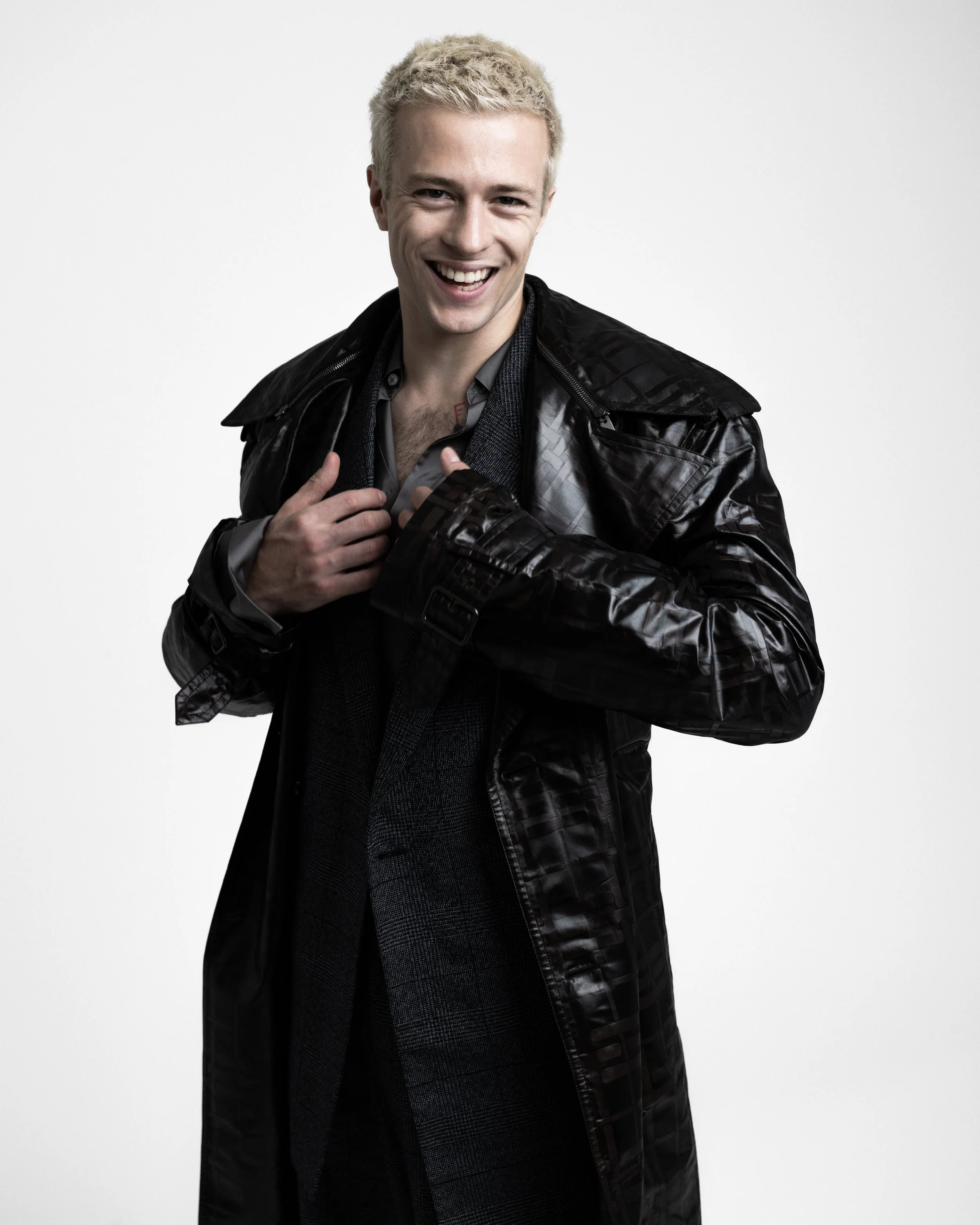
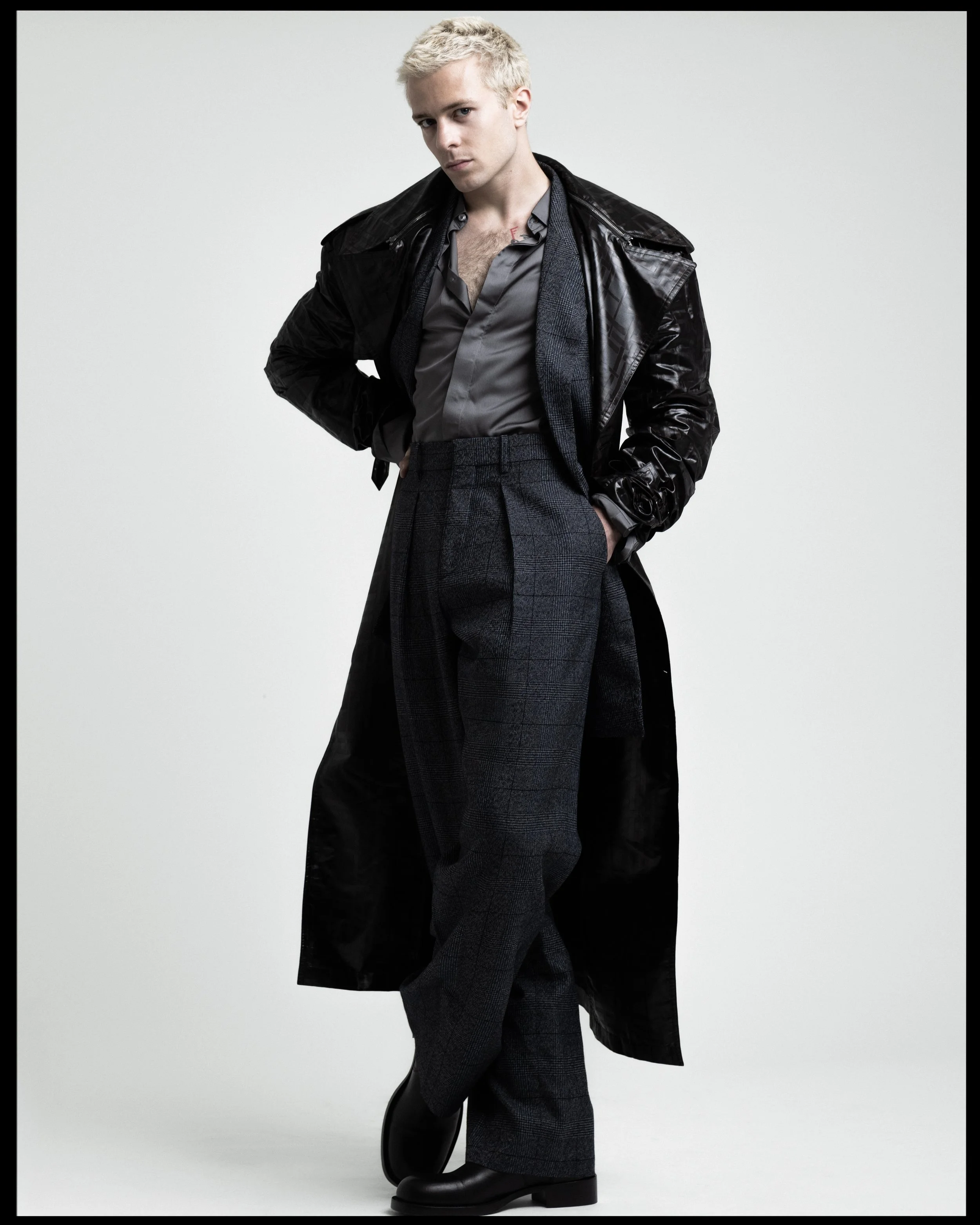
Both Isle of Man and LORNA TUCKER’s Bare tell very different stories that are rooted in real-life worlds. What drew you to these projects, and how did each challenge you in a different way as an actor?
The through line, I guess, would be that they both felt like narrative and documentary blurred together, even though Bare is a true story.
For the Isle of Man TT, we had a lot of the real racers in the scenes and a lot of the real bikes as part of the set, and we were actually filming on the Isle of Man. And that was beautiful.
But for Bare, that project is basically Lorna Tucker’s story of her teenage homelessness in London and this incredible ragtag group of dreamers and artists she meets on the streets. And she cast all of us based on something about a character she saw naturally existing within us.
I can understand that’s special. You’re an artist, obviously, as an actor. What is one movie that you’ve seen in your life that has changed the way you look at the world or people?
It would probably be Magnolia (1999). That movie follows four characters, all going through serious pain and hurt. And for me, it reminded me that everyone is hurting, whether they’re showing it on the outside or not. And when people go home, there’s a whole other life that you don’t see.
TEAM CREDITS:
talent RUARIDH MOLLICA
photography DANIEL SARS
styling FABIO IMMEDIATO at THE WALL GROUP
grooming BRADY LEA at A-FRAME AGENCY
casting and editor TIMI LETONJA
interview TIMI LETONJA and NIA TOPALOVA
cover design ARTHUR ROELOFFZEN
