
interview by NIA TOPALOVA
Saul Nash returns to Milano for the third time, presenting his AW26 collection Masquerade. This season, the British-Caribbean designer explores themes of identity, transformation, and disguise. Right after the show, Nash shared that his aim is to empower the wearer through his clothing; clothing that can act both as a form of masquerade and a medium to embody our very own essence.
Why Masquerade, and why now?
Identity is something I’m constantly questioning, both internally and externally. My work is often driven by personal experience, and I’ve long been intrigued by the line between what we consider formal and what feels too casual. Where I come from, tracksuits carry a strong symbolic relevance among the people who wear them. This collection continues to question where the man who wears tracksuits goes as he gets older. People will always want to put on different clothes, and the act of building one’s identity is, in itself, a form of masquerade. That idea feels consistently relevant for me, now and in the future.
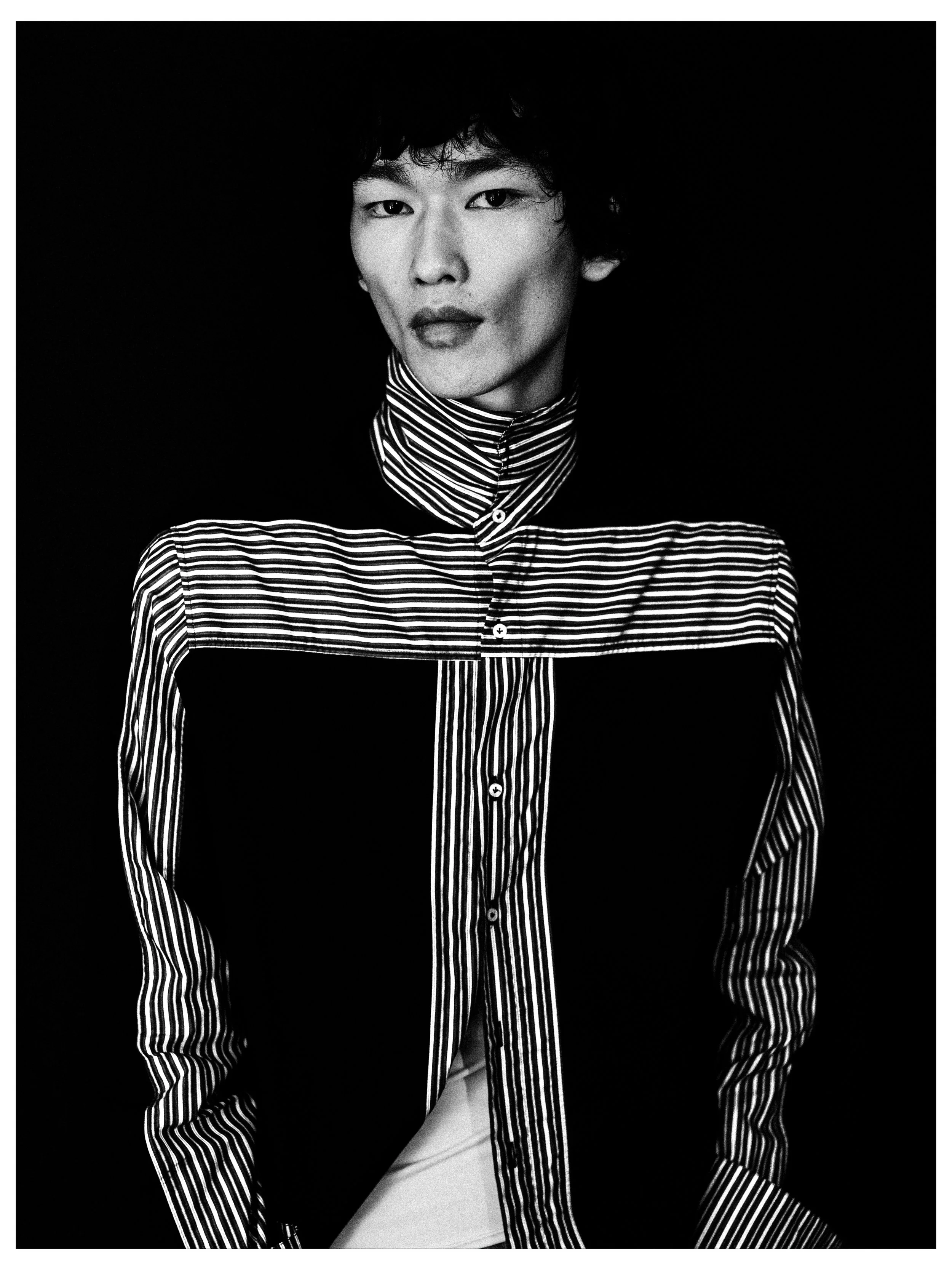
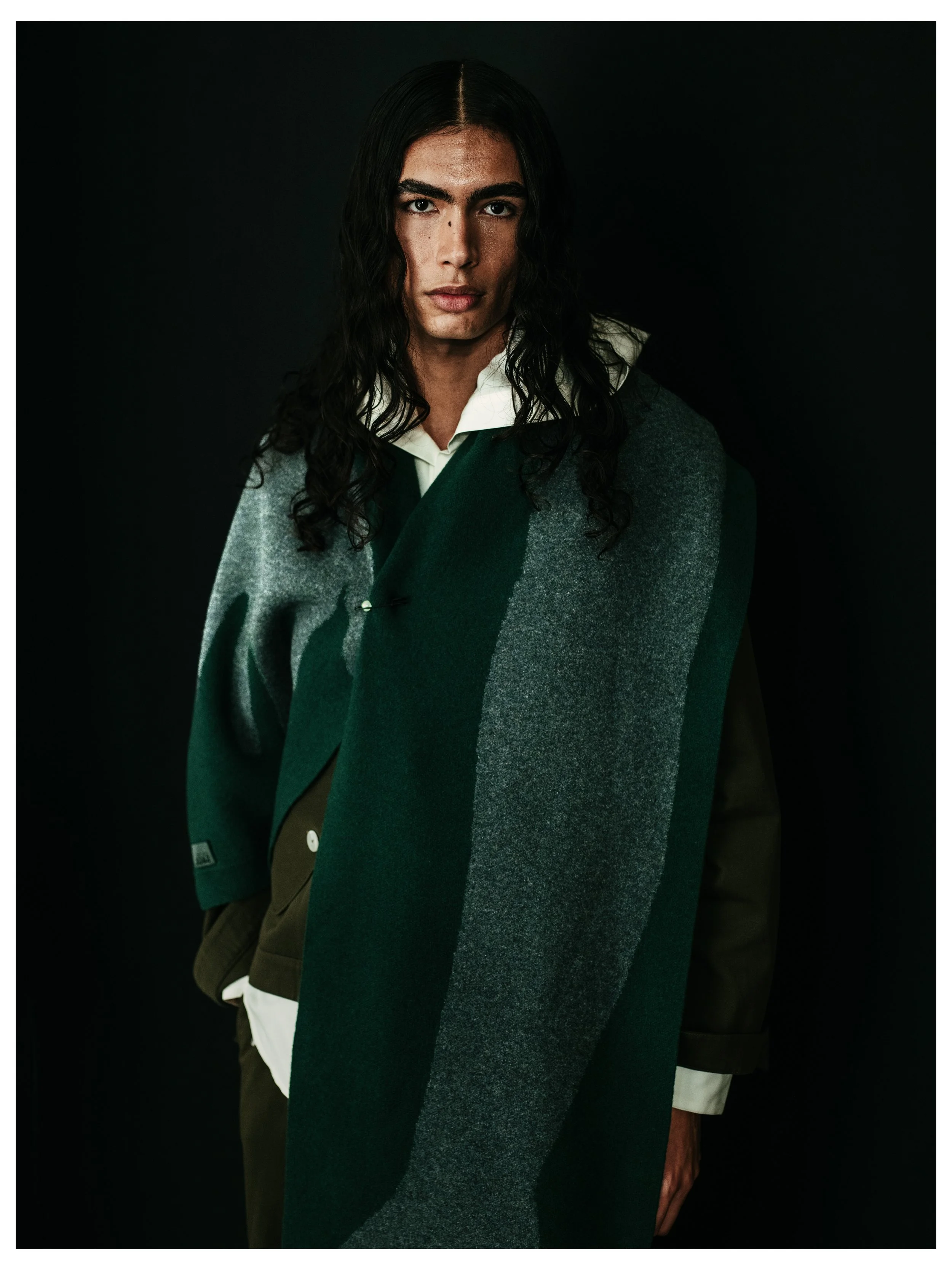
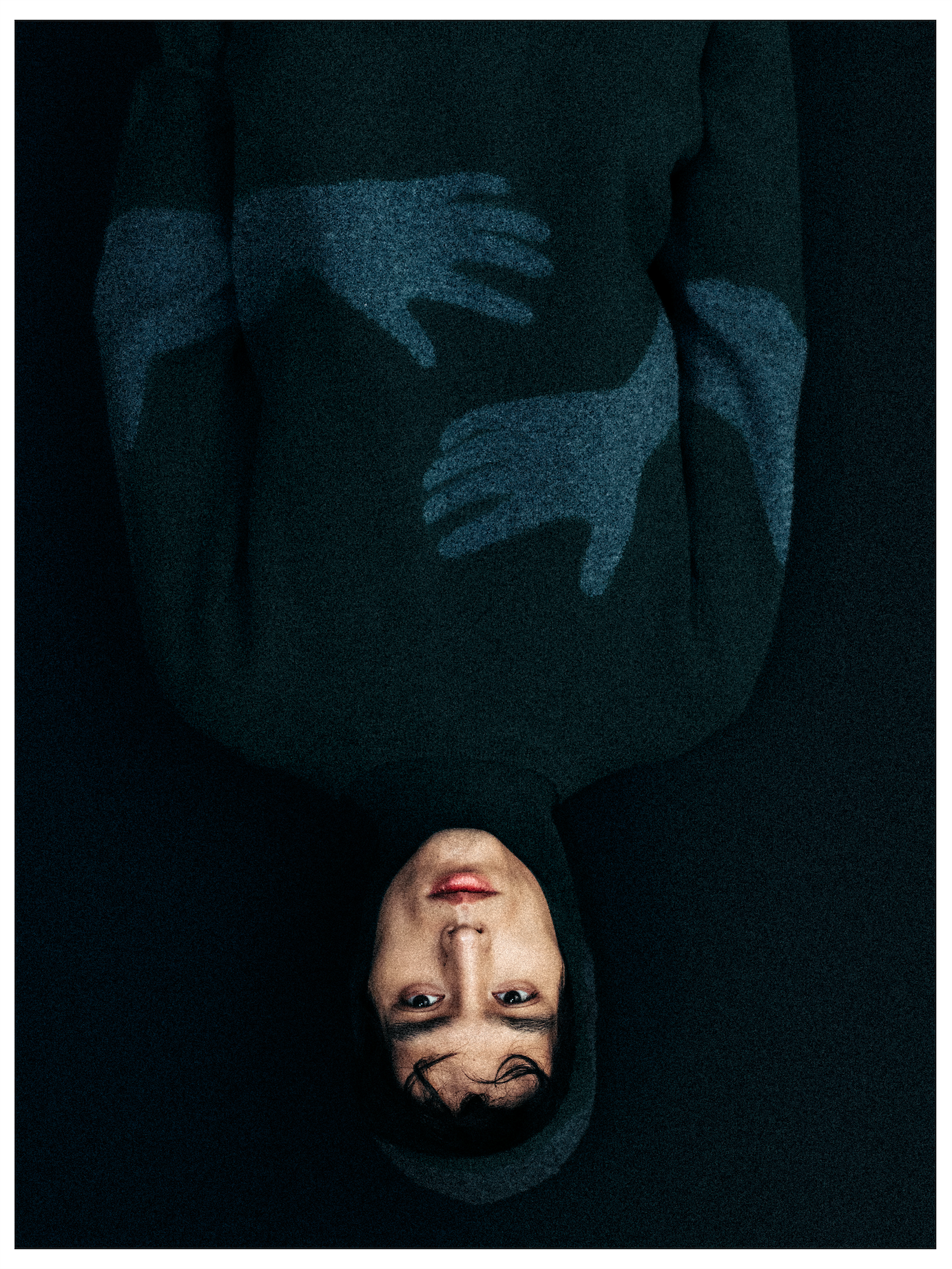
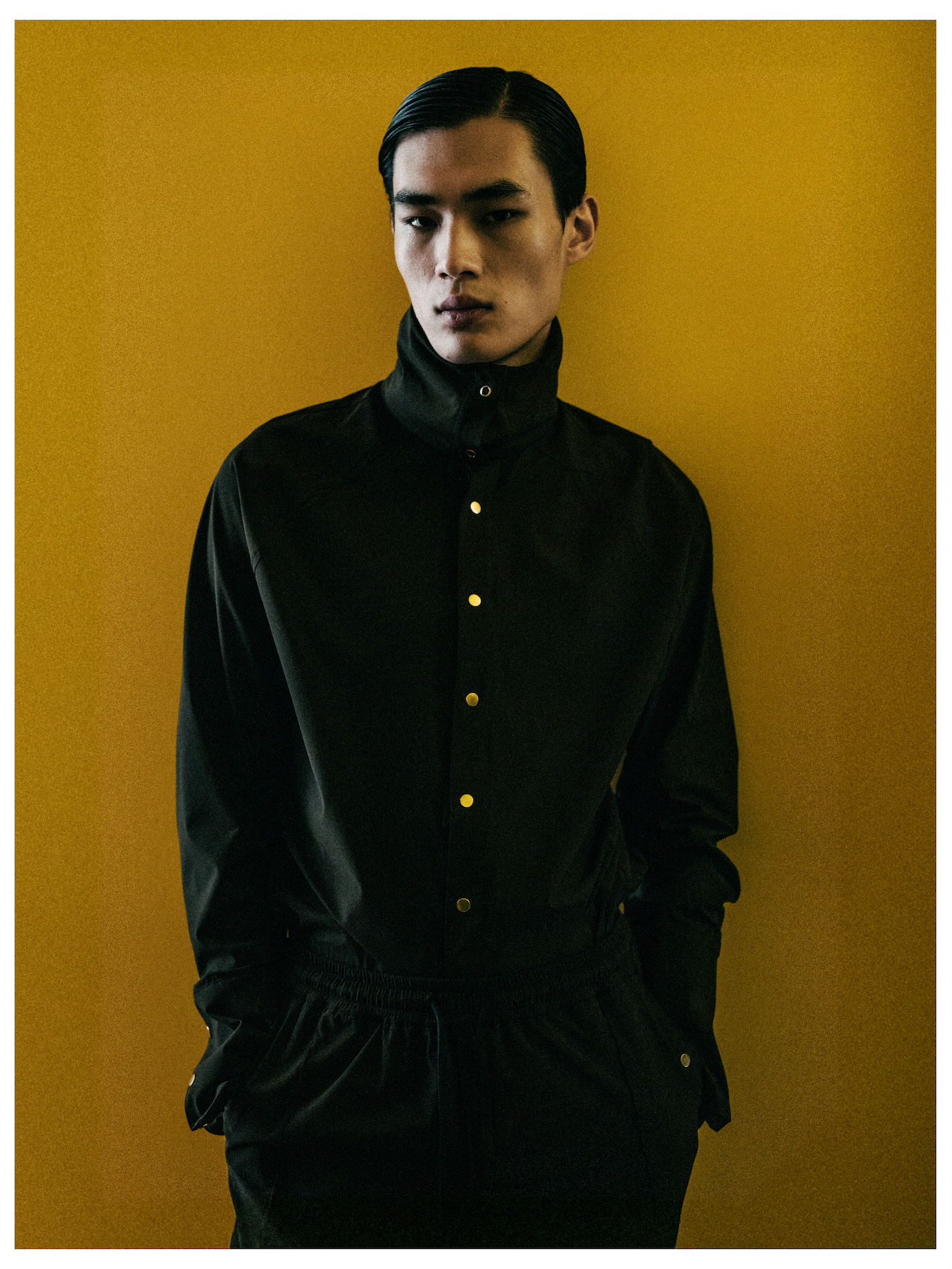
backstage of SAUL NASH FW26, photographed by JEREMY FRENCH
Your SS26 collection Embrace explored intimacy and connection between bodies. Do you see this season’s work as a continuation or a departure?
The thread running through our work is the exploration of movement. Each collection’s research and title is a new way to inspire and inform our design choices. Embrace focused on the sensibility and nuance of connection between two people. This season, that idea of embrace took on a new meaning, one of embodying and embracing oneself.
Tell me more about the white fabric performance.
The white fabric was informed by thinking about masquerade as a Christmas tradition across the Caribbean. The costumes often feature ruffles with a float-like quality, which stayed with me as an idea of lightness and movement. This then expanded into looking at dance costumes as a form of masquerade, as well as the way fabric is used to cover modest areas in European male sculpture. That sense of floating was brought to life by the dancers in the show as they threw the white silk into the air.
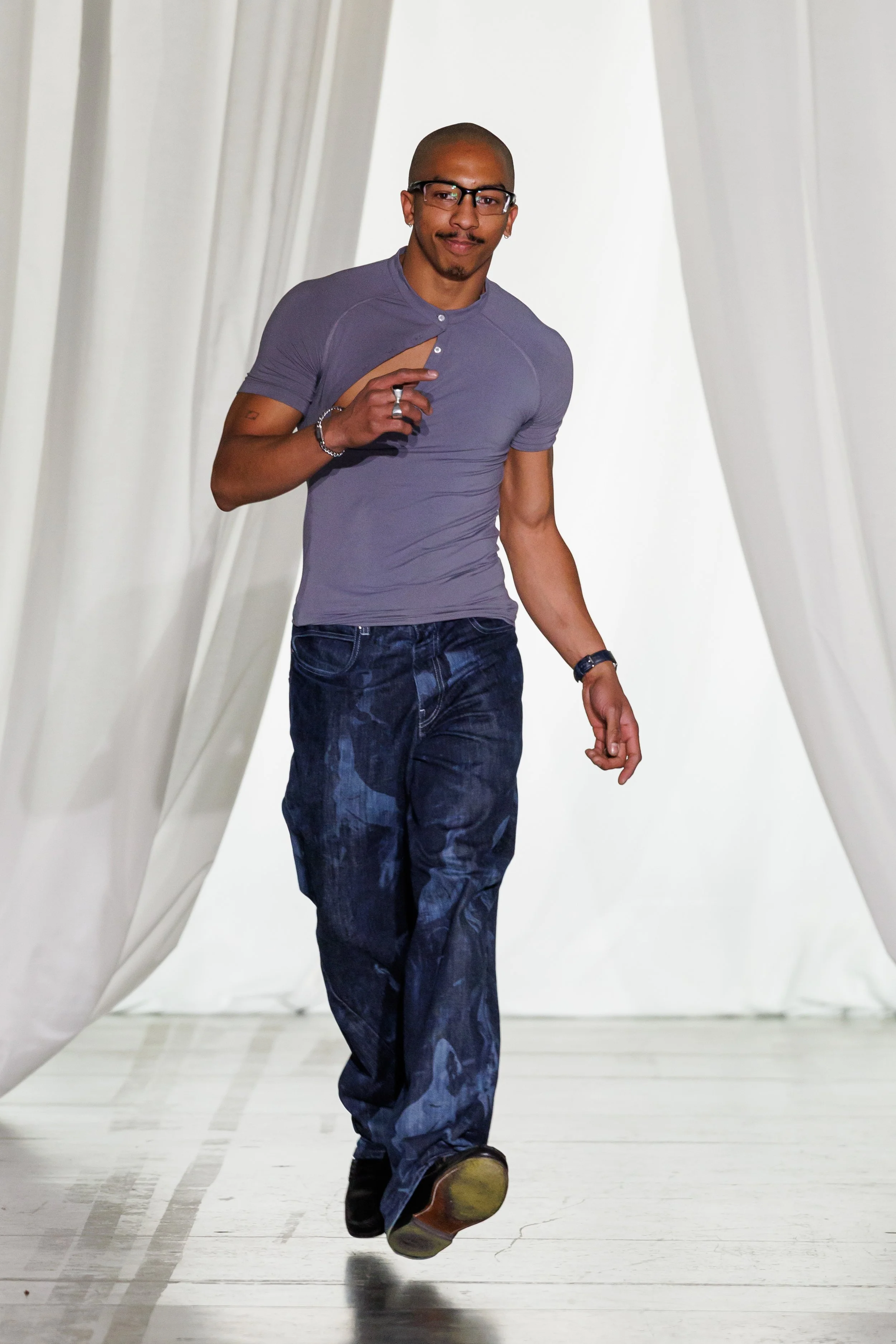
image courtesy of SAUL NASH
When clothes are used to shape identity, what role do protection and exposure play?
For me, comfort is key. As designers, our job is to provide space for people to find where they fit, while also enabling liberation and self expression. The clothing can evoke a stereotypically masculine feeling, but through the wearer’s choices, whether they layer pieces, fasten them, or leave them open, there is also room to reveal a more sensitive side.
Movement has always been at the heart of your work. If clothing can be a gesture or a way of connecting, was there a specific “gesture” you wanted to insert into this collection?
I really want people to feel free and experience a sense of weightlessness, whether through tailoring or more sports focused elements. I want them to stand tall and confident while doing so. My favourite gesture, though, is spinning and turning. I often think about this when choosing fabrics, asking myself what they would look like filled up with air.
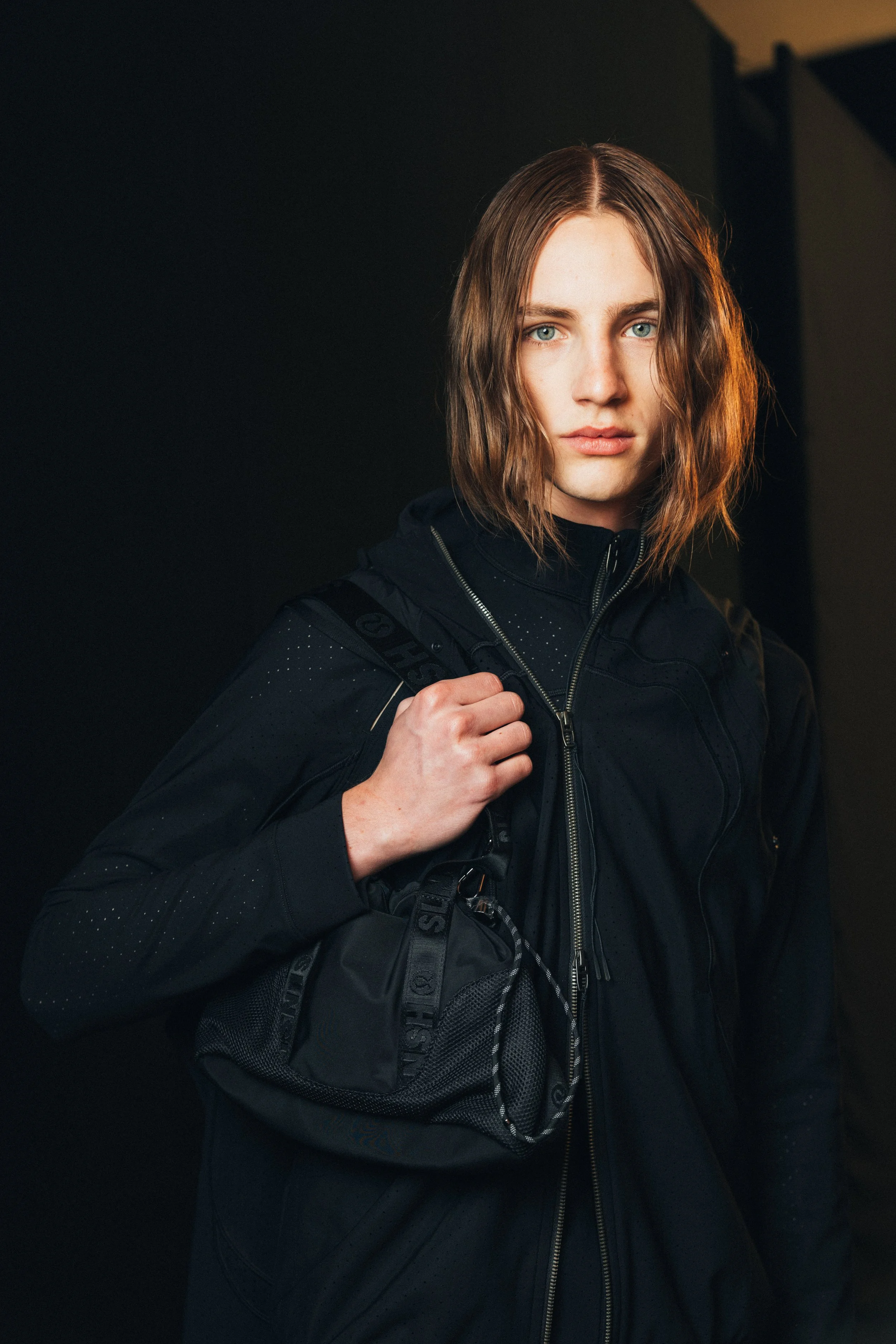
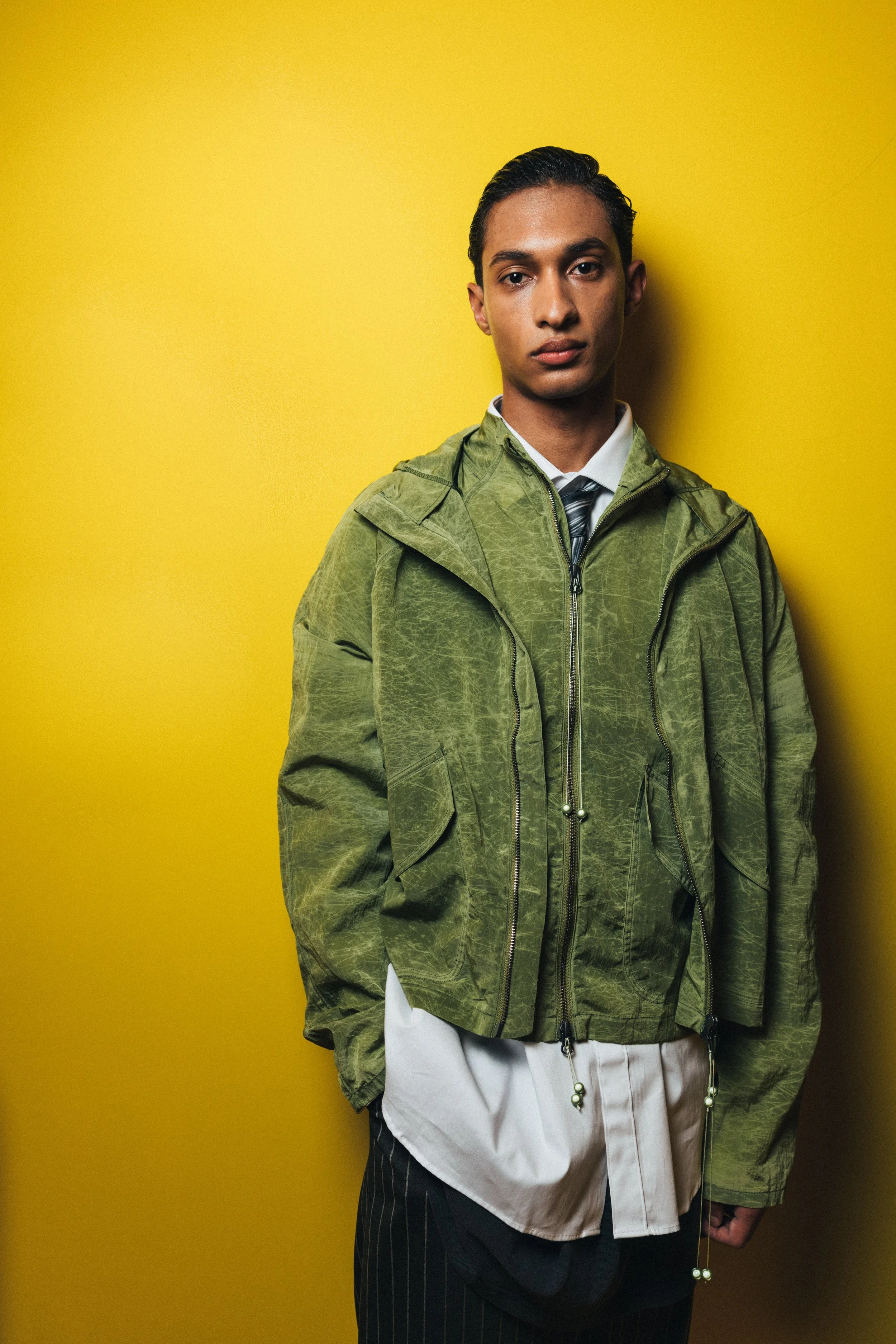
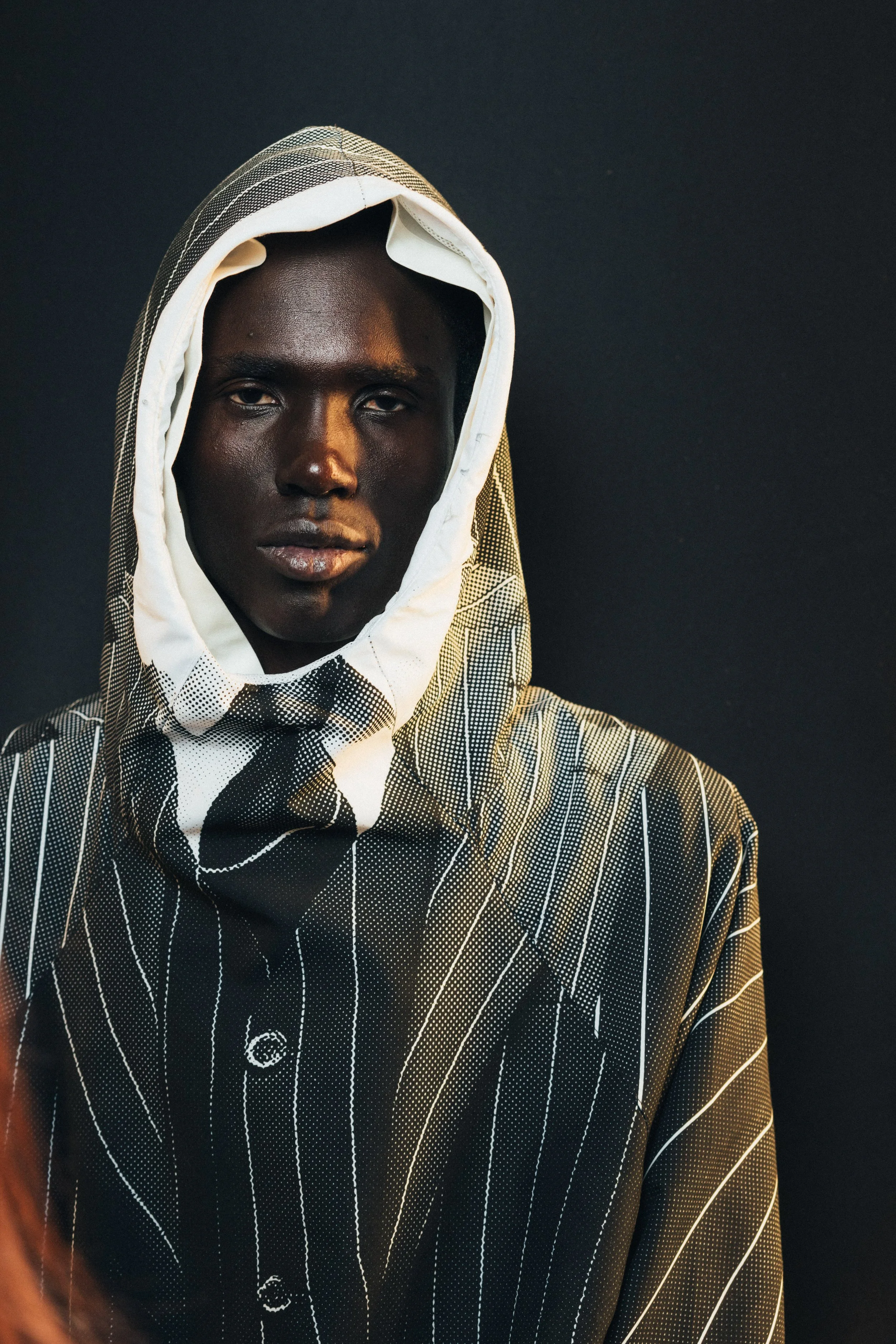
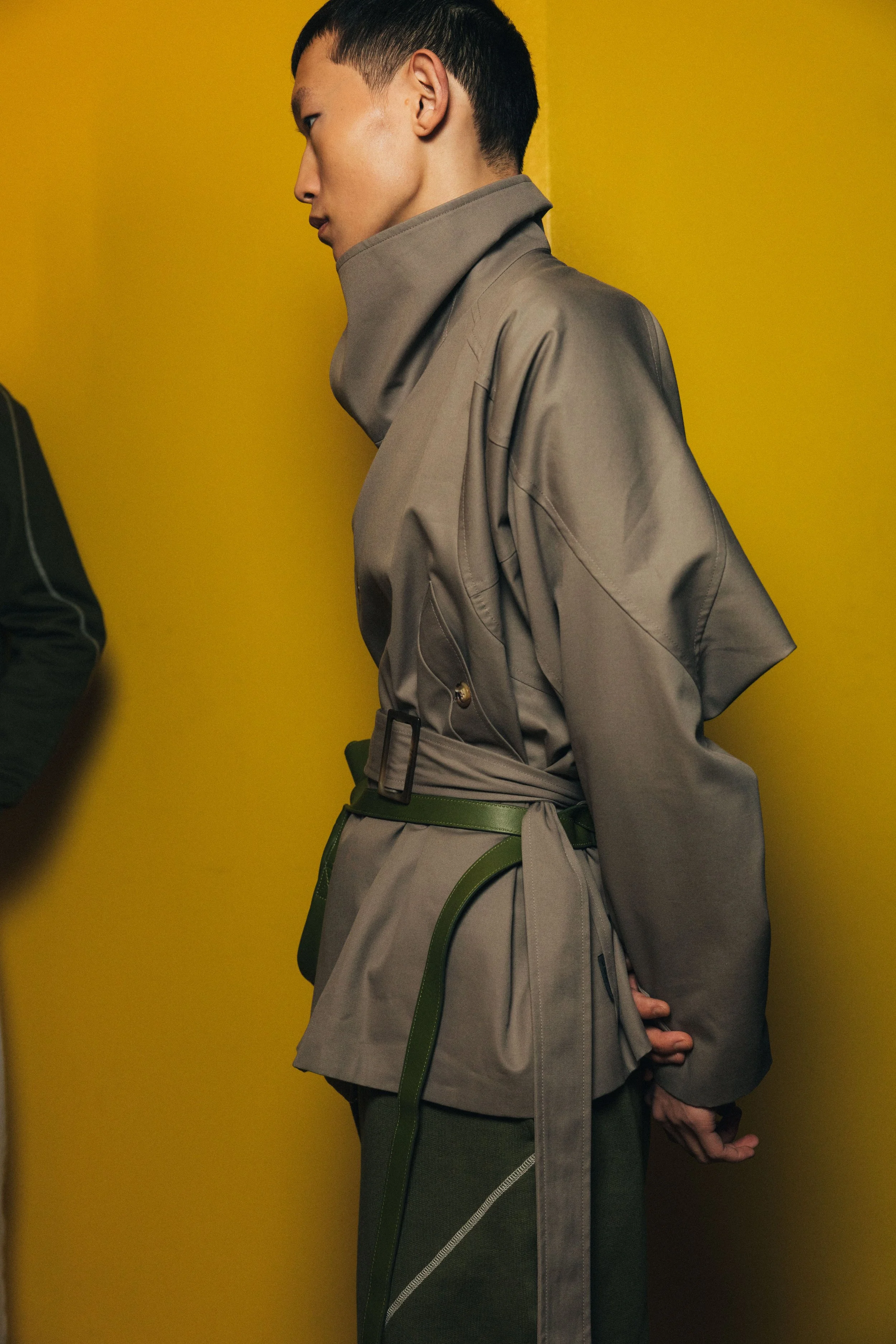
backstage of SAUL NASH FW26, photographed by ASTRA MARINA
What has changed in your approach to technicality compared to previous collections, and did you experiment with any new materials or construction methods this season?
As a team, we are constantly evolving and looking for ways to further develop and elevate what we do, and this season was no different. It became an investigation into cut, proportion, and the development of each category. The suiting was made from stretch wool to not only cut for movement but also enable it. This season marked our first developments in alpaca. We also explored masculine utilitarian silhouettes in lyocell and Lenzing™ viscose to achieve a soft, light finish. Our hooded shirting was made from waterproof cotton for full functionality, while the Oxford shirts were woven with stretch. In our multi seasonal SLNSH Collaboration with Lululemon we were able to expand with new technical developments. An example is the fully seam taped transformable anorak finished with a camo motif print that features moving bodies when viewed from a far. The collaboration comes out on 14th April 2026.
Your work invites the wearer to interact with the clothing. What kind of interaction do you wish people would have with Masquerade?
Masquerade is about creating space to both layer up and strip away. We all wear masks in different ways, and this collection gives the wearer room to question what it is they personally want to convey.