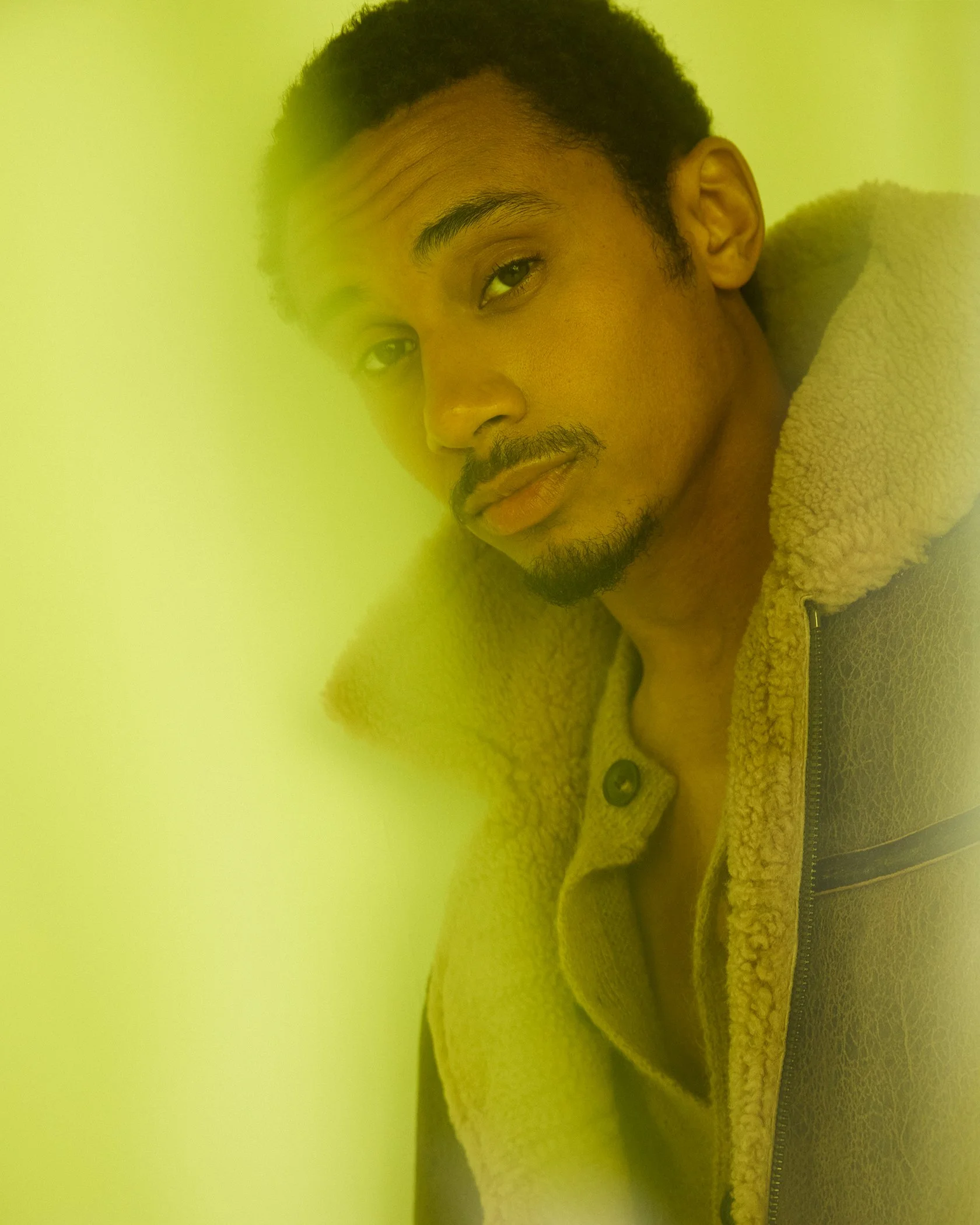
interview by JANA LETONJA
Sekou Diaby is quickly emerging as one of British screen’s most compelling young talents. After making his debut as Toby in the acclaimed BBC series Boarders, Sekou has moved confidently between comedy and drama, with roles in My Fault: London and Spike Lee’s From Sidney, with Love. This October, he took on his most psychologically complex role yet in Animol, the feature directorial debut of Ashley Walters. Set inside a young offenders’ institution, the film sees him play Dion, an influential gang leader whose authority masks a more complicated instinct for survival. Following the film’s award-winning Berlin premiere, Sekou is entering a defining new chapter, with the BBC adaptation of Caleb Azumah Nelson’s Open Water still to come.
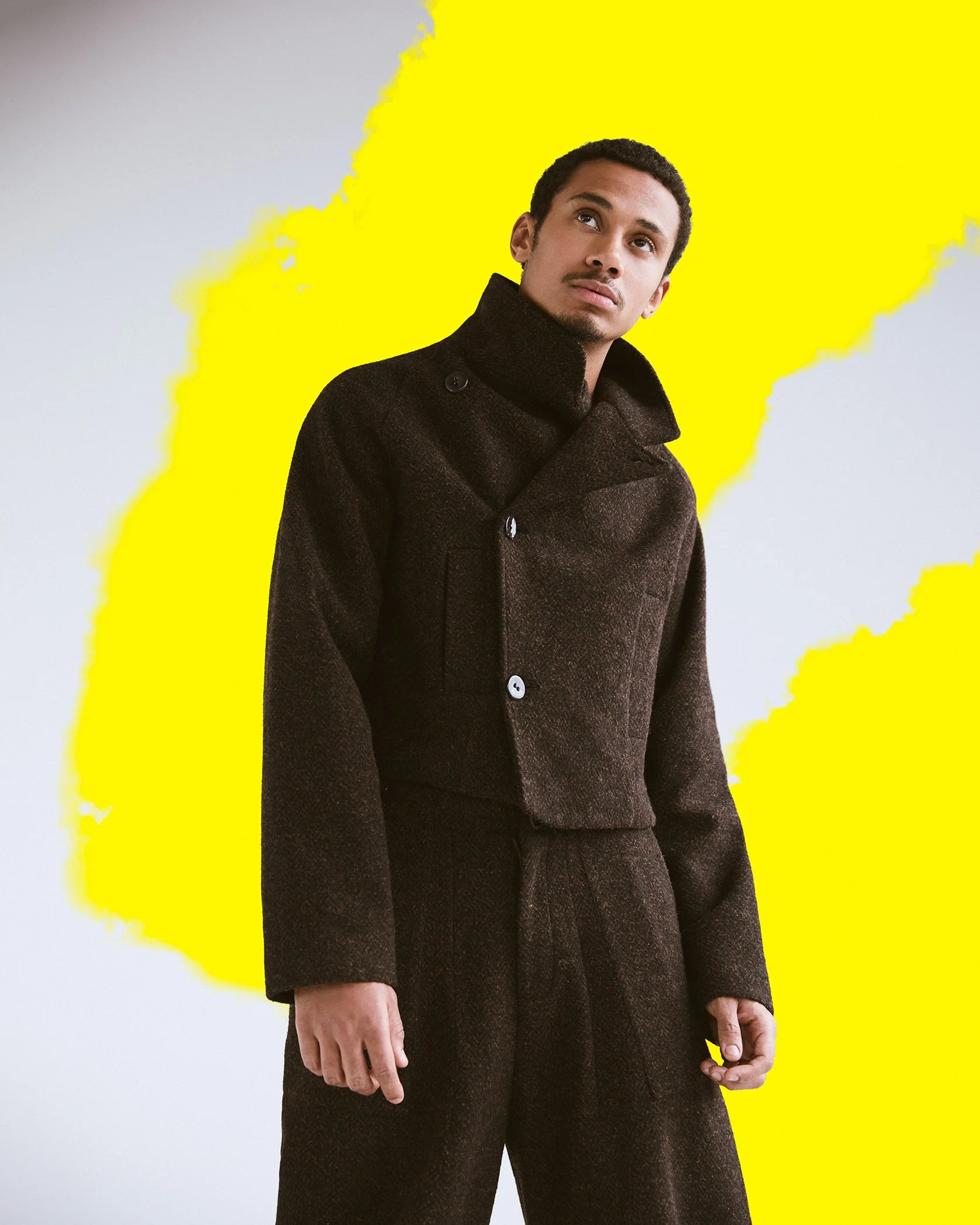
photography by DAVID REISS
Animol feels like an important step in your career. What was your first reaction when you read the script and met Dion on the page?
When I first read the title, it made me sceptical. I feel like prisoners and criminals are often portrayed in a light that alienates them and dehumanises them. And so, with a title like Animol, I instantly became sceptical, but as soon as I read the script, it became pretty clear that this was a real human story, and it was something that I would be honoured to be a part of.One review praised your performance for resisting the idea that Dion is simply "good" or "evil". Was avoiding that kind of moral simplicity important to you?
Absolutely. I think in any character you play, or in any art piece that you are a part of, you have a responsibility to tell the truth, and the truth is never black and white. It's all shades of grey. There's no such thing as a completely good person and there's no such thing as a completely bad person.
People of the past not acknowledging that responsibility to tell the truth and strongly questioning their prejudices is a big part of why there is so much conflict and injustice in the world today.
Not only do we have a responsibility to try to tell the truth, but I believe the truth is more interesting than fiction. The closer to the truth the better I reckon.
Animol explores power, loyalty, violence and survival among young men. What conversations did the film make you think about differently?
I think all of us instinctively know things and have a shared moral compass, and just understanding of what life should and shouldn't be. But one thing that the film kind of brought right up to the surface and shoved right into my face was just the fact that it doesn't take a lot to inspire change.
Dion is someone that you wouldn't expect to be vulnerable, and it's through simply watching someone like Troy involuntarily have to be themselves and be exposed, that Dion's whole mindset shifts. And for me, it gives me hope. It doesn't take a lot to inspire change.
Ashley Walters makes his feature directorial debut with the film. What was he like as a director, particularly given his own extensive experience as an actor?
Ashley was a dream director. He gave us the freedom to play, and he was also informed and invested enough in the film, and what we were trying to do, to know when to give us tracks to stay in. And I think what that meant was, as an actor, I felt I could trust him. I think the best moment in a project is when you realise you can trust your director, because then you're free to play without worrying about messing up.
The environment of a young offenders' institution is naturally intense. How did you protect yourself emotionally while working inside that world?
I don't know if I did. I have a thing that I do after every day at work, where I imagine I'm outside. It's a grey, rainy day. Rain is just falling down on me, and there's a door in front of me. I open the door, close the door, lock the door with a key, and throw the key through the letterbox.
And now, it's still a grey day, but it's not raining anymore. I then shake all the rain off my body, take off my coat, take off a bag if I have it on. I shake off all the rain from my body and step through another door. Close it, lock it, throw the key, and through that door it's sunny, and I bask in the sun.
And that, for me, is my method of coming back to who I am and letting go of all of the leftover muck from the day and from the character.
The film premiered at the Berlin International Film Festival and won the FIPRESCI Prize in the Perspectives section. What was it like watching audiences encounter the film for the first time?
It was great seeing the reaction from the Berlin audience. A lot of people were not from the UK, and did not necessarily have a strong reference to the world that we were creating. But judging by their audible reaction in the cinema, it was kind of a moment of like, wow, and a testament that a human story is a human story. Even if it seems far from you, we can all relate, and we are all much more the same than we are different.
Your first major television role was Toby in Boarders, which allowed you to show a very different, often comedic side of yourself. How important was that character in shaping your confidence as an actor?
Doing Boarders was extremely important in shaping my confidence as an actor. It was not the first time, and won't be the last time, but it was definitely one of those moments that reminded me that what I have to offer is of value, is unique to me, and is celebrated.
As well as, of course, teaching me set etiquette, the tricks of the trade, and all of that good stuff you get when you're thrown in at the deep end of a big television set.
You've moved from Boarders to My Fault: London, Animol and now Open Water and Code Zero in a relatively short period. What are you looking for when choosing roles at this stage of your career?
I want to work with interesting people, brave people, risk-takers. I want to push myself to do things that are scary, uncomfortable and seemingly difficult. And I want to do projects that are saying something, saying something important, and are there to do more than just entertain.
You'll next appear in the BBC adaptation of Caleb Azumah Nelson's Open Water. What attracted you to that particular story and its world?
During the audition process, I read Open Water. Disclaimer, I'm not much of a reader, so I could have just been easily impressed. But I felt seen, by the book. Me and Caleb were both raised in South London, and we're both Black men, so there was something very relatable about it.
For me, what the book talks about is being looked at, but not being seen, and I think that's what love is, to be seen. For me, that’s what the book explores. Love and being seen. Reading it was kind of the first time I had even thought about it in that way, and it had a huge impact on me.
I remember an acting coach once asked me, as part of an exercise, to think of a time when I felt like I wasn't seen. Weirdly I couldn't think of any examples. A security guard in a shop will always see me. Someone that grips their bag when they walk past me on the street has seen me. I feel like I'm always being seen. Like I could never be invisible. Then the acting coach asked me to think of a time when I had felt fully seen, and I couldn't think of an example of that either. And I realised I'm always being looked at but never truly seen.
The book made me reflect and realise that one of the only times, if not the only time in life I felt truly seen, was in intimacy. That's what the book so beautifully showed and summed up for me. And I think that's rare for a lot of people. I reckon a lot of people aren't even aware that it's a thing. To be seen. I wasn't.
And so I thought if we can find a way to translate what I think the book was saying into a TV series that's more accessible and can reach more people, it would be an honour to be a part of.
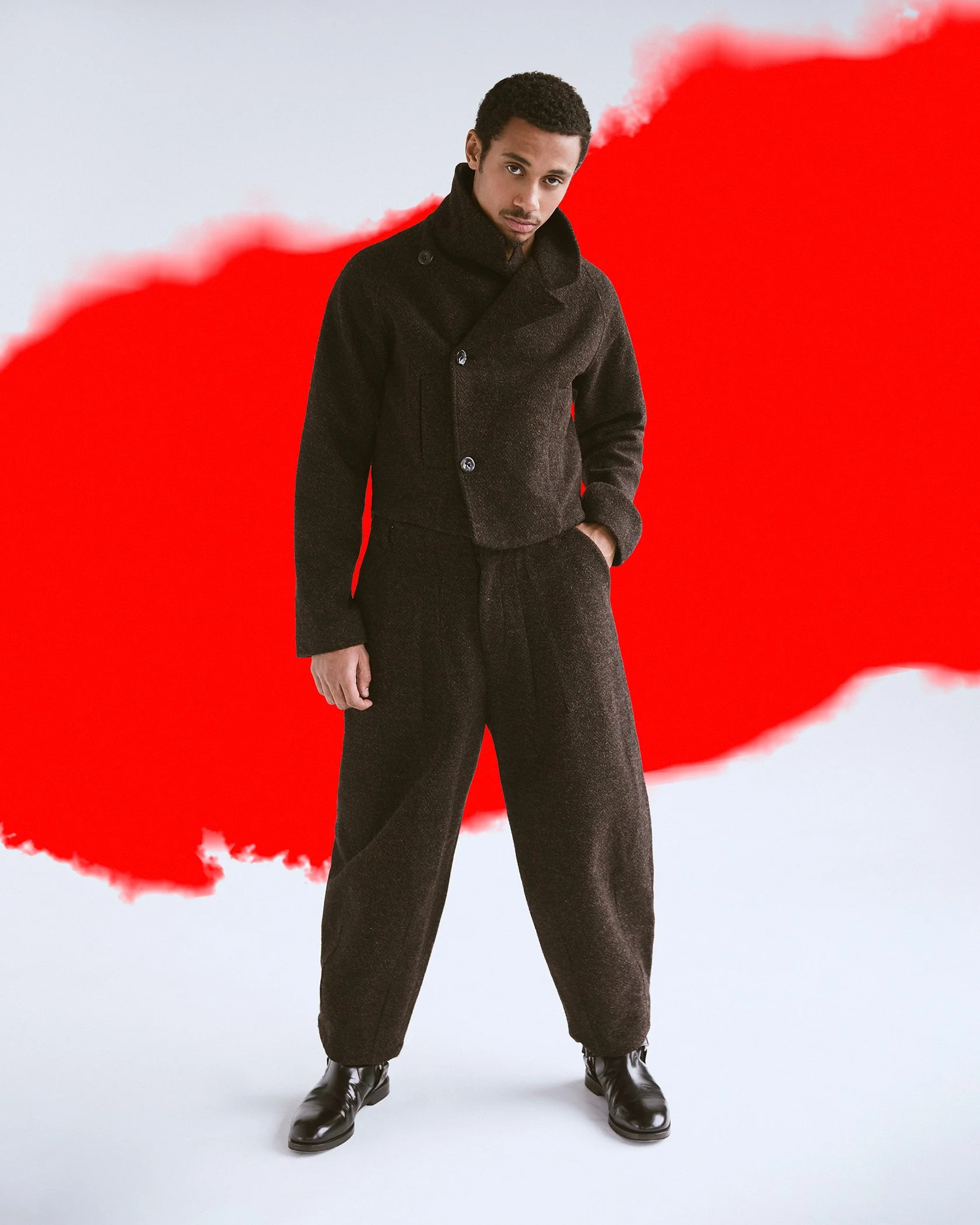
Fashion can offer another way of constructing, or revealing, identity. How would you describe your own relationship with clothes and personal style away from a character?
I've always had an interesting relationship with fashion because I've always loved it, but I've always been scared to spend. And so I've kind of made my identity that of someone who doesn't care about what they wear or how they look, when really I do.
But I think when I do feel financially stable enough to start investing in my dress sense, which I have started to do, I don't want my wardrobe to have one look, because I'm not a one-dimensional person. I think your wardrobe should represent you, and you are interesting. You are different, depending on how you feel, where you're going, what you're doing, how your week has been. You're going to want to dress differently, and I want my wardrobe to represent that and to represent all the different sides of me.
As your profile grows, what feels more important to you: challenging audiences, surprising them, or simply continuing to surprise yourself?
I think as my profile grows, God willing, I've just got to keep my eyes on the prize, which is to create meaningful work at a high standard that can have some positive impact on the world. And as long as I do that, I think I should be all right.
I think one of the most empowering things you can give someone is inspiration. I would love to have a body of work that inspires.