
IN CONVERSATION WITH STACY CLAUSEN
interview by JANA LETONJA
Stacy Clausen is emerging as one of the most exciting new talents to watch, stepping into the spotlight with his breakout leading role in Leviticus, acquired by Neon following its buzzworthy premiere at Sundance 2026 and arriving in theatres this June. Set within a deeply conservative religious community in regional Australia, the film is a haunting and emotional exploration of identity, love, and repression, with Stacy delivering a fearless performance as Ryan, a teenager grappling with his sexuality under intense scrutiny. Already building a strong résumé across television and film, including projects like Fires, Scrublands, and True Spirit, Stacy’s powerful turn in Leviticus marks a defining moment in his rising career.
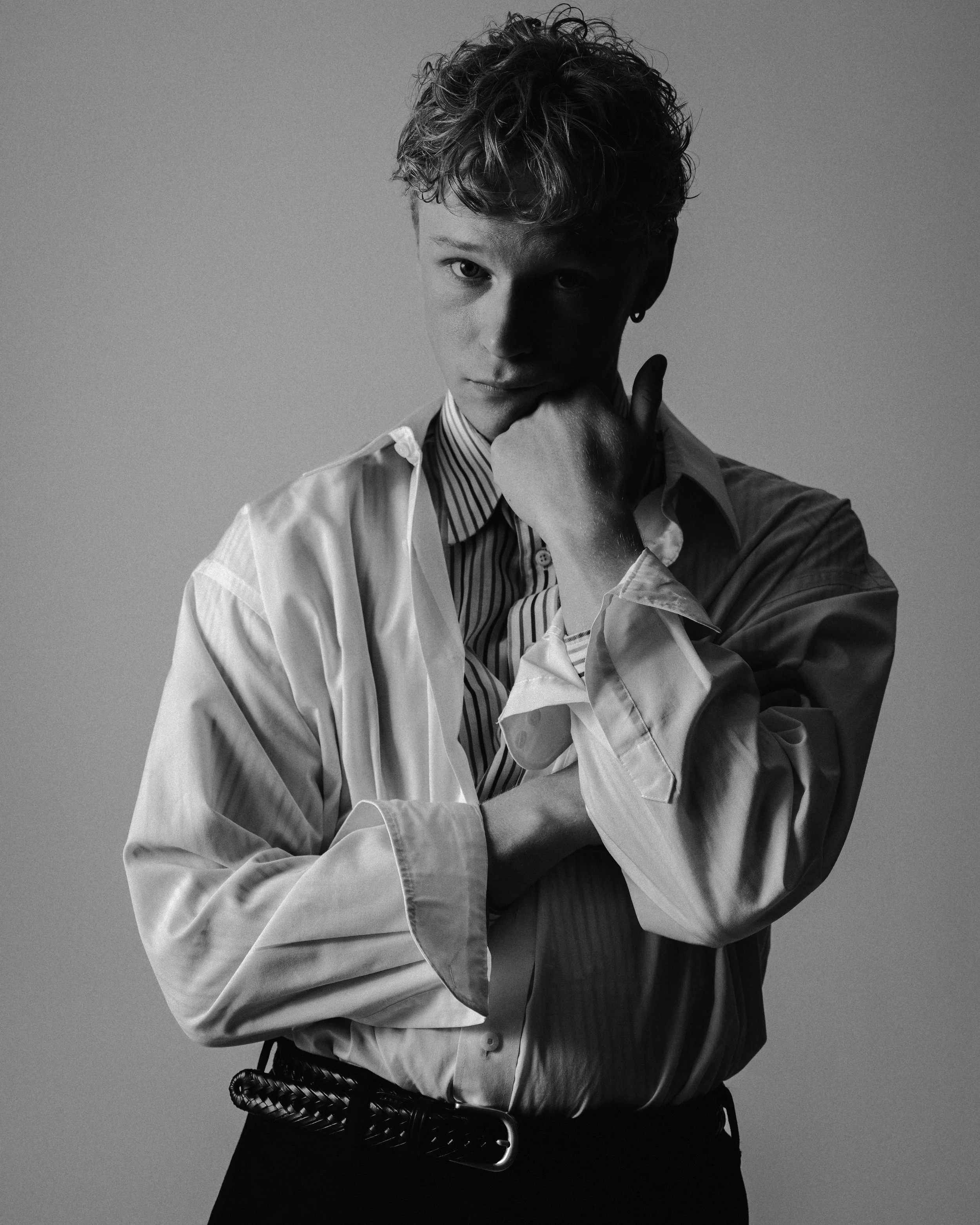
Leviticus has generated a lot of buzz since Sundance. What drew you to the role of Ryan?
Initially, during the audition process, I was actually auditioning for the roles of Naim, Ryan and Hunter. But from the moment I read the script, Ryan was the one I was after. He was the one I felt like I could understand the most, but at the same time, adjacent to that, there was so much detail within the character that was so intriguing, and that I wanted to learn everything about. There’s so much of him that exists beneath the surface; he’s in an environment where he can’t articulate what he’s going through, so every thought and feeling is so internalised. And then there are all these incredibly written relationships that involve complex defence mechanisms and involve him having to change things about himself. Everything together just created a character that was so incredibly compelling to play.
How did you prepare to portray such an emotionally complex and vulnerable character?
Adrian was such a guiding light when it came to Ryan's approach. I remember before we started shooting, he took Joe and me on a little road trip to regional Victoria, where we did a bunch of character exercises. Just spending time in character, in that type of environment, you begin to put together how the world around Ryan influences the way he thinks, or the way he holds himself, or how he acts in a public setting. I think starting from the core of the character was how I could tackle it best. More specifically in this particular story, starting my approach from where his fears and desires began, and then building outwards from there, helped me navigate the emotional complexity of Ryan and create the nuances of his behaviour and reactions. In terms of the challenge that is vulnerability, I just allowed myself to lean on everyone around me. Adrian, Joe, our onset producers Sam and Hannah, and our intimacy coordinator Amy, were all so supportive. I was also lucky to have this film shot in and around my home city, so I could stay at home with family, which makes it a lot easier to jump out of the character when the day’s done.
The film tackles heavy themes like identity and conversion therapy. How did you approach this responsibility as an actor?
I was highly aware of those themes and the sensitivity around them, but I think you can’t fall into trying to represent something broadly. As an actor playing a character, I’m only a device being used to tell a story that’s a lot bigger than me. So it had to start with Ryan as an individual and his unique experience. I did spend time listening and reading about those experiences to better understand the emotional reality of it, but I was careful not to treat it as something to be performed. There’s definitely a sense of responsibility, but I think the most respectful and right way to go about it was to just stay honest to Ryan, play my role, and let the story underline those themes.
What was the most challenging scene for you to film in Leviticus?
The scenes I find the most challenging are usually the ones where there’s a big jump or change in an emotional state, and there were definitely a few of those. Having to go from emotional point A to B, and then take yourself all the way back to A for another take, over and over, can be pretty exhausting. The possession scene was one of the most challenging, going from a moment of stillness and even a bit of amusement about it, straight into an entity ripping my body and mind apart from the inside out was pretty difficult. I think the reason that one stands out in my mind is because of the physicality that was involved. I was literally suffocating myself and then quickly going into throwing my body around, screaming at the top of my lungs. The car park scene was one that was super emotionally challenging for me, going from hopeful, to confused, to scared and then to heartbroken. But everything is so worth it when you get to see it work and finally come together.
The film blends elements of horror with emotional storytelling. How did you navigate that balance?
Well, I never approached it as a horror from the inside; it was almost always the drama first. My focus was always emotional truth, and I think the more we leaned into the silence and the things left unsaid from a dramatic perspective, the darker horror elements developed on their own. I think good drama creates tension. I can let the filmmakers flip that tension that we’ve built on an emotional foundation, into whatever they like with special effects or music, etc. I just tried to hold onto the emotional side of things and let the rest get taken care of.
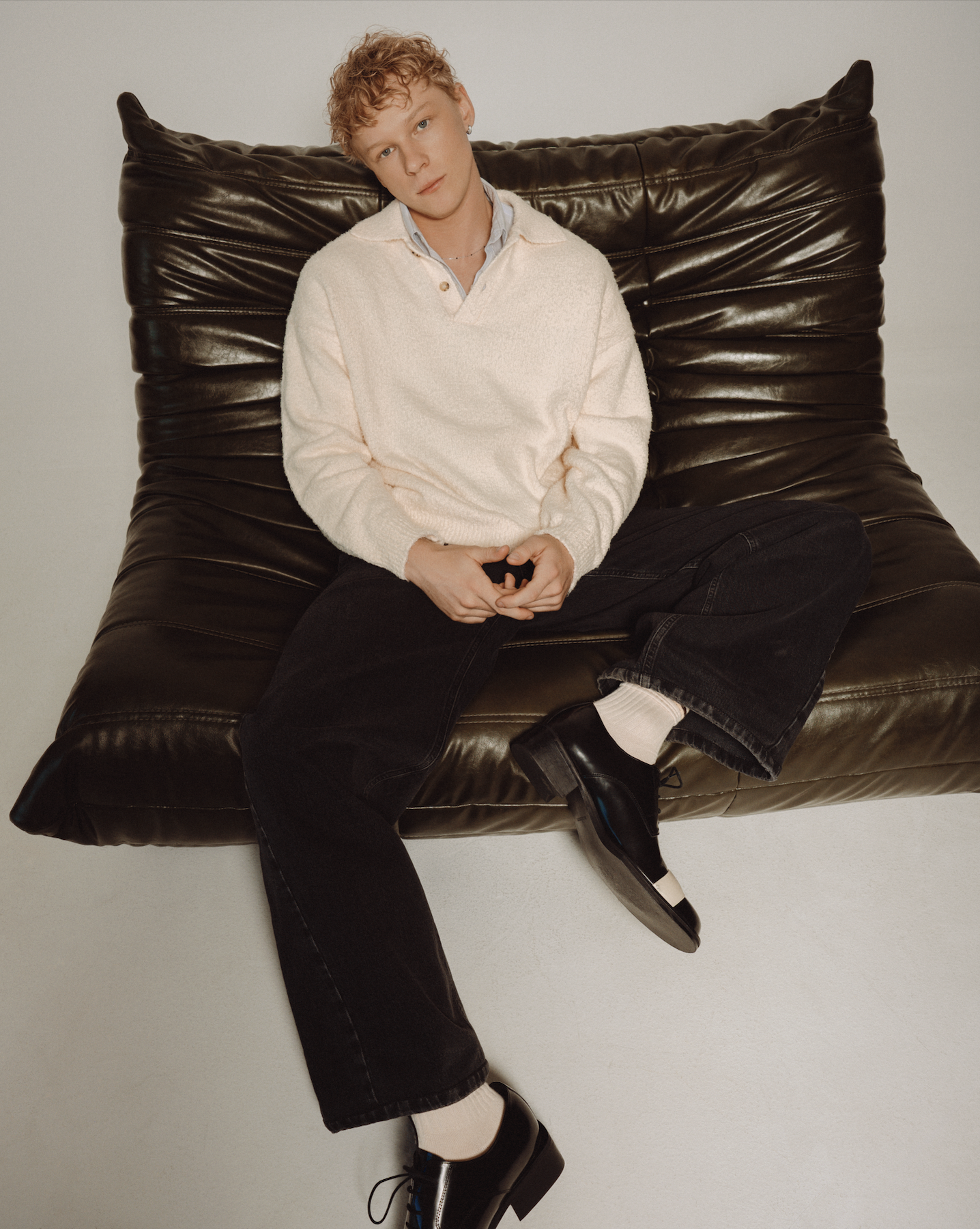
What conversations do you hope this film sparks among audiences?
I don’t want to define exactly what people take away from Leviticus. There aren’t actually many easy ‘answers’ to be had, I think that’s something that’s really great about this film. But I definitely hope there are conversations around identity, love, particularly around the queer experience and the role that communities and environments play in the pressure to suppress parts of yourself. If it can make people talk about and notice how those pressures present themselves in everyday life, in the environment around them, around the people they love, I think that’s really meaningful.
How has the response from Sundance audiences shaped your perspective on the film?
The response from Sundance was immediate. You can try to influence a perspective, but you can really never know how exactly audiences are going to respond to something. But Leviticus really felt like it landed the way we hoped it would. I wouldn’t say it necessarily changed the way I think about the film, but it definitely made me more aware of its impact. I had LGBTQ+ people reaching out to me to say they wish they had this film when they were growing up. That’s more than just satisfying. That’s immensely heartwarming to know that I’ve been a part of a project that could really mean something to someone. That might make someone feel seen for the very first time. That’s special.
Sundance really opened my eyes to what this film could do.
You’ve worked across TV and film. How did leading a feature like this differ from your previous roles?
I suppose what feels different about leading anything is the level of responsibility you feel. You’re present in a lot more of the process, from pre-production through filming, and the decisions you make for your character have a much larger effect on the story, as your character plays such a key part of the emotional through-line of the film. I think what made it so different from other things I’ve done is the combination of that responsibility with such emotionally dense material. In this style of film, and this style of acting, in this type of role, I felt like I had to stay more focused and committed than I ever have. That’s a result of the pressure I put on myself, stemming from not wanting to disappoint the people relying on you, most importantly, the audience of this film in particular.
What has been the most defining moment of your career so far, and why?
I think Leviticus has been a definite turning point for me. It asked a lot of me as a performer, and having done it, I really felt like I proved something to myself. I’ve always believed in my own ability, but there was a level of reassurance and satisfaction with the work that I’d never felt before. I learnt so much doing that job in terms of restraint in performance and trust, presence, and preparation. I’m so grateful for it, I feel like it’s had a massive effect on me as an actor and the way I approach performing.
You have several upcoming projects, including Shiver and Mosquito Bowl. What excites you about those roles?
Shiver and Mosquito Bowl are my first two international projects. There was some incredible cast across those two films that I got to train and work with, but I think I’m most excited about switching things up, getting to work in worlds that are completely new to me. They’re both massively different from Leviticus in tone, genre and character, so I was super excited to see how that would challenge me differently on set. I’m super into pushing myself into varied spaces, trying not to repeat the same thing, so Shiver and Mosquito Bowl really fulfilled me in that regard.
How do you choose projects that challenge you versus those that feel more familiar?
I love this question. There’s an instinctual aspect to that decision of whether something is challenging or ‘too’ familiar. We’re all people who share universal experiences, so things might appear familiar on a page, but people are also so wonderfully individual, and despite a similar tone or setting, it can still push you in a completely new way. So you have to trust your gut. Once I engage with the material, I think about whether I feel I’ll be able to place a part of myself within the character, and whether that part of me is something worth exploring. Sometimes I visualise myself in the role, in particular scenes, and if that image excites me, or even better scares me, it could definitely be worth doing. I think it comes down to an opportunity to learn and experience something new.
How do you stay grounded while your career is gaining momentum?
I’m really lucky to have super close family and friends who keep things in perspective. I can be out in the world doing some crazy stuff but you can bet on the fact that once I get home, Mum is getting me to empty the dishwasher. I also think having a life that exists outside of the industry is really important. It gives me some distance; I’m not measuring my worth in terms of momentum or career progress. I understand this ‘momentum’ is providing me with some amazing opportunities, but I approach those opportunities the same, no matter the scale or whatever it may be. Just stay focused on the work. That’s what I’m in it for.
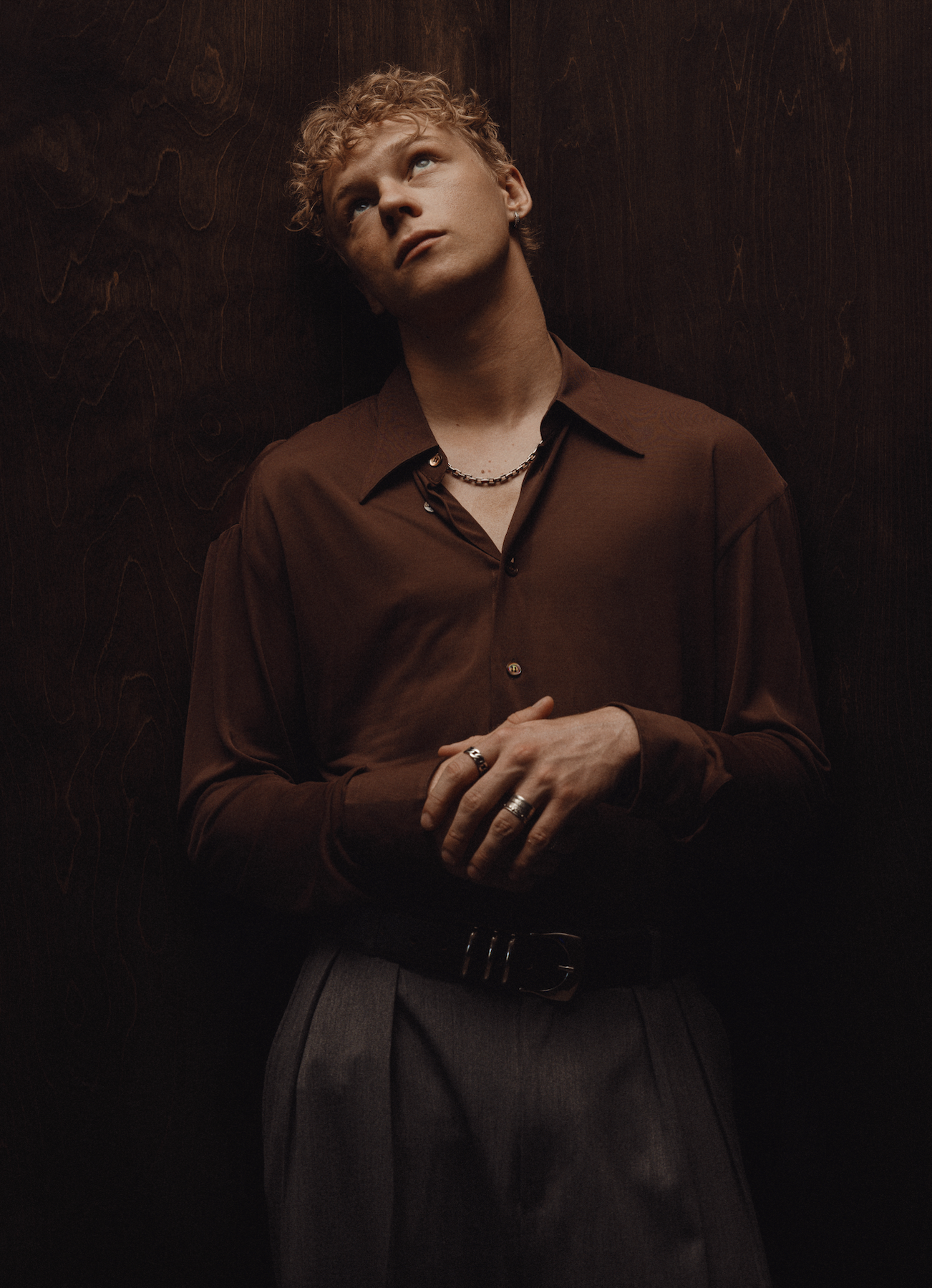
TEAM CREDITS:
photography RYAN PFLUGER
styling BENJAMIN HOLTROP
hair and makeup SONIA LEE
