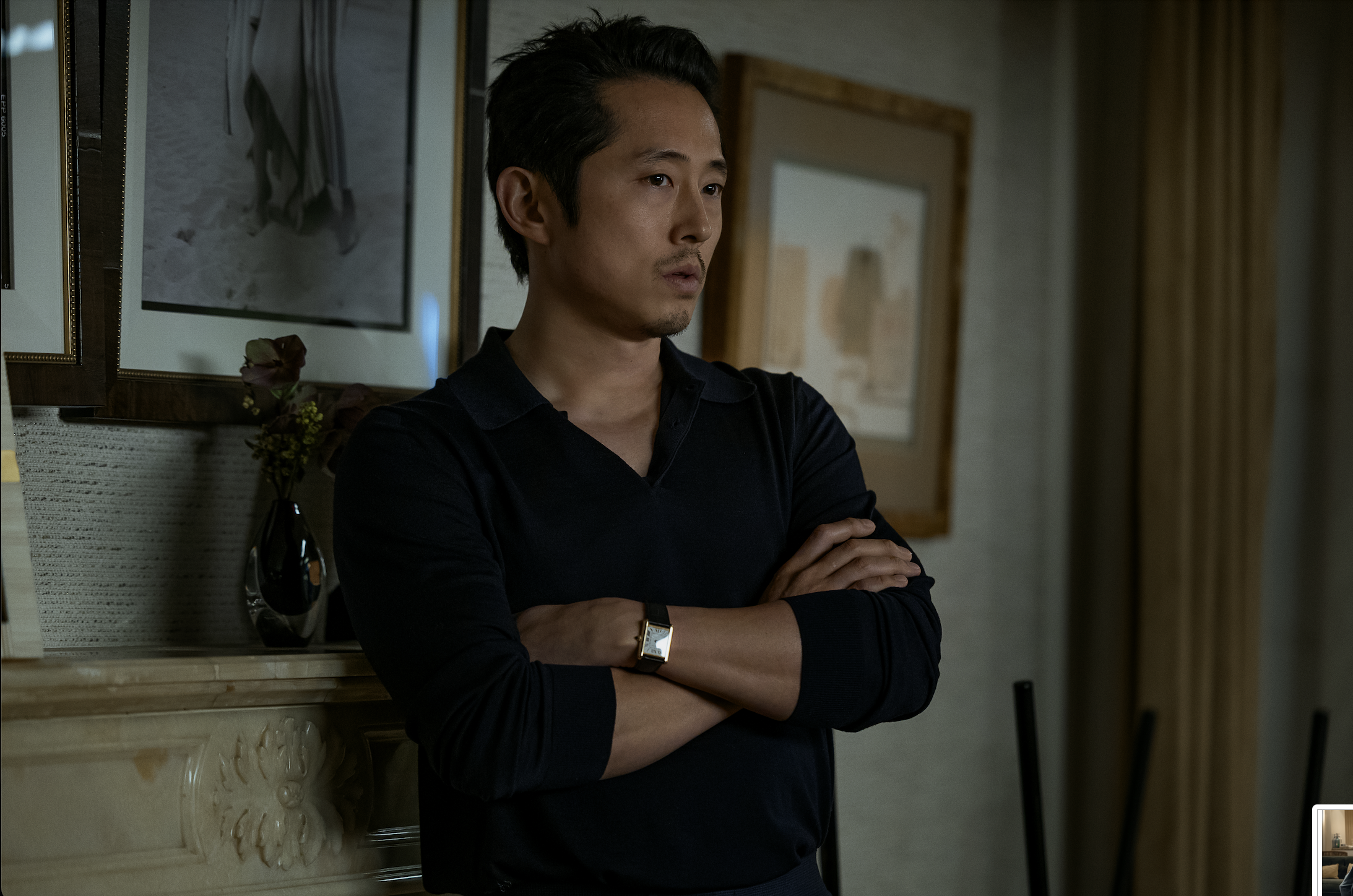
IN CONVERSATION WITH THE CAST OF ‘ANIMALS’
interview by TIMI and JANA LETONJA
How far would you go to protect the people you love—and what would be left of your principles once you did? Animals, the new thriller directed and co-written by Ben Affleck, places that question at the centre of a story where family, morality and survival become increasingly difficult to separate. Affleck stars as Mark, a Los Angeles mayoral candidate whose carefully constructed life is thrown into crisis when his son is kidnapped.
Alongside Kerry Washington as his wife Abigail, Steven Yeun, Adriana Paz and Luis Gerardo Méndez, the film traces what happens when its characters are pushed into circumstances where every decision carries a consequence and the distinction between right and wrong becomes harder to maintain.
For Numéro Netherlands, we spoke with Affleck, Washington, Yeun, Paz and Méndez about the moral tensions at the heart of Animals, the complicated dynamics of marriage and loyalty, the experience of existing between cultures, and what people are capable of when protecting those closest to them.
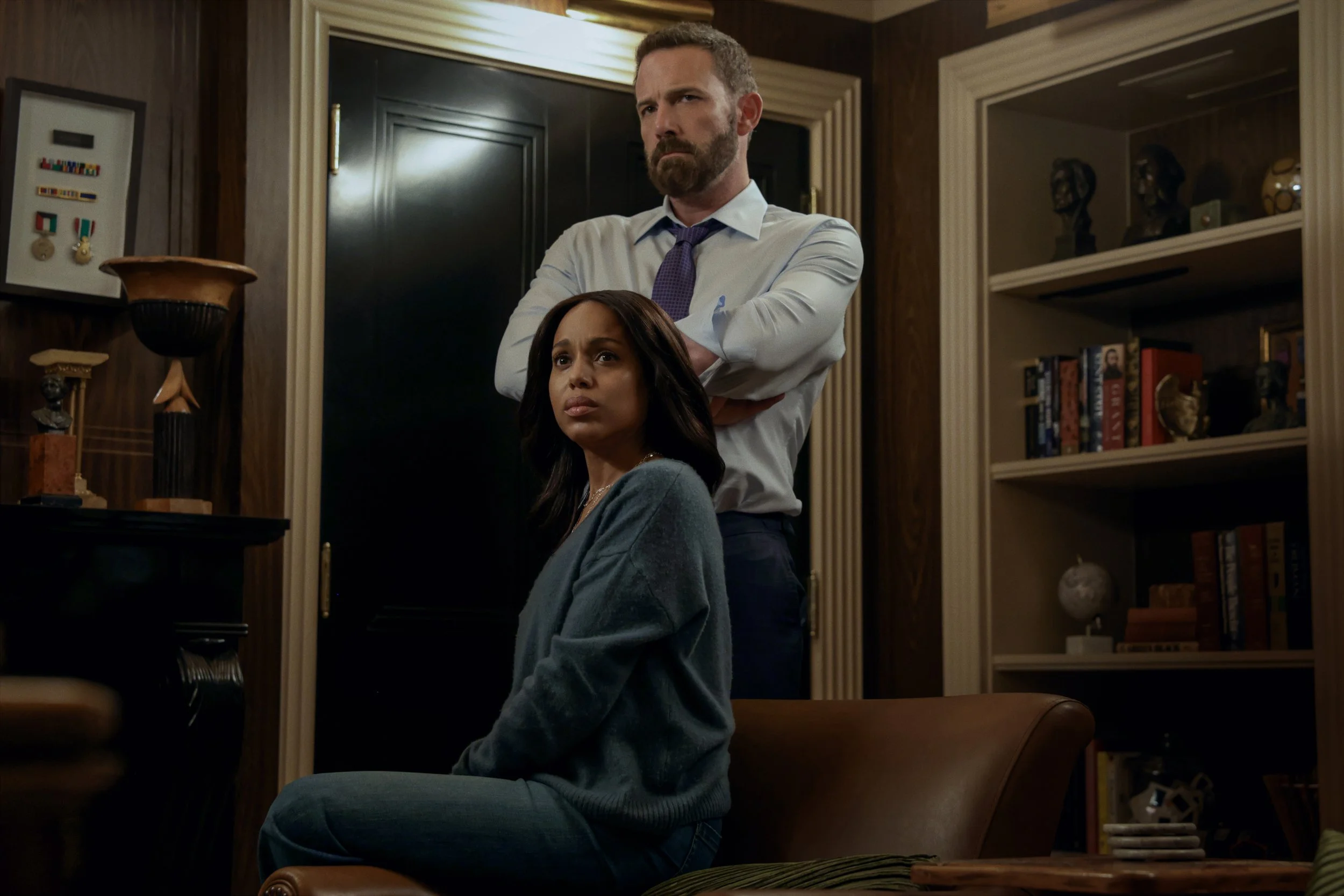
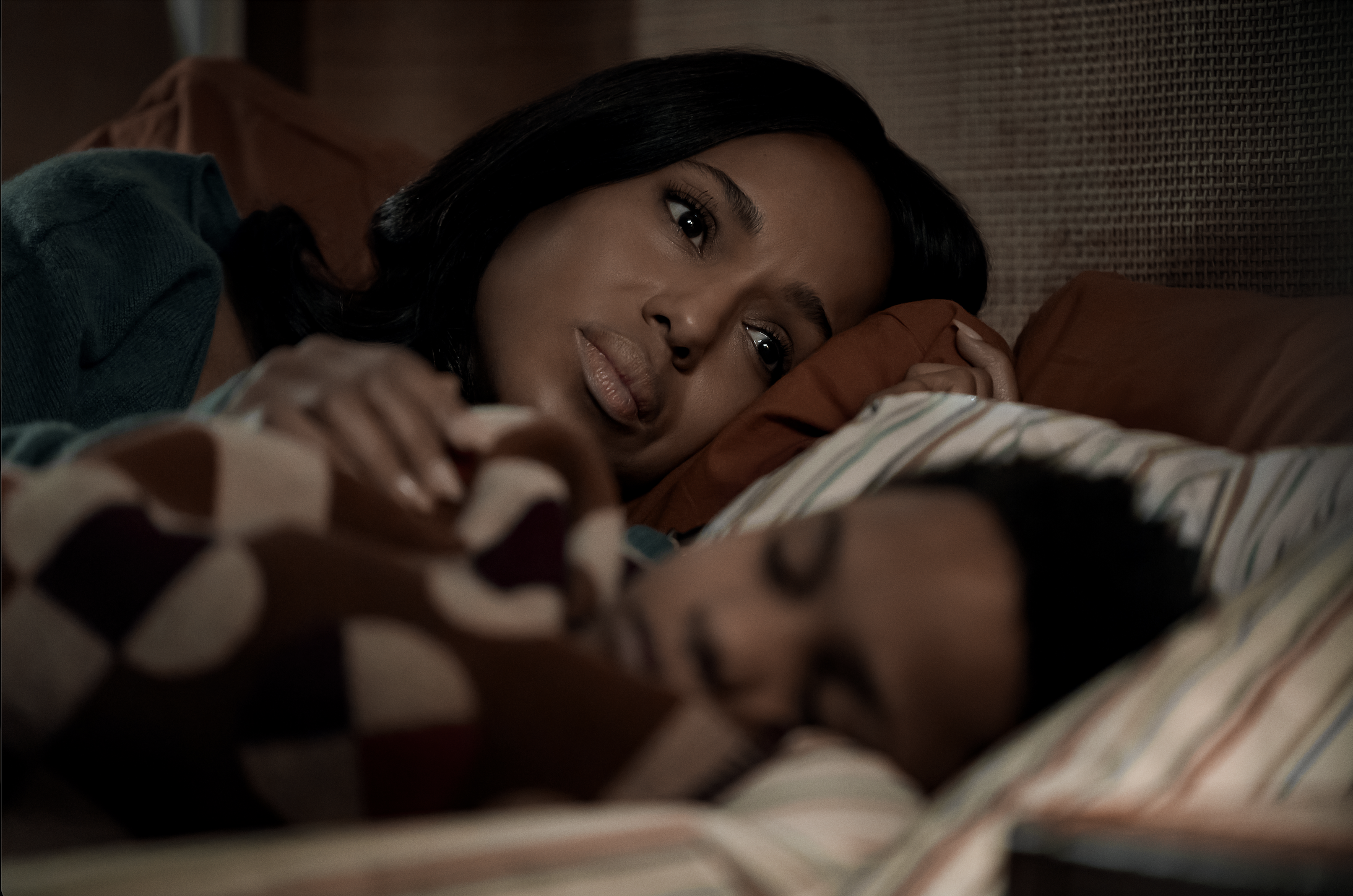
image courtesy of WARRICK PAGE/NETFLIX
At the heart of Animals are some difficult questions about morality, family, and the choices people make under extreme pressure. Which of those questions were you most interested in exploring as a director
Ben Affleck: I think some of the first questions that you mentioned are sort of broad, and they’re part of the theme of the movie, but I don’t believe that movies do a very good job talking broadly about systems or constructs. What you need is human beings that you can connect to.
So, in that sense, what was interesting to me about, for example, the relationship between the three of us is that we have this marriage, and yet I’ve migrated to a closeness and a connection with him, more truth, because we’re actually telling each other the truth in ways that have created this fracture. And so this is also a source of tension in his marriage.
I guess the short answer is the marital aspect of it, because there’s nothing more emblematic of these difficult questions about: Who am I? Who do I show to my partner? What happens if I show my real self? Will I not be loved? You know, it’s a great risk-reward proposition. And I thought that was really interesting to explore.
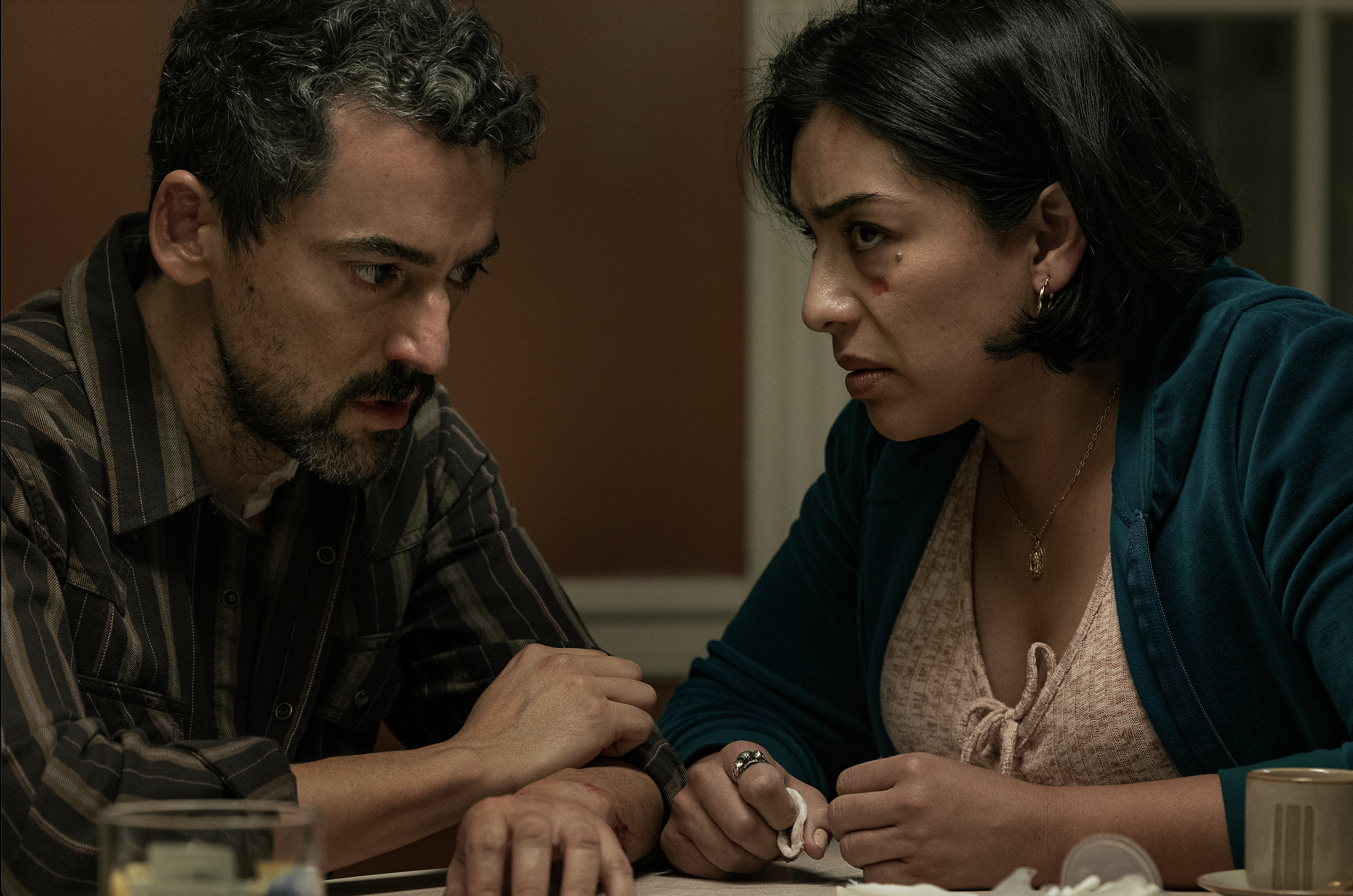
One of the film’s most striking lines is, “Decency is what separates us from the animals.” What does that idea of decency mean to all of you, particularly when his circumstances begin to test the limits of it, and did making the film challenge or change what that word means to you?
Kerry Washington: I want to answer this as myself, not as Abby. But I think decency is about different things at different times. It’s about considering the humanity of another person, right? As you walk through life, thinking about the wellness and the goodness of other people, not just oneself, is part of what decency looks like.
And I think that’s why it’s sort of opposed to animalistic behavior, which is just about survival and doing whatever I have to do for the survival of myself and my kin. So I think decency is trying to open up our minds to include or extend our idea of family as we make decisions about who and what deserves to be saved, loved, and respected.
Steven Yeun: From Sam’s perspective, I think decency sometimes gets in the way for him. I think he sees how decency can sometimes cloud the essential truth, and he wants to cut through it. But he himself is also decent, in that I think he carries decency as a baseline. For him, he just wants people to say what’s real so that we can get to it. And I think that’s an interesting tension with him.
There’s also this sense with Sam that sometimes you have to do indecent things because the bigger picture will allow for everyone to exist in a world that’s more decent. It’s a very powerful argument.
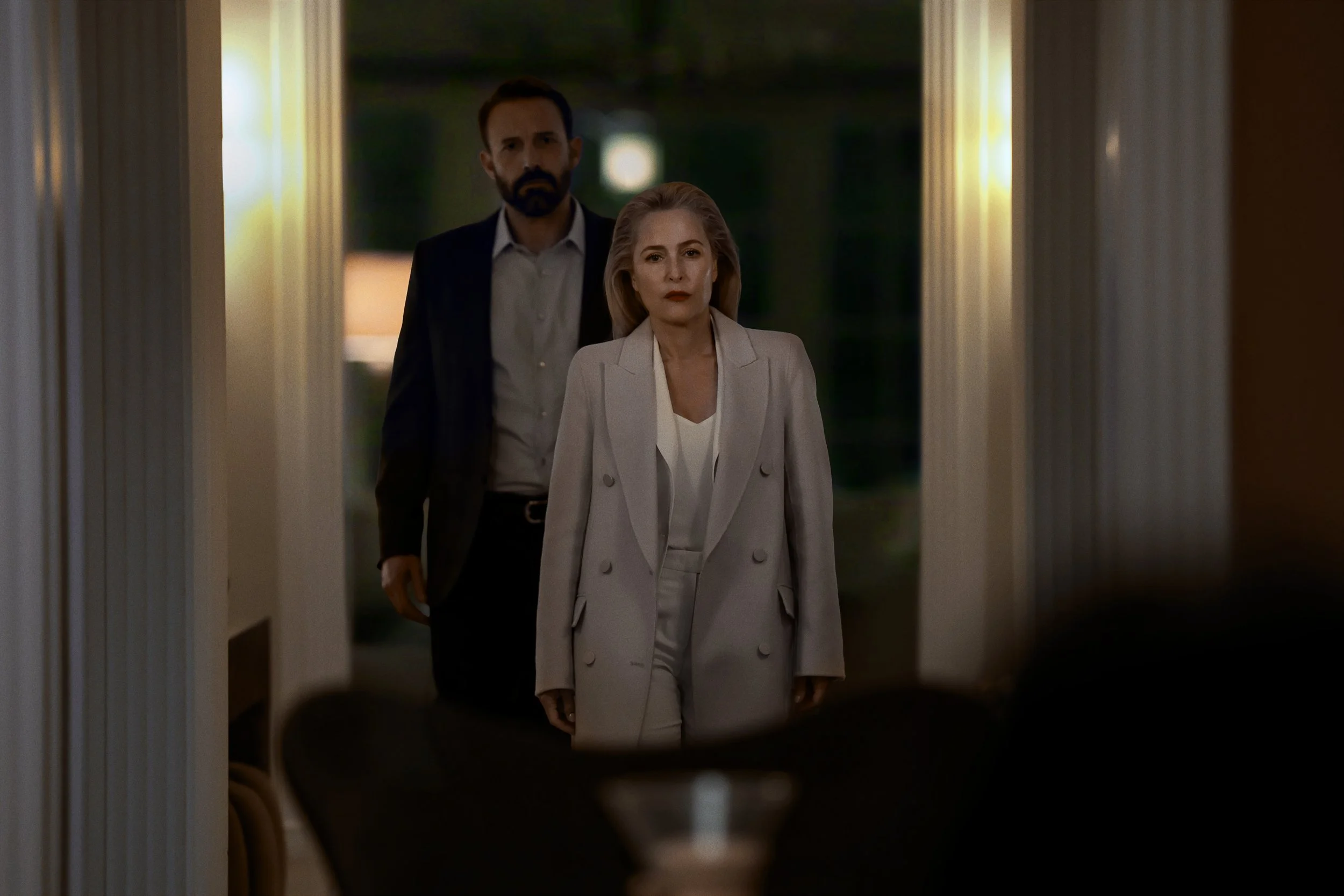
Cecilia seems to move between several different worlds in the story without ever fully belonging to any of them. What do you think that reveals about the way she sees herself and where she feels she belongs
Adriana Paz: I think when you migrate, that happens to you because you have a distance from the world that you came from, and then you try to be part of the new world that you’re coming to. But at the same time, you realize that you’re not part of either of them. And then you try to fit into both. That can be very difficult.
When you leave Mexico and then go back, people see you as someone who’s been living in the States. And if you’re in the States, people call you the alien, the Mexican. And it’s like, where am I?
So I think Cecilia feels very attached to this family because they have been very good to her, but is she really part of the family? And she’s very in love with Ramon, and Ramon represents Mexico and love and the future. So what are you going to do? What are you going to decide? She’s in a very difficult situation and position.
Ramon is pulled into a situation where the stakes become increasingly personal and the choices available to him begin to narrow. As that pressure builds, what did you feel was driving him most—what he wants, what he fears, or what he feels he has no choice but to do?
Luis Gerardo Méndez: I think it’s a blend of all those things, but it translates to protecting what you love the most, which is your family. And I think there’s nothing that can beat that. I can think about my career or my money or my friendships or my dreams, but my family is on a pedestal. It’s something that you cannot touch. If you touch that, I’m going to go bananas.
And that’s what happens to Ramon, because he’s also in a very weird, horrible situation before that happens. He’s already in a country where he’s not welcomed. He’s a character who is overqualified to work in anything that he’s going to get offered in the US, which is the reality of millions of Mexicans.
Not just Mexicans, people sometimes come to the US to get a job and they’re way overqualified for any job they’ll be offered. But you need to say, “Okay, yeah, I don’t have all these documents, and I don’t have the relationships, I don’t have the network, so I’m not going to be able to get the job that I know I can do.”
So, yeah, it’s a very complex situation, and it is very moving to be in the shoes of a character like that.

There’s a sense of a much longer, more complicated history between Cecilia and Ramon than what we actually see on screen. How did you find that shared history, and what did you feel needed to exist between the two of you even when it was left unspoken?
Luis Gerardo Méndez: I think it’s because we’re both nerds. We are nerds about acting, and we had a lot of questions and long conversations about it. Somehow, we had also met years before in Mexico. We’ve both been working in Mexico for 20 years, but we had never worked together in Mexico, which is very weird.
So I guess we do have a past together as performers. And when you’re working outside your country, you feel that. It feels like, yeah, we’re on the same team. We’re already on the same team, and we’re fighting for something. So it wasn’t that hard, actually.
Adriana Paz: No, it wasn’t. We were a team. That’s very accurate. But we talked a lot together, like, “What do you think about the scene? What do you feel? Is it correct? Would Ramon say that? I don’t think Cecilia is going to react like that.”
And we talked about how long they had been together. We came up with questions that weren’t in the script. And it was great to have Luis Gerardo open to that, because you can’t have that all the time. Not all the people you work with are open to doing that. Maybe they don’t give it the time or whatever. And we cared a lot about that, and it was great because it meant we didn’t have to say anything.
Luis Gerardo Méndez: And I want to add something because I think this is very important.
We were in a very particular position doing this movie and playing these characters. It felt like a massive responsibility to the Latin community in the US. There are millions of people living through a very hard situation right now, and who have been for a long time, for the past several years.
So the scenes we’re doing are going to speak to millions of people in the US who are not Latin, and they might raise some questions. When you’re doing a scene and you know that scene could have that impact on millions of people, you don’t want to think about it too much because then you’ll be paralyzed. But you do know that it’s something very special.