
IN CONVERSATION WITH TOMMY MYLLYMÄKI
interview NATALIE GAL
Tommy Myllymäki is one of the defining figures of contemporary global cuisine, and for anyone familiar with the world of haute cuisine, his name needs little introduction. We sat down with him to talk about the story behind his acclaimed restaurant, Aira, the influence of his Swedish roots, and the cultural narratives that shape his work. The conversation also touched on his advice for newcomers hoping to find their footing in an industry that becomes more competitive by the day.
Furthermore, just days ago, Chef Myllymäki reached another defining moment in his career when he was selected as one half of the chef duo, alongside Pi Le, entrusted with creating the menu for the Nobel Prize Dinner in Stockholm’s iconic Blue Hall. An honor reserved for only the most respected voices in gastronomy, a powerful acknowledgment of his influence, vision, craft and national representation on a global stage.
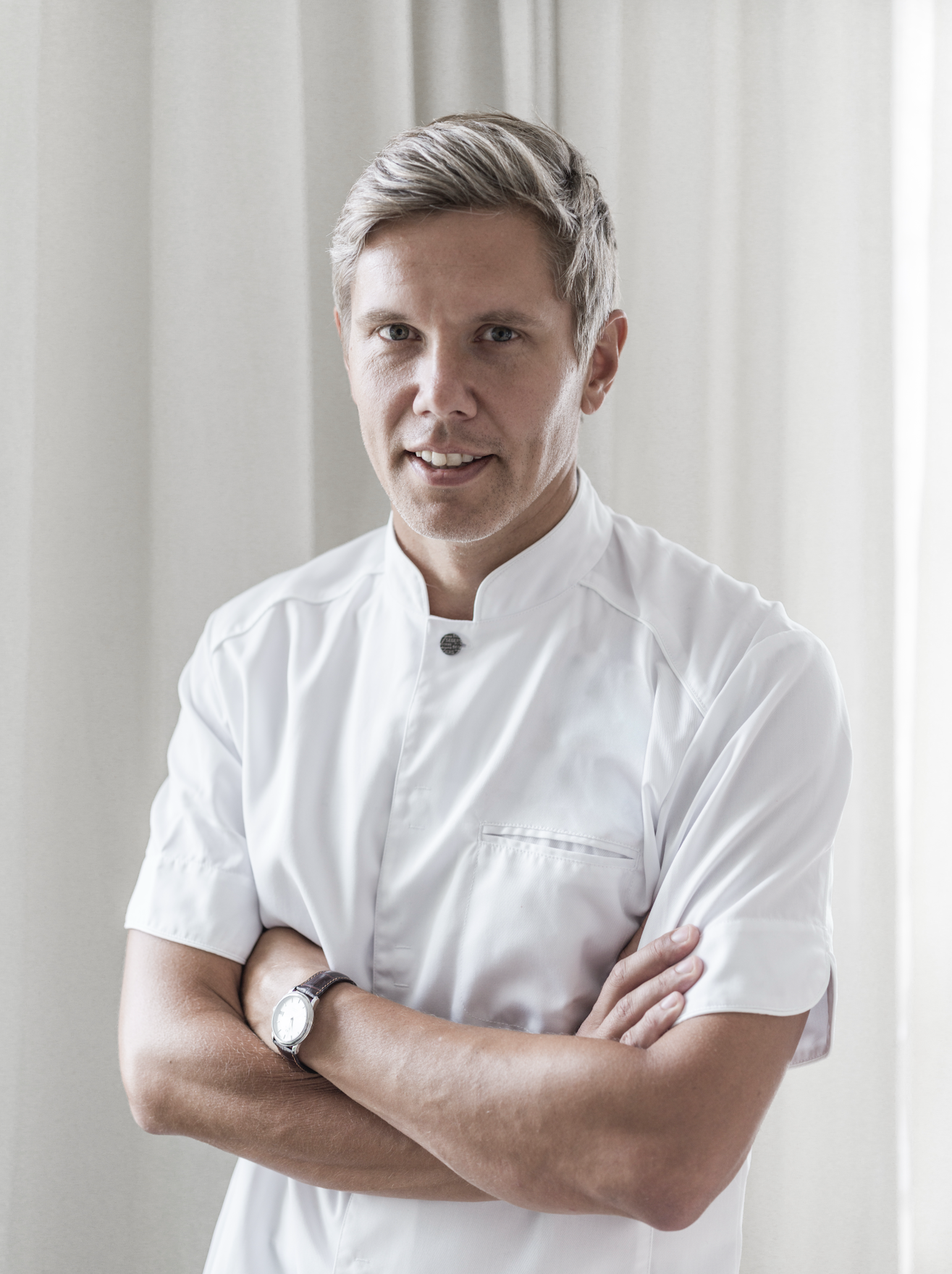
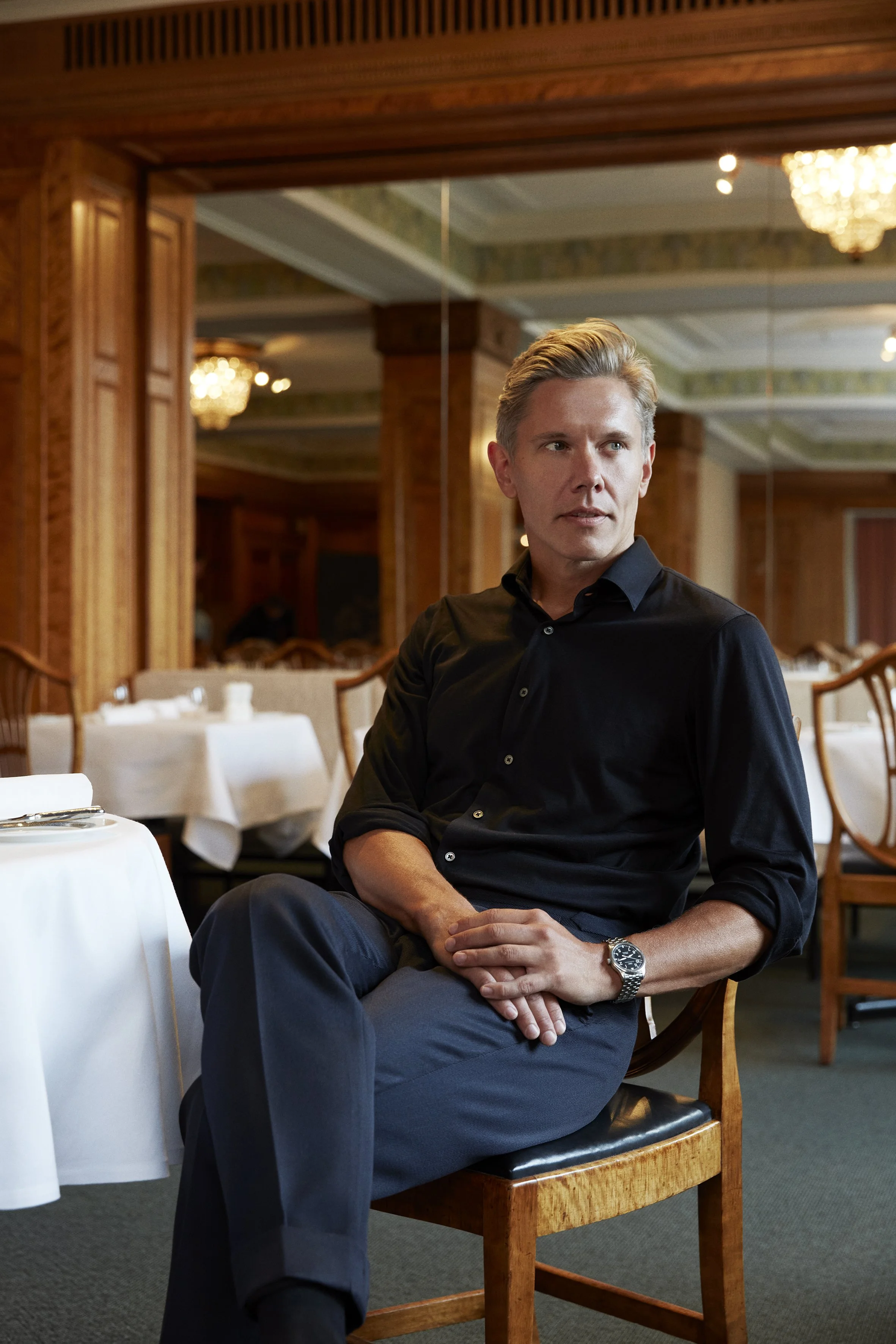
You come from Sweden, how do you feel your heritage influences your cooking, whether in ingredients, techniques, or culinary traditions?
I grew up with seasons that are very present, and I think that shapes everything. In Sweden you really feel the difference between light and dark, abundance and limitation. Summer is short but very generous, winter is long and quite demanding.
Swedish food culture has always been about respect for the product and making it last: pickling, curing, smoking, fermenting. Those techniques are not trends for us, they were simply necessary. Today I use them in a more refined way, but the logic is the same: don’t waste, highlight, preserve character rather than hide it.
At the same time, Sweden is a very open country. We’ve had influences coming in from everywhere, the idea of the “pure” Scandinavian kitchen is a bit of a myth. I grew up eating very simple, honest food at home, but also discovering new flavours through travel and immigration. So my heritage gives me a framework of restraint and seasonality, but I’m not nostalgic. I like to let Swedish ingredients have conversations with the rest of the world.
What are your thoughts on how people from other cultures and continents perceive Scandinavian or Swedish cuisine? Do you think their understanding is accurate, or is there something often misunderstood?
I think many people see Scandinavian cuisine as very minimalist, almost austere: a lot of beige, a lot of stones and moss, very serious plates. That image comes from a few influential restaurants, and there is truth in it, we do like clarity and we edit a lot on the plate. But I also think it can give a slightly cold impression.
In reality, Swedish food culture is extremely warm and social. It’s Sunday roasts, crayfish parties, Christmas tables that never end, and very humble dishes like meatballs, herring, potatoes in every shape. It’s hospitality more than aesthetics.
The biggest misunderstanding is perhaps that simplicity means a lack of complexity. For me it’s the opposite: simplicity is what’s left when you have removed everything that isn’t essential. It takes a lot of work and technique to arrive at something that looks effortless. Scandinavian food is not minimalistic in emotion, it’s actually quite maximalistic in memory and feeling.
You’ve also participated in several television programs. How did you experience that, and what are your general thoughts on cooking shows and culinary media?
Television was never a goal for me; it came as a byproduct of competing and cooking professionally.
At the same time, TV is a very compressed version of reality. A dish that takes months to develop becomes a 30-second shot. A service that is five hours of stress, concentration and teamwork becomes a short montage with music. So I always remind myself and young cooks: what you see on screen is entertainment, not the full craft. The real work is repetition, small adjustments, and a lot of quiet moments that would be boring television.
I think culinary media has a responsibility now. Cooking is also care, collaboration and discipline. If we want the next generation to join this profession and stay healthy in it, we have to show that side too.
Aira has a distinctive architectural design, close to nature, the water, and built as a beautifully crafted wooden structure. How does this physical environment align with your cooking philosophy and with the essence of Aira itself?
Aira is literally surrounded by water, trees and changing light. You feel the weather as you arrive. For me, that already tells part of the story before we serve anything. The architecture is warm, tactile, very crafted, there’s a human hand in the details. That’s exactly how I want the food to feel: precise but never clinical.
The building also creates a certain calm. You see the city, but you’re slightly detached from it, almost on an island of your own. That allows us and the guests to slow down. I think food tastes different when you’re able to breathe and pay attention.
In the kitchen we talk a lot about harmony between the plate, the room and the view outside the window. If we serve something very pure and green while the trees outside are turning the same colour, there is a subconscious connection. Aira is not just a restaurant with a nice design; the architecture is part of the ingredient list.
You’ve achieved remarkable recognition in your field, including two Michelin stars for Aira. What advice would you give to someone just starting out in gastronomy, especially someone without industry connections?
First: don’t make stars or awards your identity. Use them as a compass, not as your heartbeat. If you focus on learning, serving the guest and respecting the product, the recognition will either come or it won’t, but your life will still be meaningful.
For someone without connections, I would say: your attitude is your CV. Arrive on time, listen more than you speak, taste constantly, and treat every task, peeling onions or plating caviar, with the same level of respect. Good kitchens are always looking for people like that, regardless of background.
Be curious and patient. Spend time in different types of restaurants; a small bistro can teach you as much as a fine-dining kitchen. Ask for stages, send honest emails. Many of us who are seen as “established” today started with zero contacts, we just showed up again and again.
And finally, take care of yourself. The old romantic idea of the exhausted, self-destructive chef is not something we should celebrate. Cooking is a long-distance sport. Sleep, eat properly, move your body, keep a life outside the kitchen. You can’t cook generosity if you’re completely empty inside.
If you had to describe Aira as a concept in just three words, which would you choose?
Elegant, generous, precise.
Elegant space, elegant cooking, generous in its hospitality and portions of attention, and precise in the way we think about flavour, timing and detail.
Do you have a favorite dish or ingredient that you personally love to work with, and would recommend for people to try using at home?
I’m very drawn to humble ingredients, and cabbage is one of my favourites. It’s available almost everywhere, it’s inexpensive, and it can be incredibly elegant if you treat it with care.
At home I often tell people: take a whole cabbage, roast it slowly until it’s deeply caramelised, then glaze it with good butter, maybe a splash of soy or fish sauce, and finish with something acidic like lemon or vinegar. Suddenly you have a dish that feels both comforting and sophisticated, made from something that usually sits forgotten at the bottom of the fridge. Or just slice it as thin as you can and blend it with a nice vinaigrette. So fresh and tasty. I very often choose pointed cabbage as salad instead of a classic salad.
In general, I think if you have good potatoes, good butter and something fresh and acidic, you’re already very close to happiness. The rest is just fine-tuning.
