
IN CONVERSATION WITH TOMY AGUILERA
interview by JANA LETONJA
Tomy Aguilera is a rising Spanish actor quickly establishing himself as one of the most promising faces in contemporary television drama. He gained recognition for his breakout role in Skam España and expanded his international profile with Bienvenidos a Edén. His growing body of work spans both television and film, including projects like La promesa and Por los pelos, leading up to his upcoming starring role in the Netflix series Oasis, set to premiere in summer 2026. With a natural screen presence and strong connection to new audiences, Tommy represents a new generation of talent shaping the future of Spanish audiovisual storytelling.
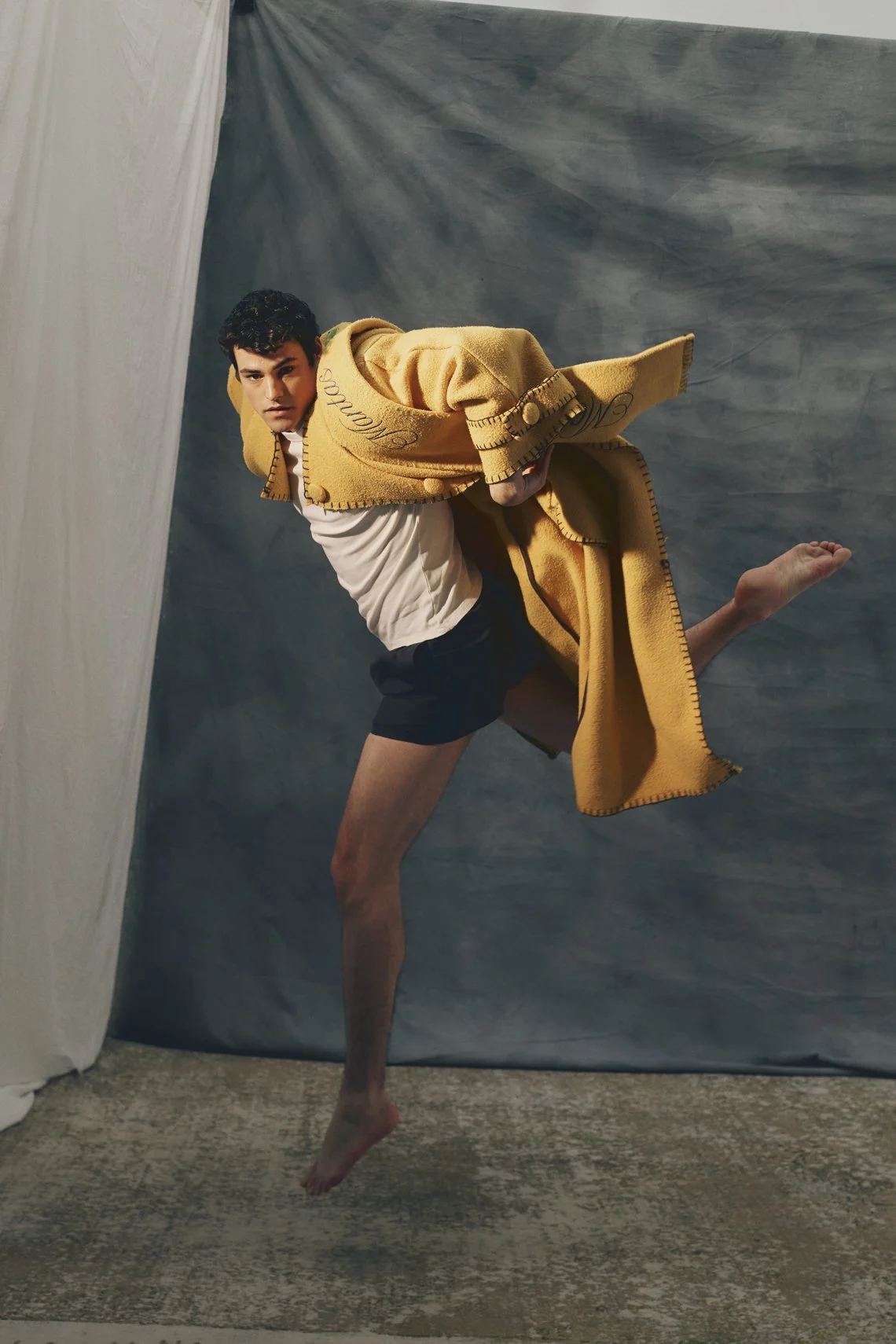
coat PÑLVR
tee COS
short GIORGIO ARMANI ARCHIVE
Looking back, how did Skam España shape your career and identity as an actor?
Beginning my career with Skam España, with the benefit of hindsight, was the most fortuitous thing that could have happened. It was the first project for every actor and actress on the series, and that created an atmosphere of unfiltered excitement and an innocence that cannot be replicated.
Begoña Álvarez Rojas, our director, was the architect of it all. She possessed the rare instinct to initiate us into this beautiful, often brutal, métier through kindness, tenderness, an invitation to play and, above all, a radical simplicity and humility. I think of her constantly when I wrap a project now, the lengths she went to in order to shelter us from the less poetic realities of this profession.
SkamEspaña, and everything Bego instilled in us, has defined how I inhabit a set today, meticulously prepared, conscious that it is, first and last, a collective act. Even within a pronounced hierarchy, each of us is indispensable to the narrative. It’s about surrendering, body and soul, to the immediacy of a sequence, whilst cultivating an atmosphere and a complicity that make everyone want to return the next morning.
We are profoundly privileged to belong to this rather magical craft, and on SkamEspaña, we felt it in every frame. I must also credit Jon de la Cuesta, one of the series’ writers, who, years later, would be instrumental in my involvement Oasis. SkamEspaña altered the course of my life and continues to do so. Still now, people stop me from time to time to speak of it. That, in itself, says everything.
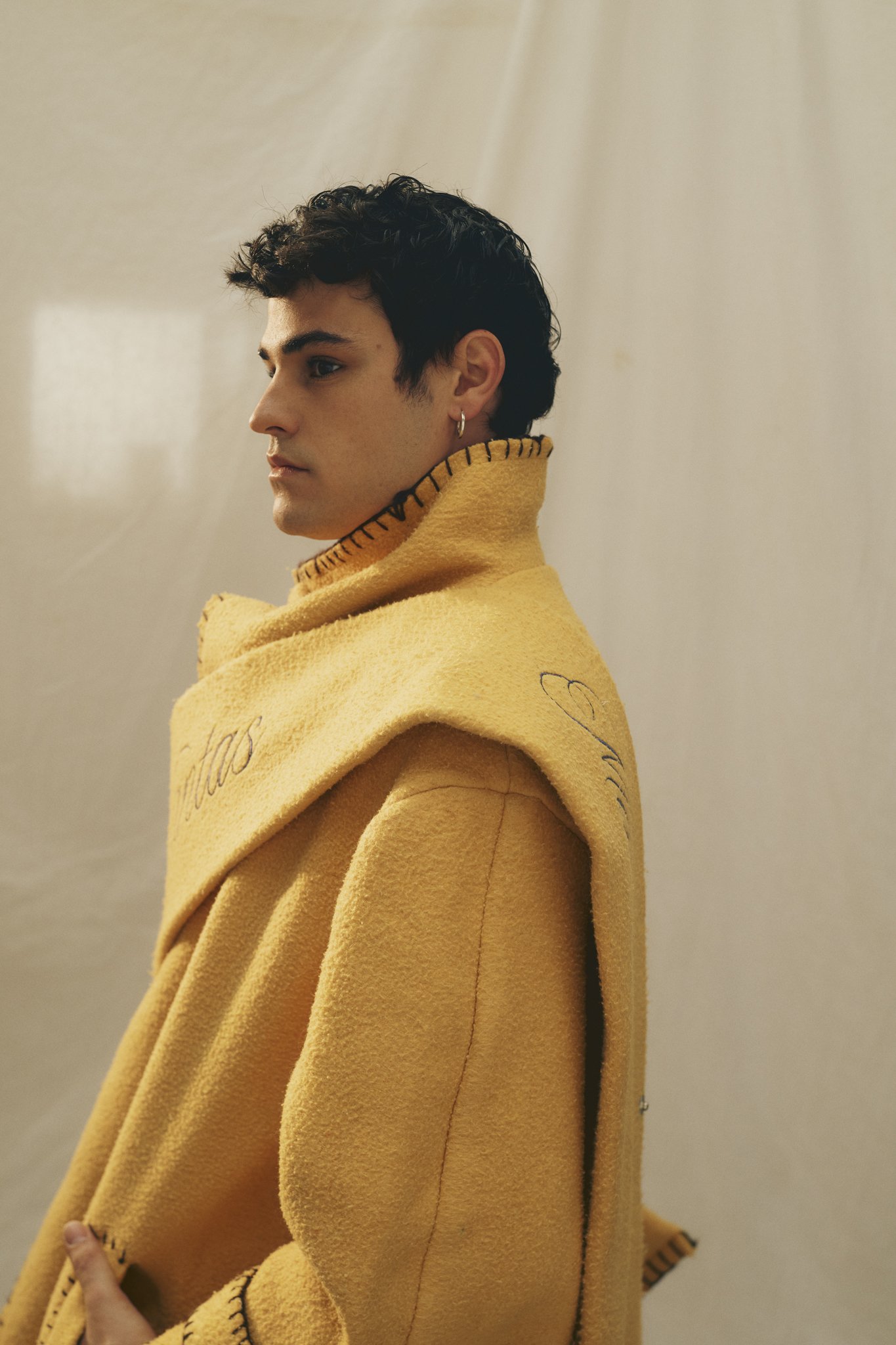
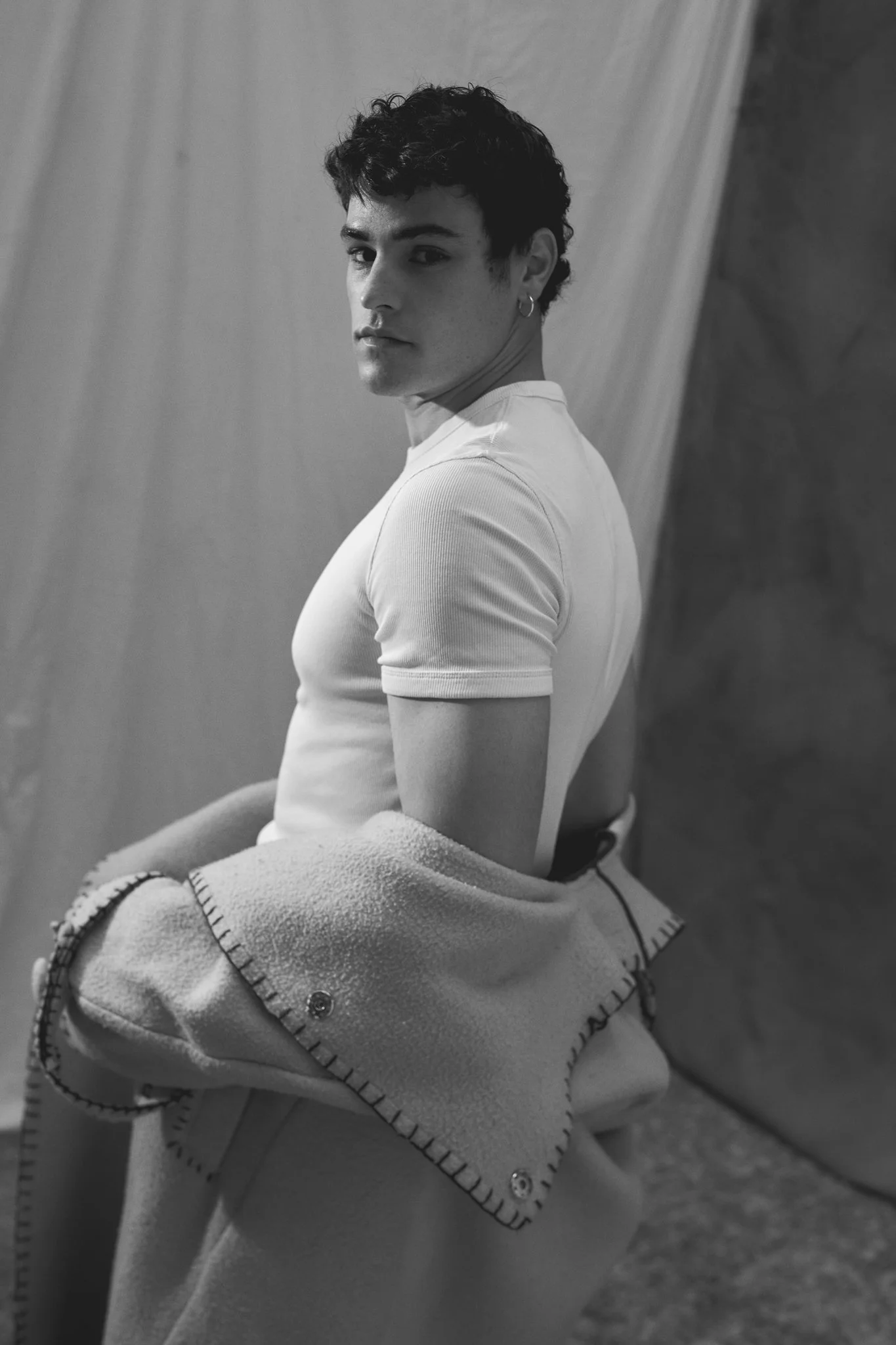
coat PÑLVR
tee COS
short GIORGIO ARMANI ARCHIVE
What attracts you to a script or character at this stage in your career?
What compels me toward a script or a character is my inability to resolve the questions the story, its conflict, or what the character’s behaviour provokes in me. The less clearly I can articulate what I think or feel, the more seductive it becomes. Some films and series present a thesis on the world and set out to prove it. I’m drawn to those that offer a vision and inverse a proposition and its contradiction. Where there is no contradiction, there are only answers. Where there is great contradiction, there are dangerous questions. I believe questions expand us, pulling us further from inherited beliefs about the world, about human behaviour, about society. Only then does identity shift. When we integrate contradictions, we evolve as humans, as artists. A mentor, the formidable Inma Nieto, once told me, “Certainties have very short legs.” I couldn’t agree more. Short legs travel slowly. Ours is a craft of vast distances.
There is a certain peril in interrogating these questions, but that is the privilege of art. We can confront dangerous terrain from within the safety of the collective and the imagination. That peril is precisely what I seek in a script, in a character.
What was it like transitioning from a youth-focused series to more diverse roles?
That transition, though incomplete, is undeniably underway. It’s bound to one’s maturity, and to how that maturity is read by producers, directors, casting directors. I have a particular challenge. I look 22 at 27. I joke that it’s the reason I work. In truth, I’m currently filming a series in which I feel I’ve stepped into a more adult territory, one that feels congruent with my internal landscape. Things arrive when they must, even if, through the impatience of passion, the trajectory feels slow.
I also believe teen dramas are vital and deeply pleasurable to create. Firstly, for the company, castmates who often become inseparable friends, which is a kind of miracle. Secondly, for the responsibility, the chance to articulate the right questions for young people now, so they might avoid the same bruises, or at least come away with softer ones. Series possess an extraordinary power to transform, especially the young. A teen drama deserves the same rigour and intelligence as those centred around adults. Fear and hope are no less acute at seventeen than at forty. The ground trembles beneath your feet just the same.
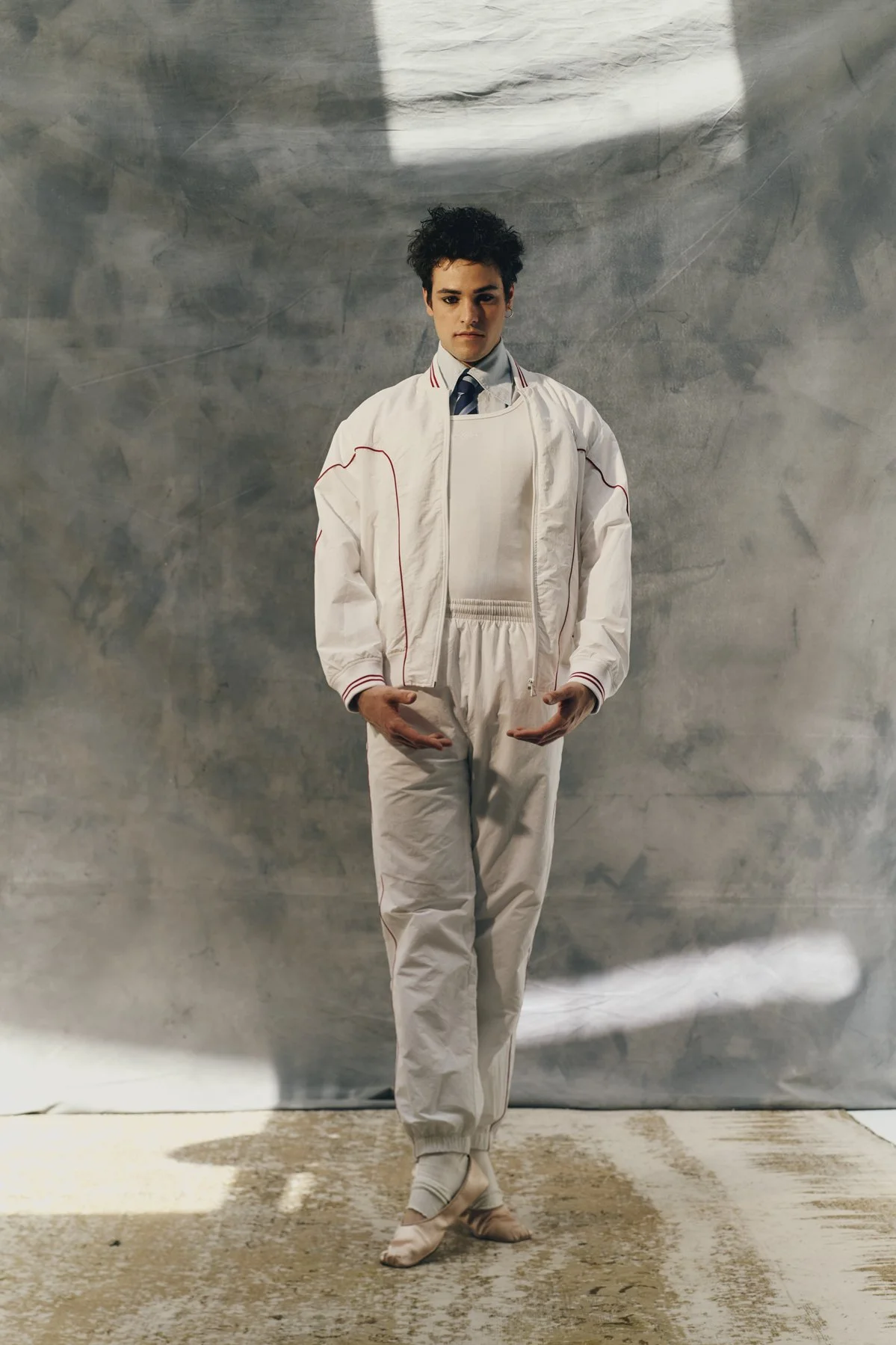
shirt LEMACHET
tank top CODE22
tie SANDRO
tracksuit LACOSTE
shoes MATY
What can you tell us about your role in Oasis and what drew you to the project?
Oasis has been one of the most defining projects of my life. Not merely because it was my first lead, but because the producers, writers and directors invited us into a truly collaborative process, two months of rehearsal, shared authorship, each of us given voice over character and story. Add to that a crew who gave everything, every day, and a cast I’ve seldom seen so precisely assembled, and we were able to render characters of real depth, real humanity, focusing on all that remains unsaid.
My character was sculpted in dialogue with every department. Together, we layered the nuances that made him human. As a company, we sought the opposites in everyone, ensuring the privileged weren’t simply villains and that their pain was visible, and that the “good” ones carried their own demons, their own fear.
We became a unit so close that the actors and actresses still gather whenever possible. Filming in Tenerife was a gift, the shared hotel, the nights of shooting and repose, forged something unbreakable. Even now, we show up for each other’s premieres, dinners, nights out. We’re genuine friends, which is rare for a project months on. Finally, sharing this passion again with Berta was a dream.
How do you prepare for leading roles compared to supporting ones?
It’s a question I could answer through Oasis. When I was cast, I thought “I’ll arrive day one with the entire season memorised, the character fully formed.” Reality was different. On a six-month shoot, exhaustion set in and I found myself learning next-day scenes the night before. Often, we had to solve the text on set, decoding its riddles in real time. You’d go home, replay the scene you’d just shot, and realise you’d have done something differently. That stings. Theatre doesn’t do that, you have tomorrow.
That’s when I understood David Pinillos, our first director and my closest collaborator in rehearsal. He spoke of “programming” the character, constructing the person in every dimension so that, whatever shifts on set, a line change, a new action, the character responds organically, without forced adjustment. Those rehearsals were invaluable, they let me embrace last-minute shifts, to relish the immediacy.
You serve the narrative. Many scenes are just walking a corridor, observing a room, holding a look. The obsessive actor in me wanted more. Just looking felt insufficient, but I quickly understood that was the work. To walk. To look. To do nothing that didn’t serve the story. I often caught myself performing for myself, not the piece. The directors guided me back.
Supporting roles, by contrast, grant you time. Time to deepen, to question further. Their arcs are usually compressed, so each scene contains its own journey, less corridors, more trajectory. That is a joy. The protagonist’s arc is a mosaic of minute scenes, reading that map with perspective is harder, less immediately gratifying, but very fulfilling in the end.
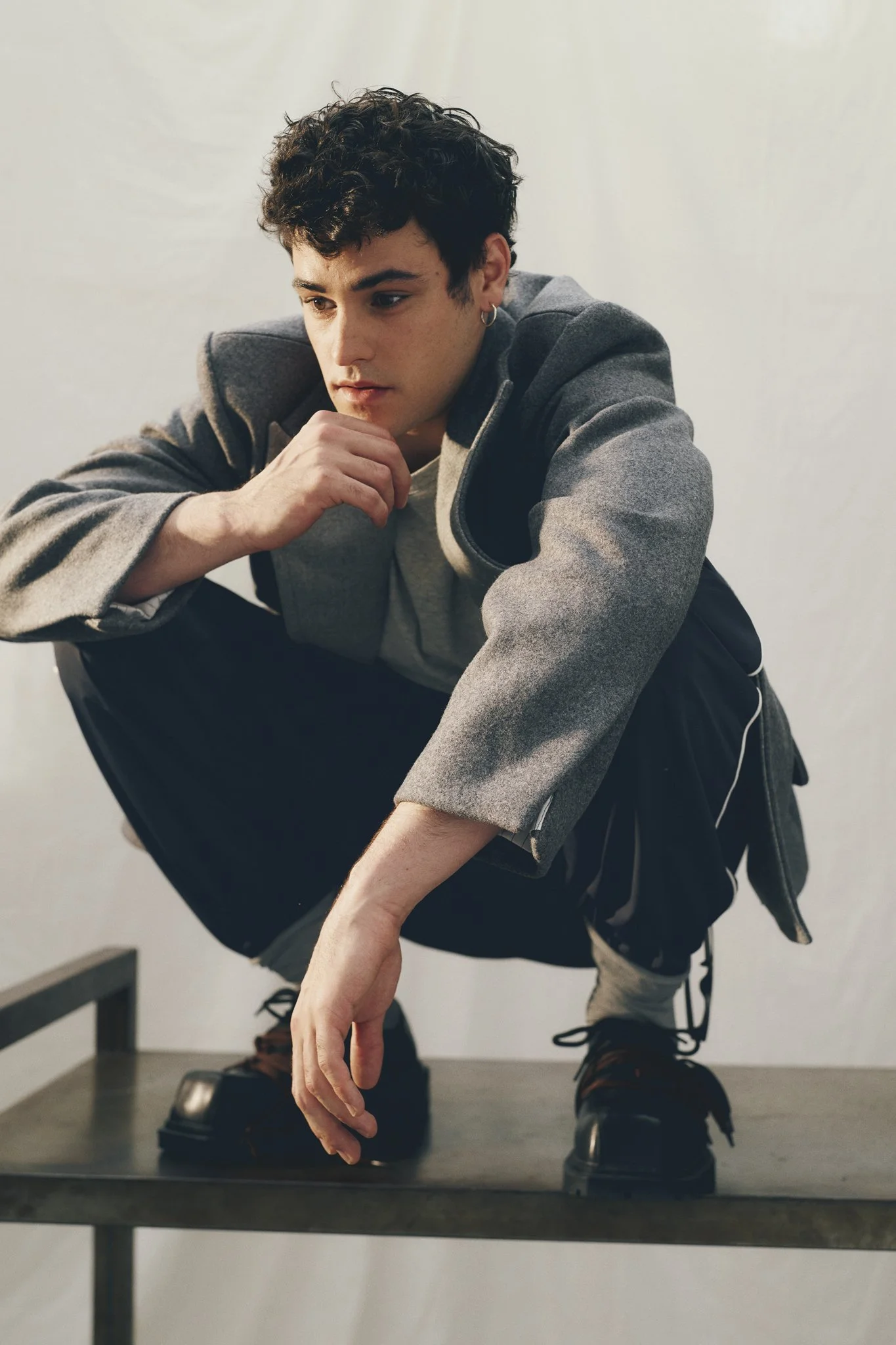
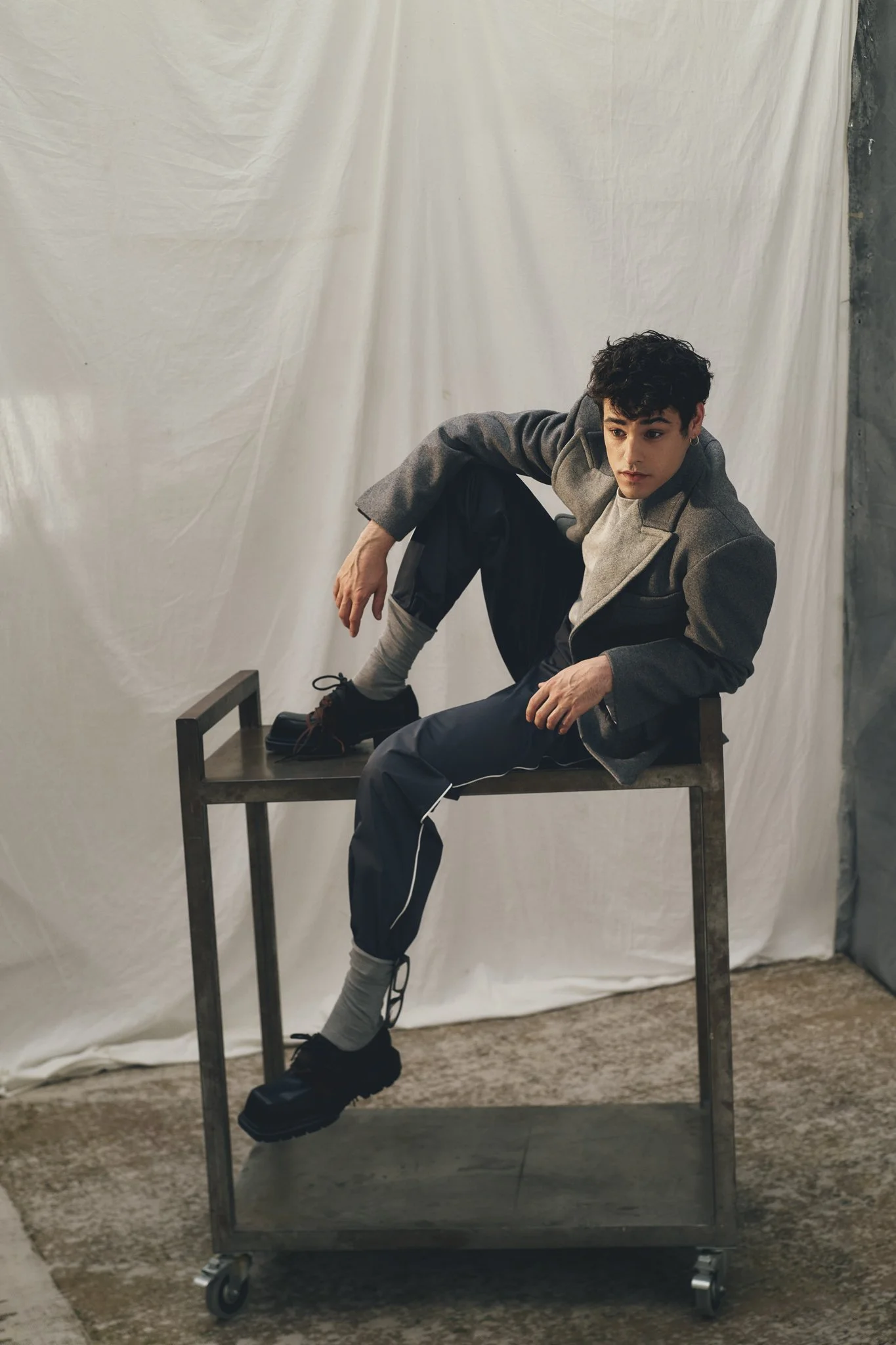
pants LACOSTE
tee CODE22
blazer RUBEARTH
shoes PAT EQUILUX
glasses PRADA LINEA ROSSA
What challenges have you faced as a young actor in the Spanish industry?
None that any actor or actress, young or established, hasn’t encountered. Perpetual rejection. The glacial pace. The disproportion between the labour you give and how it’s valued. The droughts of work, the doubt it breeds in you, in your family. Watching immensely gifted friends pour drinks to survive. It is a complex, exacting profession demanding relentless work, internal and external. If it weren’t worth it, no one would persist. Just as nothing is more painful than seeing a friend unable to live their passion, nothing is more profound than seeing them on stage, inhabiting it. One necessitates the other.
How do you see the Spanish audiovisual landscape evolving globally?
I feel an immense pride in being part of Spain’s audiovisual and theatre landscape. I wouldn’t trade it for any other. We’re in a moment of expansion, film and theatre both, and it’s inseparable from the space women have claimed in this industry. The diversity of films each year, the number of female directors at the forefront, has brought a long-awaited freshness that, quite simply, draws cinema closer to life. Spanish films travel more, and are recognised abroad. Three Spanish films in competition for the Palme d’Or at Cannes this year, that’s not coincidental.
We have a formidable industry, departments of extraordinary talent. In an era of war, hatred, ferocious inequality and the rise of fascism globally, cinema is a counter-power we must not abdicate. We must protect it, for the generations to come.
There’s also been a disconnect in this country between the public and its cinematic history. A prevailing scepticism, especially among younger audiences, toward classic Spanish cinema. Yet immerse yourself in Buñuel, Berlanga, Saura, Garci, Camus, Almodóvar, Cuerda and so many others, tragically overlooked, and you confront the magnitude of our cinema, its singular identity. We, the younger actors, must turn our gaze there too, and advocate for a renaissance of the films that speak of our parents, our grandparents. That cinema is us. There are masterpieces nearly forgotten. Too often our work is more revered outside Spain than within. This saddens me deeply.
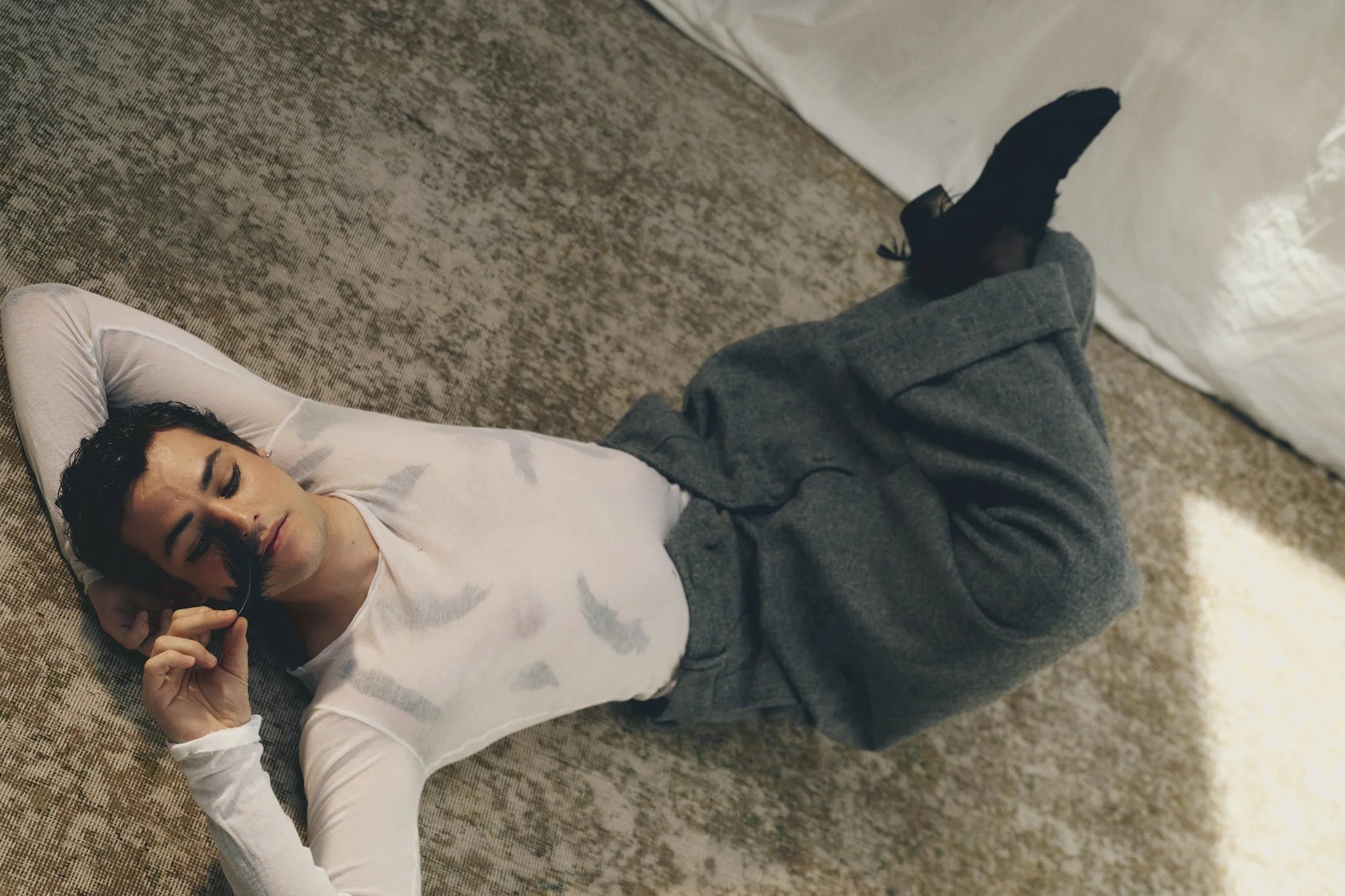
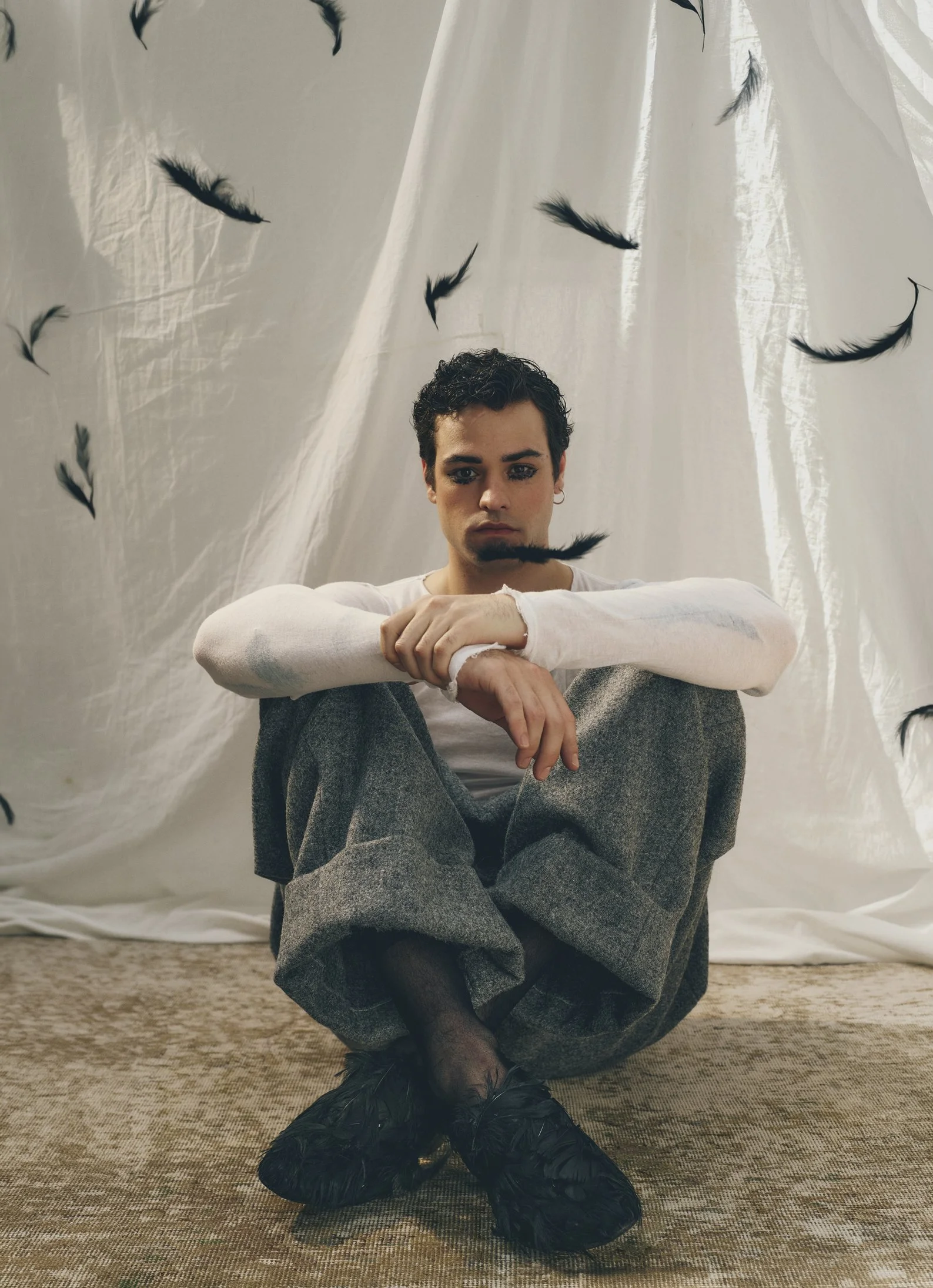
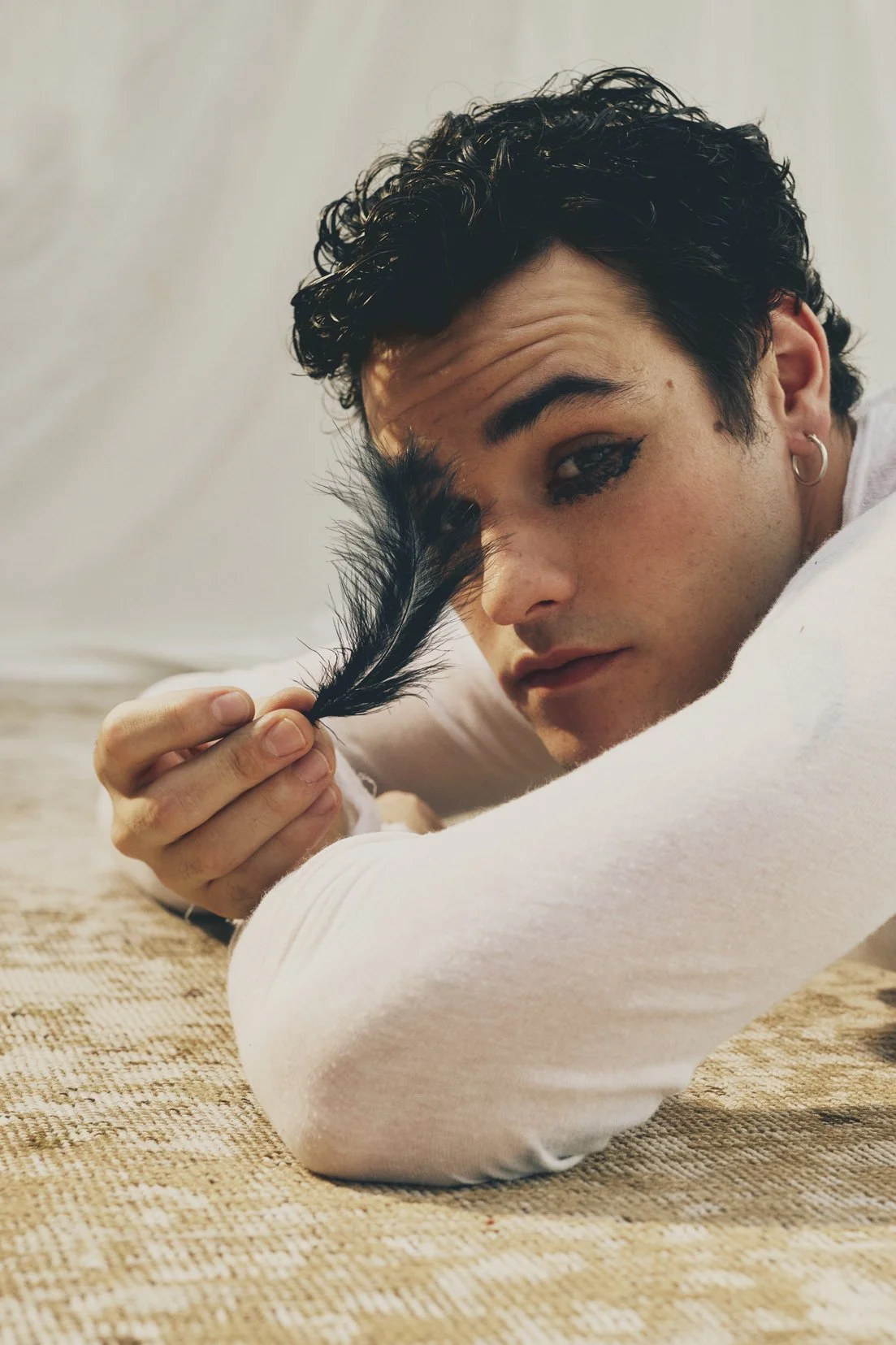
top VINTAGE
pants and shoes NAVALES.000
How do you balance artistic ambition with audience expectations?
The question is intrinsically linked to scripts. Some are engineered for mass consumption, built on proven formulas. Others are born from an urgency to articulate something, from collective experimentation. Clearly, these realities collide. We need to live, to earn, to find stability, difficult in this profession, while also needing to feel fulfilled as artists, engaging with unresolved, “dangerous” questions. The actor’s craft lies partly in locating what moves us about art within any project. It’s not always easy, but there is always something, a way to deepen, to humanise, even to dignify a script designed solely for numbers. That tension is constant, and it’s beautiful to fight so that your character has interiority, a past, a trajectory, and becomes something that might connect, reflect, or move someone, anywhere.
Do you have a dream genre or role you’d like to explore next?
For some time, I’ve been intrigued by roles that revolve around power, a politician, a barrister, a CEO. Delving into that world, so distant from my own, fascinates me. The psychology of power, why people act as they do when they hold it, raises questions I find irresistible. It would be a compelling journey.
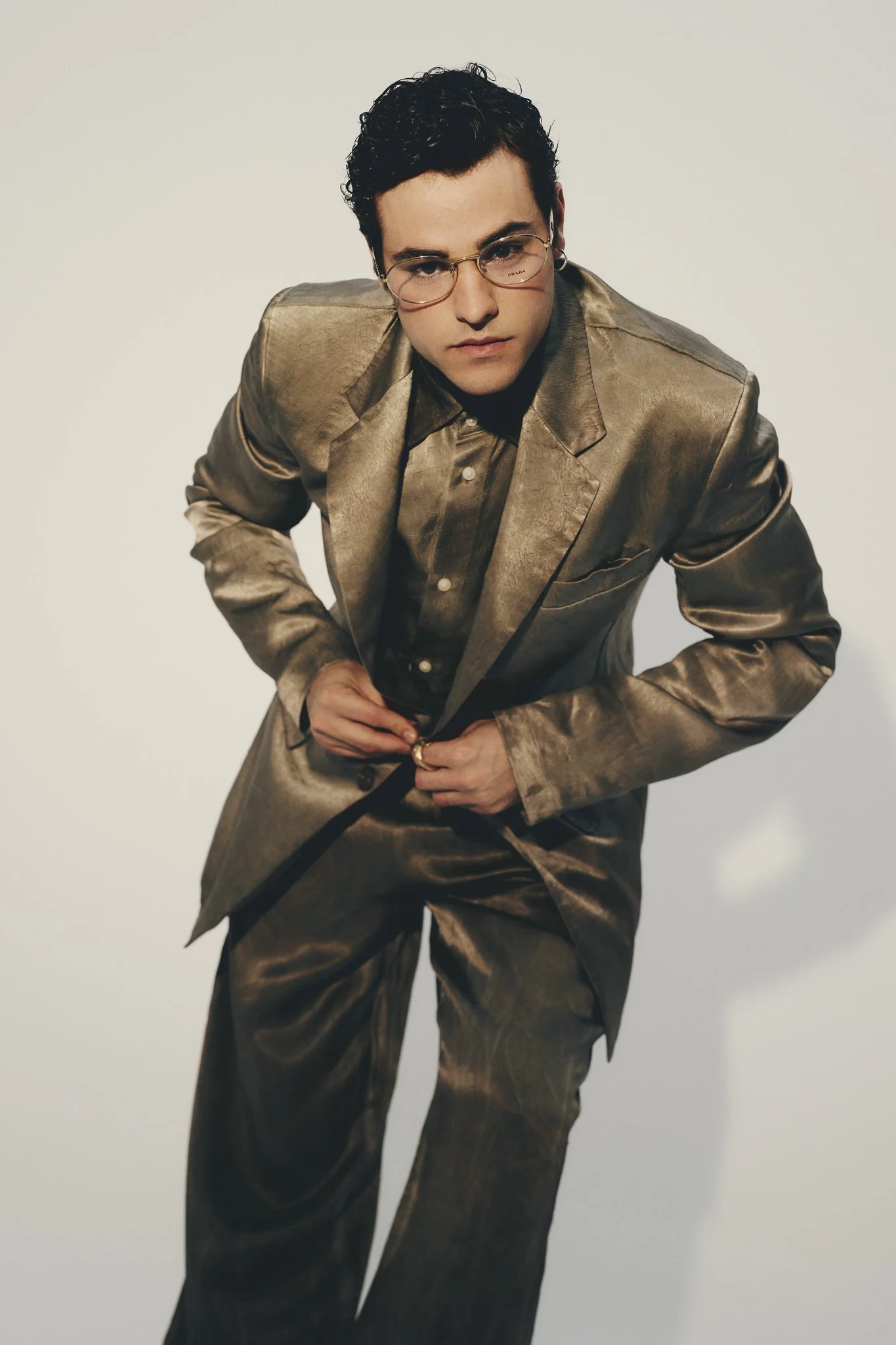
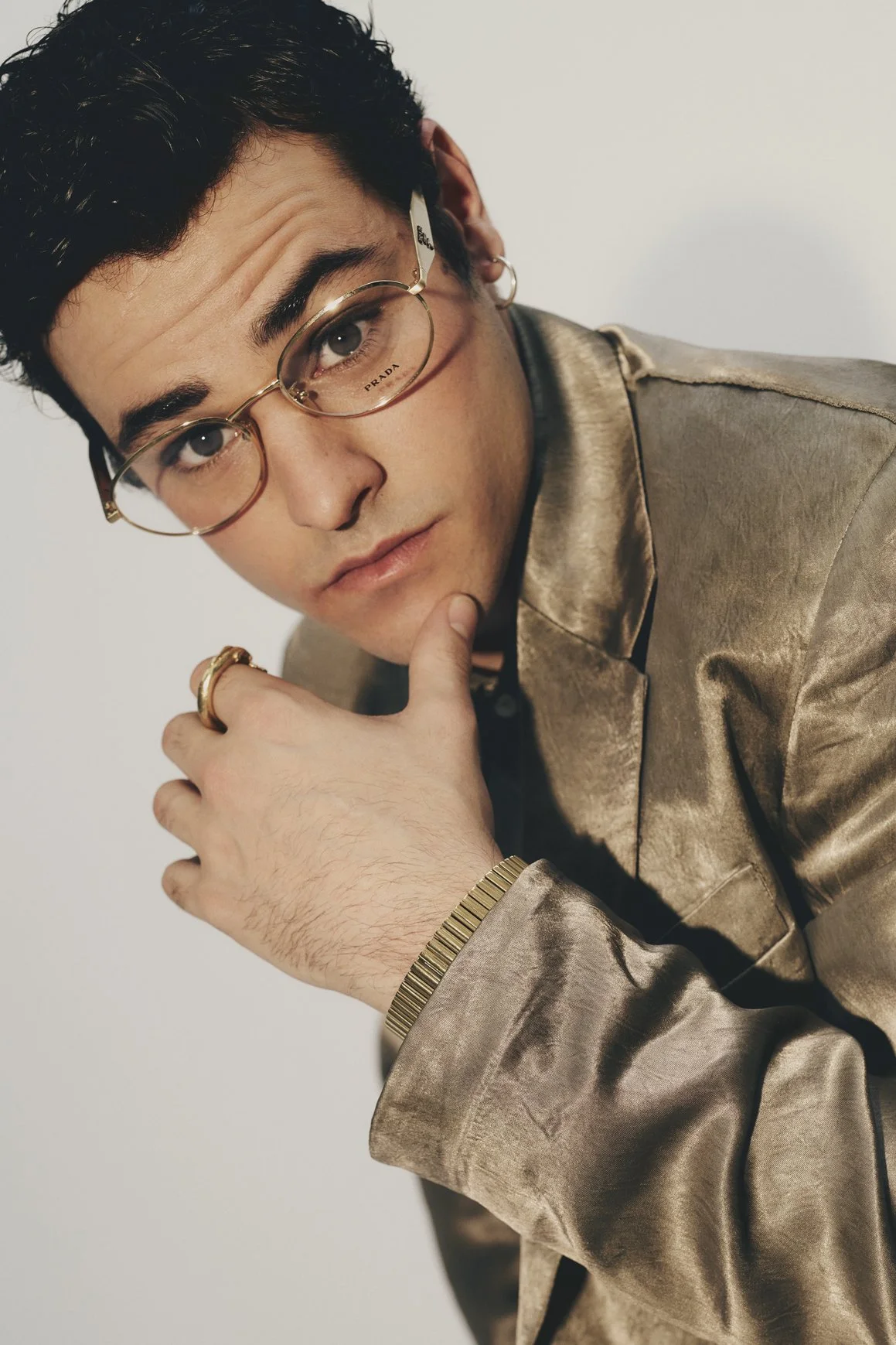
full look DIESEL
glasses PRADA
What inspires you outside of acting?
To answer fully would take pages. In essence, first, my friends and the profound love we’ve built are my greatest inspiration. Second, acting is a way of life. You never cease being an actor, you begin to see existence through a lens of pure curiosity. Everything, every minute, demands to be known. The street, people, family, love, all of it becomes under attentive, non-judgemental observation, an enthralling odyssey.
Beyond acting, I produce music, another passion of mine. Alone or with others in the studio, investigating sound with synthesisers, instruments.
Writing is a growing compulsion, and with it, the desire to direct. I’m in the process of completing my first short film. I trust that life and instinct, coupled with relentless work, will lead that curiosity where it needs to go.
And finally, my oldest passion, enduring since childhood, the sea, and all its mythologies.
How do you handle pressure and visibility at a young age?
The management of visibility, or its absence, and the pressure of this profession is remedied through training. The more prepared you are, the more you’ve entered spaces to discover, to fail with dignity, to experiment, the more steadiness you carry onto set and into silence when the phone doesn’t ring. I’ve felt most like an actor in a rehearsal room. I’ve trained in different countries, cities, and I will never drift away from that practice. To believe you know everything is death for an artist.
The other essential anchor is a close circle of healthy relationships, spaces where you can exist in full, safely. Loving relationships in which you can weep and laugh without restraint. With that, when you inevitably become a bit of an idiot, they’ll tell you, tenderly, and you can return to the humility required to be who you truly are.
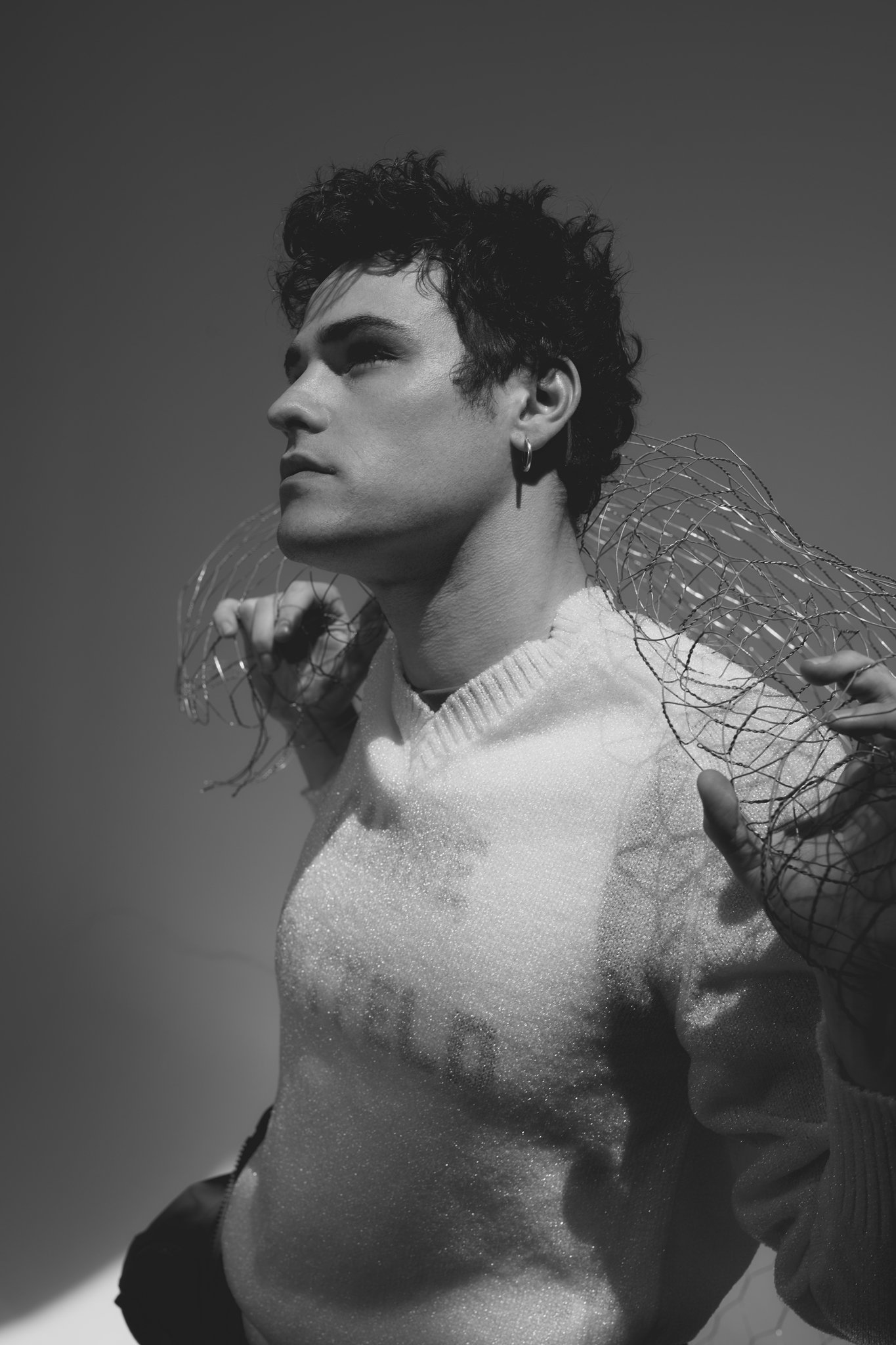
t-shirt ALLED MARTINEZ X KARL LARGEFELD
jersey OUR LEGACY
jumpsuit VINTAGE
TEAM CREDITS:
talent TOMY AGUILERA
photography ANDRÉS GARCÍA LUJÁN
styling JESÚS LAFUENTE
hair and makeup MANU MORENO using L’ORÉAL PROFESSIONNEL
studio LA MADAME
photography assistant ISABEL ANDUEZA
styling assistants GEMA GARCÍA and ALMUDENA ESTRELLA
editor TIMI LETONJA
editorial director and interview JANA LETONJA
