IN CONVERSATION WITH TONY ABEYTA
interview by JANA LETONJA
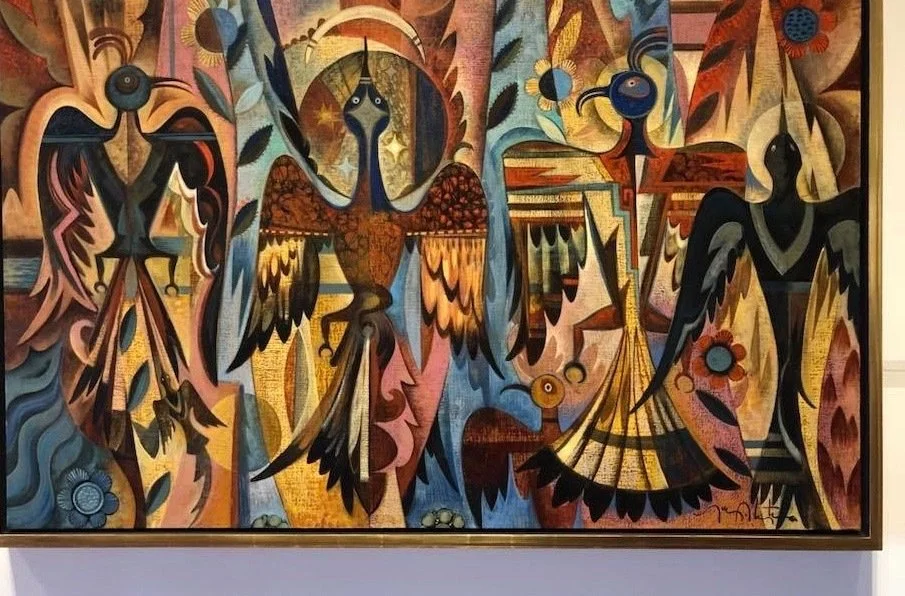
HOSH unveils an exclusive capsule collection in collaboration with contemporary Diné artist Tony Abeyta, translating his expressive, land-centered visual language into wearable form. Known for paintings that bridge Indigenous cosmology and Western art traditions, Abeyta brings his exploration of landscape, mythology, and figurative cubism into Birds of a Feather, a limited-edition design featuring the Thunderbird, Waterbird, and Peyote Bird. Rich with symbolism—wisdom, protection, prosperity, and inner knowing—the capsule reflects a shared commitment between HOSH and Abeyta to honor Native narratives while engaging contemporary audiences through art and fashion.


How did the collaboration between HOSH and Tony Abeyta first come about?
A cold call from Tom Tarica turned into a brainstorming conversation. Tom called me while I was driving across the desert and we spoke at length about his idea of starting an indigenous apparel line featuring artwork merged with comfortable organic cotton shirts that each artist had free license to do what their creative muse directed them to do. I thought it was a great idea with the right group of established artisans. We became famous friends and immediately saw the potential to do something unique and meaningful. I wanted to advise Tom as a friend and there has never been a conversation of how to make it profitable, only to embark on a passion project that would be appreciated by a niche market for indigenous apparel, one that spoke about native culture and personal expression.
What felt most important to preserve when translating your paintings into wearable form?
Individualism. I would be one of several dozen other artists. We all work differently and our voices in the art world are unique. I could do whatever I wanted and that's what I did. My image was personal, but I wanted to make it for everyone. Art, body, spirit and fashion merged into a simple shirt that exemplifies a vision of my culture and artistry.
Your work often straddles Western canon traditions and Indigenous representation. How did that dialogue shape Birds of a Feather?
My work is always lyrical and based on mythologies explained to me in my youth. They retain my memories from childhood. I've been to several art schools and learned about color theory, compositions and design. I experimented with every tool I could employ and then retreated to some essential idea of my love for indigenous mythology and spirit. The birds exemplify these ideas and celebrate our connection to it all.

The Thunderbird, Waterbird, and Peyote Bird carry deep symbolic meaning. Why were these figures central to this capsule?
They are all mythological beings, each powerful and elemental. I see that they have a long history to indigenous people and yet they don't exist in the real world. These birds are stoic and eternal. They are well respected in the pantheon of our world and yet they can be forgiving and gentle and fragile in a world of disbelief. They emerge in my artwork and are translated into this design that surrounds whoever wears it, serving as symbolic protection from a world where we can’t discern what truth is at times.
How does Indigenous cosmology inform the visual storytelling within this collection?
Navajos believe we are guided by the stars. They determine water cycles and when we are born, guiding us throughout our life. Often in urban areas we can't see them anymore because there are so many lights reflected back at us. When we escape urbanity they are always there, immovable.
You’ve described painting the land as though you are part of it. How does that philosophy translate into fashion?
Fashion is an extension of the body and it always gives us individual agency. We make choices on what we wear and when we wear it. So many people choose clothing that exemplifies an alternate vernacular. Sometimes it’s a western theme or even a worker man’s attire in the office place. We choose what place we want to be part of. I am an artist that paints the land and I am ruled by its color palette. I often choose the colors that surround me. Today I am wearing a vintage yellow, and tomorrow I may choose a sky blue. I want to be part of what I paint and naturally it brings me closer to it.

What does it mean to create a piece that surrounds the wearer with what you describe as “quiet guardians”?
The images that are within the design should act as a banner that surrounds the body front and back. its highly symbolic and should radiate a sense of happiness. Like words, images have power.
How does this capsule expand the dialogue around Indigenous representation in luxury or contemporary fashion spaces?
Indigenous art is often depicted in contemporary fashion, though usually uncredited. With Tony’s collection, it’s another step in the right direction of crediting the artist and letting them tell the story they wish to tell. We’re proud and grateful to collaborate with Tony.
How do you hope Indigenous audiences will feel when they see and wear this piece?
A sense of pride and acknowledgement. Most of all, I hope it reminds them of their own unique narratives, their memories.
In what ways does this collaboration challenge or redefine the boundaries between fine art and wearable art?
Art in contemporary culture has many mediums and has found its place on skate decks and apparel. It belongs to the world that sees it and can bring art to the mainstream world. Art that cannot leave its frame or a gallery wall is a prisoner of commerce and can limit the possibilities of appreciation.
Your practice bridges abstraction and narrative. Where does this capsule sit within your broader body of work?
The paintings are always evolving, and abstraction is always more essential and expressive for me. It can tell a story without words or explanation. It can just be a feeling.
How important is exclusivity and limited production in preserving the integrity of the artwork?
When something is rare it can be more precious. In the world of record collectors, rare can add an air of preciousness. When things are mass produced, they can lose their essence.