
IN CONVERSATION WITH VALENTINA MORETTI
Interview by Samo Šajn
Valentina Moretti builds worlds before she builds audiences. The LA-based Mexican artist, multi-instrumentalist, and producer launched CyberFetish Records not with a press strategy, but with a mythology: a cyberpunk opera, vintage synthesizers, and a visual language rooted in fetish culture, science fiction, and the full complexity of her own trans identity. The label’s debut release arrives through Soy Machin, a side project that reclaims a Spanish slur used to mock trans women and turns it into a declaration of artistic freedom. We sat down with Valentina ahead of the release of “Doctor Machin” to talk about what it means to build something underground, honest, and built to last.
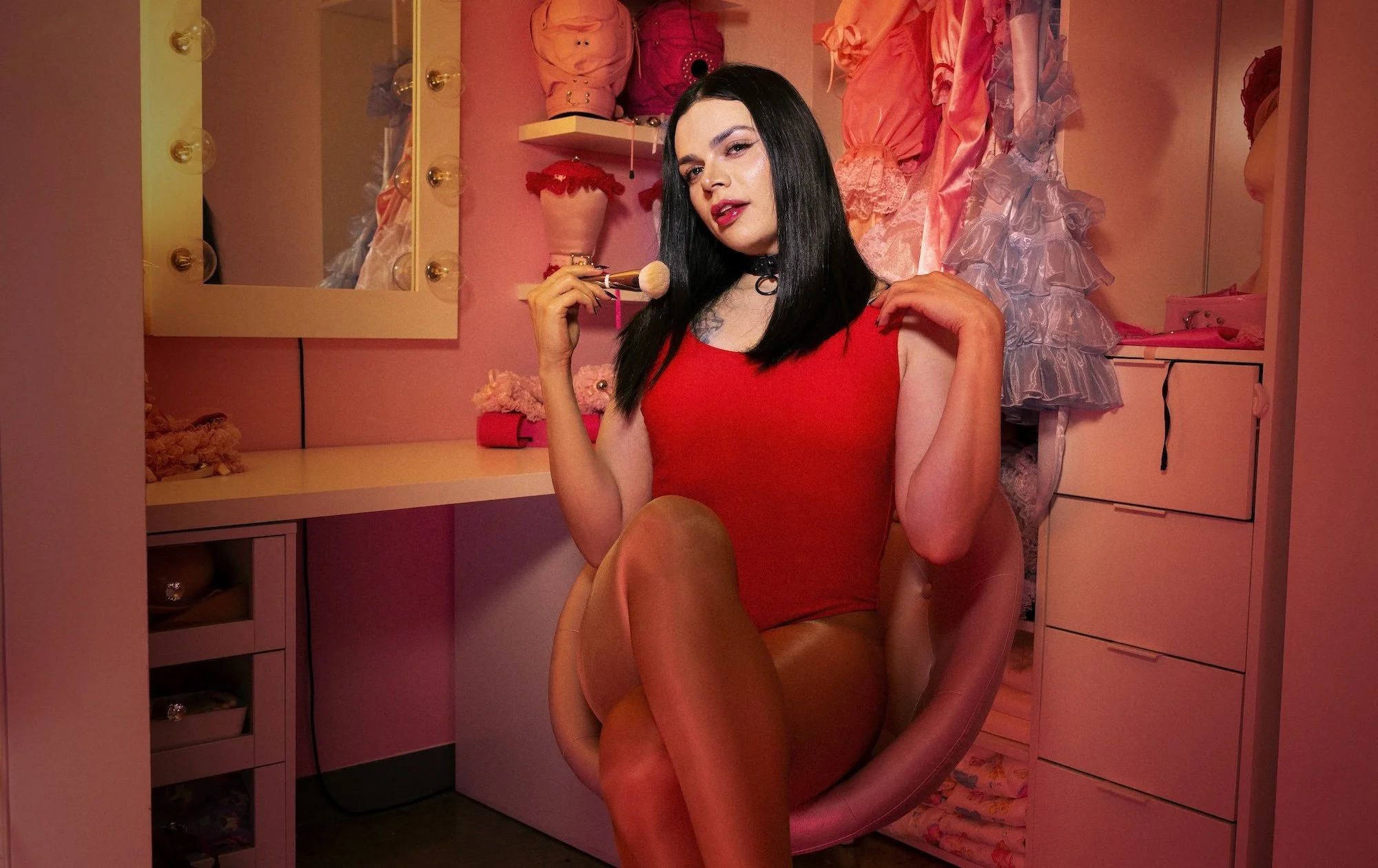
CyberFetish had a fully formed visual identity before its first record went public. How important was it to build the look of the label before the sound reached the world?
The sound and visual identity came together at the same time. It was important to have a musical identity paired with a visual one from the start. It began with a theatre play I was writing that explores gender and sexuality in a world that can make you feel ashamed of your deepest desires. A cyberpunk/goth opera. Think Repo! The Genetic Opera meets Blade Runner, but queer, with all the music performed live on vintage synths.
Since a theatre play takes a long time to develop and I couldn’t wait, I decided to condense part of the first act into a song I could release alongside a new music project.
At the same time, I was in talks with Mark about creating a label that could help indie artists express themselves. I told him how I had struggled to release my music because labels didn’t see it as commercial enough, or because I’m trans, and how that pushed me to create my own label, Rex Records.
Mark really understood my story. As a songwriting camp director at SXSW, he works closely with writers and sees firsthand how difficult the industry can be for indie artists. I’m not kidding when I say some of us struggle just to keep a fridge full of groceries.
With that in mind, and with the vision of sharing music that feels different, we created CyberFetish. We want to support indie creators, writers, musicians, and designers, and push the boundaries of what it means to make music and run an independent label. Most importantly, we want to create a safe space for artists to express themselves.
The Soy Machin aesthetic draws from fetish culture and cyberpunk futurism. Where did that visual vocabulary come from? Were there specific designers, films, or artists that informed it?
It’s really a combination of everything I am and everything I love. It builds on my Valentina Moretti project in terms of retro-futuristic sounds and visuals, anime, and my passion for sci-fi, and pairs that with a more fetish-driven side of myself that I hadn’t explored in my music before.
The list of influences is huge. It’s basically my whole life. But if I had to name a few, I would say films like Blade Runner, 2001: A Space Odyssey, and Alien; musicians like Kraftwerk, David Bowie, Front 242, Depeche Mode, Nine Inch Nails, and Gary Numan; anime like Ghost in the Shell, Akira, and Gantz; visual artist Hajime Sorayama; and horror films like Hellraiser and Cat People.
Most importantly, it comes from my own exploration of gender and sexuality. It’s a very honest portrayal of who I am.
CyberFetish seems to be building with Europe in mind. What does the European audience understand about your work that other markets might miss?
I think the market I come from, Mexico, is currently heavily focused on reggaeton, regional, and Latin genres in general. On top of that, my sound is deeply rooted in vintage synthesizers, which naturally connects more with the European scene, especially considering how artists like Kraftwerk and Depeche Mode shaped electronic music in Europe and globally.
In that sense, my project shares some similarities with artists like Arca, who also comes from a Latin background but has been embraced by European audiences via the US.
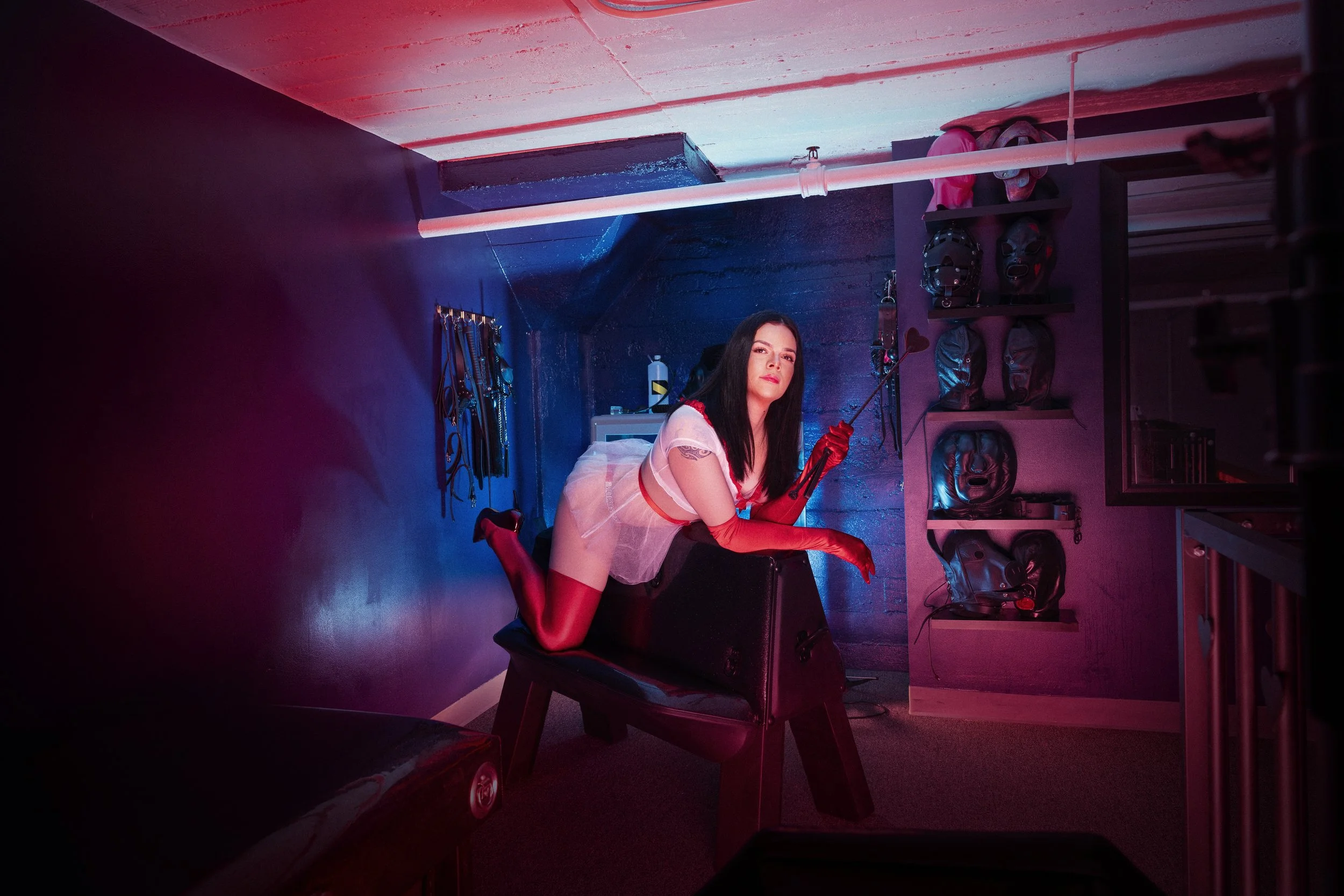
You plan to open CyberFetish to other artists beyond your own projects. What are you looking for? Is it a sound, a look, or a particular way of existing in the world?
Electroclash and Electronic Body Music are key pillars of the CyberFetish sound, but we also release techno, indie dance, and house. At its core, we’re an electronic music label that celebrates all forms of electronic music.
We’re not focused on hits or viral tracks. We’re focused on building a community, a safe space, and a real movement. If your music is weird and interesting, it fits CyberFetish. If it says something that feels taboo in the mainstream, it fits CyberFetish.
You have appeared on Spotify’s EQUAL, Mint, and Pride covers and performed in the Super Bowl LVII campaign. How do those mainstream moments inform the underground ethos of a label like CyberFetish? Do they push against it?
Not at all. In fact, quite the opposite. It shows that being different isn’t a disadvantage, and that opportunities can come even if you’re not following trends. You can represent the underground while still sharing your work on big stages or with major brands.
To be honest, I was surprised that the NFL and FOX Sports were open to working with me as a trans artist making non-commercial music. Being part of a Super Bowl campaign was a huge moment, not just for me, but for the LGBTQ+ and underground music scenes, which are often excluded from spaces like that.
CyberFetish will continue pushing for cultural evolution, creating safe spaces for indie artists, and embracing individuality and freedom of self-expression.
Music, fashion, identity, technology, you work across all of them at once. Is there a point in your creative process where they stop feeling like separate things?
Definitely. At some point, being an artist means sharing your vision and your true self, and that naturally involves all of these elements. That’s one of the reasons I admire David Bowie so much. He didn’t just make music. He engaged with storytelling, fashion, film, and technology, pushing his sound and identity beyond what was possible at the time.
Sometimes music alone isn’t enough to fully express what you’re trying to say, and I think that’s a beautiful part of being creative. I really enjoy working across different forms of expression and media. It all becomes part of the same language.
