
IN CONVERSATION WITH VALENTINA PARATI & CHARLES BOYTE
Interview by Samo Šajn
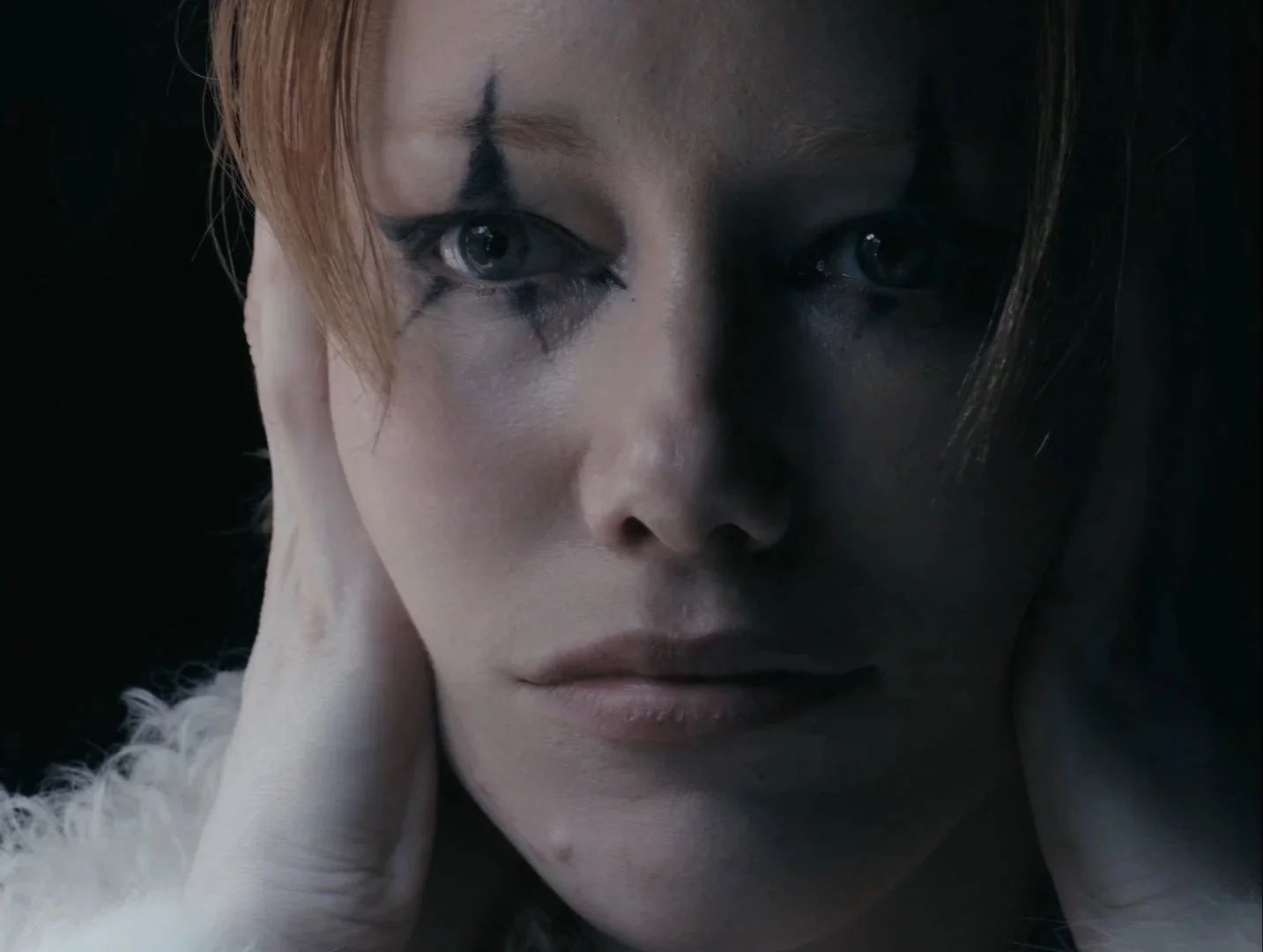
VALENTINA PARATI
Film Director and Screenwriter based in Berlin, holds an MA in Cinema from ECAL / HEAD Geneva.
Val’s work explores the intersection between mechanical and human systems, focusing on the invisible forces that blur the boundary between body and machine.
Her current research examines the family as the primary system of power, with a particular focus on intimacy within abusive dynamics.
Valentina works across fiction, documentary, and music video, and is now collaborating with compelling “villain” characters.
Valentina’s films have been showcased at festivals such as Queer Lisboa, Internationale Kurzfilmtage Winterthur, NIFF, Festival aux Courts, Clermont-Ferrand Market, as well as in exhibitions including CAC Genève (CH), Ciaccia Levi, and Fondazione Sandretto (CH).
Notable press includes Flash Art Italia and an upcoming film screening for Mousse Magazine.
Valentina recently co-founded a film production company, Steel Productions, and is teaching during an upcoming summer school class at AA Architecture School in Berlin.
What first interested you about this project, and what made you want to direct this video in particular?
This encounter with Illspeed happened at a kind of magically precise moment, for our creative worlds to collide.
Making movies is a slow process. You have to be patient. I am in Berlin, working away on a couple of new projects, and I am very restless to bring my ideas to life. Meanwhile, Illspeed is over in Paris/Madrid/US, cooking up this sexy new music project, wanting to frame it through experimental filmmaking as a kind of alias, a way to remain out of direct public view. It was a perfect match.
A music video with the band as the protagonist becomes an almost docu-fiction short film, like the first one I recently made for Slim Soledad. But here, because Illspeed chose to remain physically anonymous, the video opens up into a fully fictional space — a testing ground for scenes I’ve been developing for my feature film.
I’m at a particular turning point in my practice, transitioning into a new phase — bringing together elements that have always been present in my work with newer ones, like dark satire, which Illspeed was equally drawn to.
In the feature film I’m writing, Kennel, the opening scene introduces an eccentric group of metalheads and queers, much like my friends and I — a kind of chosen family. They’re gathered for outdoor karaoke at a birthday party in a trashy rural setting, singing “Meravigliosa Creatura” by Gianna Nannini.
The characters in the Duplicant music video are not those from my film, but the spirit of the scene is resonant and was born there.
Music has always been central to how I write films. Until now, my work has largely focused on machines speaking louder than humans (Spotter 2023, Accaio 2024). So it feels like a natural progression to work with music as the starting point.
At a Q&A for her recent film Alpha (2025), Julia Ducournau put it very simply:
“soundtracks are what characters feel but cannot say.”
It went really well, and Illspeed and I have just filmed Surrender, our second music video together. I’m very happy to share that the protagonist is Arno Frisch, known for Funny Games (Michael Haneke).
If you don’t know him, he is a terrific villain in cinema history!
When you started working on it, what kind of mood or feeling were you hoping to create from the beginning to the end?
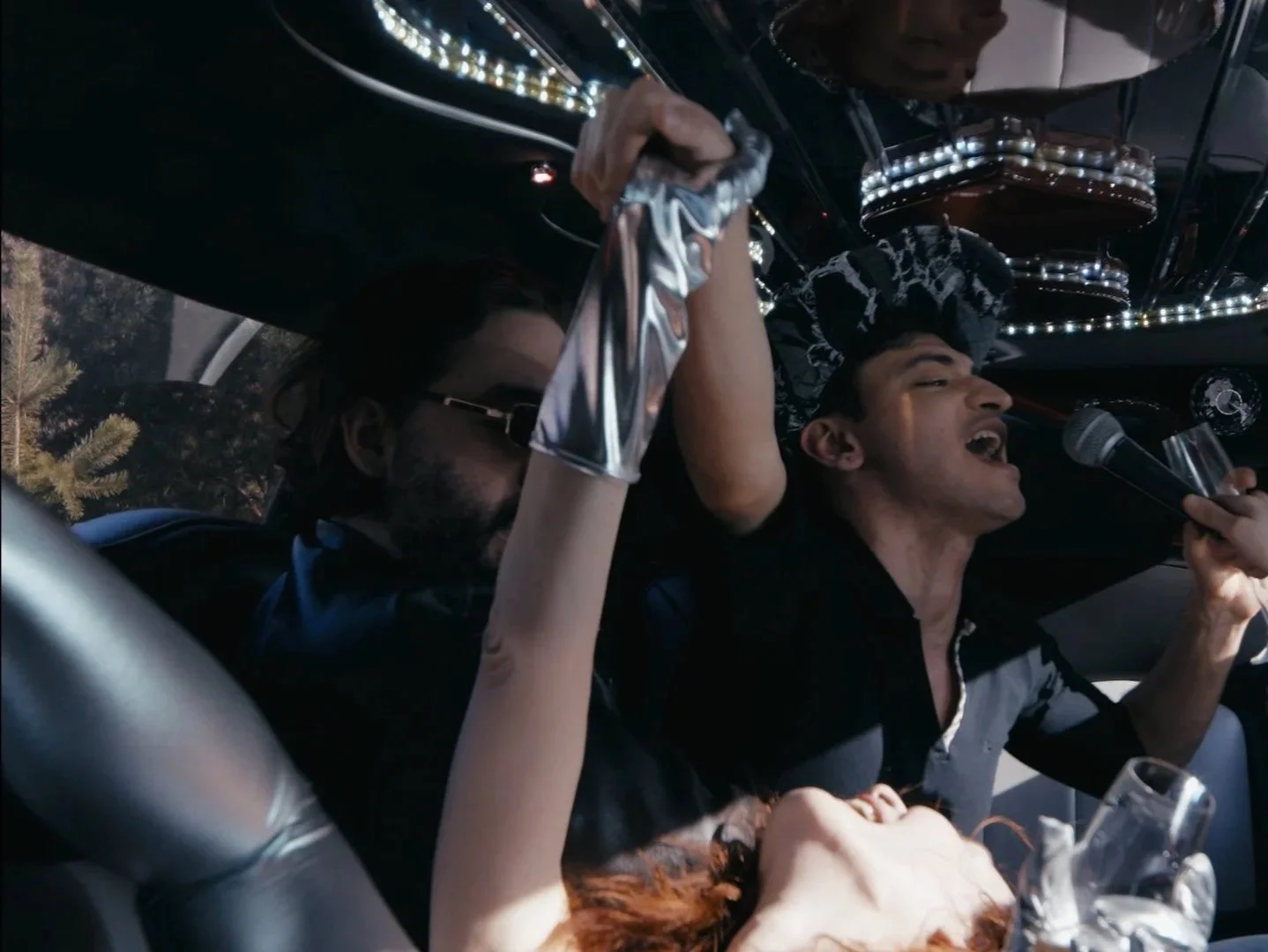
I wanted to work with a karaoke scene — this was the starting point. I imagined a washed-up rockstar who, in order to feel special again (and for some extra cash flow), hosts a private event in a limousine for his last remaining fans, offering them a kind of intimate karaoke experience.
I had watched Rimini by Ulrich Seidl, and I was deeply struck by the character of Richie Bravo. He carries this melancholic energy — someone who has clearly lost something, but for whom performing is still the only way to exist.
Even though the plot is a little sad, it was important that we were not making fun of this character. It is a celebration of some unexpected, “adorable freaks” coming together and connecting.
The casting was very important. Together with Inès, I didn’t want formally trained actors — I wanted real people/actors who bring raw texture to the characters based on their obscure interests.
Each of them brings something unique:
The metal guy: Dietrich Mayer, an artist and self-described “greyhound dad” of Stumpy, working across sculpture and ritualistic interventions in nature. We met in a whisky bar through mutual friends in my metal scene.
The smart and sexy twink: Ramon Guevara, an Italian literature researcher working toward a PhD, interested in Latin American literature, queer theory, and critical approaches to power, marginality, and subjectivity — nerd by day, party star by night. I once saw him wearing a cowboy hat in a club, attracting everyone’s attention with purple lights on his face.
The captivating, ageless siren: Zoe Van Datz, a model and actress with a very strong visual identity and an incredibly expressive face. I think when I saw her in the agency I thought she was interesting, but when I checked her Instagram and her capability to be different in each costume, I was like: she is Poison Ivy in this strange video.
The washed-up rockstar: Charlie Boyte, playing Mr Charles, is my full-time muse. They are a spatial designer and furniture maker from New Zealand. I was particularly interested in building the central character around them. I usually share everything throughout my process with them, and this time I wanted them to not only be inside my ideas but to materialize as this fantastic character.
P.S. I’m secretly deeply in love with them.
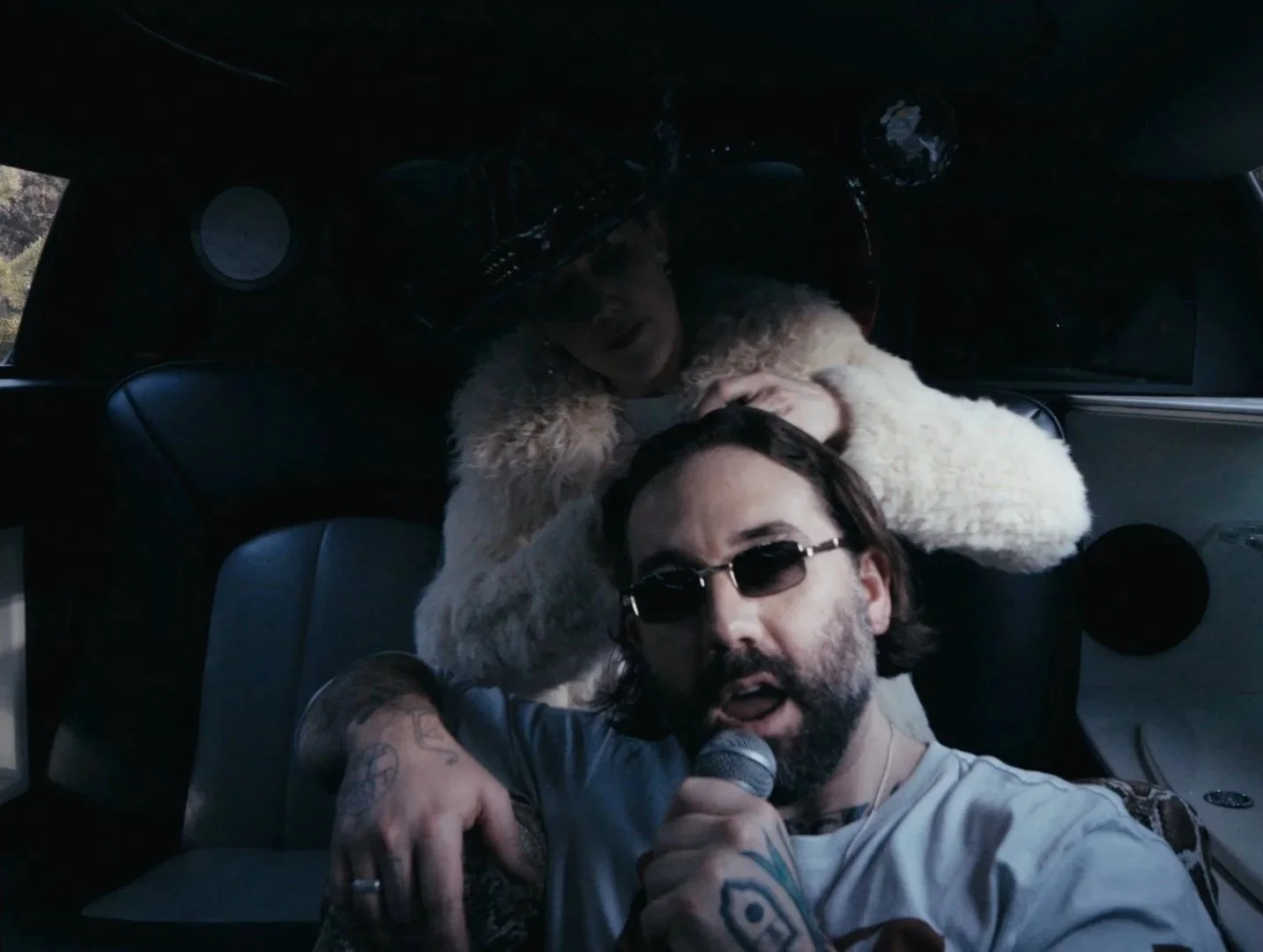
Was there a specific scene or moment that helped everything click into place during the process?
If we speak about the process from the start, things really clicked with Illspeed when I realized how invested they were in building the project around strong, obscure, memorable characters.
Naturally, I find it very exciting that the band wants to remain behind the scenes and let the identity of the music itself take on the life of fictional characters we dream up together. I love the ambiguity and mystery around the idea that the band might have a double in the video — someone who may or may not be them.
I had literally just founded Steel Productions with my close friends (Daniele Lucchini, Filippo Vogliazzo, Moritz Jekat) when Illspeed proposed the project to me. We are all artists working with film in one way or another, so our idea was to build a film company focused both on cinema and commissioned work with artists and musicians. Illspeed has been our dream first client as a production team!
From the first call, Illspeed and I were on the same wavelength — trading wild ideas and trusting each other to push them further. It never felt like work, more like play; the briefings felt like freestyling with friends.
If we speak about the moment on set: there’s a game in Italy called “Uno, due, tre, stella” (similar to freeze). I decided to film this scene first to break the ice. It created an immediate connection between everyone. Suddenly the energy shifted, and the group became real.
How did you know when the video felt finished and ready to be released?
When the song was so present in my mind that I started dreaming about it — that’s when I knew the editing process was complete.
CHARLES BOYTE
Charlie is a spatial architect, researcher, and writer whose work investigates how space shapes relationships across bodies, materials, cultures, and systems. Working primarily with residential architecture and experience design, their practice moves fluidly between research and commission. Each project operates as both a critical proposition and a tangible spatial outcome - testing how ideas can be built, inhabited, and experienced. Charlie has lectured internationally, founded collaborative furniture practice CRUDE in 2024 and recently contributed to the publication But Who Are We Building For? (Danish Architectural Press, 2025), by Building Diversity, advocating for more inclusive spatial practices.
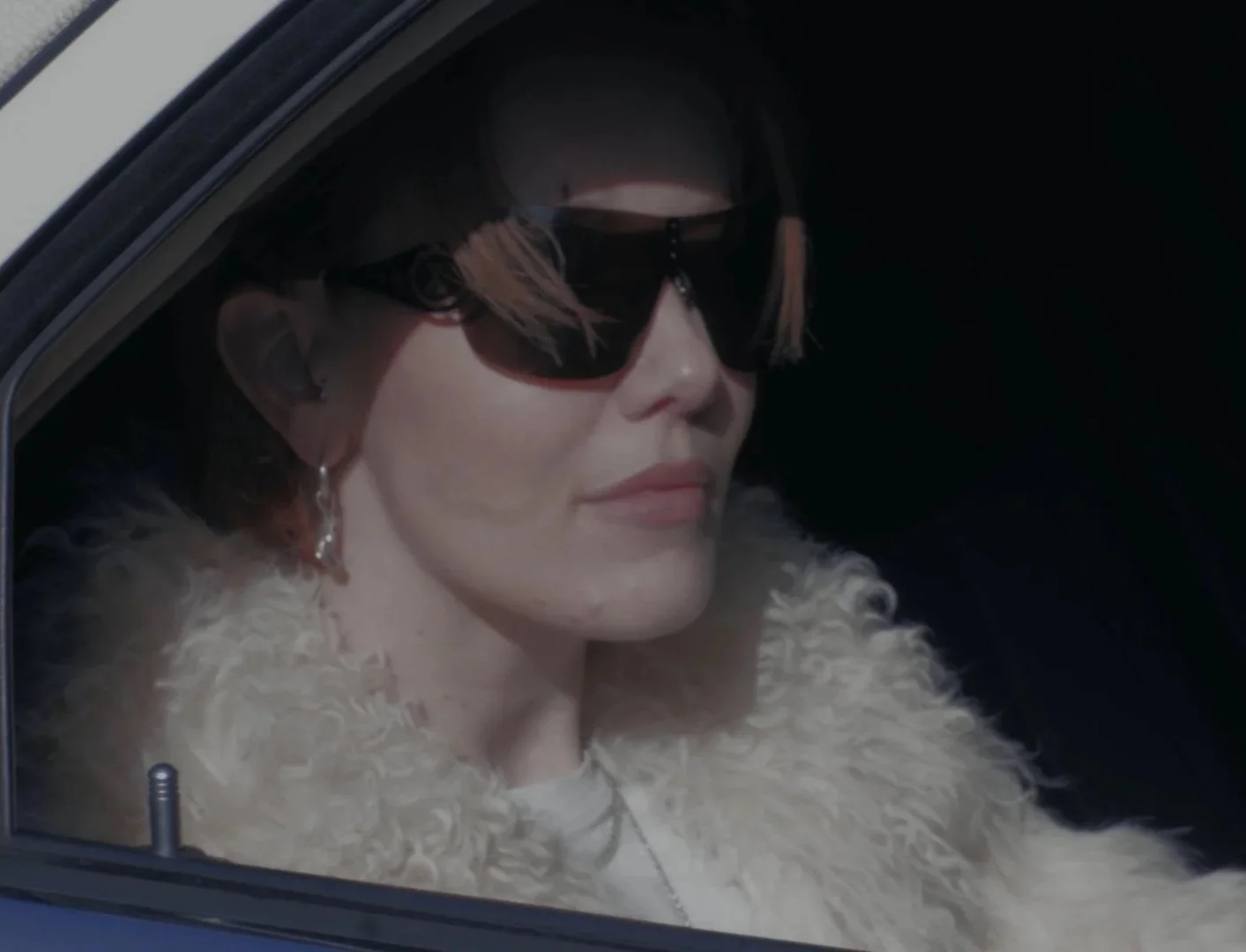
What made you want to be part of the project, and what drew you to the role?
When Valentina first described the character — a washed-up, middle-aged ex–rock star hosting intimate karaoke sessions in his limousine for his last remaining devotees — I felt an immediate tenderness toward this guy.
My first question was whether he was driven by economic necessity or by a deeper hunger for connection and adoration. We quickly agreed it was the latter. And that sold me.
Because ultimately, I think that’s what all of us are chasing: connection. Whether it’s with a friend, a dog, a stranger at the supermarket, a colleague, or a lover… It’s that fleeting moment of knowing we are understood by another being that gives us fuel.
Mr Charles is, without question, a lonely and slightly unmoored figure. But there’s something quietly defiant in him. Rather than retreating into isolation, he constructs a kind of fragile fantasy — an intimate, moving space where he can mobilize the only tool of connection he knows. Through music, through proximity, through shared attention.
I was interested in letting him fully inhabit his shamelessness, his awkwardness, his almost juvenile sincerity, and in dissolving the usual boundaries between performer and audience. Inside the limousine, there is no stage, no hierarchy. Just a group of strangers, suspended together, singing as if they belonged to a peculiar choir.
And those are the Illspeed lyrics they chant in unison:
“Let the choir sing.”
How did you work with Valentina during the shoot to shape your performance?
It was my first time in front of a professional camera, still or moving, so the process began with a certain surrender. I had to trust Valentina’s instinct in casting me as this eccentric character. She had a precise idea of how he moved, his insecurities, and what fed his ego.
At one point, Val danced for me, and I danced back, absorbing his slightly stiff but sincerely immersed gyrations. We also explored scenes where he awkwardly prepares for his admirers to arrive, with small, intimate rituals that reveal how he exists when no one is watching.
We never filmed those moments, but they prepared me for the day. Before shooting, I found myself alone in the limousine, translating that physicality into the constraints of the space. I sang into the mirrored surfaces as if they were an audience, multiplying myself, rehearsing connections. By the end, I was totally feeling myself.
Later, I realised I had, in some way, already lived the scenes we chose not to film. Valentina has a slightly uncanny intuition — almost witch-like, precognitive at times — so perhaps this was one of those instances where their imagination quietly became reality.
It was also important for Val and Inès, the creative director, that we were styled in some of our own clothes. I am wearing some plastic snakeskin pants gifted to me by my old roomie Jeuru (who is an actual rock star), and some early 2000s Prada ankle boots from Miuccia’s peak ugly-chic era.
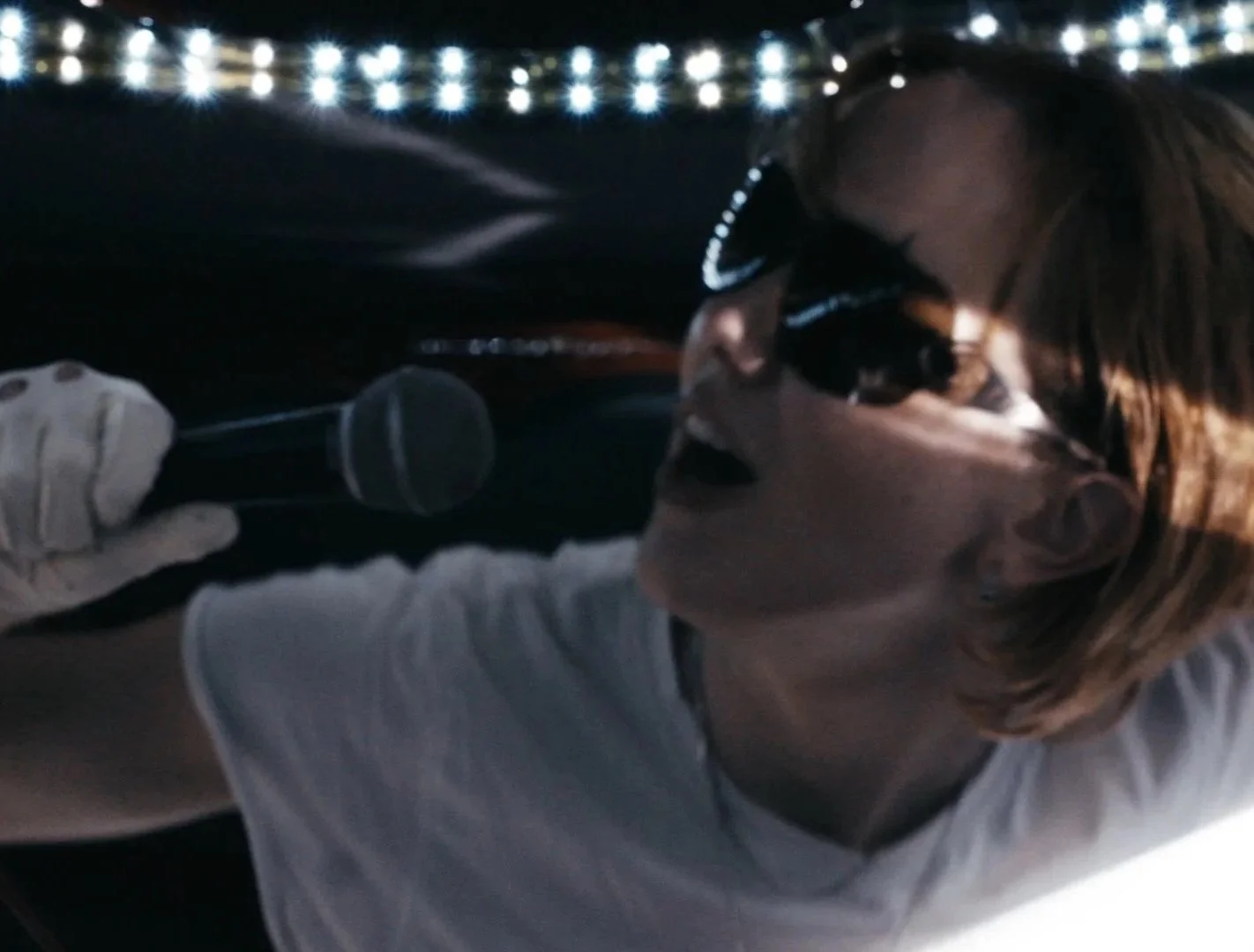
Was there a particular moment on set that stayed with you after filming?
To kick off the shoot, we played Stella (“freeze” in English), which I used to play at my childhood birthday parties. It immediately set a playful tone, which was the perfect icebreaker before we all climbed into a tight and very sweaty space to dance all over each other.
Watching the final video, how do you feel about the way your performance comes across on screen?
I felt completely at ease, able to lean into something uninhibited, and I had a lot of fun with it. I think that translates. There’s a looseness that doesn’t feel self-conscious — you can’t really tell it was my first time in front of a professional camera.
But maybe that’s not so surprising. As a queer, neurodivergent person, I am no stranger to performing. Earlier in life, it came from a less healthy place — from survival or escape — but after some personal development, it became a way to shape identity, to move between different versions of myself as they surface.
And I don’t believe performance is the opposite of authenticity — they are entangled. I have a few alter egos; you never quite know which one will arrive, but they are all me.
I see that in this character, and I see it in the world around Illspeed. The authenticity of the project is in the interaction with performance.
