
IN CONVERSATION WITH VASSIŁINA
Interview by Samo Šajn
Photography by Lissyelle Laricchia
VASSIŁINA is a London and Athens based avant-pop artist. Her new album, i.par.ksia.ko, is about identity, self-discovery, and personal struggles. She mixes pop and electronic sounds, and her music is known for emotional vocals, bold energy, and strong live performances.
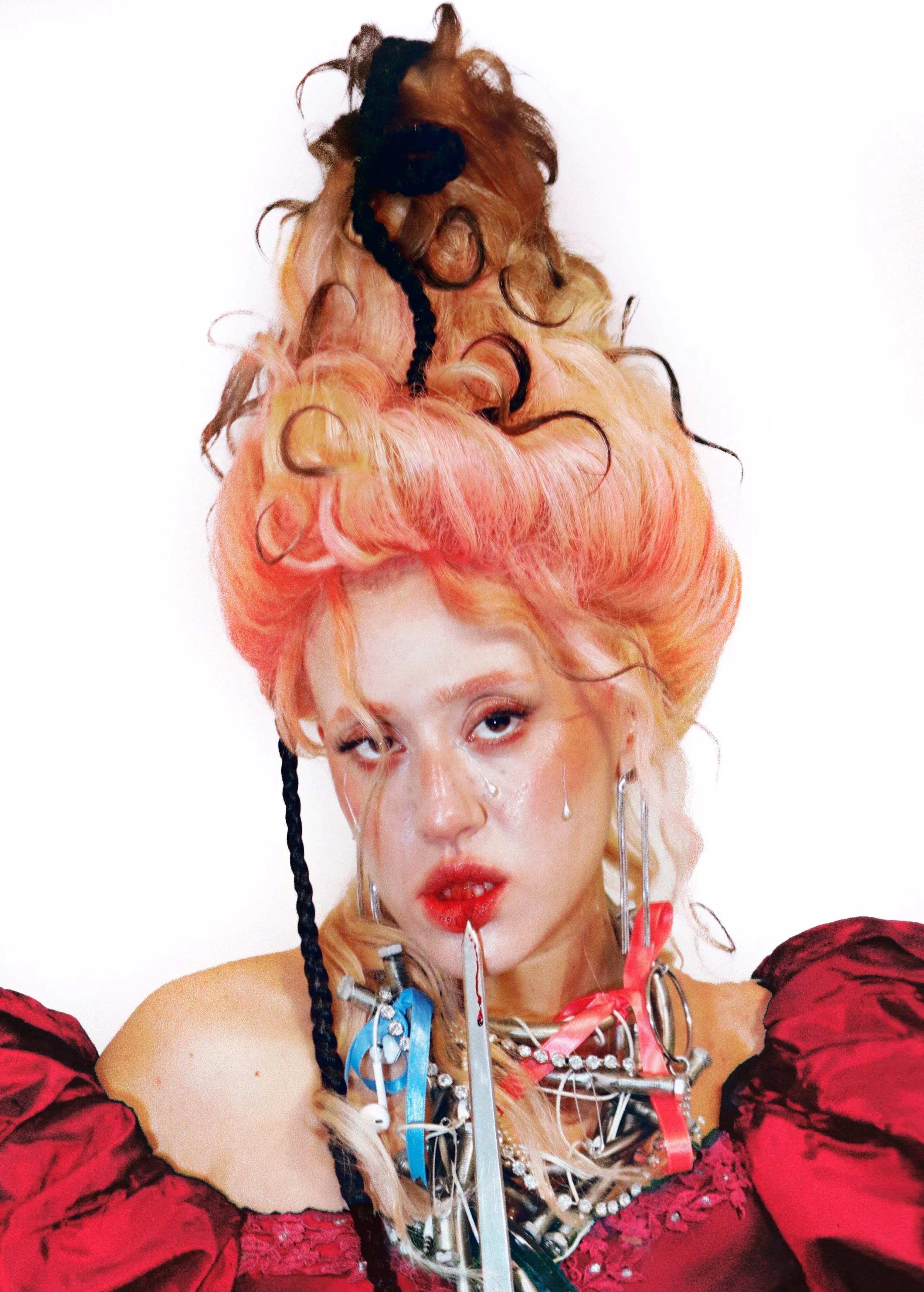
The album title i.par.ksia.ko translates to “existential.” What personal or emotional questions were you thinking about while making this record, and how did they find their way into the music?
This album came from a period where I was constantly questioning where I belong, who I am becoming, and what parts of myself I’m allowed to keep while evolving. After years in therapy and being on SNRIs, I kept asking myself why I feel such a strong need to change my life completely. Is it self-destruction, or is it growth, finally facing fears and unresolved trauma?
It also speaks about deep-rooted guilt shaped by growing up in an Orthodox Christian environment and the emotional inheritance passed between mothers and daughters, including shame and unspoken expectations.
It talks about the feeling of living multiple parallel lives, especially when moving between cities or living as an immigrant. Sonically, I wanted the record to reflect that instability, with shifting voices, contrasts between softness and distortion, and intimacy colliding with chaos. It’s also the first time I worked fully in my mother tongue, which made the process more vulnerable and honest. At the same time, it’s an album that feels much more extroverted.
Alice in Wonderland is a big influence on the album. What parts of that story do you relate to most?
The Alice idea came later, while working with Vinyl Face and Lissyelle on the album cover. I realized I needed a unifying world, both sonically and visually.
I relate to the idea of falling into unknown worlds and constantly redefining yourself. Alice keeps changing size, and the rules keep shifting and collapsing, which mirrors my experience with mental health, antidepressants, and OCD. It’s the feeling that you might finally “fit” into the world, but the world keeps transforming around you.
I also see Alice in Wonderland as one of the most queer fairytales. A huge part of my process was finding strength through other femininities while embracing fragility. I needed that childlike tenderness that carries very adult weight. Throughout my artistic journey, I’ve been drawn to myths and fairytales because of their theatricality—it feels very drag-coded. I’m deeply inspired by my drag queen friends and the way they use transformation as both armor and expression. That energy feeds directly into my visual world and stage presence.
On “Katadiki” (“Condemnation”), there’s a tension between vulnerability and menace. What does “condemnation” mean to you in this context?
As I said, this album talks a lot about guilt rooted in Orthodox Christianity and how that evolved from religious OCD into hypochondria. I realized that many of my choices in life, even my love life, followed patterns of self-punishment that stick with you.
The video feels like a dream within a dream, moving through a life that doesn’t actually fit you, slowly waking up from it, and discovering the strength that comes from collectivity and shared experience.
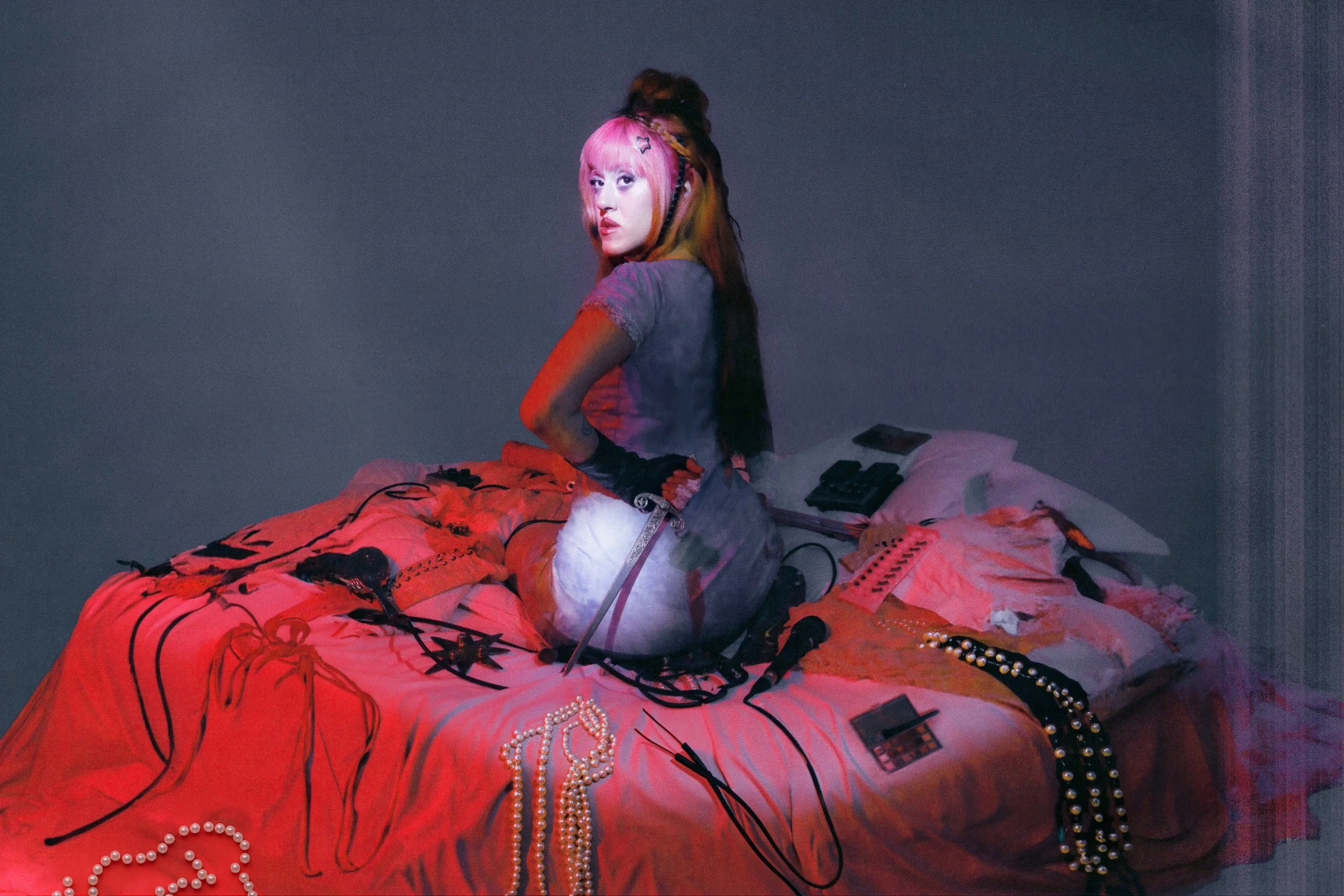
You use AI to transform your voice on the album. What drew you to that process creatively?
At first, I thought about asking a British friend to read those parts, but I wasn’t interested in outsourcing the voice. I wanted to question the idea of a “fixed” identity. I didn’t use AI to replace humanity, I used it to alter myself. It reflects how I used to mask my accent and identity while living in London and, more broadly, how we already shape ourselves daily with AI.
Greek isn’t treated like English, French, or Spanish in the global music industry, and that directly affects how exportable Greek artists are. This creates constant pressure to adapt and westernize your art and voice. So I started wondering, what happens if I force my own voice into a British accent? Would that make me more approachable or more alienated from myself? You can still hear me underneath, just fragmented. That tension became part of the emotional language of the album.
How did the collaboration with director Alex Brack come together for the “Katadiki” video?
I really love Alex’s vision and art, so it was very exciting to work with him. I think he really elevated our vision. I’m also very particular about what I want creatively, so having my close team around me, especially Iokasti Mantzog and Vinyl Face, was essential. I’m really grateful to my label, KIKI MUSIC, for supporting me and backing our vision.
You’ve been moving between London and Athens while making this music. How do those two places show up in your sound?
Athens inspired my lyrics and gave the album its more extroverted, upbeat energy. London shaped the sonic world. The record lives exactly between those two places emotionally, Mediterranean but sonically influenced by Western avant-pop.
Your music sits somewhere between pop, dark electronics, and club culture. How do you usually describe it to people who haven’t heard it before?
I usually say it’s all about dark drama but make it pop. It’s girly, it’s dark, it’s messy, and it’s intense but soft here and there.
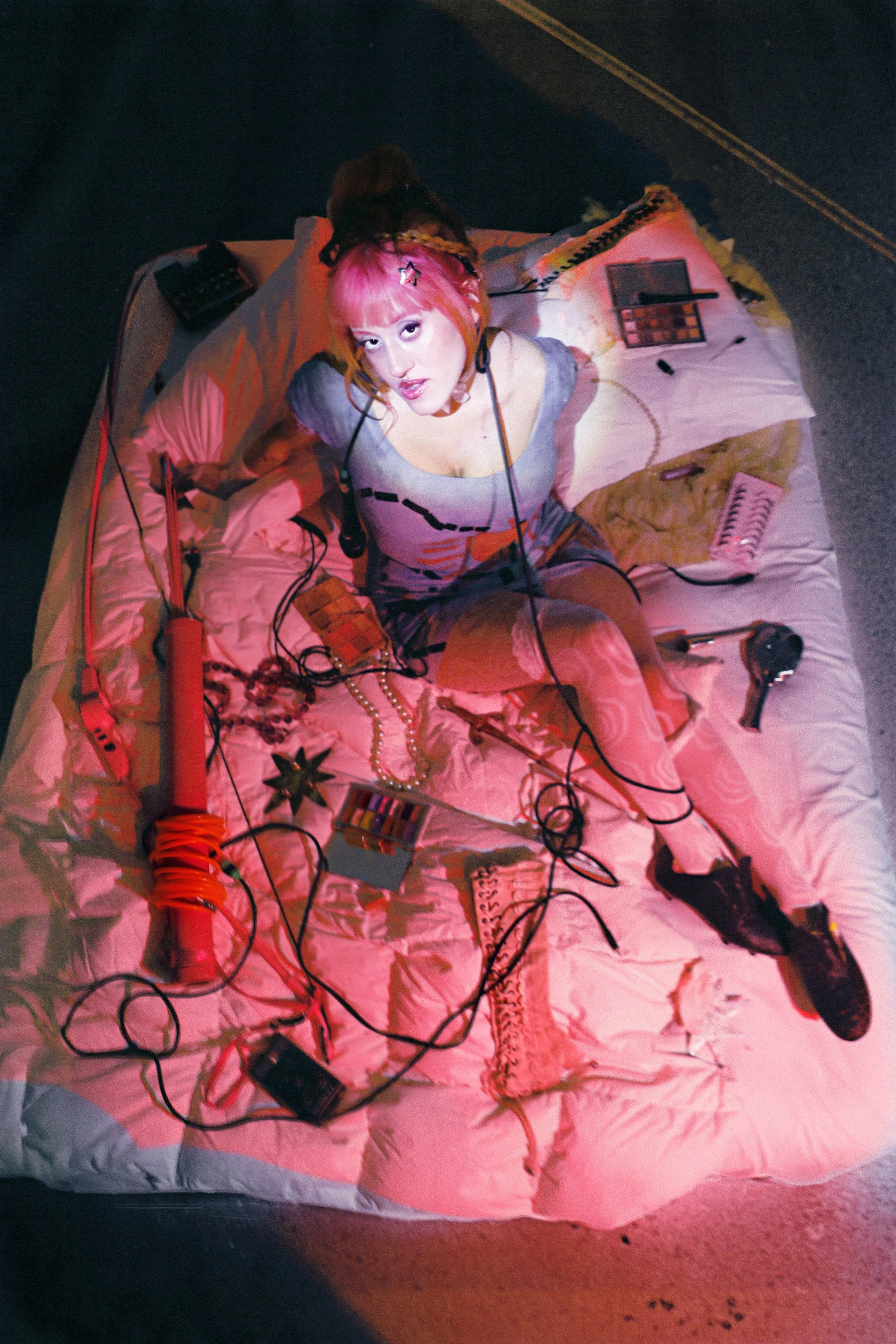
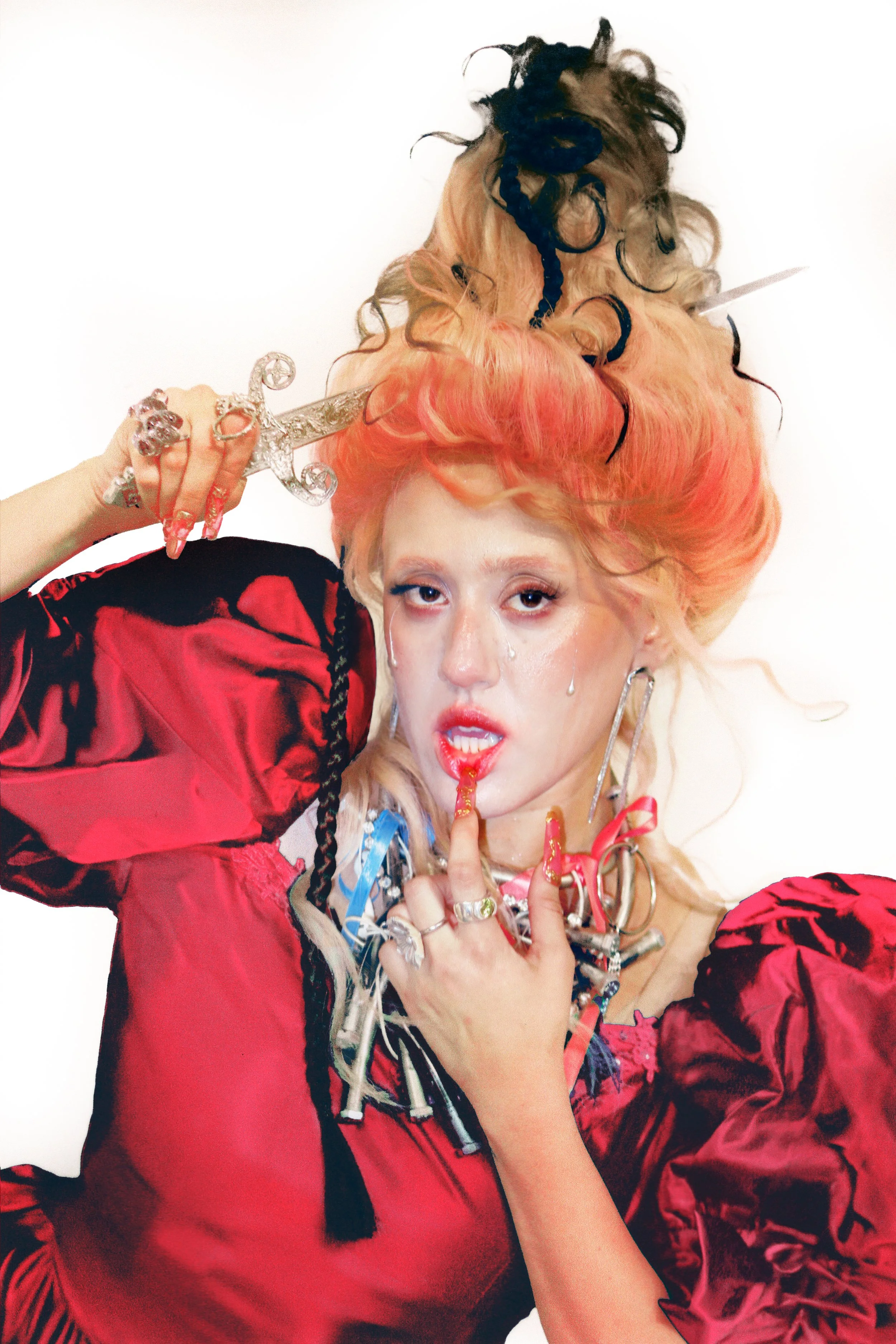
You’ve worked closely with TOTALWERK for a long time. What makes that collaboration work so well?
I met Tom at Goldsmiths during our MA, and it honestly felt like meeting my other musical half. We’ve been writing together for seven years now, and there’s zero ego in the room. He completes me sonically, and we both like pushing ideas until they feel uncomfortable and honest. It’s not just about making beats, he really understands my messy creative process. He’s an insanely talented producer and writer, and I’m genuinely grateful to have him on my team.
Your live shows are very physical and immersive. How important is the live experience to how people understand your music?
I feel like my music makes more sense live. I want to build small theatrical worlds but make them pop and punk. That’s why I’m so drawn to drag performances and musical theatre. I love drama, chaos, sweat, and being emotionally fragile on stage. Sadly, for my knees, my best shows are always the ones where I go home with bruises and mud all over my body.
Now that i.par.ksia.ko is finished, what do you hope listeners take away from it?
I hope people get curious about the Athens music scene and give it real visibility. It’s extremely hard to export, and not because of a lack of talent. Even if they don’t understand the lyrics, I want them to feel the emotion and see that music goes beyond language.
