IN CONVERSATION WITH WILLIAM CATLETT
interview by JANA LETONJA
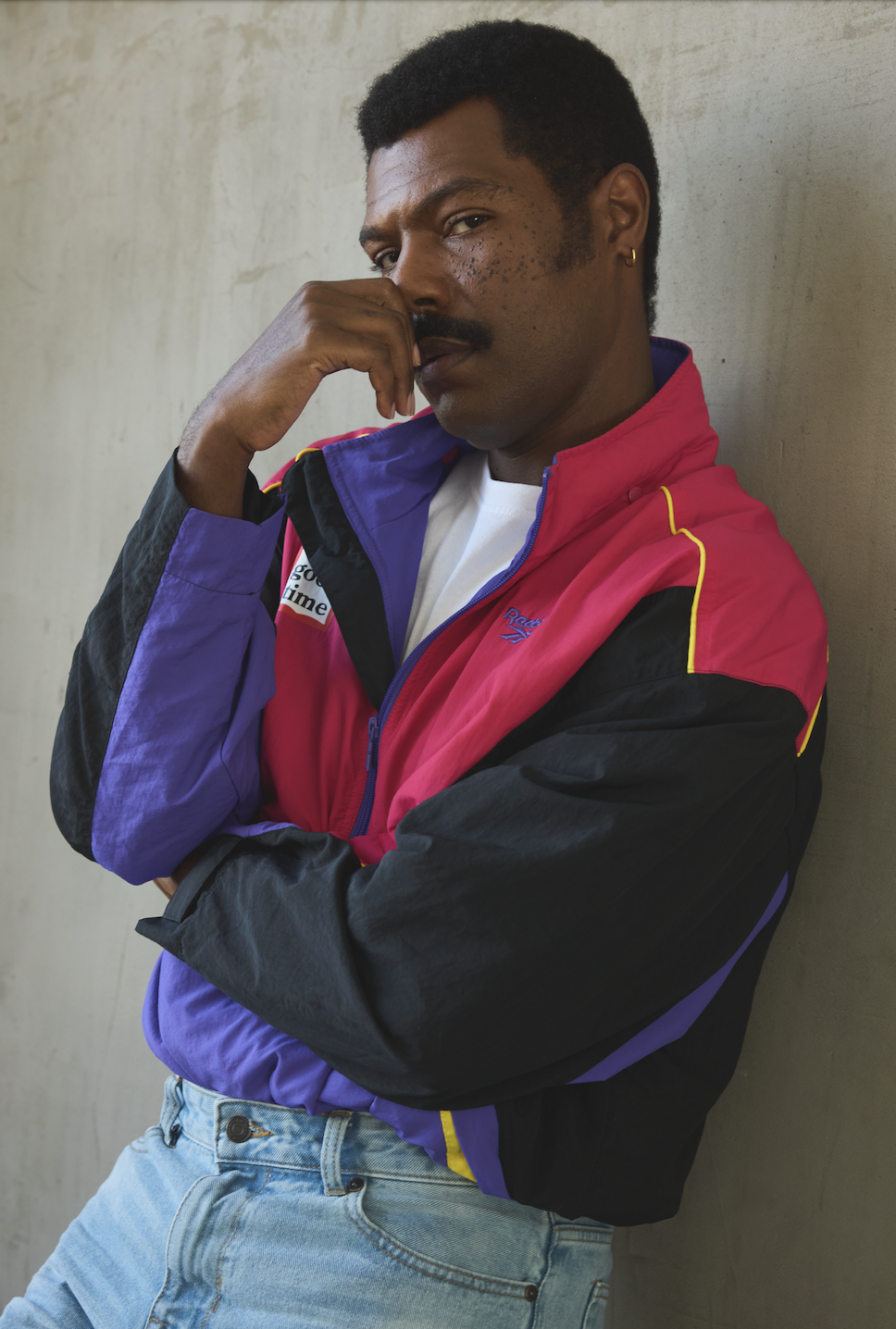
There is a quiet intensity to William Catlett, an actor whose performances often reveal as much through silence as they do through words. Across projects including A Thousand and One, Constellation, Black Lightning, and Abigail, he has cultivated a body of work grounded in the complexities of masculinity and emotional vulnerability. His first leading role in a feature film, Color Book, brought those qualities into sharper focus, earning critical praise for his deeply affecting portrayal of fatherhood, love, and resilience. Now, he enters one of horror’s most iconic universes with Peacock and A24’s Crystal Lake, premiering October 15. Drawing inspiration from Sidney Poitier’s commanding presence in In the Heat of the Night, William brings a nuanced perspective to themes of race, authority, and identity.
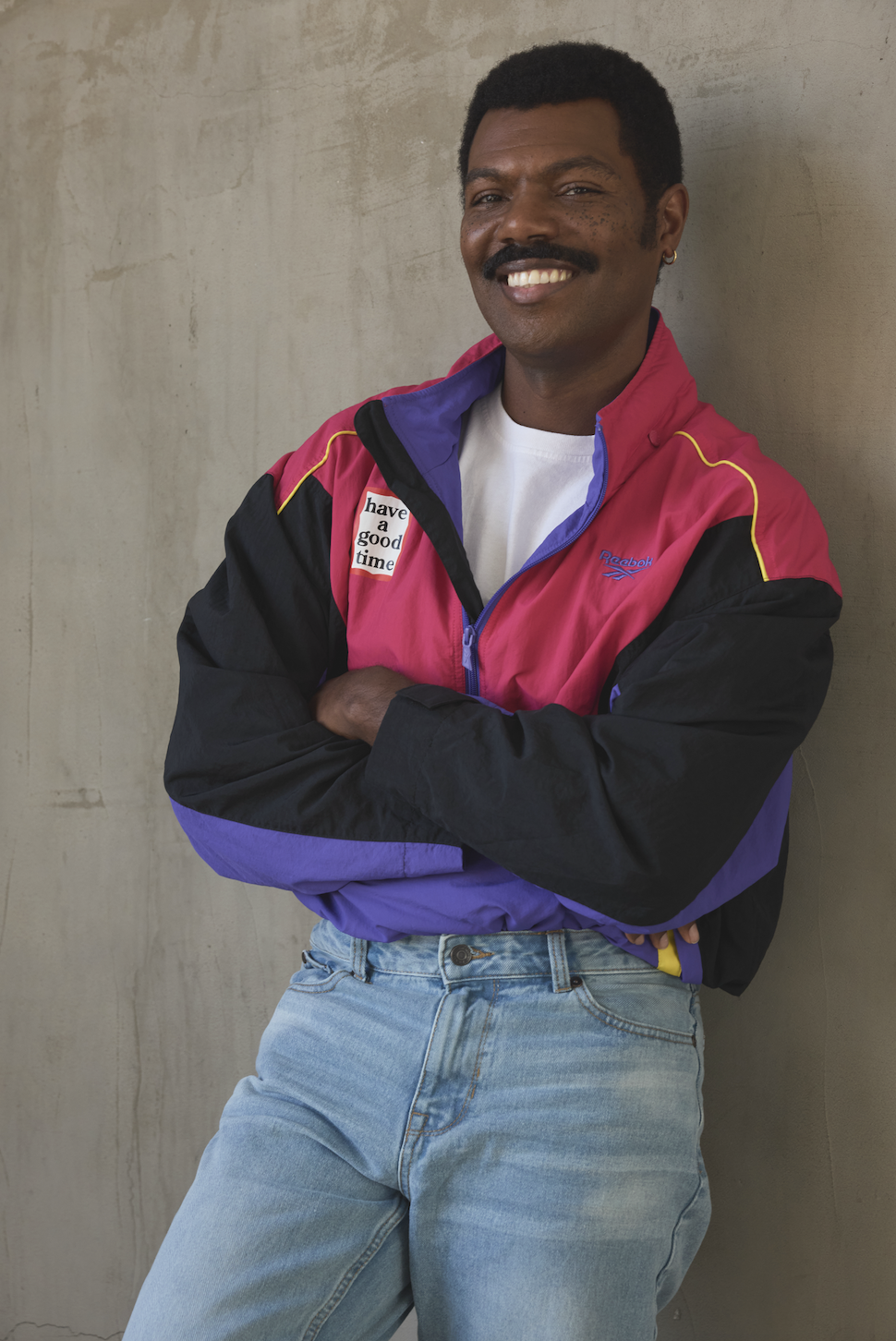
photography by VICTORIA STEVENS
What initially drew you to this project, and what made Levon Brooks a character you wanted to explore?
I initially passed on the project. I had just finished shooting Abigail, which I loved, and Tyler and Matt were incredible directors to work with. However, after dancing with a vampire ballerina in Ireland, I wasn't looking to jump straight back into horror. Although I was excited about the opportunity to work with A24 and Peacock, I decided to pass. Then I read the sides, which led to a meeting with our showrunner, Brad Kane. I fell in love with his enthusiasm for Friday the 13th and Camp Crystal Lake.
What made Levon Brooks a character I wanted to explore? He was layered, with a troubled past, and I was intrigued by the complexities of life in 1972. What was it like to be a cop, or rather, a Black chief of police, during that time? I wanted to understand what it felt like to live in that era. I knew I could help ground the story in truth and, more importantly, serve as a conduit for the voices of that time.
Putting on the uniform and believing you're one of them, only to realize that the people you work alongside don't see you that way, is a tough pill to swallow. Those microaggressions made my blood boil. They slowed my breathing and forced me to ask myself where do I place this pain in my body so that it becomes part of the unspoken dialogue no one will ever hear? When you hear a man say, "You don't hear me," he's speaking about thoughts and emotions he's unable to communicate verbally. They remain imprisoned within him.
How did you approach building the different layers of Levon's identity?
My approach to acting is a spiritual experience. I have to listen to the character's desires, and often, we share those same desires. I try to keep my process simple by asking myself, “Is it honest? Is it truthful? How do I get the actor out of the way and allow the character to use my instrument with the precision of a master swordsman?”
When I allow that process to unfold naturally, grief emerges, and vulnerability becomes intricately woven with strength. Some men believe that showing emotion is a sign of weakness, but true weakness lies in locking your emotions away and becoming unable to feel the gifts of the wind. Our emotions are what make the human experience worthwhile. Learning to balance them is what requires constant sharpening. No one should ever be completely out of control because that means their emotions rule them. Yet, refusing to feel anything at all is a slow death in an empty river.
How does the historical and racial context shape the way Levon moves through the world?
I believe Levon is going through a transitional period in his life. He has just lost his wife, and I think he's reached a point where he's tired of trying to fit in or assimilate into society's expectations. He knows he lives in a town where people don't accept his kind. Even when no one says it directly to his face, their unwelcome looks reinforce that reality. He has to decide whether to conform to those expectations or rise above them.
Even the possibility of falling in love with Pam presents a risk. Although interracial relationships were legally permitted in 1972, they could still face significant social opposition. Is that risk worth taking? But how can I truly live if I'm constantly confined by society's expectations? Those restrictions are echoes of the same mentality that once separated water fountains for Black and white Americans. Levon recognizes how deeply people's perceptions of one another are shaped by learned behavior.
What do you think Levon is most afraid of confronting?
I don't mean to get philosophical, but I think we exist between three realities: the past, the present, and the future. We often find ourselves living in either the past or the future. Most people exist in the present, but they don't truly live in it. Some are so trapped by their past that they can no longer envision a future. Others become consumed by what lies ahead, preventing them from filling the present with joy and gratitude, even when their future is bright.
You often hear people say, "I'm supposed to be further ahead than I am right now." That may be true, but there are also people who trust that they'll eventually reach their destination. They allow themselves to rest in the present while preparing for the future, rather than being tormented by it.
I believe Levon is caught somewhere between the past and the present.
How did you develop the emotional chemistry and tension between Levon and Pam?
I remember looking at a photograph of Linda Cardellini online before my initial audition. As I looked into her eyes, I thought to myself, "I could fall in love with this woman." I searched for a little light between the stained-glass windows, something that suggested there was hope. I didn't know Linda personally at the time, but I sensed humor in her eyes, and laughter always makes the heart grow fonder.
I remember one particular day on set when we were filming our first kissing scene. All I could think about was wanting her to remember Levon when she went home. At that moment, the character and my instrument were in complete agreement. Whether she thought about Levon afterward is something you'd have to ask her. But that was certainly his intention. New love is always exciting.
What continues to draw you toward characters whose strength is inseparable from their vulnerability?
I believe every character you'll ever play is buried somewhere deep within you. It may take some digging to uncover what's hidden, but that character is already there.
As I mentioned earlier, acting is a spiritual experience for me. Strength and vulnerability hold hands in the park on a windy day or a spring morning. They're inseparable, and they reveal themselves only to those willing to embrace them together rather than treat them as opposing forces. "How long shalt thou wait to meet thee?"
How important is silence in your performances, and what can restraint reveal that dialogue sometimes cannot?
Well, everything in creation is speaking. You can sense that it's about to rain even before the petrichor fills the air. You can tell a storm is approaching simply by watching the trees dance back and forth. I'm not silent for the sake of being silent. I communicate without words, just as the plants in your home communicate through their dry leaves.
It's no different from locking eyes with another driver on the road, when you both turn toward each other at the same moment, only to quickly look away out of fear of potential chemistry. Nonverbal cues often reveal the truth, even when the words coming from someone's mouth tell a lie.
Has your understanding of masculinity evolved through the roles you've played?
I view power as a position of responsibility, something that should be used to uplift others, although it can sometimes be used to tear them down. True power isn't abusive or manipulative. It can carry authority, but it should always contain the seed of liberation. Its purpose should be to liberate rather than oppress.
Think about an athlete who wants to dominate a game. The ultimate goal isn't simply domination itself, but to lead his team toward victory. In that sense, power becomes a means of creating opportunities and lifting others up.
Are you particularly drawn to moral ambiguity, and what makes a flawed character interesting to you?
We're all deeply flawed, and the capacity for both good and evil exists within each of us. Certain aspects of our nature remain dormant until enough pressure creates a chemical reaction that leads to combustion within us. That same pressure can either strengthen us or become detrimental to our well-being. These opposing forces coexist within the human experience.
Philosophers have explored these ideas for centuries, the morality of man, the duality of the spiritual and physical, and the relationship between the conscious and subconscious mind. I enjoy exploring these complexities, which is why I'm drawn to characters who exist within moral ambiguity.
Which experience or collaboration most significantly changed the way you approach your craft?
I'm still exploring the depths of who I am. The more experiences I have, the more material I can draw upon when bringing a character to life.
I remember going on vacation to Brazil. After a long day of hiking and exploring, I pulled a chair away from the table, sat down, and exhaled. I was completely exhausted. That single experience made me a better actor.
When you're acting, sometimes you sit in a chair simply because you've been told to. You forget about the moment before, the experiences that brought you there. I'm not trying to give a great performance, I'm trying to experience reality. I want to keep exploring because every moment, whether I'm on set or simply moving through life, gives me another opportunity to grow. Each experience becomes another repetition, another chance to sharpen my craft. Experience will always be your greatest teacher.
How would you describe your personal relationship with style, and what does the way you dress communicate about you?
I'm a creator, and I enjoy expressing myself through different mediums. Fashion is another extension of that creativity, another opportunity to tell a story without saying a word.
Just as I immerse myself in a character when I put on their clothes, I approach my personal style with that same sense of intention and imagination. What I wear reflects how I feel, what inspires me, and sometimes even the person I'm becoming. Fashion allows people to discover another side of me, one they may not necessarily see on screen. It's a way to communicate my personality, my perspective, and my artistic vision beyond the characters I portray.
I don't believe creativity should be confined to one medium. Whether it's acting, storytelling, or fashion, I'm always exploring new ways to express myself. Designing is something I'd love to explore further down the line, another opportunity to bring my ideas to life. Who knows? In a few years, you might be surprised to discover that I'm the one behind something you're wearing.
What kinds of stories, characters, or creative risks are you most interested in pursuing next?
BLADE.