
IN CONVERSATION WITH YOUNG EMPERORS
interview by JANA LETONJA
photography by YOUNG EMPERORS
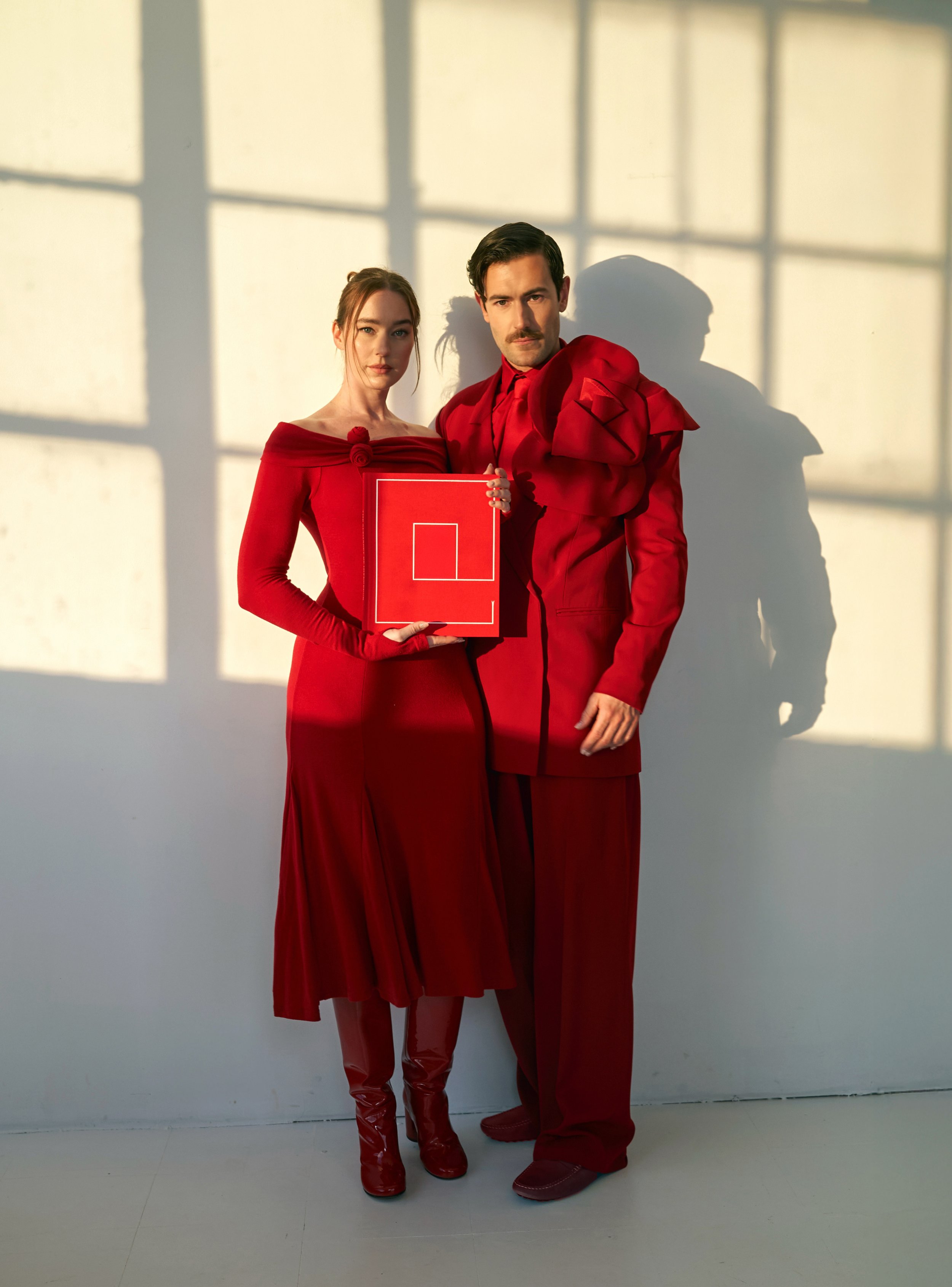
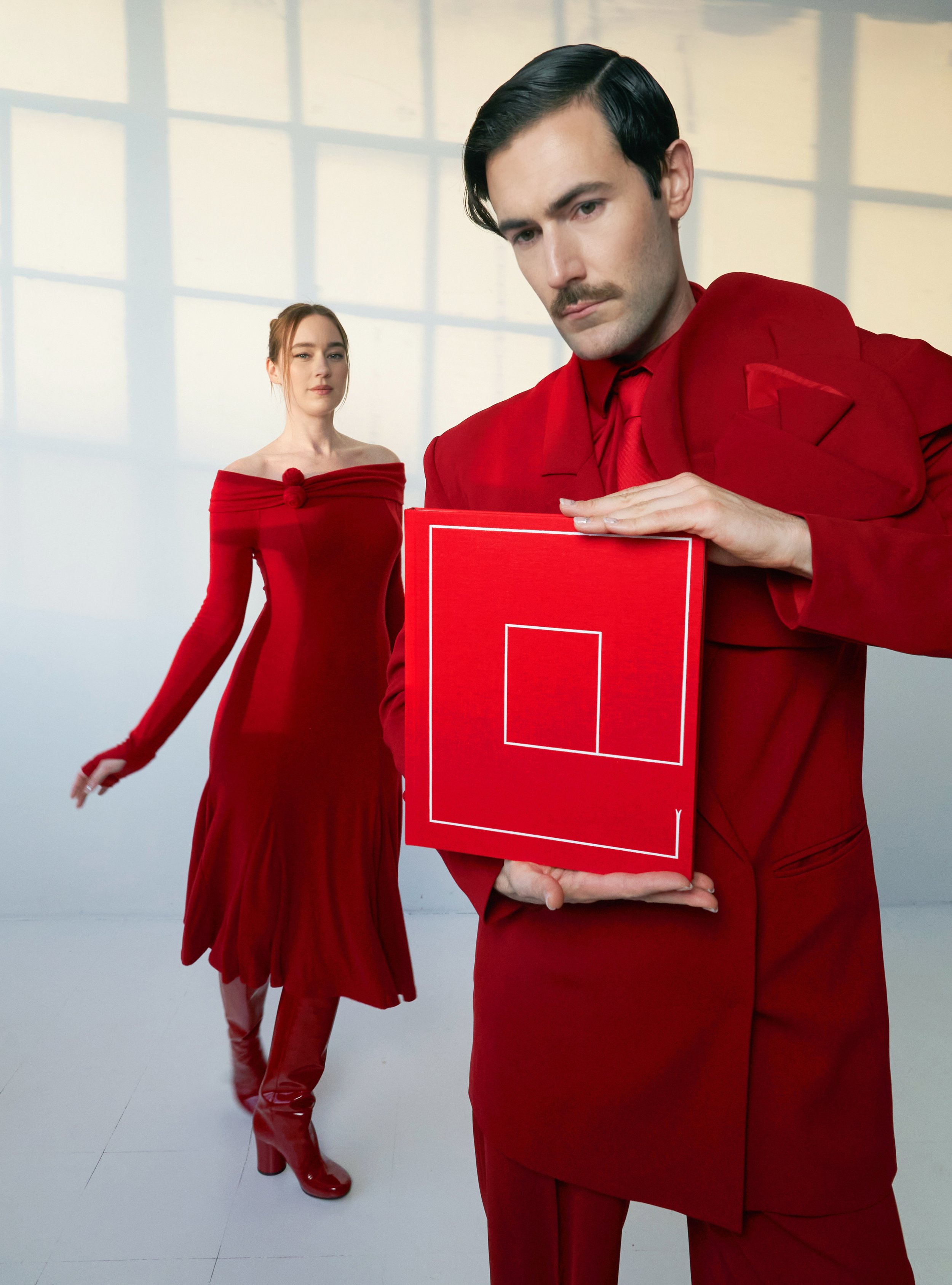
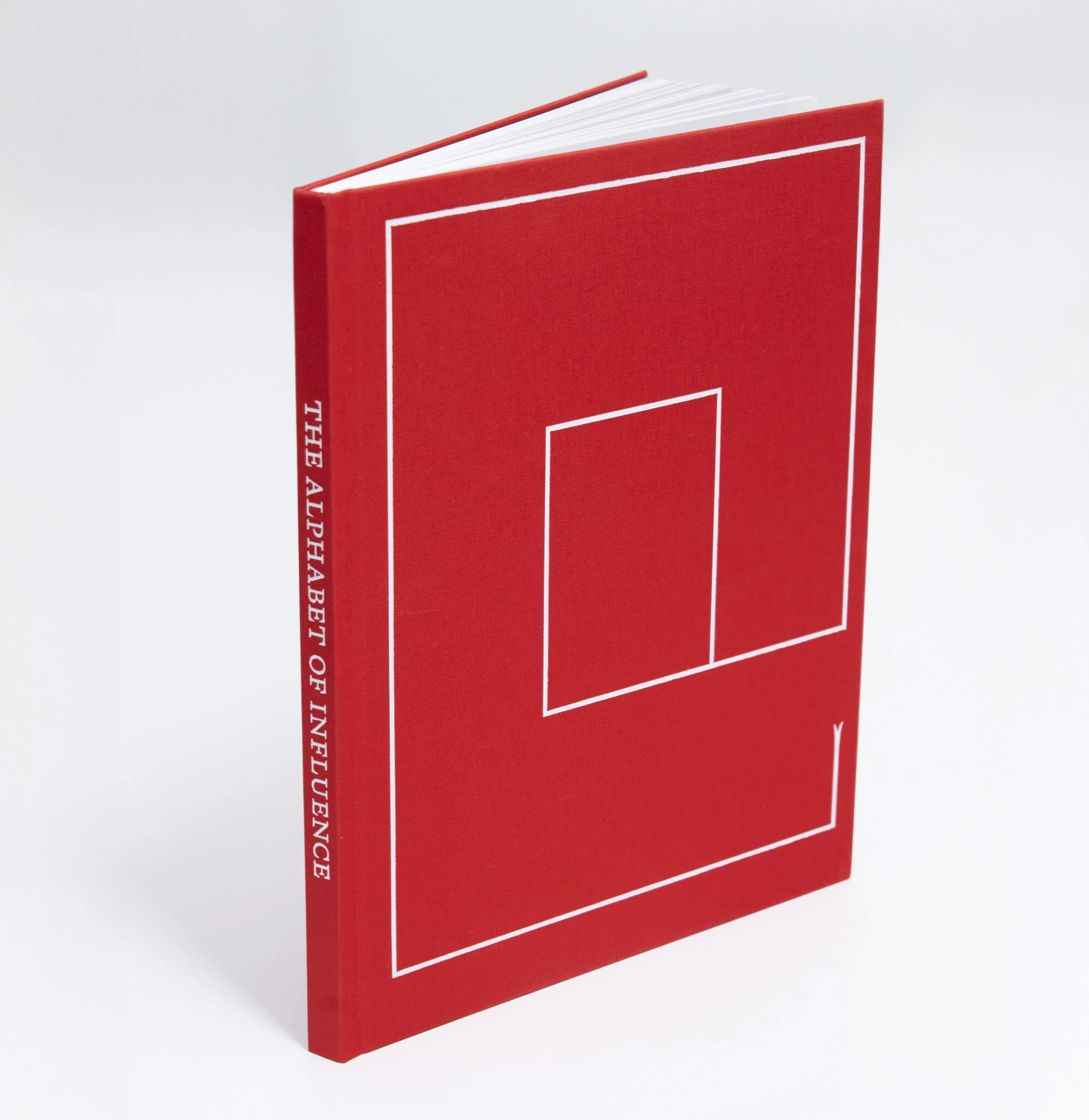
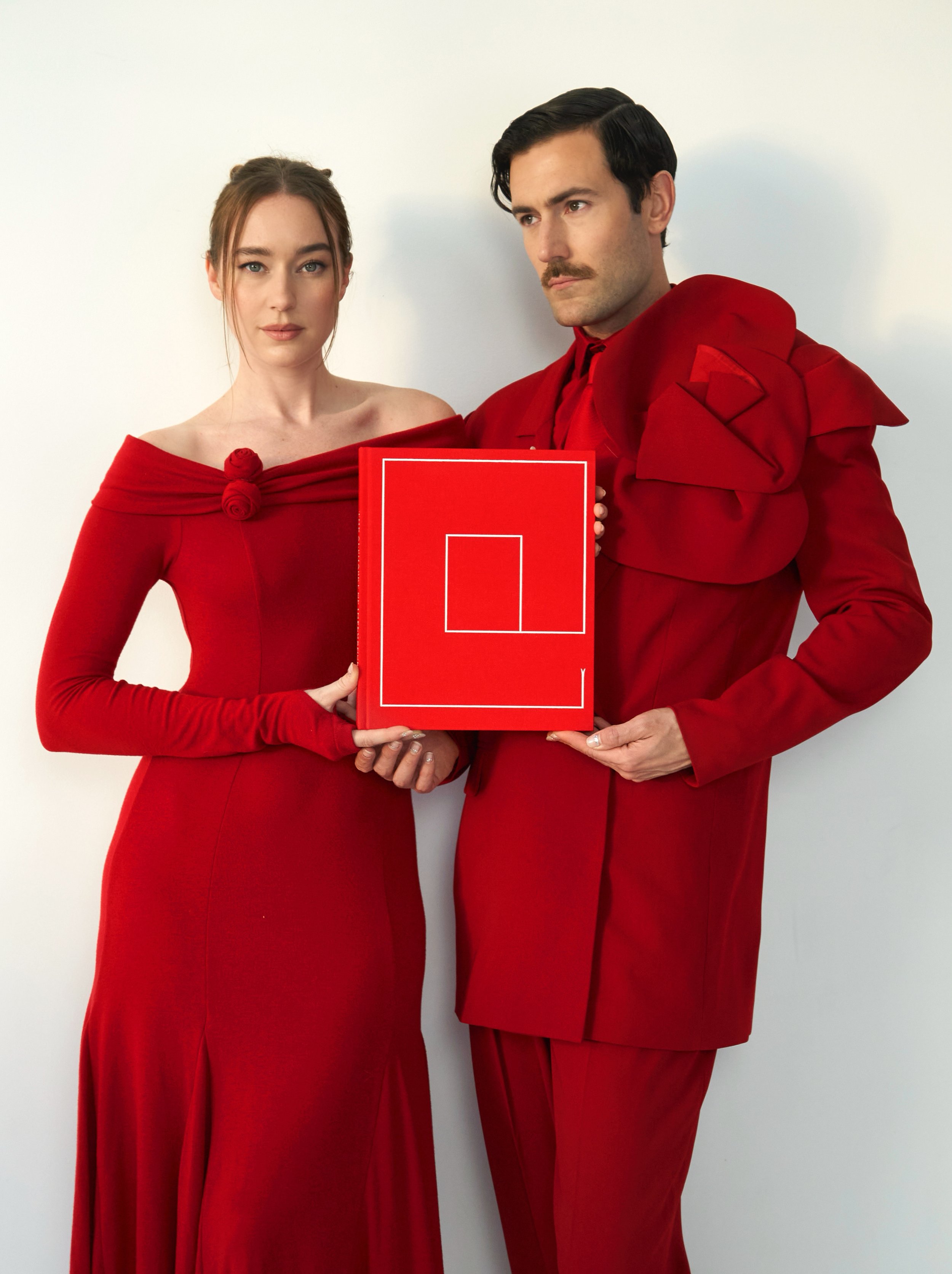
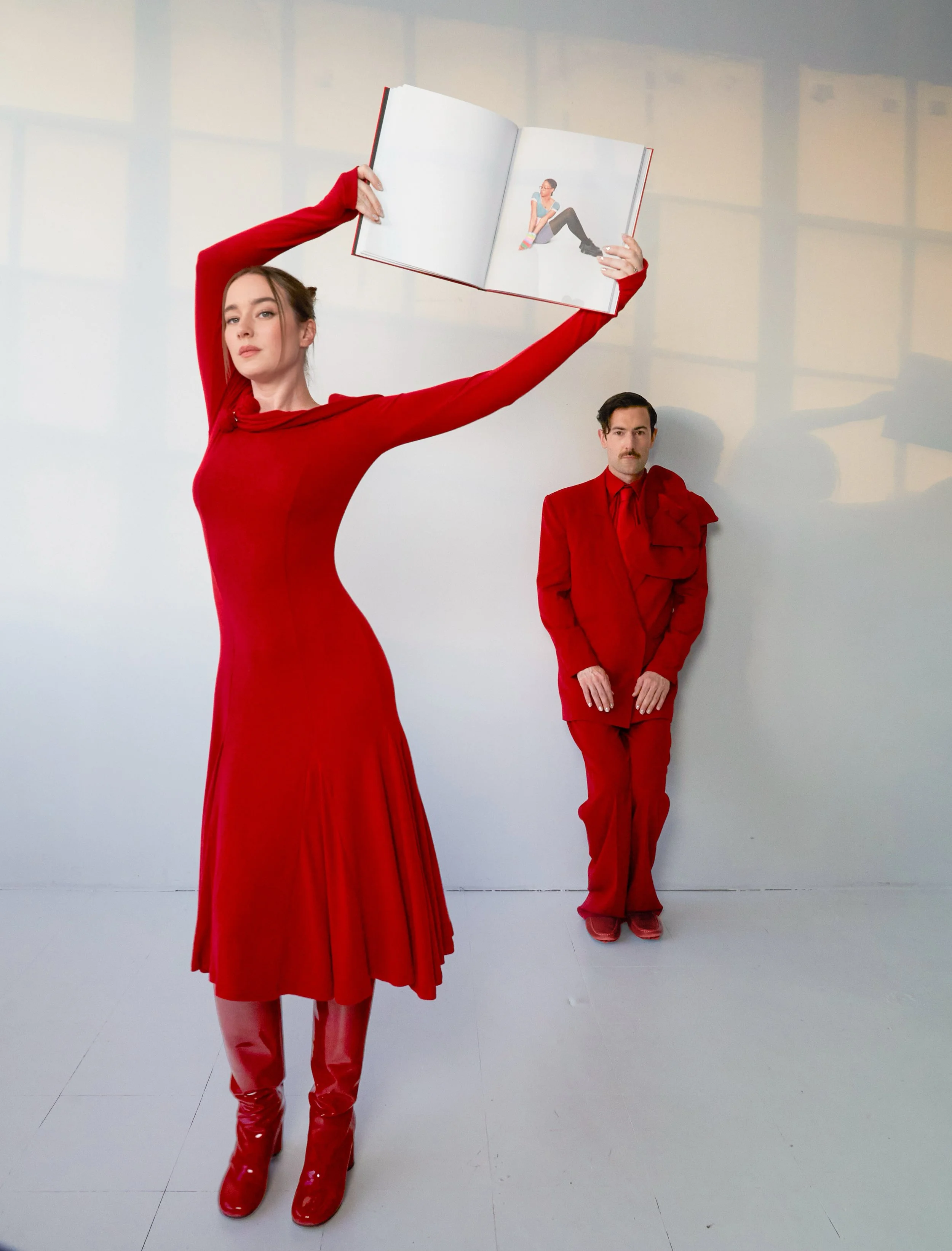
Young Emperors—the Paris-born, New York–based creative duo of Isabelle Chaput and Nelson Tiberghien—have built a vibrant universe at the crossroads of fashion, photography, film, and performance art. Known for their coordinated styling, visual storytelling, and imaginative use of social media as an artistic medium, the pair now debuts their first book, ‘The Alphabet of Influence’, created in partnership with Instagram’s new Drafts program for creators. The project reexamines the very idea of influence, transforming 26 modern digital tastemakers into living letters of a new visual alphabet while reframing social platforms as the next “once-rejected medium” on the brink of artistic legitimacy. Through playful typologies, intimate portraits, and stories folded within each page, Young Emperors offer a tactile exploration of how language, identity, and community shape our digital era.
What sparked the initial idea for ‘The Alphabet of Influence’, and why did you choose “the alphabet” as the core structure?
We were looking for a way to explore influence as both an artistic force and a cultural language. The alphabet offered a conceptual architecture that is at once simple, symbolic and typographic. By assigning each creator to a letter drawn from their Instagram handle, we could turn a digital ecosystem into a physical, curated list. ‘The Alphabet of Influence’ emerged from that desire, to freeze a moment of the algorithm, to celebrate the people who shape it, and to present influence not as numbers, but as a constellation of 26 unique voices.
You ask the question “What is an influencer?” After creating this book, how has your own definition evolved?
For us, the idea that “influencer” is more than a job title was there from the very beginning. We always felt it was a language, a way people communicate, express ideas, and shape culture in real time. Spending two years shooting and speaking with these 26 creators only reinforced what we believed from the start, that influence is really about connection. It’s the ability to move people visually, emotionally and creatively, whether you have 500 followers or five million. An influencer is a digital artist who uses social media as a canvas.
Social media has long been considered a “rejected medium.” Why do you feel now is the right moment to frame it as art?
Social media has often been treated as a “rejected medium,” but this is a familiar pattern in the history of art. Every new form of expression is first dismissed by the powers in place. Photography was considered mechanical, cinema was seen as entertainment, even fashion imagery had to fight for legitimacy. Yet each of these mediums ultimately reshaped culture.
Today, social media plays that same role. It is not just a tool, it is a language, a vector, a canvas where entire aesthetics, identities, and communities are formed. We felt that now is the right moment to frame it as art because it has stopped being ephemeral noise and has become one of the central ways humans communicate, remember, and create. Algorithms, audiences, and creators redefine authorship every day.
How did the Instagram Drafts program influence or shape the creative process behind the book?
The Instagram Drafts program didn’t influence the project in any shape or form, they gave us complete freedom. In fact, we had already been working on ‘The Alphabet of Influence’ for almost a year and a half before Instagram offered their patronage. The concept, the structure, the selection of creators, and the aesthetic direction were all already defined.
What the Drafts program did was give us the means to concretize the project. They believed in the idea and provided the support that allowed us to bring it to full scale to print, and to produce the book exactly as we imagined it. At no point did they ask us to adjust the narrative or compromise the artistic intention
What was the biggest conceptual challenge in transforming 26 creators into symbolic letters?
Making sure each letter remained readable while still feeling aesthetically strong and cohesive. We wanted every creator to transform into a symbol without losing their personality, but also without breaking the graphic unity of the alphabet.
What guided your selection of the 26 creators featured—was it their artistry, their cultural influence, their storytelling, or something more personal?
Our selection was guided by a mix of artistry, originality, and humanity. We wanted to highlight creators who are true artists within their niche, people who bring something new, unexpected, or visionary to social media. Each of them has developed a distinct visual language or storytelling approach that feels uniquely their own.
But beyond their craft, it was also deeply personal. We wanted to work with people who felt genuine, kind, and grounded. People we admire not only for what they create, but for who they are. Influence can be measured in many ways, but for us, the most meaningful form of influence comes from creators who shape culture while staying authentic and generous.
Your work always blends fashion, photography, and performance. How did these disciplines come together differently for a printed art book?
For us, creating a printed art book felt like a return to our origins. Before becoming Young Emperors, we were fashion photographers and directors under the name @cesarlovealexandre, and always used a variety of medium to materialize our vision, so working on a physical object brought us back to the fundamentals of image-making, light, composition, sequencing, editing.
How do you approach balancing spontaneity—the essence of social media—with the permanence of a physical publication?
Balancing spontaneity with permanence is at the heart of this book. Social media is ephemeral by nature, fluid, porous, always moving. A printed publication is the opposite. Fixed, grounded, anchored in time. Rather than choosing between the two, we wanted to let them complete one another. The book becomes a space where spontaneity can be contemplated rather than scrolled past, where the fluidity of digital expression is translated into something tactile, lasting, and human. Like a time capsule, a family portrait.
Color, symmetry, and coordinated styling have become your signature. How do those elements operate in the book’s visual identity?
With 26 creators, each with their own universe, it was essential to develop a visual system that could unify them without erasing their individuality. That’s why we chose a typology, which has always been present in our photography work and ties back to the origins of photography. Following a set of visual “rules” with the alphabet, we creates a structure that holds all these different worlds together. This typology mirrors the way we’ve always worked, building visual languages that feel consistent even when the subjects are wildly diverse.
As a real-life couple and artistic partners, how did your dynamic shape the emotional tone of the book?
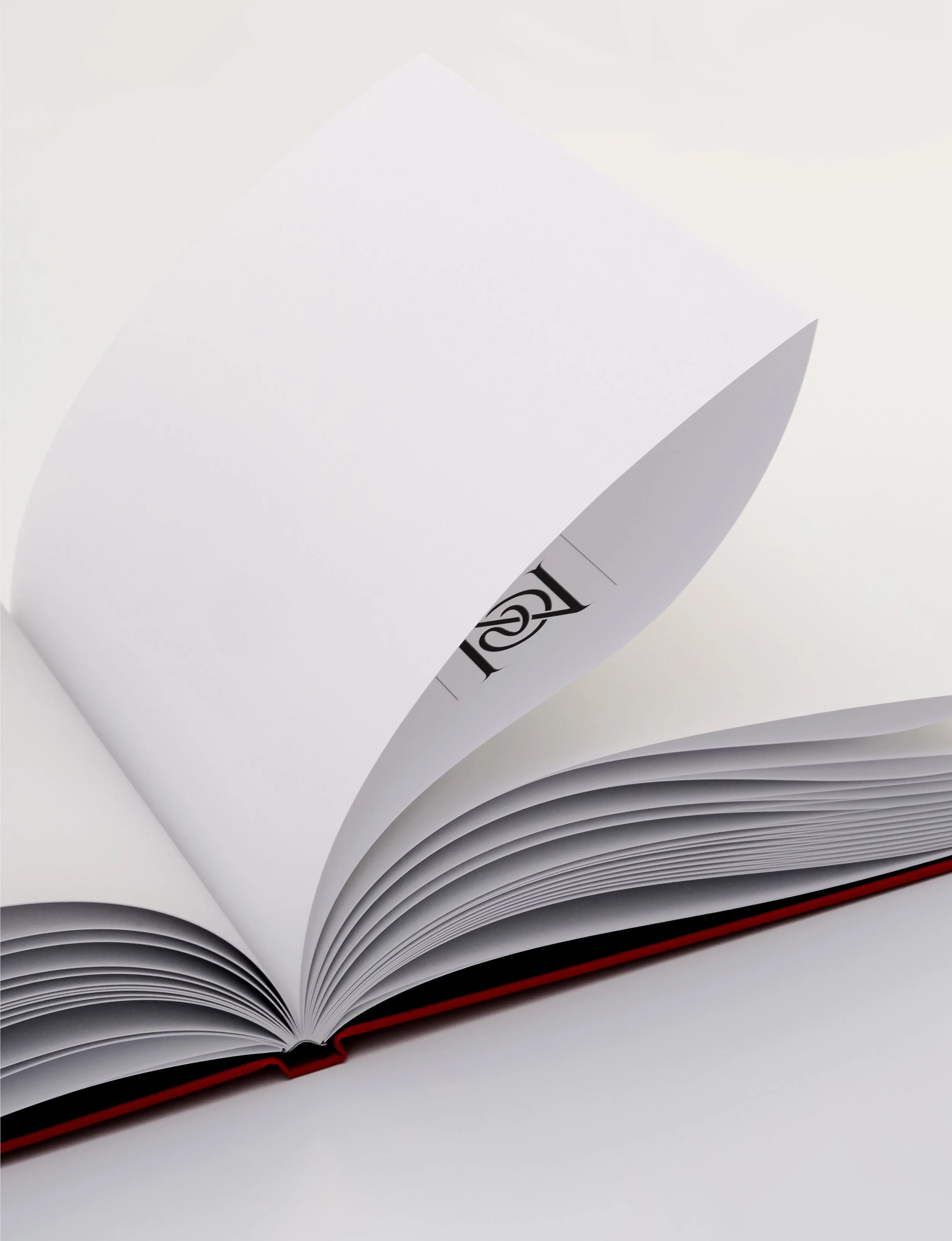
Our dynamic is woven into the book almost invisibly, yet it shapes everything — the way we see people, the way we build images, the way we approach storytelling. Being a real-life couple and artistic partners means our process is built on trust, dialogue, and a shared intuition. We instinctively understand how the other reads a scene, a gesture, a color, a mood. We wanted to extend that same process of reading one another to the reader. The Alphabet is constructed as an invitation. First you learn to read by learning the letters. Then, through the act of cutting open the French-folded pages, you access a deeper layer. It mirrors the way we work together – surface and depth, instinct and understanding, the immediate impression and the hidden story that reveals itself slowly.
You’ve renounced traditional labels—name, gender, individual identity—to create a unified aesthetic. How does that philosophy appear in this new work?
It shows up in the way the book refuses to be attached to a single face or identity. You don’t see “him” or “her,” or even the two of us as individuals, you see a merged aesthetic. We work as one entity, and that’s the lens through which the whole project was created. The book itself leaves a choice to the reader in its neutrality at first, the pictures are there to be observed first and the opinion is yours to make. If you want to open the pages and discover the text, you have to decide to take that action.
You’ve described Instagram as your “space of experimentation.” How do you imagine the relationship between digital platforms and fine art evolving over the next decade?
In the end, social media is just a vector. A medium. A channel through which creativity flows. As that channel expands, so does its artistic potential. We’re already seeing creators treat digital platforms with the same intention and precision as painters, photographers, or performers. Over the next decade, we imagine this boundary dissolving even more, with digital work entering museums, archives, institutional collections, and new hybrid spaces.
And perhaps the format itself will evolve. Maybe it will transcend the phone. Maybe influence will move beyond screens into immersive environments, holographic interfaces, spatial computing, new ways of sharing that feel even more personal.
Now that you’ve entered the world of publishing, what new mediums or forms of expression are you eager to explore next?
We have so many projects in the works. We’re about to introduce a line of experimental merch, objects that stand in opposition to fast consumption and the traditional “merch” model. Pieces that feel closer to art than product. And of course, we want to make a movie. That’s a big dream for us, and we’re slowly building toward it.