
IN CONVERSATION WITH JAMES THE SEVENTH
interview by JANA LETONJA
Pennsylvania-born singer, songwriter, multi-instrumentalist and former ballet dancer James the Seventh turns transformation into creative fuel. After a career-altering injury redirected her path from ballet toward music, she began building a singular world shaped by theatricality, vulnerability and a taste for the unexpected. Her new EP Science, produced entirely alongside longtime collaborator Oren Yoel, captures that evolving identity across tracks including Pity Fuck, Coolest Cat and Goofy. Ahead of headline and touring dates in London and the US, we caught up with James to discuss Science, the physical memory of dance, creative instinct, performance, style and finding freedom in starting again.
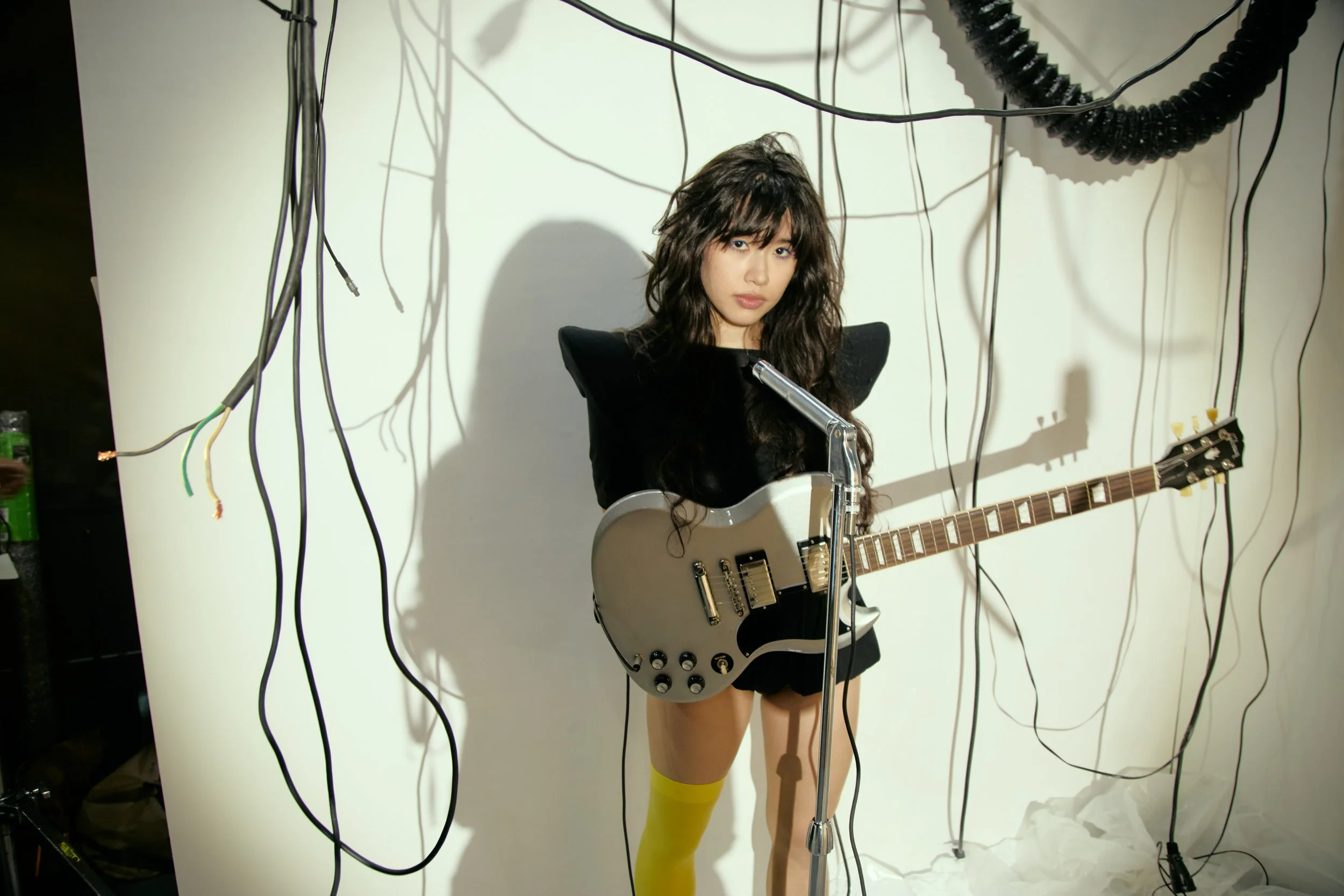
all images by OLIVIA WEIN
Science feels like an intriguing title for a body of work that deals with very human, unpredictable emotions. What does “science” represent within the world of this EP?
After I made Science the song, I found the through line between each of the songs on the EP as I was thinking about using science as a metaphor for the ways we theorise our thoughts, emotions, and behaviours and try to understand ourselves. Each song on this EP is a reflection on this theme, whether it be the self reflection, experimentation that comes with relationships and figuring out which ones are right for us, and the primal want to be understood and desired.
Looking at the finished project now, what do you think Science reveals about you that your previous music didn’t?
Looking back at making Science, I felt more fearless and less self conscious while experimenting with parts of my voice and implementing several aspects of my personality into my music, and it was such a breath of fresh air to create with Oren. It was the first project I made after I finally sought help for depression and anxiety as well, and I just felt like bouncing off the walls because I felt a weight off my chest that I hadn’t felt in a long time. Definitely a period of self reflection and fun.
You worked solely with Oren Yoel on the production. How has the creative language between the two of you evolved through working together over time?
When I first began working with Oren, I had been making music for a couple of years. I hadn’t really worked much with other people, and I was learning to get comfortable for a while because I felt vulnerable when I was making music. Regardless, Oren since then has become a mentor to me, one of my closest friends, and we’ve always had a synergy which has been so awesome. Over the years, we’ve established a flow where we are always bouncing song ideas back and forth via text, and many of the songs we make together come from a dual jam session with one of us on guitar and one on bass in the studio. Our creative language definitely feels like a safe space to have fun, say something stupid, and be honest.
Songs like Pity Fuck, Coolest Cat and Goofy have titles that immediately establish a certain attitude. How important are humour and irreverence in the way you process more vulnerable emotions?
Humour is so important to me because I’m a human and it helps me have some relief and zoom out a bit. I enjoy humour and I like to incorporate it into my lyricism because it’s authentic to my personality. I’m the friend that will start crying about something I’m upset about and then make a joke right after.
Before music, ballet was central to your life. When your injury forced that trajectory to change, what was the most difficult part of imagining yourself outside of the identity of a dancer?
The identity part of realising I wasn’t going to continue ballet was definitely a shock to me because it was the thing I told people I was going to do when I grew up since I was 12, and my life fully revolved around it. Making music was actually what helped me form an identity outside of ballet. I was experiencing ongoing knee issues post surgery, but luckily I had become so interested in songwriting, guitar, and Logic. I didn’t know it at the time, but learning about music and new things in general helped me step outside of the identity that I created for myself before.
You started writing while your body was recovering. Did music initially feel like an escape from what was happening physically, or a way of understanding it?
Totally. I was used to expressing myself without words and without my voice since I was a dancer, but when I couldn’t dance, that was all I could do, and I felt hyper aware of that. And it was an escape too. The entire process of making a song always puts me somewhere else.
Ballet demands enormous discipline and precision, while songwriting can require letting go of control. How do those two instincts coexist in your creative process?
It was very hard at first. I would be hard on myself for thinking I need to sound a certain way, look a certain way when I sing, say something a certain way, etc. I’m definitely a perfectionist, but I’ve let go a lot over time. I’ve had to learn when is the right time to allow that part of myself in so I don’t get weird about a feeling I’m trying to convey, or just the way I am.
After so many years of communicating through movement, how conscious are you of the physicality of your music—how a song should feel in the body rather than simply how it should sound?
It feels super intuitive. I always know I like a song I’m making if I want to move to it in some way, but I am not a choreographer. I’m looking for a feeling when I’m making a song, and if I start moving, I’m probably feeling something.
There’s a strong sense of character in the name James the Seventh. How does stepping into that identity differ from who you are away from the stage?
Ever since I started calling myself James, I’ve actually felt more “me” in a way. Sometimes I’m shy, sometimes I’m avoidant, but usually expressive and annoying if the setting is right. Being inspired by random or unpleasant things I’m feeling and communicating it through my music has helped my confidence everywhere.
In an era where artists can become visible almost overnight, how do you protect the slower, more private process of figuring out who you actually want to become?
I feel very protective over the part of myself that was first learning how to make music and preserving my curiosity. I’ve learned over time to trust in my self expression and I try to focus on that because that is what I can control.
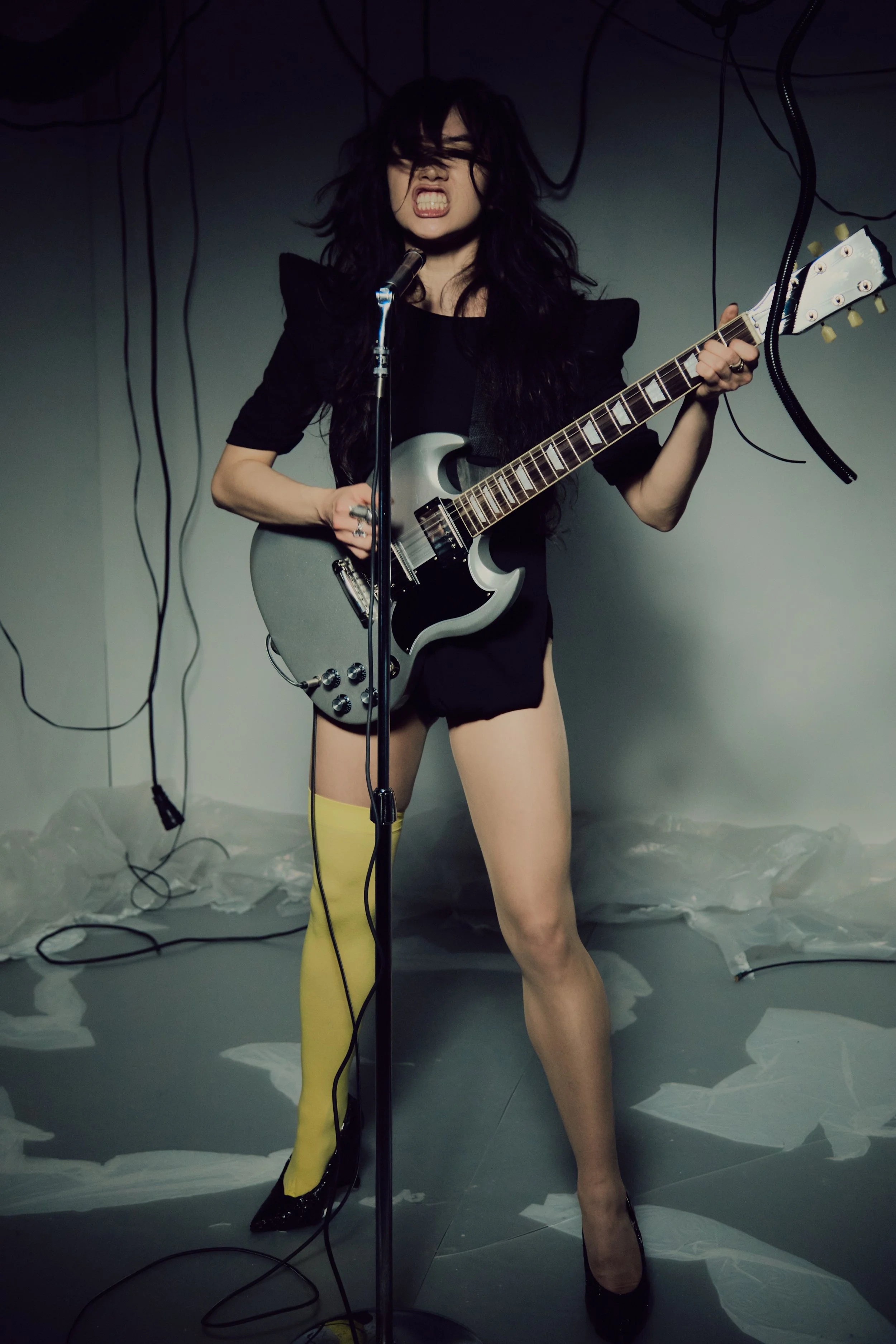
Coming from ballet, where costume can completely transform the way a body and character are perceived, has that influenced your relationship with fashion?
Nothing could ever compare to wearing a tutu onstage in a ballet. I felt so beautiful but so uncomfortable. I value comfort a lot now because I never want to stifle my movement through an uncomfortable costume, but ballet has really influenced the ways I like to get crafty with my taste.
Ballet costumes have beautiful details despite being seen so far from the audience, and I really appreciate the art of being conscious of every small detail of a piece, knowing it will be seen from near and far distances.
You’re moving from the release of Science into headline shows and touring. What are you most interested in discovering about these songs once they exist in front of a live audience?
I am so excited to perform these songs live because the best way to show emotion and convey a feeling of a song is through a live performance. This tour is going to be a discovery period for me as well as it will be my first time playing all these songs live. I can’t wait to share it with everyone that comes.
If Science is an experiment, what have you learned from it, and what do you want to test next?
I’ve learned that there are some feelings that just come with the human experience and life is constantly experimental. I want to test myself because I am probably going to anyway.
