
IN CONVERSATION WITH ZIBBY ALLEN
interview by JANA LETONJA
Zibby Allen returns as Brie Sheridan in Netflix’s global phenomenon Virgin River, with the highly anticipated new season premiering on 12th March. As one of the platform’s most binged series, consistently ranking in the global Top 5, the show continues to deepen its emotional stakes, and Brie’s journey remains at its heart. Off-screen, Zibby is entering what she calls her “folklore era,” splitting time in Scotland, embracing nature, herbalism, and a slower, more intentional way of living. A longtime wellness devotee crafting herbal tonics and alcohol-free elixirs, with her own line in the works, she balances screen success with grounded ritual. She is also co-producing and starring in the revival of Hollywood Rush, a charitable theater event supporting LGBTQ causes and mental health initiatives.
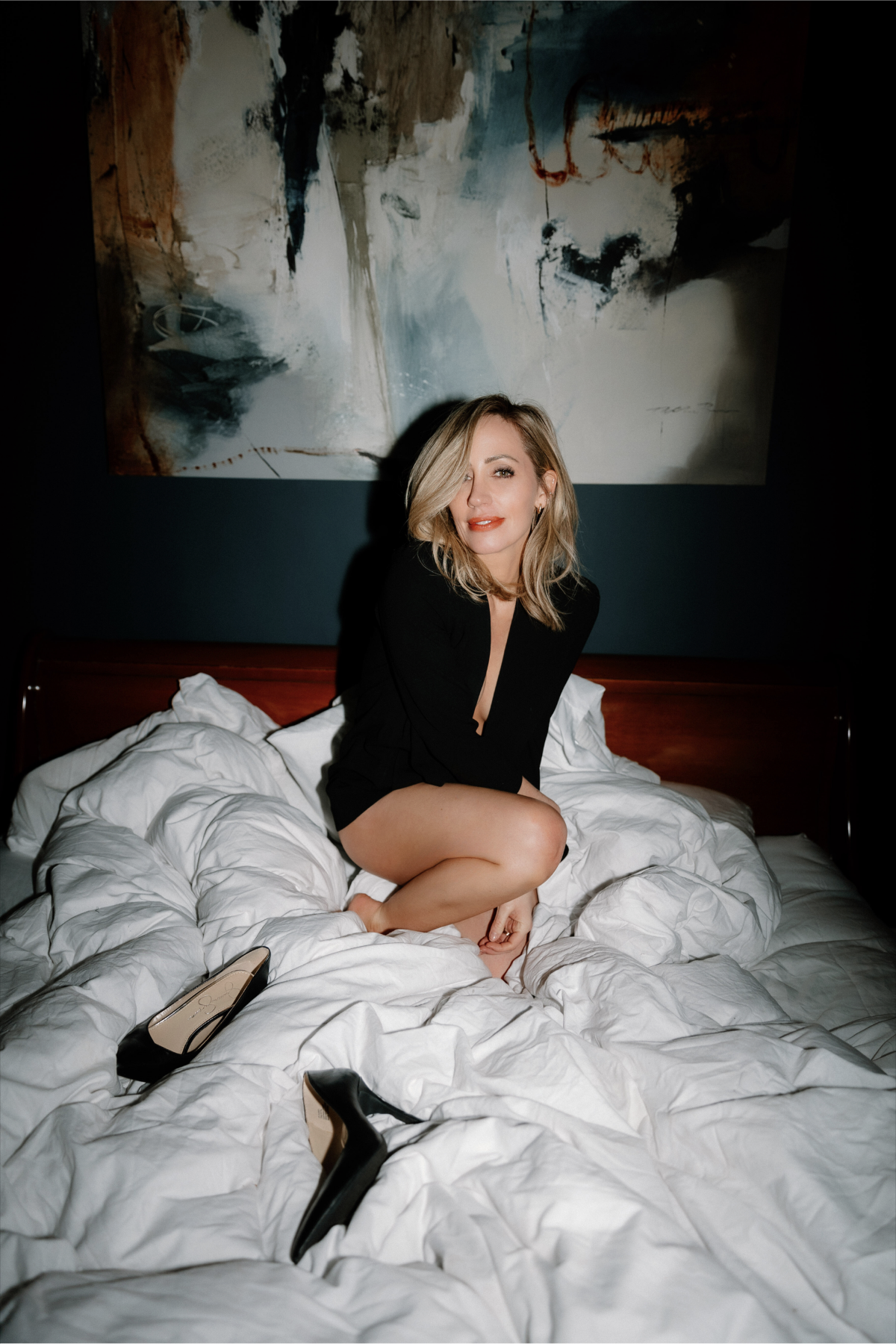
Virgin River continues to dominate Netflix globally. What does it feel like to return as Brie for this new season?
Returning as Brie never gets old. It genuinely feels like a gift. There's something rare about getting to live with a character for this long, and I still find myself discovering new things about her every season. She's taught me a lot, both as an actor and as a person, about resilience, about vulnerability, about the kind of strength that doesn't always announce itself.
And there's something really grounding about the continuity of this job too. You build real relationships with the crew, with your scene partners, and that makes the work richer in ways that are hard to articulate.
How does Brie evolve emotionally in the upcoming episodes, and what can the fans expect when the show returns?
Brie's been caught in this real tension between her head and her heart for a while now, and a lot of that stems from the betrayal and abuse she suffered at the hands of Don. That kind of violation doesn't just heal cleanly, and we've seen it affect how she moves through relationships, with Brady, with Mike, with herself.
This season, she really has to reckon with that. She can't keep outsourcing her pain to her love life, she has to actually sit with it and own it, including the mistakes she's made along the way. There's an accountability this season that I think will be uncomfortable but necessary for her.
And alongside all of that, you'll also see some of what I love most about Brie, that fierce sense of justice she shares with her brother. She's brave in ways that sneak up on you.
The show is known for its devoted fanbase. How has the audience response shaped your experience?
Virgin River fans are truly the best. The internet can be a pretty unforgiving place, especially when you're working in the public eye, but the Virgin River fandom corner of the web is genuinely warm. There's a lot of love there, and I don't take that for granted.
I also think it reflects something true about why the show resonates. ‘Virgin River’ holds up a mirror to the goodness that exists in most people, the desire to be part of a community, to show up for each other through the hard stuff, to celebrate the good. Most of us just want to love and be loved, and the fans embody that. It's a sweet reminder to come back to if I get too in my head about my work.
You’ve spoken about being in your “folklore era” while living in Scotland. What does that mean to you?
What's true is that Scotland has become a real second home over the years. It's where I met my husband over a decade ago, and where so much of our life is rooted. Close friends, his family, a sense of community that feels very grounding.
It's also been a natural counterbalance to the Hollywood bubble, which I think can get pretty myopic if it's all you're surrounded by. I'm someone who needs that balance. When I'm too deep in one world - one environment, one set of priorities - I lose something important. Some part of what keeps me connected to my work, and to myself. Scotland gives me that perspective back.

You and your husband are searching for a country estate, or even a castle. What draws you to that dream?
We don't have kids, but we have a lot of love to give, to our friends, their children, our families. And one of the ways that shows up is in how much we love hosting. Creating a space where people can actually spread out, stay a while, feel taken care of, celebrate, grieve, create, etc., that's genuinely important to us. It's our love language, but it's also just practical. We want the room for it.
A country estate makes sense for that. Somewhere with history and character, where we can build something lasting, not just a home but a place people return to. We love the feeling we get in ancient buildings. They feel like both a celebration and an acknowledgment of the passing of time. And visually we’re naturally drawn to older structures, the architecture, the craftsmanship you don't really find in new builds. Adam is an abstract expressionist painter who frames his work in antique frames, so he has a real sensitivity to that world, the layers, the history, the patina of something old. Between the two of us, restoring something feels far more exciting than buying something finished. It's the right kind of project for us.
Nature and wellness play a big role in your life. How did your interest in herbal tonics begin?
Lockdown was probably the catalyst. Like a lot of people who were fortunate enough to be removed from the direct impact of Covid, that time became an unexpected invitation to go deeper on things I'd always been curious about. Herbalism was one of them.
Once I started studying it, I couldn't stop. There's something genuinely amazing about the medicine that exists just outside your door, plants that can support hormonal balance, skin, the nervous system, and histamine issues. I've been able to address so many of my own health things through herbs, and that's been really empowering. It's one of those areas where the more you learn, the more you want to know
You’ve created alcohol-free elixirs that mimic the feeling of wine. What inspired that exploration?
Honestly, wine just stopped agreeing with me. The histamine, the acidity, the way I feel the next day isn't worth it anymore. But I still love the ritual of pouring a glass at the end of the day, that physical signal to downshift. I didn't want to lose that.
So, I started making cold-infused herbal elixirs using herbs that naturally support the nervous system, things that help you unwind without the aftermath. A little hibiscus gives it that deep rose color, it goes in a wine glass, and honestly, same ritual, better outcome. It scratches exactly the same itch.
With your herbal product line in development, do you see yourself building a lifestyle brand alongside acting?
Honestly, "lifestyle brand" is probably the last thing I'd call it. That term feels pretty loaded right now. It's everywhere, and a lot of it does feel a bit hollow. That's not what this is for me.
I just genuinely love sharing things that have made a difference to my health. Herbal infusions, making my own mineralized water, using tinctures instead of always only reaching for something pharmaceutical. These are things I've quietly been doing for myself, and it feels natural to share them. If that turns into something, great. But I'm not starting from "how do I build a brand." I'm starting from what I actually use.
What rituals keep you grounded amid the demands of a hit show?
Especially while filming, enough sleep above everything. Then meditation, tea, and staying in close contact with my people. I exchange voice memos with my closest friends and they just keep me grounded and laughing. They know me as a human, not an actor or a role. That's irreplaceable.
And then staying creative in small ways that have nothing to do with work. Things that come from me and are only for me, no audience, no output. When I have those things, I feel like myself.
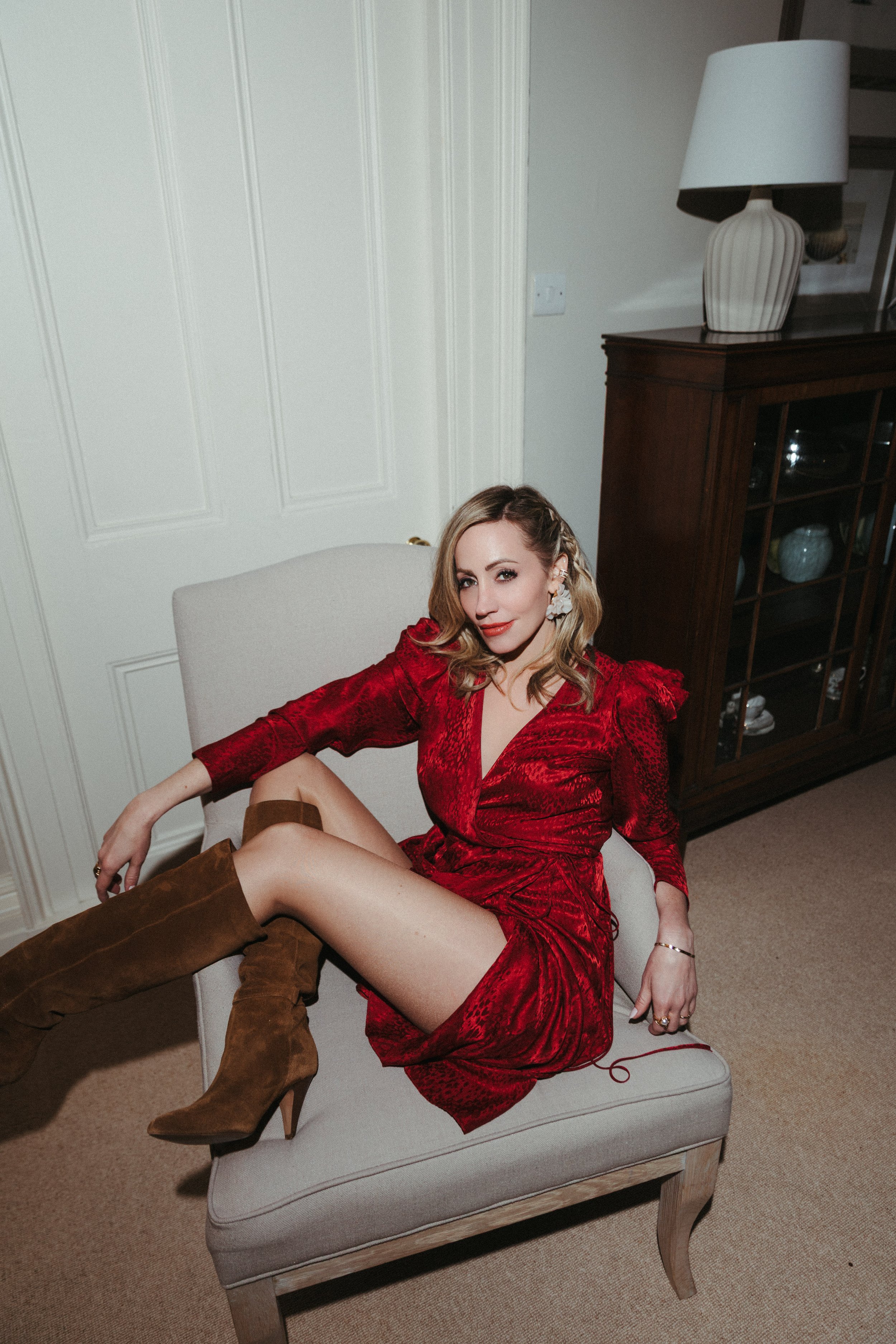
You’re also reviving Hollywood Rush to benefit FosterMore and continue the Baby Dragon Fund’s legacy. Why is this project so personal to you?
Hollywood Rush actually started fourteen years ago as something I produced to raise funds and awareness for the Baby Dragon Fund, a fund established in memory of my brother Hunter, who died by suicide. The fund supported programs at the LA Gay and Lesbian Center, the same programs that had meant so much to Hunter during his life.
What I remember most from that first event is just the power of community. People in this industry showing up, doing what they do best, and rallying around something that mattered. That experience stayed with me. Bringing it back now, and extending that legacy to FosterMore, feels like a natural continuation of the same spirit - using the tools we have to show up for people who need it.
How does producing theater differ from acting on screen?
As an actor, you're in service of the story. That's your lane and you stay in it. Producing asks you to hold the whole thing. Every decision, every moving part, the vision behind why it exists at all. It's a completely different muscle.
What I love about theater specifically is the aliveness of it. There's no safety net, no second take. It happens and then it's gone. That energy is infectious, and it changes what's possible in a room. On screen you're chasing a moment. On stage, the moment is already there.
Supporting LGBTQ causes and mental health initiatives has been central to your advocacy. How do you choose the projects you align with?
It's never really been a strategic decision. The things I've shown up for have come from lived experience, either my own or people I love deeply. When something touches your actual life, the choice to advocate isn't really a choice. It just becomes part of who you are.
I'm also drawn to organizations doing quiet, consistent work rather than just the ones with the loudest platforms. The places that are actually in it with people, day to day. Those feel worth showing up for.
As this new season launches and your personal life enters a new phase, what feels like the biggest transformation within you right now?
Trust. In myself, in my instincts, about what matters and what doesn't. That's probably been the longest work. I'm not sure you can rush it, you just have to live enough life.
I feel more settled than I have in a long time. Not because everything is figured out, but because the things that ground me are real and I know what they are. Adam, my friends, Scotland, the small daily things I've built around my own wellbeing. They're not luxuries, they're load-bearing.
And I think loss stays with you in ways that keep quietly reshaping how you move through the world, what you give your energy to, what you want to leave behind. I feel more oriented around that now than I used to.
So, less transformation, more arrival, maybe. Like I'm finally living in a way that actually feels like me.
TEAM CREDITS
talent ZIBBY ALLEN
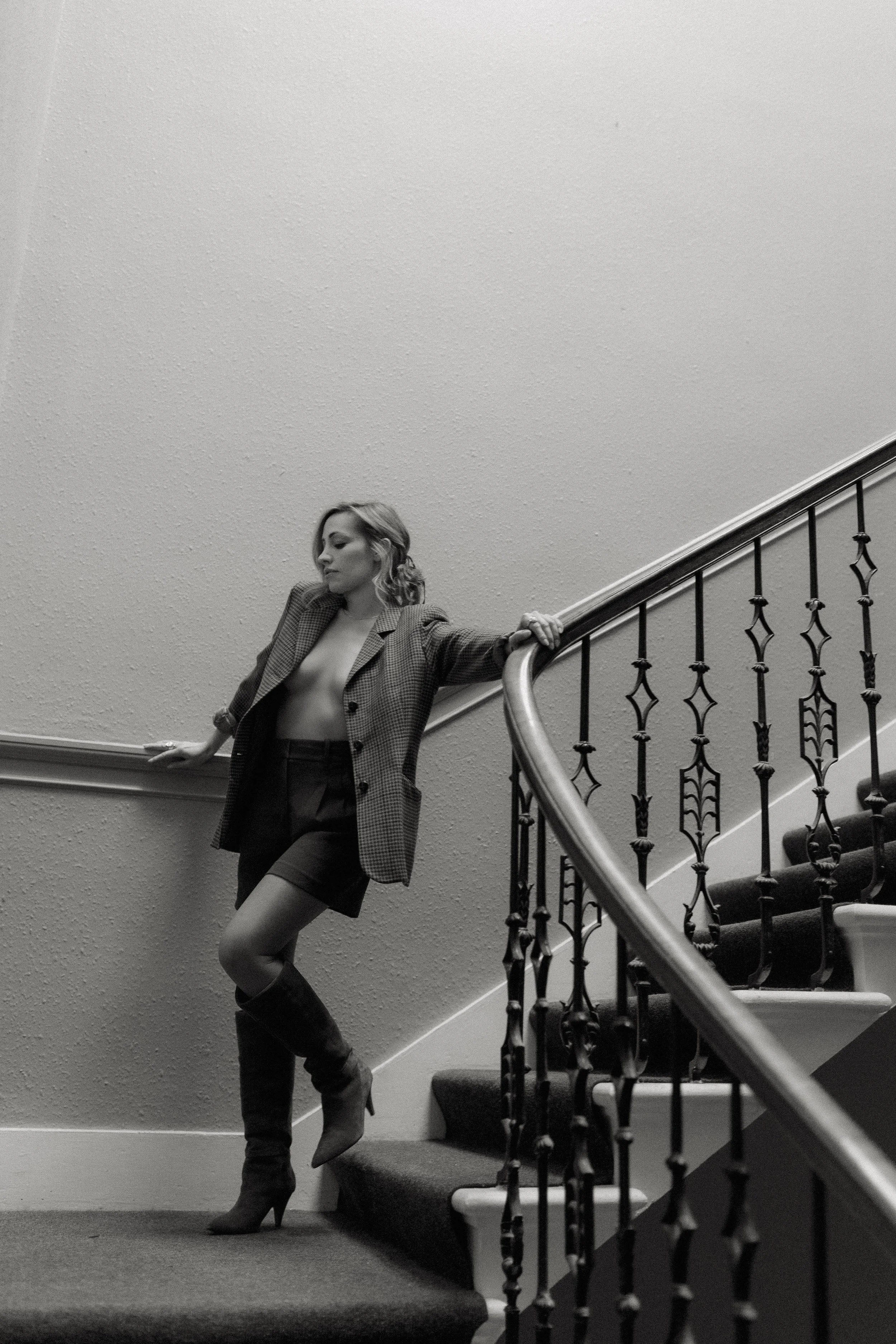
photography CORINNE MOFFAT
editor TIMOTEJ LETONJA
interview and editorial director JANA LETONJA
