
‘A USEFUL GHOST’ REVIEW: A DISTINCTIVE DEBUT FROM THAI FILMMAKER RATCHAPOOM BOONBUNCHACHOKE
words by SONNY NGO
When the house of a self-proclaimed Academic Ladyboy (Wisarut Homhuan) is troubled by random coughs and trails of dust, the culprit is found to be none other than the newly purchased vacuum cleaner. A visit from the handsome repairer (Wanlop Rungkumjad) leads to the startling revelation that the appliance is haunted by a ghost – in fact, the whole manufacturing facility is sprawling with them. Shocked by this discovery and drawn in by the repairman’s charm, the Ladyboy eagerly listens to the tragic backstory that follows. A Useful Ghost is writer-director Ratchapoom Boonbunchachoke’s feature-length debut, and an ambitious, extraordinarily bold one at that.
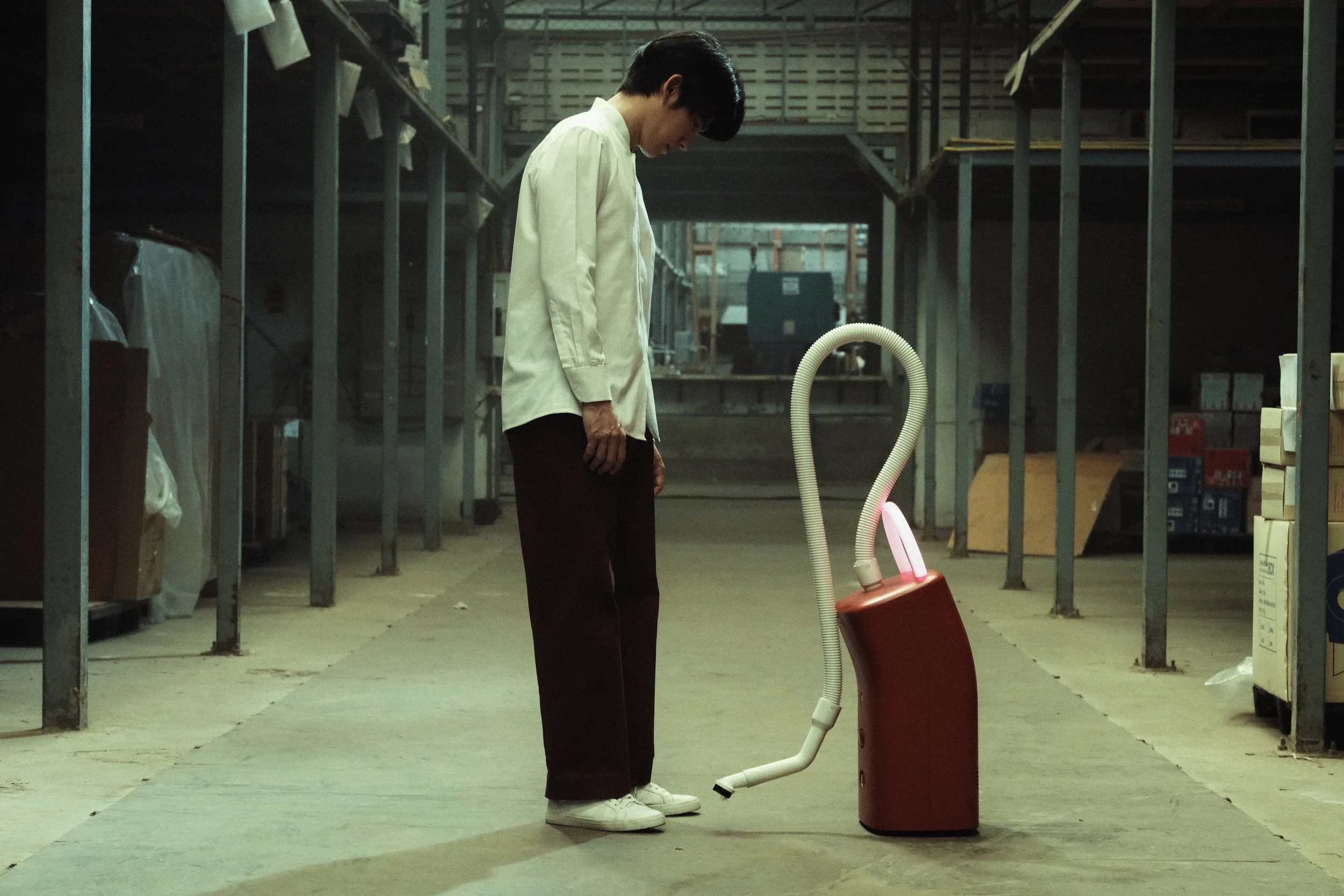
image courtesy of VEDETTE
The lore begins as follows: a labourer passed away during working hours and his vengeful spirit decides to haunt the factory by possessing various appliances. A nuisance in and of itself already, things get worse for leading boss Suman (Apasiri Nitibhon) when her recently deceased daughter-in-law Nat, played by Thailand’s sweetheart Davika Hoorne, decides to occupy a vacuum as well. It’s a clunky and awkward machine, but it does the job – she just wants to be with her husband March (Witsarut Himmarat) again. At last, they are reunited, though March’s family disapproves of their human-ghost relationship. To stay together, Nat must prove herself useful to them and exorcise the remaining ghosts in the factory.
From here on out, the film gets increasingly unpredictable both in terms of plot and genre, yet Boonbunchachoke manages to create a colourful concoction out of his riveting ideas. One of the film’s most prominent themes is queerness, not least because of the inherently queer dynamic between Nat and March. Other characters too – from the Ladyboy and the repairman to the later introduced brother of March and his Australian husband – exist within the queer space. Their interactions within this world reflect broader societal and familial anxieties and pressures, which lends the film a poignant undercurrent beneath its eccentric premise. Where the film finds its ambitious footing is in the pairing of such heavy topics with other equally substantial material: exploitation, capitalism, political oppression, and dust pollution are all themes that shape the narrative in one form or another. Rather than isolating these varying ideas, the film allows them to overlap and collide, highlighting the interconnected nature of these issues. Some audiences might find that the cineast bites off more than he can chew here, but for a debut feature, the sheer zealousness and audacity is difficult not to admire.
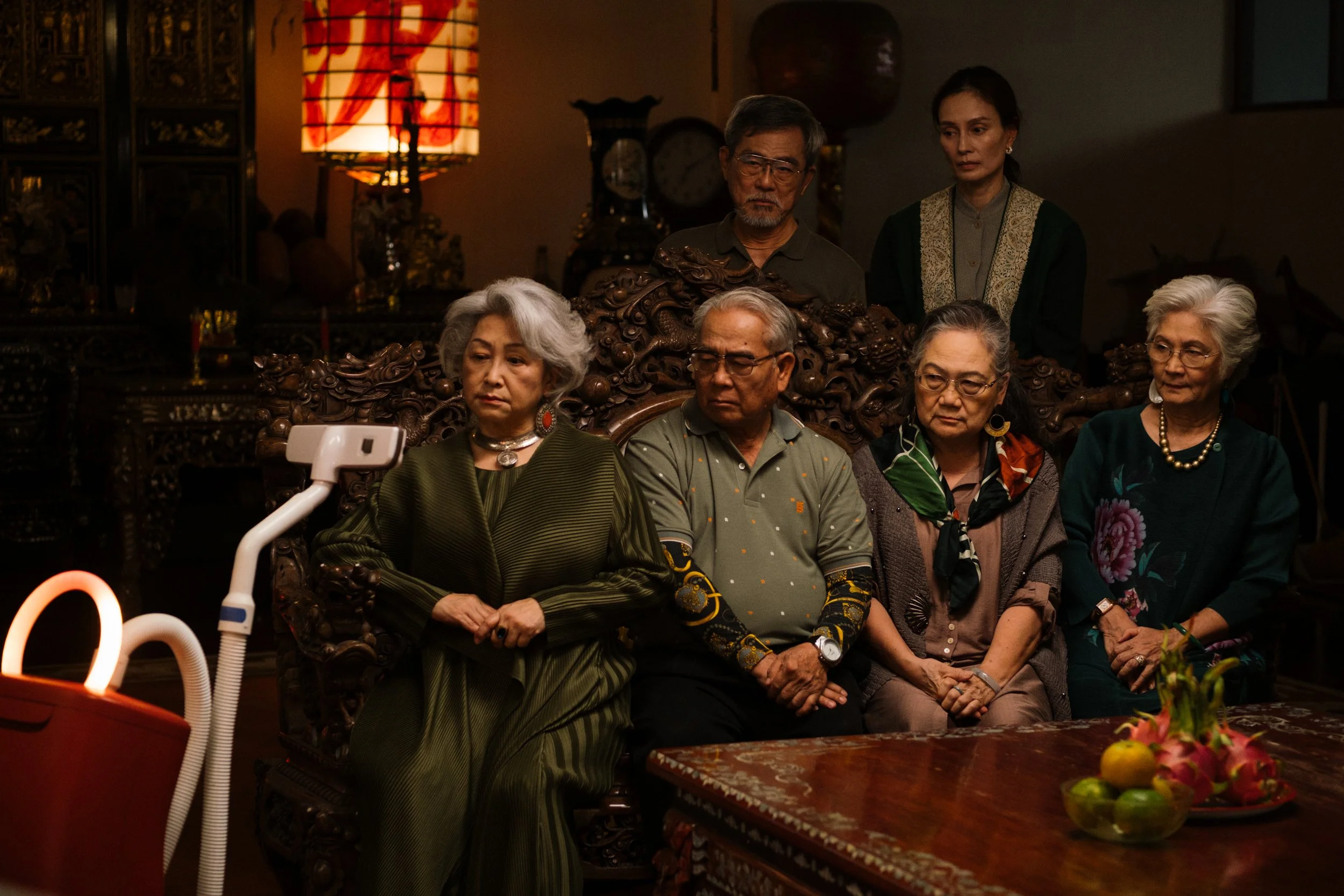
image courtesy of VEDETTE
What most audiences will find no trouble to agree on, however, is that the film is incredibly funny. Largely, what makes the humour so entertaining is the utterly blank expressions on the actors’ faces when they deliver a joke, as if the events happening in this world are the most normal thing ever. This dissonance makes room for some exceptional laughs – what other film would have Buddhist monks make a vacuum cleaner out for a “cunt”? It’s this deliberately dry and deadpan comedy that gives the film a much-needed lighthearted boost, especially when viewed in contrast – or perhaps in coherence – to the film’s more grave subject matter. Supported by the scene-stealing, lumbering vacuum, Boonbunchachoke is able to create a campy, whirlwind of a picture that balances absurdism with comedy and sharp political criticism.
At times, however, the film does suffer from pacing issues. The second act in particular drags on, partly due to the ardent convergence of storylines and themes, which occasionally makes the narrative feel spread thin. There is an inkling that the filmmaker is clinging onto too many ideas all at once, and while such ambition is admirable, it does result in certain loss of momentum. But the film does make up for it by a ridiculous ending sequence that seemingly ties everything together in a strangely fitting, chaotic manner. Such visionary strides should be celebrated, and indeed the film won the Grand Prix during last year’s Semaine de la Critique at Cannes. Despite some of its imperfections, A Useful Ghost remains a blistering debut from Boonbunchachoke, who imbued the film with explosive and creative energy throughout. It’s a singular vision, and it certainly won’t be the last we hear from the Thai filmmaker.
A Useful Ghost premiered at Cannes’ Semaine de la Critique 2025 and is out in Dutch cinemas now.