
COWARD REVIEW: LUKAS DHONT’S MOST MATURE FILM YET
words by SONNY NGO
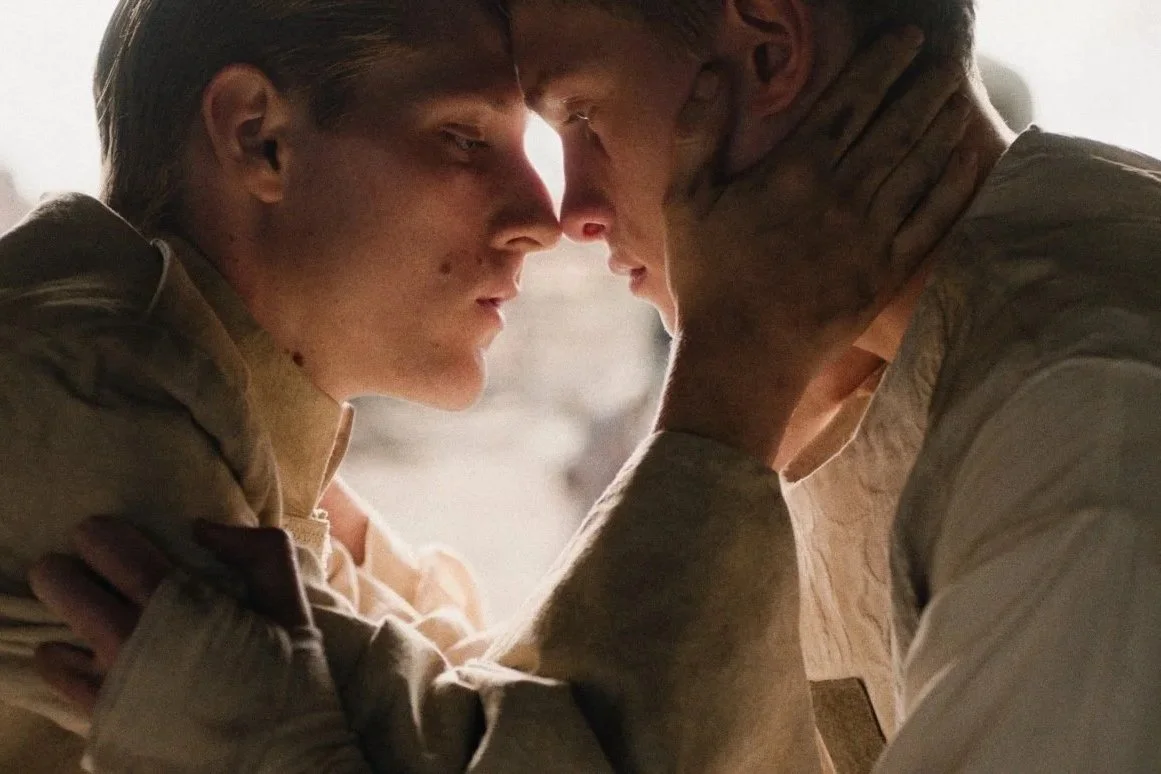
In Coward, the latest Cannes-premiering picture of Belgian filmmaker Lukas Dhont, two WWI soldiers find love in the most troubled of places. Pierre (Emmanuel Macchia), a handsome and brawny farmboy, navigates the horrors of the Western trenches when he falls for the flamboyant Francis (Valentin Campagne), a tailor excused from the frontline and put in charge of raising troupe morale through theatre and drag performances instead. The film is a sensuous, at times overwhelmingly sentimental, take on a war romance, but it is also Dhont’s most elegant portrayal of a burgeoning love story.
all images courtesy of LUMIÈRE and FILMINC
The film opens with Pierre and an ensemble of soldiers singing together. They are hopeful and motivated about the fights to come, however, they are soon faced with the dreaded reality of war: muddy trenches, exhaustive training, and bloodshed. They are quickly waned both physically and mentally. Some try to maintain their patriotism while others become numb and desensitised – most just want to go home, although deserting their positions would have severe consequences. To raise back morale, a group of rejected battle soldiers, led by Francis, are tasked with putting on theatrical shows. On one of the first occasions we are introduced to Francis, he is screeching and carried to the cafeteria where he is dunked atop a table. He wears a robe, appears pregnant, and asks one of the soldiers to help him push out his baby. The soldier in question missed the birth of his child because of the war, and this was Francis’ way to uplift him. Pierre is shocked and elated by the performance. The troupe then bursts out into an irresistible chant.
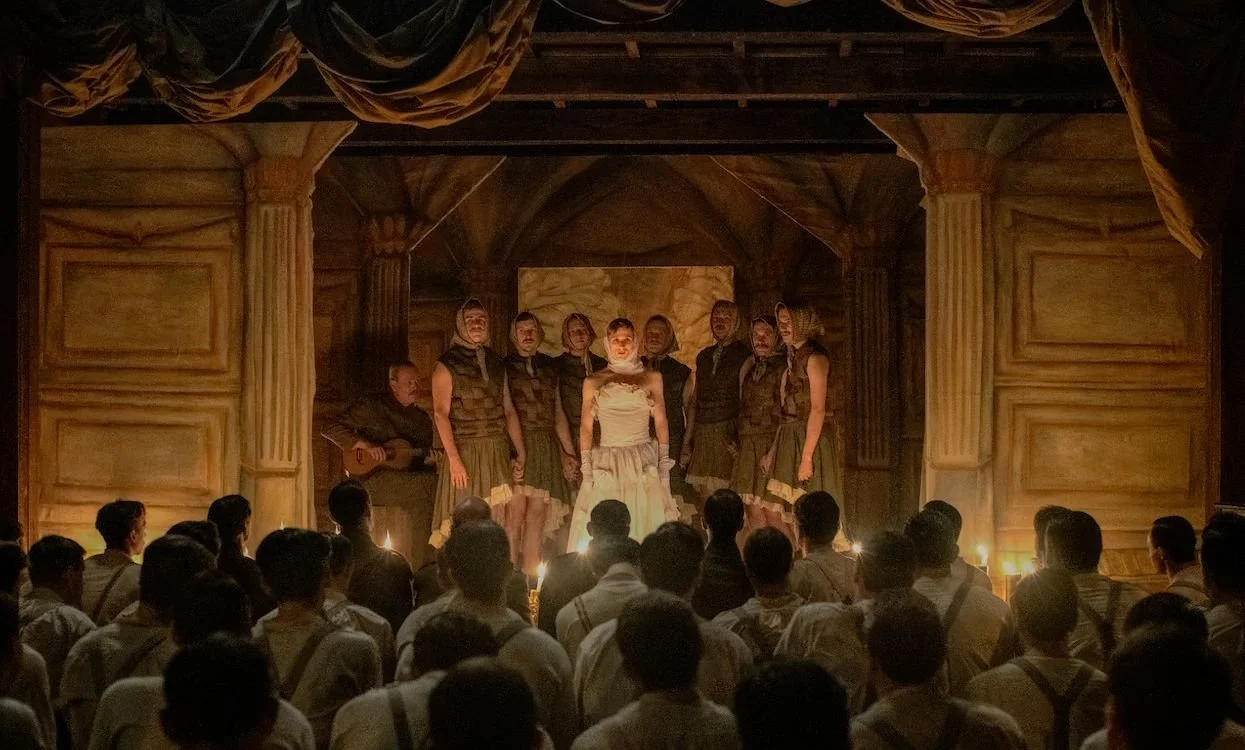
It is the beginning of Pierre’s subtle attraction to Francis, who regularly asks him to help out with the performances. Their creative partnership gradually unfolds into a love story, though none of the soldiers bat an eye just yet – these are times of war and more important matters are at hand, after all. That changes when a drained and fatigued Pierre tries to be excused from the battlefront to join Francis’ theatrical group. As the war rages on, the band of rejects begin to be seen as cowardice, which is taken to new heights when the romance between our main couple takes on a larger role. But are they really cowards? Does it not take courage to love? Is anyone truly brave when hell erupts on Earth?
Similar to Dhont’s previous Oscar-winning film Close, the casting process for Coward began unorthodox: the writer-director observed students at a landscape architecture school in Belgium when he was charmed by Macchia and encouraged him to audition the part. He was a total newcomer to the acting world, making him the perfect shy and inward Pierre opposite Campagne’s more explosive Francis. It is no secret Dhont has a knack for plucking out his leads and creating the space for them to flourish. For his debut feature Girl, he looked at young dancers before being enamoured by Victor Polster, while for Close he discovered Eden Dambrine whilst sitting on the same train. For Coward, too, the film centres two star performances by Macchia and Campagne, who have incredible chemistry together. Macchia in particular has a way of expressing his interior anxieties so well, which is further amplified by Dhont’s signature directing. We stay close to the characters and the camera never quite lets go of Pierre, following him relentlessly from the training grounds to the trenches. It creates an intimacy between us, Pierre, and the rest of the militant troupe.
That military ensemble as a whole animates the film: they expand the world of Coward beyond our main couple, providing different anatomies of young soldiers and their walks of lives. But in the second half of the film, they start to disappear as Dhont decidedly becomes focused on Pierre and Francis. The film begins to lose some of its footing here, since the film is at its best when it operates within the twilight of the war-is-hell and queer romance genre. Solely concentrating on the love story made the film feel a little too swoony and repetitive towards the end; although, of course, a case can be made for the importance of queer love centralising hope and positivity – there are enough gloomy war films as is.
Dhont has had plenty of criticism come his way for Girl and Close – particularly in the way his filmmaking seemingly manipulates the emotions of audiences. But here, few of those traces are seen: Coward is his most mature film yet. Dhont’s directing enable Macchia and Campagne to be showstopping together: they jointly won the Best Actor Award at Cannes for a reason. Despite the occasional tap into melodrama towards the end, the film remains at exceedingly high command. When the soldiers make love, sing their songs, and vocalise their chants together, you cannot help but waver and be in awe.
Coward premiered at Cannes Film Festival 2026 and will screen in Dutch theatres starting October 22.