
words by SONNY NGO
There is an overwhelming void in Andrey Zvyagintsev’s Minotaur. Set in an unnamed city in 2022 Russia, streets barely carry movement while grey high-rise buildings are empty of people. Rooms are spacious and opulent, but feel rather uninhabited for the most part. It is the consequence of Russia’s first full-on mobilisation into Ukraine and serves as the backdrop for Zvyagintsev’s killer noir. It is an exalted, slow-burn and an indisputable return to form for the now-exiled Russian filmmaker.
all images courtesy of LUMIÈRE and FILMINC
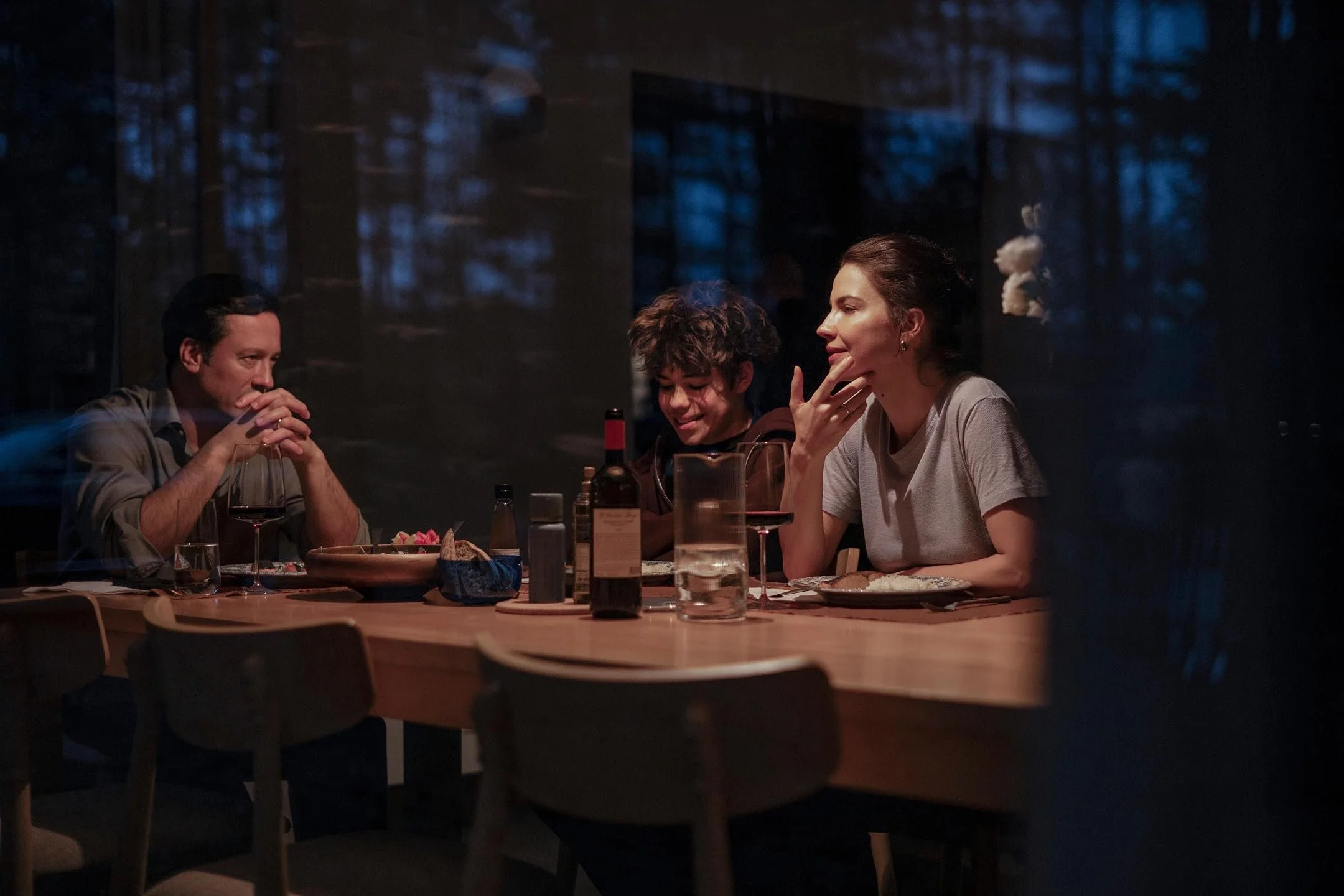
Gleb (Dmitriy Mazurov) is a successful transport-logistics CEO and lives with his wife Galina (Iris Lebedeva) and their son Seryozha (Boris Kudrin) in a polished, modern house. Their space postures their social status – it is grand, rich, and open – but it also hints at undercurrents in their strained marriage. There, too, exists a monumental space between the partners, reflected, often, in the cold, impartial attitude of Galina towards Gleb and his inability to connect with her. Perhaps it is the fault of the house’s sleek architecture or perhaps it is to blame on the suspicion of an affair: When Gleb is off to work, Galina finds herself in a steamy entanglement with Anton (Yuriy Zavalnyouk), a lowlier yet more carefree photographer. Although Gleb hires a private investigator to get to the root of it, he has more urgent issues to contend with. The mayor of the city has ordered his firm, together with his competitors, to put forward male employees to draft into the war, unbeknownst to most of the staff.
The film’s title is in reference to the Ancient Greek myth of the part man, part bull creature who roamed the Cretan labyrinth and whose insatiable hunger could only be stilled with the sacrifice of 14 young persons. In this story, it appears that Gleb is the king who is forced to cede a tribute into the labyrinth. Does that make Putin the minotaur then? It is a devastating premise, but even more so is the utter lack of resistance from Gleb and the other firms. In fact, Gleb takes advantage of the opportunity to remove an inconvenience from his life. It is but a stint on the consciousness of the elite, though not nearly enough to galvanise any opposition towards the mayor – is that even possible under Putin’s dictatorship?
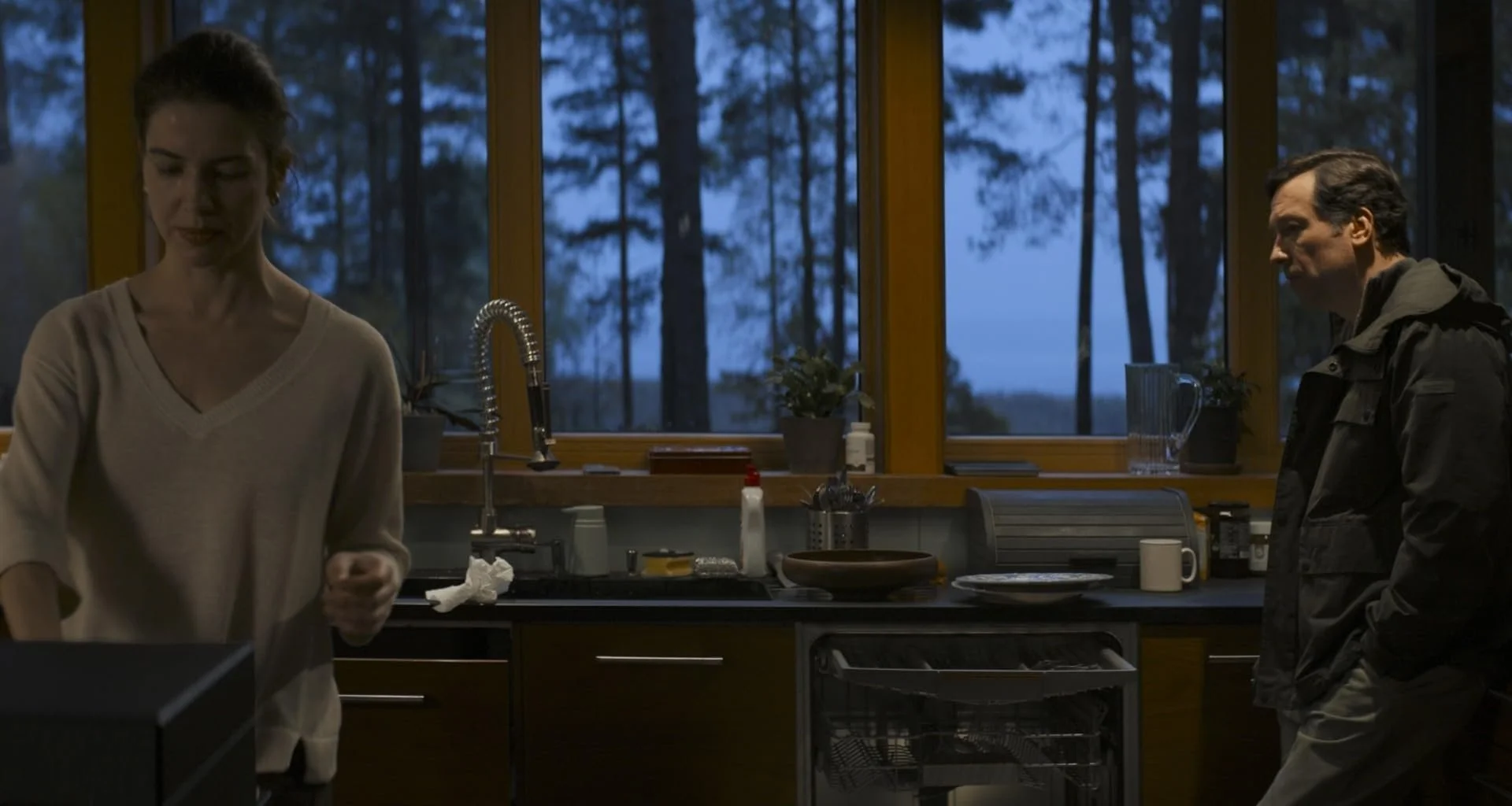
Zvyagintsev follows the essential narrative beats of Claude Chabrol’s 1969 La Femme Infidèle, but places our main trio in the context of 2022 Russia. That background becomes a vital agent in addressing the power plays at hand. Zvyagintsev is able to draw parallels between the corrupt system of Russia’s oligarchy and Gleb’s socioeconomic status, which precisely wields him the power to reach his goals as both a businessman and a victim of infidelity. At some point, Minotaur becomes so entwined that you wonder if the primary story is that of Gleb and Galina or of Russia and Ukraine. Fore- and background enhance each other before eventually blurring into a field of dark clouds.
Minotaur captures a nation of tragedy. One where morals of good and bad have been upended by corrupt and ravenous monsters and whose everyday citizens have to pay the price for. There is so much open space in the film, a consequence of decisions made in the comfort of four enclosed walls. Zvyagintsev has managed to dissect the nuances of contemporary Russia to create a piercing cinematic feat reflecting its society’s dread and gloom. At one point, Gleb advises his son about a school bully, stating that, “Whoever starts a fight first, loses for being stupid” — I hope Russia’s minotaur realises that soon, too.
Minotaur premiered at Cannes Film Festival 2026, where it was awarded the Grand Prix, and will screen in Dutch theatres starting November 26.