
‘FRIDA: THE MAKING OF AN ICON’ BECOMES THE HIGHEST PRE-SELLING EXHIBITION IN TATE MODERN HISTORY
words by BEX WHITLEY
Today, London's Tate Modern opens its doors to its newest exhibition: Frida: The Making of an Icon. It comes as little surprise to know that pre-sale tickets for the exhibition have been recorded as the highest in the Tate’s history. Over 41,000 have sold, with many drawn by the promise of rarely-seen self-portraits held by collectors, including Self-Portrait (with Velvet Dress) and Self-Portrait with Loose Hair.
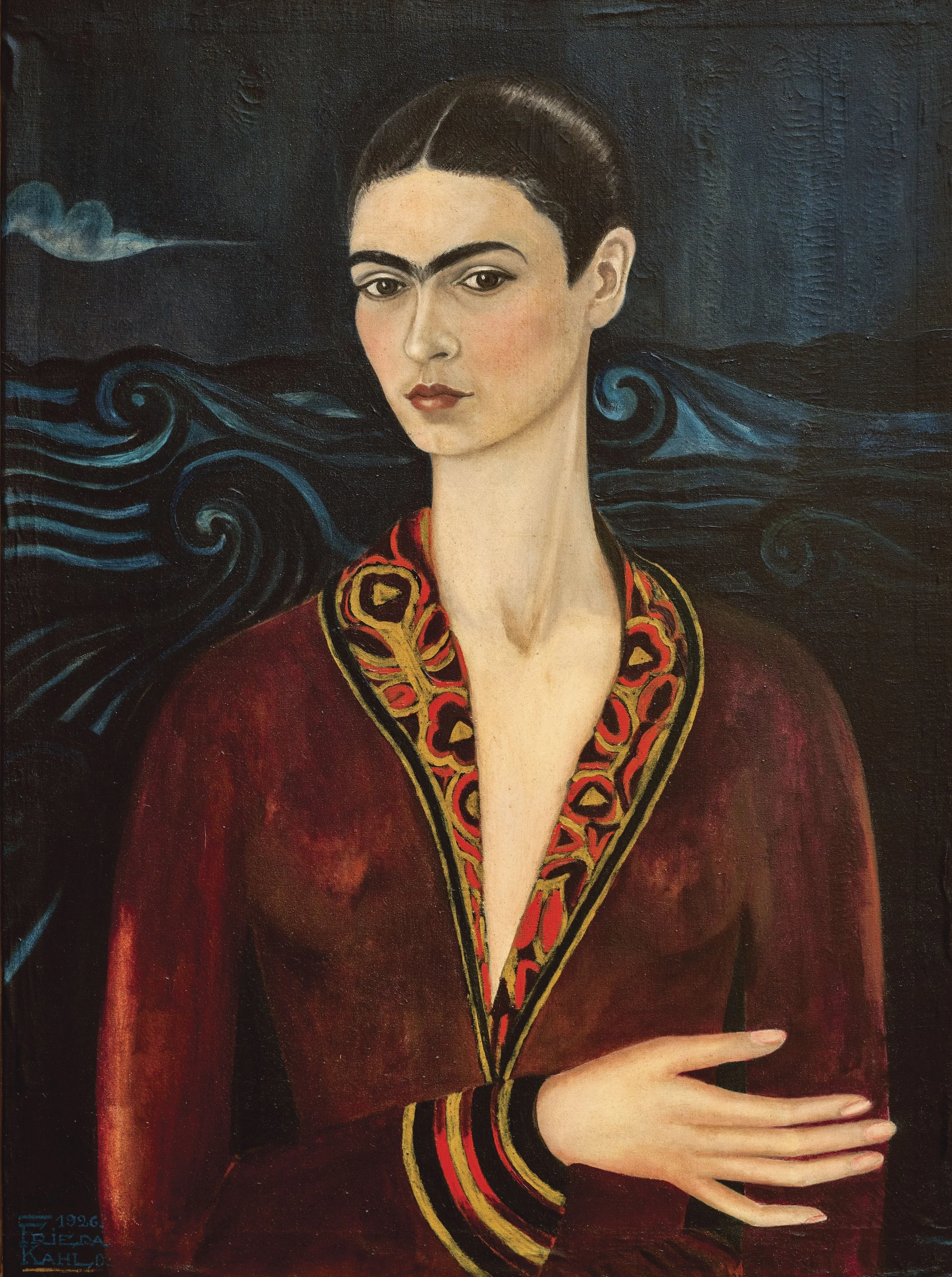
Frida Kahlo
Self-Portrait (With Velvet Dress)
1926. Private Collection.
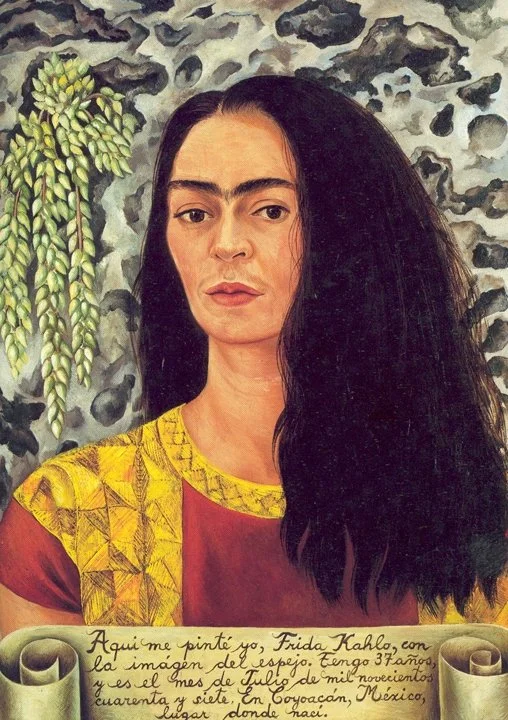
Frida Kahlo
Self-Portrait with Loose Hair
1946. Private collection.
However, the exhibition itself has been met with mixed reviews, with questions arising around the fact that out of more than 200 pieces on display, only around thirty are Kahlo's. This tension hasn't gone unnoticed by the Tate, who have framed the show as a chance to critically examine the Frida phenomenon and the scale of her commercialisation.
Where her life has been documented extensively, even by the Tate itself in 2005, this exploration instead takes a new approach. Rather than another retrospective, the array of art on display serves as a display of her continued veneration from both the public and her contemporaries. Among those featured in the continuation of her legacy are Judy Chicago and Yasumasa Morimura, two of more than eighty artists tracing her continued influence. Included works encompass photography, painting, sculpture and archive.
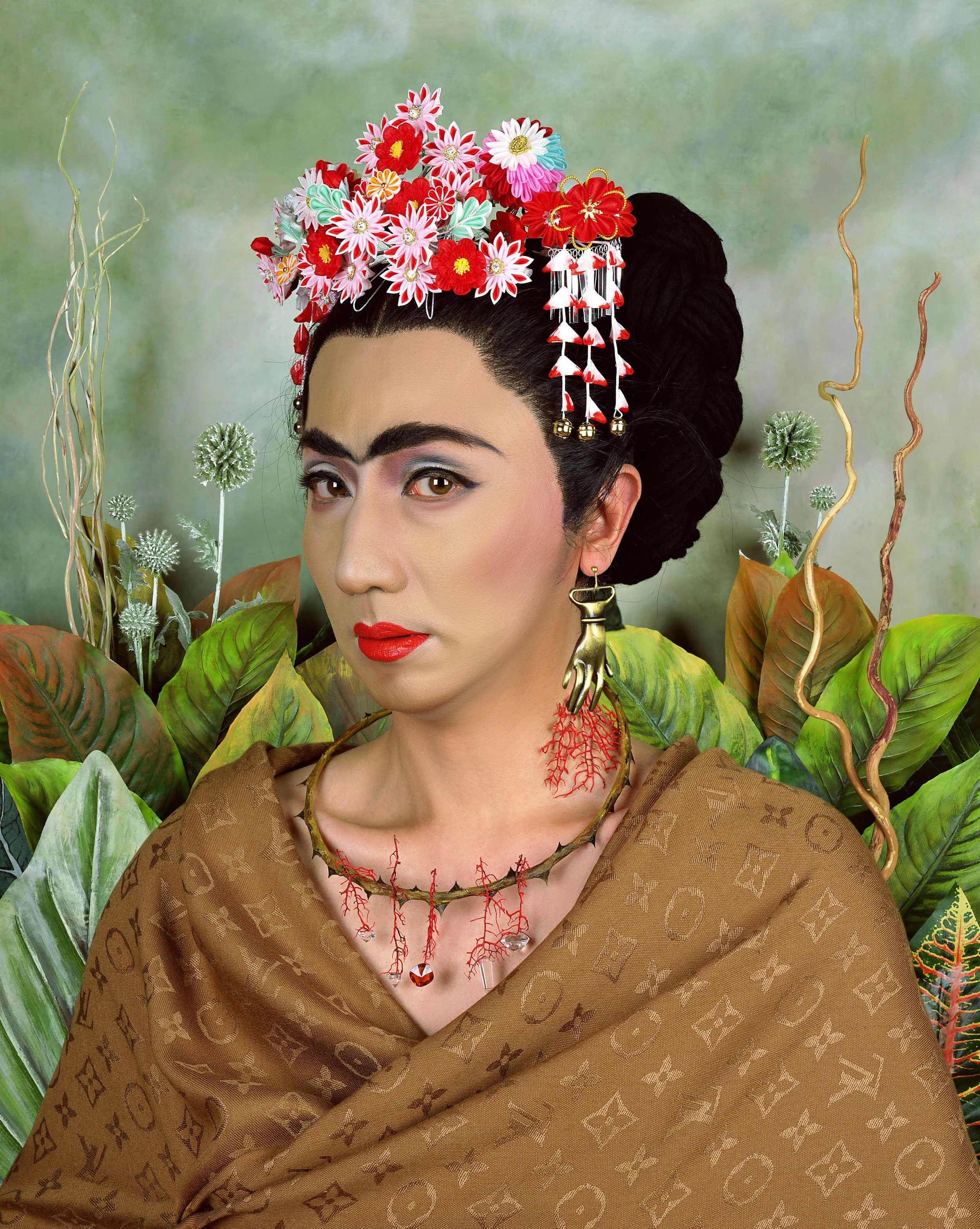
Yasumasa Morimura
An Inner Dialogue with Frida Kahlo (Hand Shaped Earring)
2001© Yasumasa Morimura; Courtesy of the artist, Luhring Augustine, New York and Yoshiko Isshiki Office, Tokyo.
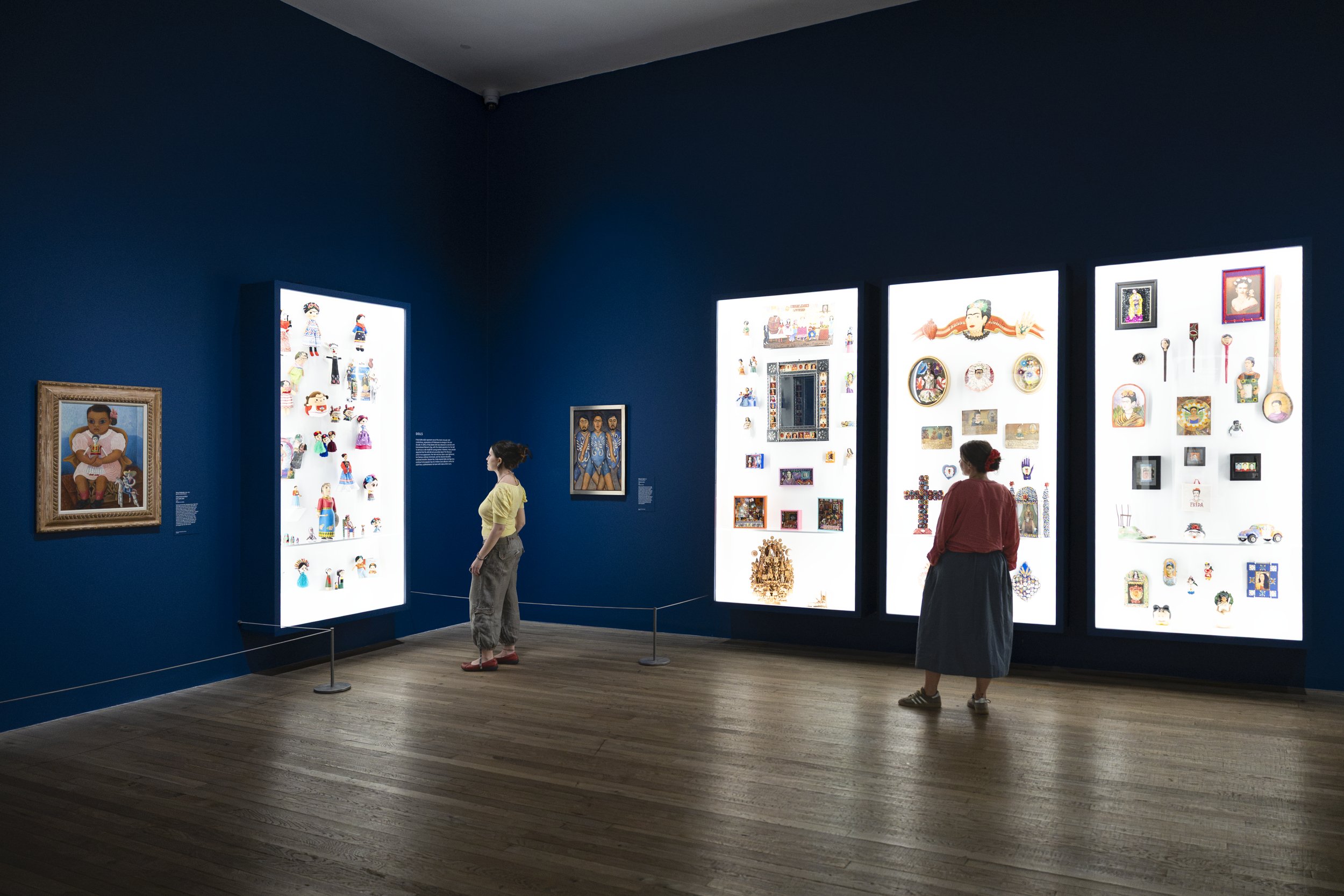
image courtesy of TATE MODERN
Developed collaboratively with Houston's Museum of Fine Arts, this amalgamation of her works alongside paintings from those she inspired creates an exacting and clear picture of the profound effect she has had on artists and communities alike. Few artists earn the title of global phenomenon, and while the commercialisation of Kahlo as a figure has been heavily critiqued, there is something to be said for an artist who has sustained such an artistic and commercial legacy.
So, what is it that has made both the art and persona of Frida Kahlo so enduring? A contribution to this may be that while many have tried, no other artist has been able to portray her quite as well as she could herself. It's an irony the Tate's exhibition leans into, with mass-market production of ‘Fridamania’ merchandise sharing the same space as her own work, including The Frame and Girl with a Death Mask. In turn, each generation's response to the work ignites something new. Where the rise of 1970s and 1980s feminism in Mexico sparked a renewed interest, so too has the 21st-century interest in self-expression and the exploration of race, gender and sexuality.


images courtesy of TATE MODERN
Ahead of her time, Kahlo's art celebrated and articulated a multifaceted existence. Her many "selves" were key to her self-articulation. She embraced her Mexican heritage, exploring a queer self-image through her work, portraying feminist ideas, the experience of a disabled woman, and the realities of migration and displacement. Fittingly, the show's run will include a Day of the Dead celebration on November 1st, with an immersive programme inspired by identity, ritual and Dia De Los Muertos.
Frida: The Making of an Icon runs at Tate Modern from 25 June 2026 to 3 January 2027.