
MUST-SEE ART IN AMSTERDAM FOR WHEN YOU WANT TO SLOW DOWN
Whether it’s getting older, the feeling that the world is constantly on fire, or simply the fact that we now watch it unfold 24/7 on our phones, things can feel increasingly confusing. Creating distance from it all has become more difficult, and lately, everything seems to spin a little faster around us.
In the constant effort to stay informed, it’s easy to feel overwhelmed. Fortunately, there are places to escape, where art, music, words, or performance attempt to untangle questions we carry. Spaces where, for a moment, the mind and body can separate from the noise. This month, we highlight cultural must-sees: works that slow you down, raise uncomfortable questions, or quietly shift the way you see the world.
WILLIAM FARR: DISSOLUTION


photography by DALE CUTTS
Sheer curtains mute the outside noise and filter the light in the gallery, creating a space that feels entirely dedicated to the works. William Farr’s works cover the walls, bringing them to life with pigment and texture. The paintings are not lit by artificial light, responding only to what nature allows in. In this way, the works are in constant dialogue, with the shifting daylight subtly changing what you see.
The title Dissolution refers not only to the dissolving of paint, but also to something more internal: the dissolution of the self, the ego, and the need for control. Farr’s process is physical and intuitive. He works with solvents, rags, and raw linen, pushing pigments into the surface only to remove them again, revealing new layers beneath. In his studio, he moves continuously between canvases, describing the process as “shuffling a deck of cards.” He compares the process to gardening: “sometimes it grows and blossoms, and sometimes it doesn’t.”
The paintings are built through countless cycles of layering and removal, allowing the work to slowly unfold. It is a precarious process; push too far, and the painting can collapse entirely. Farr invites visitors to sit with the work and allow time for the painting to be read. Preferably alone, in the wooden chair placed in front of it. The chair, whose legs were sawed shorter by his grandmother, gives you a slightly unusual perspective on purpose. He urges you to let your eyes take the time to adjust. It should be a process of continuous surrender, observing the sensations in the body. For Farr, the act of painting resembles a form of prayer and meditation.
William Farr’s Dissolution runs until April 2026 at the Homecoming Gallery.
For more information, go to: https://homecoming.gallery/artists/8306/
PERRY GITS: FAREWELL
photography by NELLA NGINGO
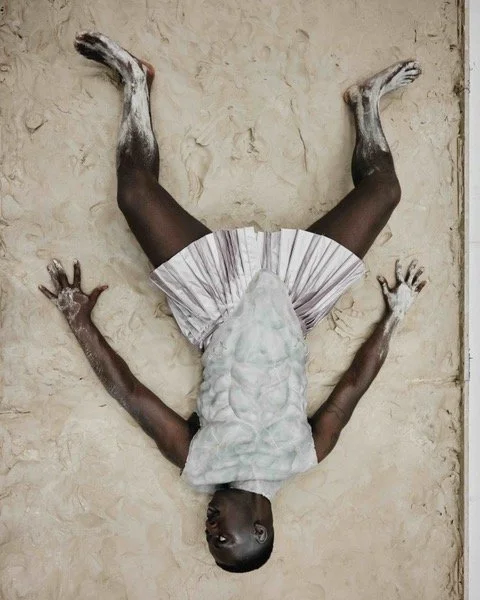
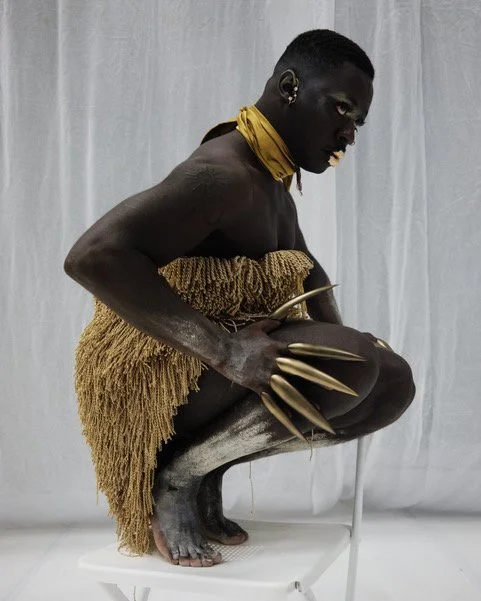
Thinking about life inevitably means thinking about death as well. Farewell, the latest performance by Perry Gits, explores exactly this tension. Rather than presenting death as something purely tragic, the performance approaches it as a space of reflection, ritual, and even celebration.
Gits addresses the audience not through direct words, but by inviting them to reflect on what comes to mind when confronted with life’s biggest questions. His performance moves through different emotional states: presence and absence, tension and release, intimacy and distance. At times, the interaction feels almost uncomfortable, as if the audience is being gently pushed to confront thoughts that are usually kept at a distance. Yet these moments also create surprising openness, allowing the performance to become something shared rather than merely observed.
Accompanied by live music from Phantom Wizard and Azubike Onwuka, Gits draws the audience into a small universe of electronic sound, light, and movement. The performance explores the interesting contradiction between different cultural approaches to farewell: the restrained solemnity of Catholic mourning rituals, the emotional intensity of Ghanaian funeral ceremonies, and the celebratory memorial traditions within queer communities. Through this layered combination of influences, Farewell becomes less about death itself and more about how we relate to it, and therefore how we relate to life. The performance creates a space where reflection replaces fear and endings blur into beginnings.
Perry Git’s Farewell runs until the 22nd of April in various theaters throughout the Netherlands.
For more information and tickets, see https://www.tafelvanvijf.nl/.
MICHEL VAN DER AA: THEORY OF FLAMES
courtesy of DUTCH NATIONAL OPERA
photography by MARCO BORGGREVE
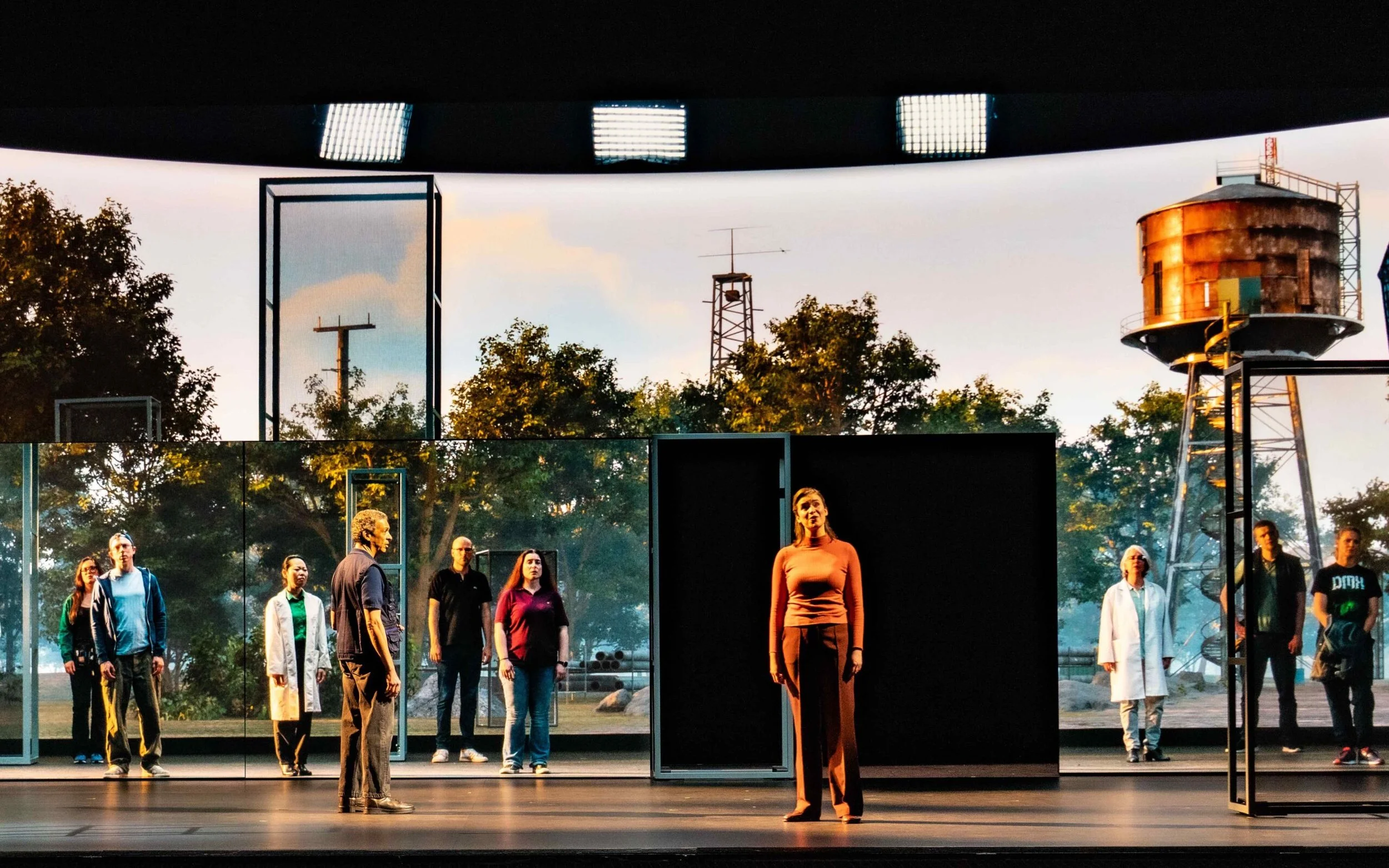
Opera is historically a place where stories are told through the theatrical language of singing and orchestral music. But Theory of Flames, by Michel van der Aa, moves beyond the traditional. From the beginning, the lines between reality and illusion start to blur. Through an interactive set design combined with prerecorded film, the stage becomes a hybrid environment where the performers interact seamlessly with what appears on screen. It becomes difficult to distinguish what is physically happening on stage and what exists only on the screen.
That confusion is exactly the point. Van der Aa uses the opera to explore conspiracy thinking and the fragile nature of truth in a world saturated with information. Truth is no longer tested against shared facts, but often measured against personal belief systems. How can people still relate to one another if they no longer believe in the same facts? What happens when two people live in completely different versions of reality?
Visually, the work unfolds almost like a painting that is constantly shifting. Layers of film, stage design and movement interact perfectly with the performers, creating an image that is always in motion. The result is interesting, but also slightly unsettling. One line in particular stayed with us long after the performance ended: “It’s not about safety, it’s about control.” In a time where our understanding of reality is increasingly shaped by screens, the opera feels less like a spectacle and more like a quiet confrontation with how easily our sense of truth can fracture.
Theory of Flames by Michel van der Aa runs from the 6th to the 22nd of March at the Dutch National Opera & Ballet.
For more information and booking the last available tickets see https://www.operaballet.nl/en/ dutch-national-opera/2025-2026/theory-of-flames#tickets
DANH VO: ΠΝΕΥ͂ΜΑ (ἜΛΙΣΣΑ)
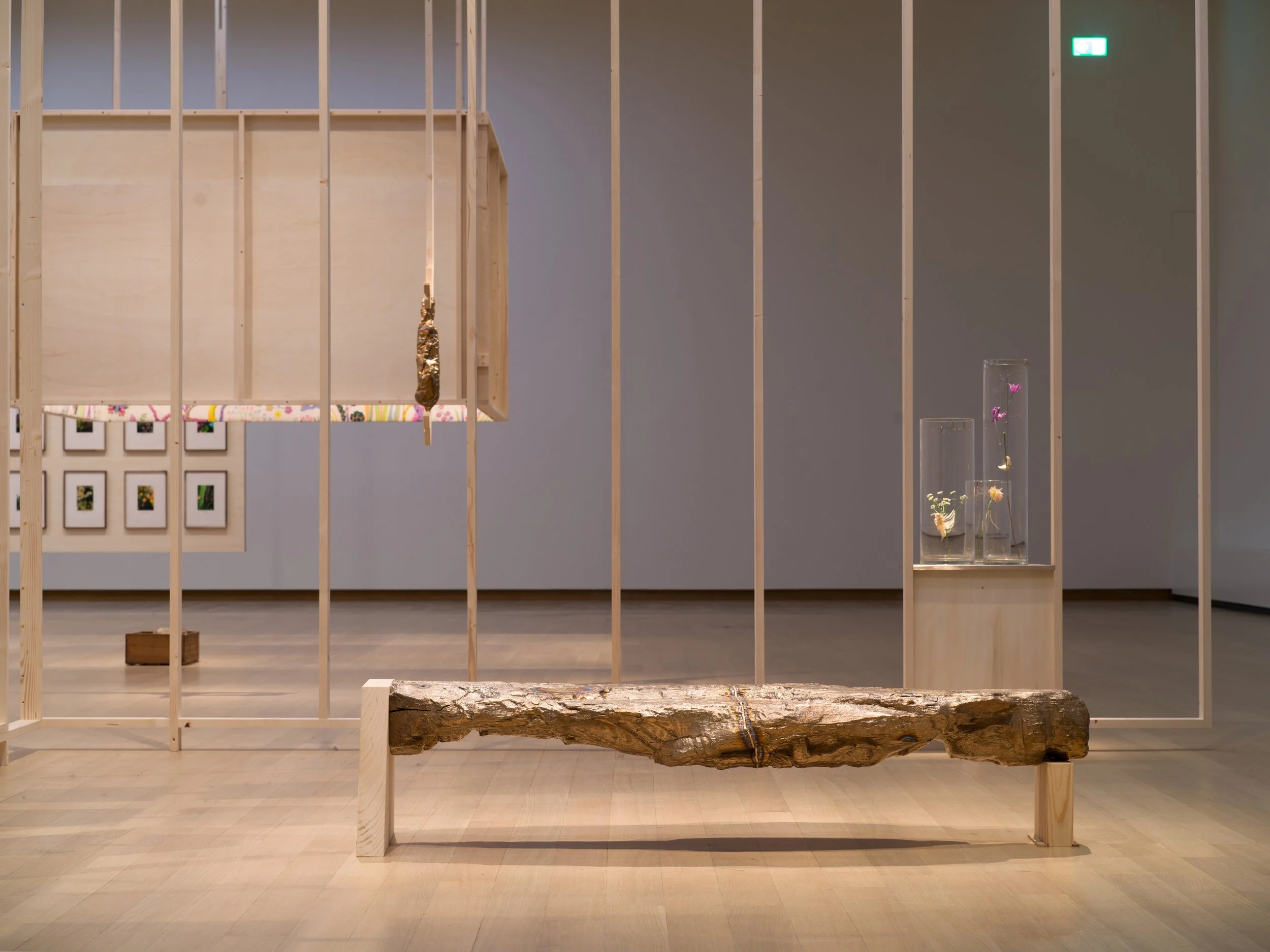
Danh Vo Zaaloverzicht (2026), courtesy of STEDELIJK MUSEUM AMSTERDAM
photography by NICK ASH
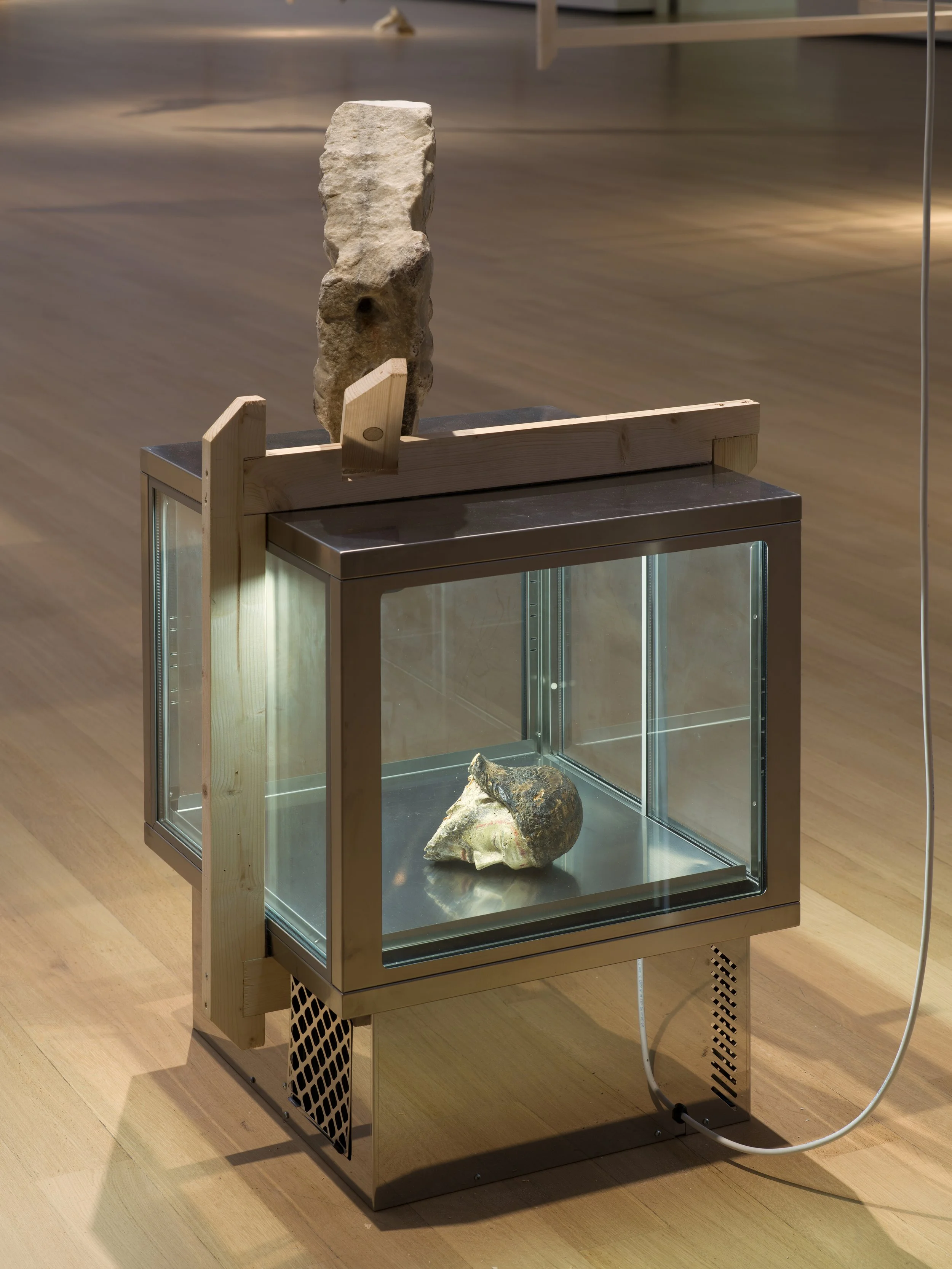
Instead of seeking logic, Danh Vo is interested in conflict, contradictions, and opposites. “My role as an artist is to be good at looking, at observing. It’s to see quality in things, whatever they are,” he explains. In his view, art should estrange. His work is not made for white cubes, it is not heavily curated in advance, and he does not work with maquettes. Instead, his sculptures are built directly in the space, forming a relationship between the body and the object. There is not necessarily logic in how the works relate to one another within the exhibition — and that, for him, is precisely the strength. He sees the beauty of objects as they are and allows them, in their simplicity, to engage with something else, creating a dialogue. It feels different from the intensely curated world we find ourselves in.
He demonstrates the power of following intuition, guided by a deep interest in materials, craft, and history. In times of confusion, his work reminds us of the value of focusing on what is human: the tactile, the tangible, the felt. Vo encourages viewers to see things differently: placing objects on the ground, upside down, or showing sides that are usually hidden, revealing new beauty in unexpected places. Everything feels in balance, inviting you to move through the space intuitively, to wander, and most of all discover.
His practice also touches on themes of displacement and relocation, reflecting how life can take unexpected turns and how we adapt to new environments to make them our own. As he puts it, “The best thing in life is that you went in a direction that was not expected, because it’s beyond yourself.” He speaks just as thoughtfully about art: “When you experience a work at 25, it will feel completely different from when you see the same piece at 75. You’ve gained a different perspective on the world, but you still carry the work with you.” In his eyes, that is the ultimate goal of art. “The most beautiful artworks that I carry with me are works that change because I change.” Maybe the fact that everything is changing is not always a bad thing. It is how we respond to it that matters.
Danh Vo’s ΠΝΕΥ͂ΜΑ (ἜΛΙΣΣΑ) is on view until August 2nd at the Stedelijk Museum.
For more information, see: https://www.stedelijk.nl/en/exhibitions/danh-vo-2
