
THE MIND, THE HOUSE, AND THE MATERIAL: A GLIMPSE INTO SZILVESZTER MAKÓ’S BAUHAUS BALLET
words by DONA TODOROVSKA
It was the opening day of New York Fashion Week, and we got intimate with Szilveszter Makó. Stepping through the doors of a big black house, mysterious hands came through small windows in the walls, reaching from behind black curtains to serve champagne flutes. Life-sized houses partially visible through the walkway of the next room, hinting at different homes, rooms and stories that have shaped Makó's world. There’s a giddiness upon entering — a curiosity that evokes something almost childlike, the kind of feeling that makes you want to look behind every curtain and see what is waiting on the other side.
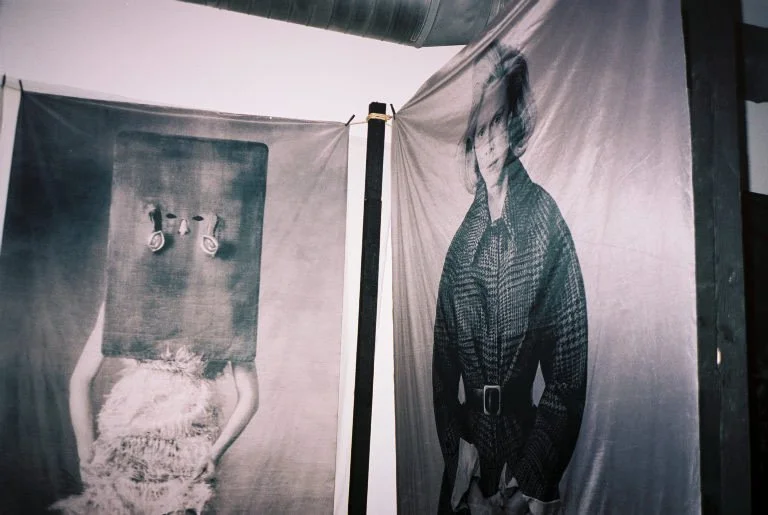
photography by DONA TODOROVSKA
On September 10, Makó welcomed us into Bauhaus Ballet, his first exhibition in New York presented by The Cultivist and Capital One. Spread across six rooms, the immersive exhibition felt less like walking through a collection of photographs and more like entering someone's house, or perhaps, more accurately, entering their mind.
There was something especially intimate about the night. New York Fashion Week calls for immediacy. Makó's work invites us to slow down and spend some extra time with it. We weren't simply being shown the final images. We were being given access to the spaces, objects, memories and materials that helped make them.
Entering the frame
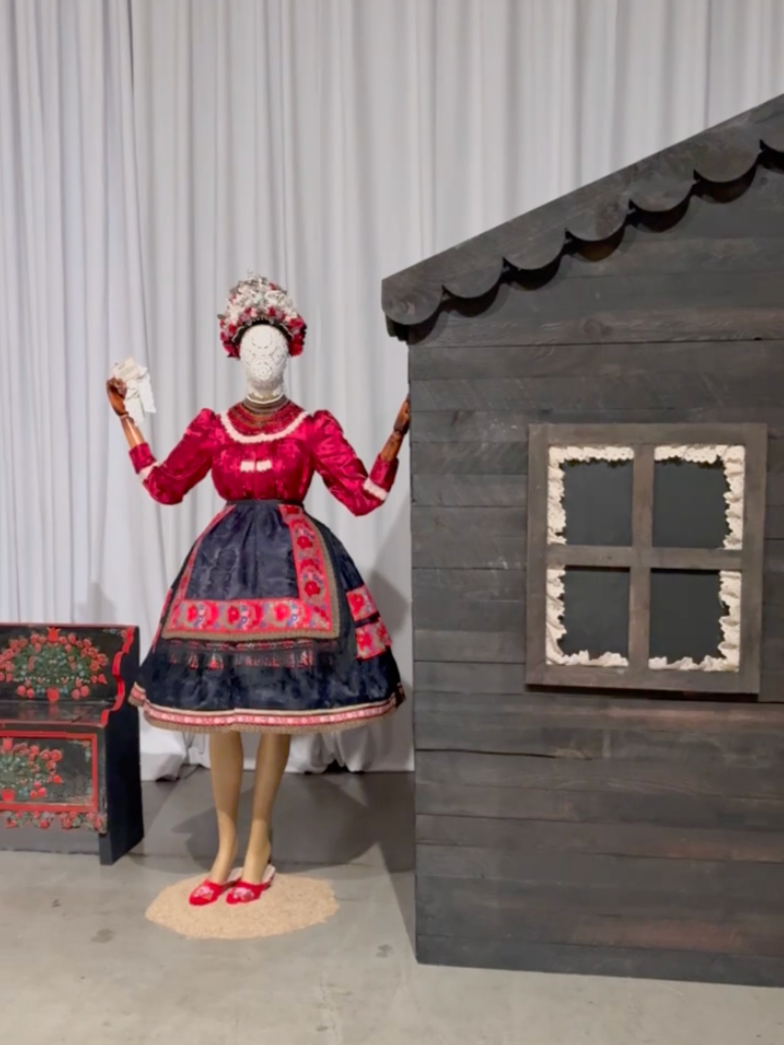
Before entering Bauhaus Ballet, the first thing you see is the house: a large black structure around the entrance, the same one made famous in Makó's image of Williem Dafoe. The black house became an entrance into Makó's world.
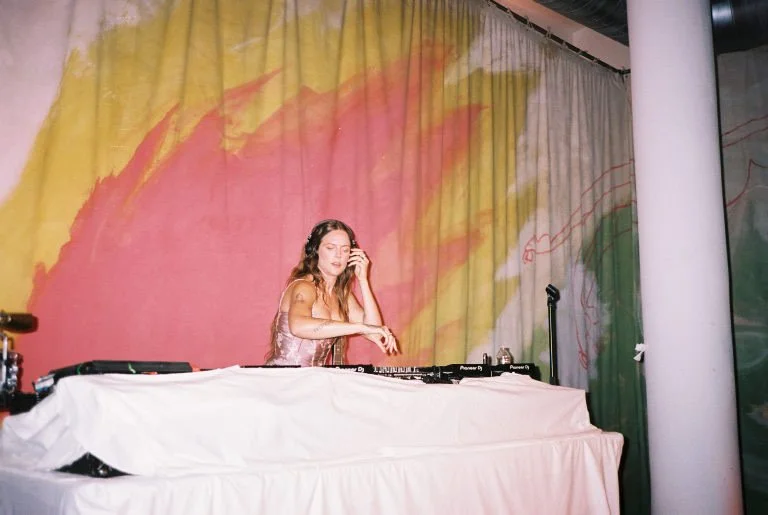
Inside, the exhibition moved through six different spaces: the Dark Room, the House of Memories, the Room of Curiosity, the On-Set Photoroom, the Path of Photographs and finally the Dining Room, which brought together friends of the artist for cocktails and a live DJ performance from Tove Lo, the Swedish pop provocateur behind some of the decade's most emotionally charged anthems, while indulging in cocktails and light hors d’oeuvres by Chef Jeremy Salamon.
Each room revealed another layer of how Makó thinks. The House of Memories brought us into a brighter, more personal space. The Room of Curiosity felt almost like opening drawers inside his mind full of childhood memories, Eastern European influences, art, fashion history, costumes and objects gathered together. Pieces from fashion archives and collections appeared alongside the materials and references that have shaped his images.
We found ourselves wondering where some of the pieces came from. Makó's work is full of objects that seem to have already lived another life before arriving inside his frame.
The box
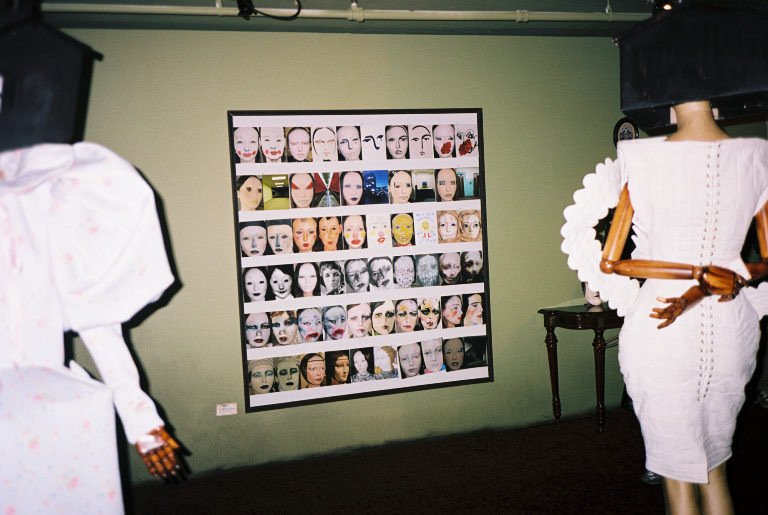
Before any of the six rooms revealed themselves to us, it was important to understand the idea Makó continuously returns to: the box.
It has become one of the most recognizable devices in his photography, capturing subjects appearing through cardboard structures, houses, and geometric frames. By his own account, it is also the closest thing he has to a guiding philosophy. ”For me, the box is both a restriction and a liberation,” he has said. “It centralises the host whilst simultaneously amplifying it, preventing energy from scattering across the frame.”
For Makó, structure is essential. Bauhaus Ballet is essentially that same philosophy turned inside out and built full scale: six rooms, six boundaries, each one inviting you to step into it.
At the On-Set Photoroom three sets sat on the floor with mirrors hanging above them, asking visitors to lie down and observe their own reflections within these surreal spaces. Props could be moved around and played with. Across from them, the cardboard-like structures allowed visitors to step behind the sets and let themselves become part of the image.
It was playful. A little absurd. And very physical. For a moment, we weren't just looking at a Makó photograph. We were standing inside the conditions that created one.
Makó's sets are not simply backgrounds. They are part of the photograph's construction. He builds the space, places the objects, controls the light and creates the boundaries of the image. Yet he also leaves room for something he cannot completely control.
The house
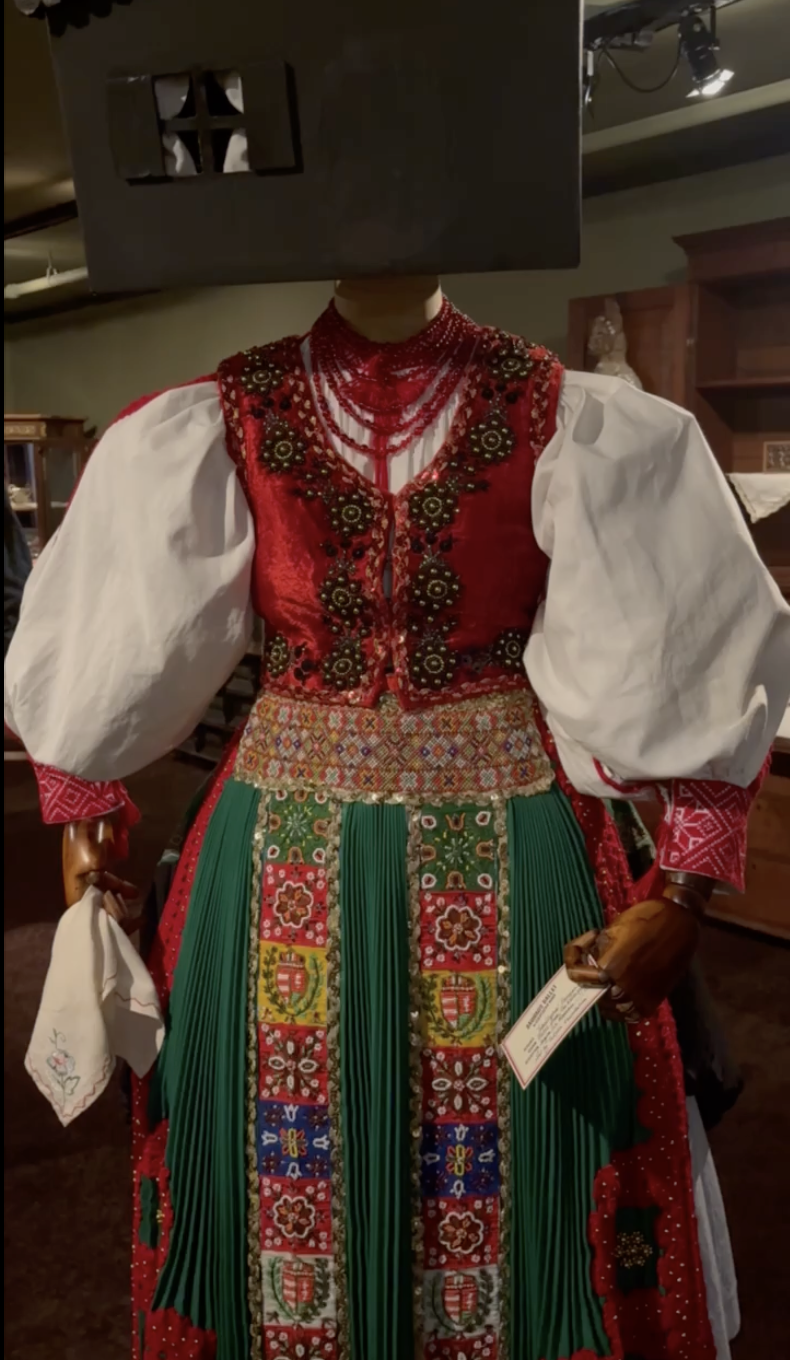
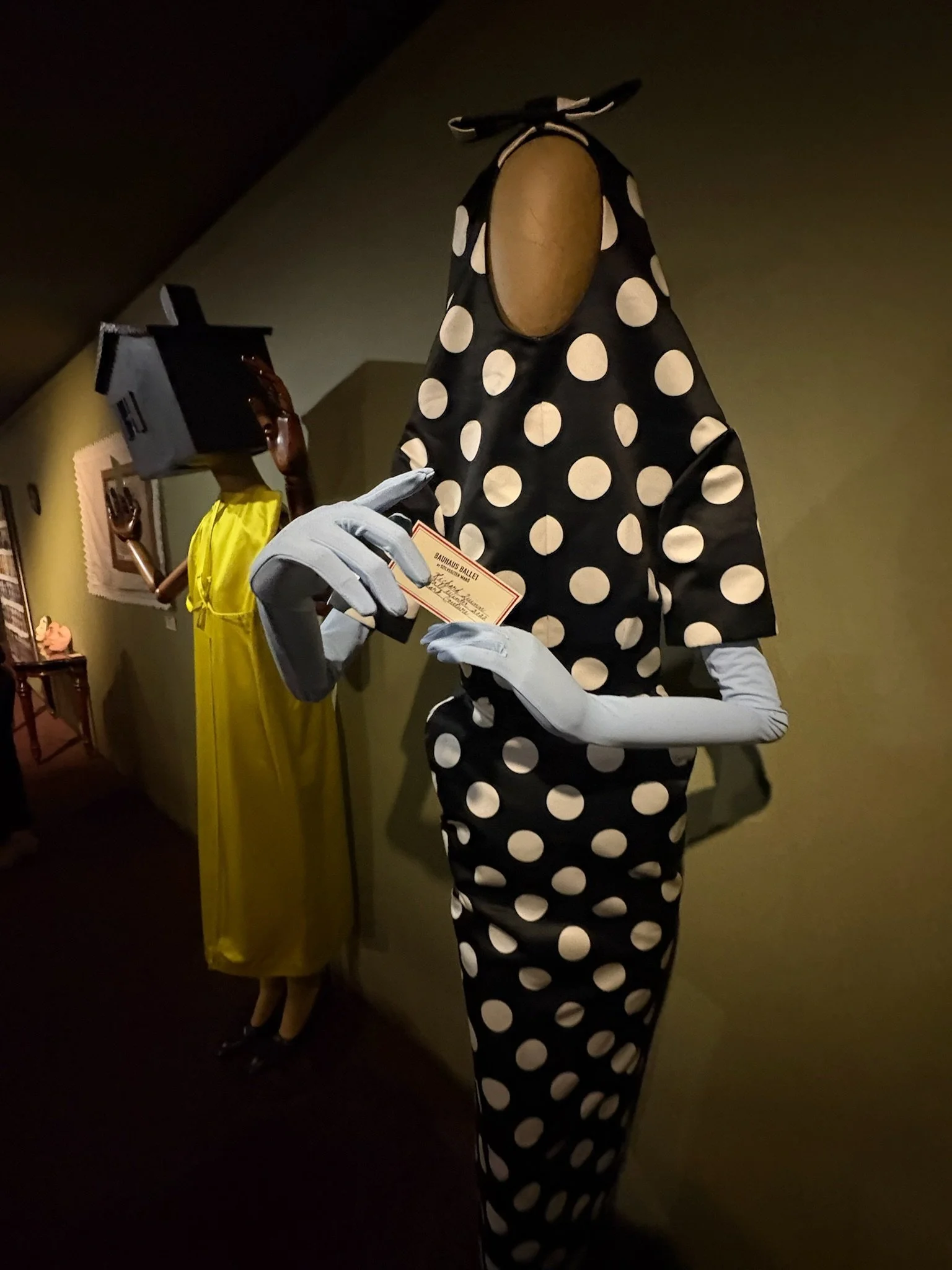
What we find fascinating is how prominently Makó's earliest experiences have followed him throughout his career. At six years old, in his hometown of Lillafüred, Hungary, Makó went to Farsang dressed as a house. His grandmother made a cardboard headpiece modeled after their family home, with an oval opening where the front door would be.
Years later, in 2023, he rebuilt that childhood house for Willem Dafoe. The image of Dafoe wearing the house is striking on its own, but knowing where it came from changes the photograph completely. The object carries his childhood, his grandparents, his Hungarian upbringing and the physical idea of home into a new world.
The house became a costume. The costume became a photograph. And the photograph became a set that could eventually be entered by other people.That is part of what makes Bauhaus Ballet feel so revealing. Makó has taken the worlds that usually exist behind his photographs and opened them up allowing us to walk inside it.
The people inside
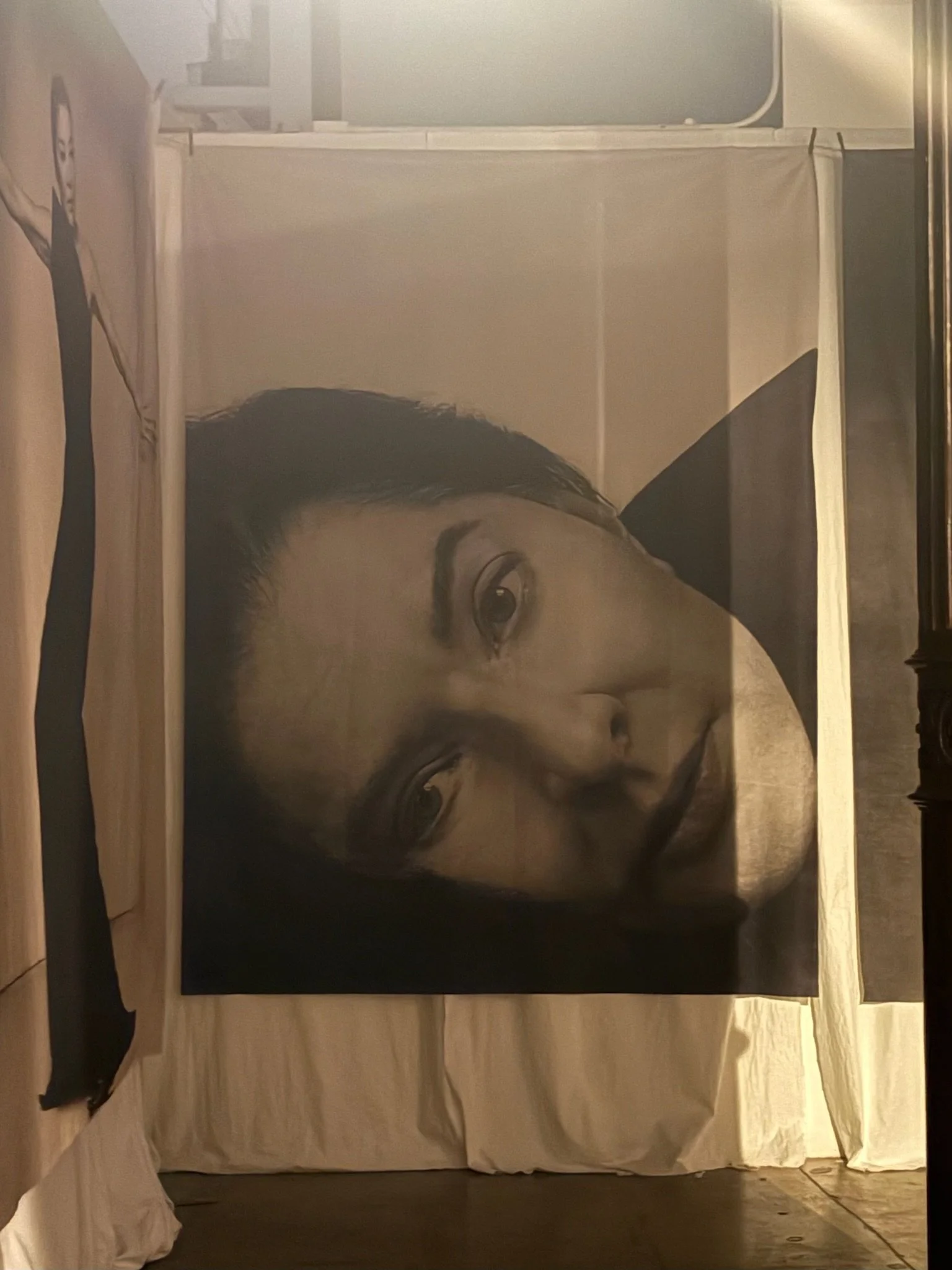
A point that kept returning to us was the way Makó removes the ordinary context in which we usually understand identity. Someone enters his unique world — Willem Dafoe, Gwendoline Christie, Cate Blanchett — and the first thing one notices is not necessarily who they are, but how they occupy the space. Their physical presence becomes more important than the status attached to their name.
Makó has said his photographs function “closer to figures in a novel. You encounter them and you then leave them behind.” You don't necessarily need to know their entire story to feel something from their presence. This is also where Makó's relationship to control becomes interesting. He is deeply involved in constructing the world, but the person inside it has to bring something he cannot manufacture himself. Speaking about Gwendoline Christie, he said, “I can remain the control freak, and she can still surprise me.” The contradiction feels essential to his work. He builds the room. Someone else enters it. And then something happens that belongs to neither person entirely.
A mind made of rooms
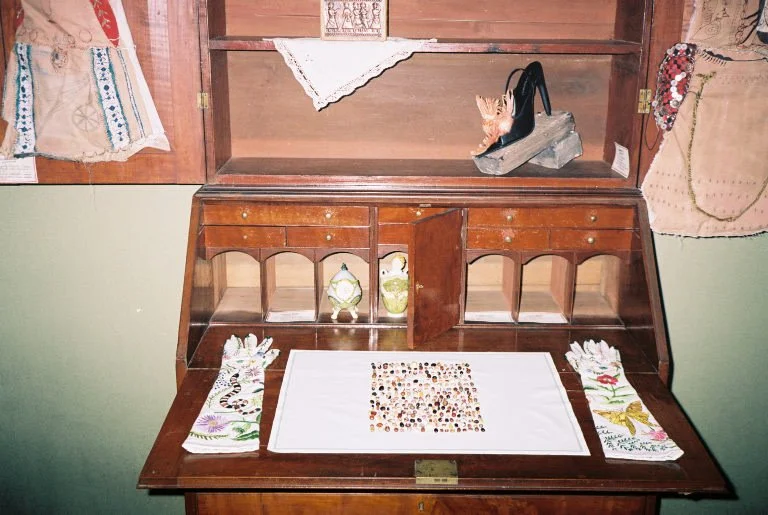
The Room of Curiosity perhaps came closest to showing us what exists behind the images.
Makó has described his mind as an “organised chaos”—lots of little rooms, hundreds of trinkets, eclectic references and fragments that don't necessarily seem to belong together until they pass through his particular way of seeing. Walking through the room, that description became almost literal. Eastern European folklore sat beside fashion. Historical references met contemporary objects. Costumes, art and personal memories existed together without needing to resolve into one clear story.
He has spoken about how most of what he sees does not survive this process. Only a small percentage makes it through his filter. The exhibition gave us a chance to see some of those fragments before they became photographs.
A different kind of fashion
There was also something ironic about experiencing all of this during New York Fashion Week. Fashion Week is built around the new, arriving fast enough that we’re already anticipating what comes next. Makó seems interested in something slower.
He reuses materials. He rebuilds sets. He returns to ideas across years. Cardboard, wood and household objects carry their previous lives with them into the frame. He has spoken about waste as the enemy of creation, and about reusing his props until they are exhausted within him. His work may be deeply connected to fashion, but it doesn't seem particularly interested in fashion's appetite with constant replacement.
Bauhaus Ballet felt slightly outside the machinery of Fashion Week, even while existing directly inside it. It asks us to slow down. To look again. To notice what was already there and have fun within its surroundings.
Leaving the house
We entered the mysterious black house expecting, perhaps, to understand more about Makó. Instead, the further we moved through the exhibition, the less that felt like the actual point. He doesn't seem interested in making work that explains itself. His photographs can be entered like stories. His references can be recognized or missed. His subjects can be famous or unknown. The structure remains his, but what happens inside it temporarily belongs to somebody else.
And now, with Bauhaus Ballet, the same thing happened to us. We became another presence inside the frame walking through his sets, becoming part of the photographs, and moving through the objects and spaces that had, until now, only existed behind the camera
Makó instinctively builds worlds and places people inside them. This time, he built one large enough for his viewers. We entered his house, his mind and, most conspicuously, his box and left without a full understanding of Makó himself, but with something more intimate: an understanding into the way he sees and thinks.
