
words by ELISABETH BERGER WALDENEGG
For its 29th edition, Paris Photo traced two centuries of photographic history. The history of photography begins at an upstairs window. In 1826 or 1827, at his estate Le Gras in Burgundy, Nicéphore Niépce captured the view from it on a pewter plate, after an exposure of many hours. It is considered the oldest surviving photograph taken with a camera. Over the next two centuries, the medium has had to win its place in museums and collections — and certain kinds of pictures won it sooner than others.
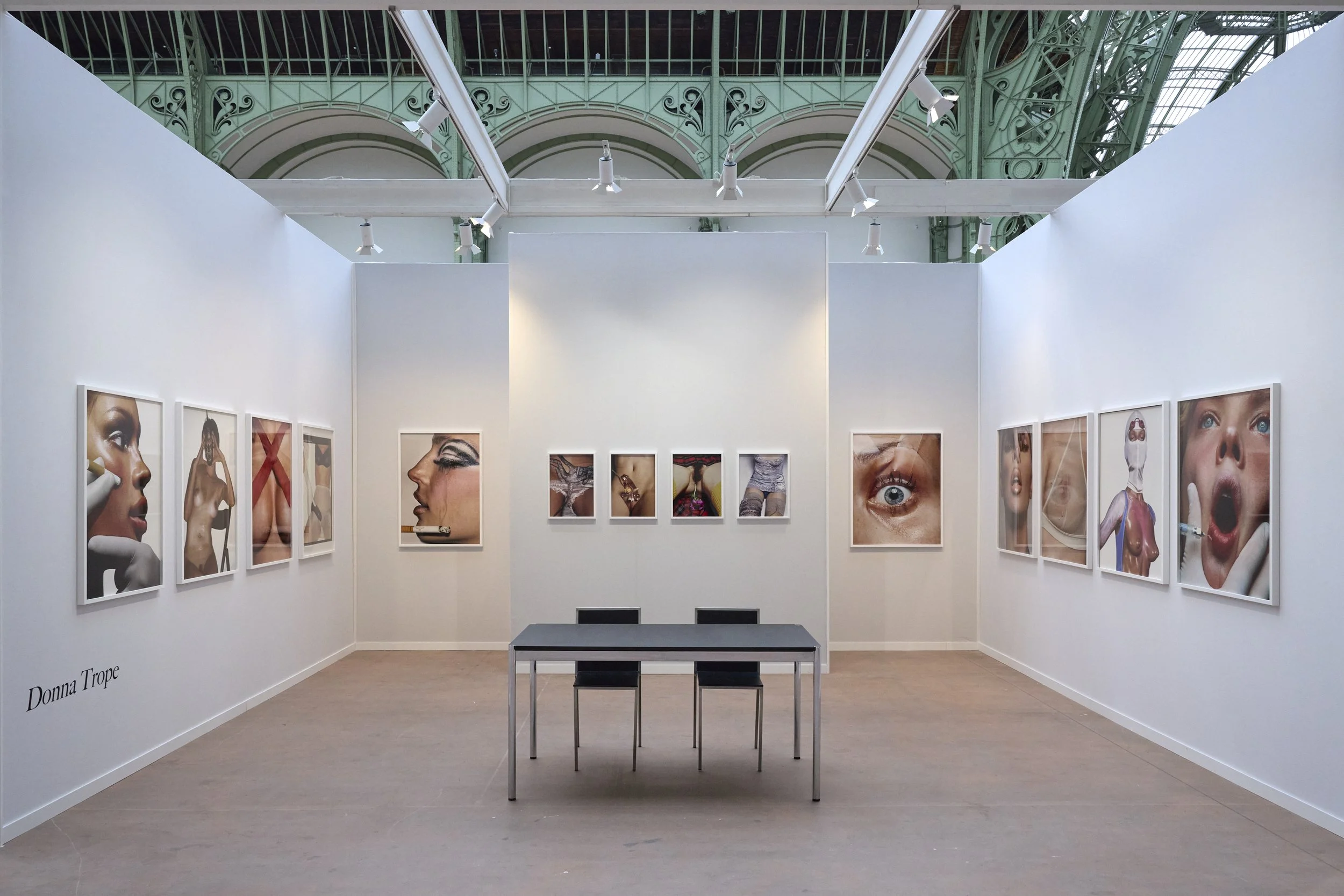
all images courtesy of GALLERY LAMBERT and DONNA TROPE
France is marking the anniversary with a year-long national programme, and Paris Photo, which closed on Sunday after four days at the Grand Palais, billed itself as its first international event. Although it opened in a nervous market — three weeks earlier, Art Basel Paris had closed early over safety concerns about planned demonstrations — dealers came back in better spirits. As ARTnews reported, some counted the fair's lower prices as an advantage.
At this year's fair, fashion and beauty photography might’ve been a quieter presence, but it was there if you looked for it. It left bearing a question: where does an image made for the pages of a magazine belong if it leaves them?
Huxley-Parlour showed portraits by Nadine Ijewere, the first woman of colour to photograph a cover for British Vogue. Michael Hoppen hung Sarah Moon and Deborah Turbeville, and Paolo Roversi was present, too, signing books. But it was at stand A16, where Galerie Carole Lambert had given the space entirely to Donna Trope, and the answer to our question manifested crystal clear:
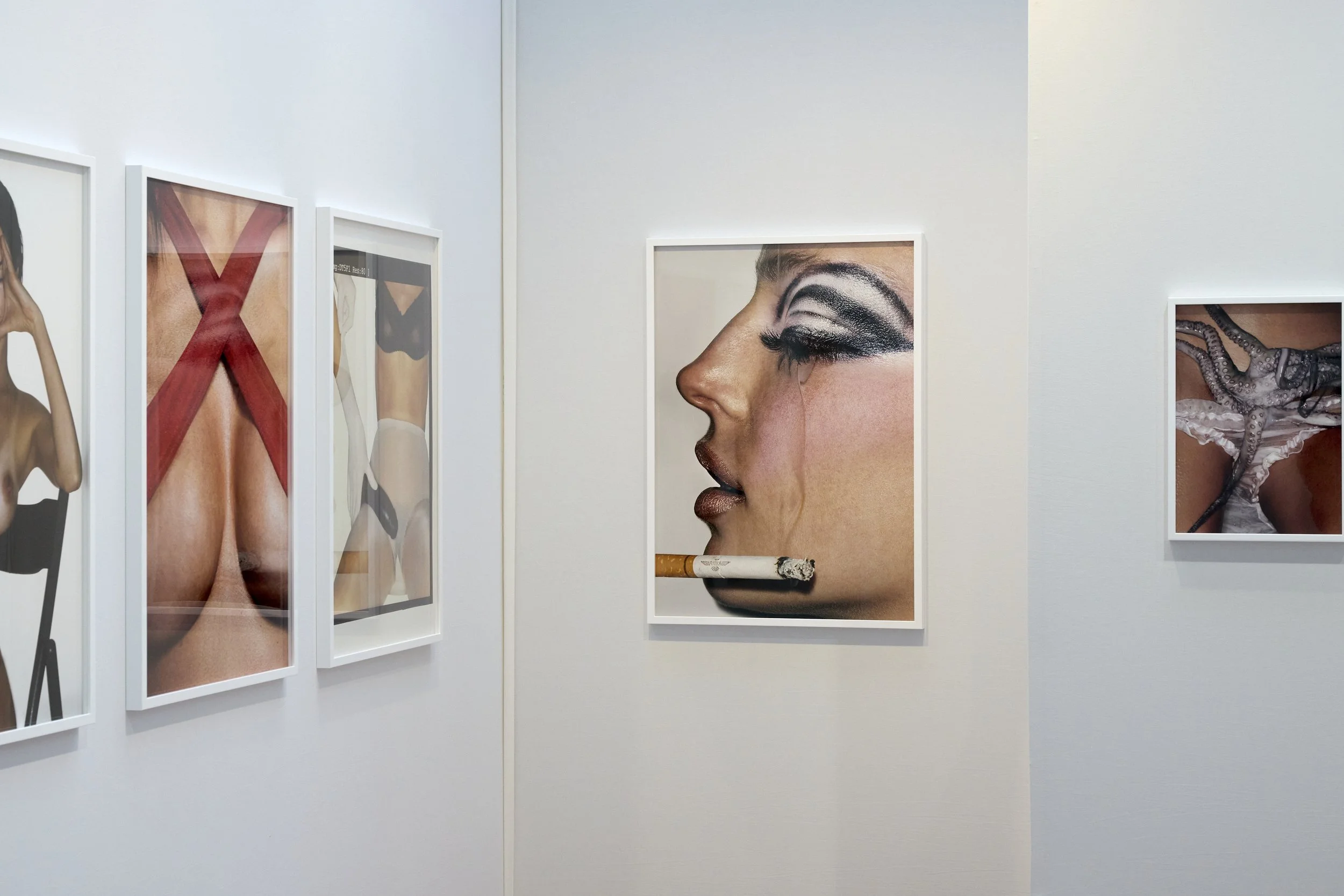
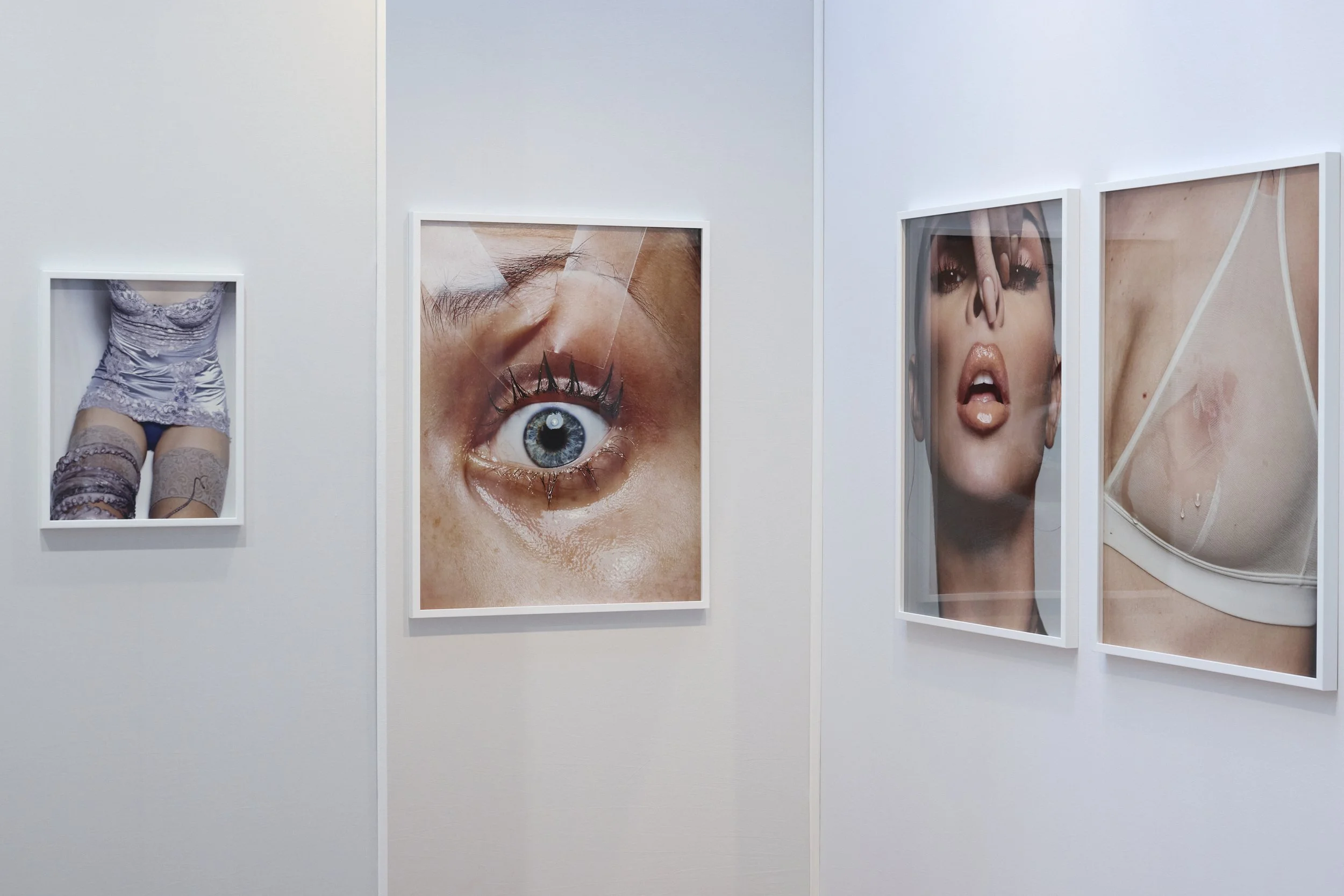
Born in Los Angeles, Trope moved to London in her late teens. It was there where she taught herself photography. She has shot for Vogue,Dazed and for clients like Max Factor and Skims. Her pictures speak the glossy language of beauty advertising, but they rarely let the viewer pass them without feeling slightly provoked. Bodies twist into unnatural positions and skin looks almost sculpted. In one image, an octopus winds its arms around a thigh in mauve lace stockings. In another, a white-gloved hand holds a cigarette against a gleaming face.
Lambert's gallery sits in a courtyard on rue du Temple in the Marais. It grew out of Lambert Lambert, the creative agency she founded, and began showing art in 2022. Lambert, however, had followed Trope since first seeing her work in Vogue in 2000. In summer 2025, she gave the photographer her first exhibition in France: Polaroids chosen from an archive of tens of thousands. At the gallery's first Paris Photo a year ago, those Polaroids shared the stand with works by the contemporary artist Charles Negre. This time, Trope had it to herself. "We could not imagine them alongside another photographer," the gallery says. The large prints were meant to create "that 'striking image' effect that fits Donna's personality so well."Going through the archive of test shots, the gallery found that each black-and-white Polaroid had a finished colour twin. According to her gallerists, Trope likes to say that she sees the world in black and white but loves to photograph in colour. "It was quite a story: from black-and-white to colour, from testing to completion, from trial to result."
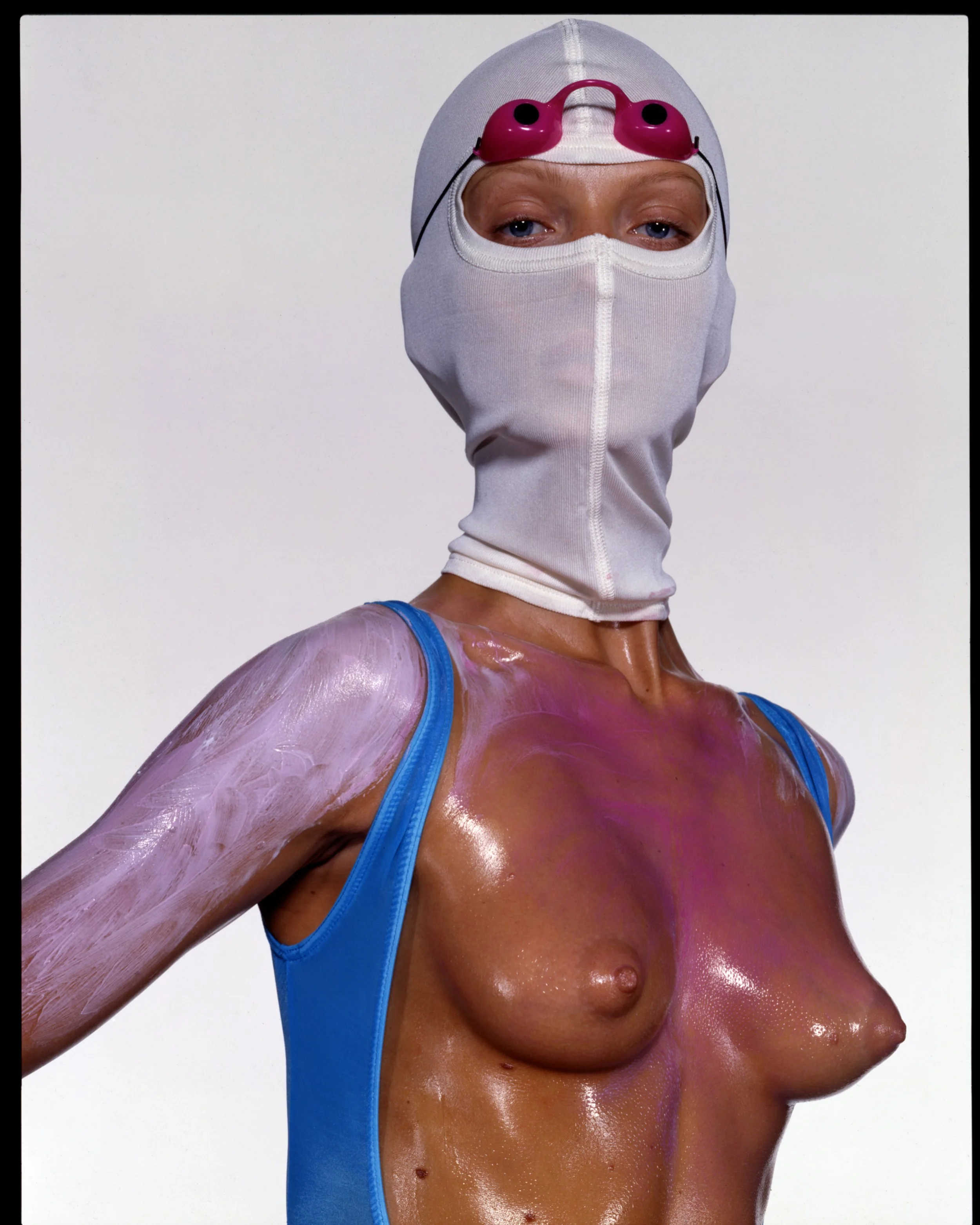
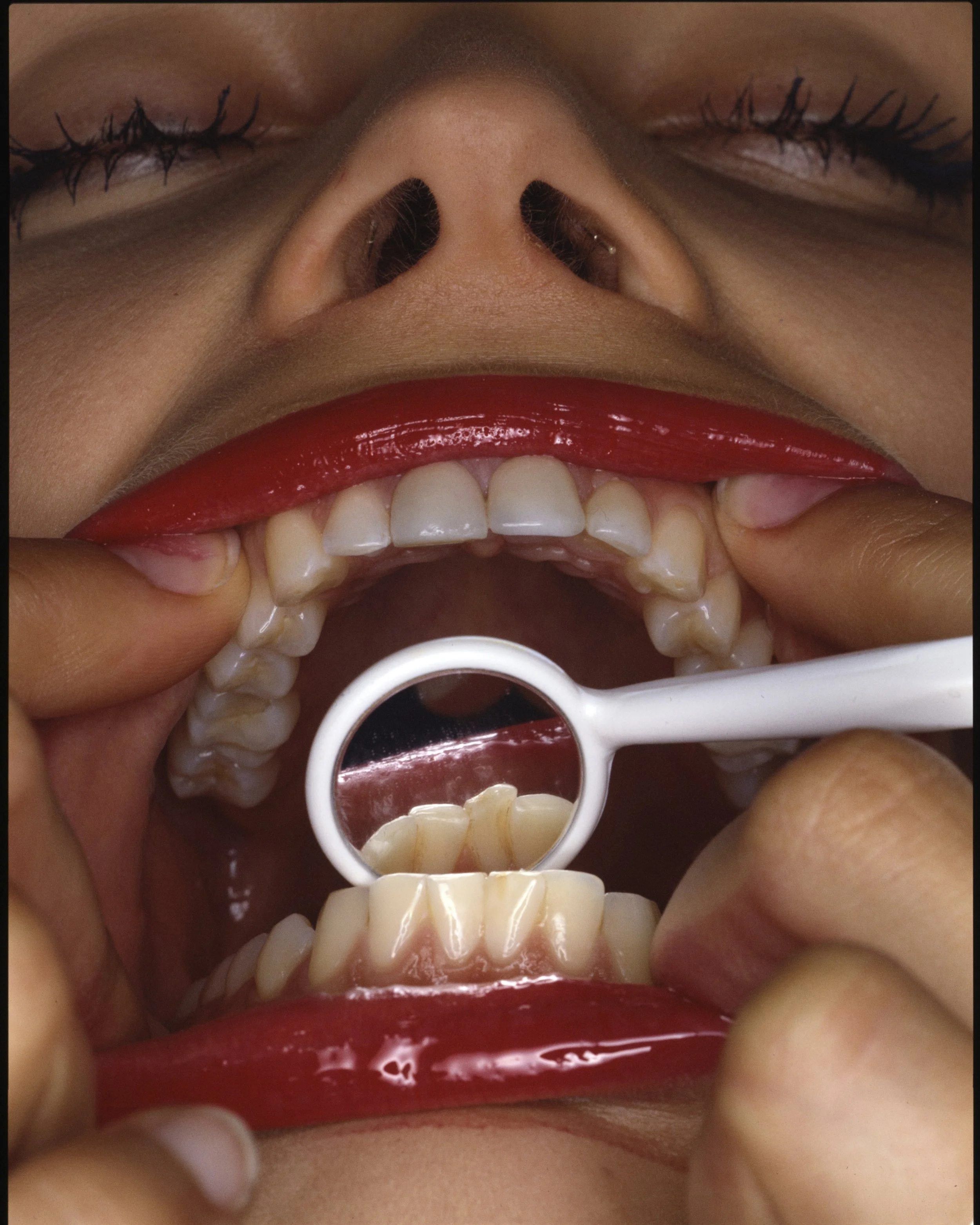
That move, from test to finished image to gallery wall, is where the answer begins. A picture once printed on an A4 page now hangs at 80 by 100 centimetres, and "the provocative nature of the image is amplified," the gallery says. In a magazine, a beauty picture has a job to do: the reader takes in the face or the product and turns the page. On a wall there is no page to turn. Details that once slipped past, such as the strain in a pose or skin polished until it barely looks like skin, start to catch the eye.
Taken out of their commercial setting, Trope's photographs also show what they were saying all along. They were made inside the beauty industry and about it, about what it asks of the people in front of the camera. That second reading seems to draw new buyers. According to the gallery, her collectors include fashion insiders, photography collectors and designers, but also "a large portion of the younger generation, who strongly identify with the criticism directed at the fashion industry and the demands it places on models." Many of the pictures are decades old, but their subject has not aged.
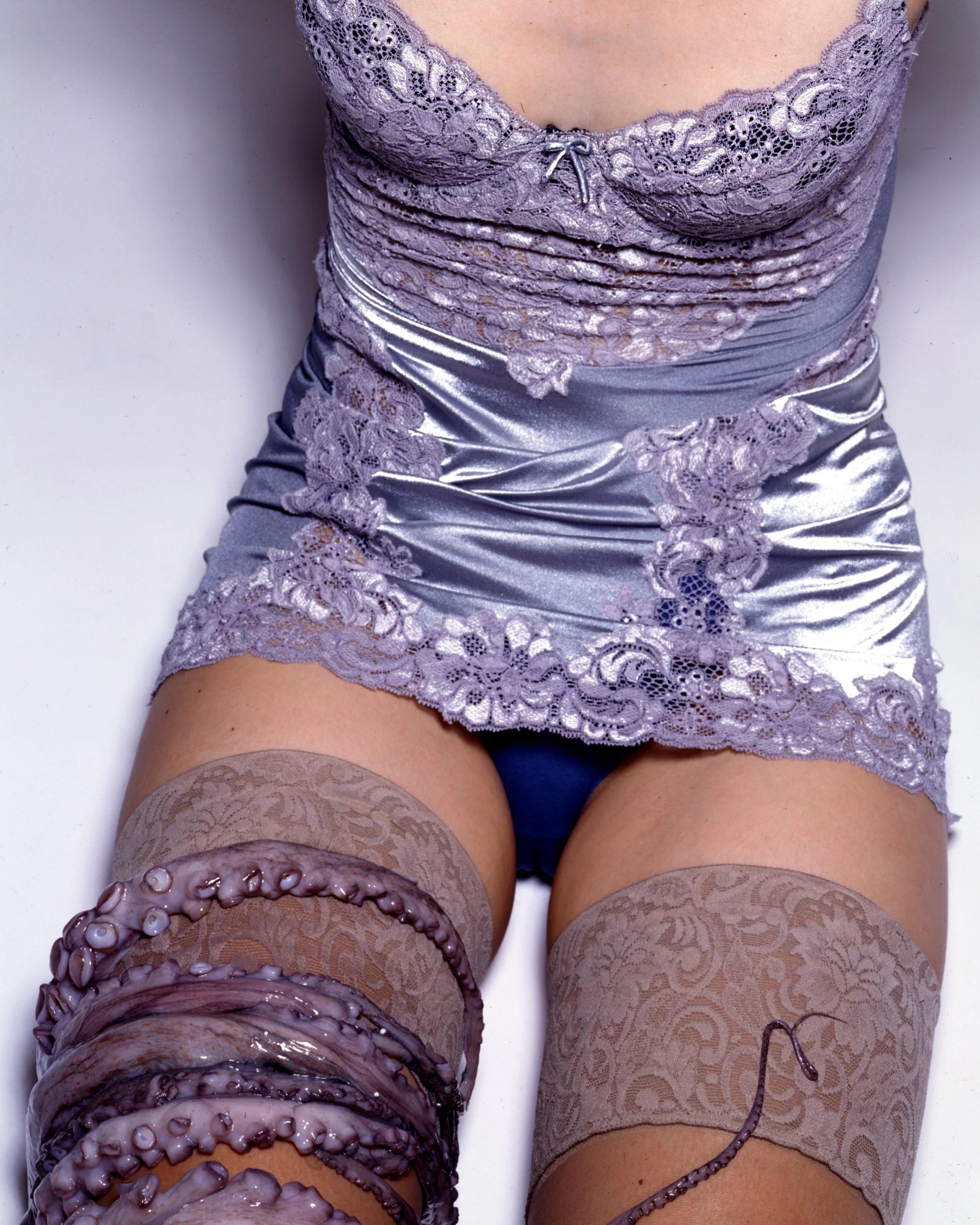
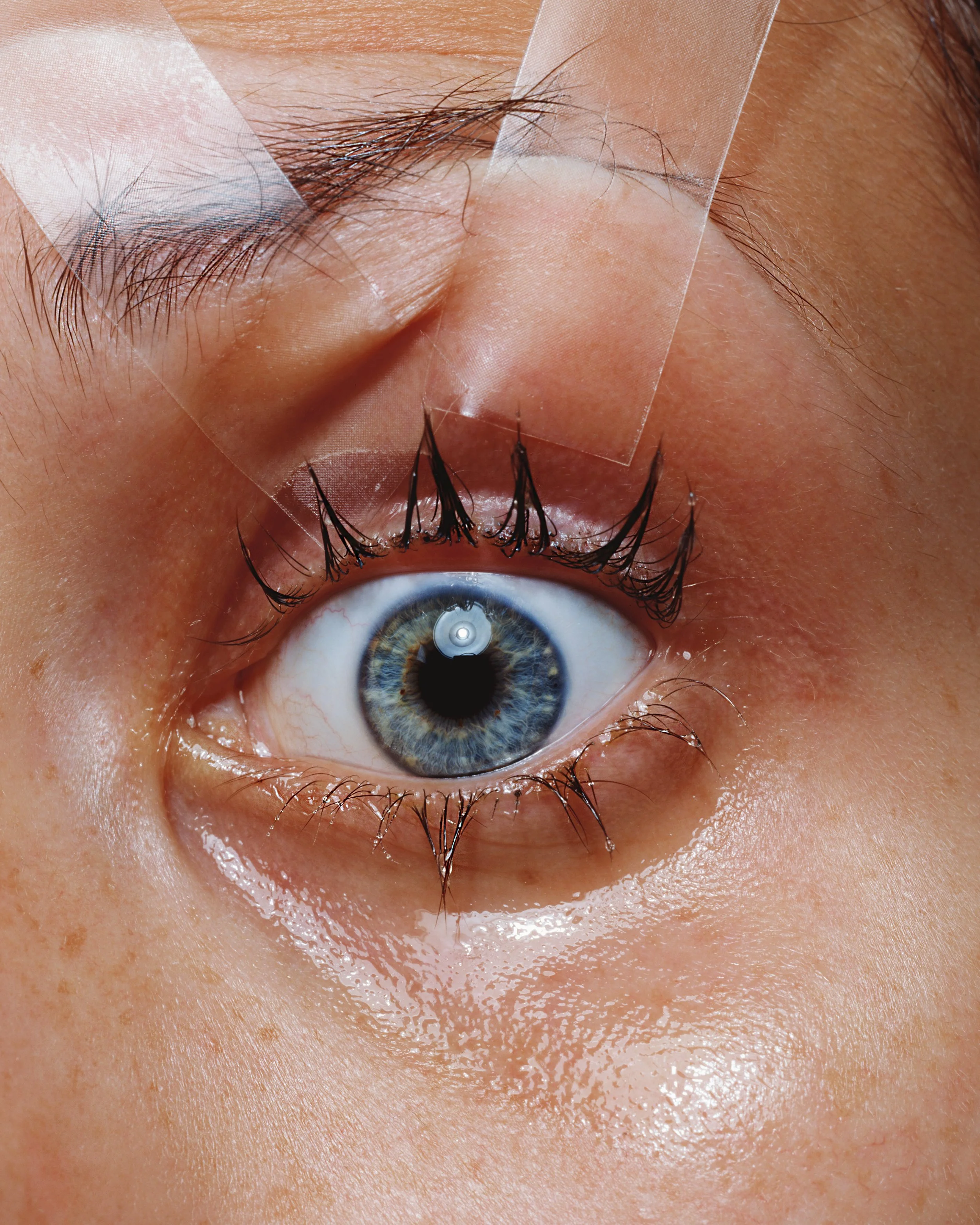
Fashion photography is no stranger to museums. Edward Steichen shot for Vogue and Vanity Fair in the 1920s and 1930s before running the photography department at New York's Museum of Modern Art, and this autumn Irving Penn is on show at both the Bourse de Commerce and the Maison Européenne de la Photographie. At a fair, where pictures are bought as well as looked at, each gallery makes the case on its own stand. Lambert used the bicentenary to make it. The gallery calls fashion and beauty photography "one of the medium's great laboratories", a field where photographers are not bound to document reality and are free to construct their own worlds.
By giving Trope the whole stand, Galerie Carole Lambert answered my question fairly directly. Showing her at Paris Photo, the gallery says, "affirms that fashion photography deserves its place in the history of the medium."