
BRANDS THAT DEFINED 080 BARCELONA FASHION WEEK
editor MAREK BARTEK
Last week in sunny Barcelona marked the 37th edition of 080 Barcelona Fashion Week — a four-day event bringing together emerging and well-established designers from the Spanish fashion scene. Here are the brands that caught our eye and should be on everyone’s radar.
BOULARD
all images courtesy of 080 BARCELONA FASHION WEEK
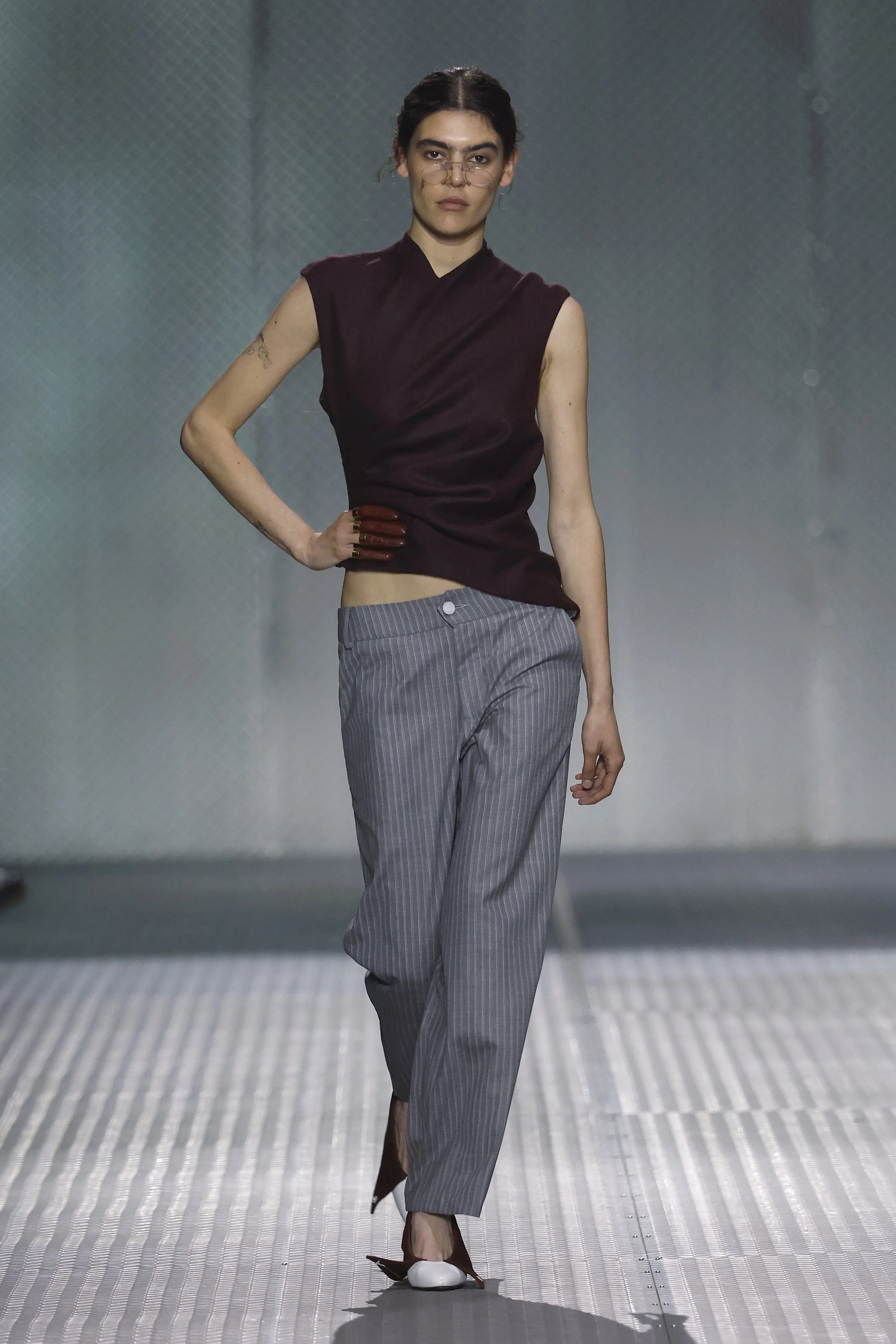
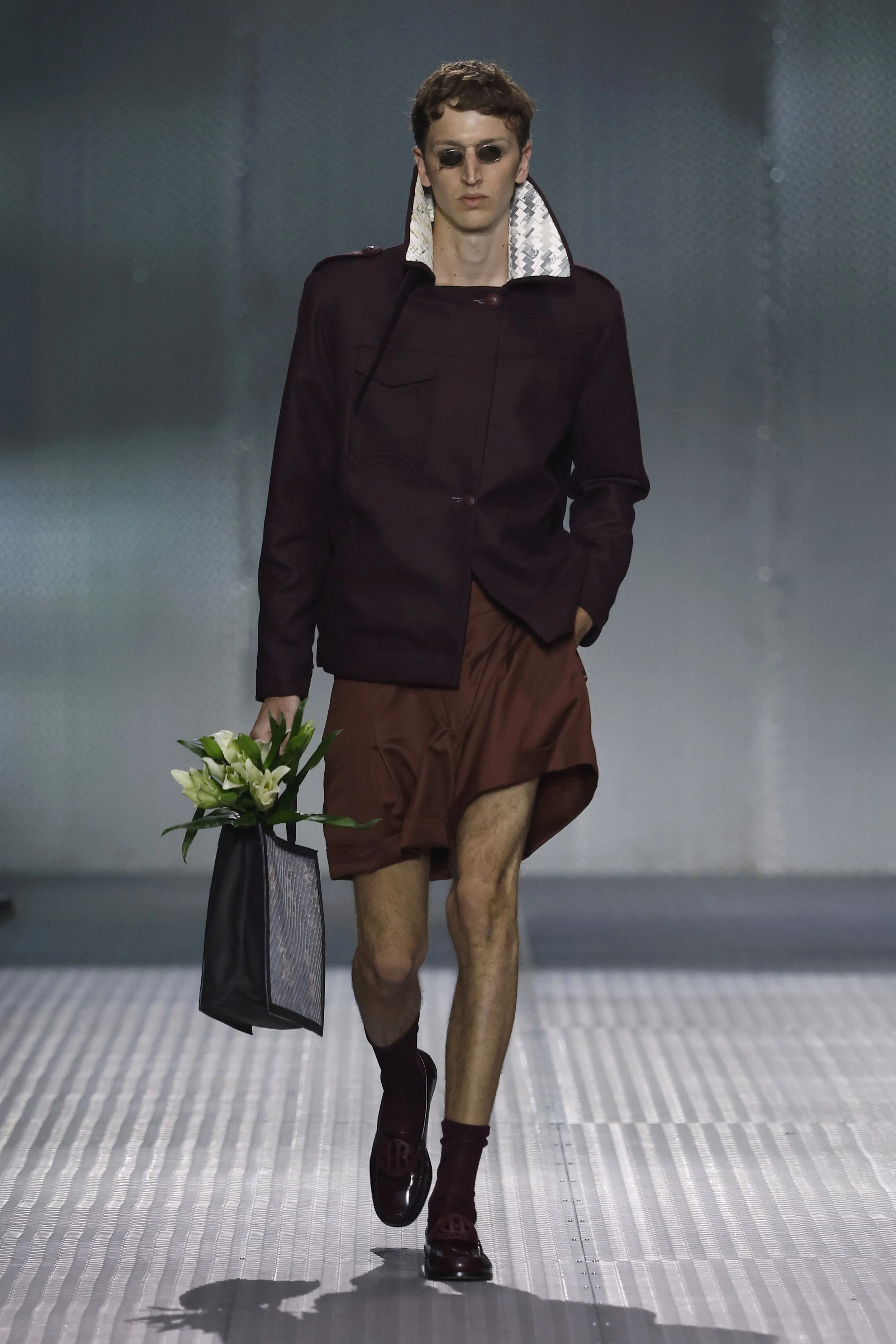
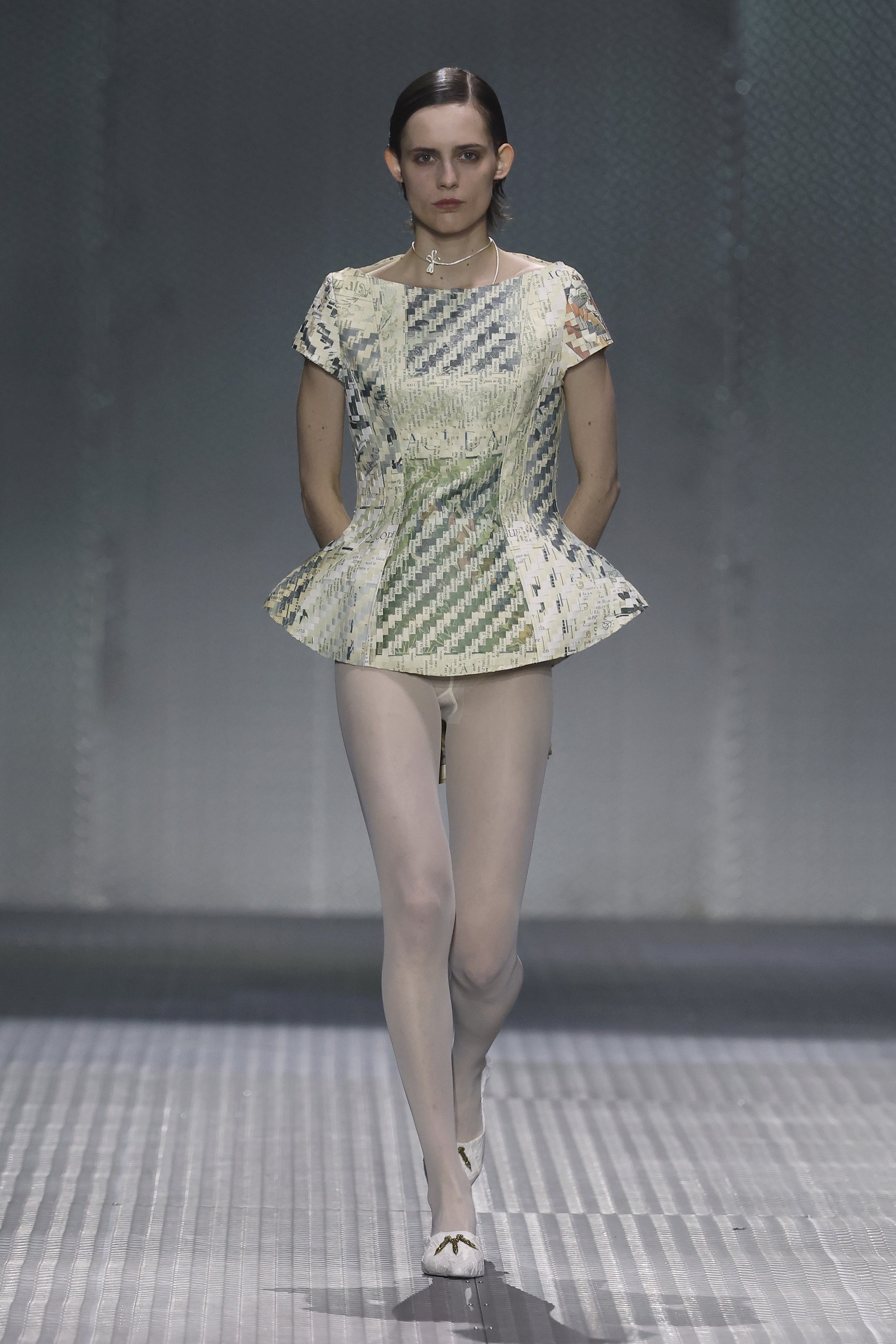
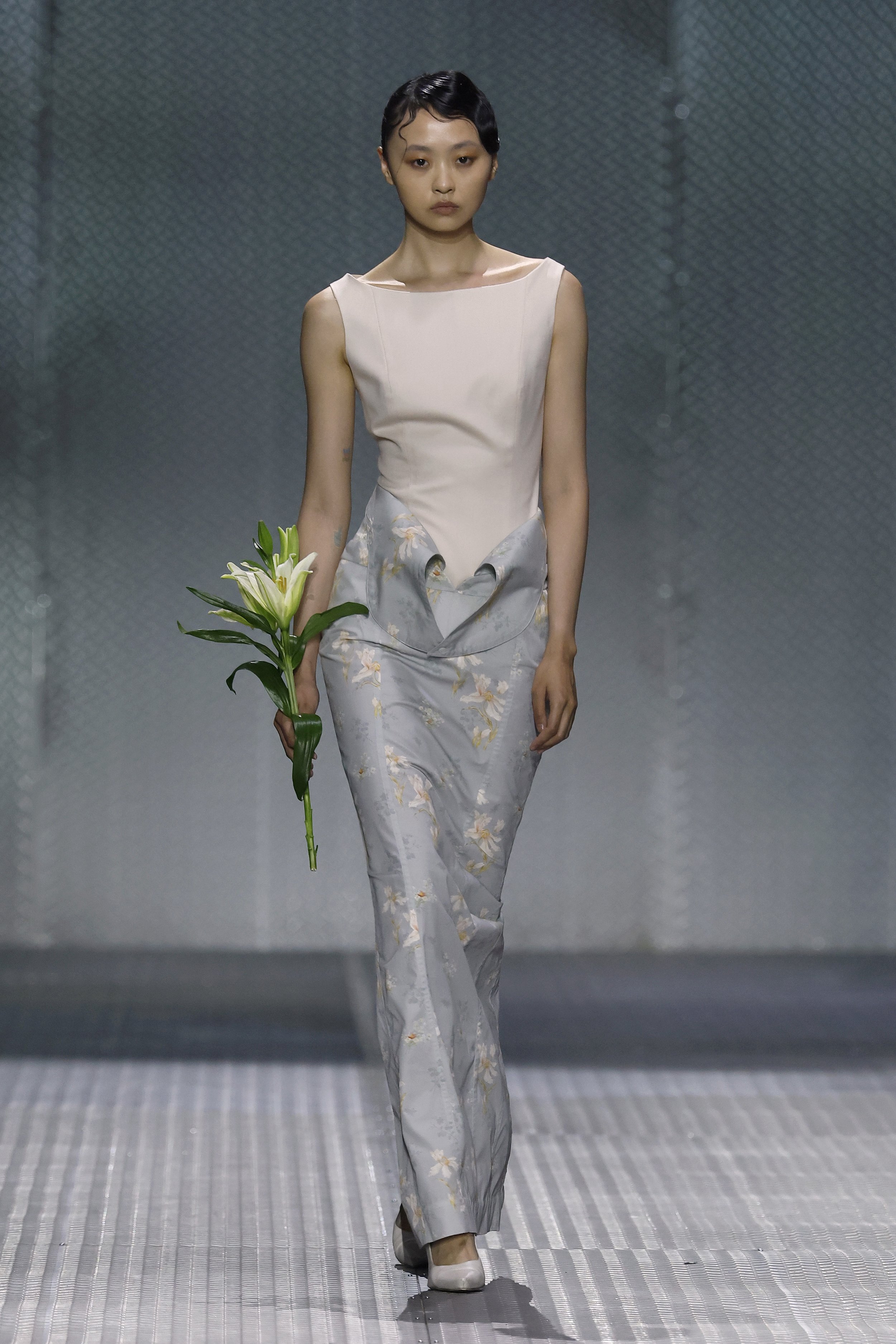
With With Kind Regards, Ugo Boulard treated his debut as an introduction — not just to his work, but to himself. Framed as a letter in three chapters, the collection moved from a more instinctive, street-leaning starting point towards something more deliberate and constructed.
The opening looks felt closest to home with a sense of Barcelona running underneath it all. Not in a literal way, but in the attitude of easy shirting, relaxed trousers, and the lightness of streetwear typical for the capital of Catalonia. From there, things shifted. Silhouettes tightened, and the collection started to lean into craft.
The second half is where the idea fully came into focus. Fabrics were developed from scanned archival material, including early fashion publications, reworked into paper-cotton blends, then hand-woven into garments. It’s a slow process, and you can feel that. There’s a certain romance to that approach — not just conceptually, but in the way time is embedded into the clothes. It aligns with the collection’s premise of the letter as something personal, something that takes time and dedication.
Some of the more decorative elements — particularly the patchworked, floral-like insertions — felt less resolved and slightly out of sync with the rest. Where the woven pieces had weight and intention, these seemed to take us out of that fantasy.
Still, for a debut, it was clear. It was about setting a direction — one rooted in process, memory, and a very specific idea of where he’s coming from and where he’s going.
GUILLERMO JUSTICIA
all images courtesy of 080 BARCELONA FASHION WEEK
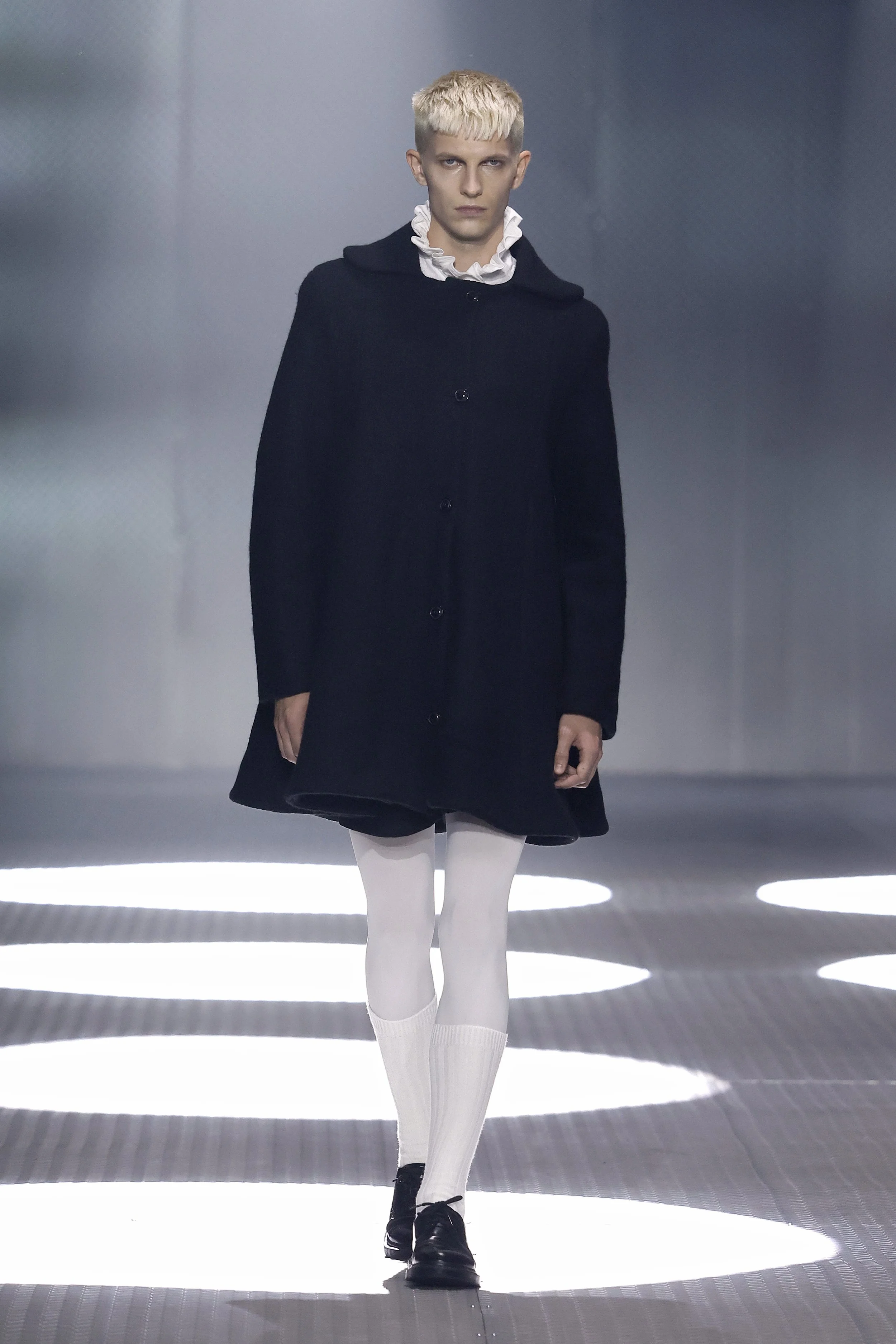
Guillermo Justicia’s Viscerum turned inward, building up on his previous collection, Void. The opening look — a sheer tank stamped with the designer’s name — felt almost confrontational in its directness. A body, a label, and nothing to hide, it set up the collection’s core message of exposing what’s on the inside.
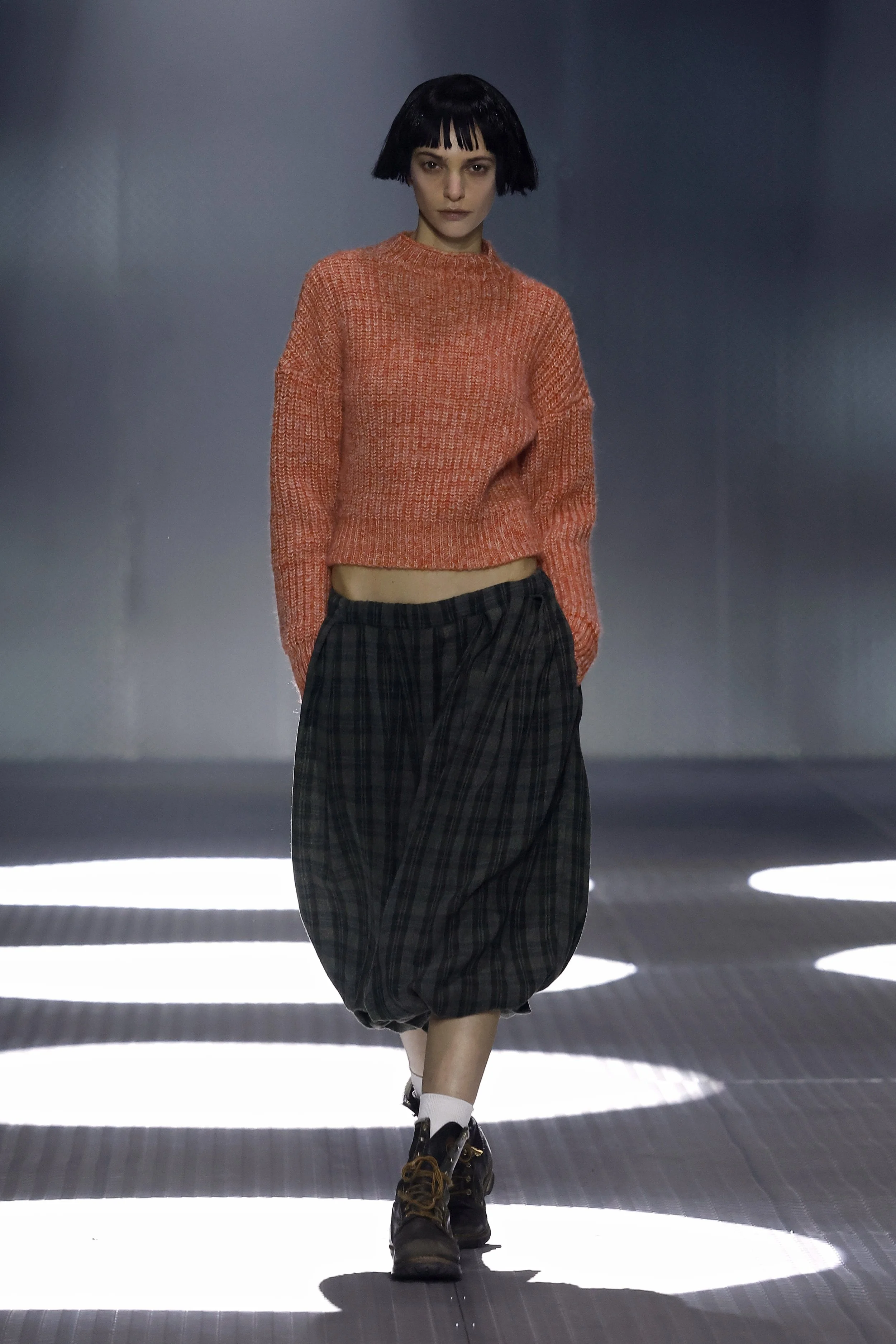
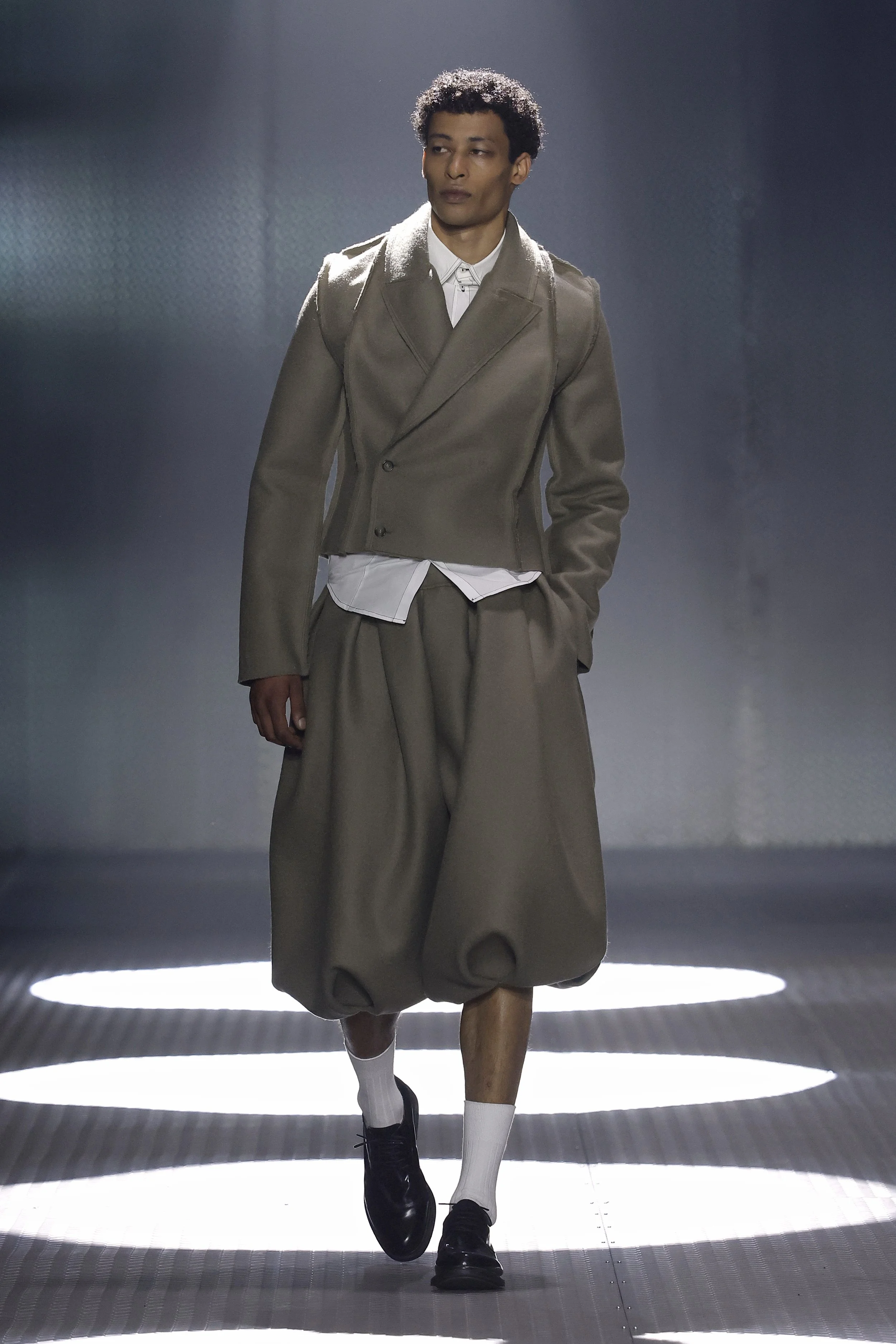
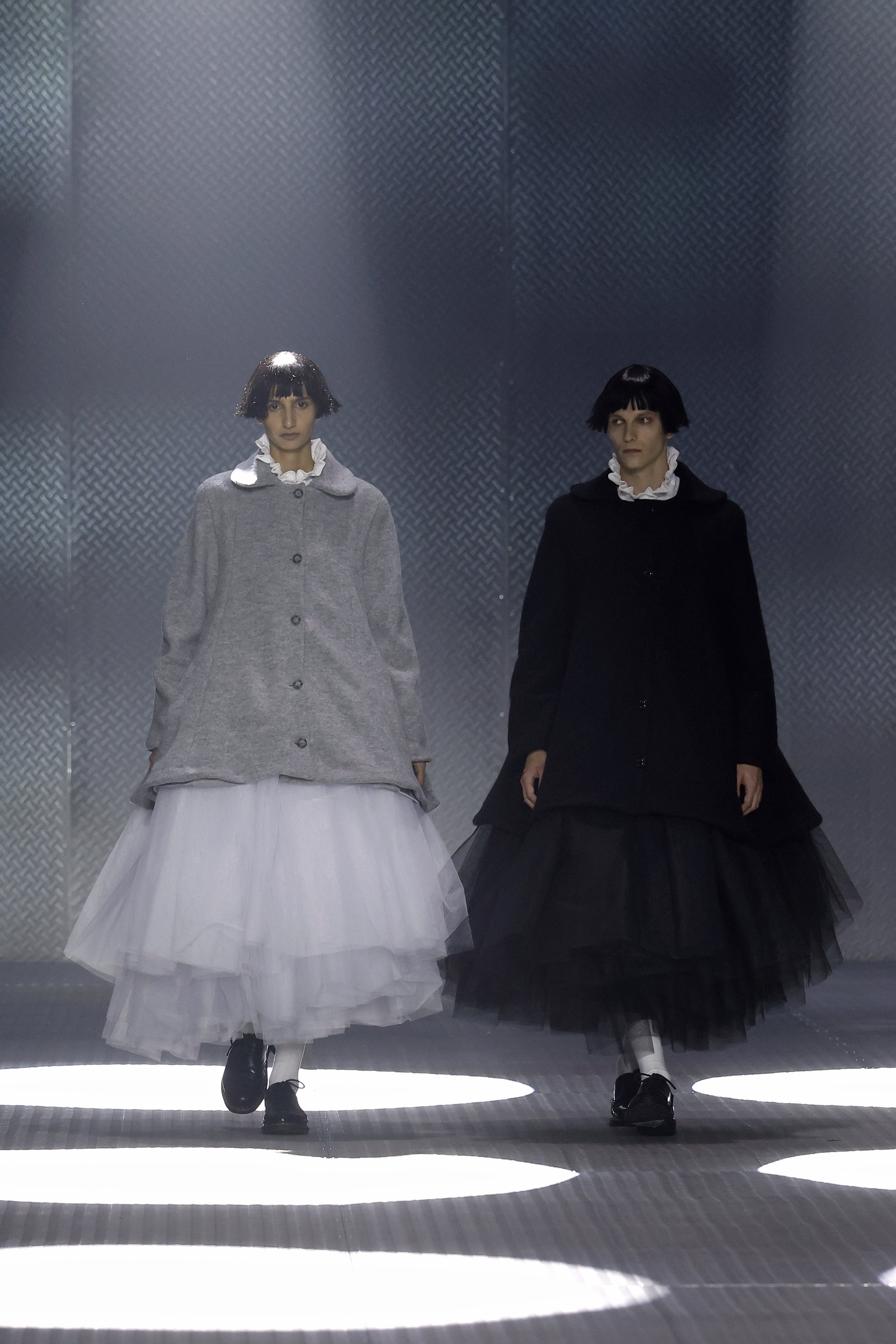
From there, the language became more defined. Structured A-lined coats and military references — caps, sharp tailoring, disciplined silhouettes — worked to establish a sense of order, while balloon shorts, sheer layers, and exaggerated volumes softened the rigidity, shifting with movement and destabilising the outline of the body. Delicate tulle skirts and cocooning outerwear introduced a sense of fragility, contrasting with the uniform-like precision of the opening looks. There was also a subtle theatricality in how the garments were worn. Layers wrapped and overlapped, and proportions often challenged the norms with extended sleeves extending, volumes, and unexpected approach to silhouette building.
The identical, blunt wigs flattened individuality, while the slow walk and steady gaze insisted on presence. Gender dissolved without needing to be stated — skirts, tailoring, and delicate detailing moved freely across bodies, never feeling assigned.
At times, the tension didn’t fully settle, but perhaps that was the point. It wasn’t about resolving anything, it was about staying in that in-between — where structure met softness, and control gave way, just slightly, to something more human.
COCONUTSCANKILL
all images courtesy of 080 BARCELONA FASHION WEEK
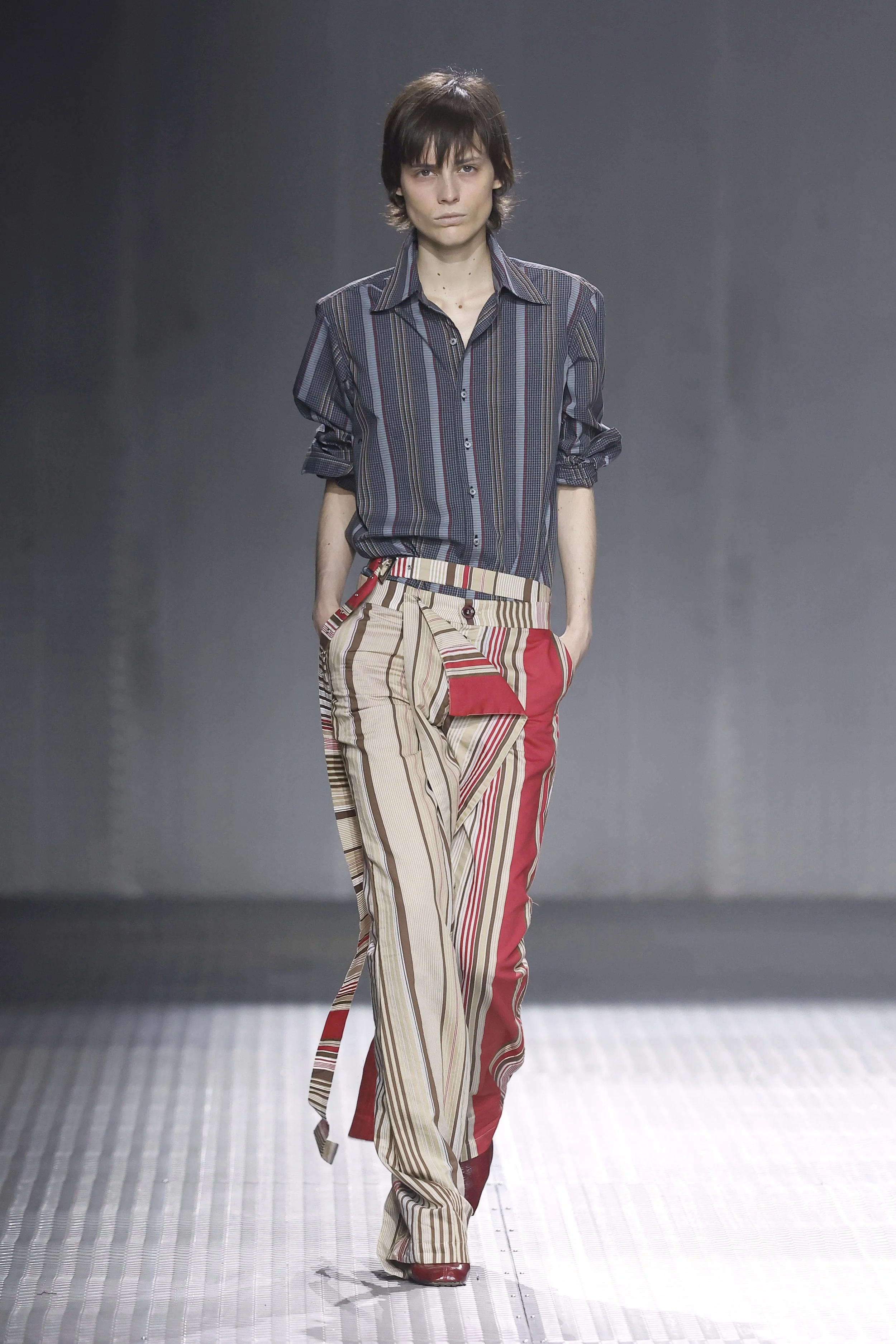
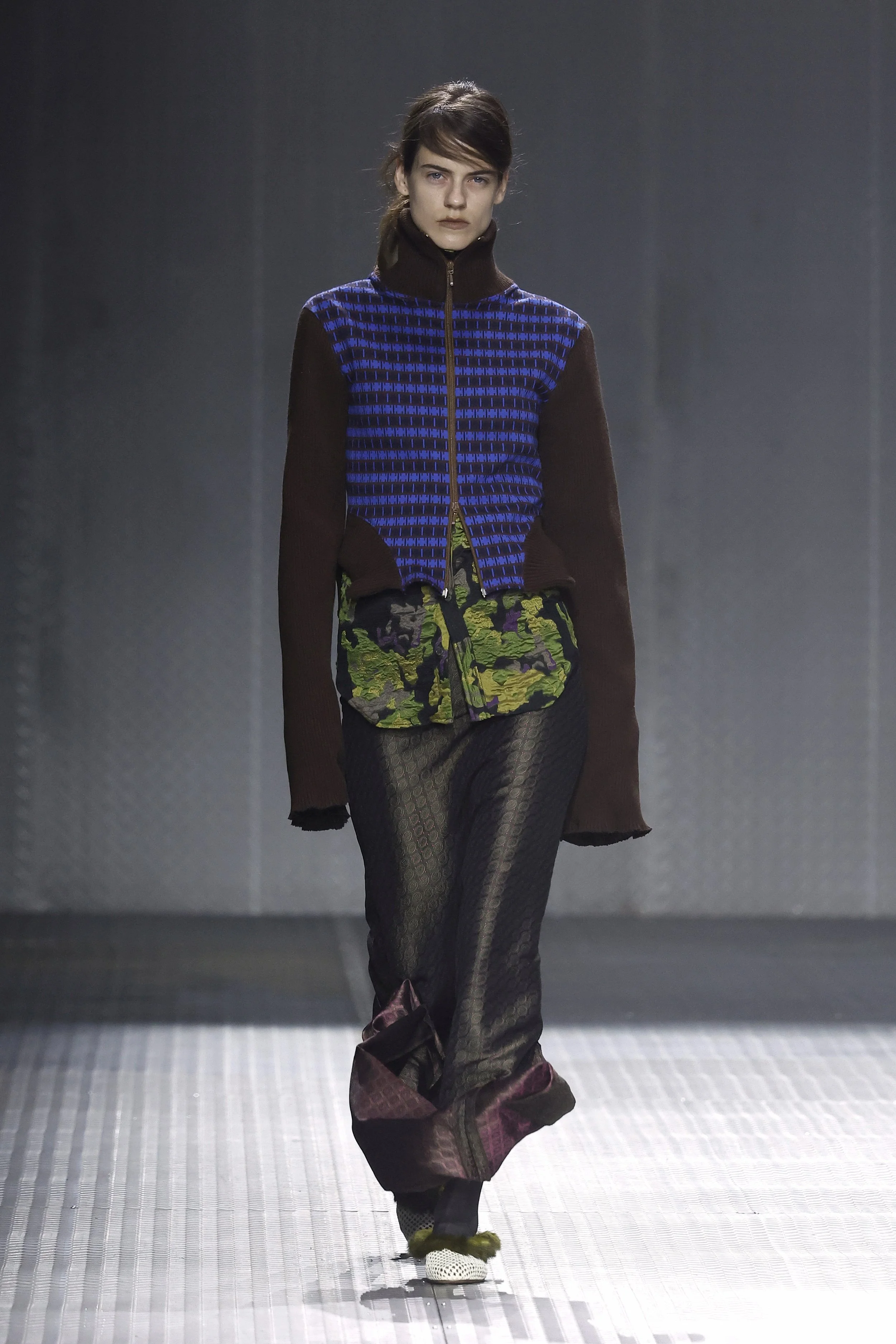
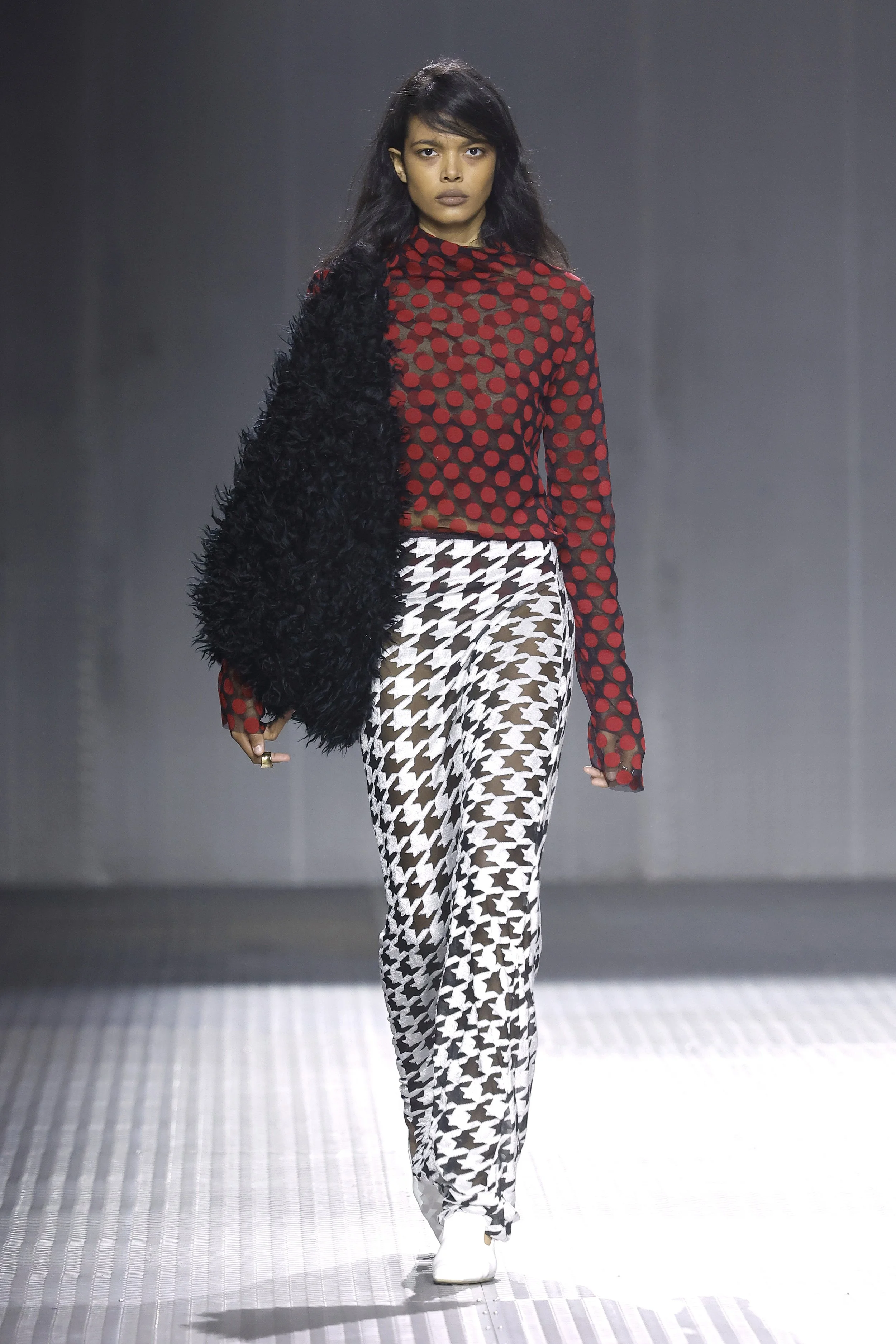
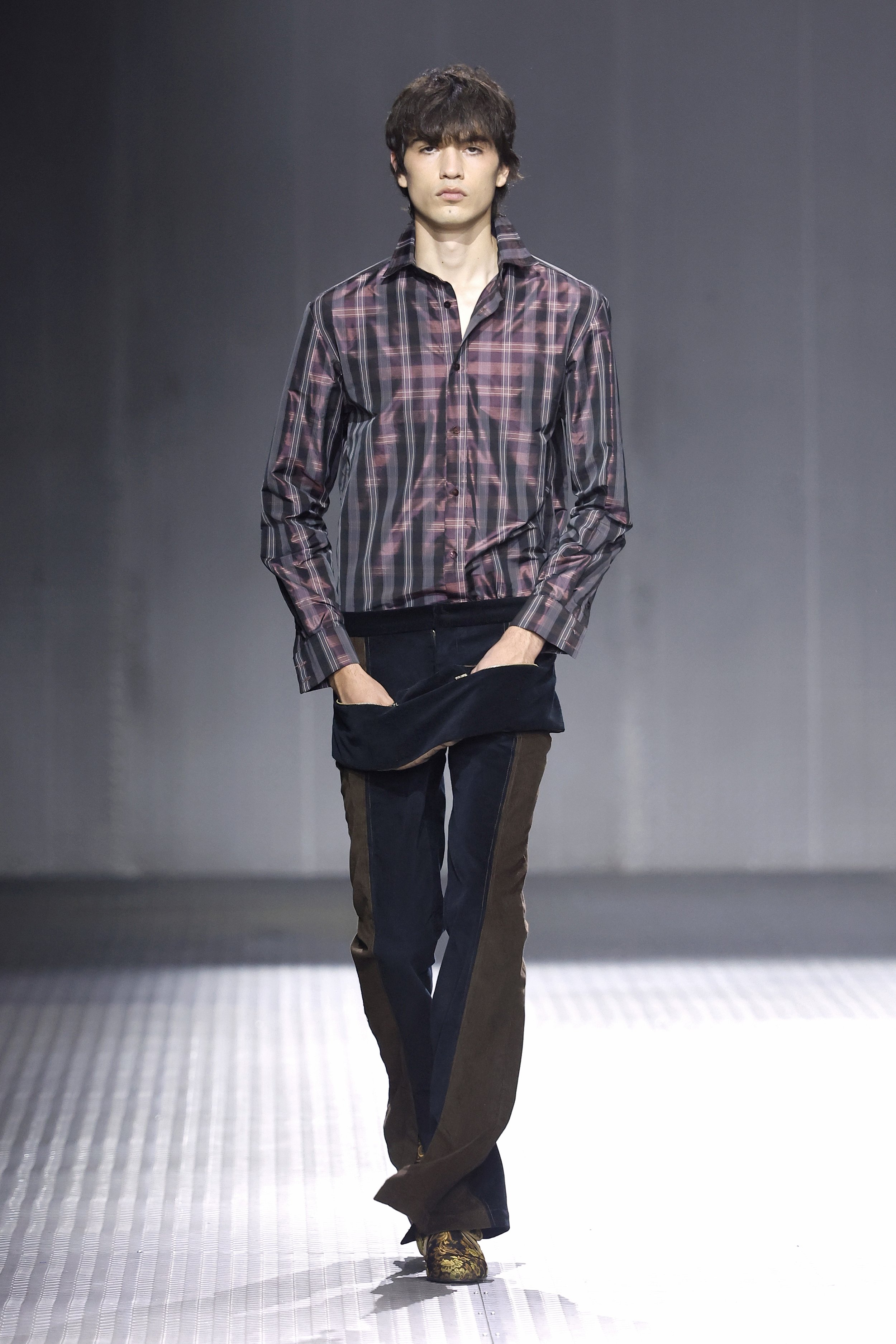
With Halfway Done, Coconutscankill focused on clothes that feel mid-process — as if something has been adjusted, twisted, or pulled out of place and left that way.
Shirting became a focal point. Button-downs came slightly off: collars spread open, sleeves pushed up a tad unevenly, proportions subtly wrong. They were paired with trousers and skirts that looked reworked — striped fabrics wrapped around the waist, panels cutting across the body or hanging loose, sometimes both at once. Stripes collided with checks, gingham and polka dots with warped shirting lines, and prints often seemed to break off halfway through. A sharp red and pink ran through the collection — belts, trims, flashes of fabric — not only to unify the looks, but to disrupt them individually.
Silhouettes kept shifting. Skirts bunched at the hips like they’d been pulled up in a hurry, tailoring lost its usual structure, and pieces moved on the body in a way that felt slightly unstable. Even the more direct looks — sheer houndstooth, transparent layers — didn’t sit cleanly, more styled into imbalance than built that way.
Accessories, too, leaned into the chaos of it all. Belts hung too long, fur-trimmed shoes that felt oddly dressed up against the rest, and in some cases the face disappeared entirely under oversized headpieces, pushing that sense of detachment further.
Not every look conveyed that tension equally, but when it worked, it landed. It felt instinctive — like getting dressed quickly and deciding not to fix anything.
DOBLAS
all images courtesy of 080 BARCELONA FASHION WEEK
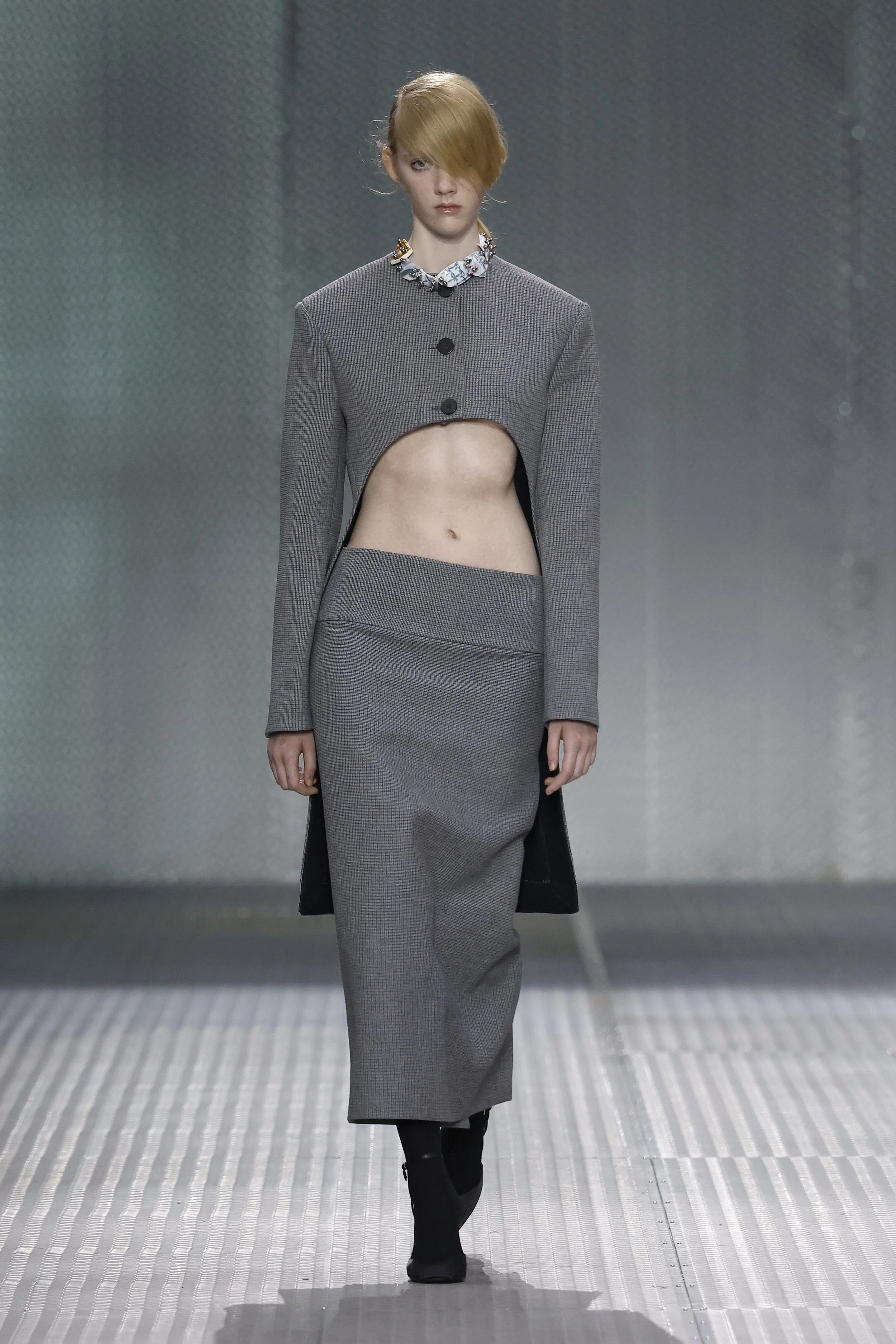
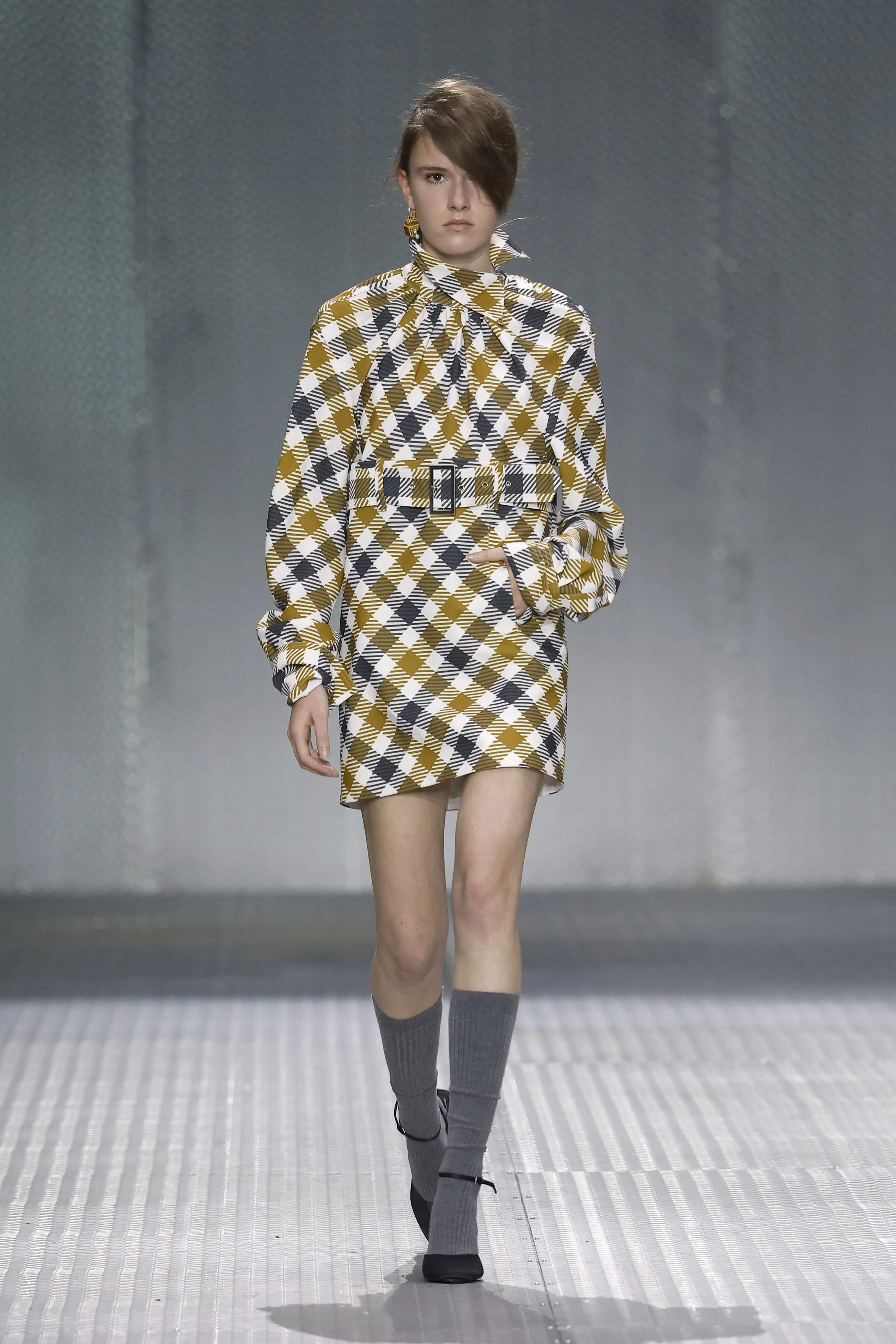
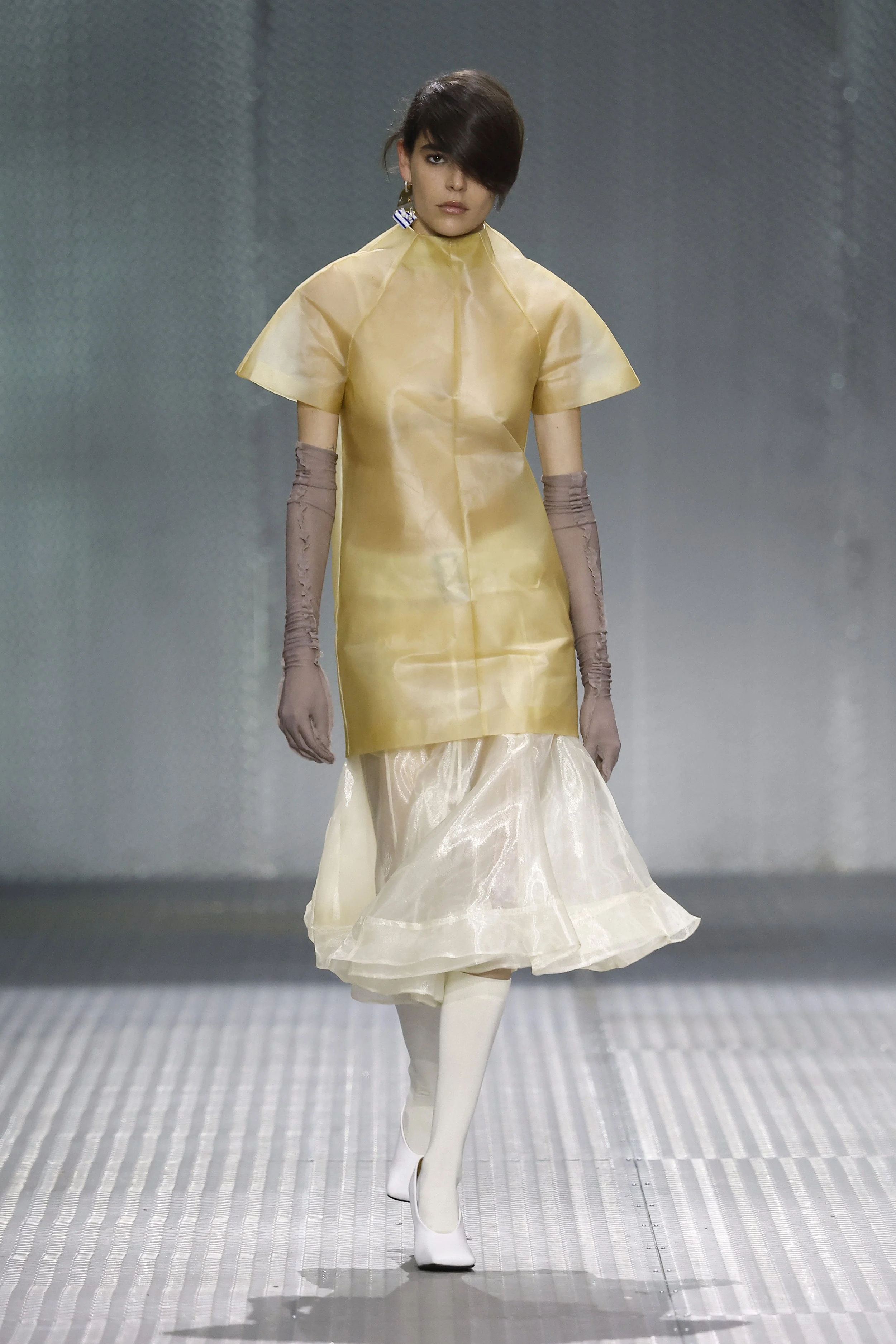
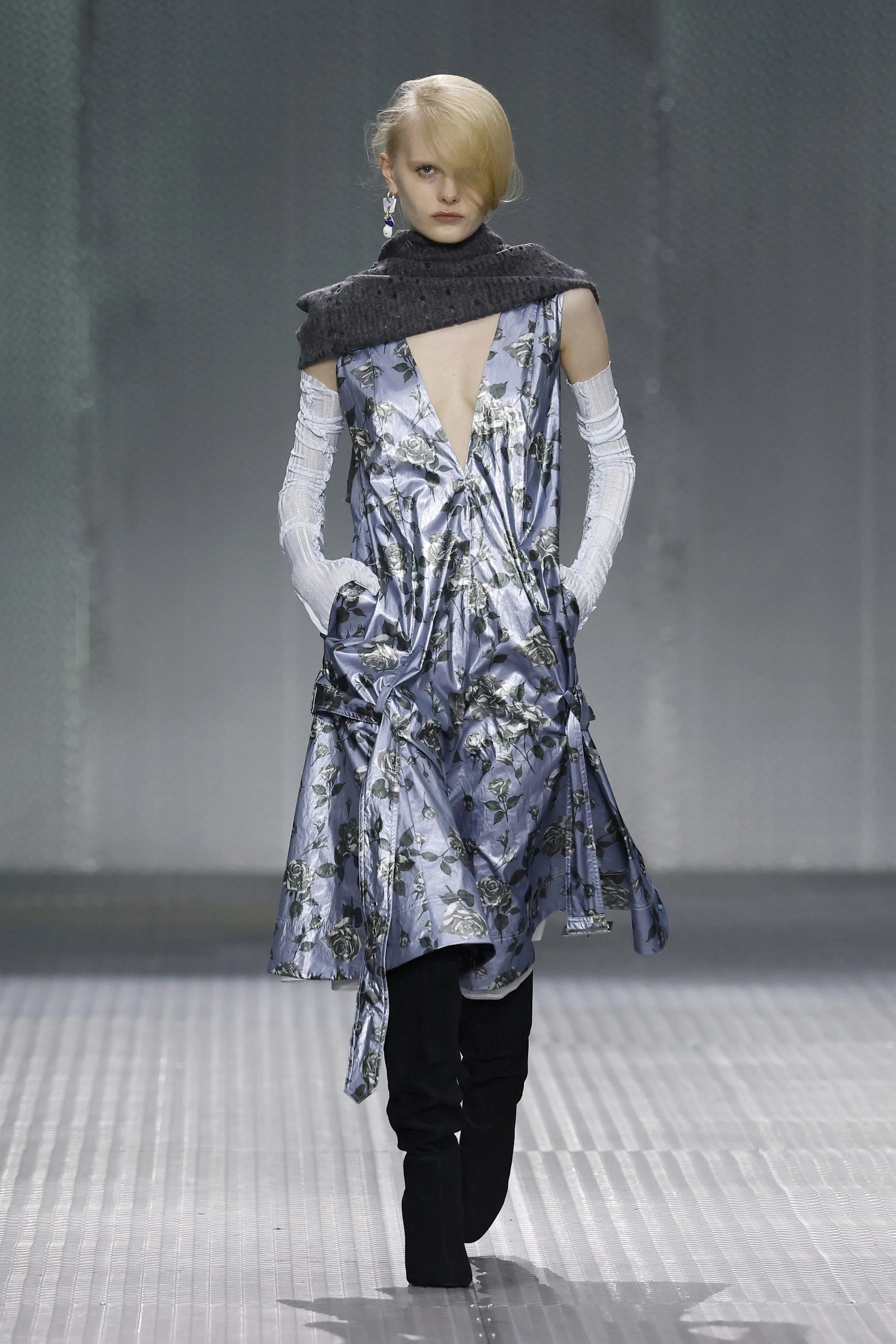
Collapse read as an eye-pleasing provocation. Asymmetry, shortened fronts, elongated backs, and raw, visible seams unsettled traditional ideas of femininity, but without completely dismantling them. There was a clear tension, but it was held firmly in place.
Tailoring sat at the centre, constantly pulled apart and reassembled. Jackets were sliced, and extended, with proportions thrown off through cropped lengths and trailing panels. The tuxedo, in particular, lost its rigidity, reworked into something more fluid, less. It worked, but at times felt almost too careful — as if the collection hesitated to fully commit to its own collapse. Materiality became another of the collection’s pillars. Translucent sheepskin, particularly in the yellow looks, introduced an interesting dialogue between structure and fragility — polished, but slightly unsettling. These moments felt the most convincing, where the concept landed without hesitation.
Belts, repeated insistently, tightened the silhouette both literally and symbolically. As the designer noted, they represent a form of oppression — but also reinforced the collection’s central contradiction. Combined with sleeveless constructions, it seemed that every gesture towards freedom was quickly pulled back under control.
That interplay was where Collapse held. It never quite broke; a collapse here wasn’t a sudden event but something ongoing.
ADOLFO DOMÍNGUEZ
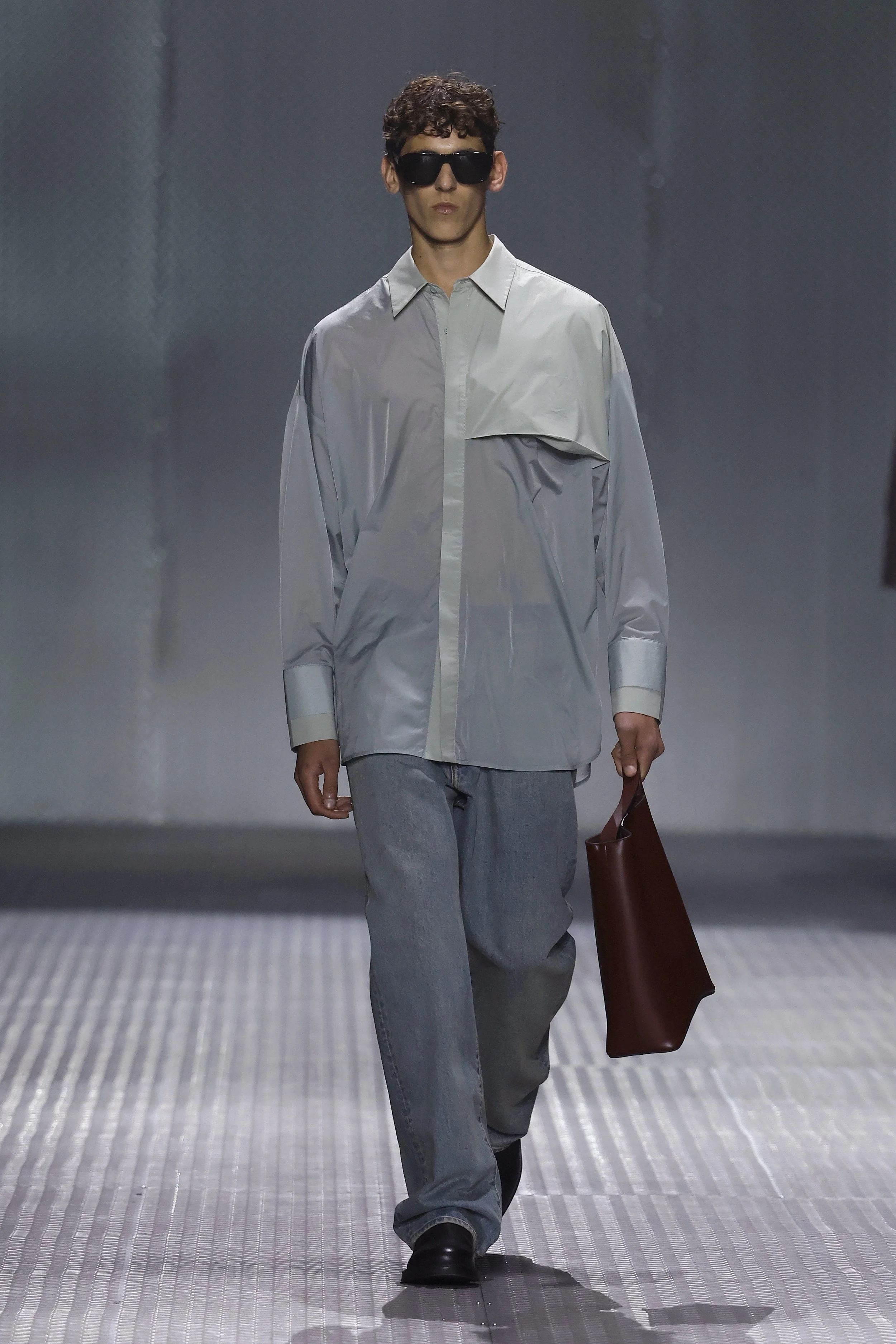
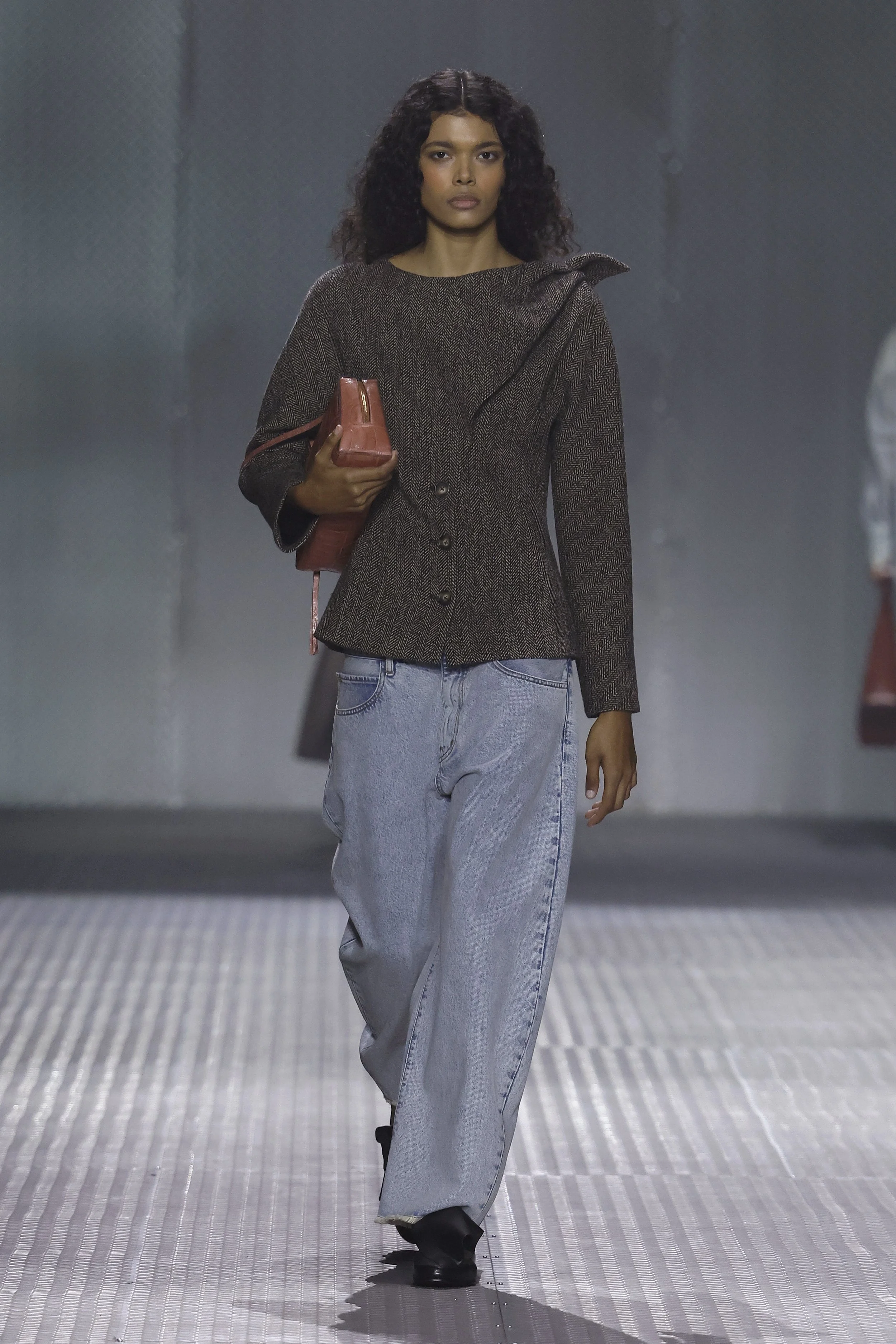
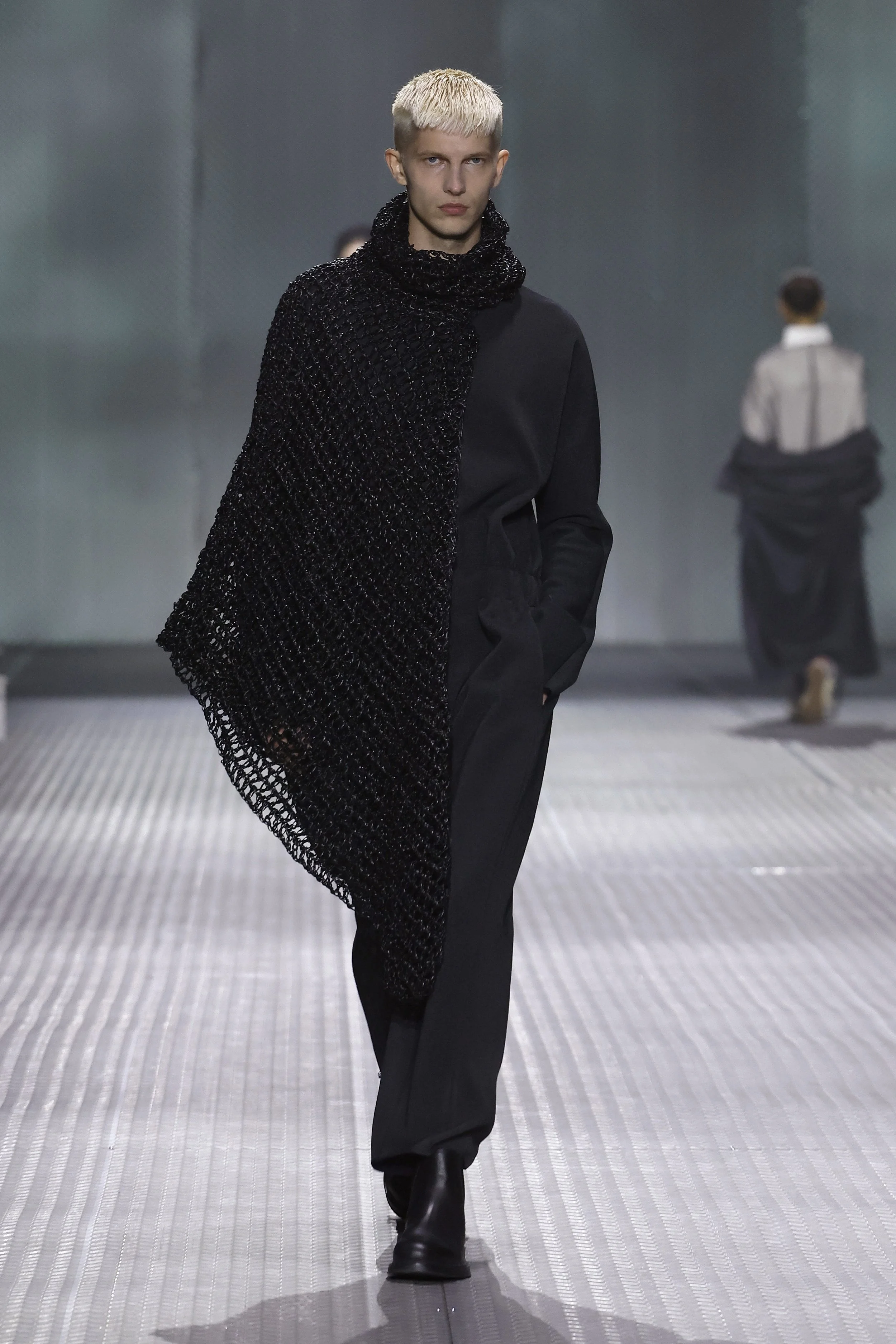
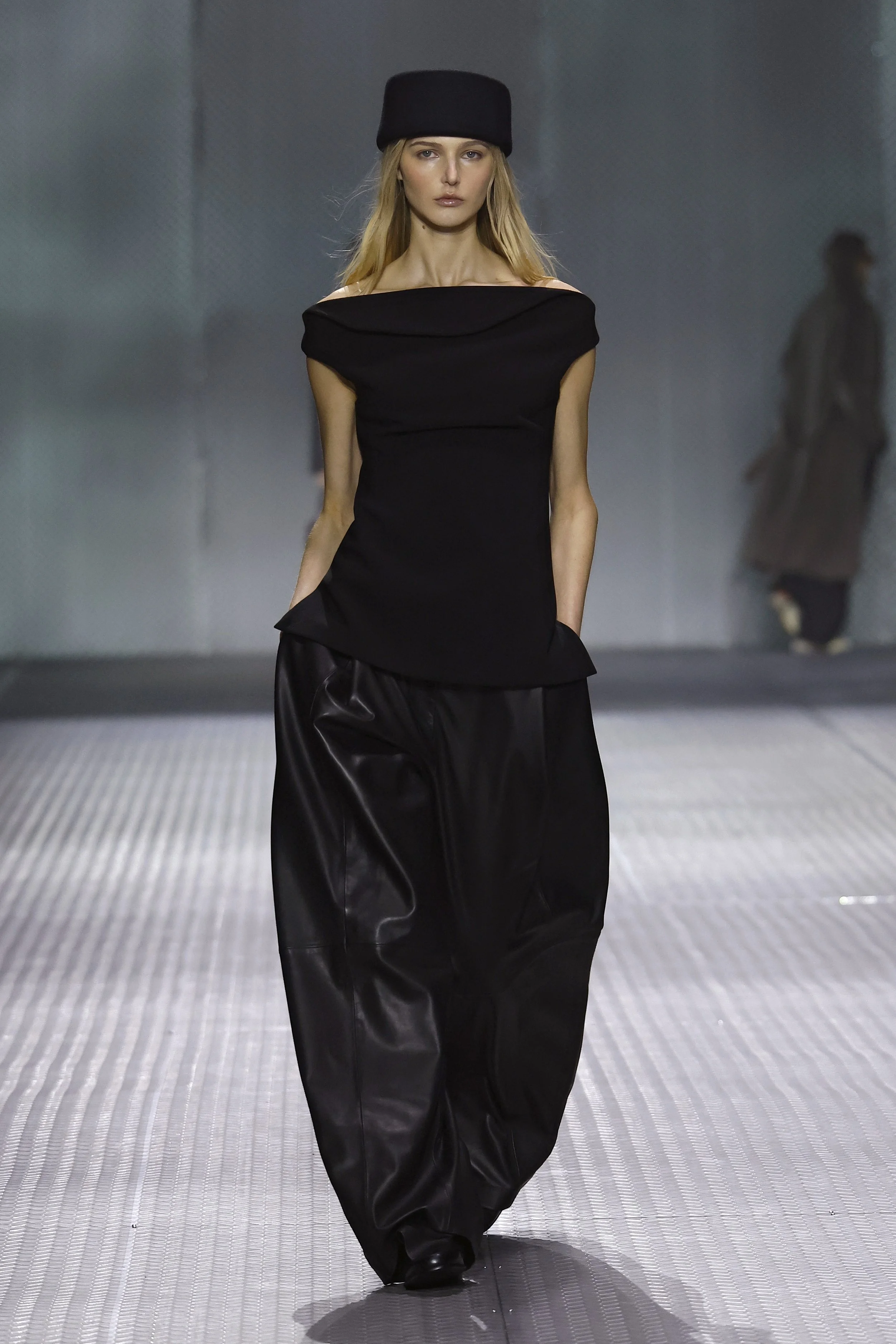
all images courtesy of 080 BARCELONA FASHION WEEK
Adolfo Domínguez’s El Número refused the usual anniversary trap of looking back. Marking 50 years of the house, the collection — under Tiziana Domínguez — leaned into what the brand has always done best: clothes that feel lived in rather than rigidly constructed. The house’s “wrinkles are beautiful” philosophy translated naturally into the collection, from wrinkled leather to softly pleated jackets, reinforcing a long-standing visual language.
What could be described as layered minimalism anchored the show, with relaxed tailoring subtly reworked through bomber-backed blazers and easy silhouettes. A restrained palette was punctuated by shades of yellow, blue and mint green. The tactility came through most clearly in unexpected fringe appliqué details and oversized, almost sculptural knits — including a black, cocooning shawl that disrupted an otherwise clean jumpsuit silhouette, making it a truly standout look.
Though some of the looks may have seemed slightly overstyled, at its best, El Número felt assured and youthful — ready for at least next 50 years.
AAA STUDIO
all images courtesy of 080 BARCELONA FASHION WEEK
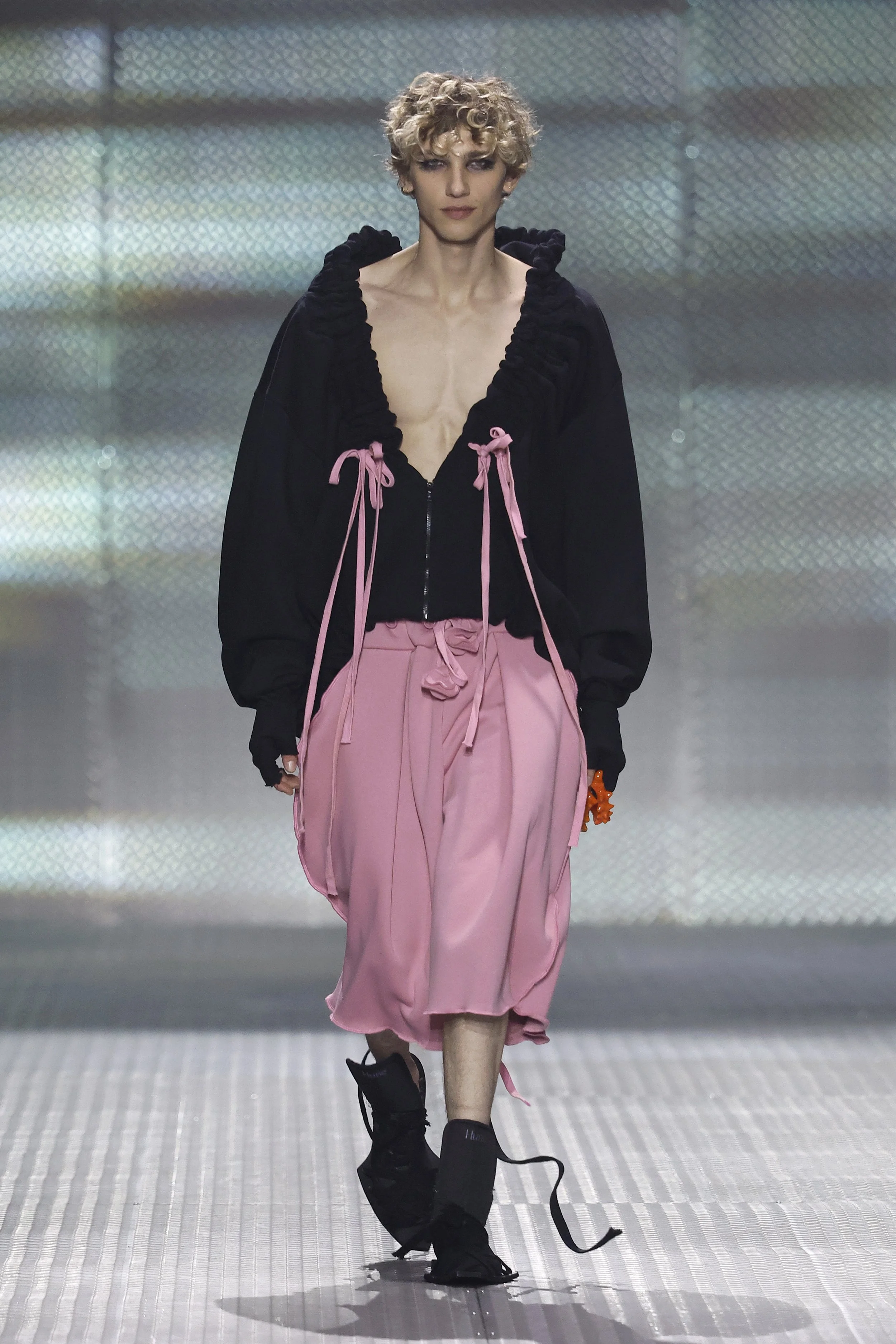
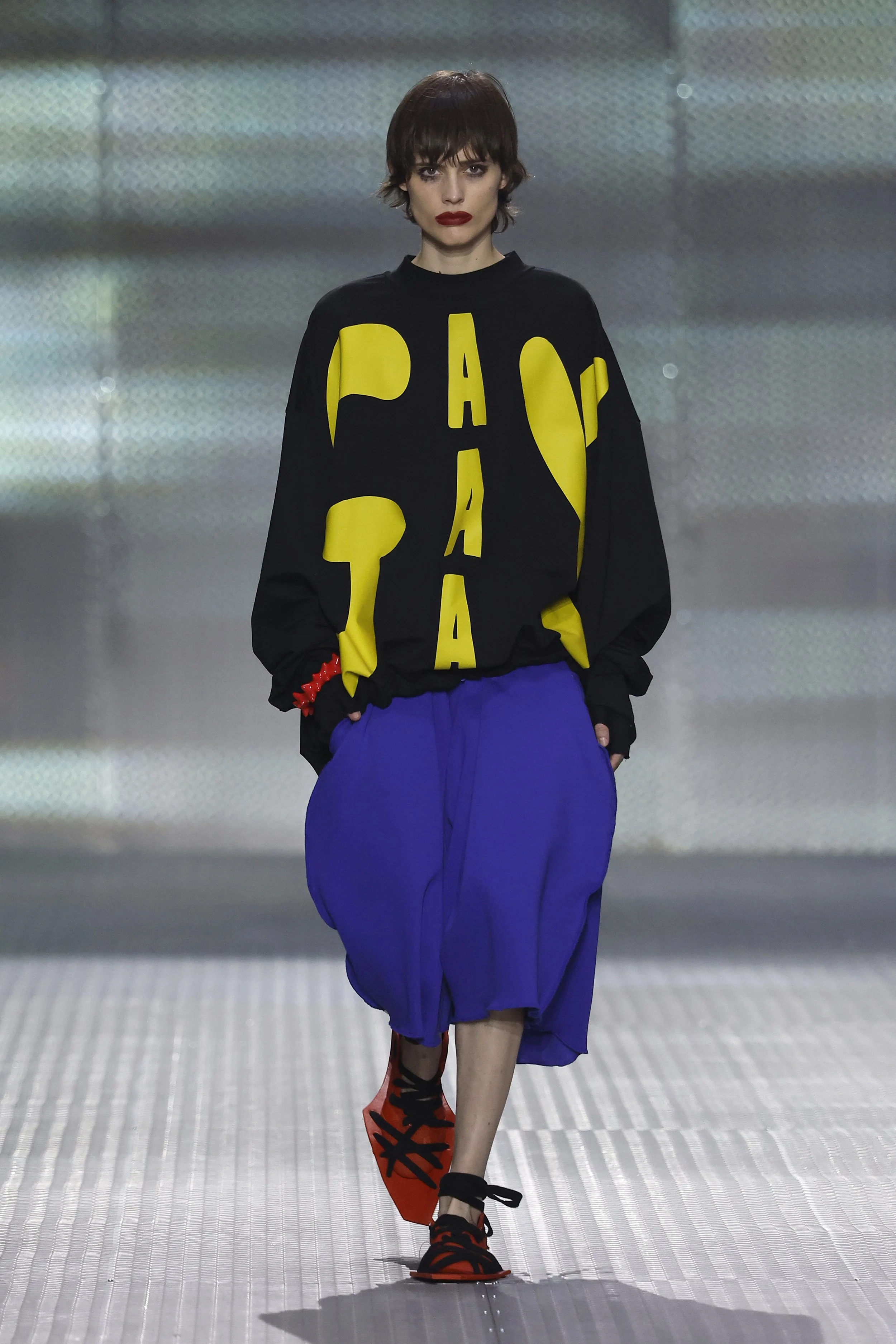
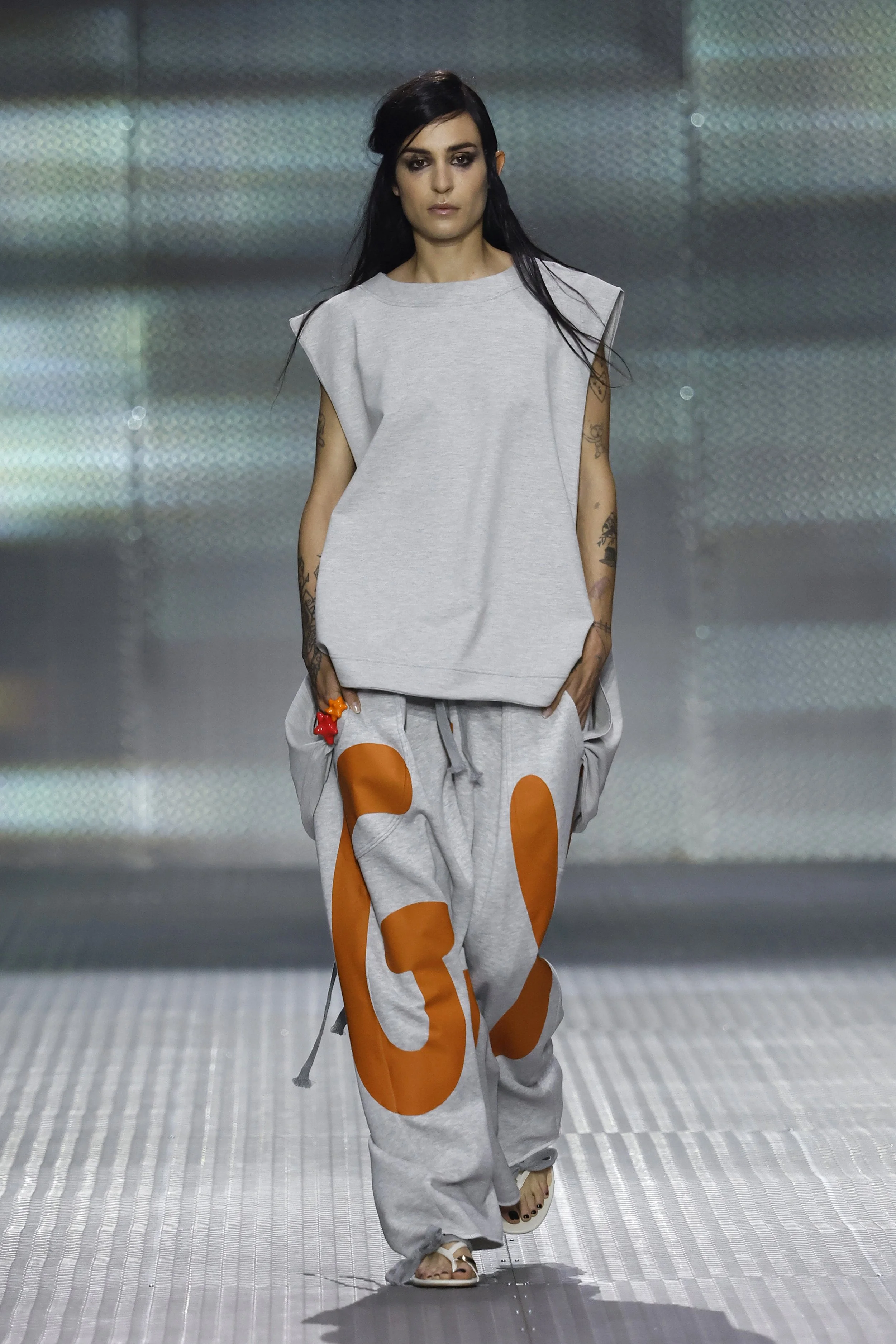
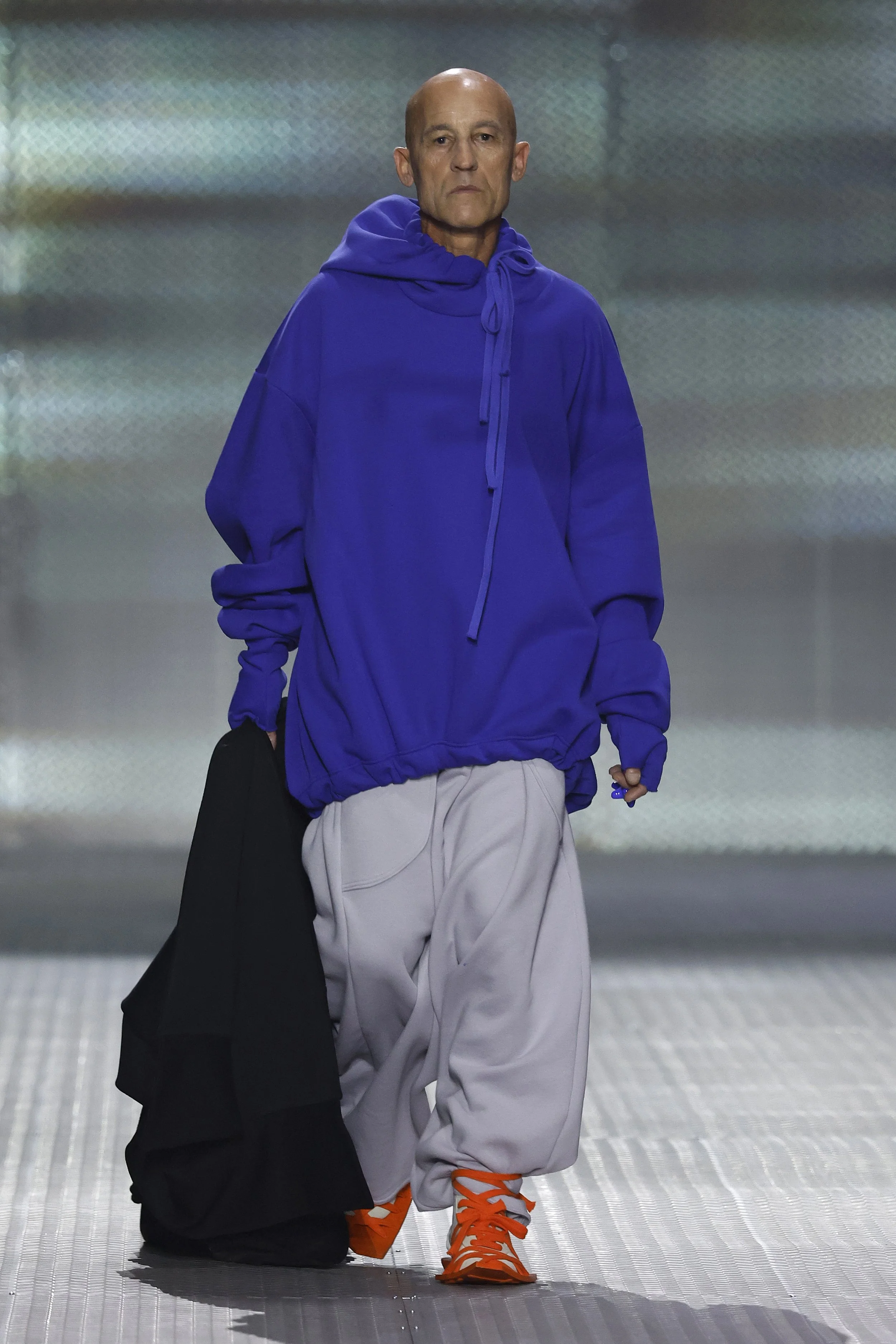
Built around 28 looks, Señora, suélteme el brazo!!! positions chaos and freedom not as opposites, but as something co-existing in a constant state of friction. Jersey dominated the collection, but not in a relaxed, off-duty way. It stretched, wrapped, and held the body in place, creating silhouettes that feel both soft and calculated. Volume gathered at the arms, shoulders and hips, while straps, ties, elongated sleeves or fingerless gloves suggested movement that was slightly restricted — as if the wearer was always in the process of getting free.
Pieces shifted depending on how they were worn, rejecting fixed functionality in favour of something more personal, more fluid. Nothing felt fully finished — and that was intentional. High-gloss, almost artificial bursts of yellow and orange cut through the black, white, grey, baby pink and indigo looks, in a disruptive manner. Placed as prints or at the wrists, fingers or shoes, they pulled focus in a way that felt slightly excessive — and very deliberate.
There was a clear punk and rock undercurrent, but it never turned nostalgic. Instead, it was filtered through something more immediate, more instinctive. The result read unapologetically queer. It was both a statement — achieved mainly by the GAAAY sweat uniform — and a way of constructing the body, of resisting neatness, of refusing to behave. If anything, AAA Studio didn’t ask for approval, it didn’t try to smooth anything out — and let that be the point.
DOMINNICO
all images courtesy of 080 BARCELONA FASHION WEEK
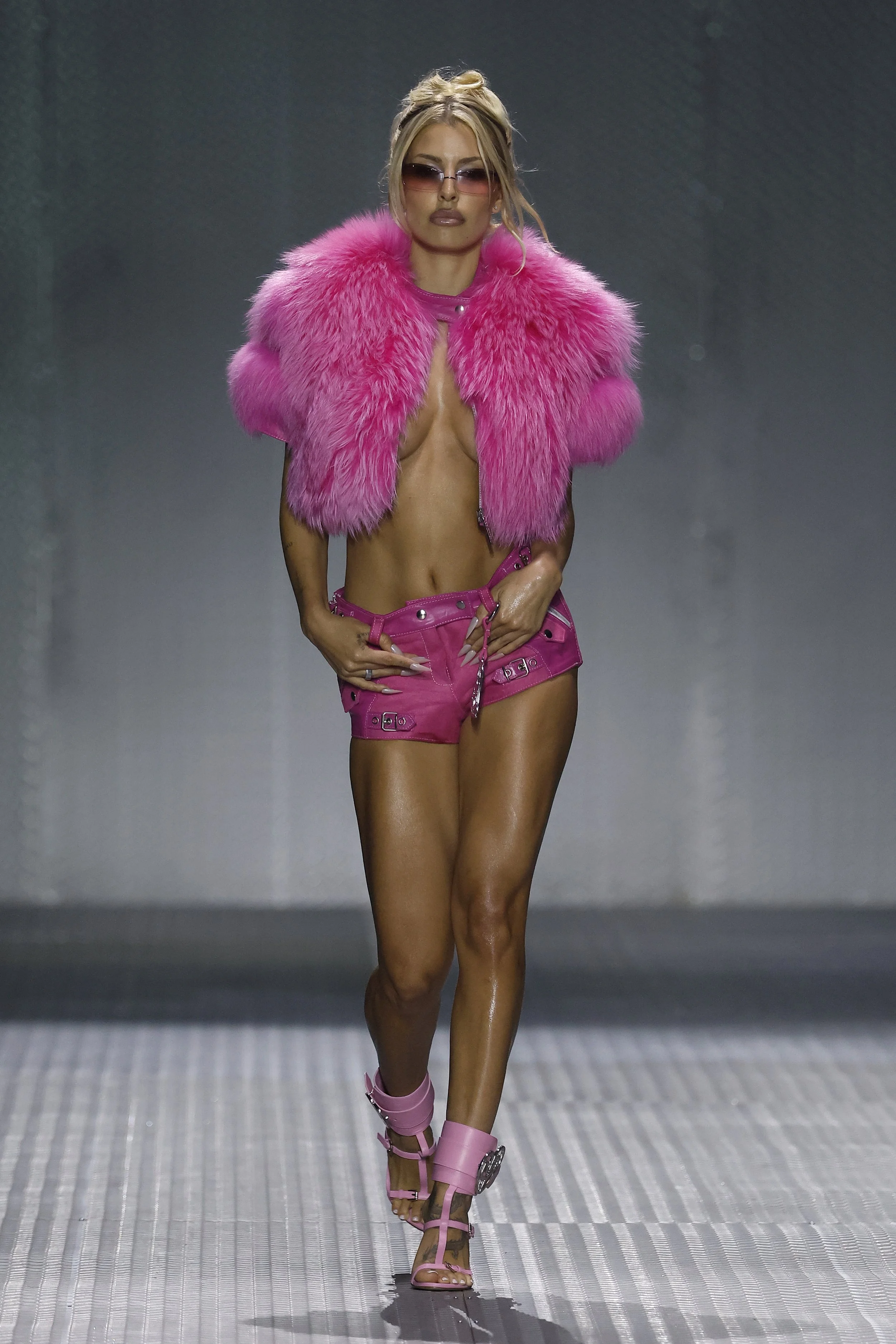
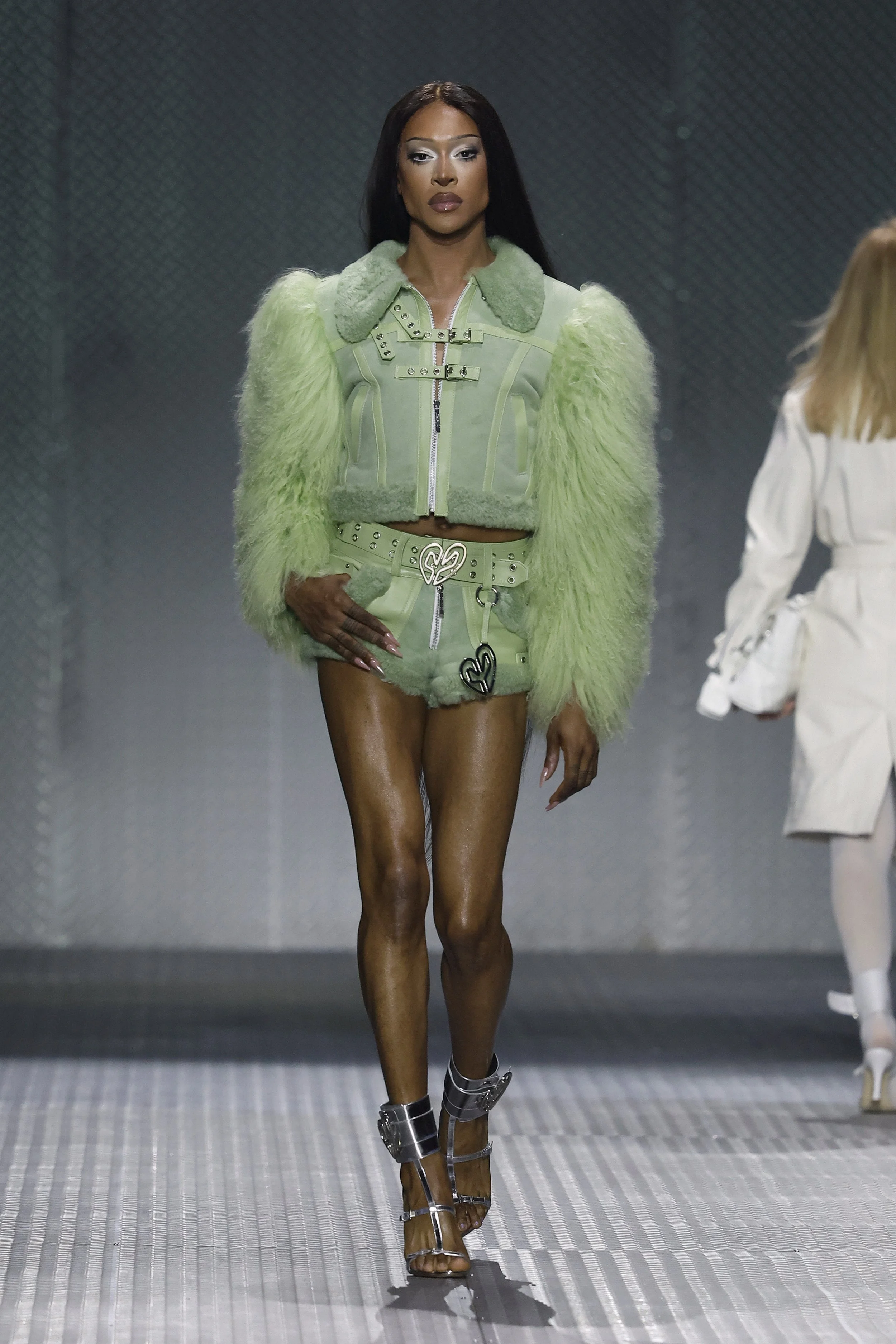
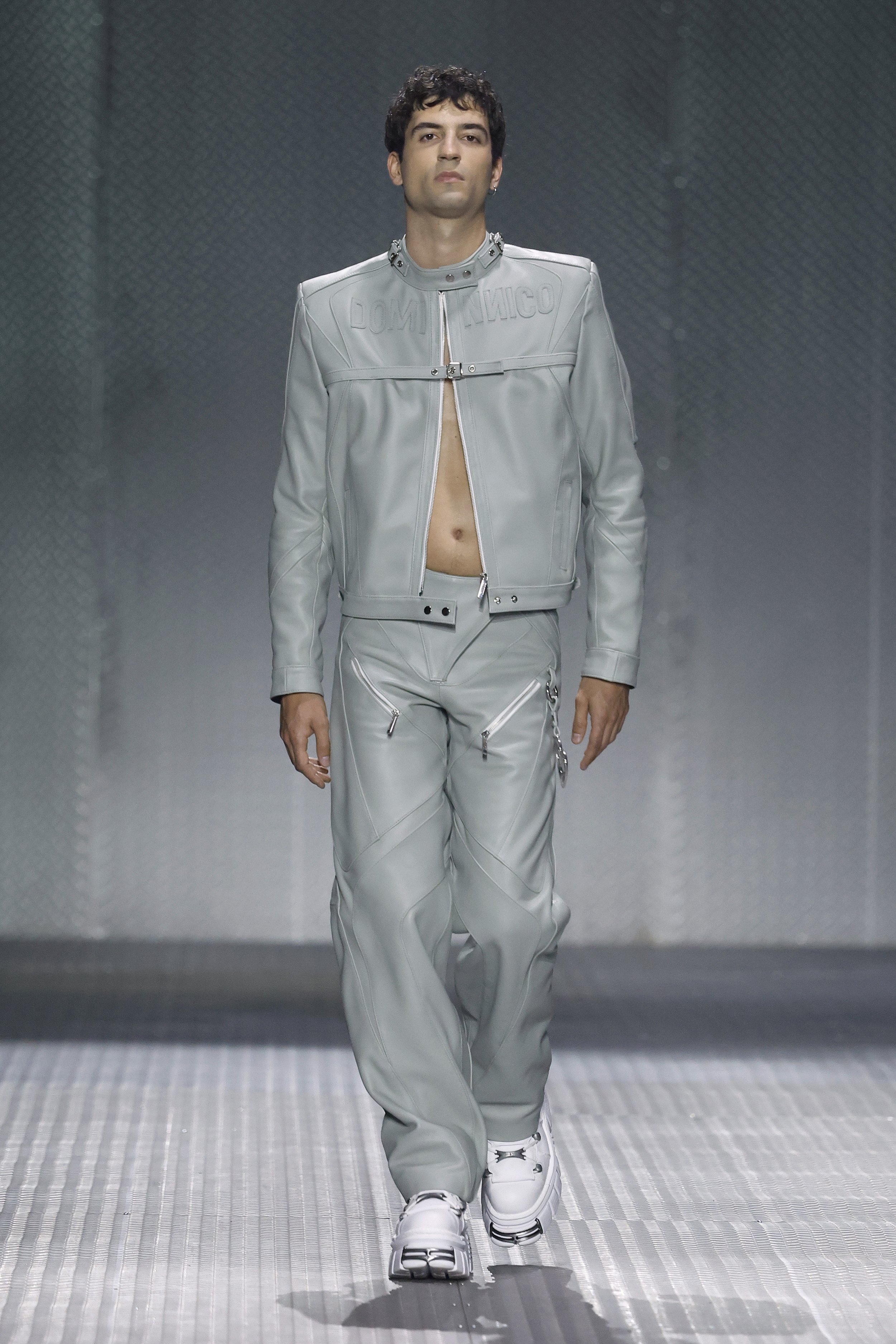
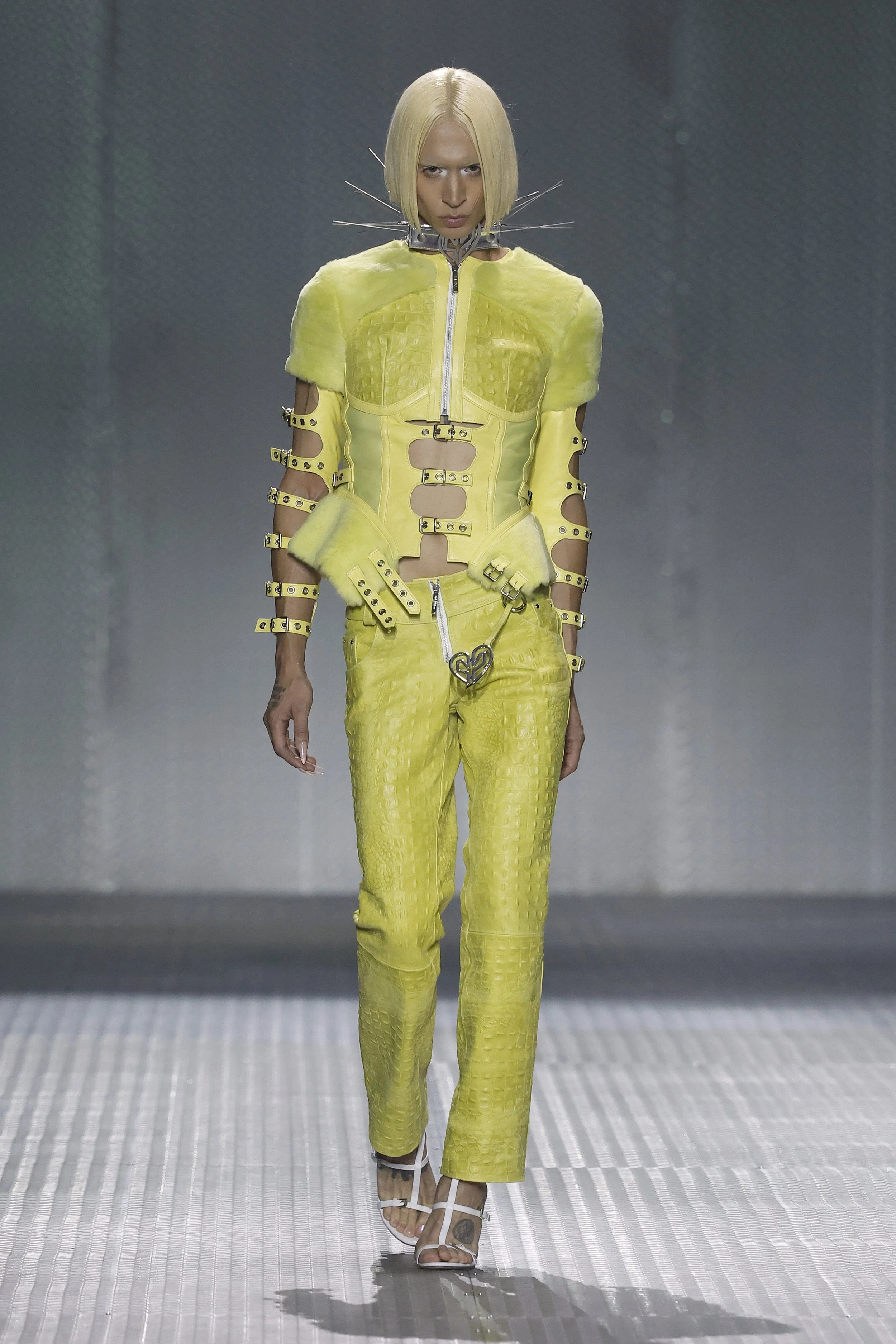
Marking ten years, Dominnico’s Soft Armour didn’t introduce a new language as much as it sharpened what the brand already does best — sex, shine, and structure — and made it feel more intentional.
The idea of clothing as armour ran through the collection, but not in any literal, heavy-handed way – maybe with the exception of the silver dress with the armour a greave. Instead, it showed up in the tension between materials. Leather, faux fur and denim came loaded with hardware — buckles, straps, metal fastenings — while the palette softened everything around it. Pink, pistachio, powder blue and washed-out neutrals stripped these pieces of their usual aggression, turning them into something more ambiguous.
Micro shorts, cropped jackets, low-slung trousers might’ve alternated with some more “day” pieces like knee-length trench coats or cleaner outerwear, but the attitude remained the same throughout. There was a clear emphasis on construction as a visual language. Straps, cut-outs, lacing and paneling mapped the body, revealing and restricting at the same time. It created a rhythm across the looks: fitted, controlled, slightly performative.
As Domingo Rodríguez Lázaro put it backstage, the collection was about using fashion as a way to express oneself — as a kind of armour — but translating that theatrical instinct into something more everyday. Even if “everyday” here still leans closer to performance than practicality, at its best, the collection felt confident in that contradiction.
NAZZAL STUDIO
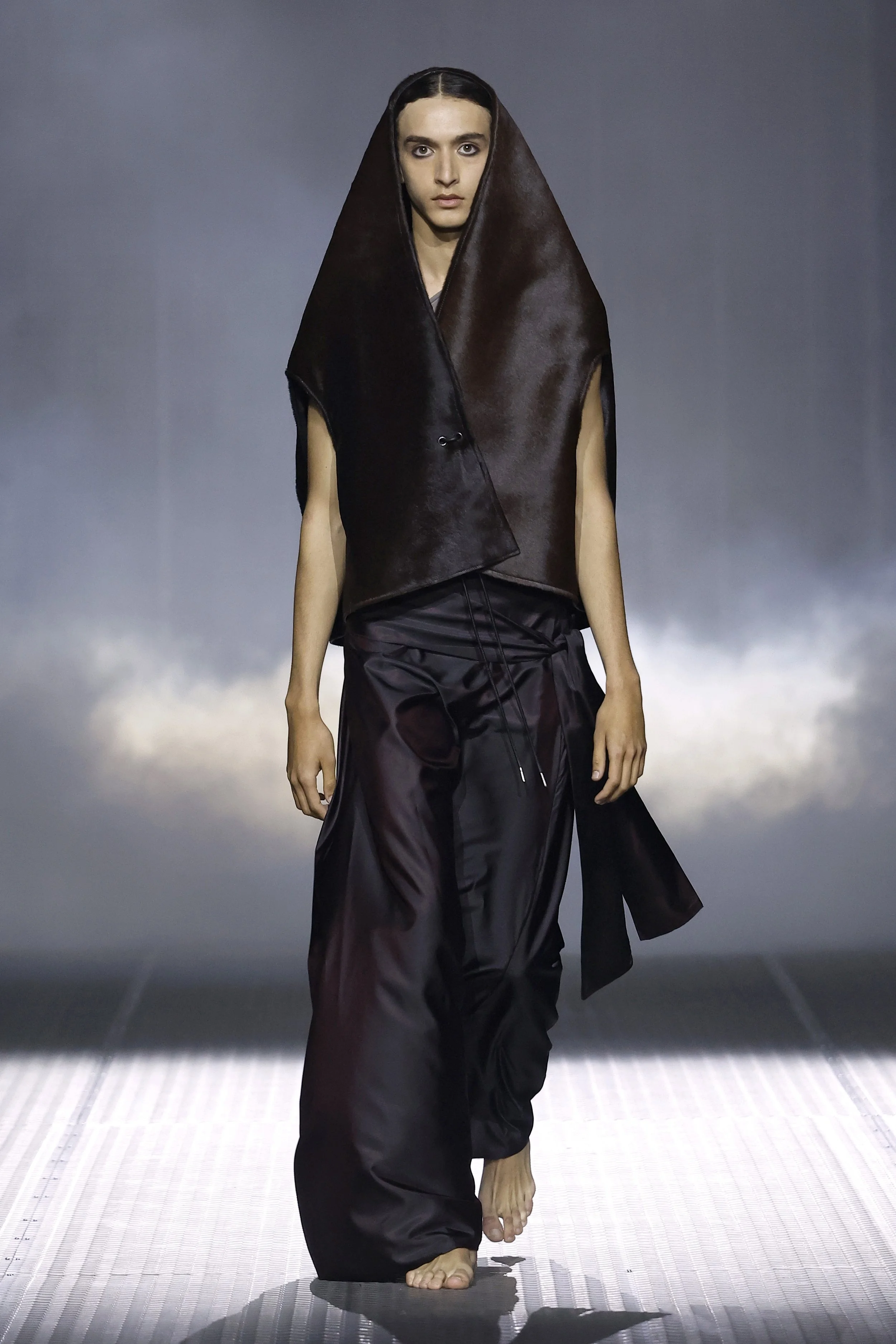
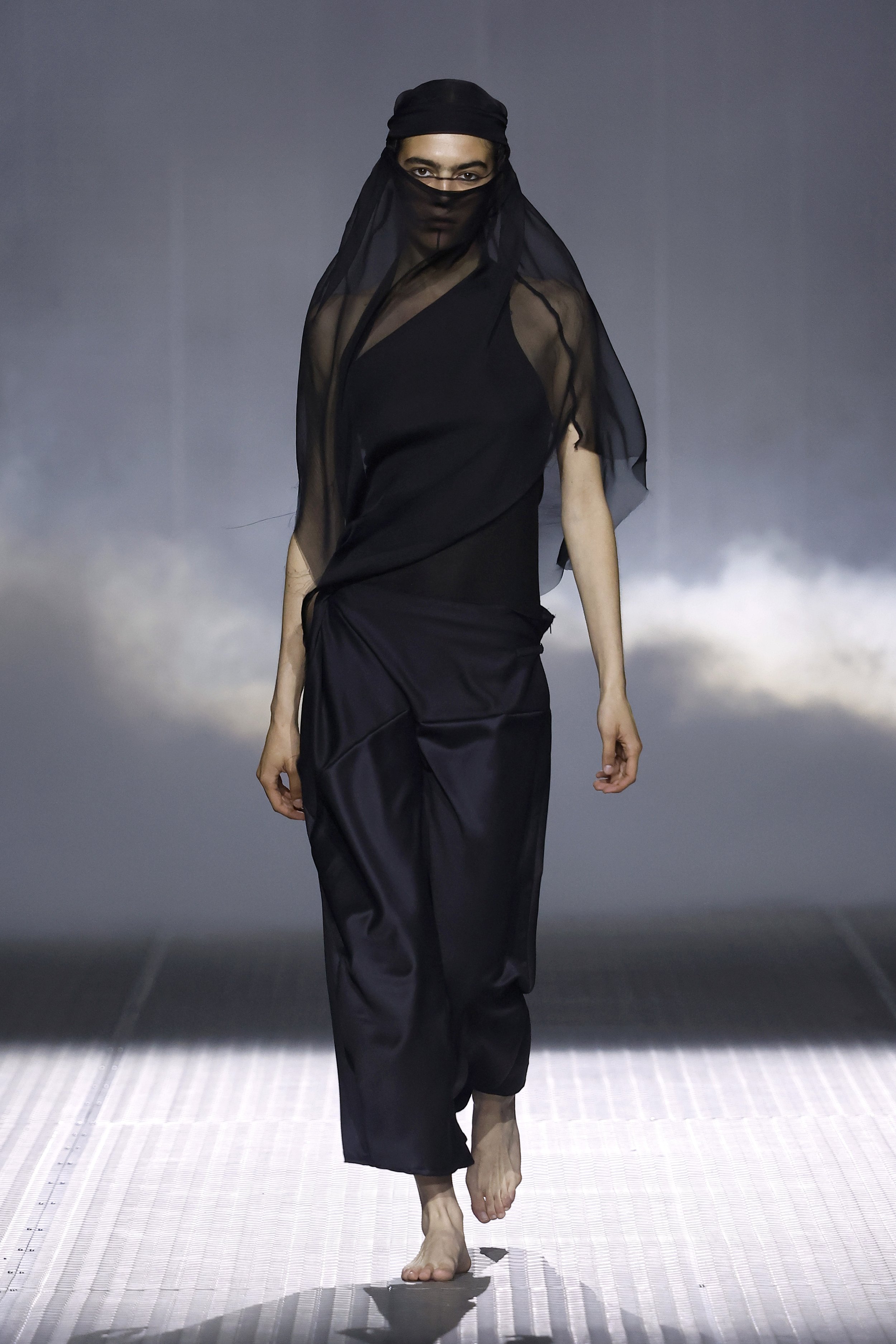
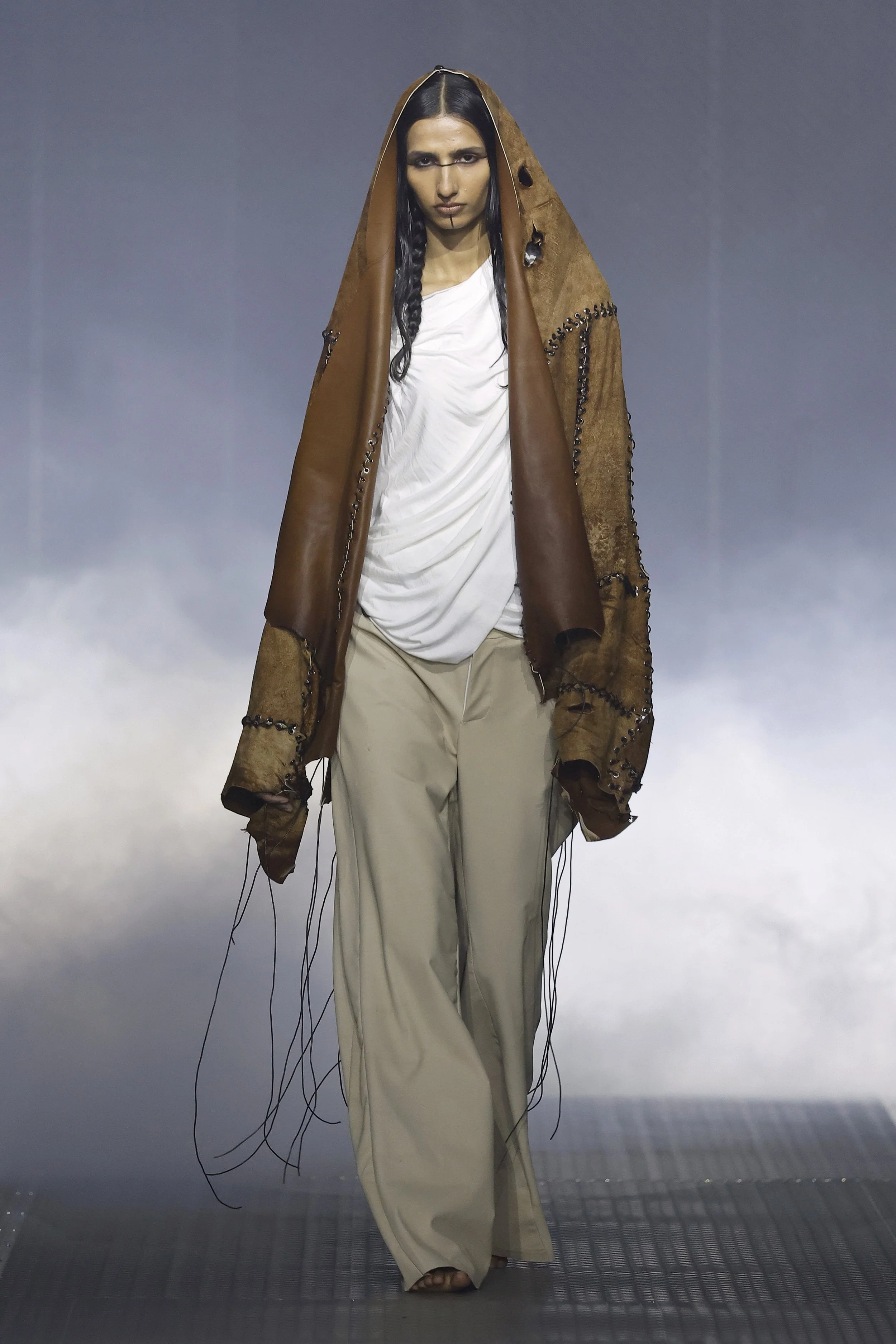
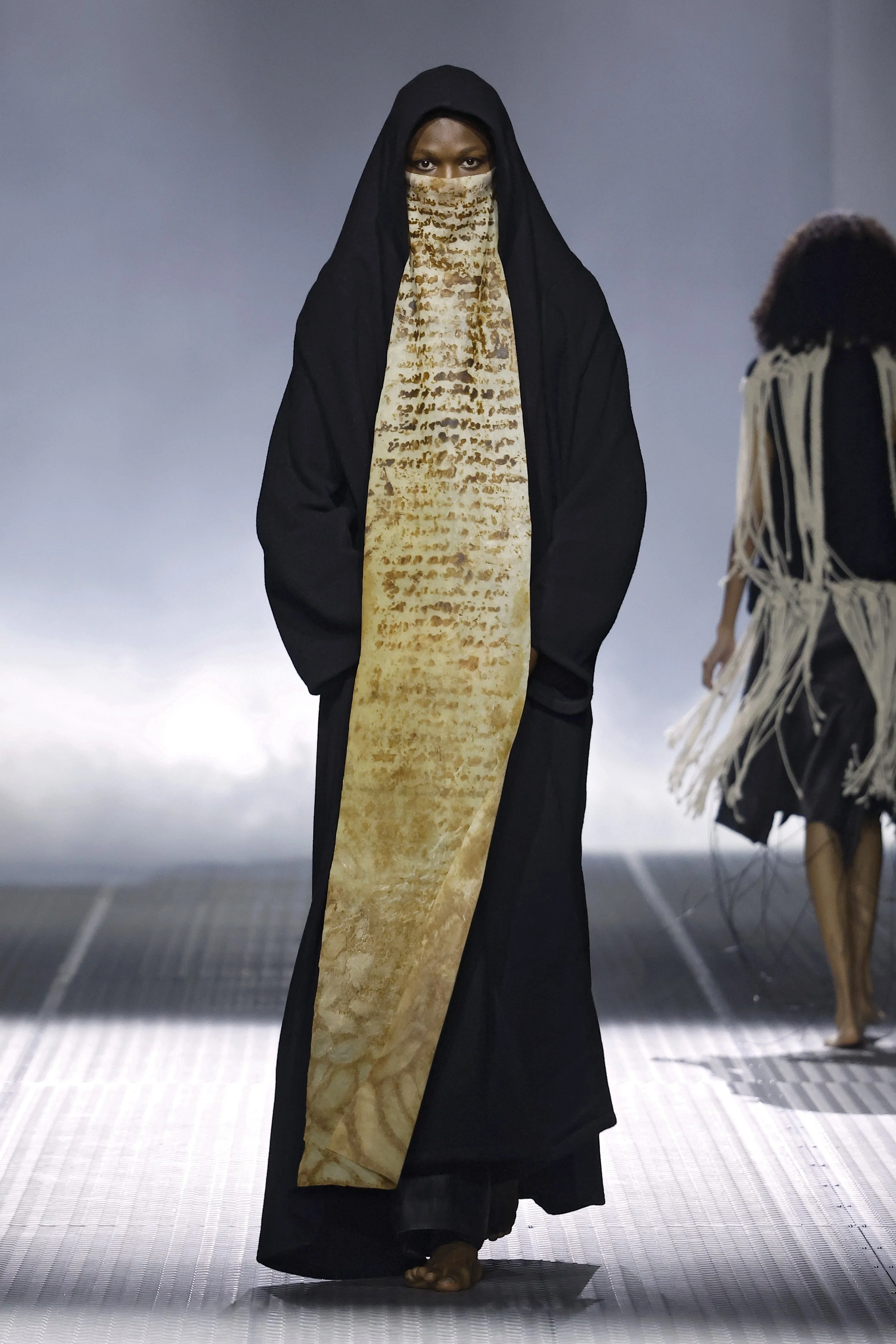
all images courtesy of 080 BARCELONA FASHION WEEK
Nazzal Studio delivered one of the most emotionally charged moments of the schedule — and crucially, one of the few that didn’t aestheticise its reference point.
Working from Bedouin life in Bilad al-Sham, Sylwia Nazzal and Jad Maq built a collection that felt grounded in its realities. The strongest looks came through in the duality between weight and fluidity: rigid, almost armour-like leather hoods framing the face, set against liquid, draped trousers that collapsed around the body. It felt functional, almost protective.
There was a clear insistence on covering and revealing. Veils appeared in multiple forms — sheer black layers obscuring the face, sand-coloured wraps pulled tight across the nose, elongated panels marked with script falling down the body like a second silhouette. These weren’t decorative additions; they controlled how the body was seen, or not seen.
Leather was left dense, sometimes distressed, sometimes punctured and roughly stitched back together, with threads hanging loose. Elsewhere, fabric gathered and twisted around the body — particularly in the black looks, where dresses and skirts wrapped and shifted instead of sitting cleanly.
Nothing felt exaggerated, nothing over-explained. The collection held its ground — somewhere between protection, identity, and survival — without turning into costume.