
BURBERRY’S WINTER 2026 RETURNS TO THE CITY
words by BEX WHITELY
Given that the start of this year has been marked by never-ending rain in London, it seems fitting that Burberry’s Winter 2026 show depicted a wet-weather evening in the capital. At Old Billingsgate, a former fish market on the Thames, the brand stepped away from the countryside and back into the buzz of the city.
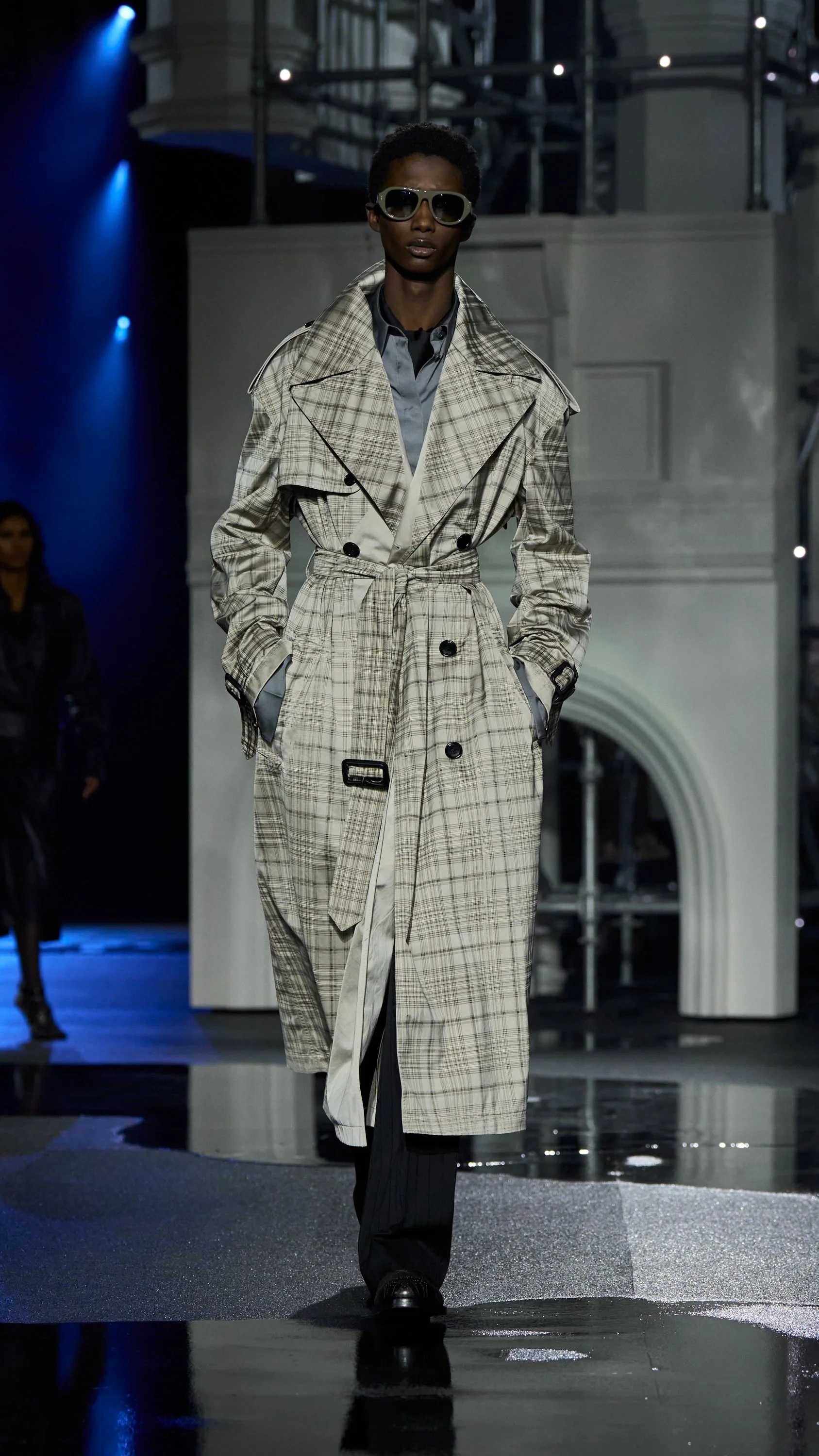
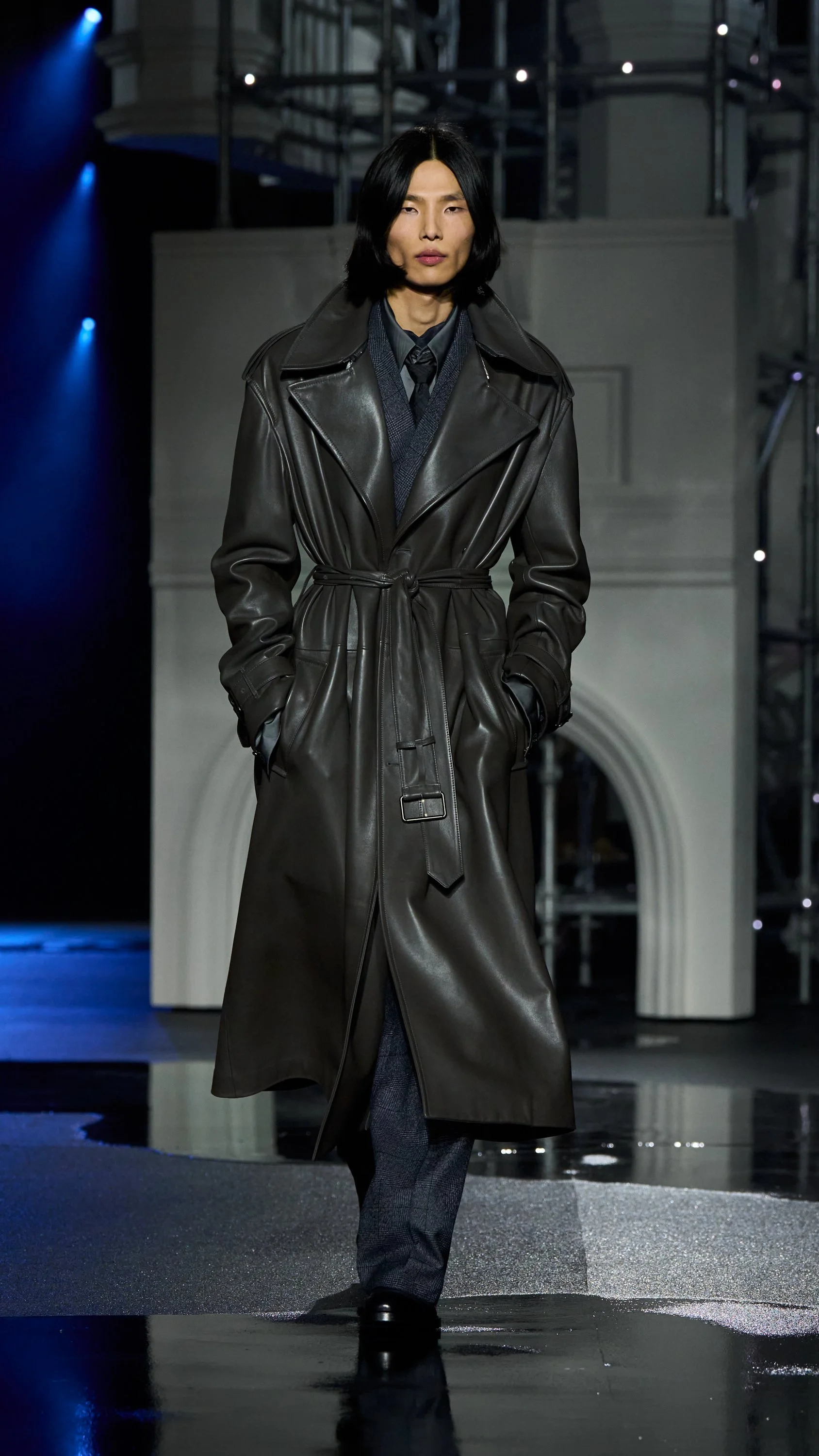
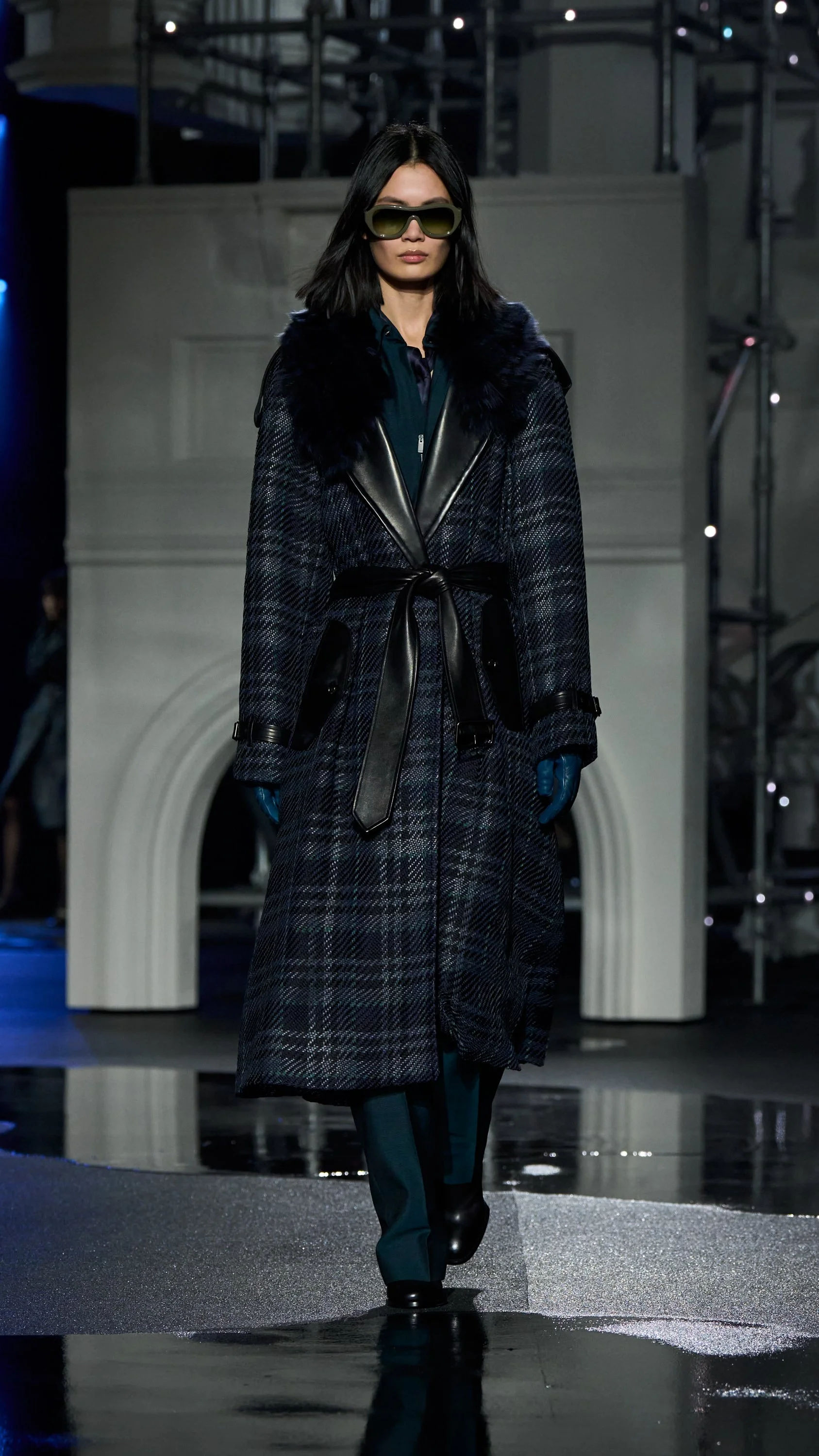
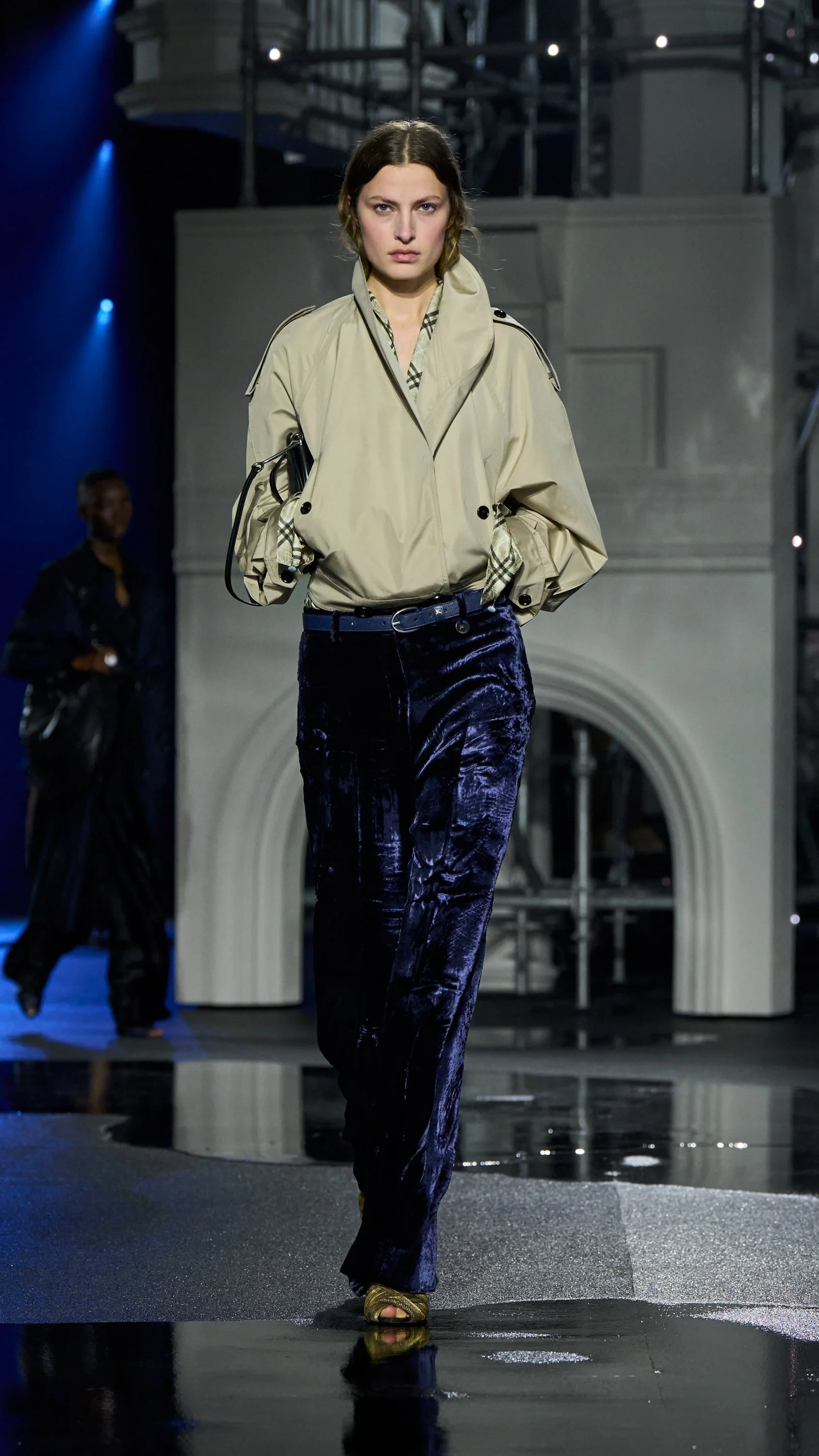
all images courtesy of BURBERRY
Daniel Lee’s direction for Burberry once again explored the relationship between youth and heritage. Rather than a clash, for Lee, it’s the defining spark that allows for the classics to be reimagined. Tuxedos, silk shirts and overcoats were styled with a casualness, sitting alongside functional pieces that became newly refined. Hoodies, raincoats, and bombers inherited the same elegant detailing with shearling cut raw on the edge or reworked in check faille that ruffles on coat collars. Deep, rich colours, including Bordeaux red, plum purple and dark ink blue, were paired with variations of Burberry beige, establishing a clear day-to-night narrative reminiscent of London evenings. It’s a sexy and slick look for the brand.
There’s an effortlessness in the collection, one that allows you to imagine the looks as part of your everyday. This, combined with the quality of materials like silks, cashmeres and leathers – to name a few – points to the brand's understanding of how luxury has been redefined in recent years. Burberry seems to be moving with the luxury consumer, recognising that quality, timelessness and versatility are key motivators in creating their wardrobes, then adding a layer of opulence with ruffles and fringing.
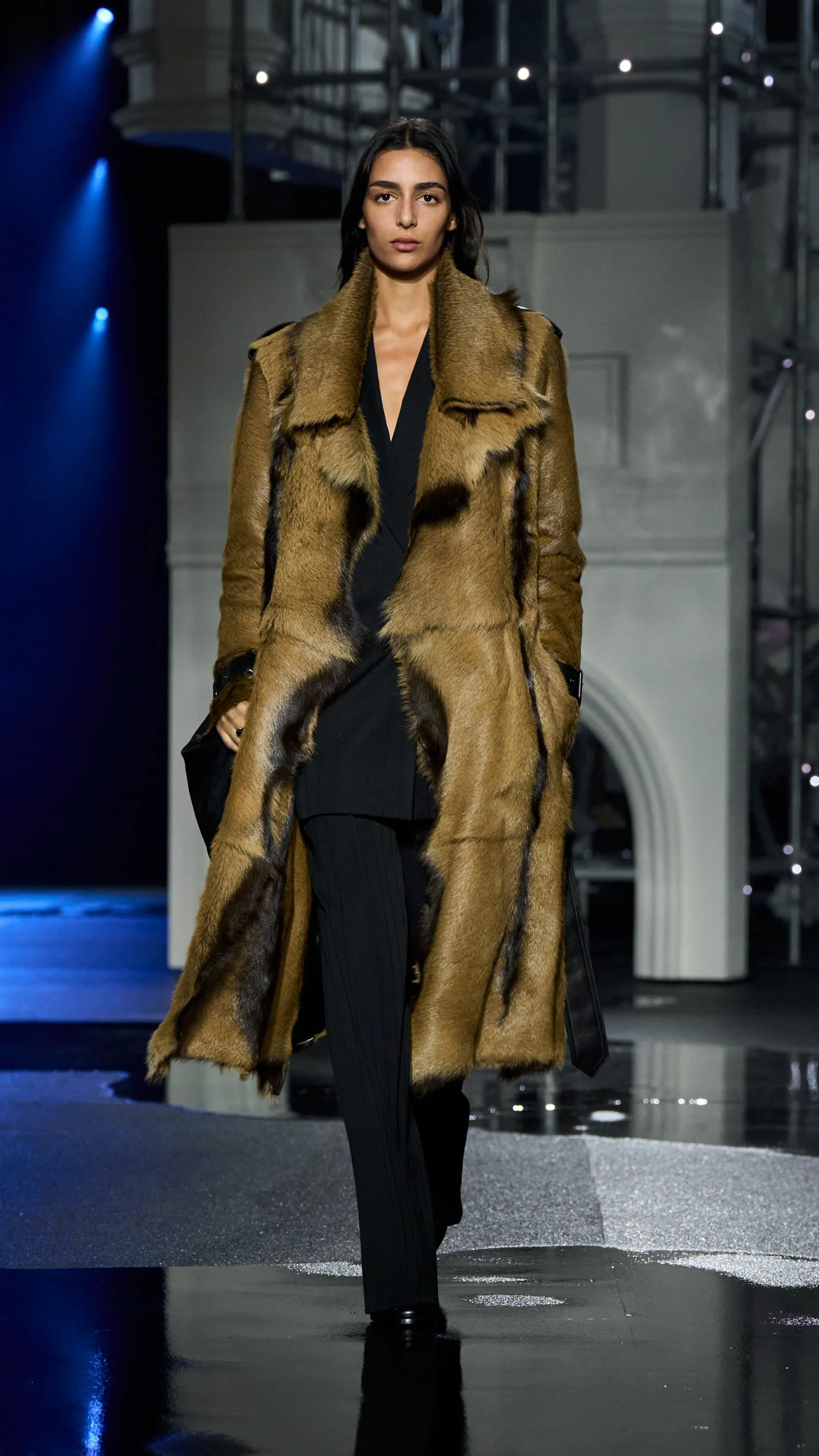
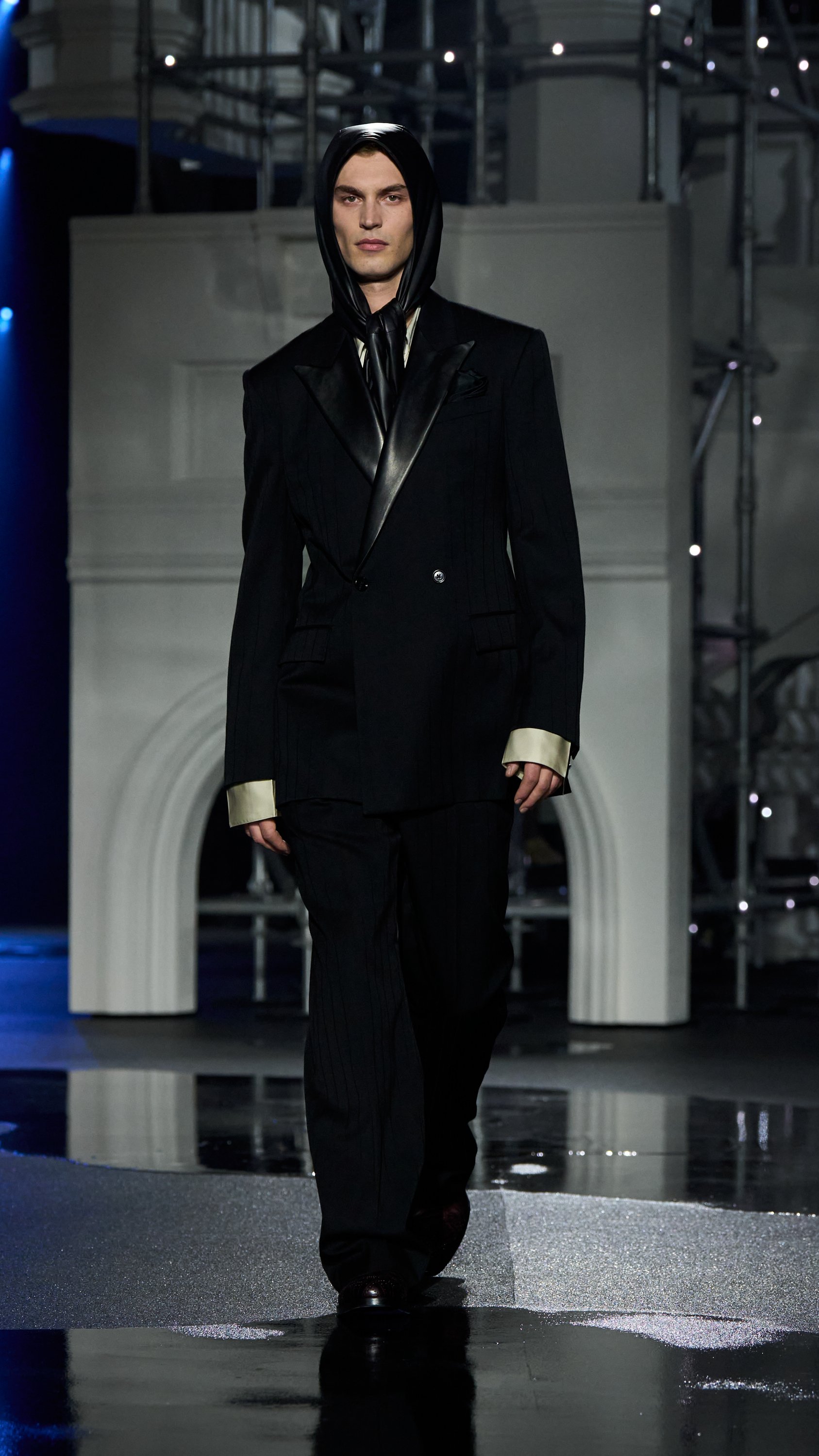
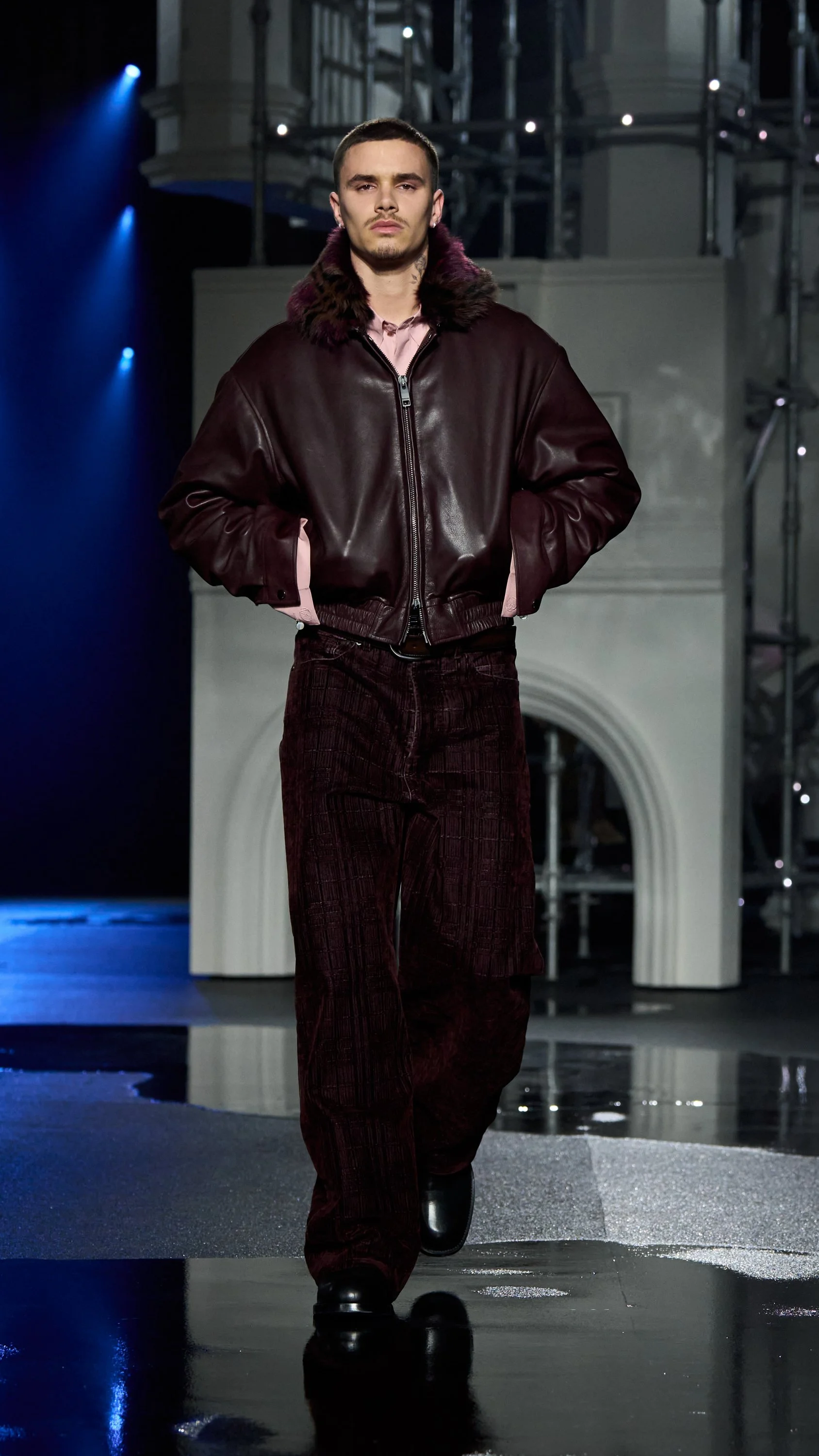
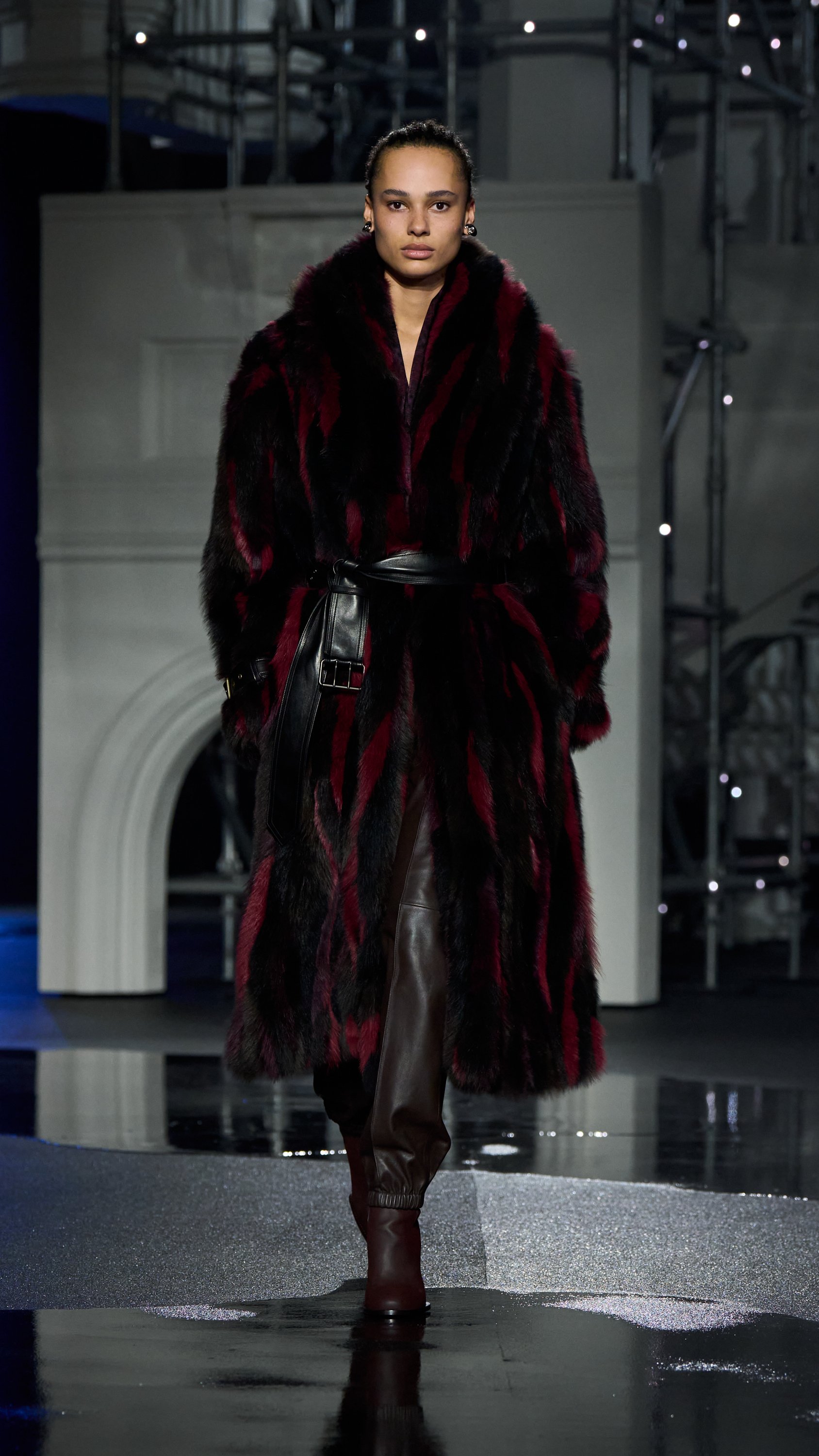
Cementing their position as the home of outerwear, trench elements appeared throughout – reimagined as belts and cuffs, in contrasting leathers, and even reworked into epaulettes on rib-knit dresses. A standout piece was a dark leather trench whose surface was scored with a map of the very streets surrounding the venue, a detail sourced from the Burberry archive, honouring London’s past and present. The iconic silhouettes were redesigned to represent rainfall and iridescent city streets. There was a clear attention to detail, from sequins and beaded embroidery to hand-knitted dresses adorned with thousands of beads and sequins that shimmered like droplets of water. The overcoat thrown over the look is said to mirror the nonchalant way Londoners pull together an outfit, as though jumping in a taxi to the next stop in the evening.
Leather boots were the footwear of choice for the majority of the looks, representing utility that nods to the house’s roots in outfitting motoring pioneers, juxtaposed with new additions such as quilted fabrics. Traditional equestrian-inspired hardware appeared on the bags, alongside hooded scarves and leather waist ties – each detail amplifying the collection’s sophistication with a functional edge.
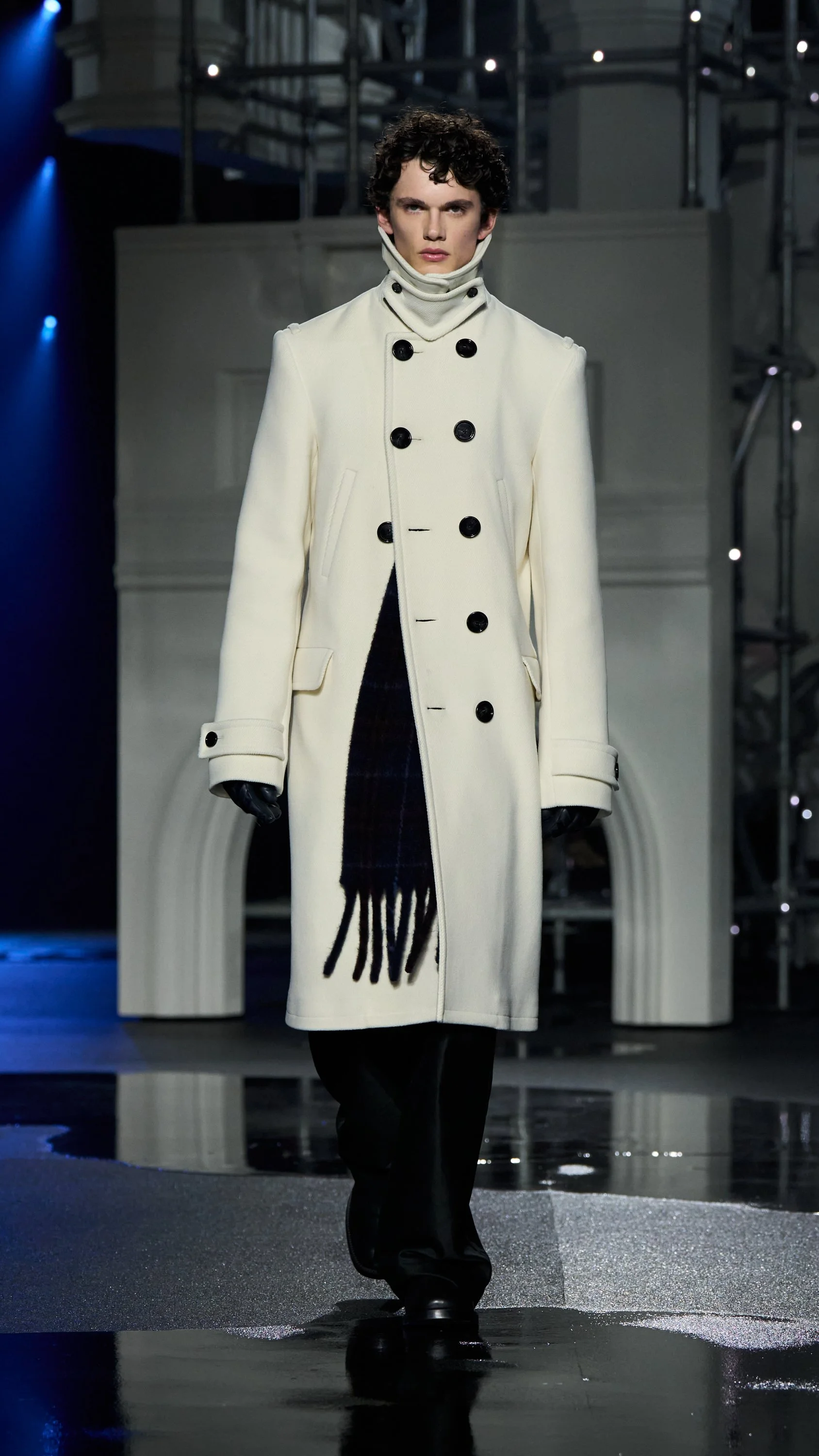
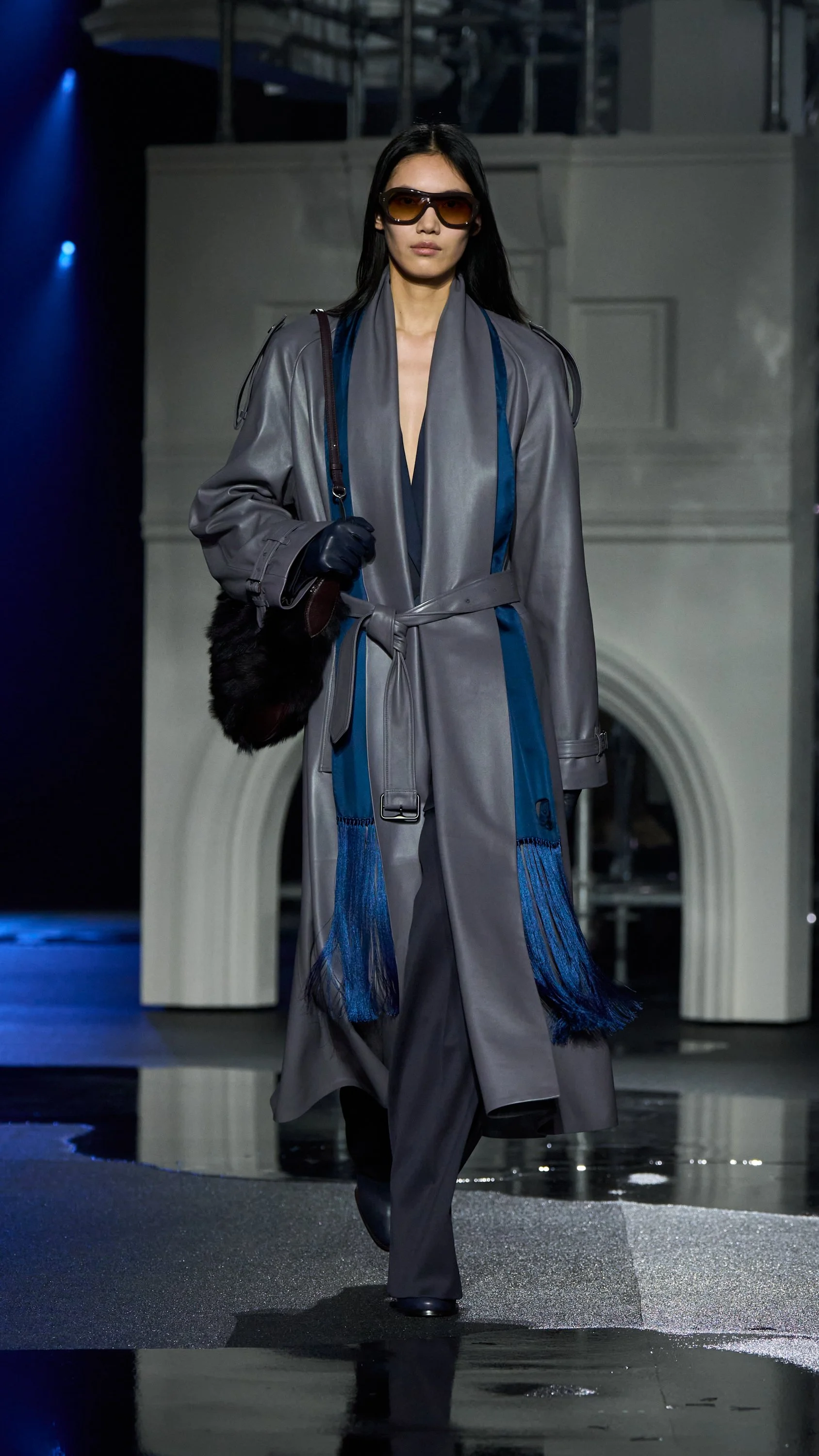
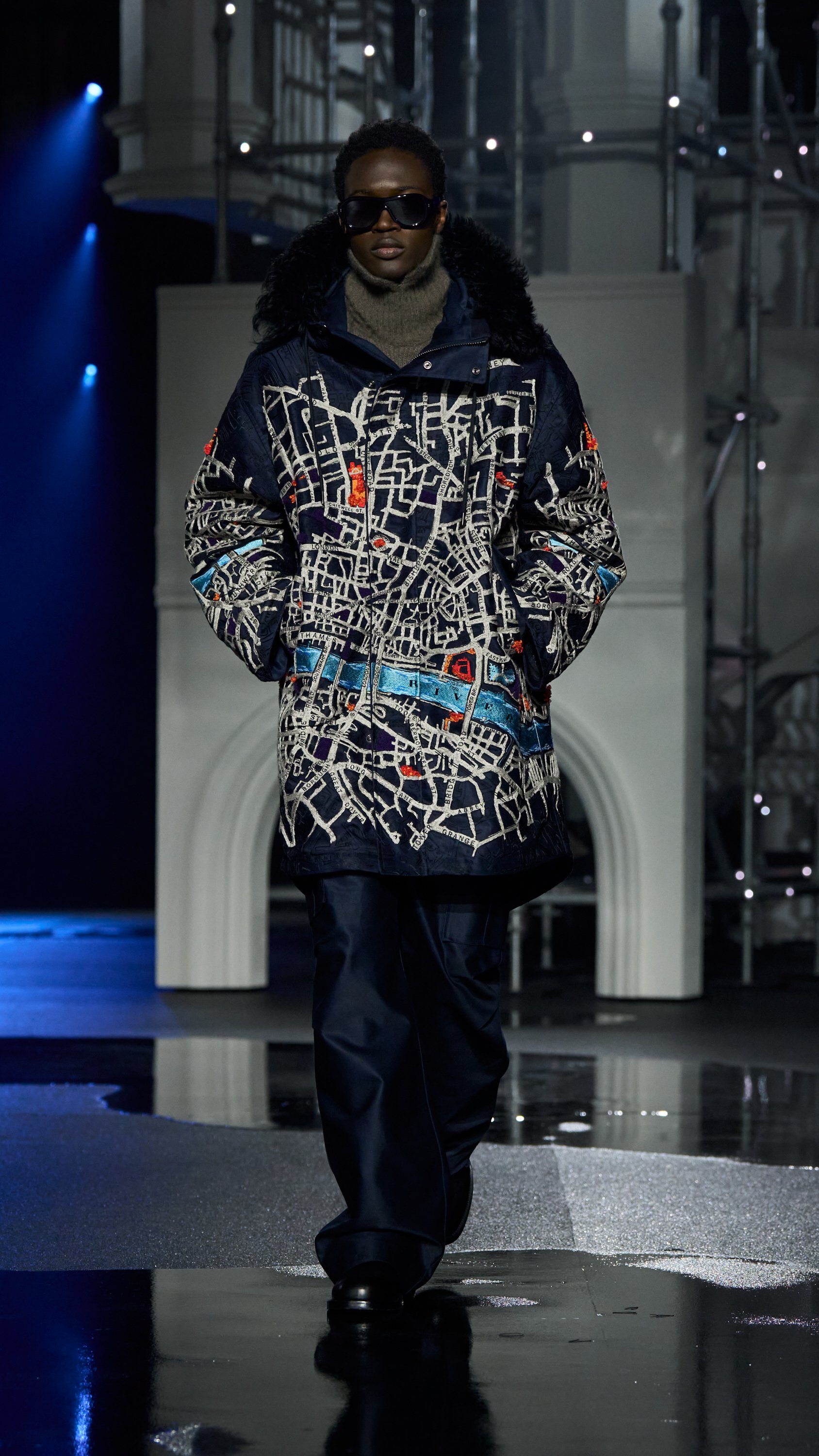
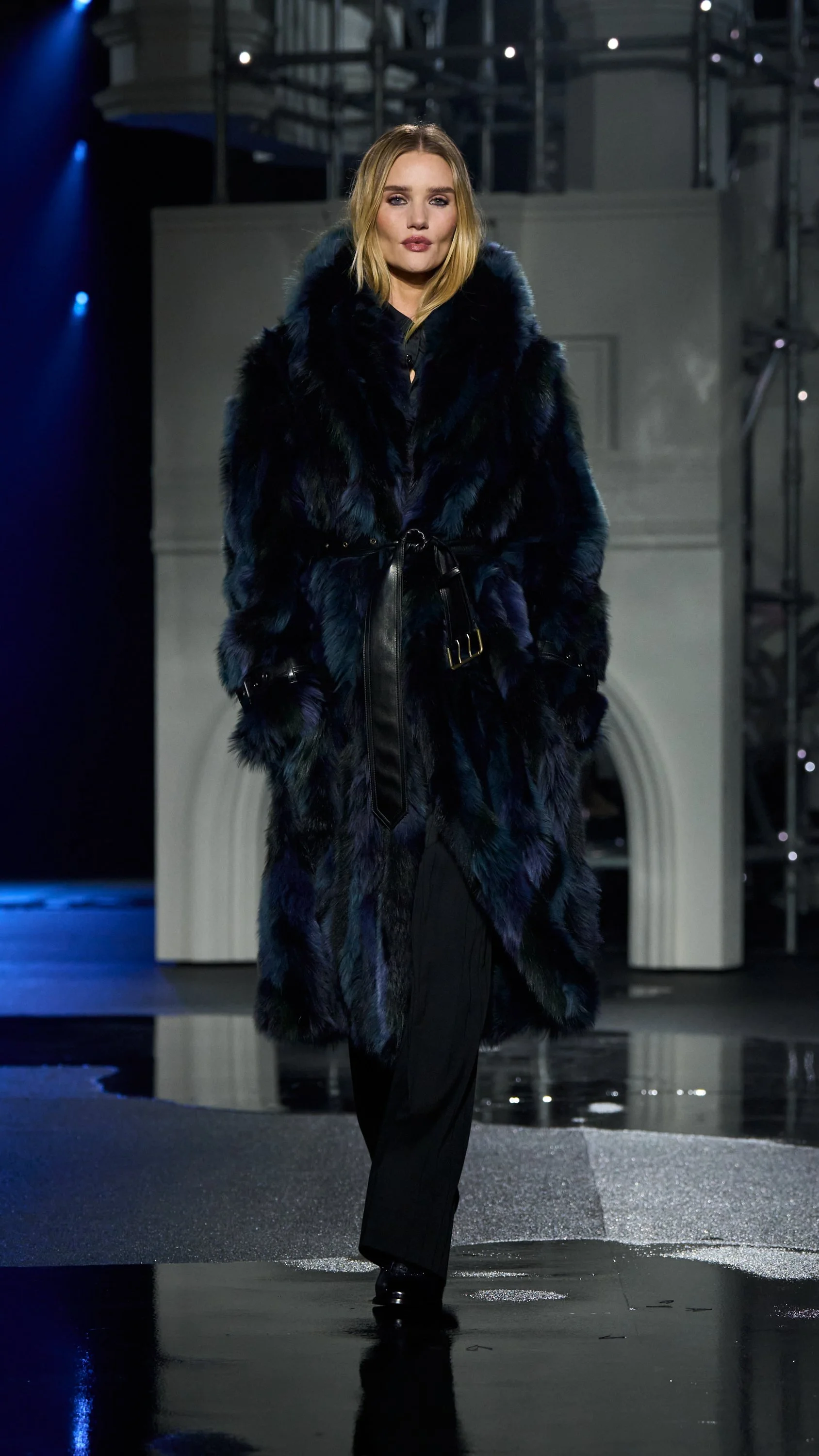
The show space itself paid homage to the architecture and infrastructure of London, with a glittering blue replica of Tower Bridge at the centre of the room. Where the garments depicted the atmosphere and buzz of the city's inhabitants, the set reflected the streets themselves. Resin “puddles” echoed the rainy streets, street lamps lit the scaffolding, and a soundtrack by FKA twigs captured the mood and energy of a London night.
It was not only the looks that suggested the timelessness of Burberry. Romeo Beckham returned to the runway, his first time walking for the brand was in 2013 at only aged ten, alongside model Rosie Huntington-Whiteley, who first walked for the brand in 2018. Attendees included Burberry ambassadors Olivia Dean and Seungmin, alongside names such as PinkPantheress and Skepta. British icons such as Kate Moss and Alexa Chung were joined by a crowd who represented the new era of Burberry, from footballer Leah Williamson to rapper Nemzzz. Once again, Burberry used their crowd to reaffirm an understanding of combining contemporary culture alongside longstanding iconic status.