
HAUTE COUTURE WEEK FALL/WINTER 2026: DAY 3
BALENCIAGA
review by MAREK BARTEK
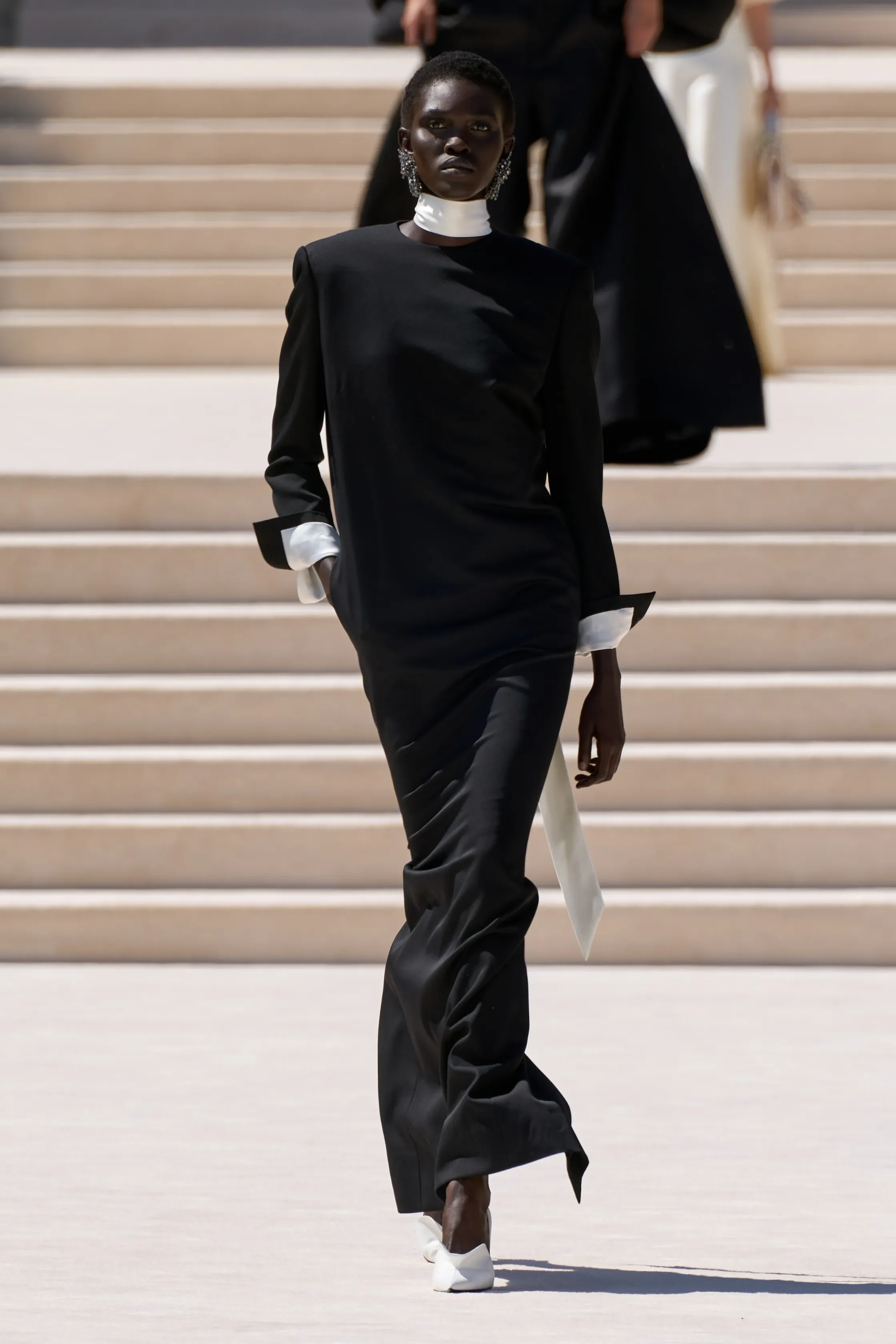
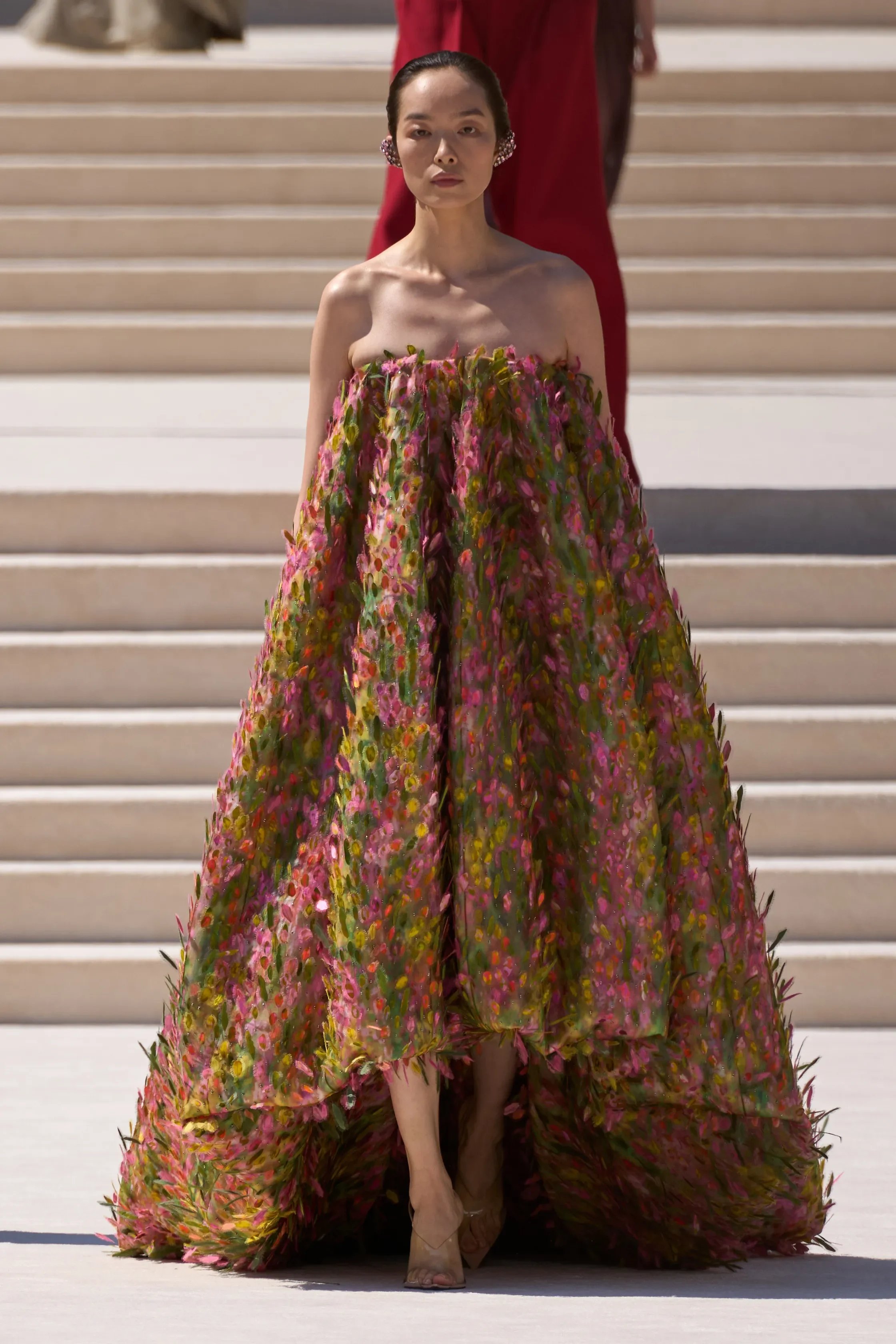
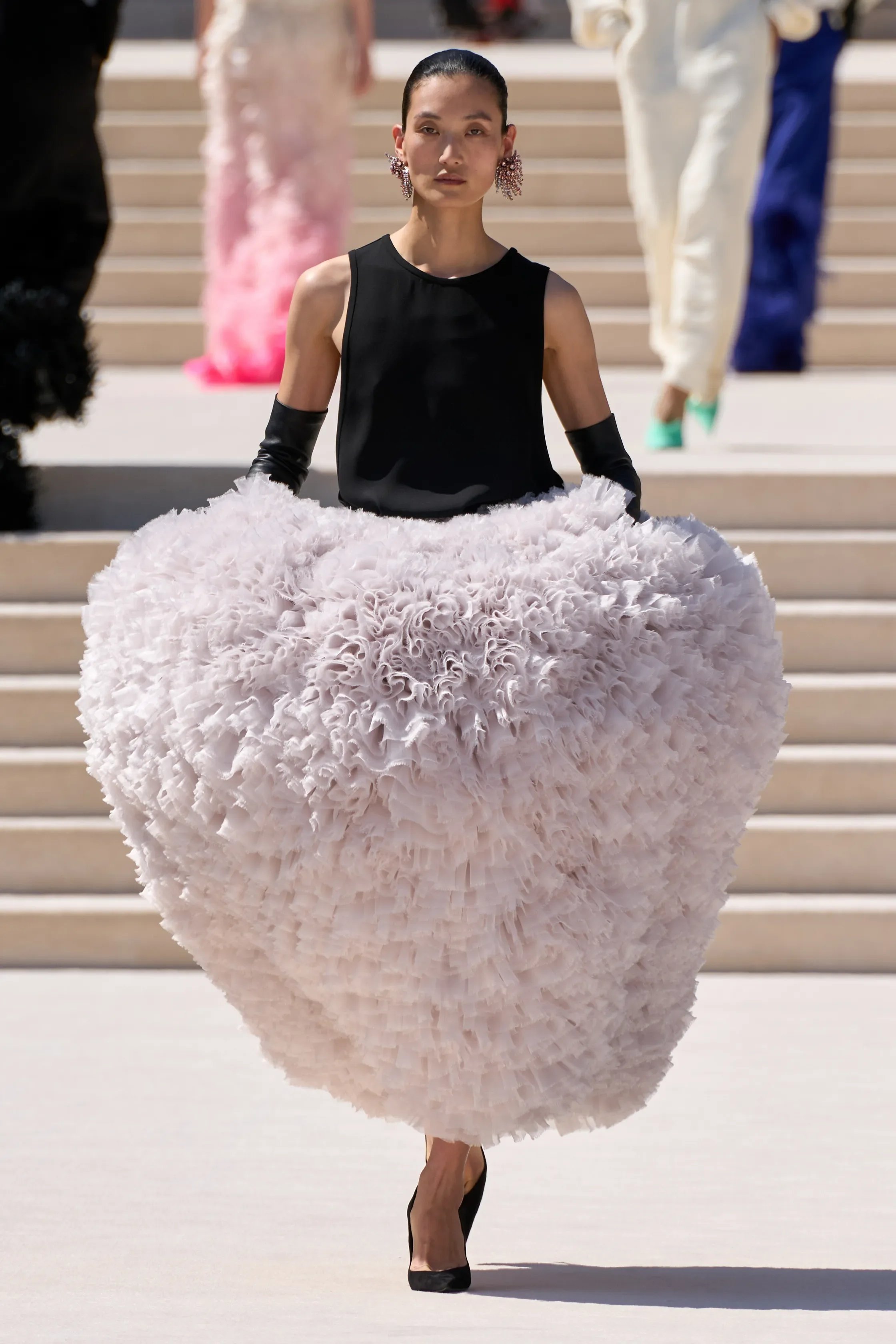
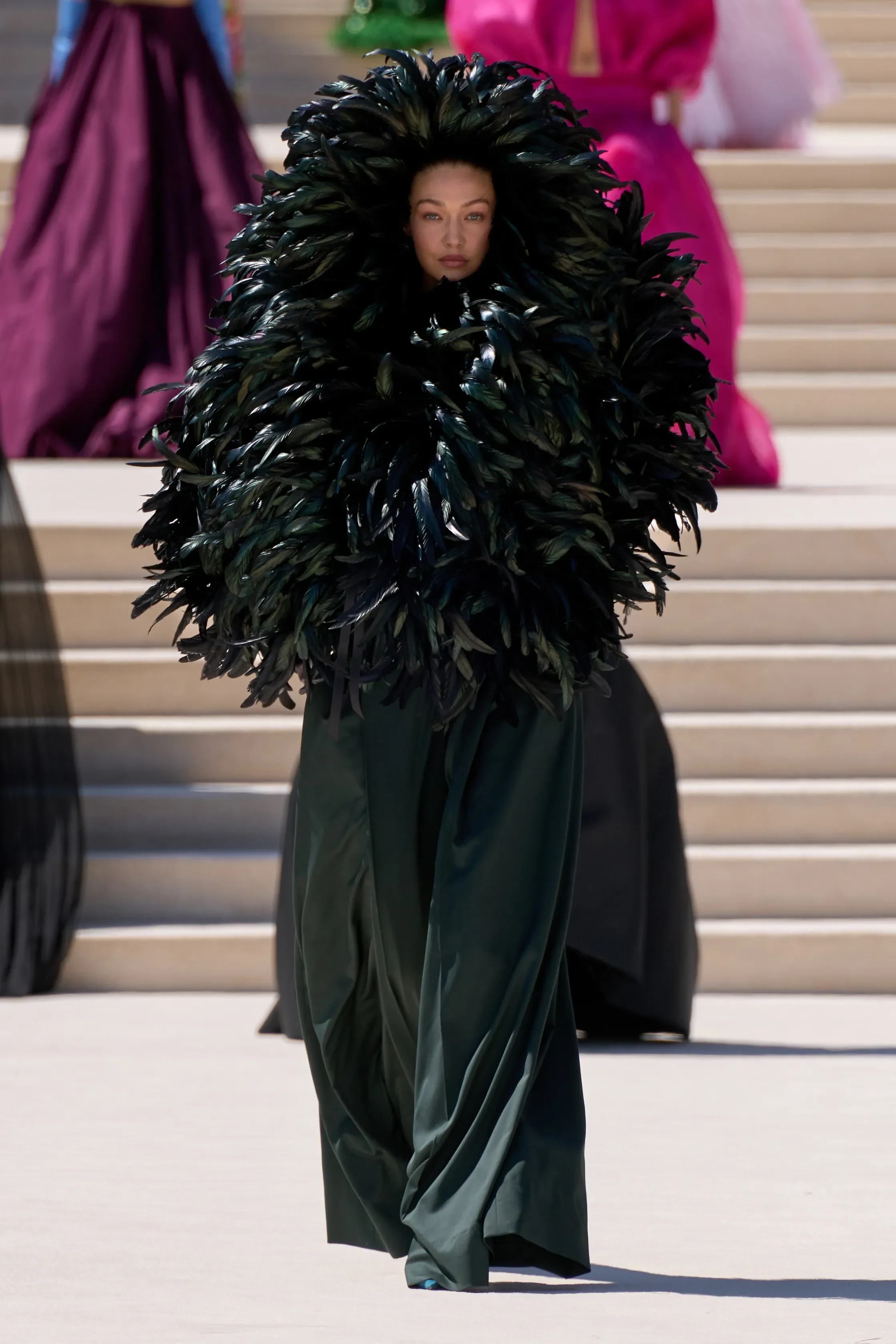
all images courtesy of BALENCIAGA
There is an almost impossible weight attached to Balenciaga couture. It is where Cristóbal Balenciaga rewrote the rules of silhouette, where Demna later redefined what couture could mean today, and now where Pierpaolo Piccioli begins the next chapter.
From the opening look — a white couture T-shirt tucked into monumental ballooning trousers beneath a blazing feathered jacket — it was clear Piccioli wasn’t abandoning his own visual language. Colour arrived in saturated bursts of scarlet, lime, emerald and violet, while sweeping feather trims, sculptural coats and generous volumes echoed the emotional grandeur that defined his years at Valentino.
Yet beneath the spectacle was an inconspicuous exercise in construction. Many of the collection’s strongest looks relied not on embellishment but on engineering. Cocoon coats, sharply cut black dresses and fluid column gowns demonstrated an obsessive attention to proportion, while fabrics developed their own architecture through internal structures rather than traditional corsetry. The dialogue with Cristóbal Balenciaga was evident, but interpreted through Piccioli’s softer, more romantic eye.
Still, there were moments where the collection felt surprisingly close to ready-to-wear. Several tailored looks, oversized separates and minimalist dresses, beautifully executed though they were, lacked the sense of impossibility that haute couture invites. When Balenciaga speaks about architecture and sculpture, expectations naturally rise towards silhouettes that seem to defy gravity. Those moments arrived only intermittently, interrupted by pieces that felt more pragmatic than transcendent.
Ironically, the most convincing aspect of the show wasn’t any single garment but its humanity. Piccioli ended by bringing the ateliers onto the runway, shifting the spotlight from the designer to the people whose hands make couture possible. It was an elegant reminder that couture isn’t defined solely by grand gestures, but by craft, collaboration and extraordinary skill.
As first chapters go, this was a thoughtful one. Piccioli hasn’t yet reinvented Balenciaga couture, but he has established a clear philosophy. The foundations are undeniably strong. The question now is how boldly he chooses to build upon them.
ROBERT WUN
review by ANOUK WOUDT
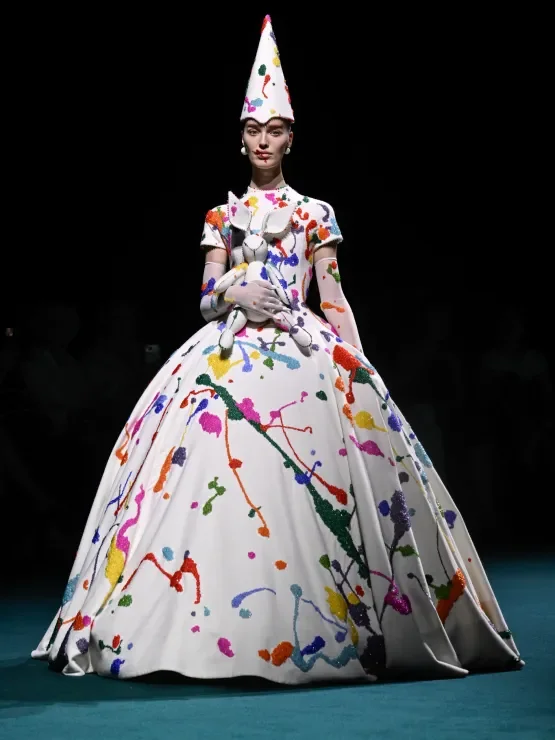
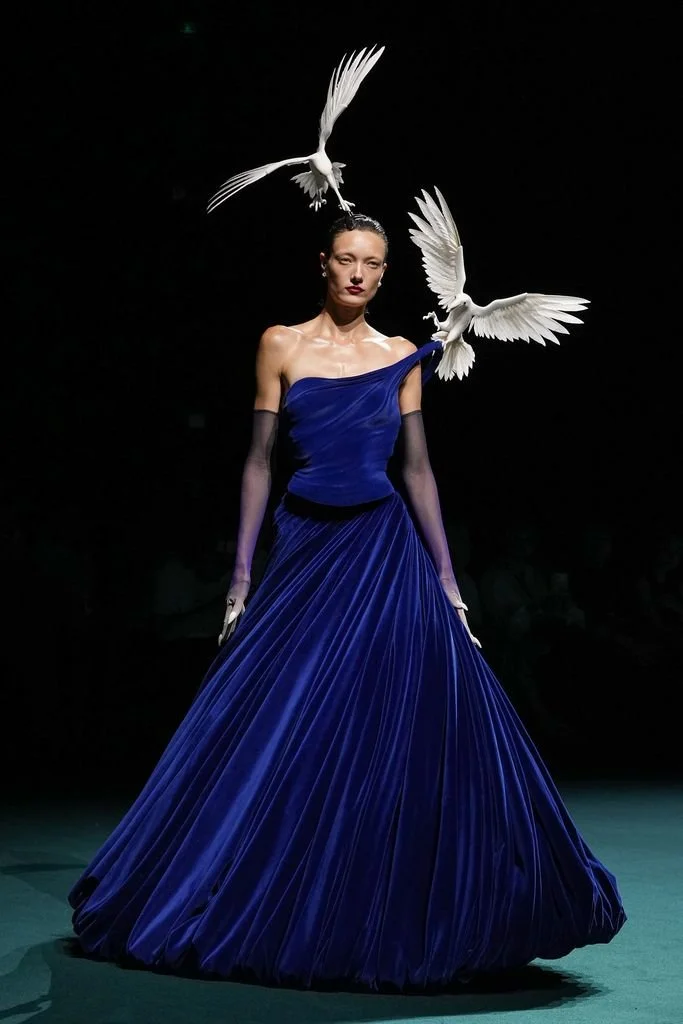
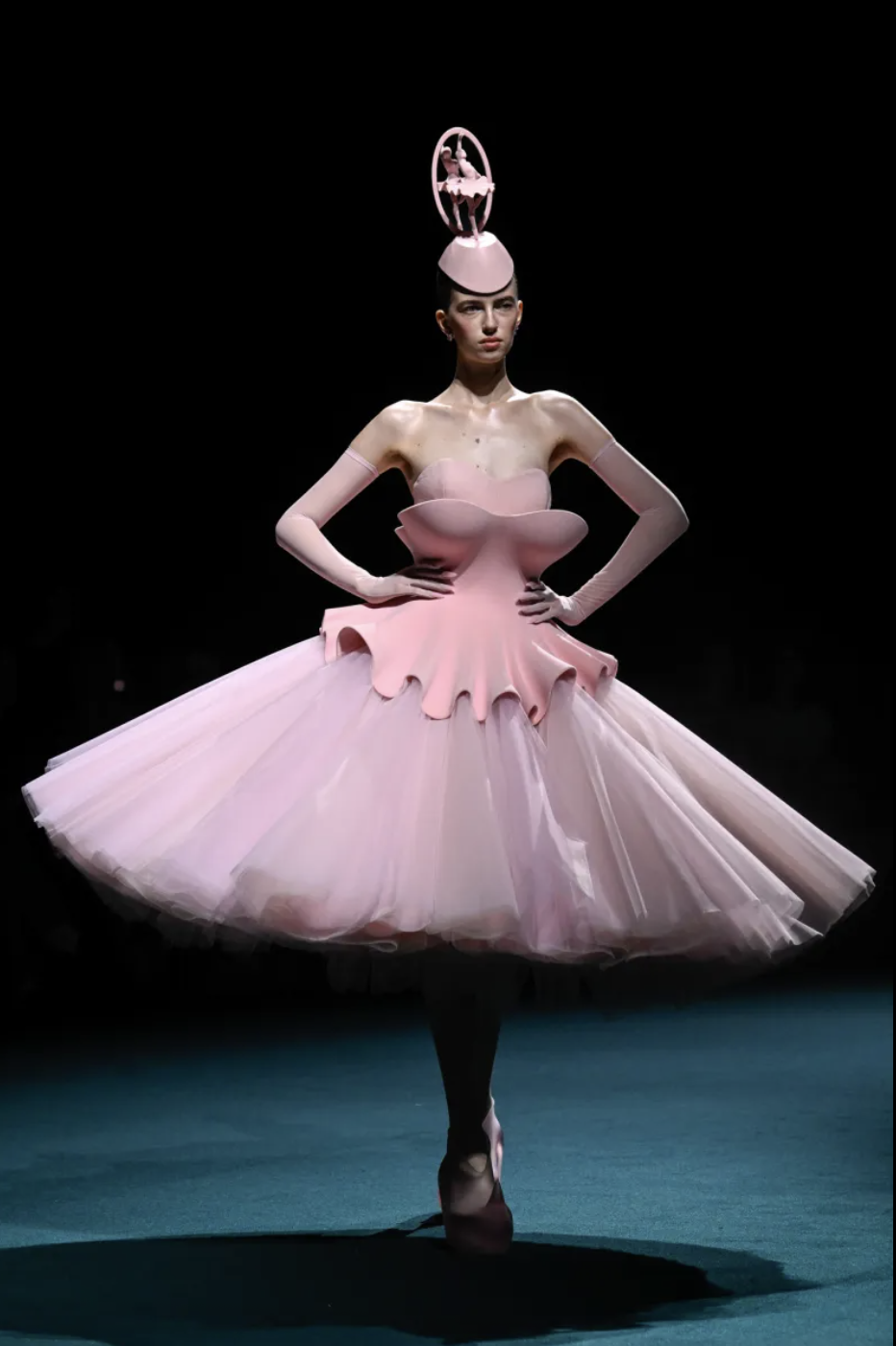
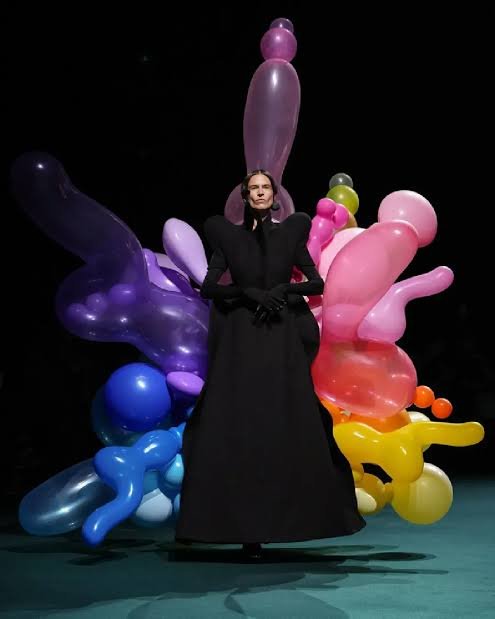
Imbued with a childlike sense of wonder, this season’s Robert Wun couture collection takes his adherence to unconventional proportions and appropriates it to the confines of a metaphorical playpen. Complete with accessorial teddy bears, bunny ears and balloon animals, every look openly explodes with playfulness, through bursts of colour and toy-like dispositions.
Opening with a figure resembling a jester-like puppet who mistakenly found itself in the splash zone of an infant’s creative endeavours, it emerges splotched in rainbow paint and clutching to its own rabbit puppet. Primary colours enter in sequence, jutting with sharp, contoured edges that each represent different geometric figures, as if it were a pre-school crash course.
In a zoo of cartoonish neon characters, each look finds its own personality, shifting through a few central motifs, one of which being the inclusion of retro-futuristic bubble helmets across multiple looks. Perhaps acting as a reimagining of a child’s, albeit cliché, dream job, the models hover with feet hidden, appearing as aliens or an abstract version of an astronaut. When a look emerged seemingly held up by the sharp grip of a white crow’s talons, every eye in the room was immediately drawn to its inventive elegance. Though a stiff structural form holds up the dress, it still manages to give the illusion of draping fabrics.
Every piece was masterful in its own right, making it difficult to break down which looks to even single out since they each brought a unique addition to the Robert Wun lineage. Ending on a massive ballooning explosion tied down by a bulbous black dress, this dramatic conclusion only made us love the collection and Robert Wun even more. Each collection seems to push forward a new idea and vision, and we can’t wait to see what his next collection has in store for us.
VIKTOR&ROLF
review by NIA TOPALOVA
all images courtesy of VIKTOR&ROLF
“Beneath every layer of adornment or discipline lies the same fragile humanity – exposed, enduring, and profoundly shared.”
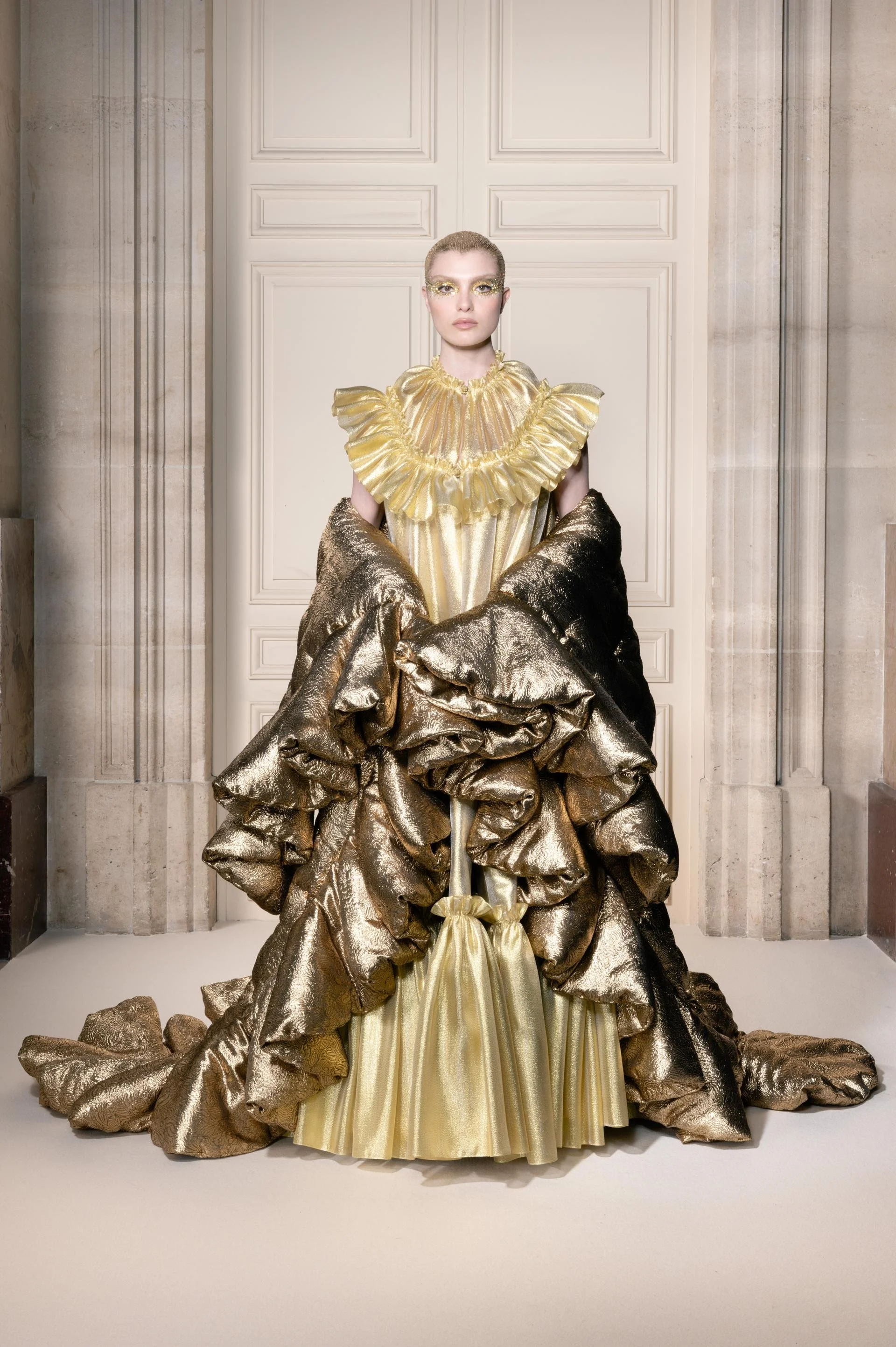
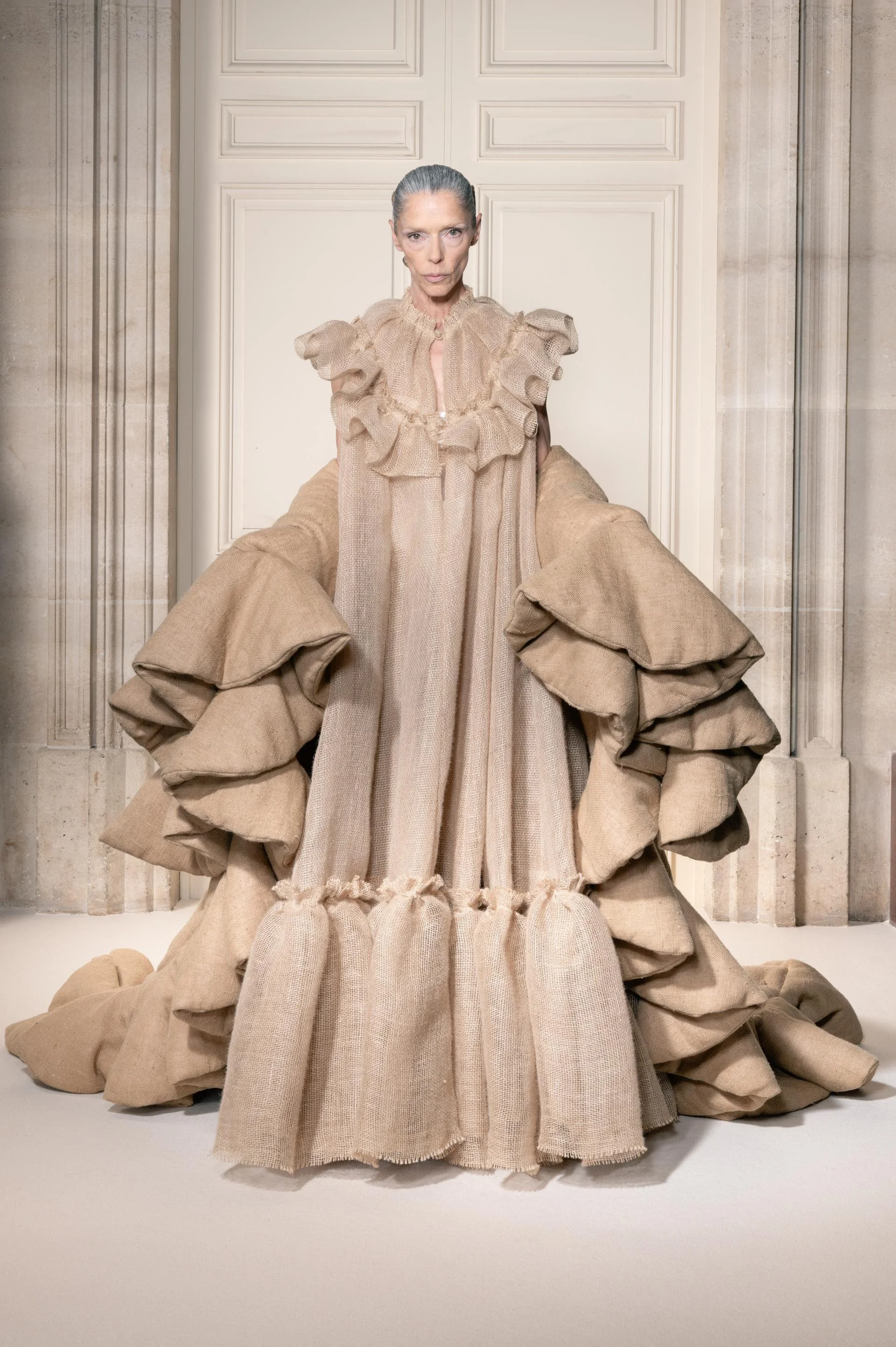
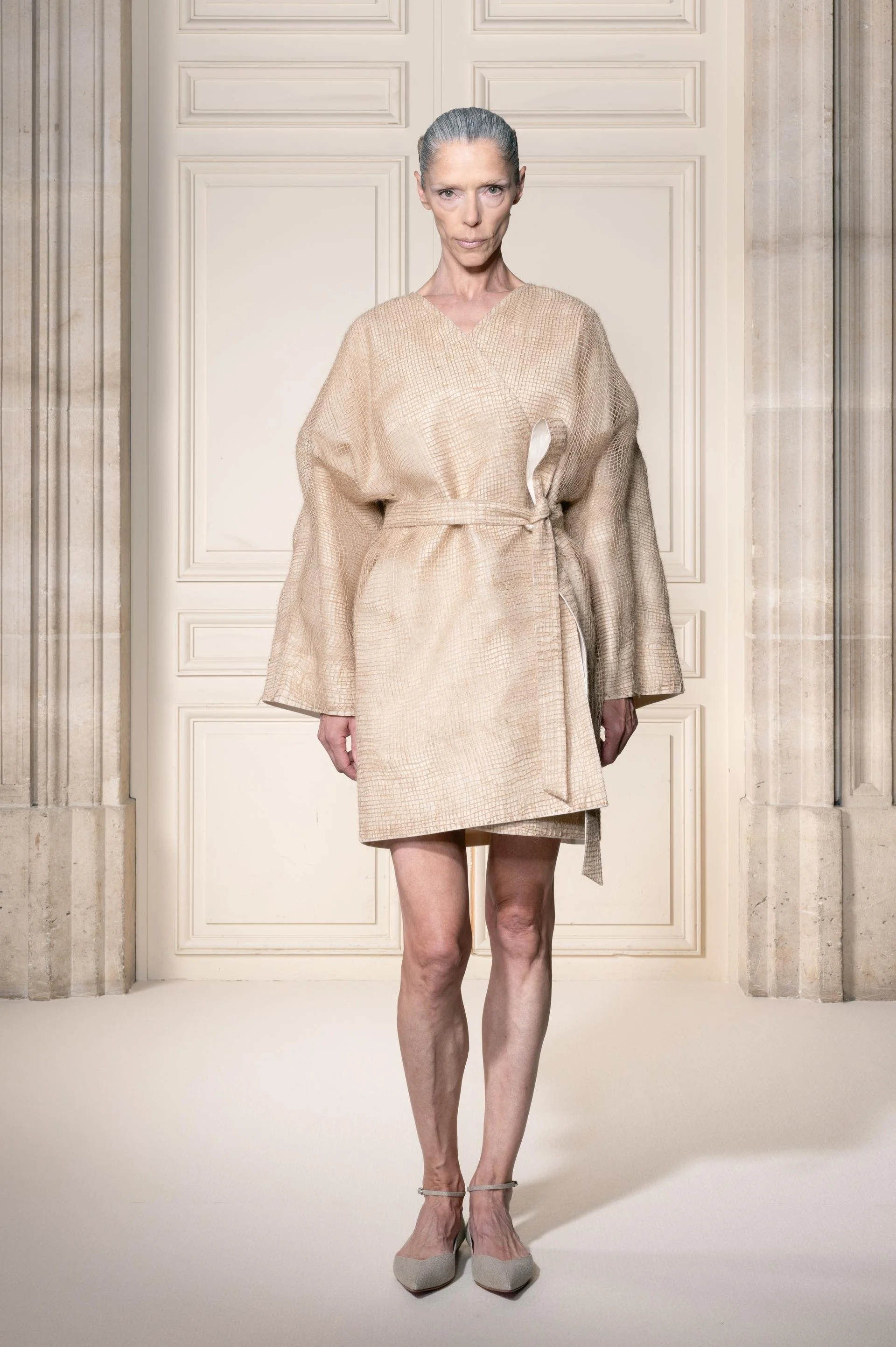
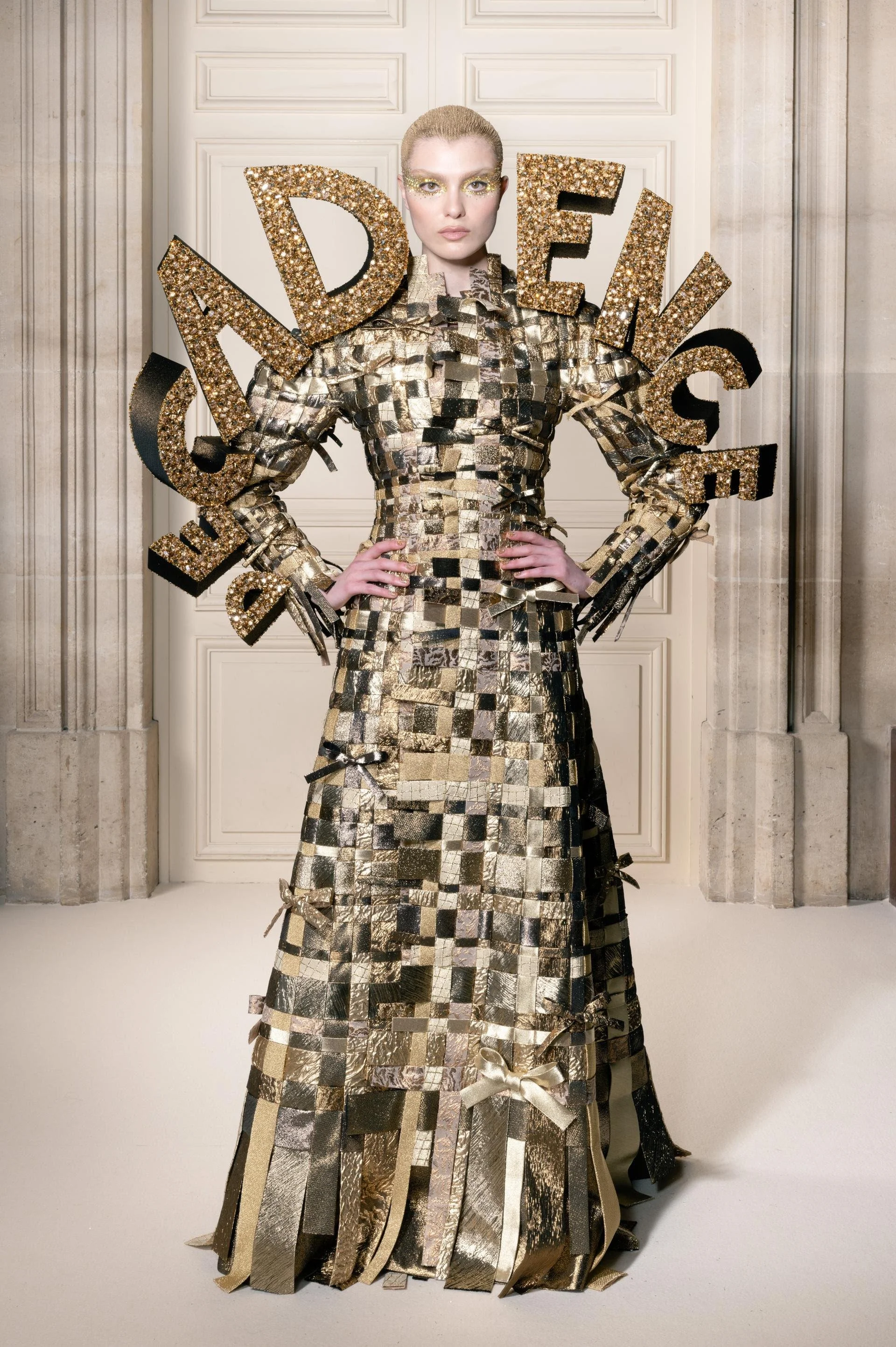
Viktor&Rolf’s new Gilded Age explored restraint and decadence, opulence and austerity, presenting a series of doubles becoming separate expressions of the same human reality. Two extremes exist within the same form, and material alone transforms their meaning. Burlap emerged as a symbol of discipline; a structure that silently supports the gilded world. Gold spoke of desire and excess. Together, they revealed what seems to be opposite is truly inseparable.
On stage, set within a bedroom-like setting, two women dressed and undressed in perfect synchrony, repeating the same gestures in a never-ending loop. Garments were worn, removed, and transformed into paired looks: a bathrobe in unbleached cotton and jute reappeared in gold-laminated lace; bias-cut dresses shifted from raw woven jute to shimmering metallic lace; bedcovers transformed into sculptural coats, tailored suits alternated between natural fibers and golden textures, while coats and gowns mirrored one another in burlap and gold. Throughout, bows, ruffles, roses and sweeping volumes repeated as symbols transcending material - restraint and decadence reflecting one another.
YUMIA NAKAZATO
review by NIA TOPALOVA
all images courtesy of YUMIA NAKAZATO
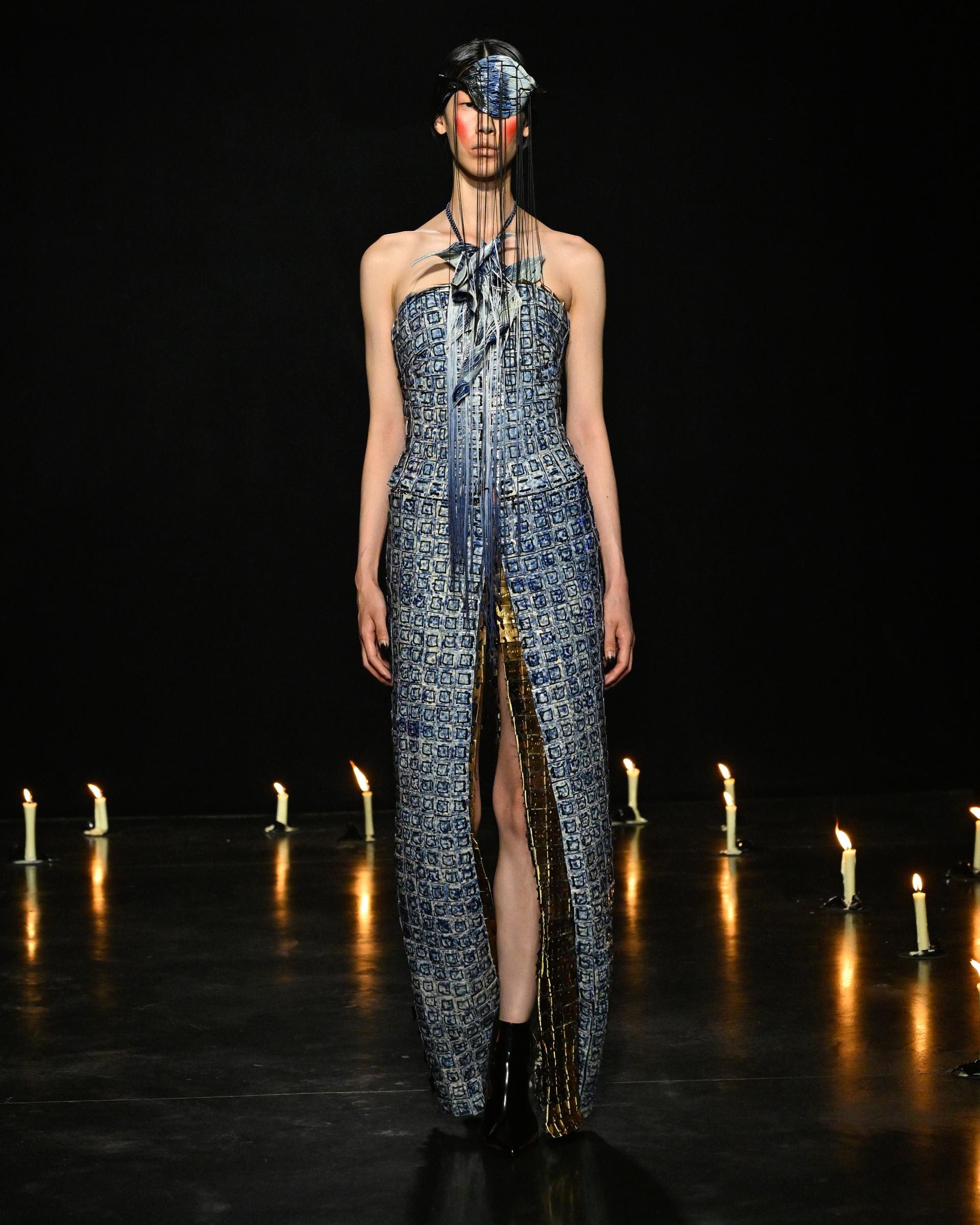
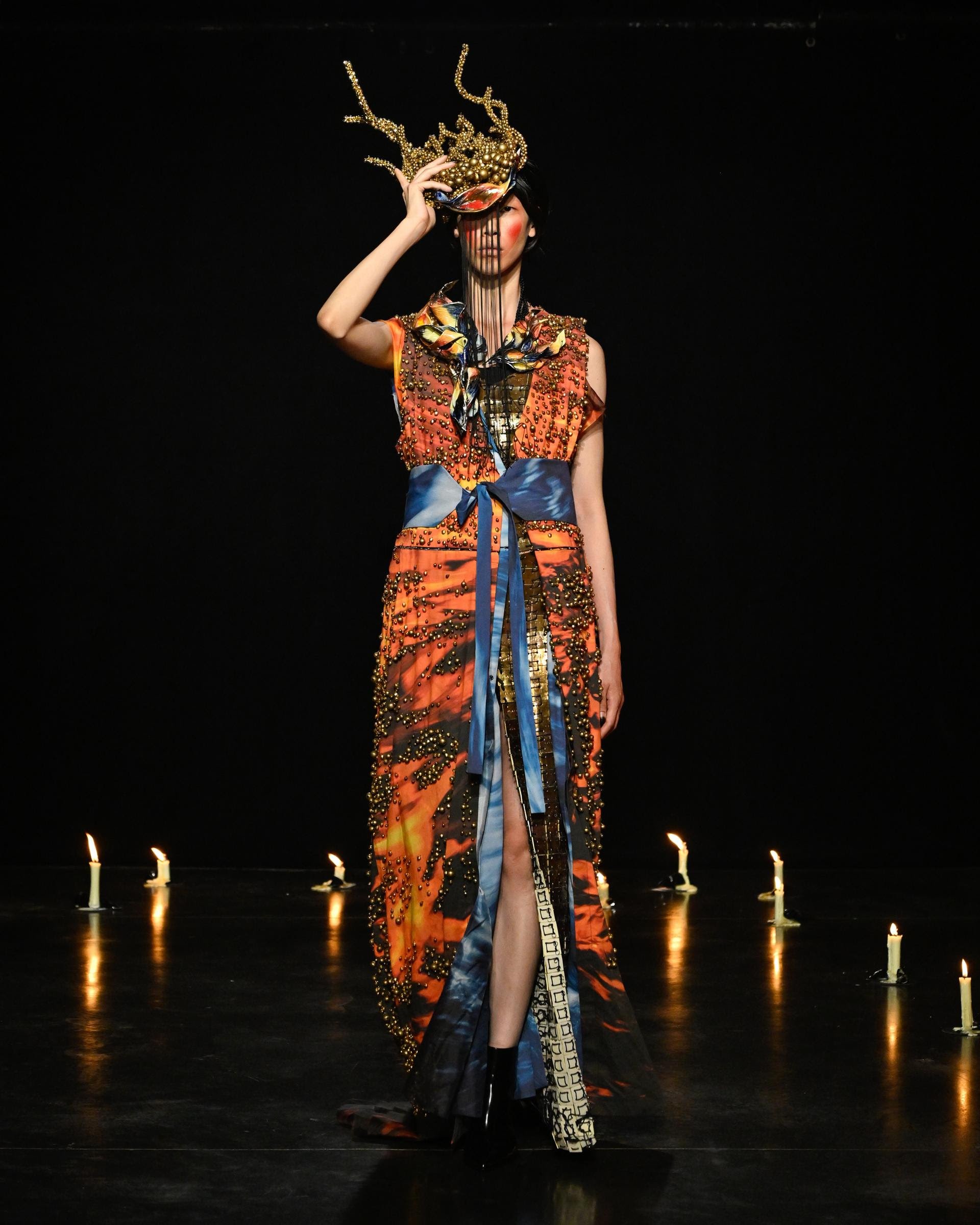
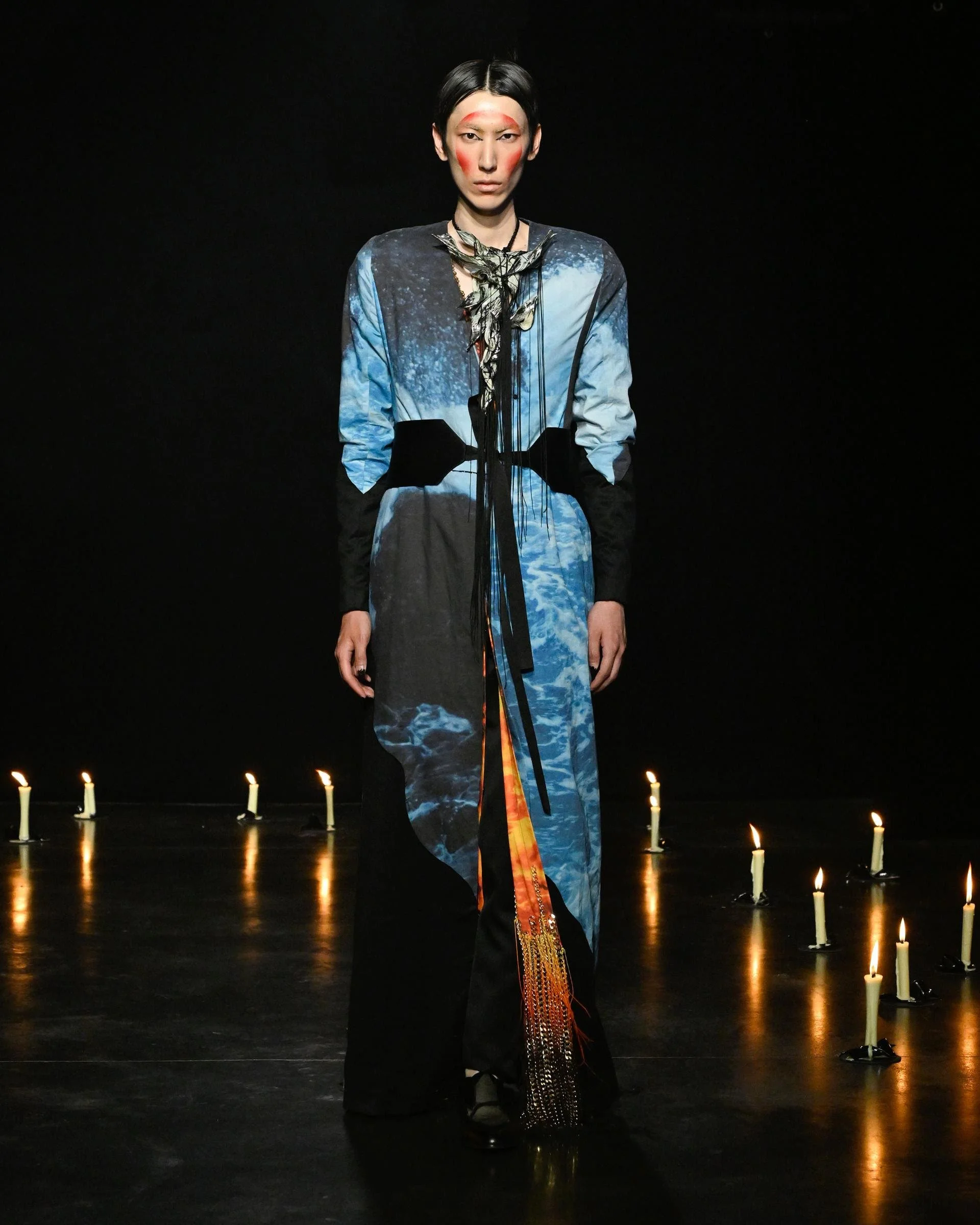
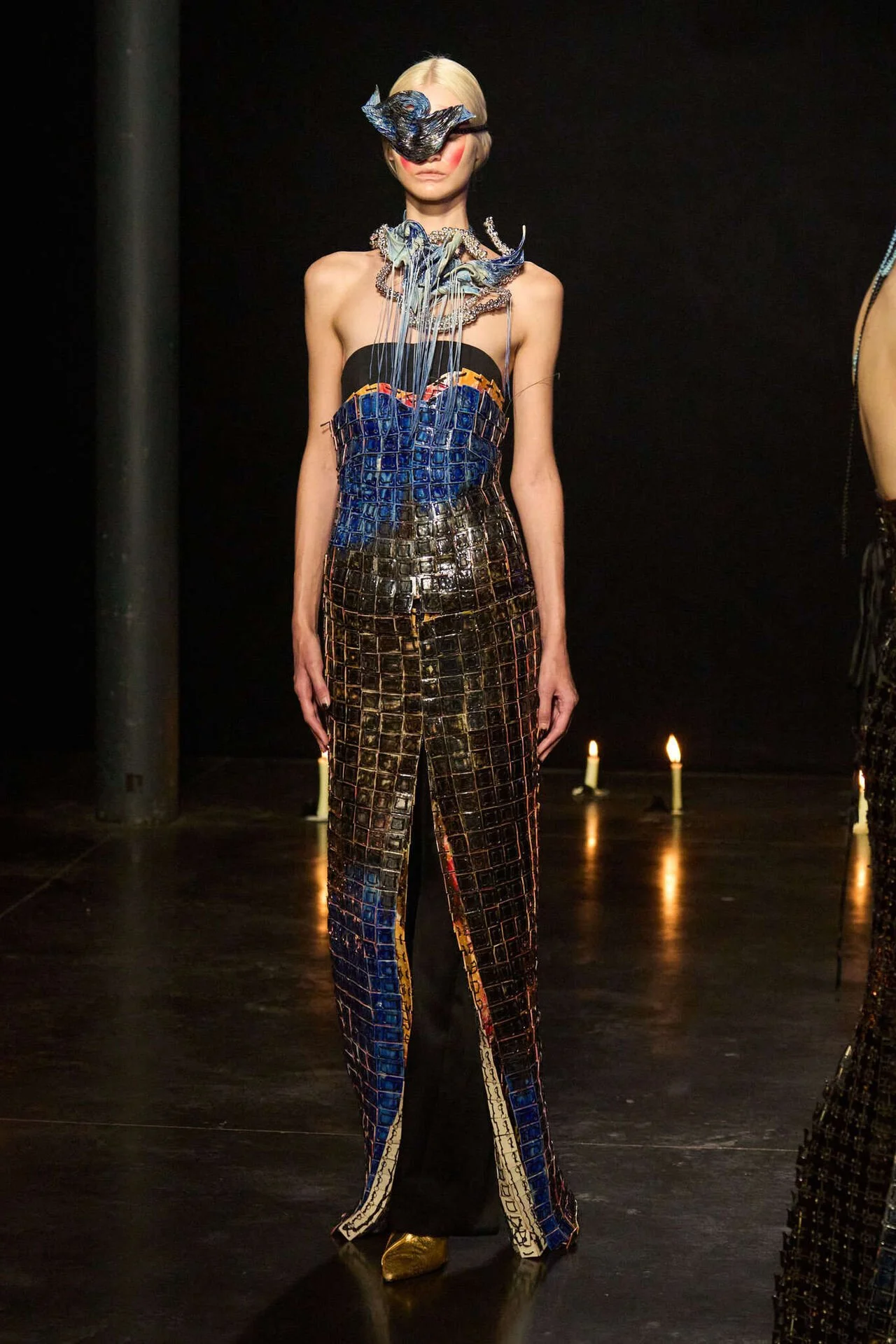
The foundation of Nakazato’s collection Sea of Fire INFERNO is the idea of duality: the duality of fire and water seen as inseparable forces instead of fundamentally opposed, seen as two forces that come together into a single whole.
Inspired by the volcanic landscapes and the powerful Atlantic waves of Spain’s Canary Islands, Yumina Nakazato reflected on how these elements can appear to transform into one another. Watching moonlit waves crash against black lava cliffs led him to imagine the ocean as a sea of black flames. Nakazato also took inspiration from a traditional costume-changing technique in Noh and Kyogen theatre called monogi, where performers change garments in front of the audience. Like the kimono, whose simple construction can create many forms and meanings, the collection featured pieces that shift from blue to red, symbolising transformation.
The collection marked the 10th anniversary of the designer's participation in the official Paris Haute Couture Week as the sole Japanese Couture Maison. Over the past decade, the brand has combined fashion, art, and technology while pursuing more sustainable methods of production.
Continuing collaborations with Epson and YKK showcased innovations in circular fashion, including Dry Fiber Technology that transforms discarded clothing into new materials and fasteners made from recycled textiles. Ocean photographs taken in Tenerife were digitally transformed into fiery red imagery and printed using Epson's low-impact textile printing technology, reducing water and energy use. To deepen the audience's experience, Nakazato also collaborated with muRata on an interactive photobook embedded with an IC chip that links readers to digital content, including the collection film and the designer's reflections, blending physical and digital storytelling.
JEAN PAUL GAULTIER
review by FRANCESCO PIZZUTI

all images courtesy of JEAN PAUL GAULTIER
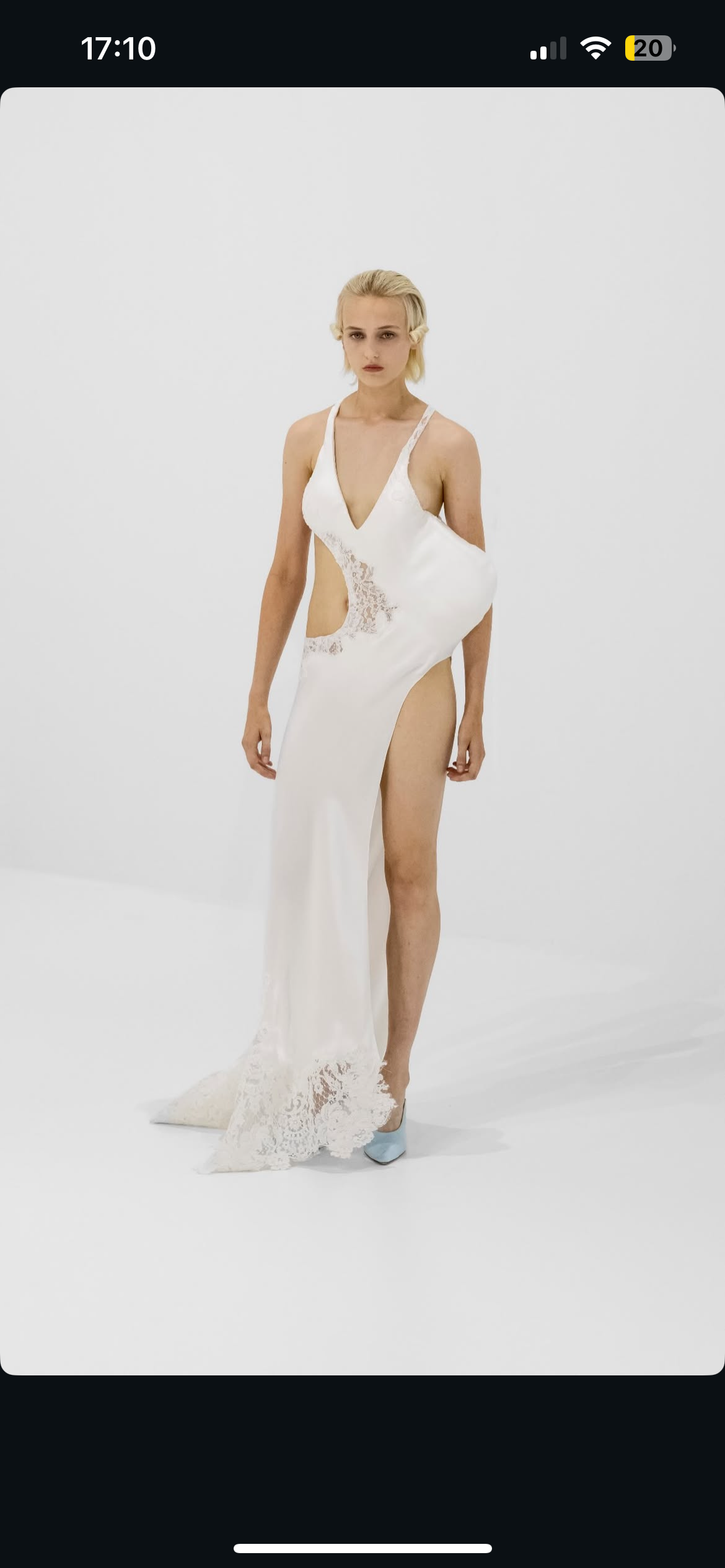
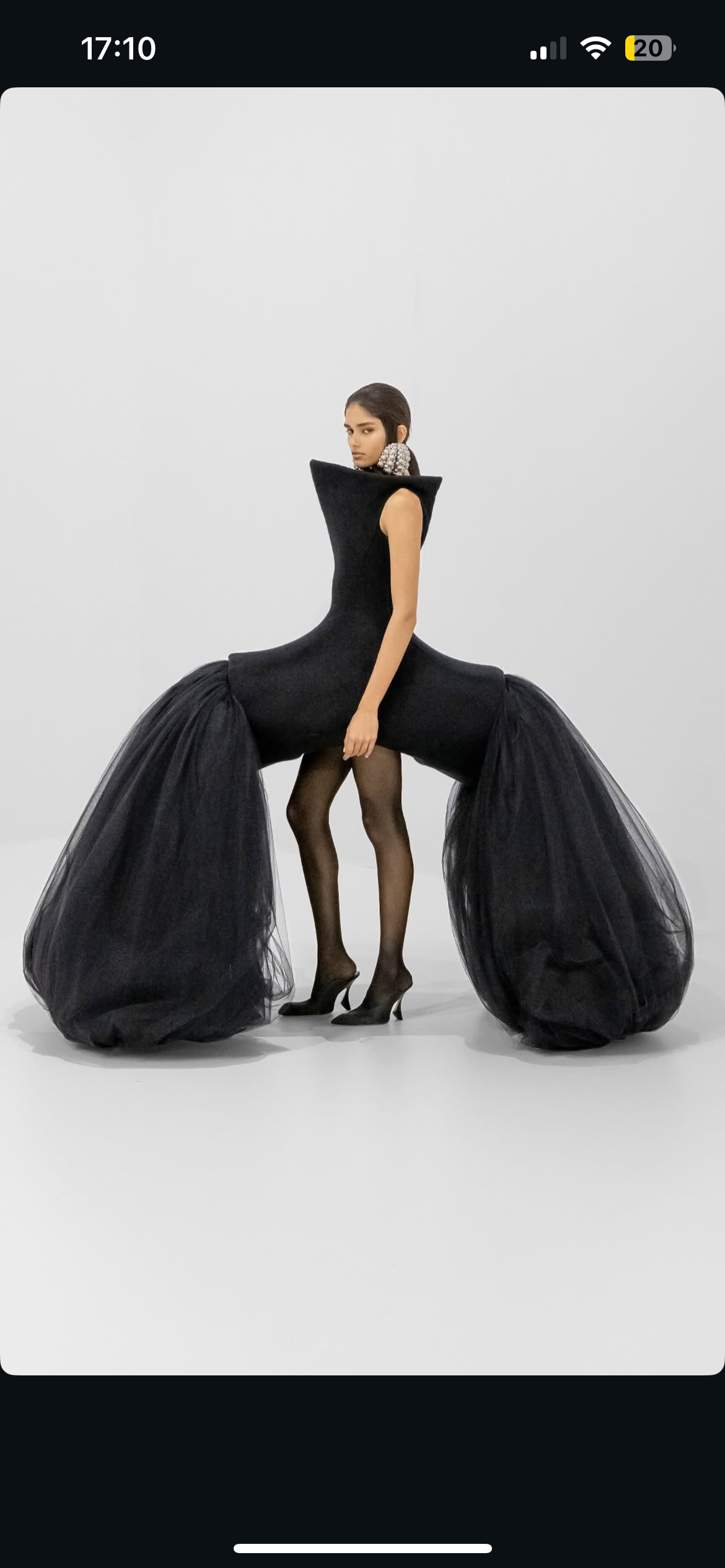
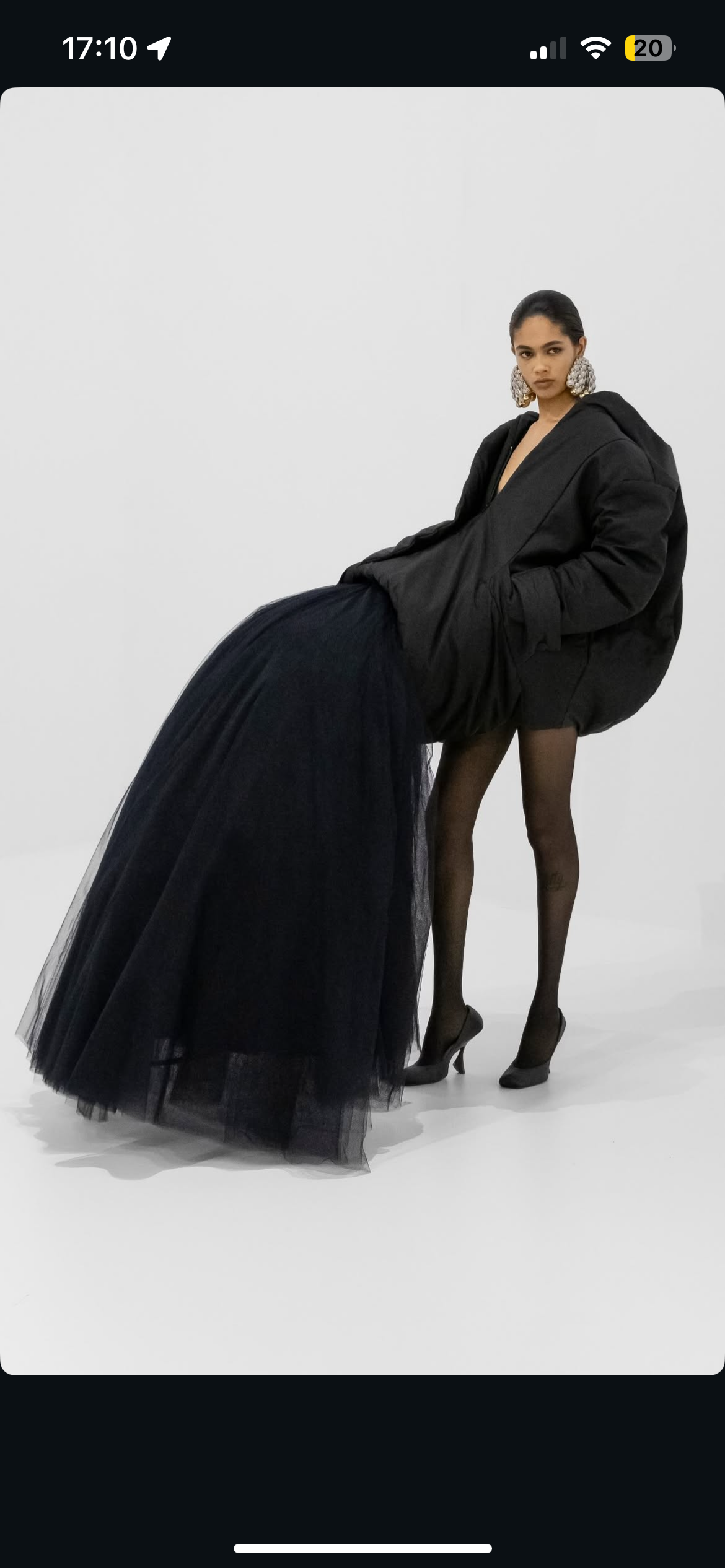
Fun and funky enough to still be considered genius, Jean Paul Gaultier’s autumn-winter 2027 collection was total form subversion on steroids. Moving in a conversation between haute couture craftsmanship and formal traditions, and their new translations through modern technologies, Duran Lantink’s haute couture debut for JPG was visually subversive in a way that felt fresh and incredibly well-thought-out.
“I want to challenge the garment itself, to push it to the very limits of its sculptural potential”, explained Lantink — and so he did. From garments turning into tube-like shapes, like exhausting pipes with tulle jetting out, to collars and necklines projecting forward as if pulled by a higher power, to fake torsos melted sideways, the collection seemed to materially outdo itself at every look.
Lantik used 3D-printed flexible TPU and PA12 as material innovations for some of his garments, and in a way, the shapes the garments took felt reminiscent of the machinery behind them itself, almost as if the clothes gained aspects and shapes from the technologies that produced them.
Moreover, it’s compelling to highlight how these shapes and their sculptural three-dimensional forms can’t truly be flattened by a camera lens into a 2D image and hence make the garment’s reflection on materiality and form even stronger.
