
HAUTE COUTURE WEEK SPRING/SUMMER 2026: DAY 2
CHANEL
review by NIA TOPALOVA
all images courtesy of CHANEL
Thank you, Mr. Blazy, for bringing back fairytale romance, and for reminding us that “everything delightful in life” belongs to us. On January 27, 2026, I moved backward in time, to the age of six, watching Snow White on my VCR, my head unburdened from anything resembling the real world, and eyes given over entirely to wonder.
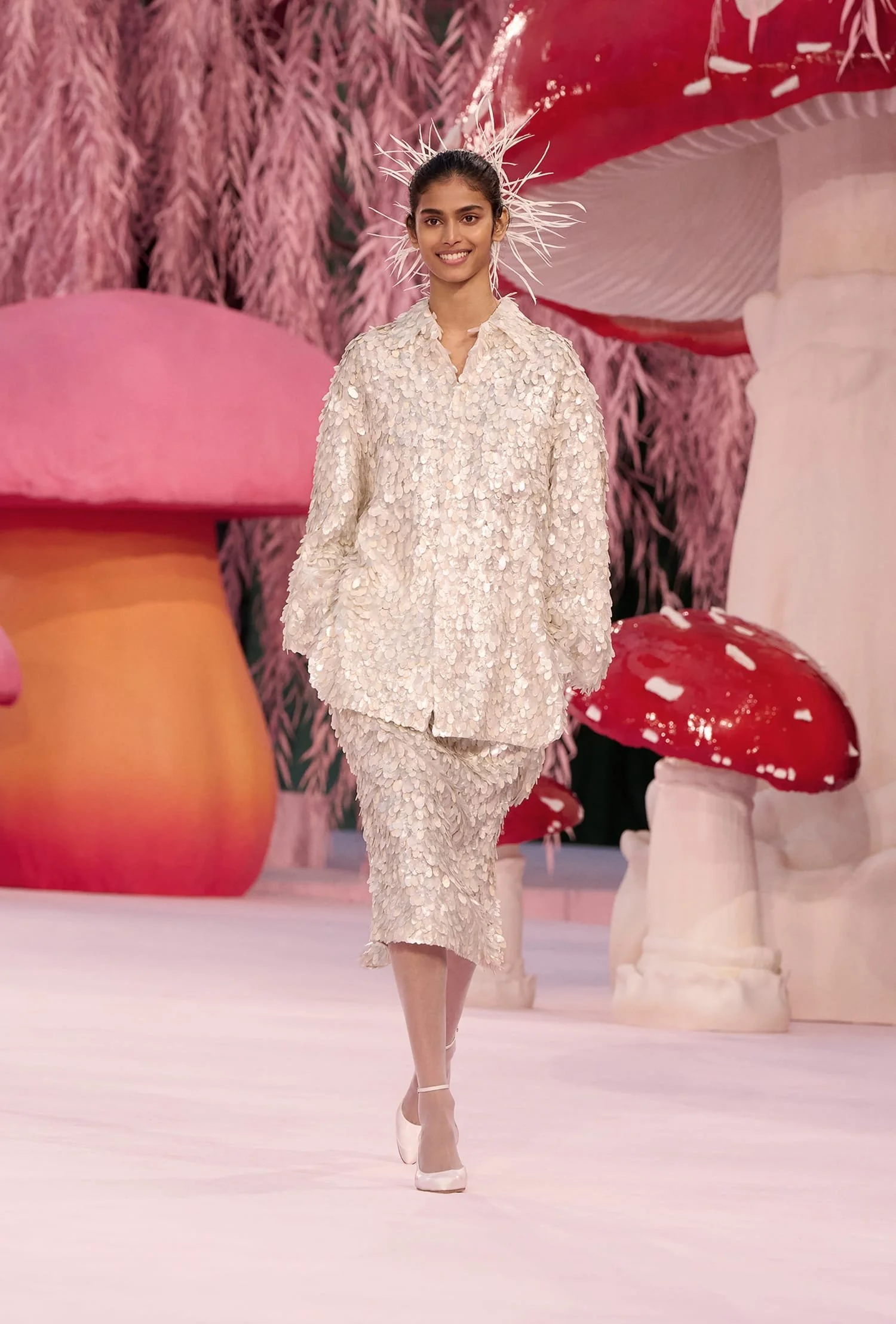
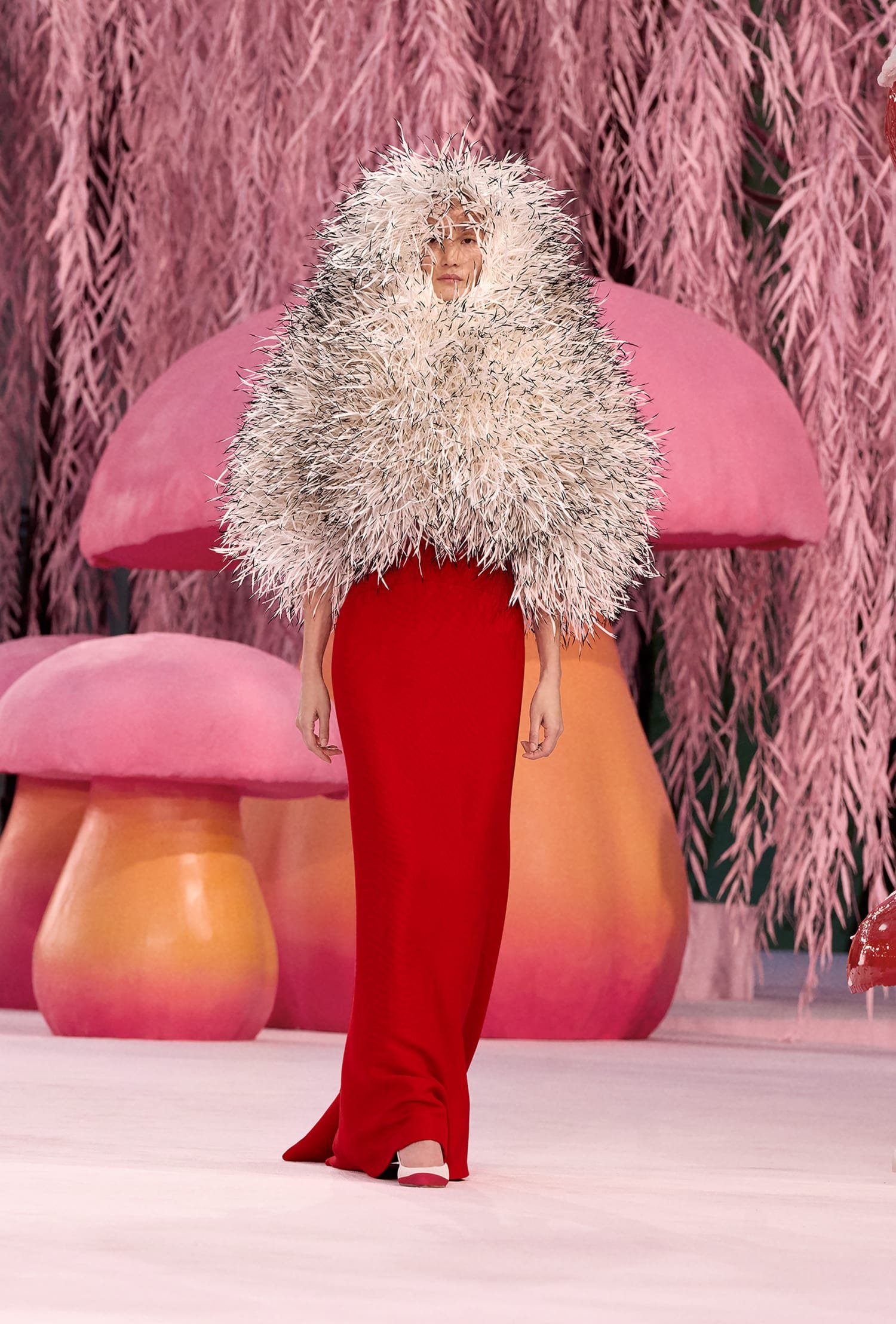
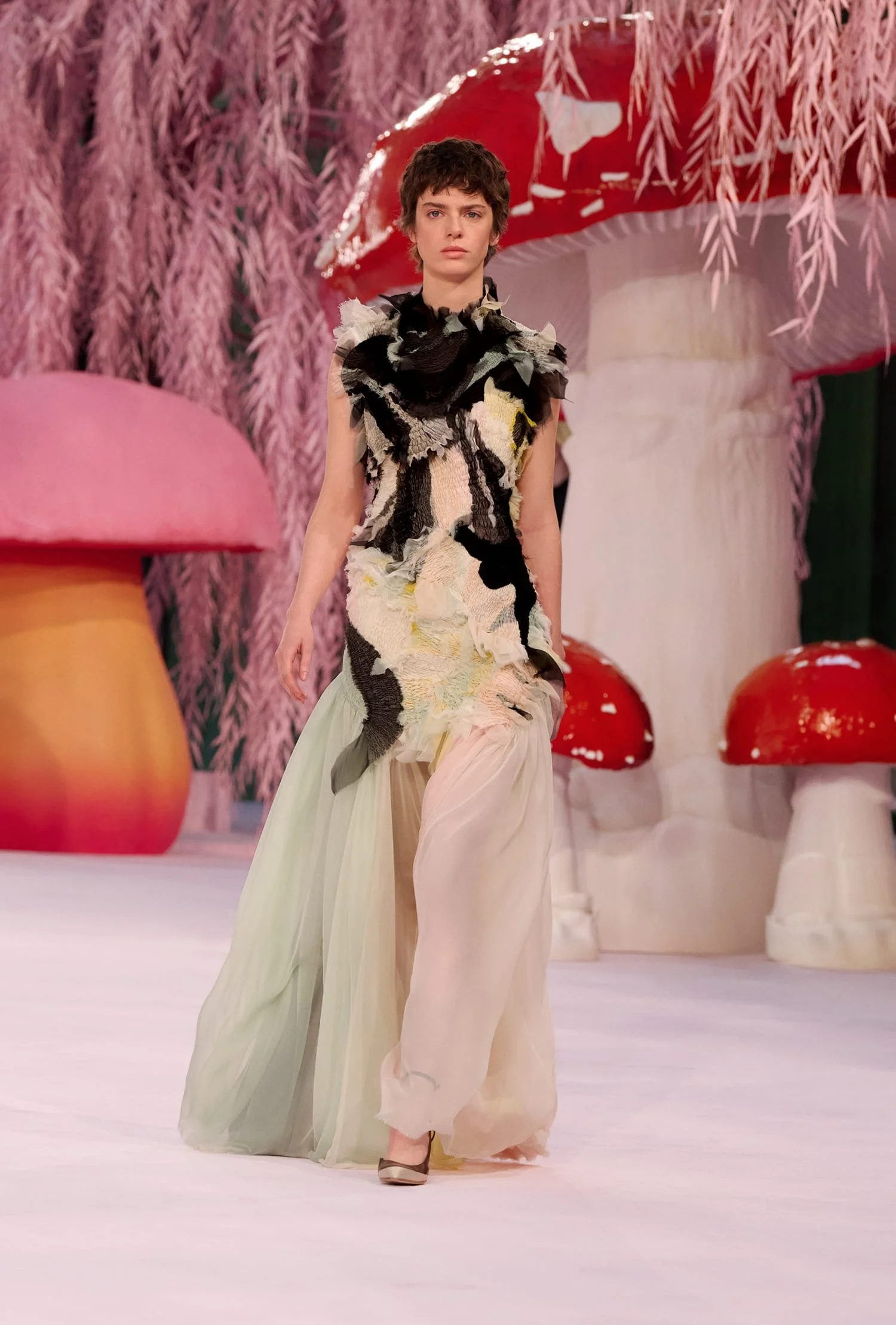
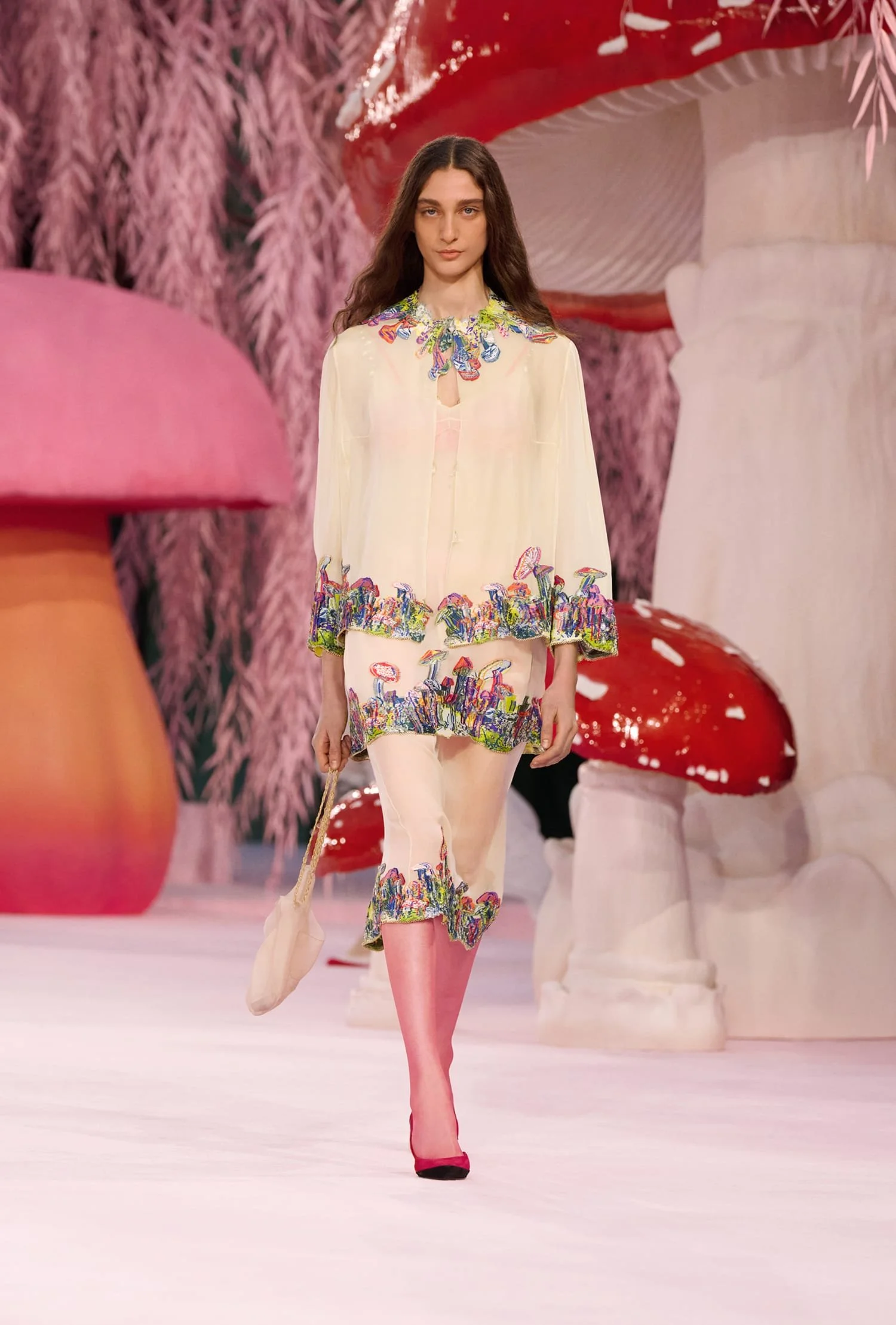
Coco Chanel was at the heart of Matthew Blazy’s debut couture collection for the House. Symbolic references were worked into the garments; a bottle of N° 5, the red lipstick, a love letter questioning “Since it is agreed that the eyes are the mirror of the soul, why wouldn't we admit that the mouth is the interpreter of the heart?”. The classic Chanel suit was reduced to its essential structure in layers of sheer silk mousseline, softened in tone.
The Grand Palais in Paris became an Alice in Wonderland, where women turned into birds, wandering among towering amanita muscaria and candy pink willow trees, falling like rain. Birds were Blazy’s chosen symbol of freedom, a symbol long embedded in House’s history, as the gilded birdcage bag, or the 1991 Chanel COCO perfume campaign interpretation of “When Doves Cry”.
It is a historic moment we’re watching unfold - Jonathan Anderson debuting for Dior at the Musée Rodin, Silvana Armani’s first Couture collection since the passing of Giorgio Armani, and Matthew Blazy, who, in his first gesture, returned to the essentialism of Chanel, with a quite intimate exchange amidst maker and wearer.
GAURAV GUPTA
review by MAREK BARTEK
all images courtesy of GAURAV GUPTA
The Divine Androgyne presented itself as Gaurav Gupta’s contemplation of the idea of non-duality, rooted in Indian spiritual philosophy. Drawing from the belief that masculine and feminine energies coexist within every being, Gupta approached couture as a means to search for balance of the opposites — body and spirit, human and divine, past and future.
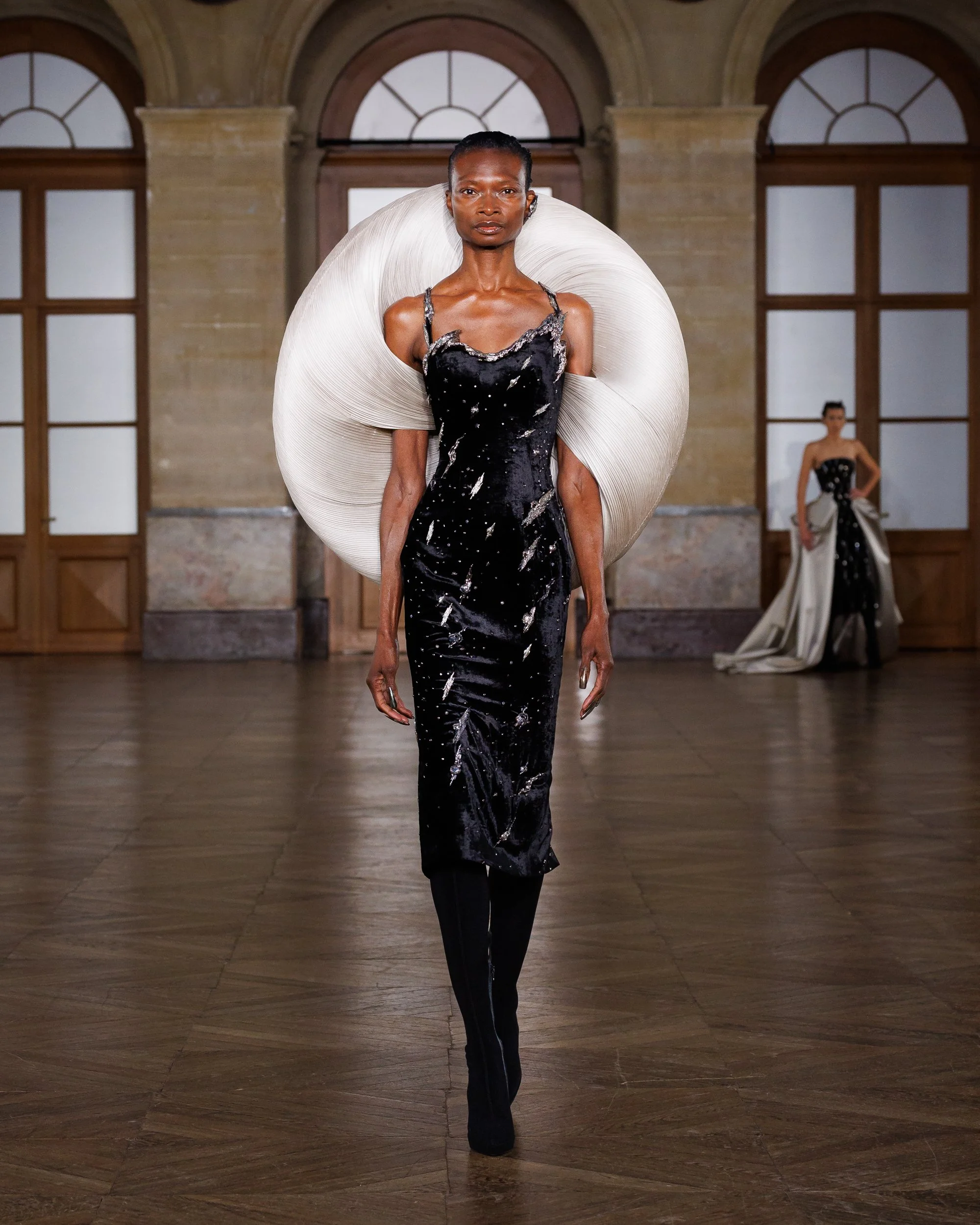
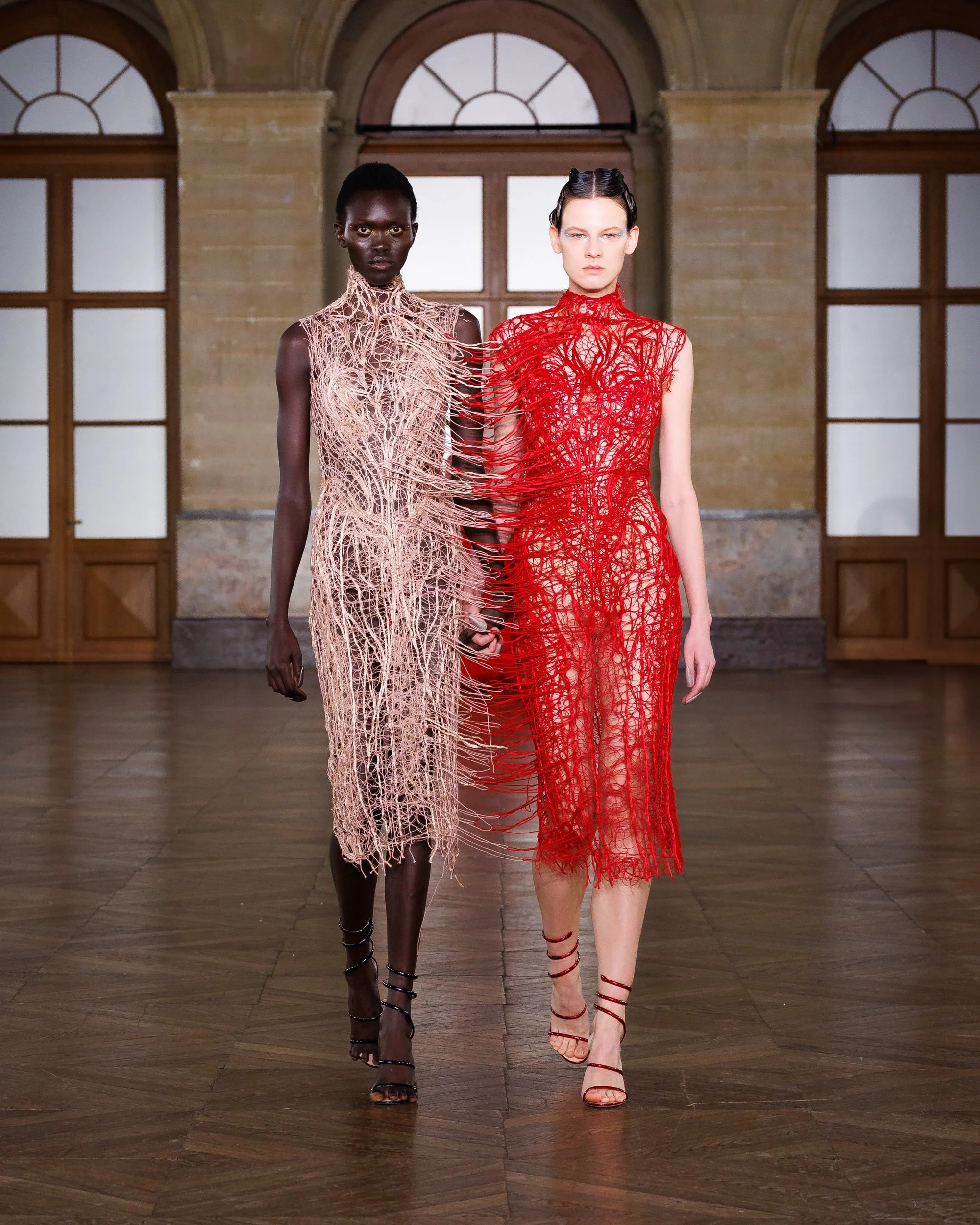
Said philosophy translated into sculptural, body-conscious silhouettes built through extreme technical precision. A black hourglass gown traced the body’s energy points with web-like lace, while twin looks were physically connected through ribbons and filaments, evoking the concept of twin flames and karmic convergence. The narrative of time got materialised: clock components were embroidered into fluid silver numerals, while planets, meteors, and cosmic forms appeared across black velvet in densely worked crystal compositions.
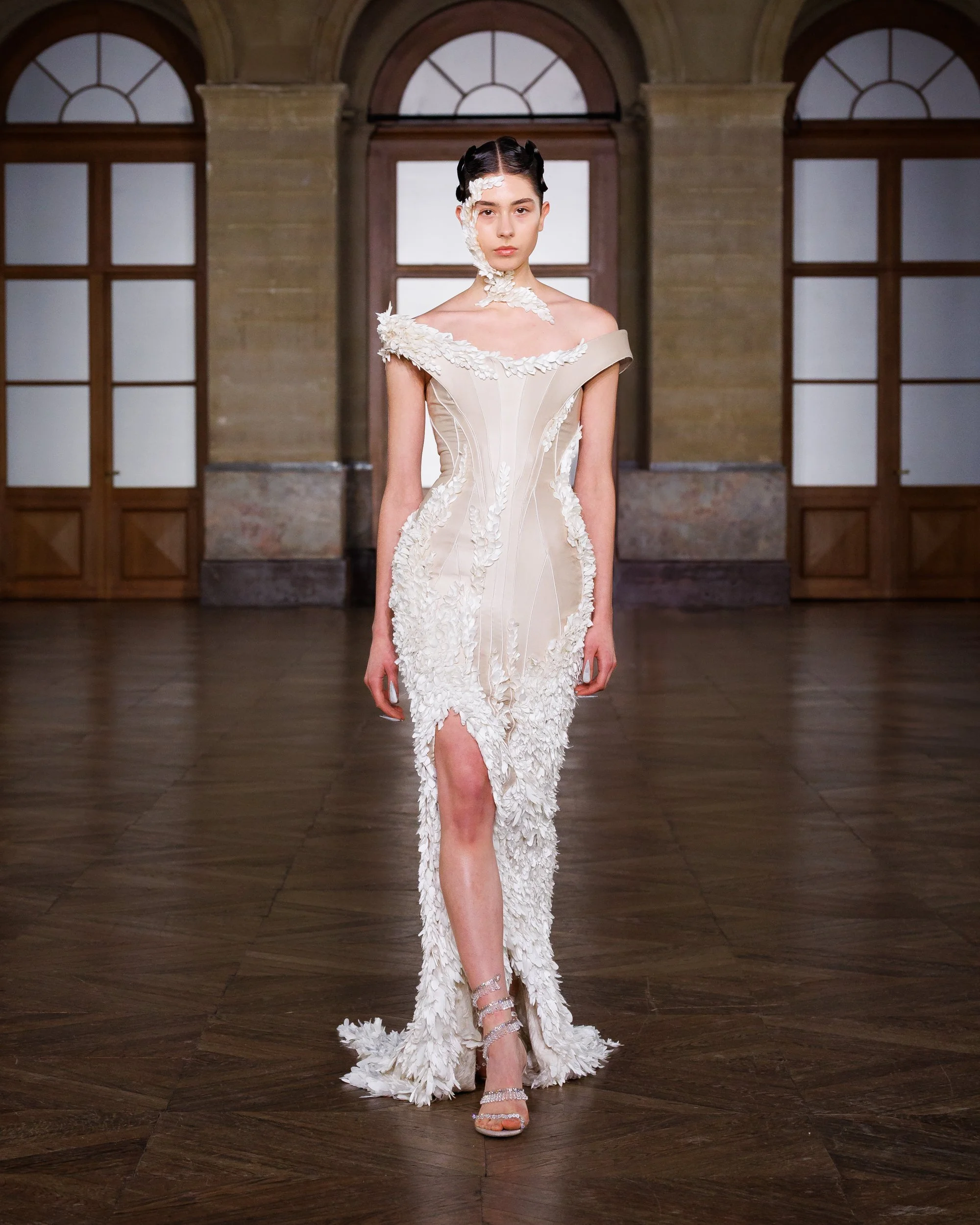
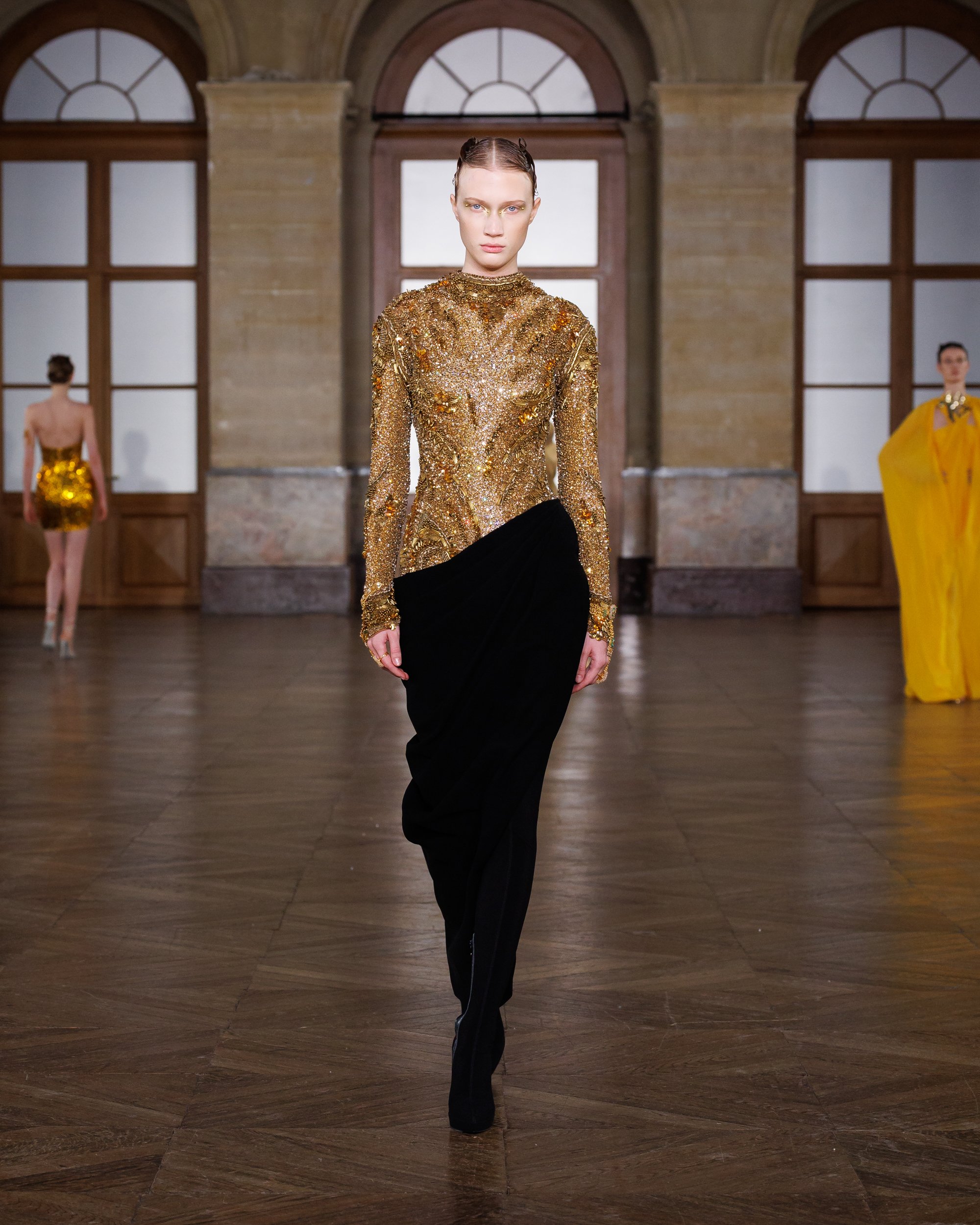
Nature and mythology surfaced throughout. Bridal looks emerged, constructed from petals fused with feathers; serpentine and insect-like forms appeared as chandelier-like structures suspended from the body. Sacred Indian references reinforced the narrative — jasmine temple flowers recreated in embroidery, brocade corsetry, and sari-inspired gold webbing — while red and white articulated feminine power and ritual across cultures.
The collection truly turned into a meditation, and the couture was treated as a living language, sharing not only the beauty but also educating us on culture, spirituality and craftsmanship.
ARMANI PRIVÉ
review by NIA TOPALOVA
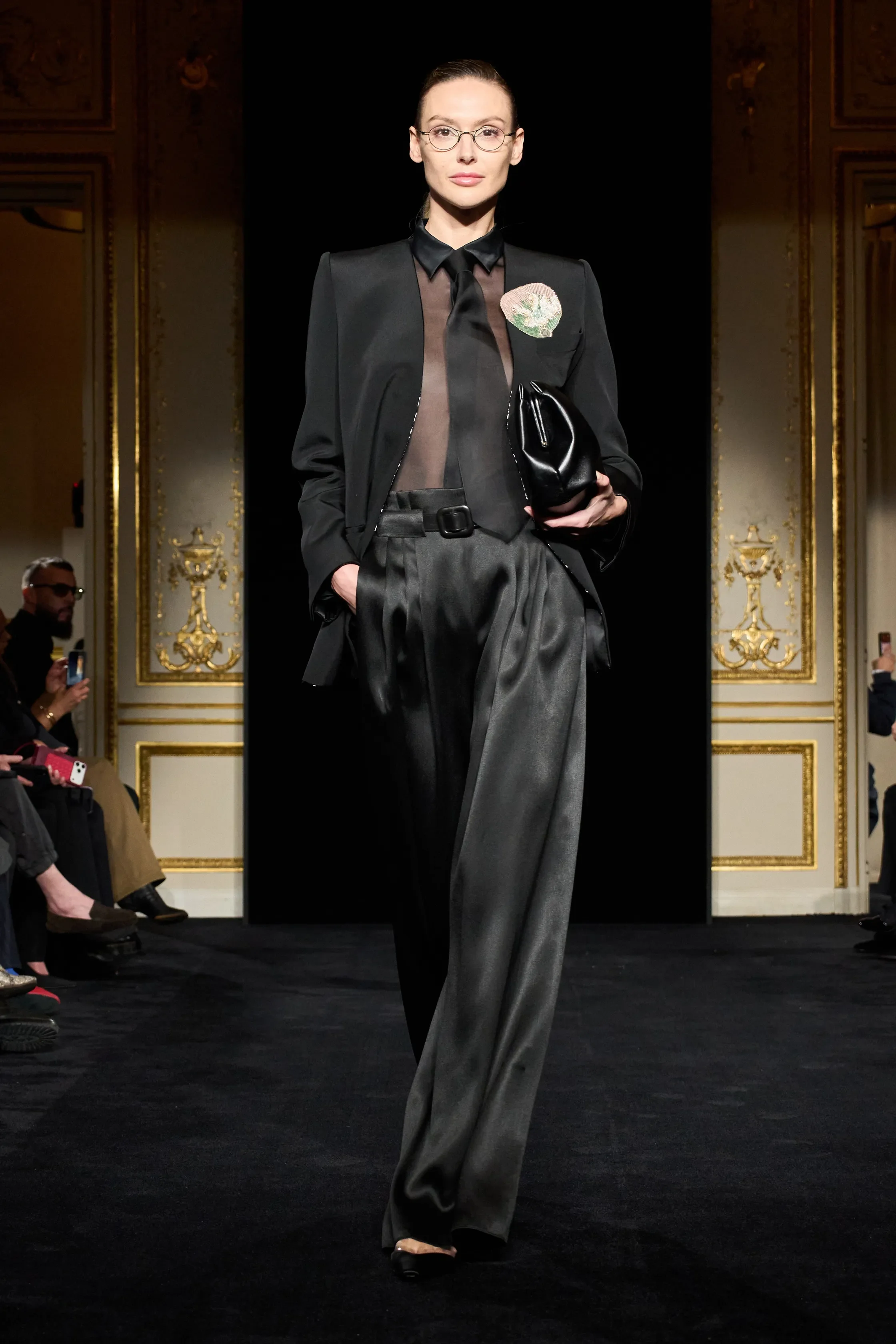
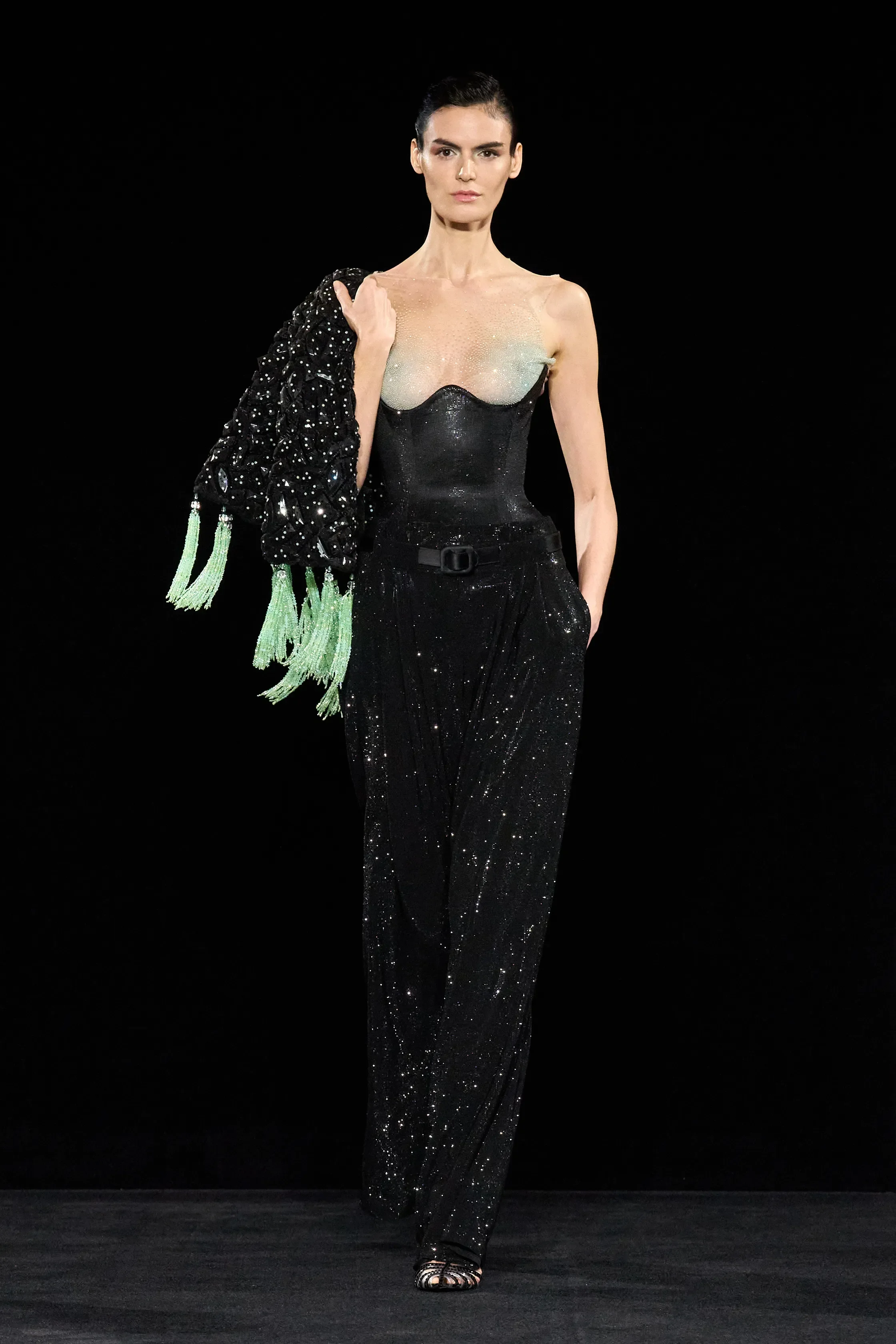
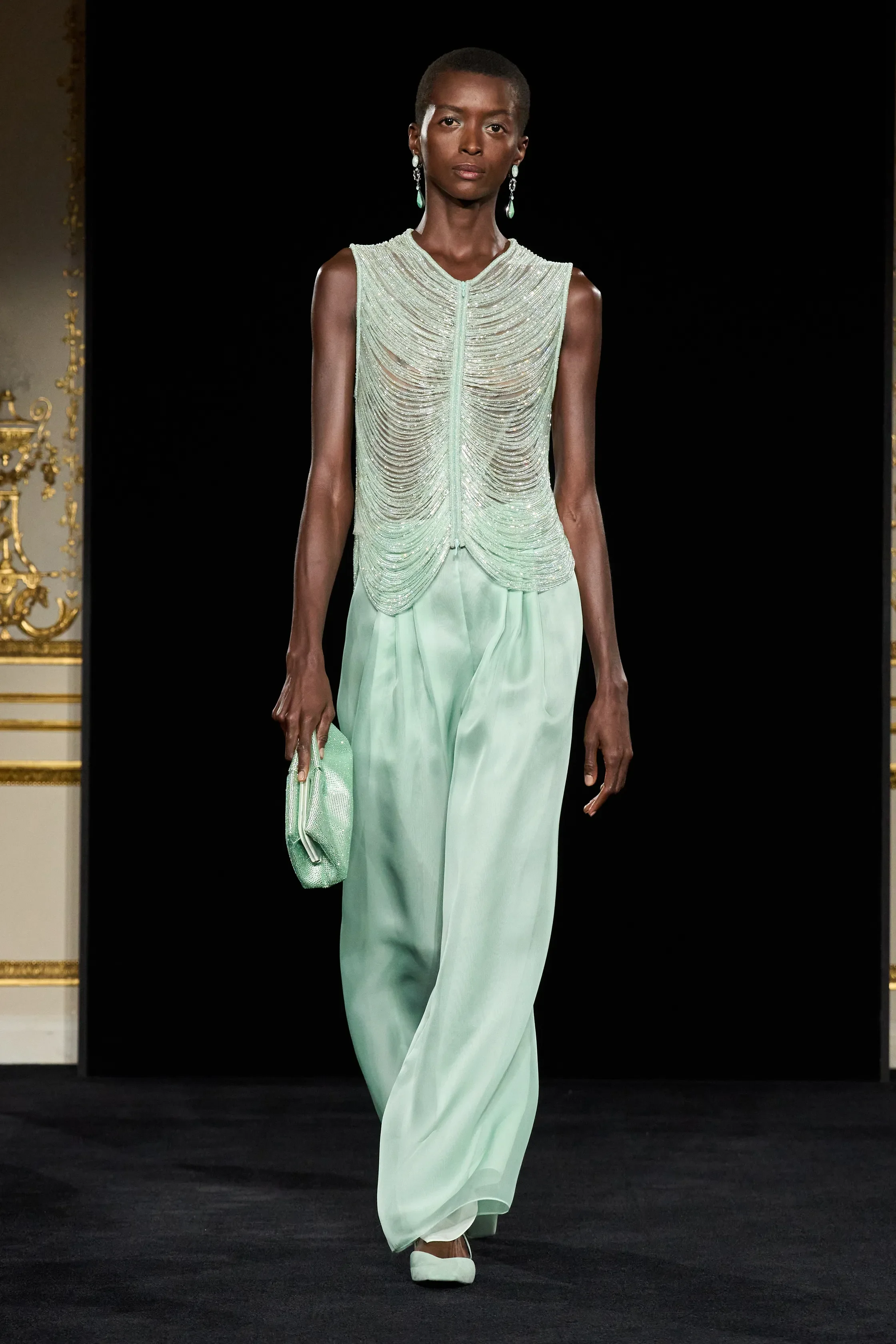
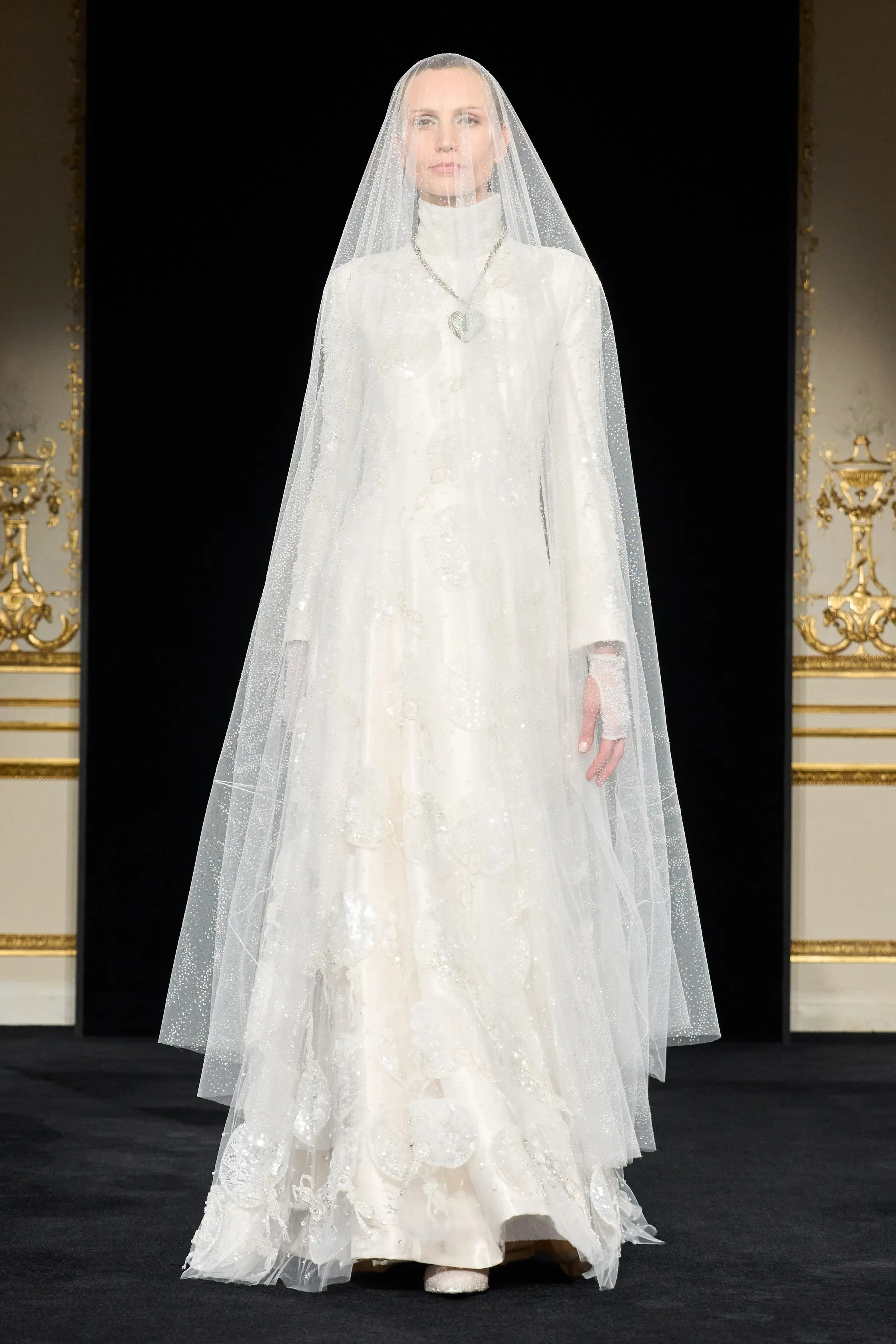
all images courtesy of GIORGIO ARMANI
The only woman at the creative helm of a fashion house on the Parisian haute couture calendar, Silvana Armani, just presented her debut collection for the House, the first since Giorgio Armani’s passing. Having worked alongside her uncle for forty years, she knows every inch of the design language built by him.
Silvana introduced a more masculine manner to the Armani woman, without sacrificing softness or betraying the House’s approach: one she noted he would have approved of. This season the hats were removed, which she described as no longer modern, turning instead to jade: an ancient and potent material, used by humankind seven thousand years ago, layered over centuries with meanings of power, spirituality, and formal perfection.
The palette shifted between ivory, jade, green and black. Structured bodices hovered over skirts, and sequined tops were paired with palazzo trousers. Elsewhere, deconstructed jackets draped over embroidered bustiers and organza ties.
Instead of the usual hundred, Silvana Armani offered sixty carefully considered looks. The finale brought back the haute couture wedding dress: long sleeves, a high neck, embroidered and completed with a solemn veil - the only piece in the collection designed by Giorgio Armani.
SAINT LAURENT
review by MAREK BARTEK
all images courtesy of SAINT LAURENT
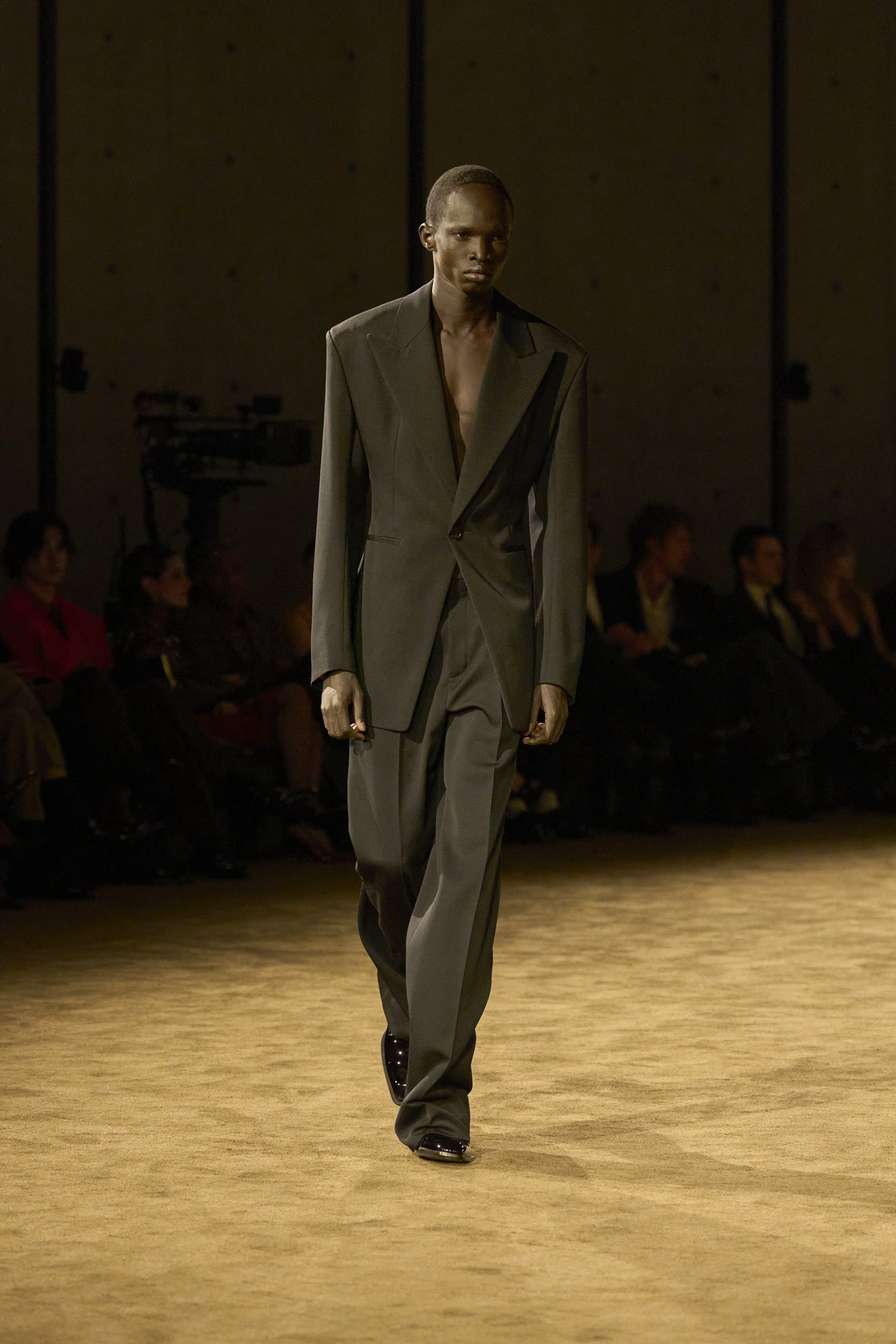
Anthony Vaccarello’s Winter 2026 men’s collection for Saint Laurent was built around intimacy and inner tension. Presented at the Bourse de Commerce, the show explored vulnerability, eroticism, and restraint, drawing conceptual base from James Baldwin’s Giovanni’s Room and its portrait of desire caught in conflict with social expectations.
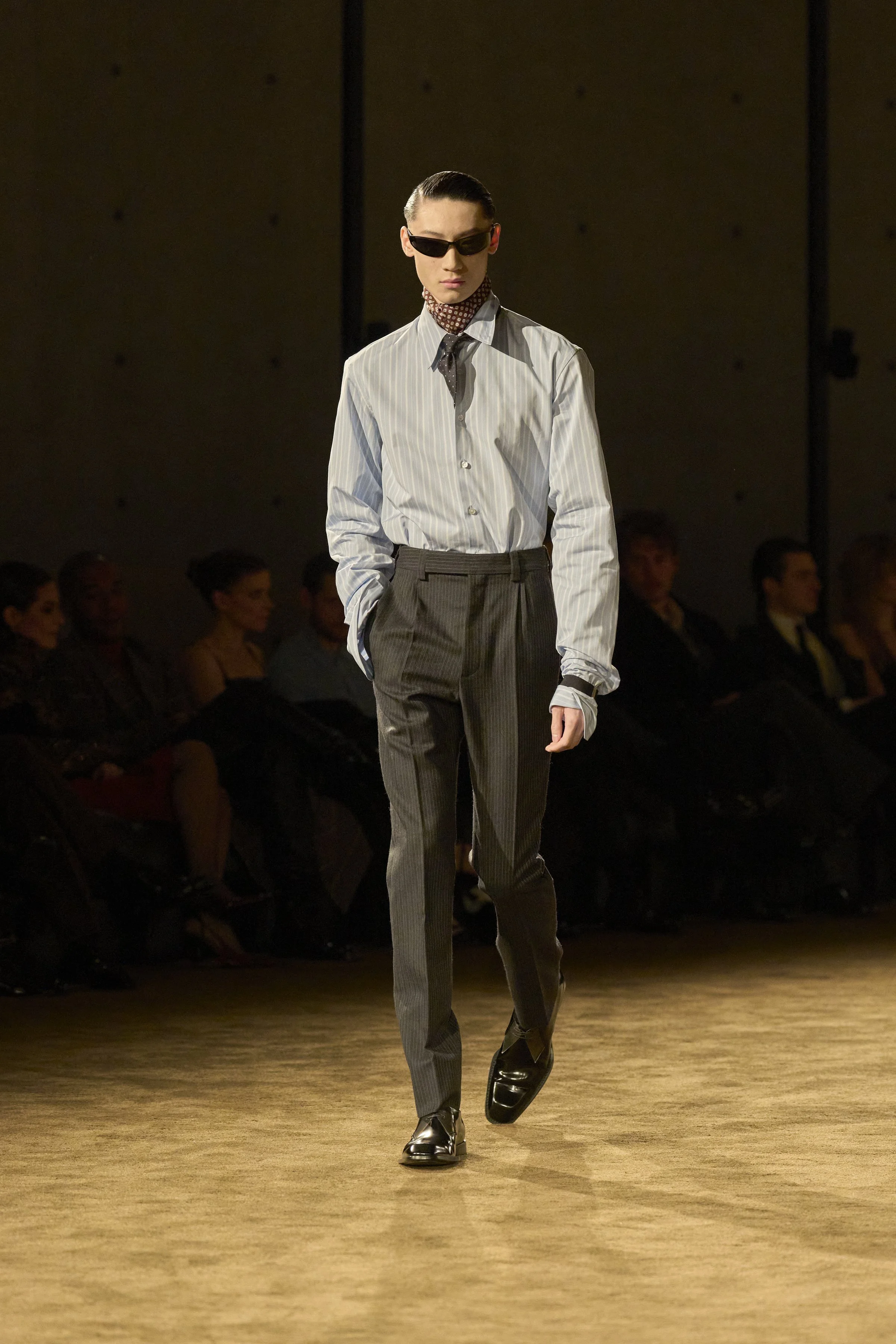
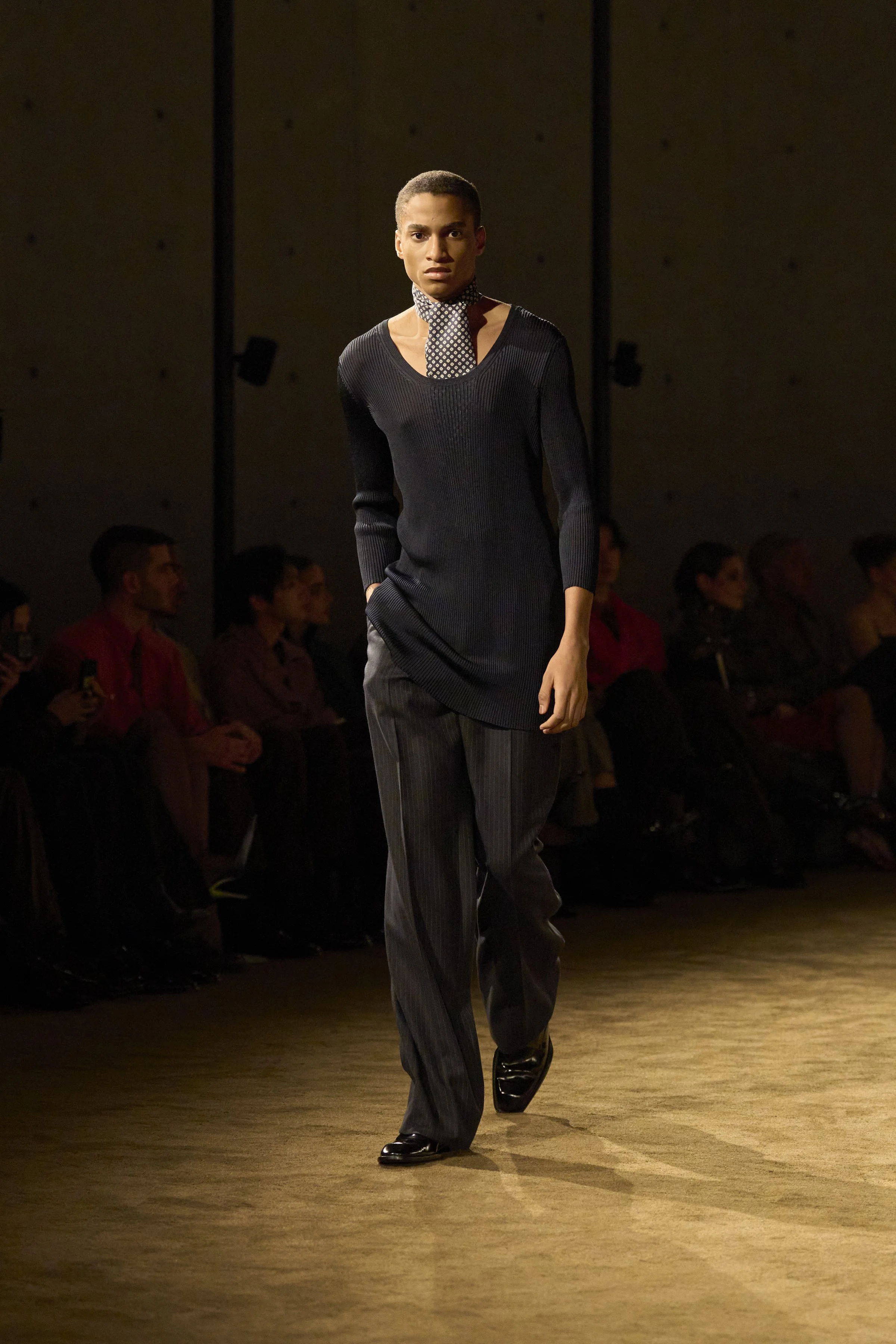
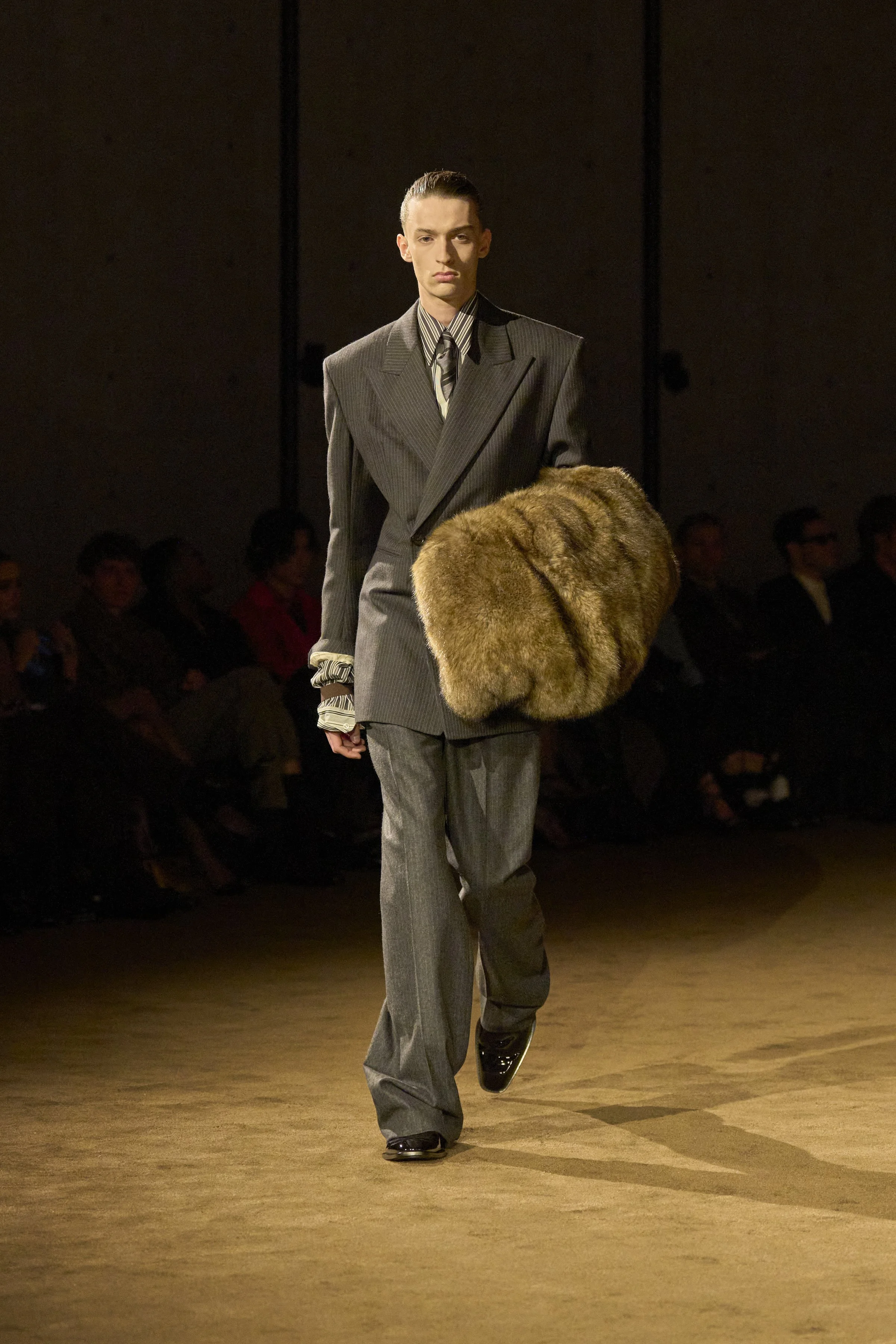
Vaccarello proposed a lean, sinuous line — jackets structured through the shoulder but softened through the waist, subtly moving away from rigid masculinity toward something more ambiguous and bodily aware. Trousers fell wider than usual, creating movement and weight, while high boots anchored the looks in already familiar style.
The collection revolved around the ritual of dressing after night. Shirts, ties, and printed silk ascots emerged as key elements, at times loosened and cascading down the chest. Textures carried emotional residue: soft, crumpled surfaces suggested wear and memory, and stood as a contrast to the house’s signature smoking.
Colour remained centred on black, reinforcing both classicism and defiance — long a dual code within Saint Laurent. Rather than redefining menswear through shock, Vaccarello continues to propose masculinity as something layered, conflicted, and openly sensual.