
HAUTE COUTURE WEEK SPRING/SUMMER 2026: DAY 1
SCHIAPARELLI
review by MAREK BARTEK

all images courtesy of SCHIAPARELLI
Daniel Roseberry turns inward this season, framing Schiaparelli’s season around feeling rather than form. Titled The Agony and the Ecstasy, the collection took its emotional cue from Roseberry’s visit to the Sistine Chapel, where, as he wrote, “I stopped thinking for the first time in years of how something should look, but instead about how I feel when creating it.”
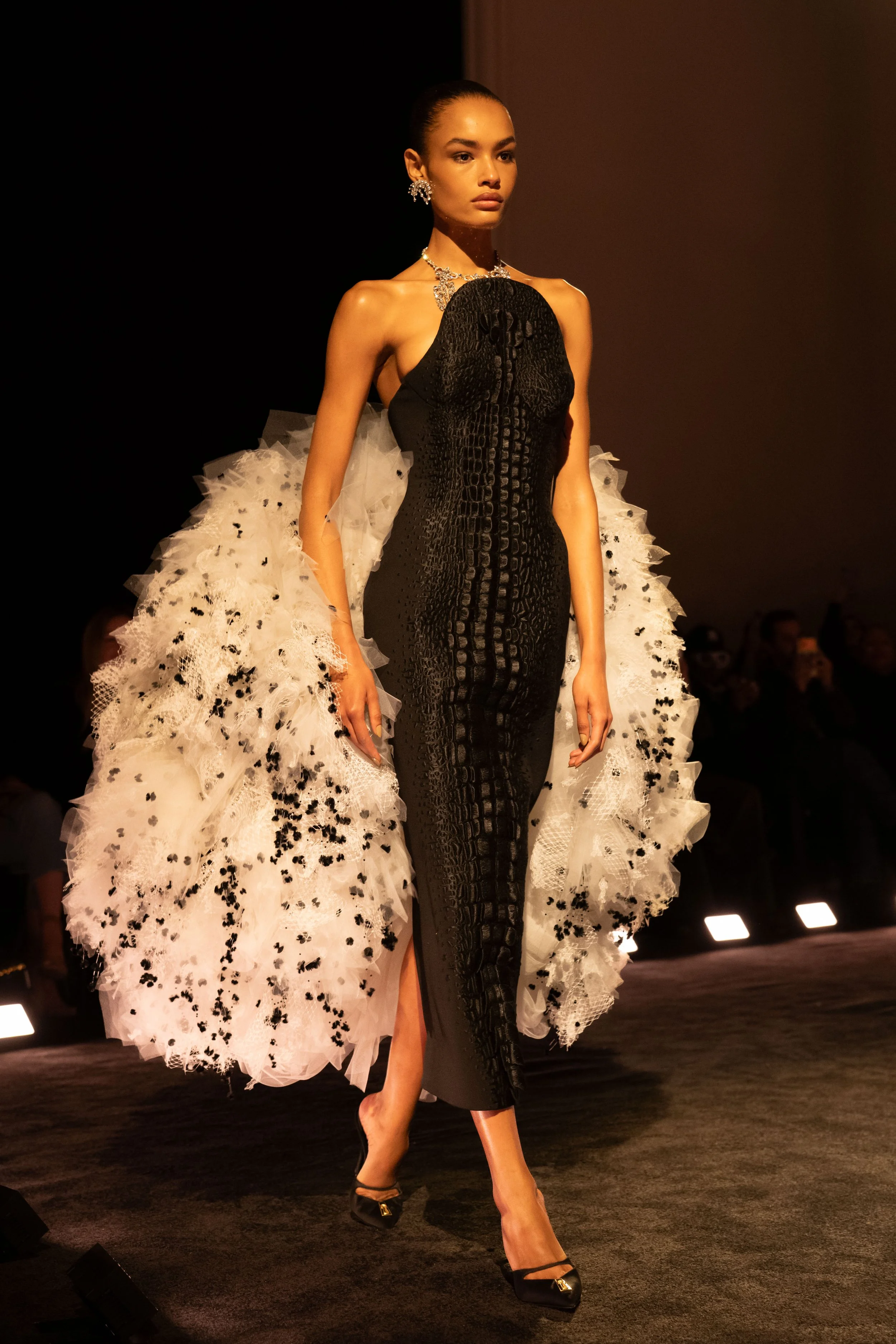
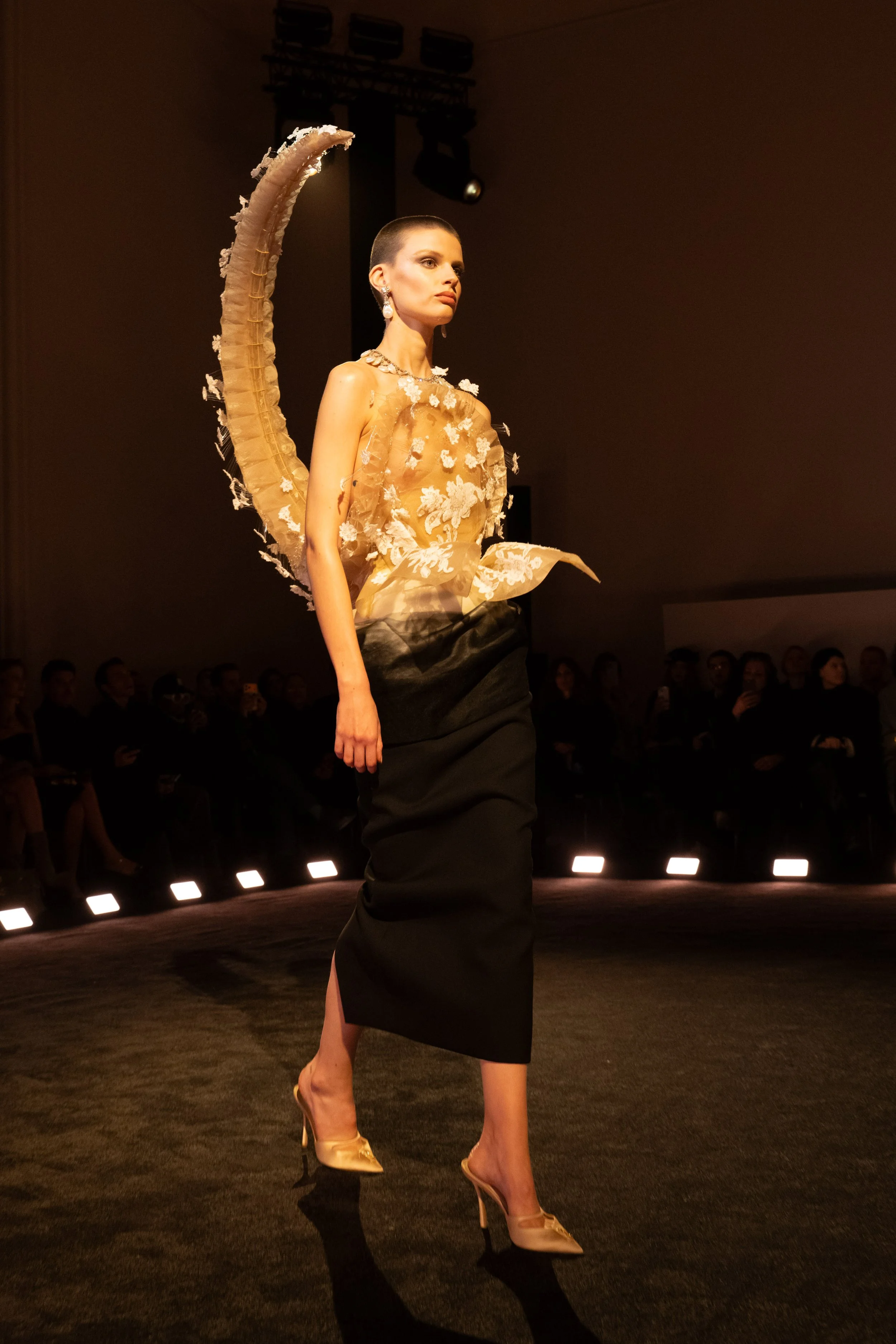
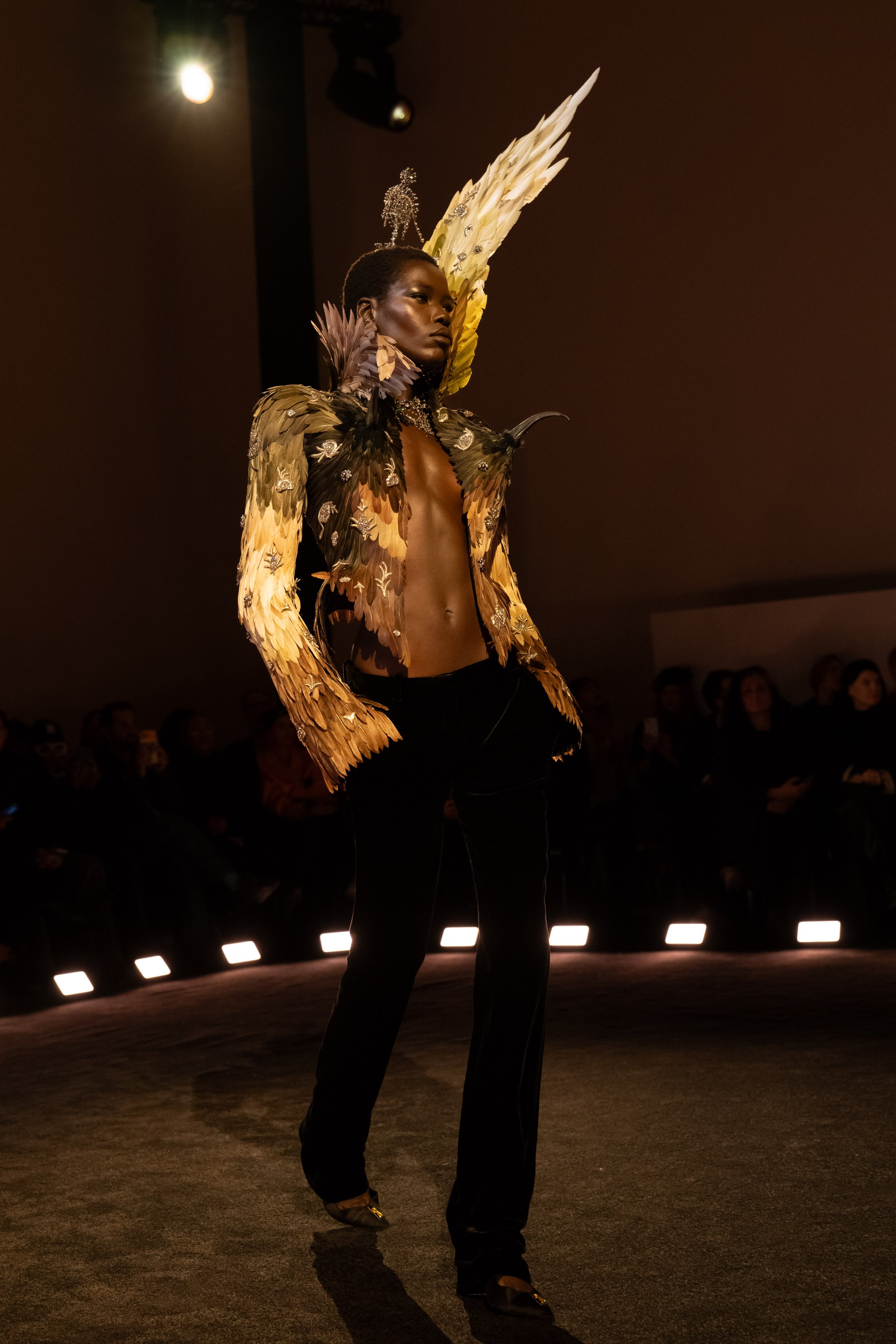
Sharp tailoring grew wings, tails, and stingers — a visual manifestation of the mentioned mental shift, which allowed Roseberry to build a collection around sensation, movement, and myth. Lace was cut into bas-relief, feathers dipped in resin and crystals, and neon tulle layered beneath chantilly lace to create sfumato shadows. Roseberry described the season’s heroines as “infantas terribles” — creatures drawn from birds, reptiles, and the sea — couture archetypes with venom woven into their silhouettes.
On the runway, the Scorpion Sisters appeared in black crin and lace with embroidered tails curling from jackets and bustiers. “Isabella Blowfish” arrived dusted in crystals, its organza spikes forming a rigid, almost defensive halo around the body. Gowns exploded into feathered clouds — one ivory dress covered with 25,000 silk-thread feathers, another radiating 65,000 kingfisher plumes in shifting blues. Bird heads reappeared as sculpted bijoux, perching on heels, earrings, and necklaces, while Schiaparelli’s keyhole motif punctuated shoes and tailoring throughout.
Yet beneath the spectacle, Roseberry somehow managed to return to couture’s purpose. “Couture is an invitation,” he wrote. “Stop thinking… It’s time to feel.”
GEORGES HOBEIKA
review by VERONICA TLAPANCO SZABÓ
all images courtesy of GEORGES HOBEIKA
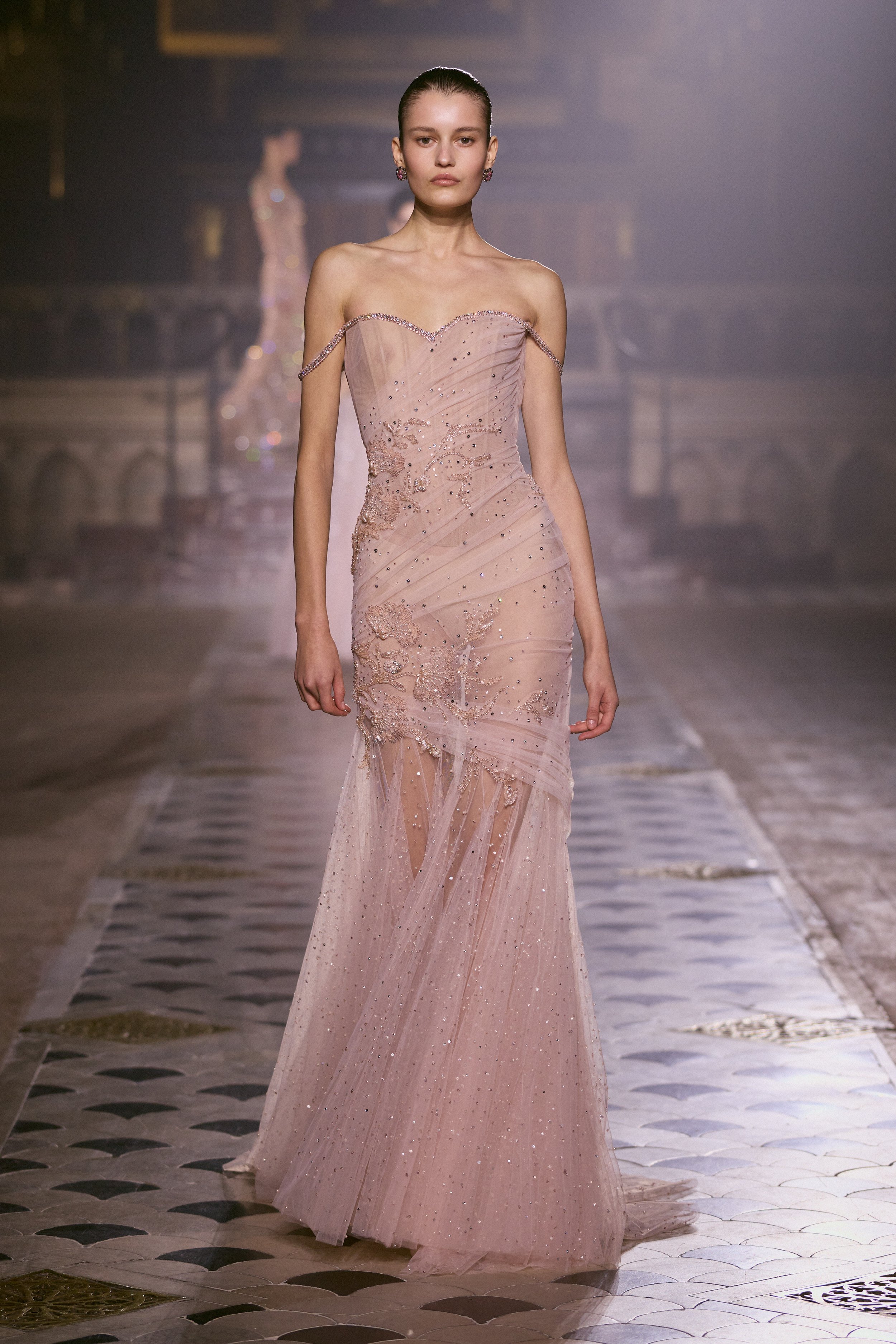
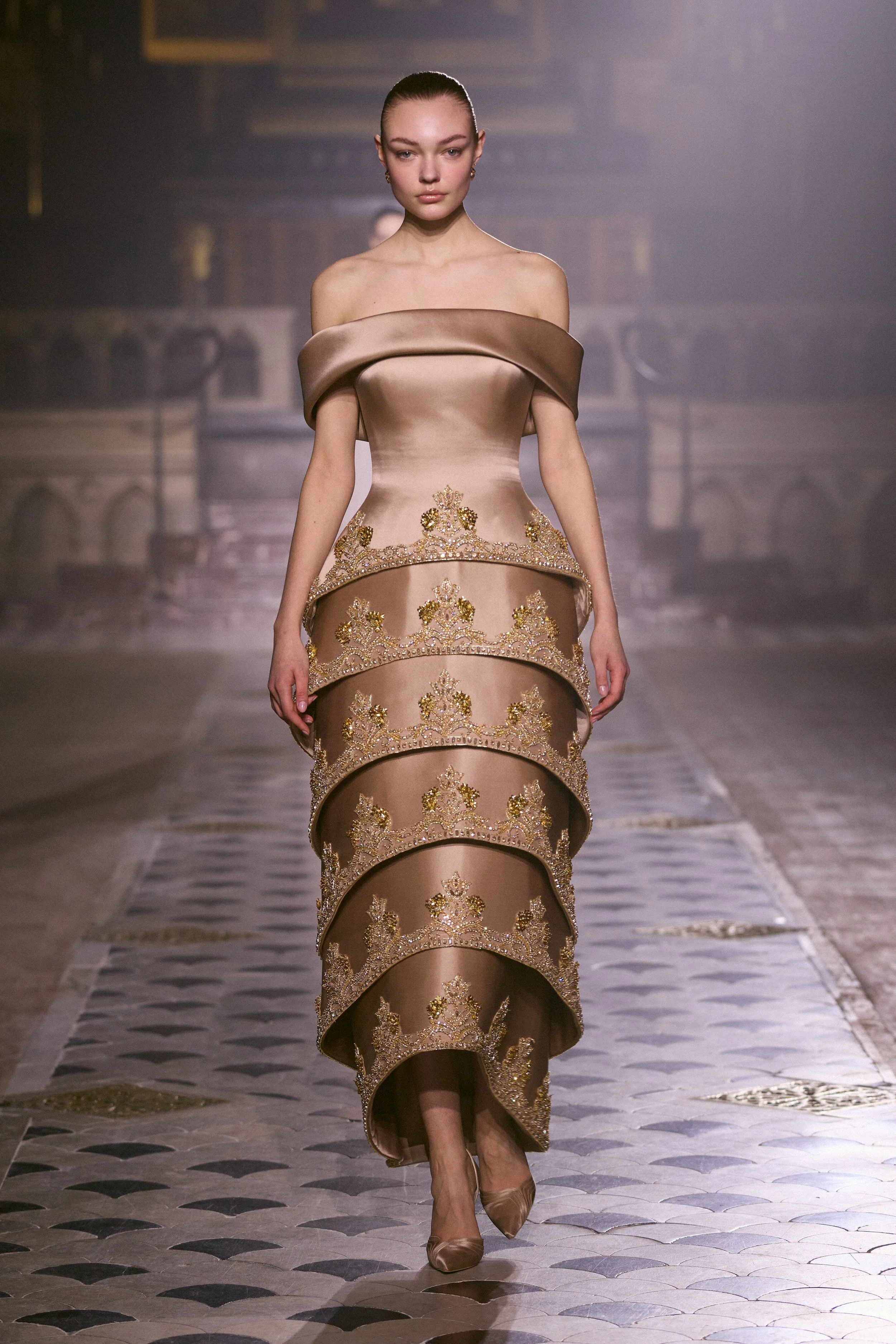
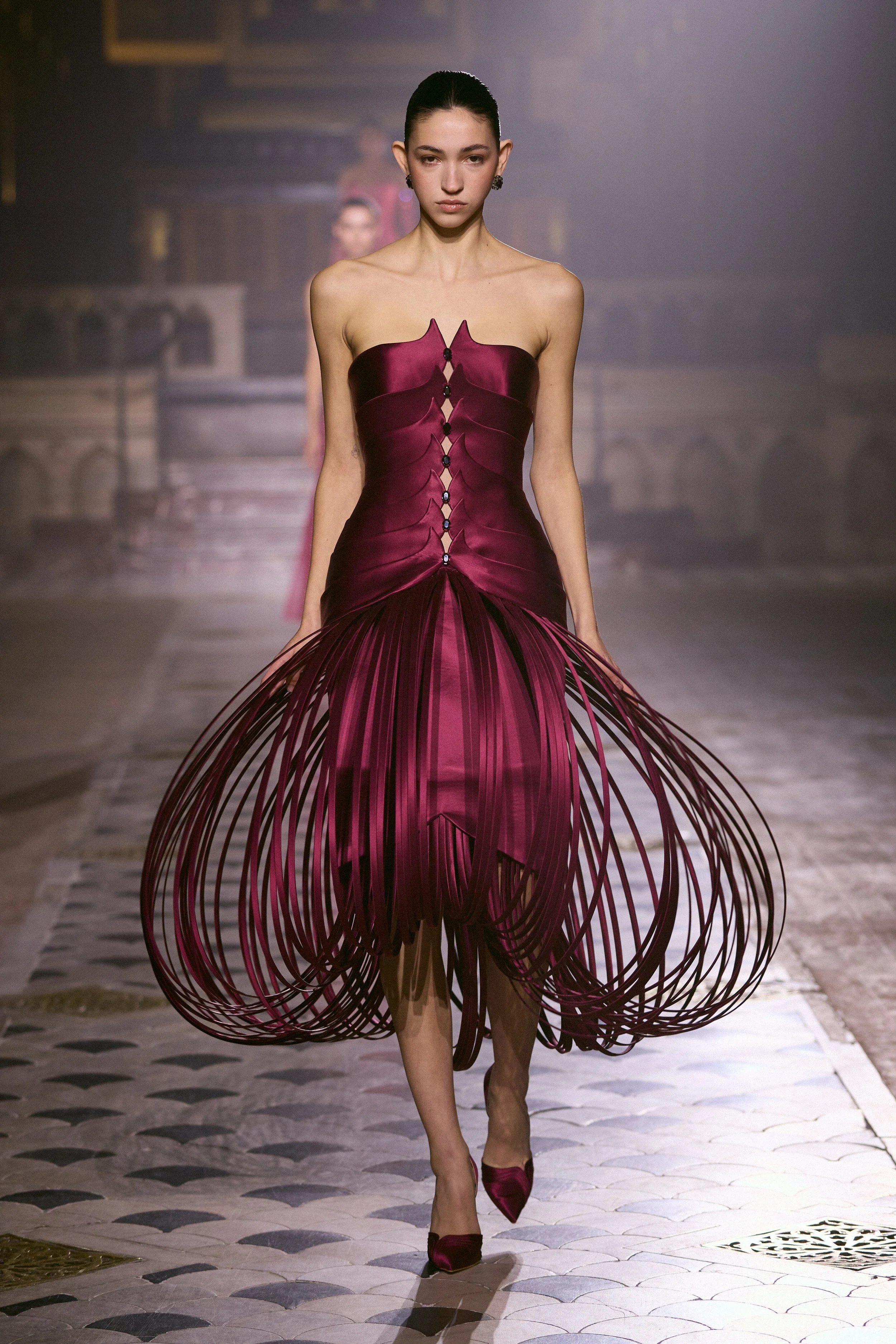
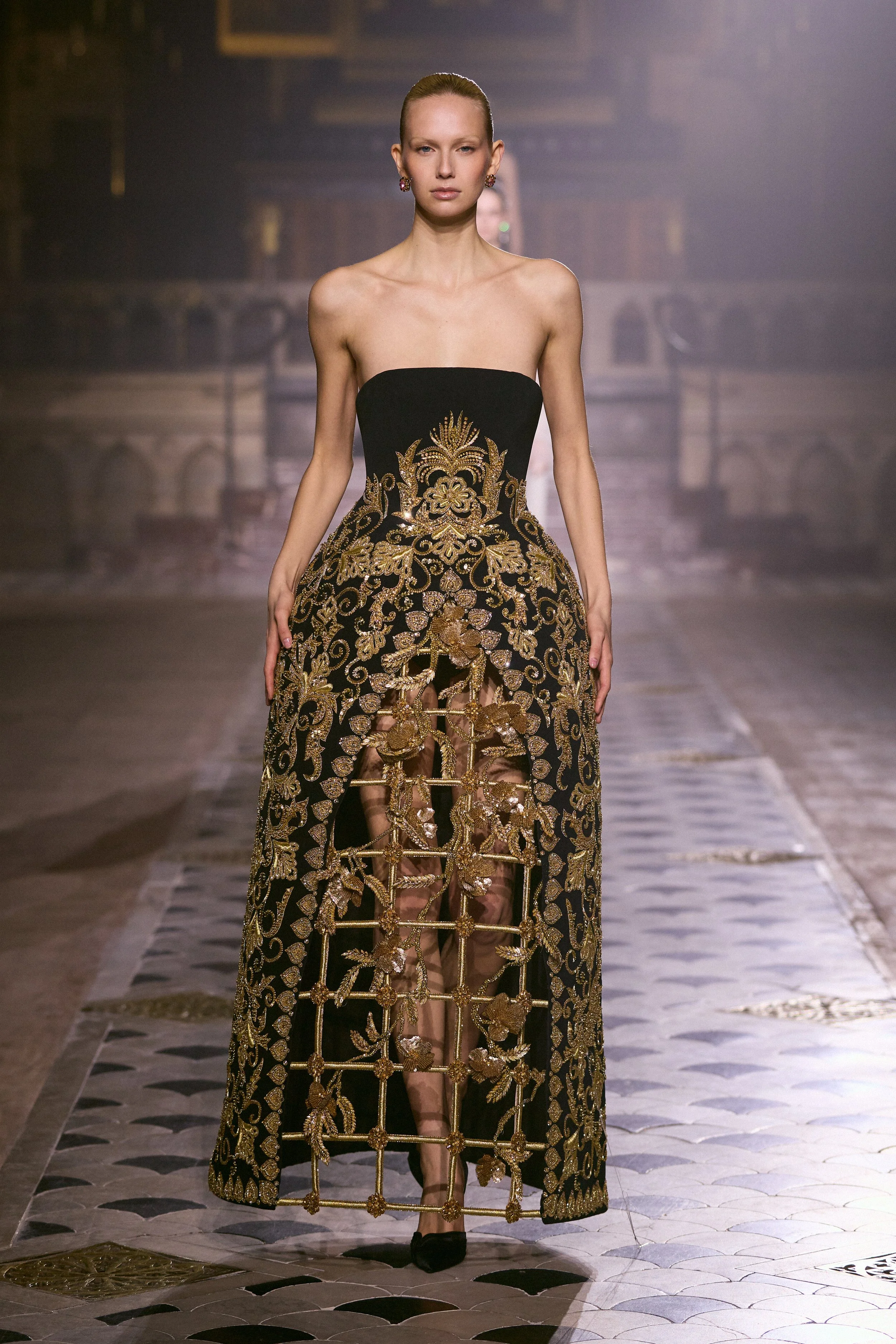
L’amour, just a drop is enough. In the right hands it becomes a pearl…something to wear. For his latest couture outing, Georges Hobeika steps right into this canon, staging a collection that treats love as an infinite creative force, to the point of sacrality even, as the runway takes place inside of a church. Each garment glimmers, and the heart-shaped bustiers in ballerina pinks respond to the show notes’ existential, “Why did you create me?” with the only answer that matters “So that you may love.”
The neckline play is divine all throughout, Hobeika moves though the whole range of styles with some looks plunging, then some more modest and high-cut. Standouts include a strapless blush silhouette composed of horizontal layers, delicate embroidery tracing a fitted column that cinches the waist. Then come the power shoulders perched atop an ivory midi dress with button-front bodice, add in opulent shades of raspberry, purple, maroon and it is indeed L' amour that Hobeika conjured.
DIOR
review by MAREK BARTEK
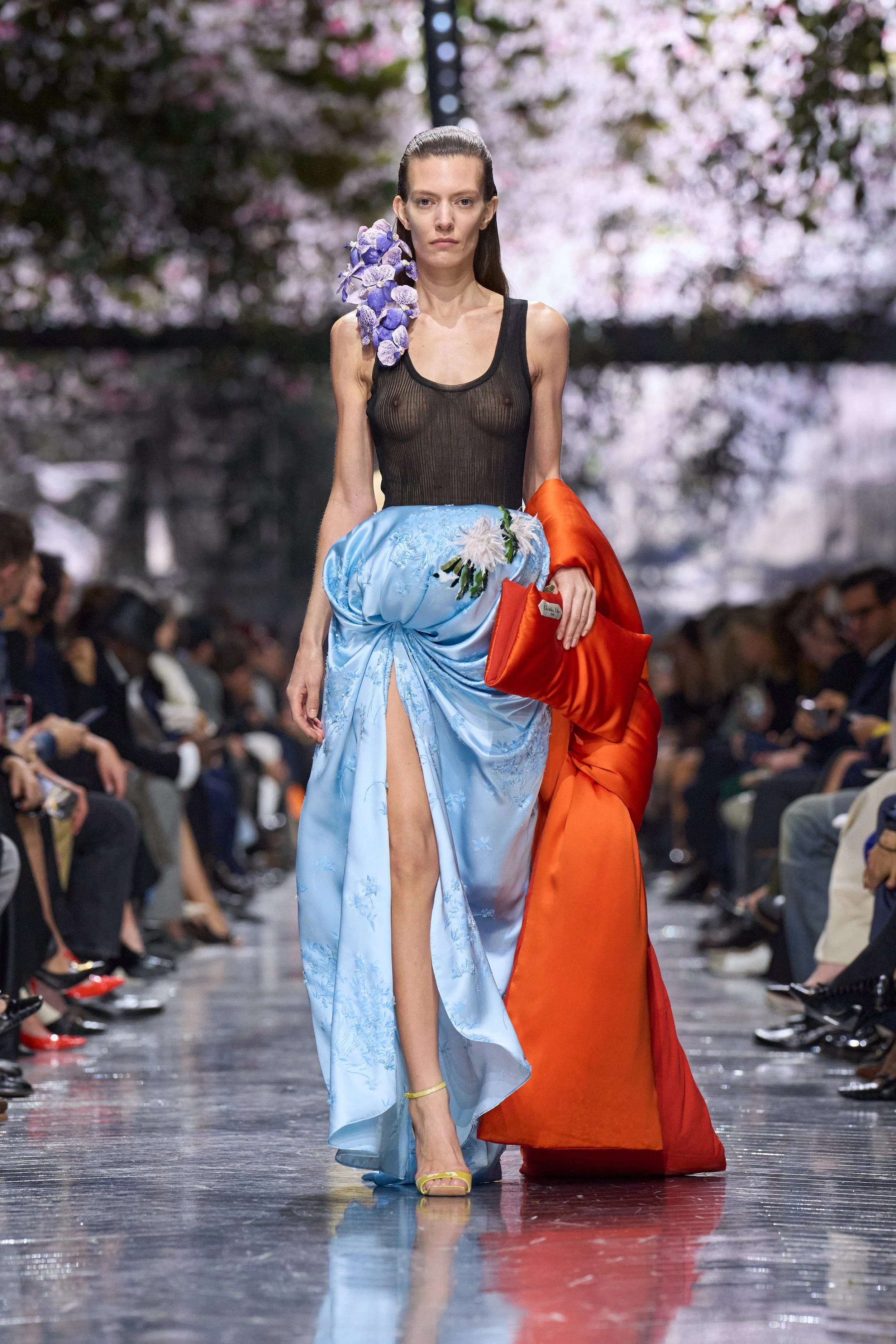
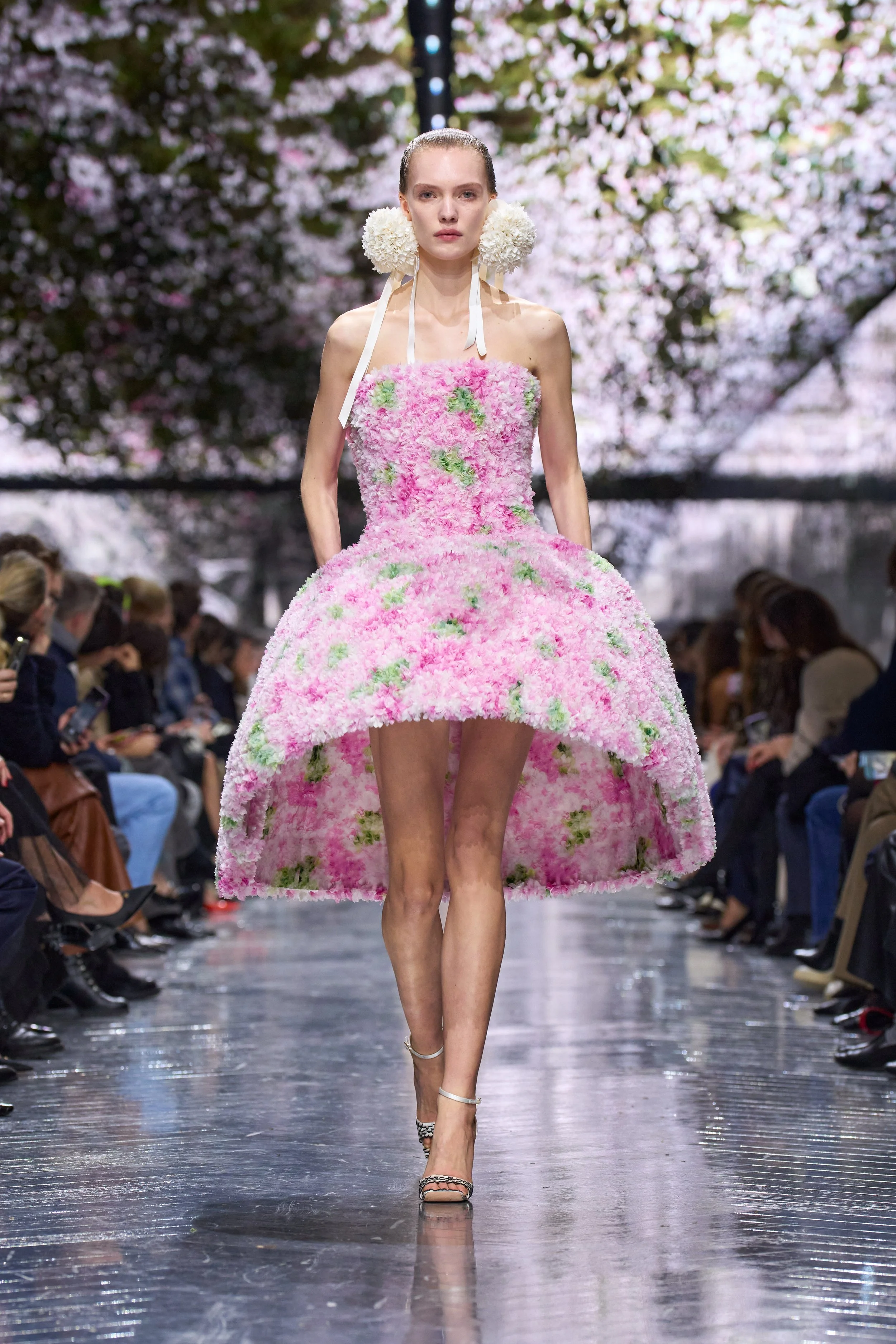
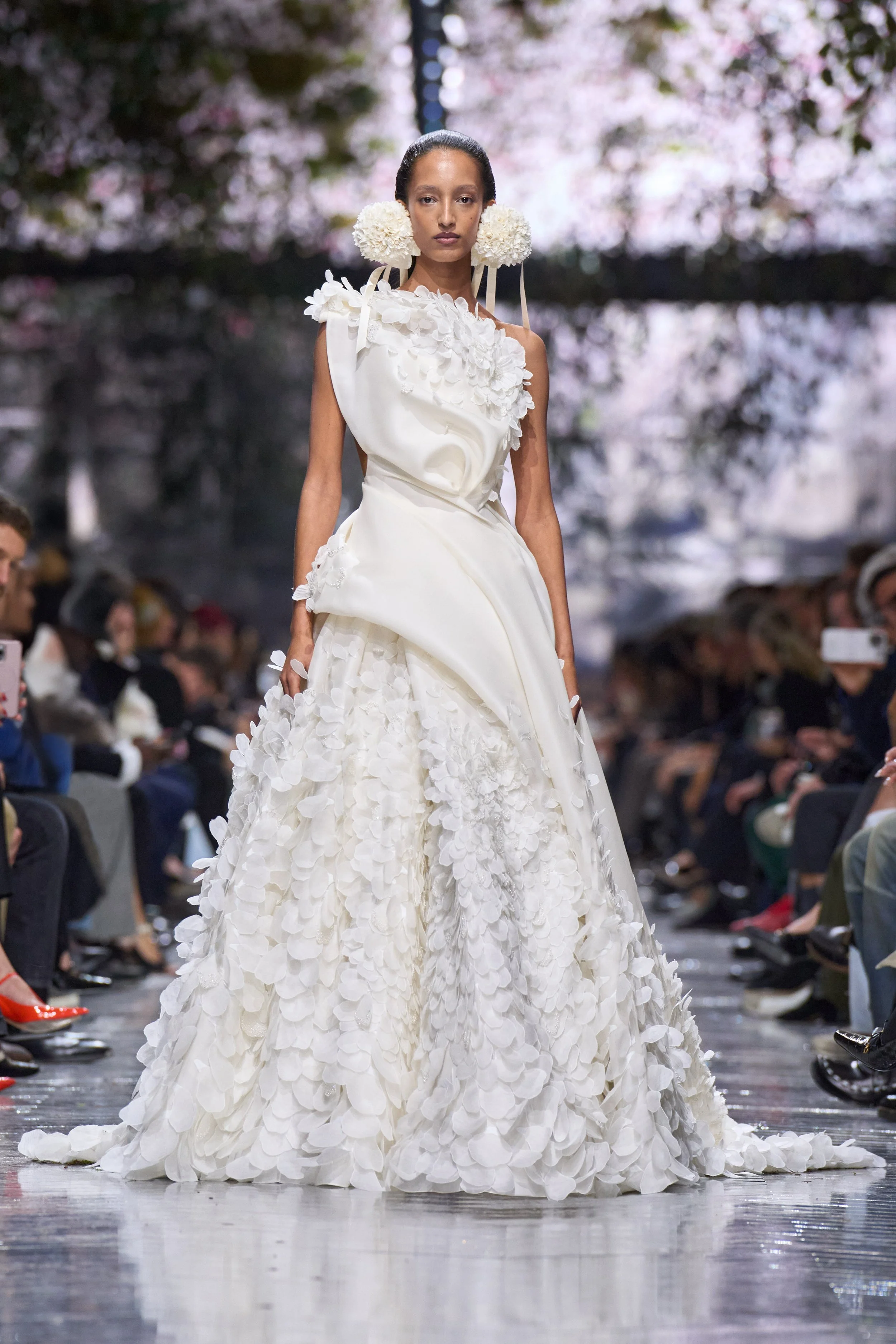
all images courtesy of DIOR
Jonathan Anderson’s first haute couture collection for Dior unfolded inside the Musée Rodin like a carefully assembled cabinet of curiosities. Anderson delivered both a show that was absolutely mesmerising and a debut focused on process, material, and time, approaching couture as a living archive.
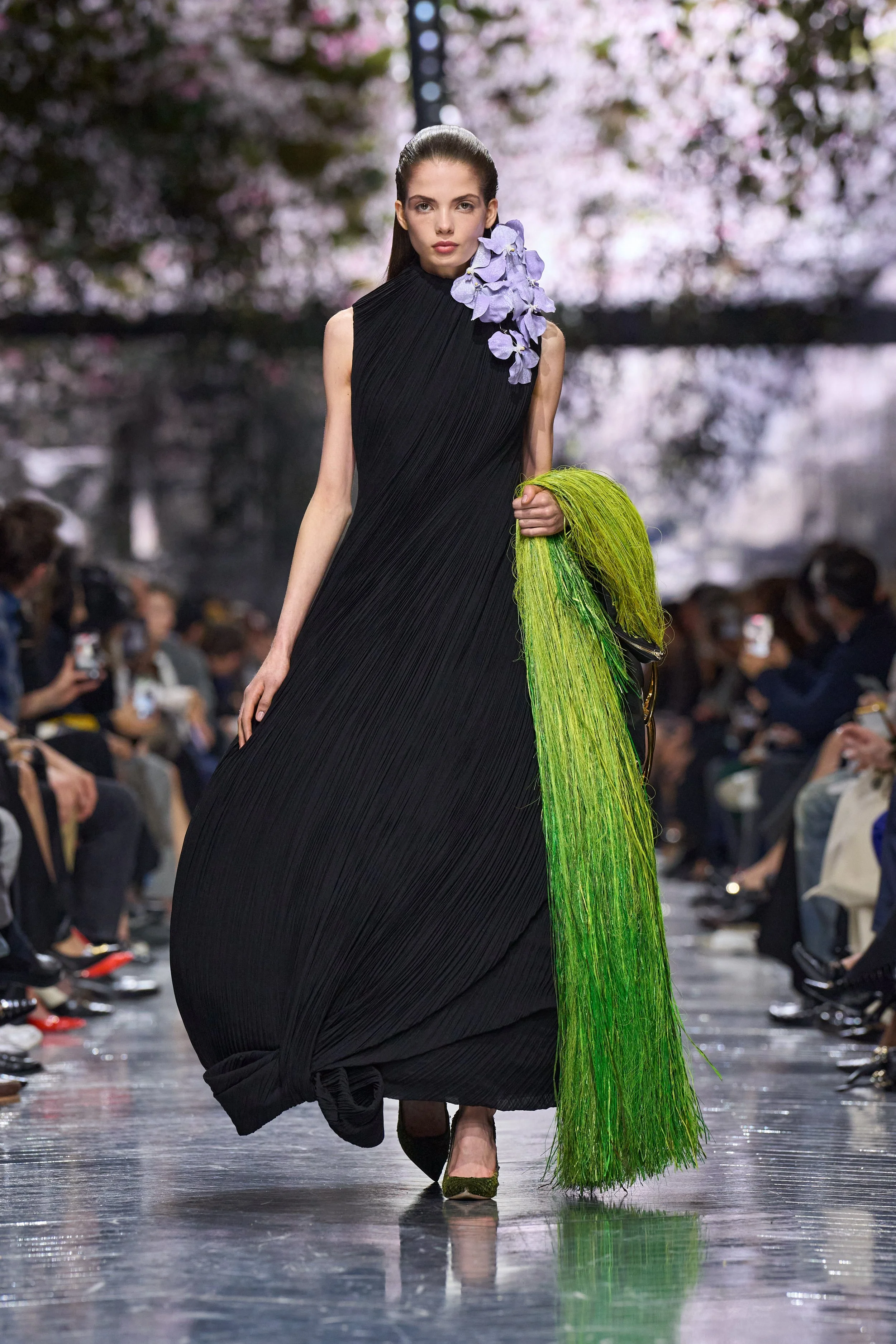
The starting points were both natural and artistic. “I thought, ‘how can we come up with a light structure for Dior?’”, Anderson shared backstage, referring to his inspiration: meteorites, fossils, portrait miniatures, but also the ceramic vessels of Magdalene Odundo, whose art fed the collection’s sense of volume, balance, and surface. Florals for spring, were definitely groundbreaking this season, appearing not as decoration but as structure: references to blooms hung upside down, slowly drying and reshaping themselves, translated into pleated corollas, twisted satin collars, and petal-like layers of organza and chiffon.
Silhouettes altered between floaty and form-holding at once. Ballooned volumes hovered above the ground in a very satisfying length, Bar jackets returned with softened lines, and coats were woven from strips of merino, alpaca and bouclé into clouded tweeds. Knitwear — rarely highlighted in couture — was folded through technical constructions that played with softness and architectural lines. Cyclamen motifs reappeared across jacquards, embroideries and accessories, anchoring the collection in a floral theme. Boning, pleating, fraying and embroidery were never hidden, but treated as part of the design itself, reminding us that couture is also a process.
But beyond anything, Anderson is a mastermind when it comes to looking at past references and re-envisioning them into something genuinely new. His use of florals recalled Christian Dior’s lifelong love for flowers — not only as ornament, but as a foundational design language. The Rococo influences we’ve seen throughout the collection were a direct testament to John Galliano, still synonymous with Dior’s golden era, and a personal point of reference for Anderson’s cyclamen posy invitation — made all the more special by Galliano’s presence at the show. At the same time, Anderson’s sense of clarity echoed Raf Simons’s couture debut, which — back then — marked radical modernity entering Dior not as a disruptive force, rather just an innovative vision.
Anderson’s love for Dior is heartwarming and pure, and it is beautiful to see this love story unfold — collection after collection.