
NEW YORK WEEK FALL/WINTER 2026: DAY 2
CAROLINA HERRERA
review by MAREK BARTEK
all images courtesy of CAROLINA HERRERA
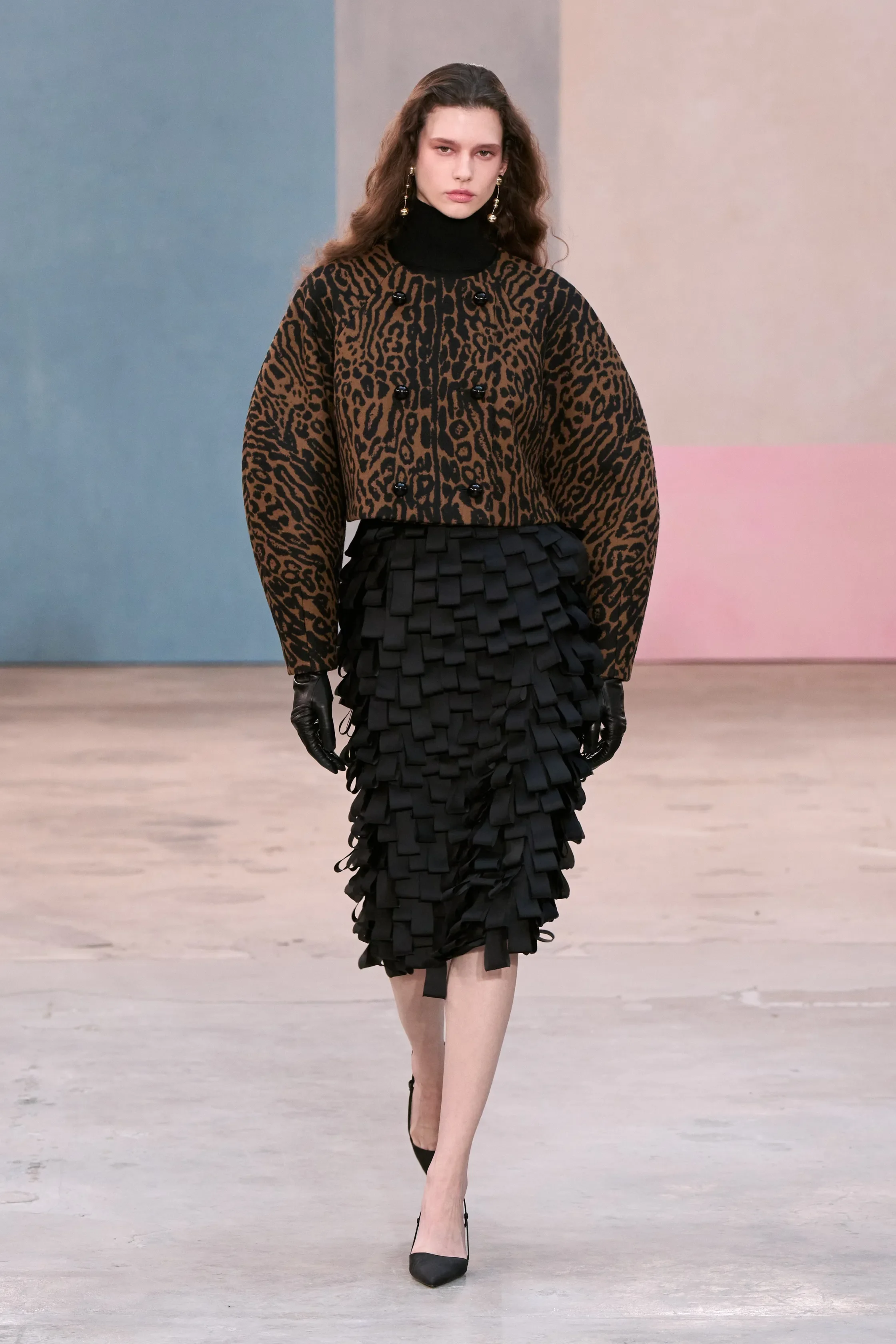
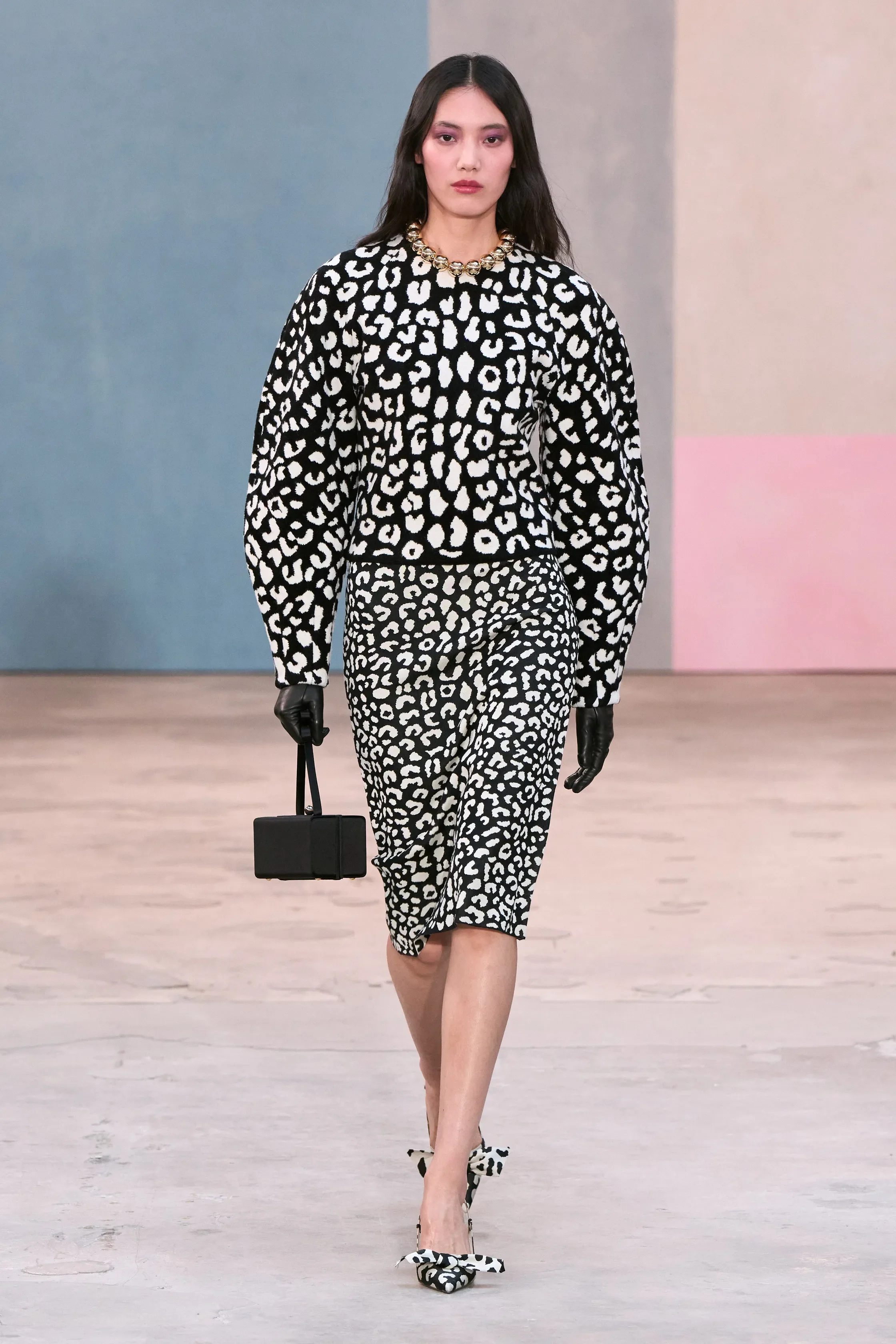
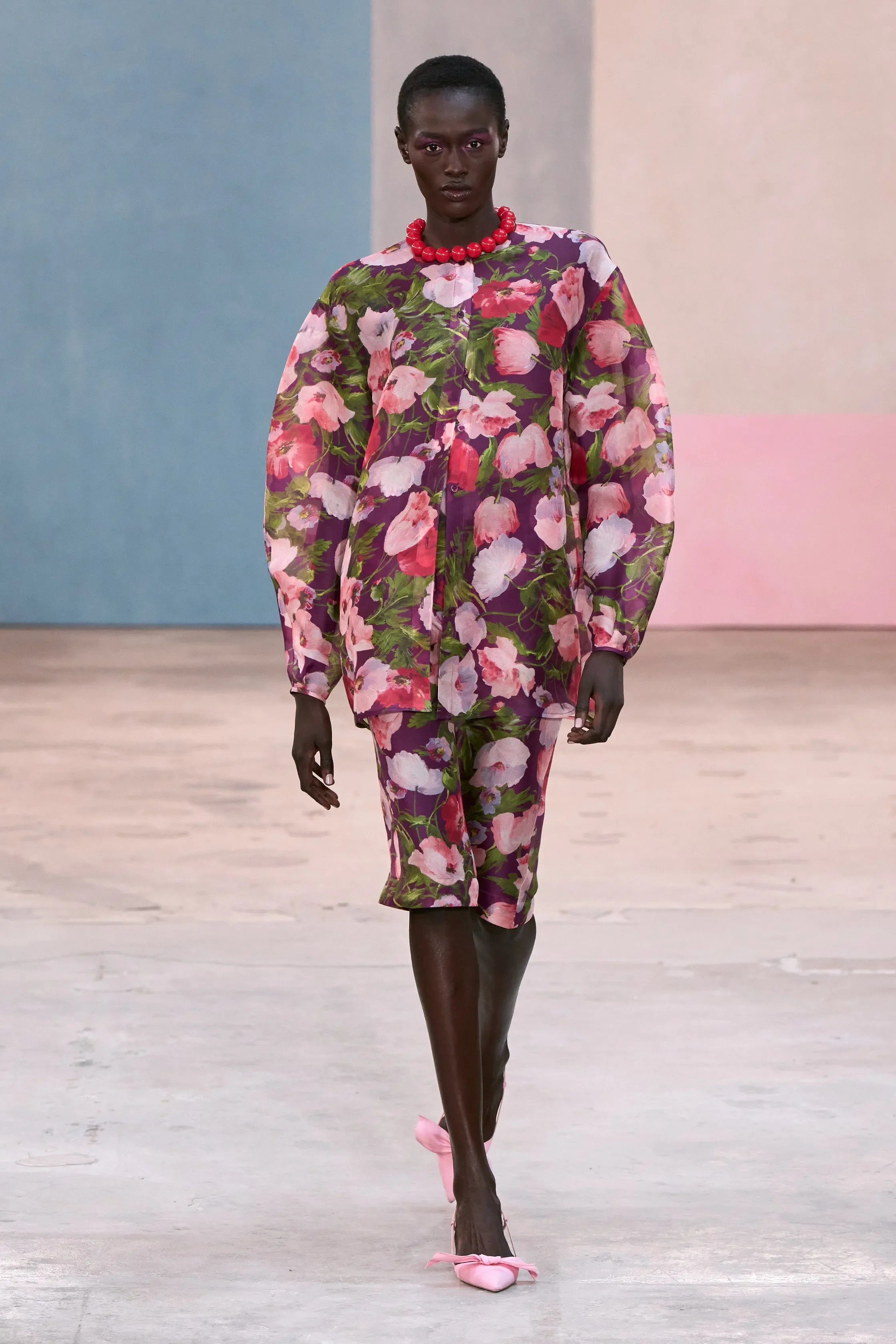
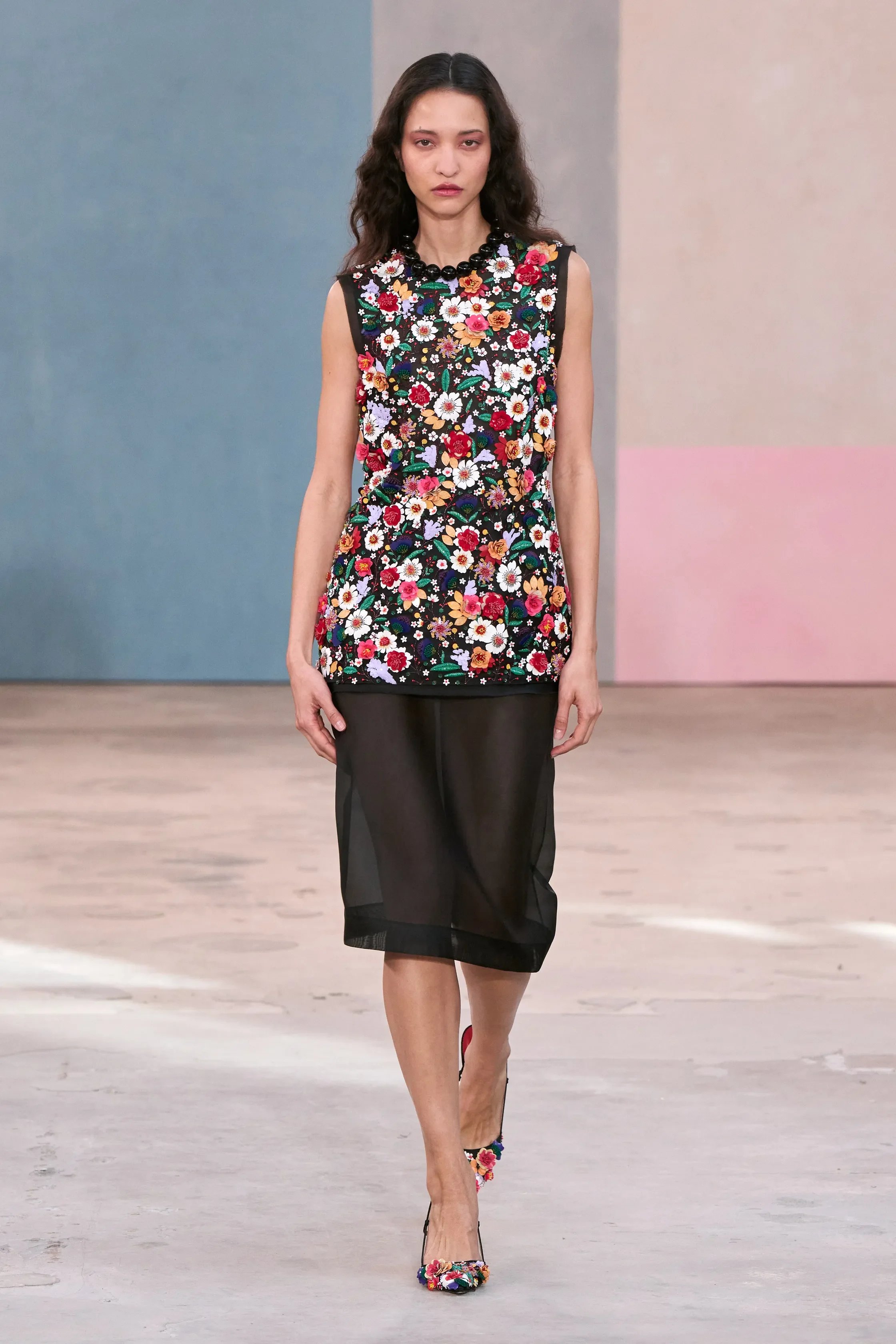
For Fall 2026, Wes Gordon turns his gaze to women who shape culture from the inside out. Inspired by artists, gallerists and muses—many of whom walked the runway—Carolina Herrera becomes less about polite society and more about creative conviction. Amy Sherald, Ming Smith and Rachel Feinstein stepped out in cocoon coats, puff-sleeve tailoring and streamlined pencil skirts that suggest momentum rather than occasion.
Gordon sharpened the house codes with graphic leopard jacquards, painterly calla lilies and a witty all-over Good Girl shoe print marking the fragrance’s tenth anniversary . Chili red bi-stretch wool, plum paillettes and forest green lurex brought punch to sculptural silhouettes, while silk faille capes nodded subtly to Peggy Guggenheim’s eccentric glamour.
Evening arrived via sequined knits and gold crystal-embroidered coats, luminous yet grounded. The message felt clear: Herrera’s woman isn’t standing still. She’s moving through the city—confident, cultured, and entirely self-possessed.
AISLING CAMPS
review by HANNAH ATIRA
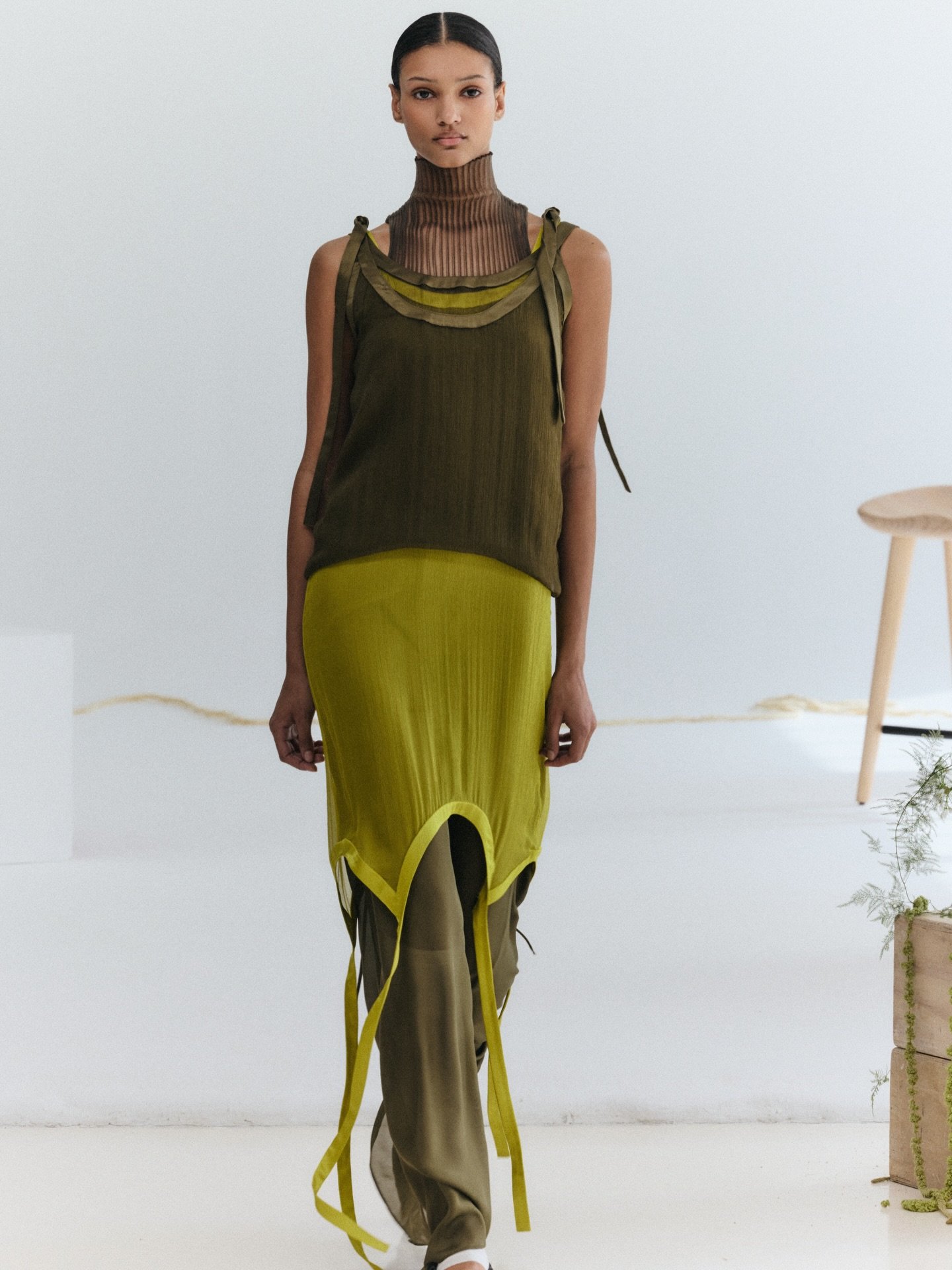
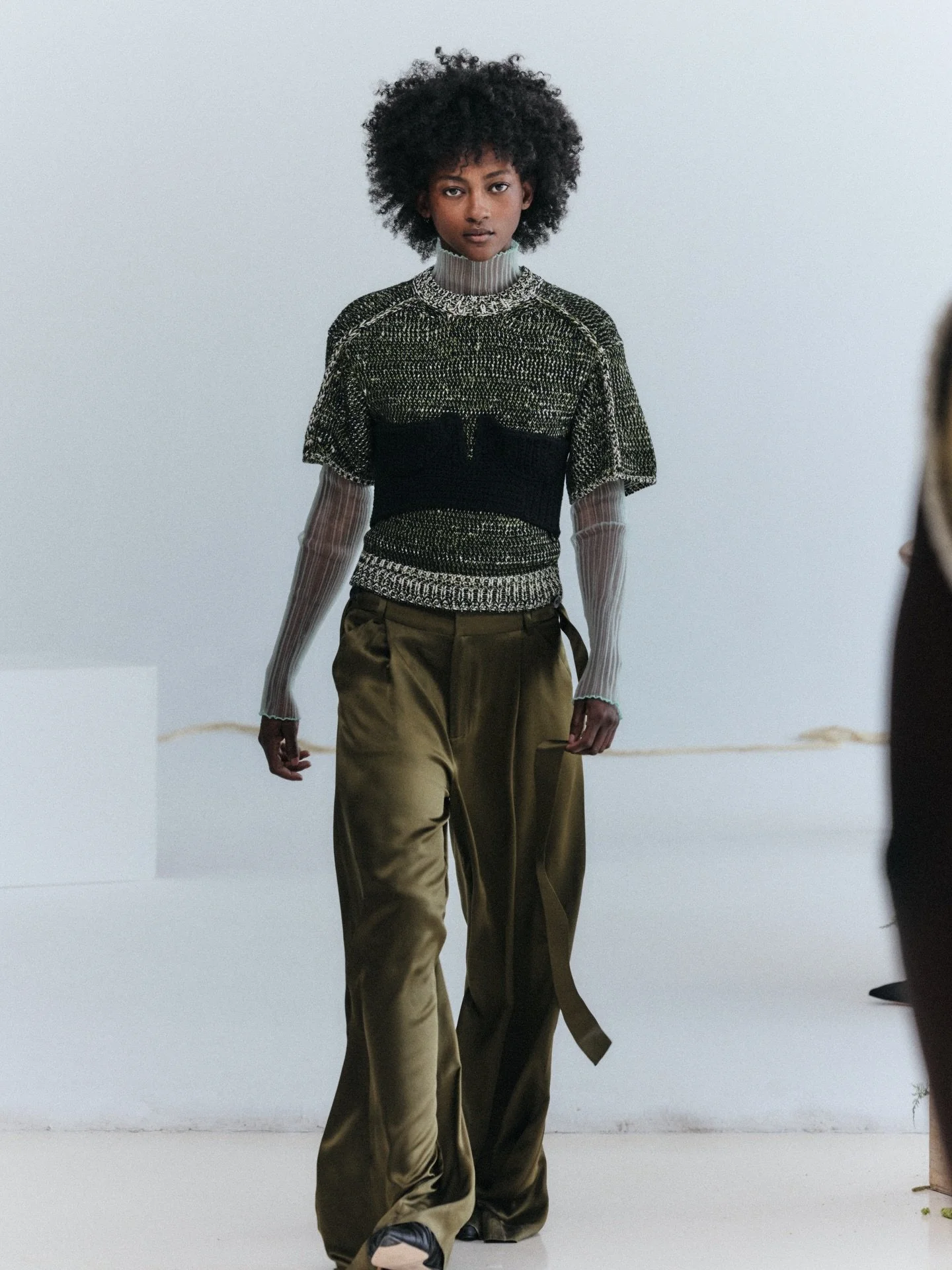
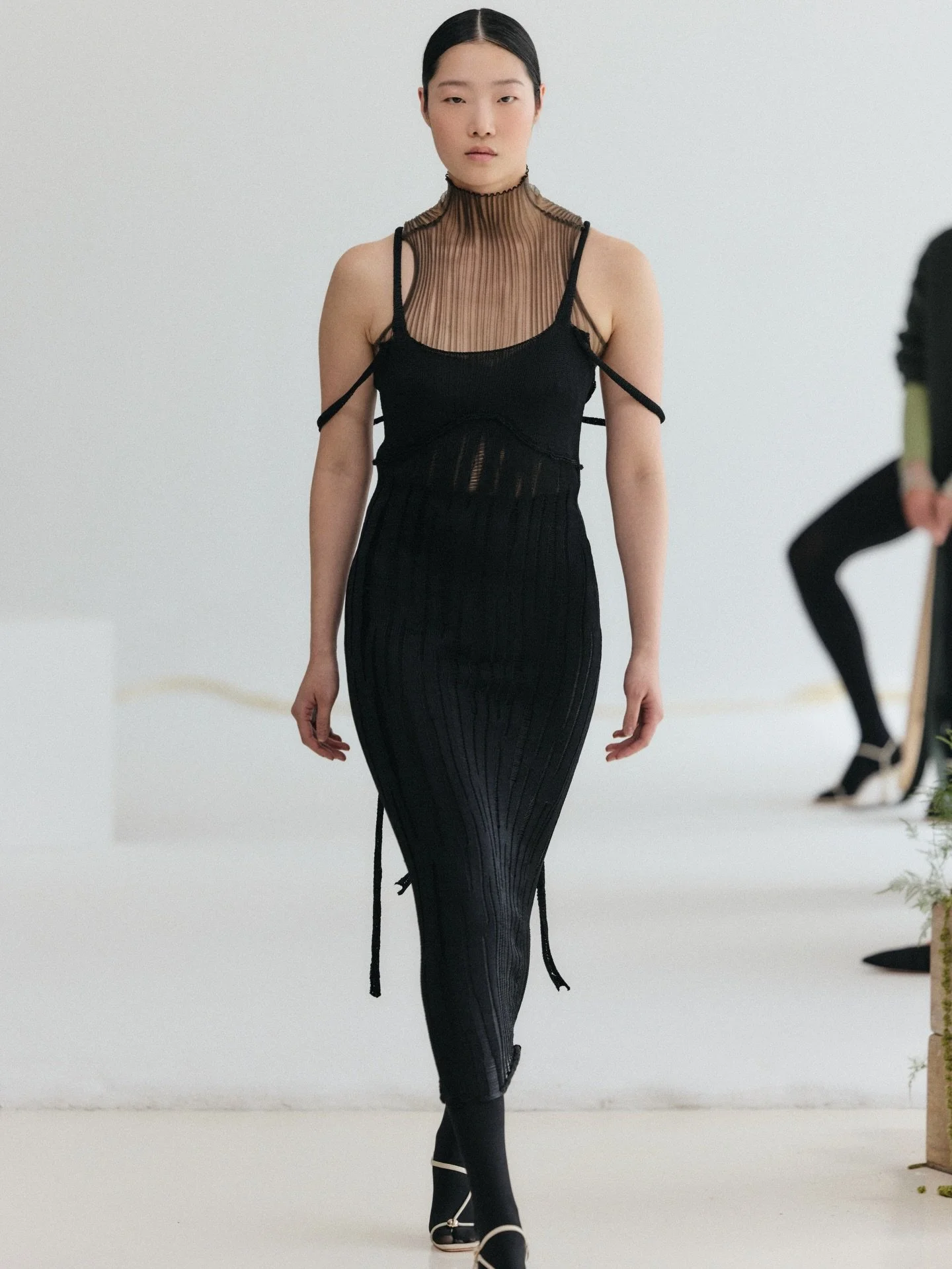
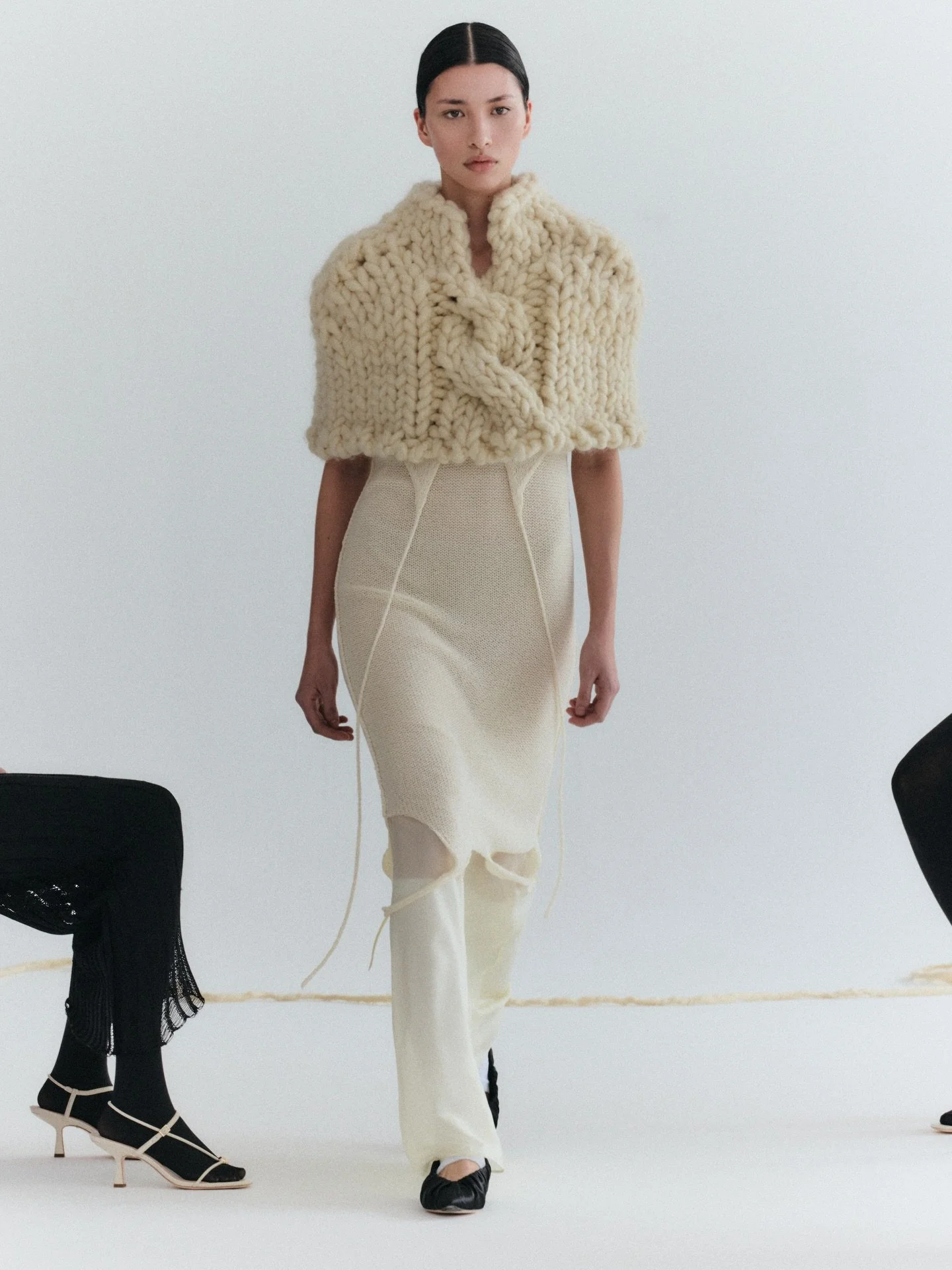
all images courtesy of AISLING CAMPS
Knitwear designer Aisling Camps makes quite the intriguing return to the New York calendar with their Fall 2026 collection. Sourcing, a “calling by nature,” as the inspiration to this collection, designer Aisling remerges with a collection truly idyllic in presence. A series of earth-toned knits, inclusive of sandy whites, petal greens, stone blacks, and greys, was gently presented against the soft contrast of an all-white sunbathed studio.
Holding to her core this season, Aisling pushed beyond the perceived boundaries of knitwear with an interweaving of various knit techniques. Through an amiable layering of tight ribbing, loose crochets, and fine sheers, Aisling further dives into the innate idea of interlacing found in nature. Exploring texture and silhouette not only through technique but through material as well, Aisling explored various fabrications this season, from Cashmere to silk, journeying into new pastures with the introduction of wovens.
Aisling Camps continues to create with both intention and a deep understanding of its wearer, “The chenilles shift. The charmeuse flows. The clothes move differently now.”
ZANKOV
review by MAREK BARTEK
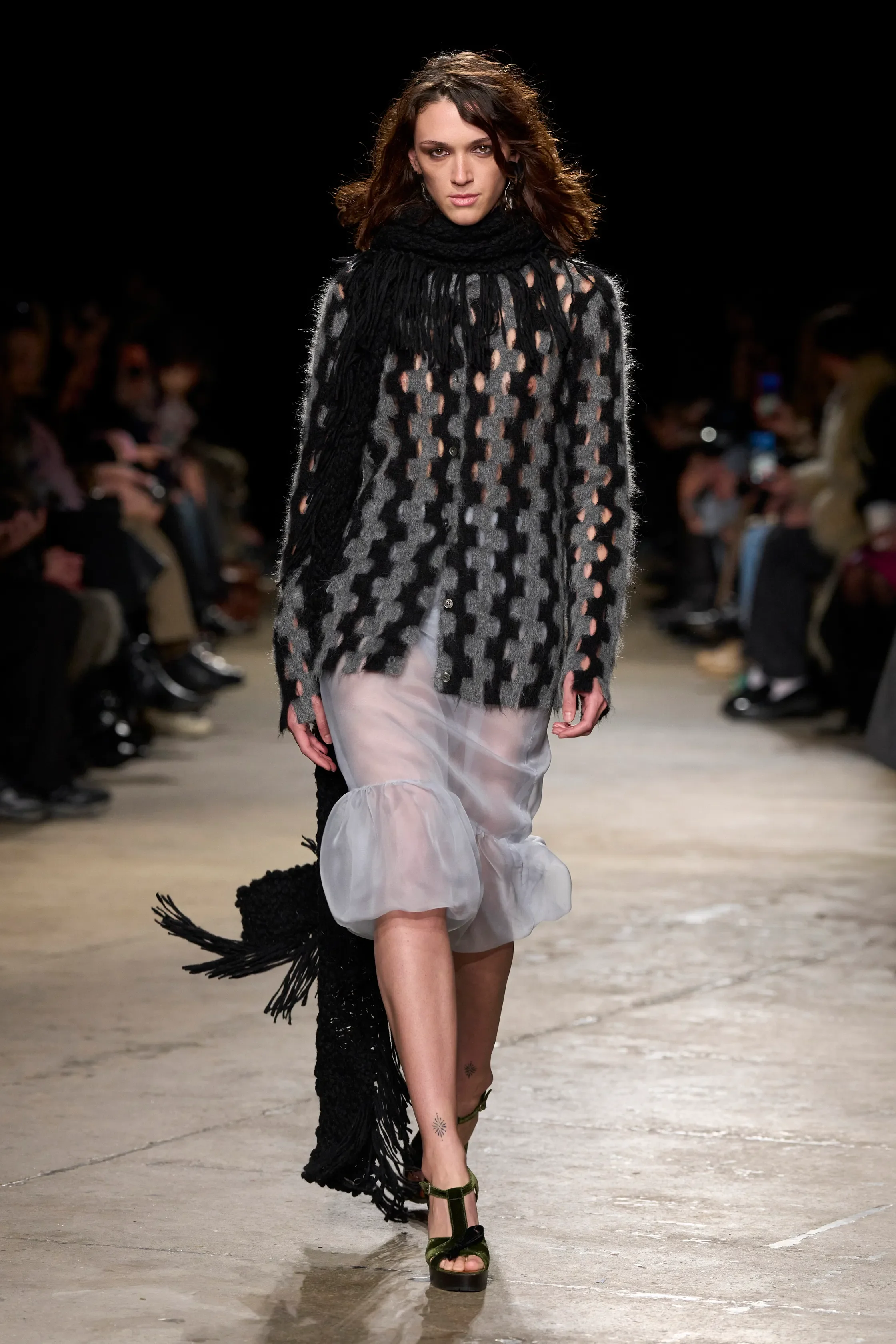
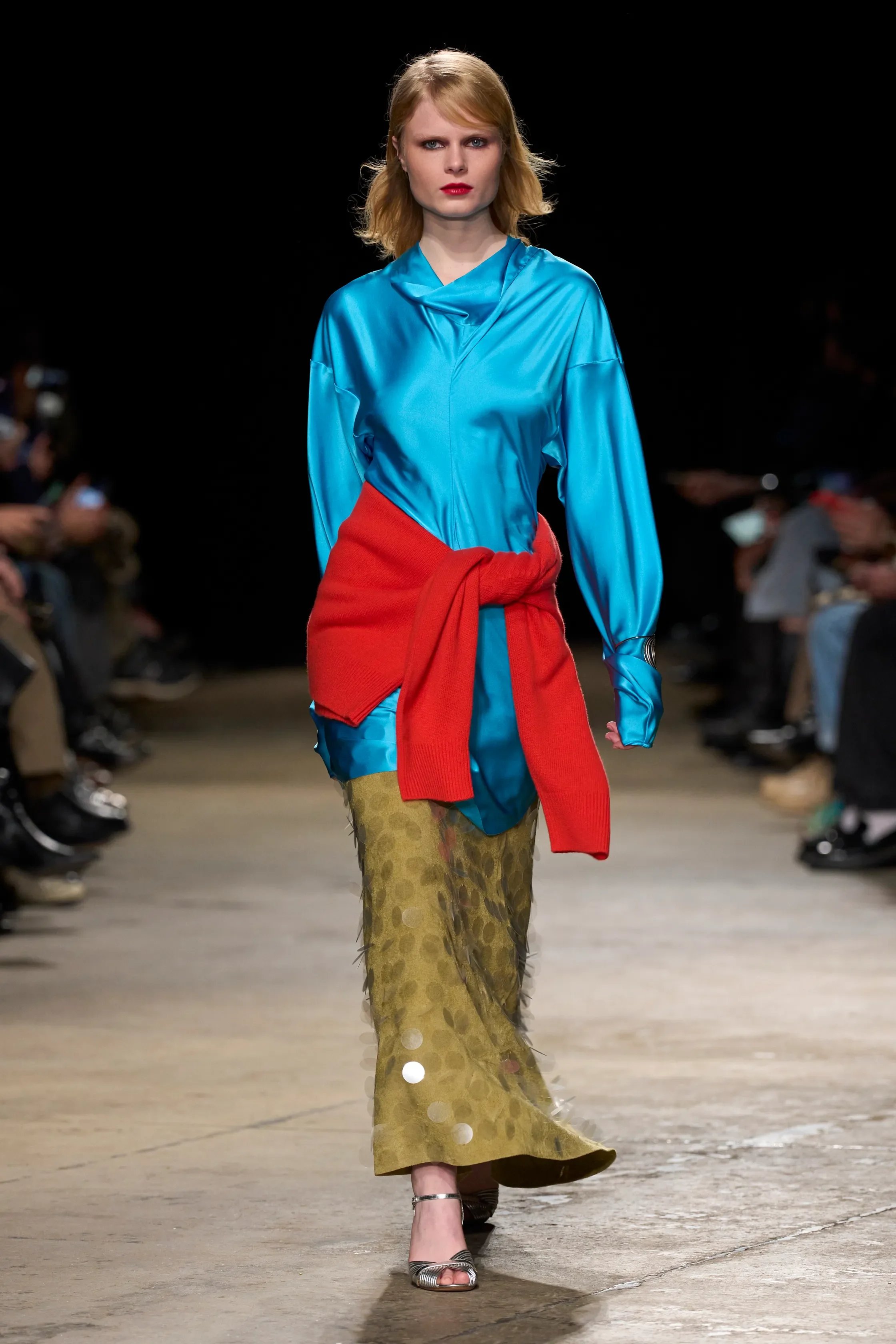
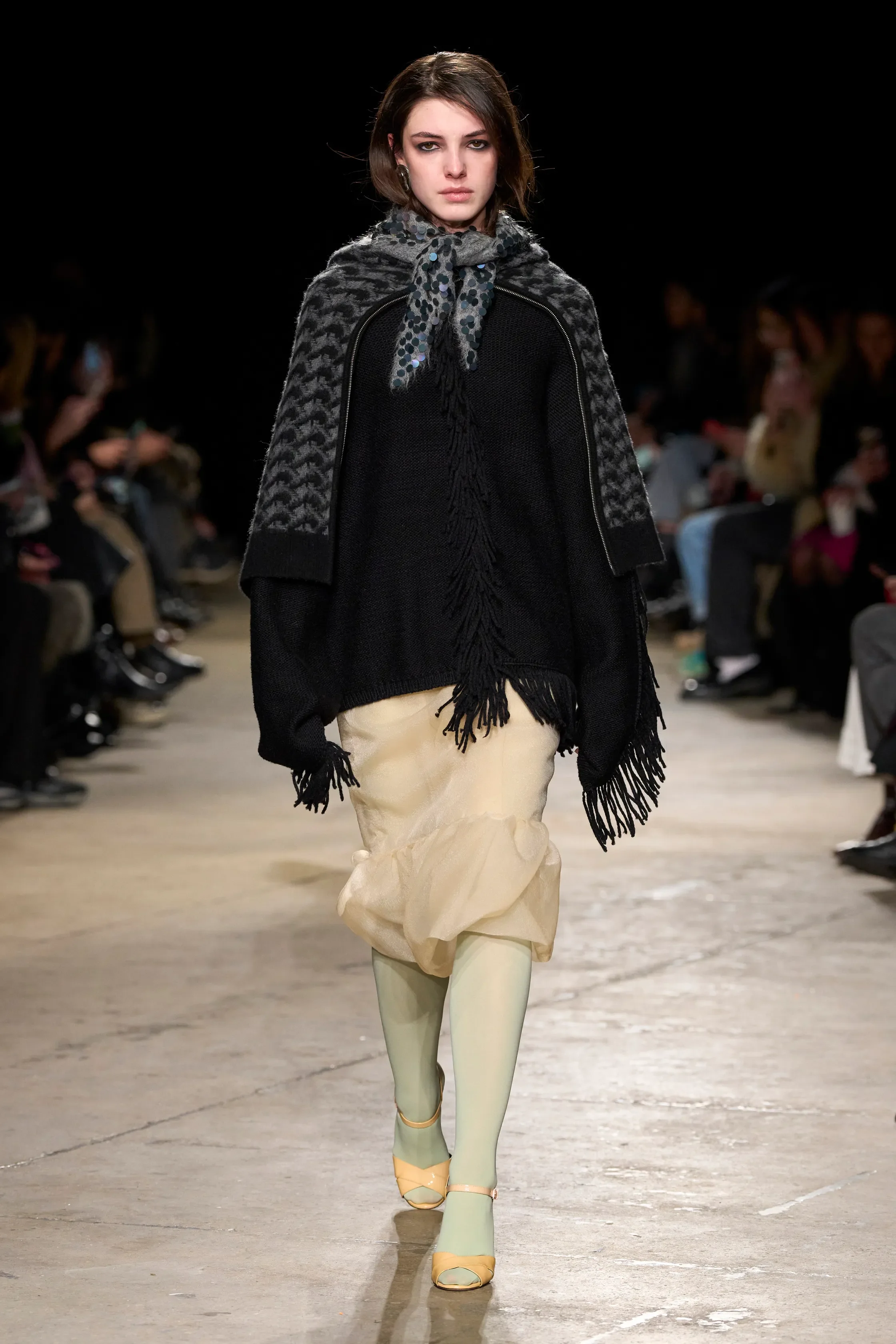
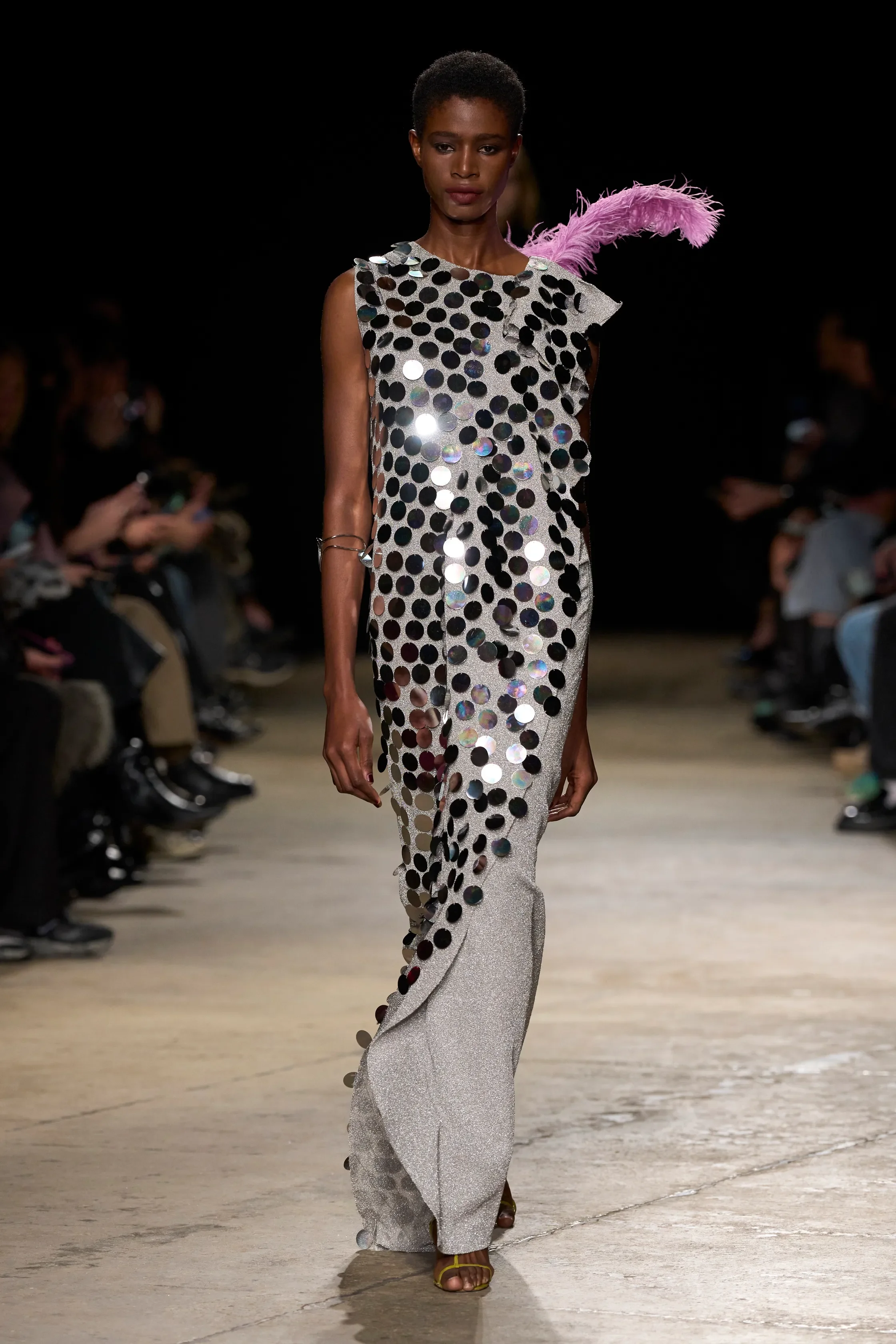
all images courtesy of ZANKOV
At Zankov, Henry Zankov seems increasingly comfortable embracing contradiction. “The more wrong it feels, the more interesting it becomes,” the designer noted backstage — a philosophy that guided a collection deliberately positioned between refinement and eccentricity.
Knitwear remains the backbone of the label, but this season Zankov pushed its boundaries. Familiar textures appeared alongside unexpected combinations: brushed alpaca sweaters paired with vivid accessories, striped shirts interrupted by draped velvet panels, and psychedelic ski motifs that injected bursts of playful energy into the lineup.
The color palette leaned darker than in previous seasons, moving through deep violets, blues, and autumnal tones that gave the clothes a slightly vampish edge. Accessories by Presley Oldham — tubular forms and fringed beads — reinforced the collection’s sculptural undertones.
Perhaps the most revealing moment came early on: an organza skirt worn inside out, exposing its construction. It was a subtle gesture toward vulnerability, echoing Zankov’s idea of a woman unafraid to reveal her imperfections. The result was a collection that felt more adventurous than before — proof that Zankov’s confidence as a designer continues to grow.
ASHLYN
review by MAREK BARTEK
all images courtesy of ASHLYN
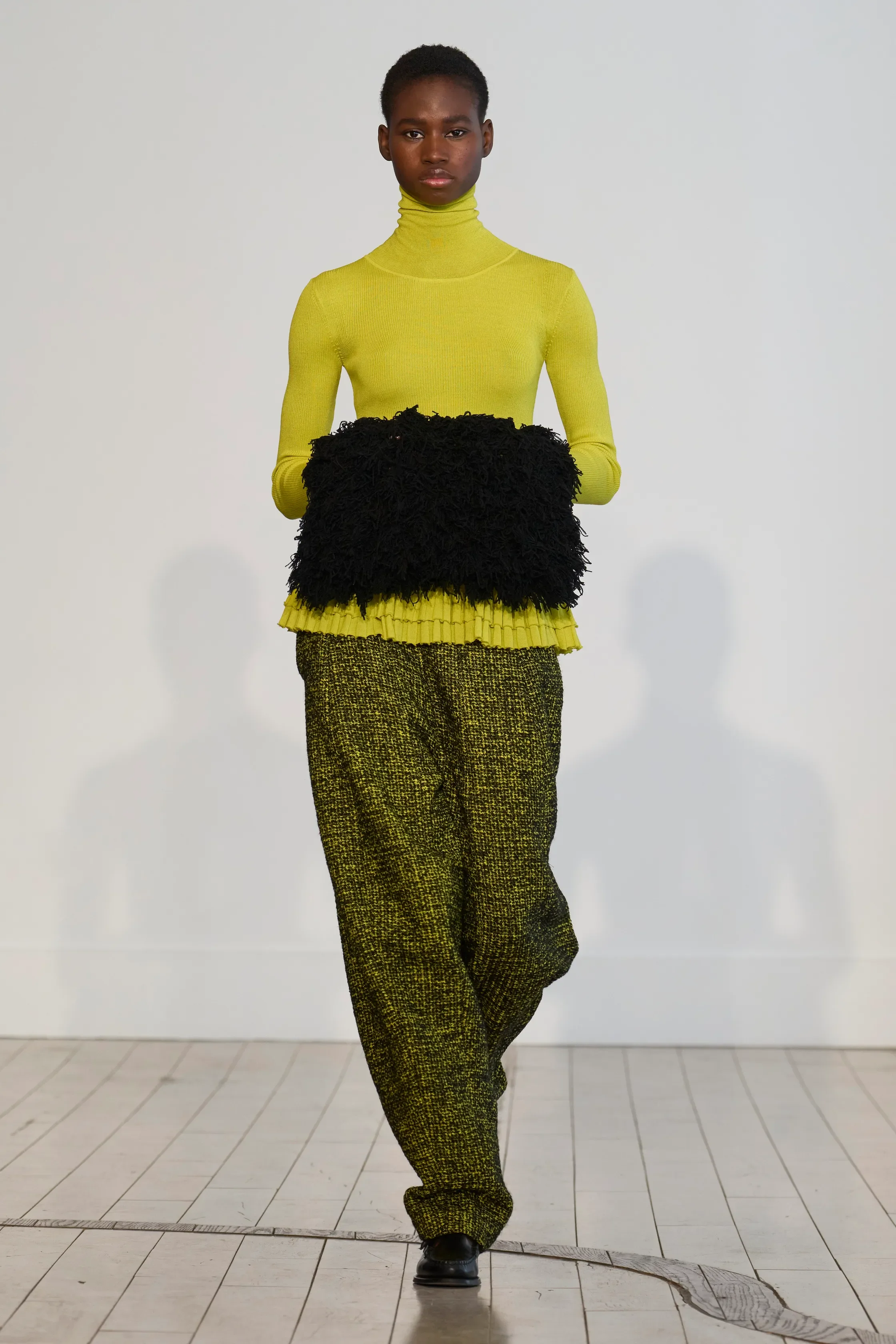
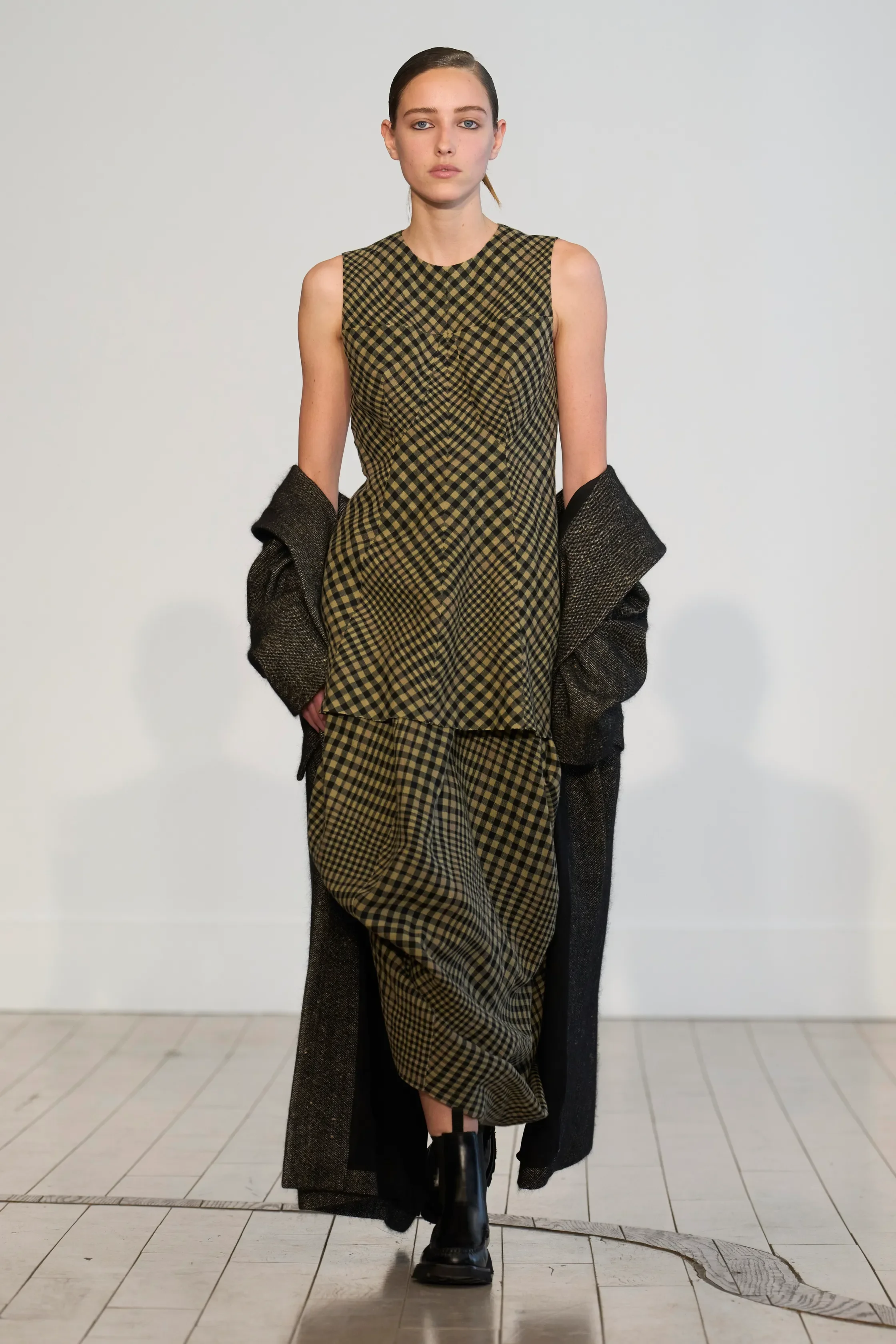
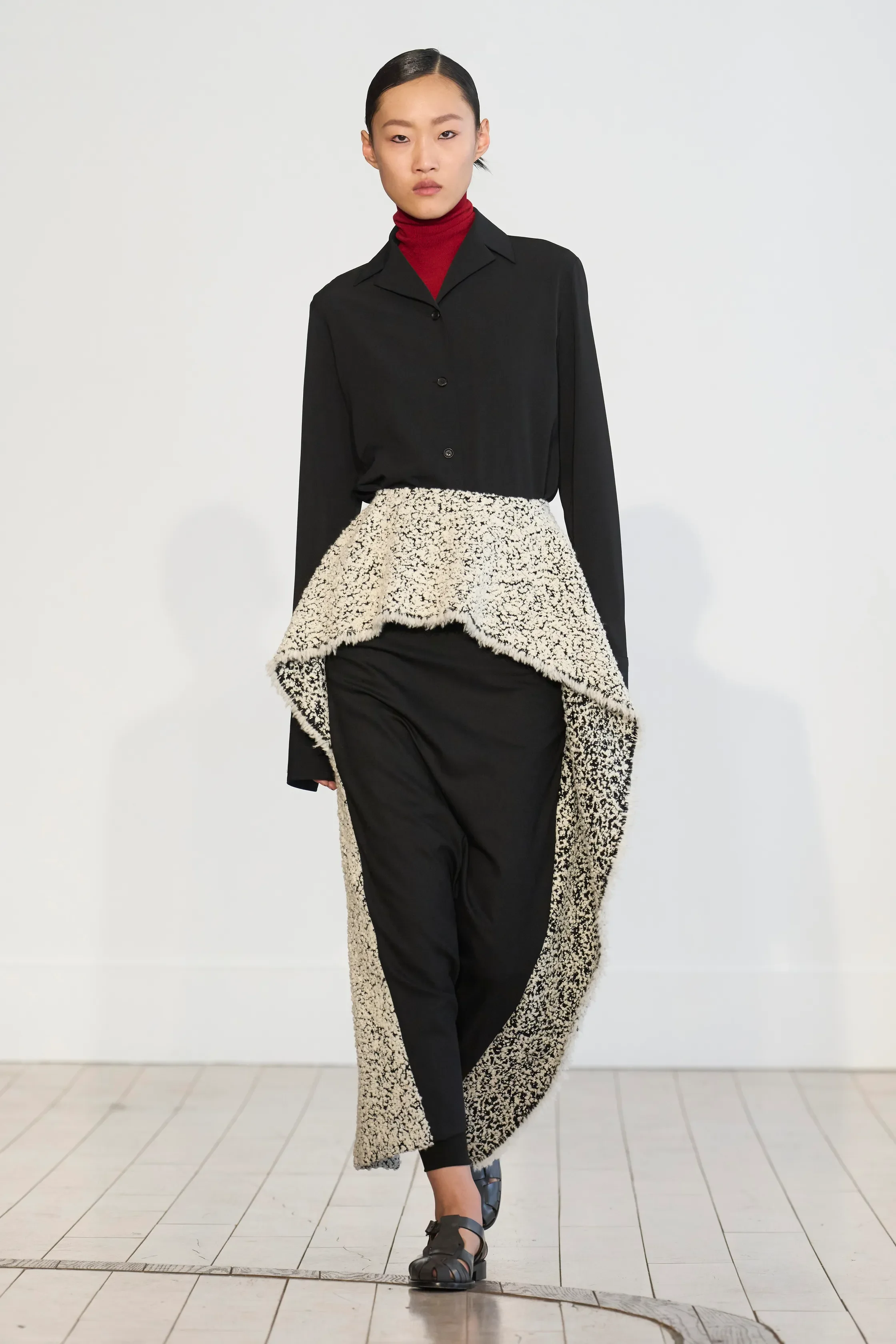
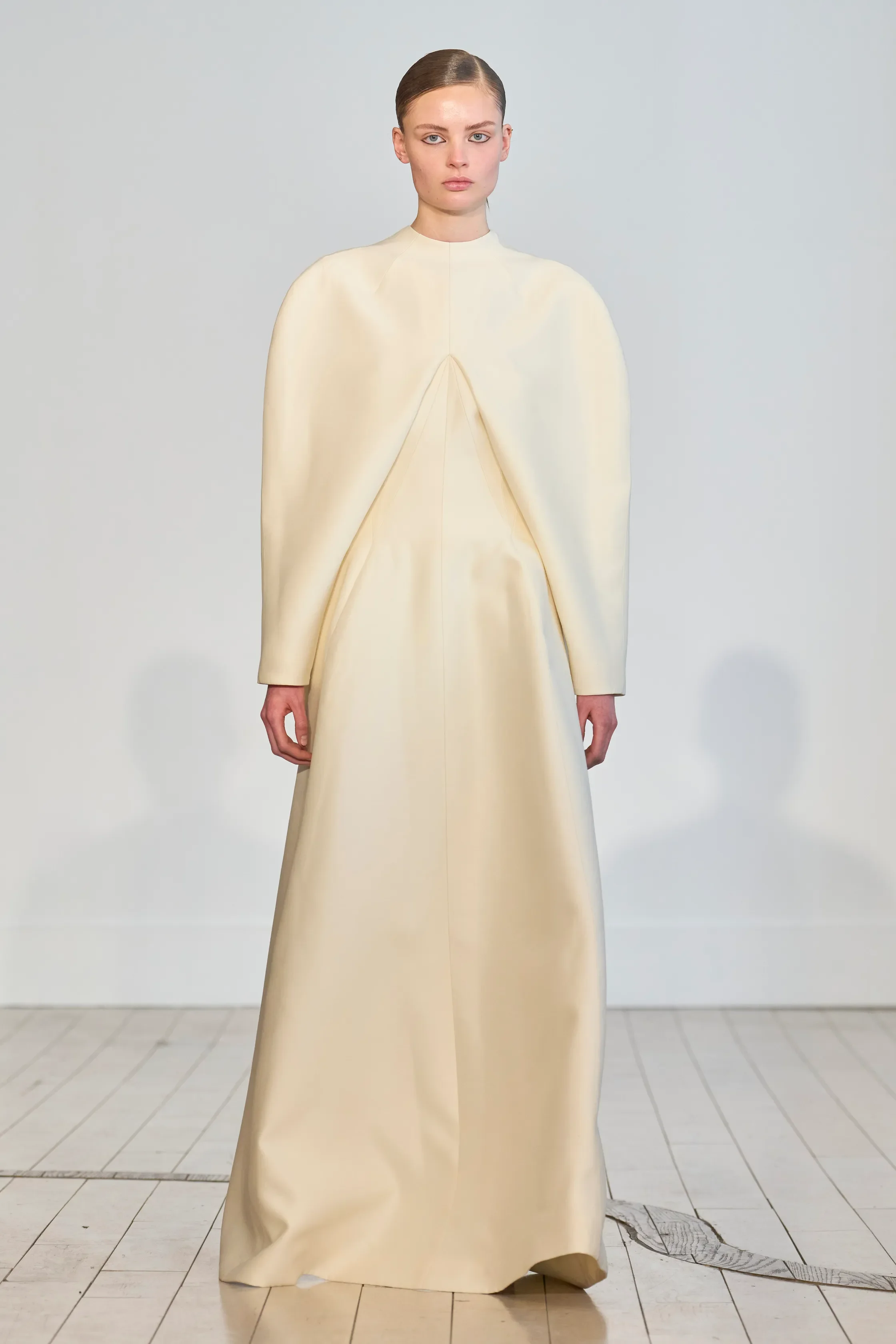
Following a milestone year — winning the CFDA/Vogue Fashion Fund and being named Emerging Designer of the Year — Ashlynn Park reportedly retreated from the noise to refocus on her practice. That sense of introspection shaped a collection rooted in the idea of the vernacular: clothing as something shared, familiar, and grounded in everyday life.
The opening looks signalled a subtle shift. Acidic citron punctuated monochrome ensembles, while gathered jerseys draped fluidly over trousers. Tailoring remained central, particularly a sculptural double-cashmere jacket whose basque back curved around the body like a calla lily.
Park’s signature tension between masculine and feminine lines felt especially assured this season. Slouchy trousers, wrapped shearling jackets, and reworked shirting played against soft, body-conscious draping. What made the collection compelling was its texture — bouclé, fringe, and taffeta layered with careful precision.Park may describe clothing as “a common object,” but in her hands, the ordinary becomes extraordinary.
CHRISTIAN SIRIANO
review by MAREK BARTEK
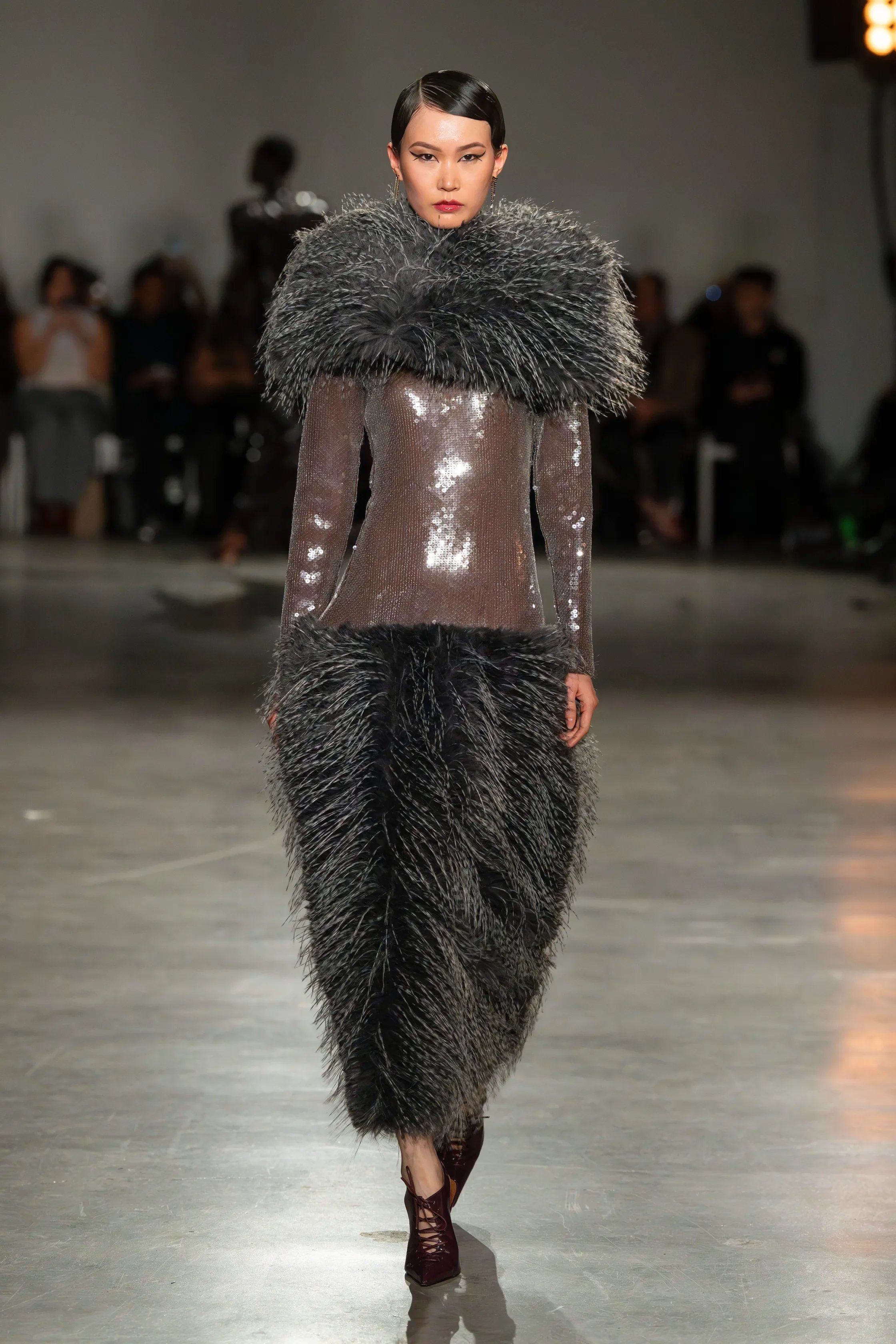
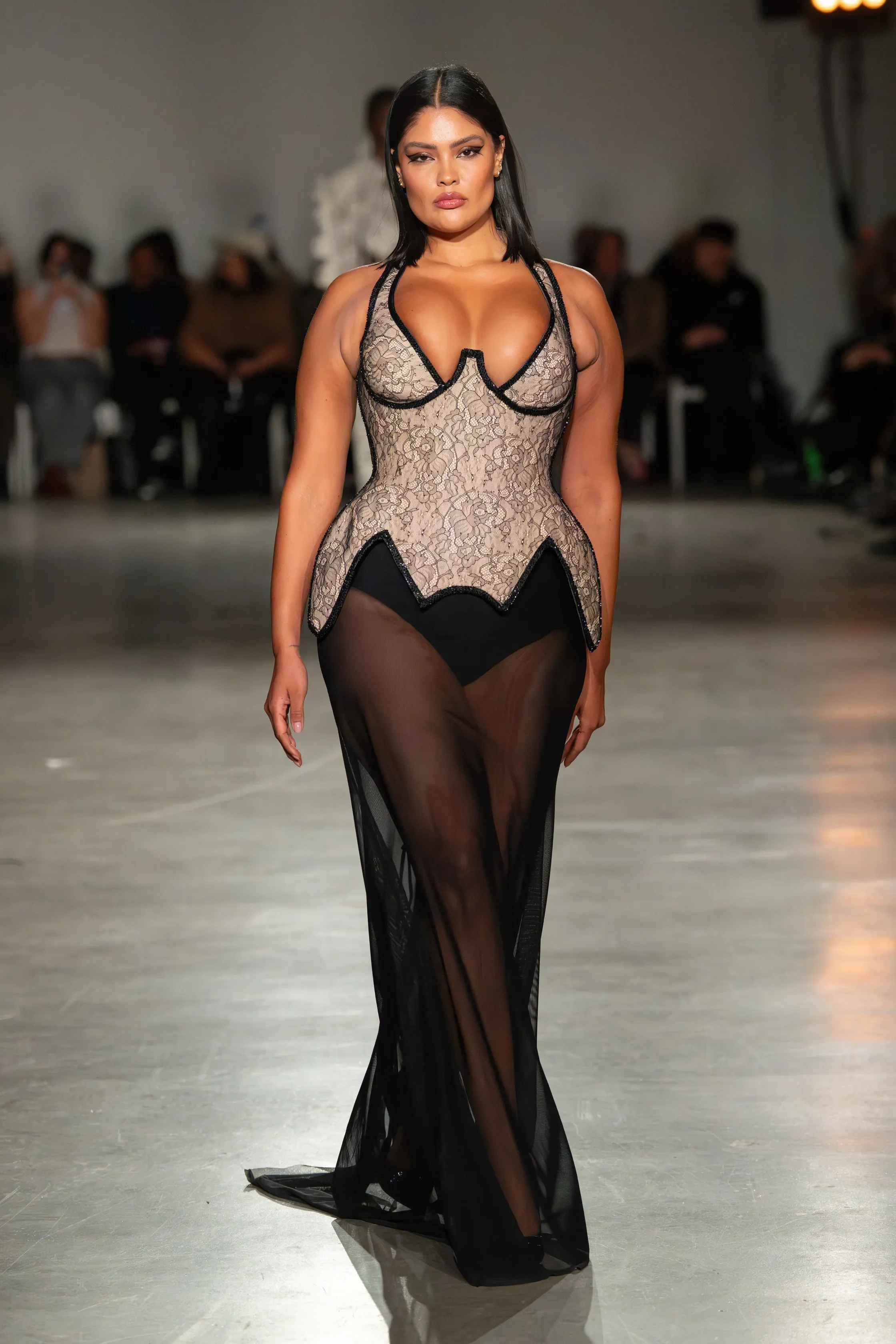
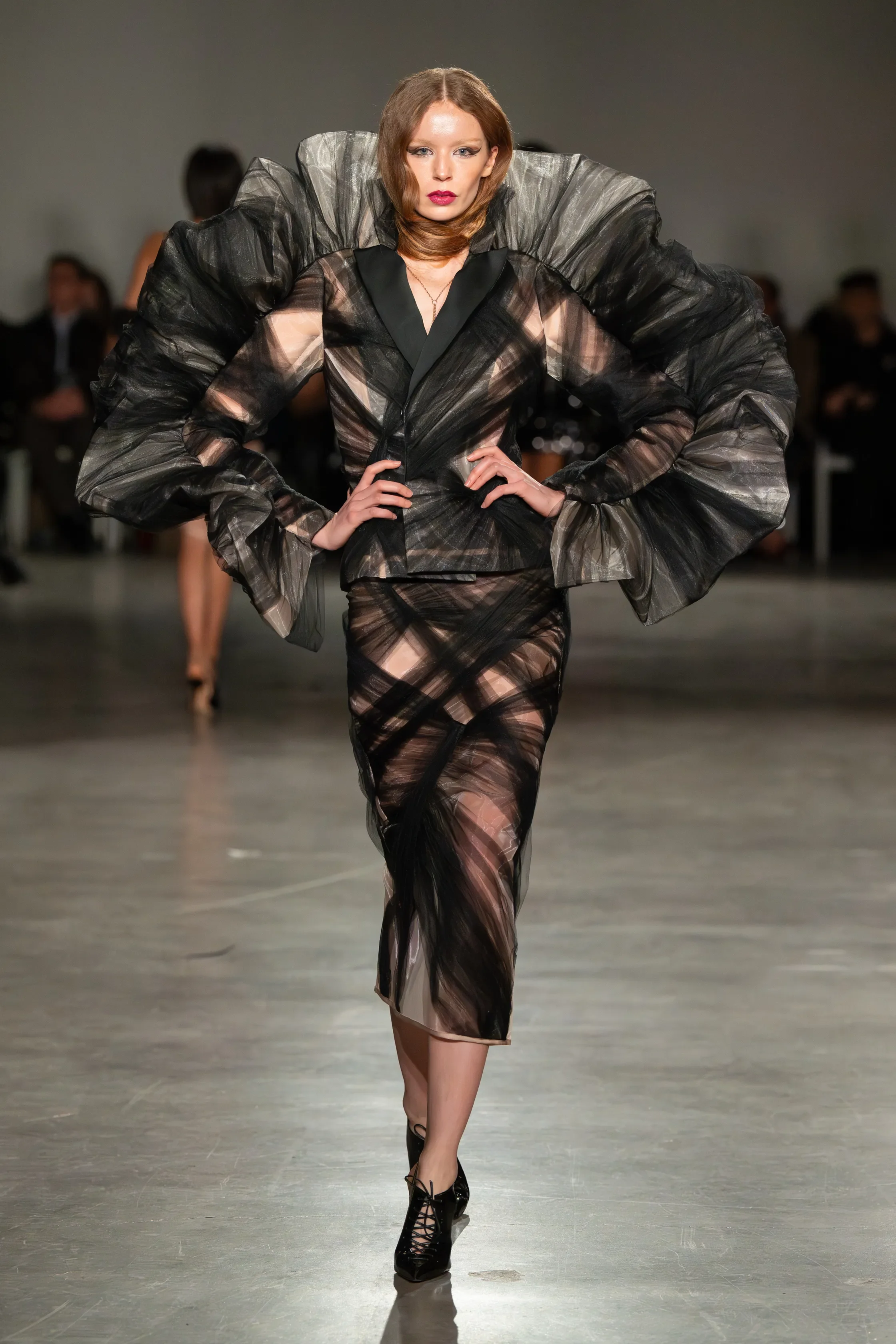
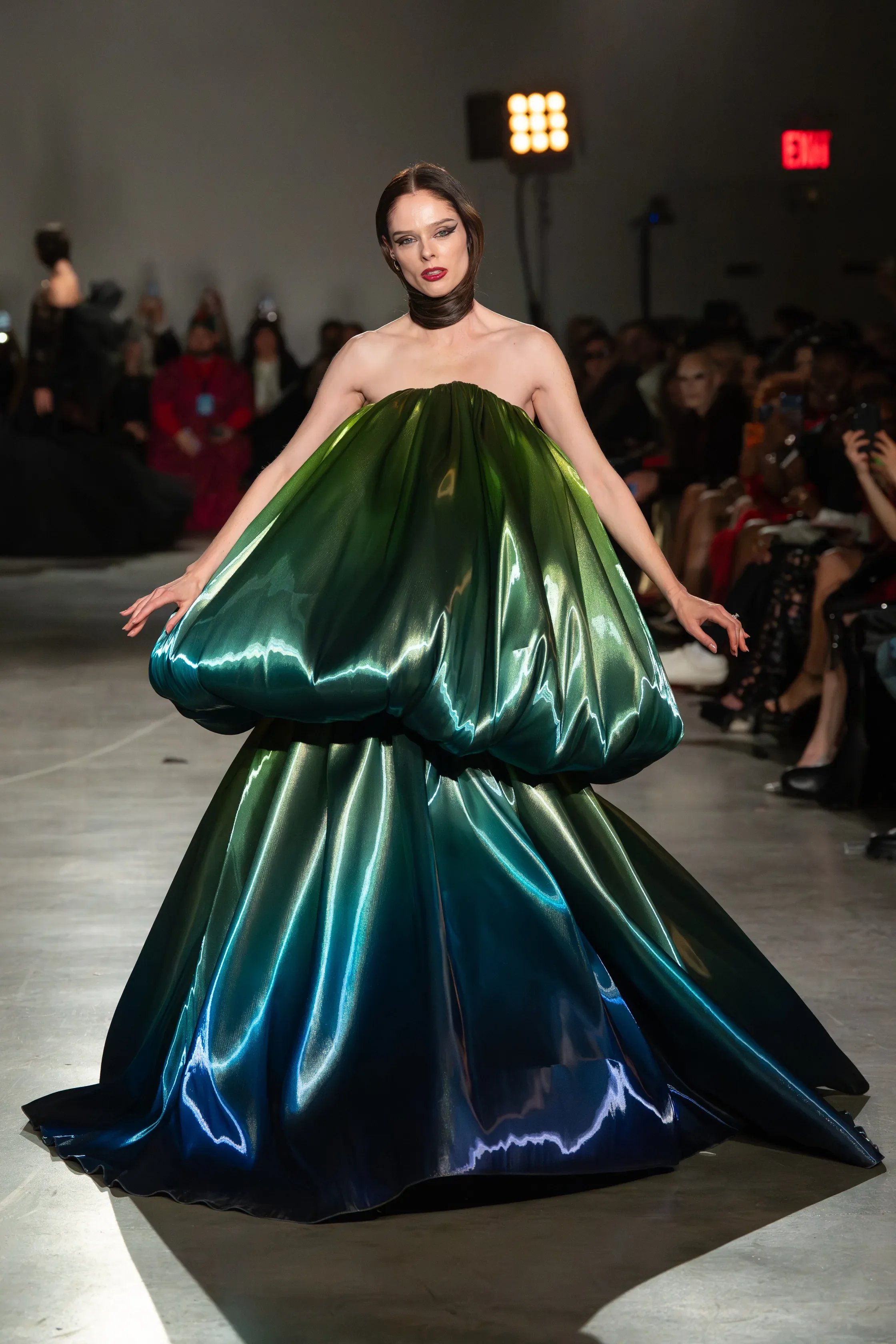
all images courtesy of CHRISTIAN SIRIANO
At Christian Siriano, theatricality has never been optional — it’s the whole point. For Fall 2026, the designer leaned even further into fantasy, presenting a collection that embraced the strange and the spectacular. “This season, I liked things that were a bit strange, and using fabrics how you wouldn’t normally use them,” Siriano explained backstage.
The opening looks hinted at that approach immediately. Evening satin was reworked into a sharply corseted moto jacket, while a spliced tuxedo jacket appeared with only one sleeve, paired with a feather-trimmed skirt. Material experimentation ran throughout the lineup: a plush “fur” coat revealed itself to be made entirely of feathers, and gathered lace formed sculptural boleros.
Siriano’s love for drama was most evident in the eveningwear. Voluminous organza gowns and sequinned bodices delivered the kind of unapologetic glamour that has become his signature — even if, at times, the excess bordered on overwhelming.
Yet what continues to set Siriano apart in New York is his commitment to casting a wide range of body types, giving every model a moment to shine. In a landscape still lagging behind on inclusivity, that remains one of his most powerful statements.
MICHAEL KORS
review by MAREK BARTEK
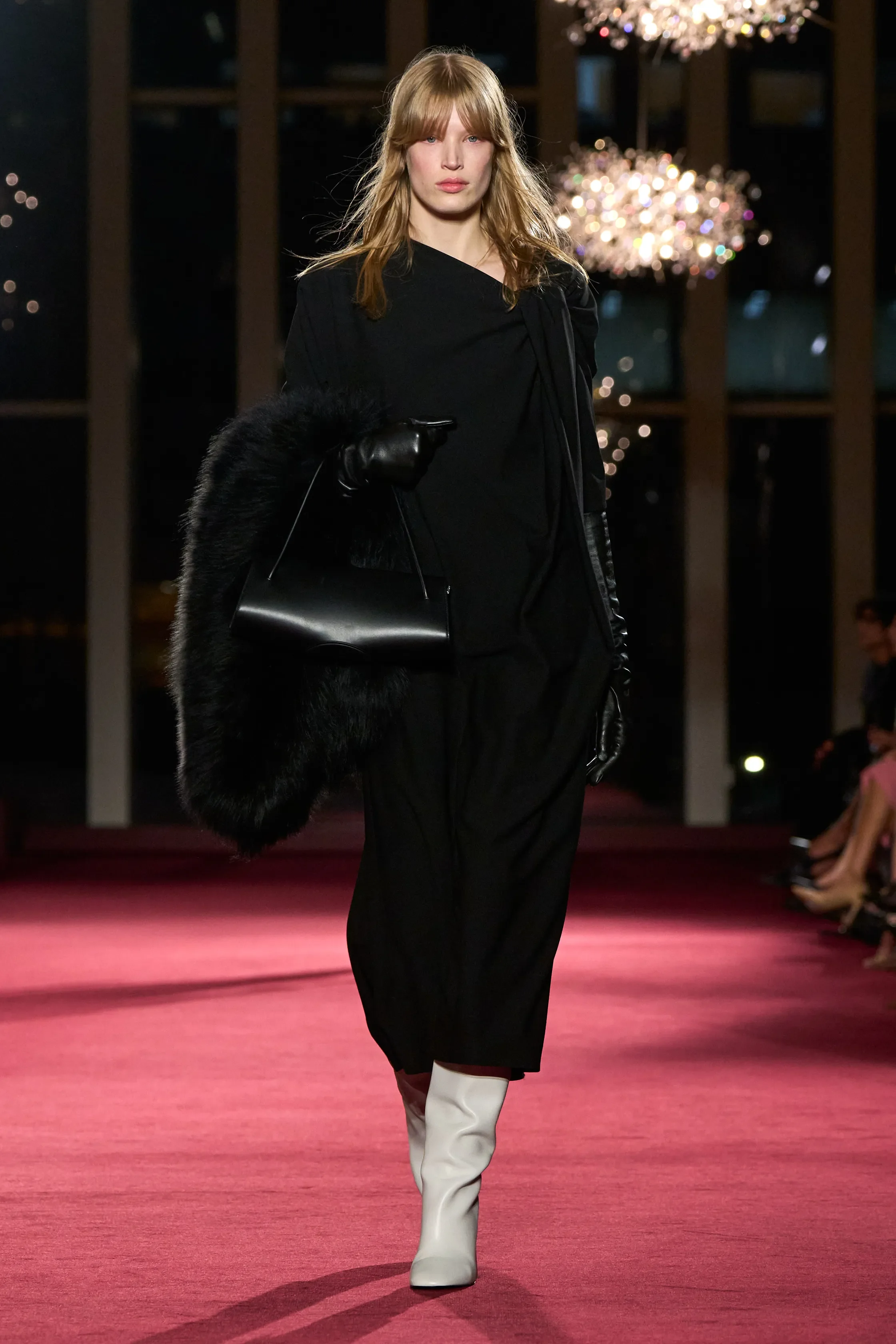
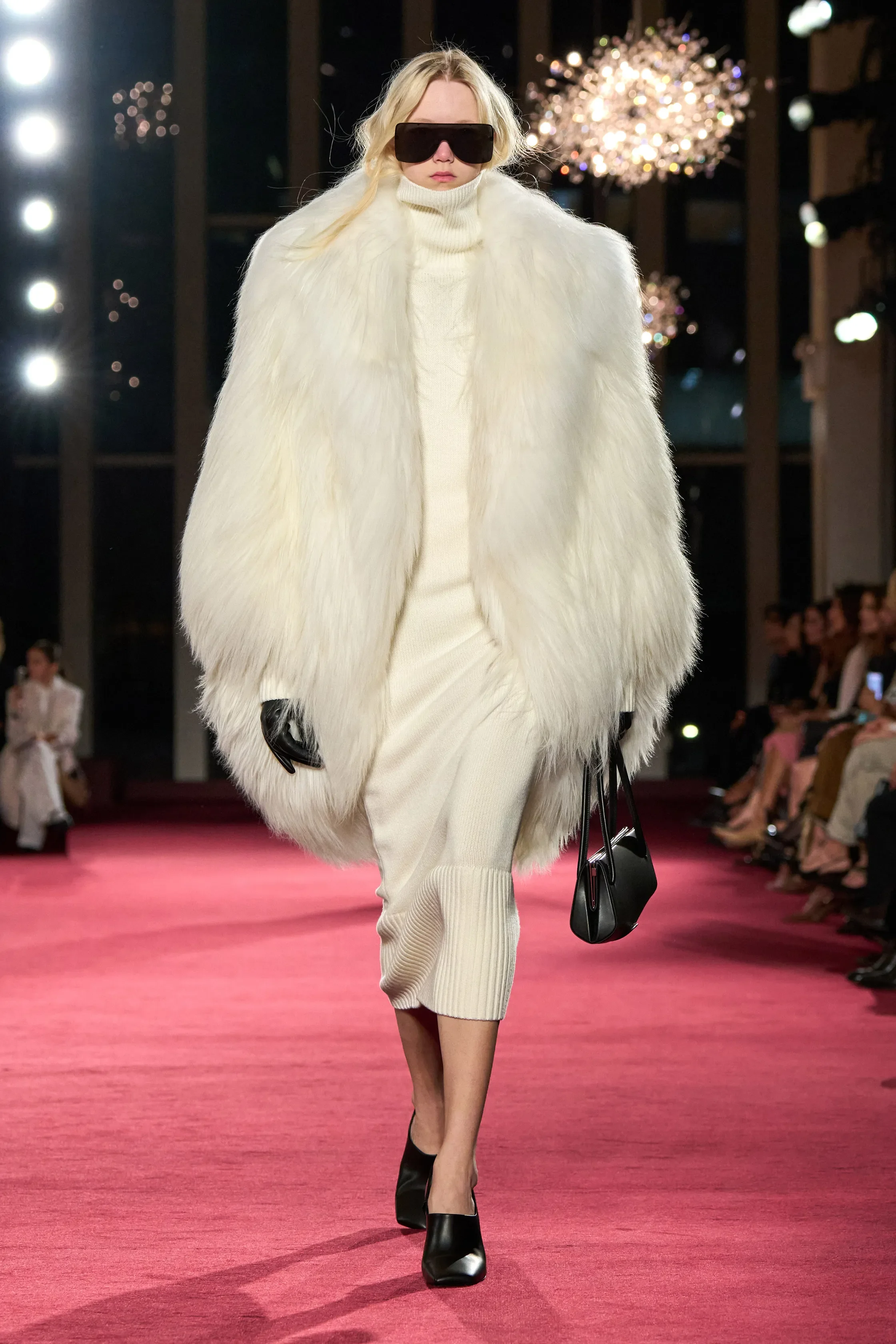
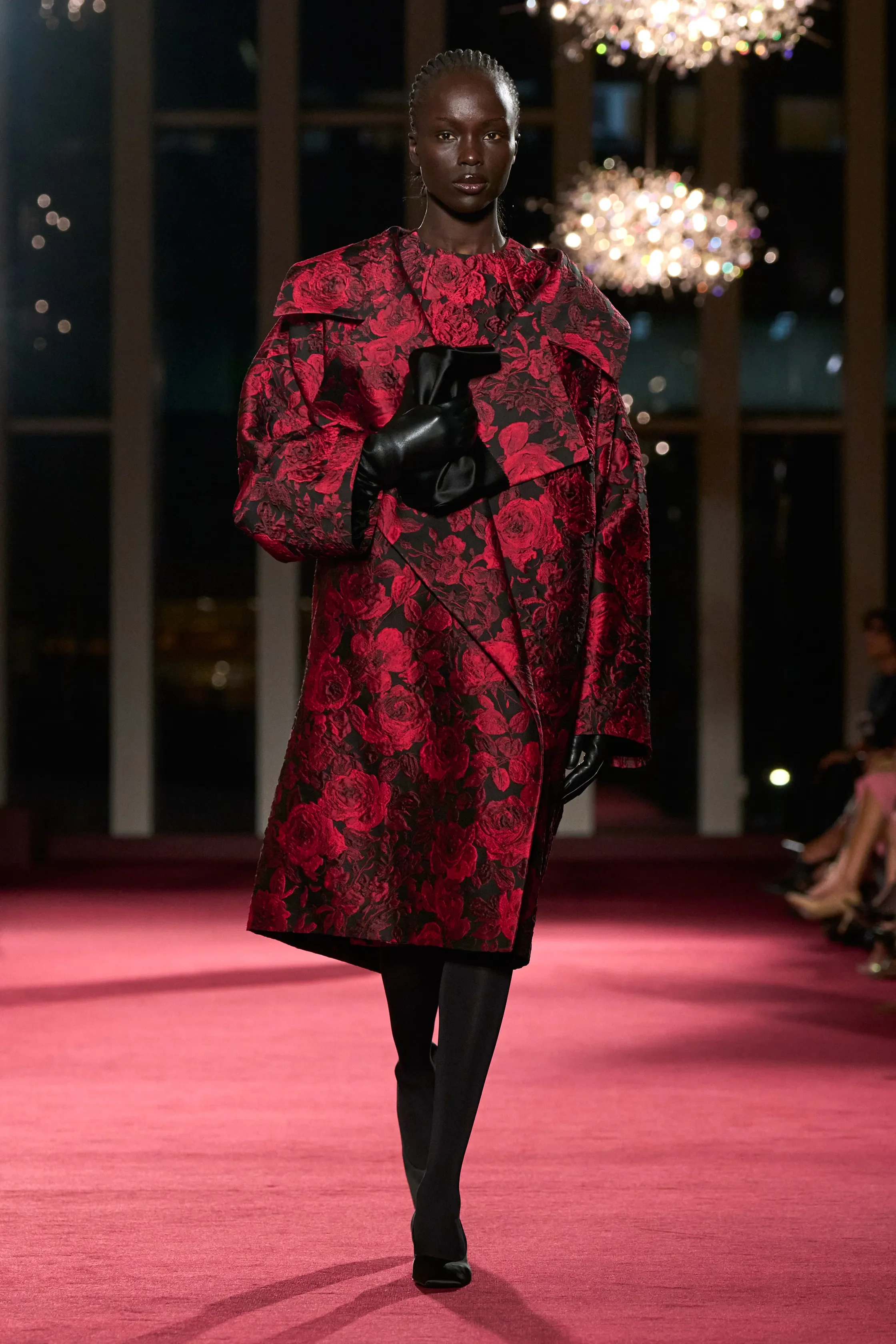
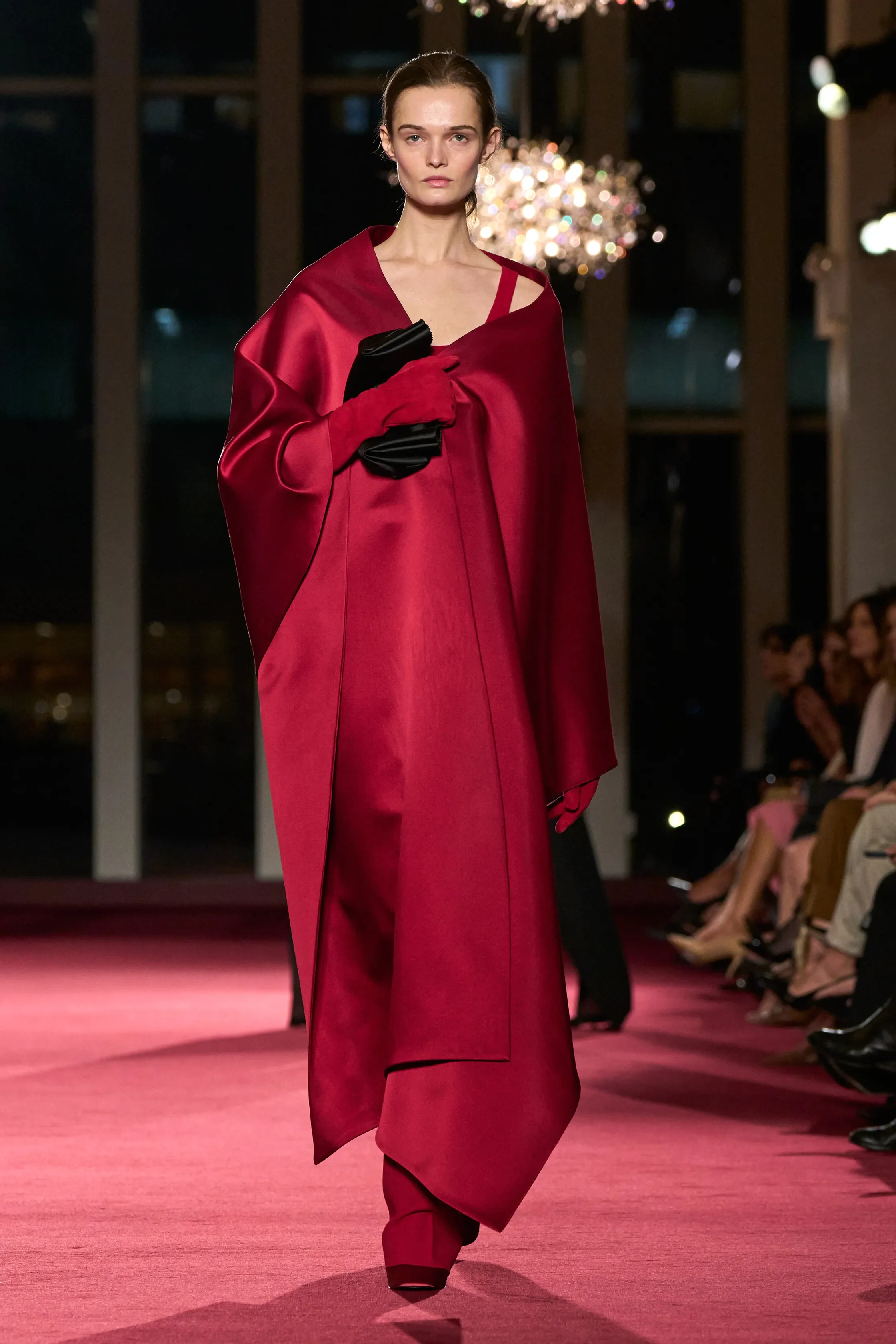
all images MICHAEL KORS
At Michael Kors, longevity has always been part of the narrative. Celebrating 45 years in fashion, the designer returned to one of his most reliable themes: the polished, pragmatic glamour of New York. “New York is about resilience, strength, grit, and curiosity,” Kors said ahead of the show, a sentiment reflected in a collection that balanced familiar signatures with subtle twists.
Tailoring remained central, though softened for movement. Jackets and trousers carried a more fluid attitude, while unexpected details — trailing bias-cut panels or skirts disguised as trousers — introduced subtle drama. Kors’s hallmark high-low approach appeared throughout the lineup: feathers and paillettes surfaced not only on evening pieces, but on shirts, pleated trousers, and everyday staples.
The designer also revisited the wardrobe constants that have defined his career. “Black turtlenecks, camel coats, and white shirts,” he noted, listing the pieces that have anchored his collections for decades. After 45 years, Kors’s formula remains largely unchanged — but perhaps that consistency is exactly the point.
ELENA VELEZ
review by MAREK BARTEK
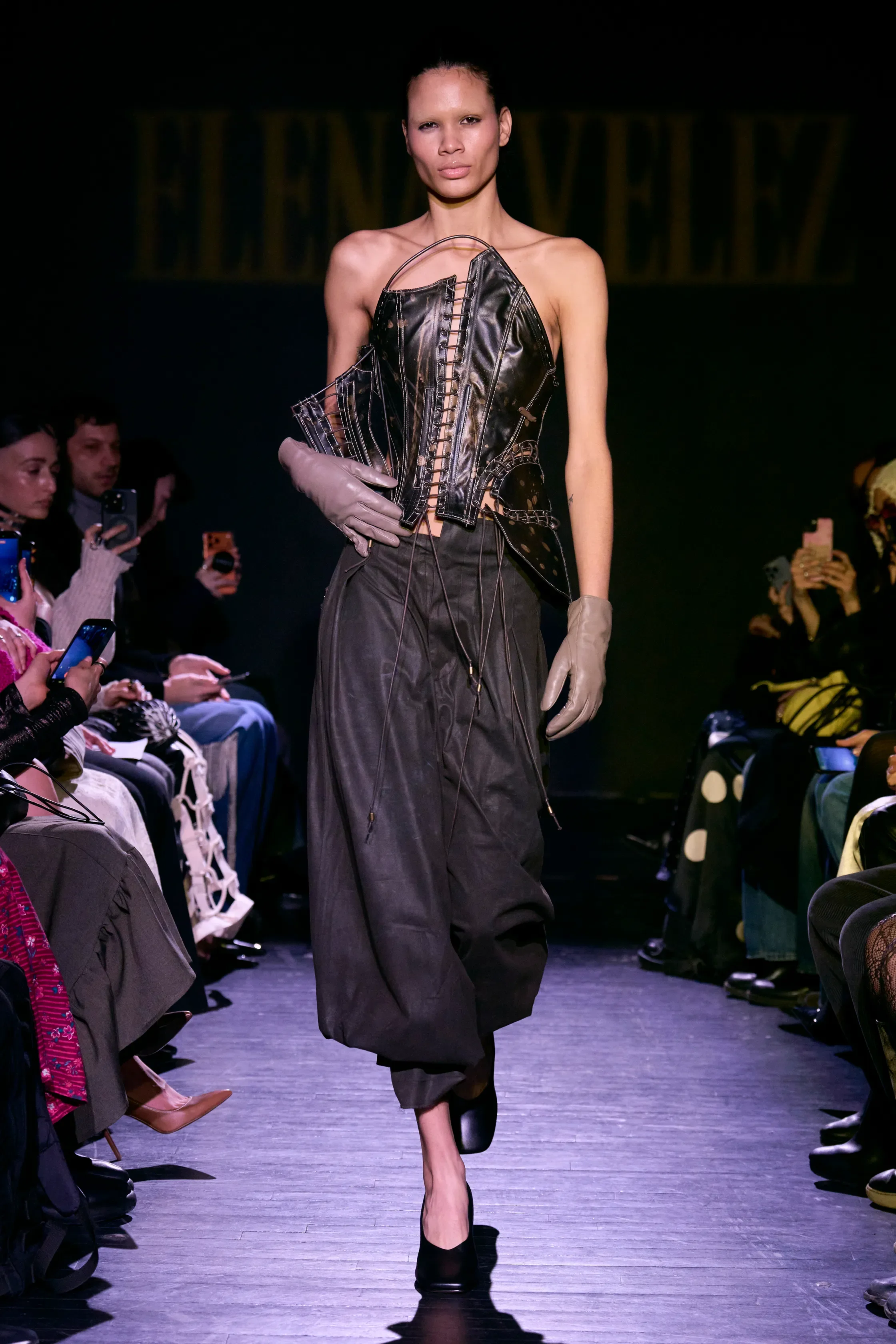
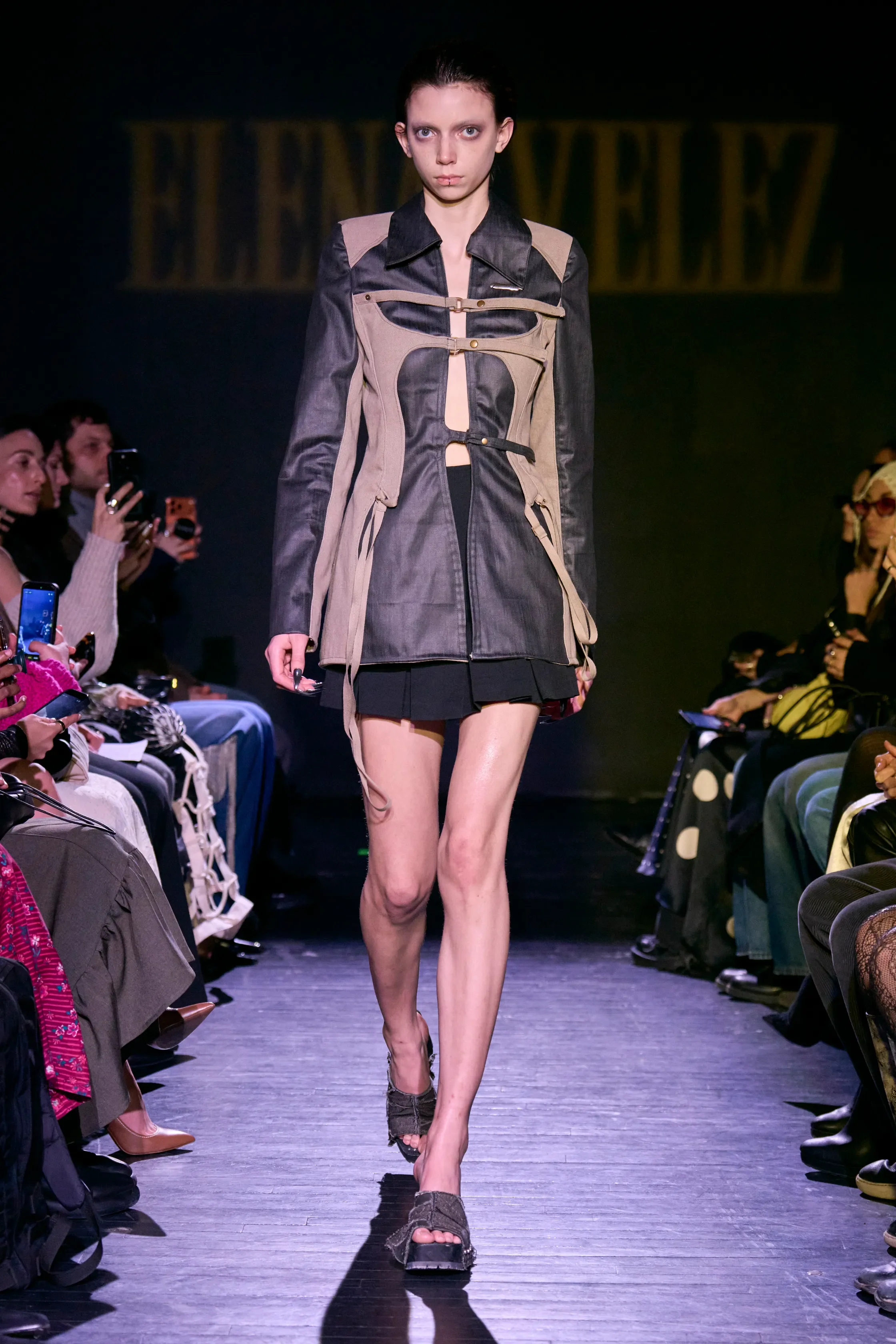
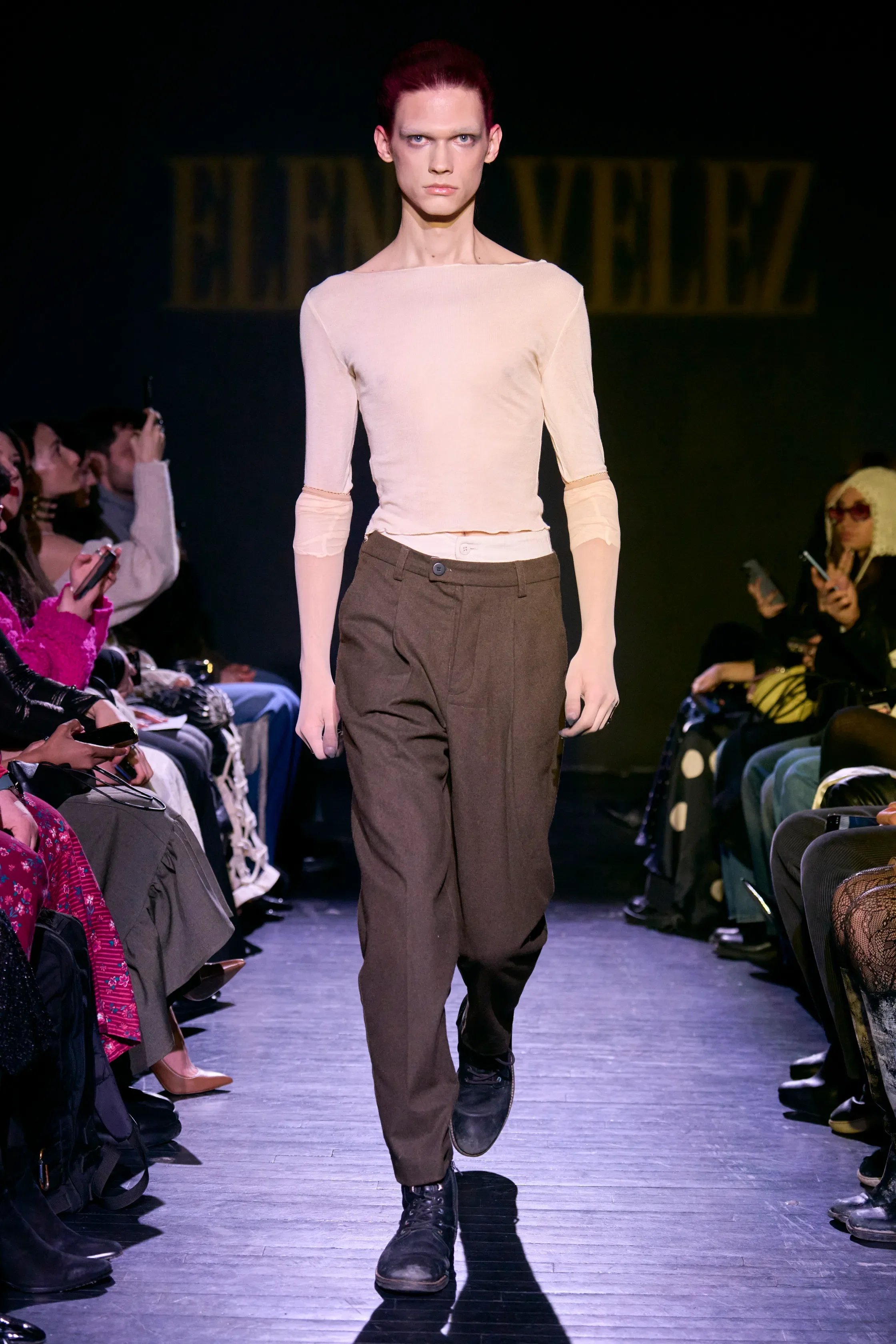
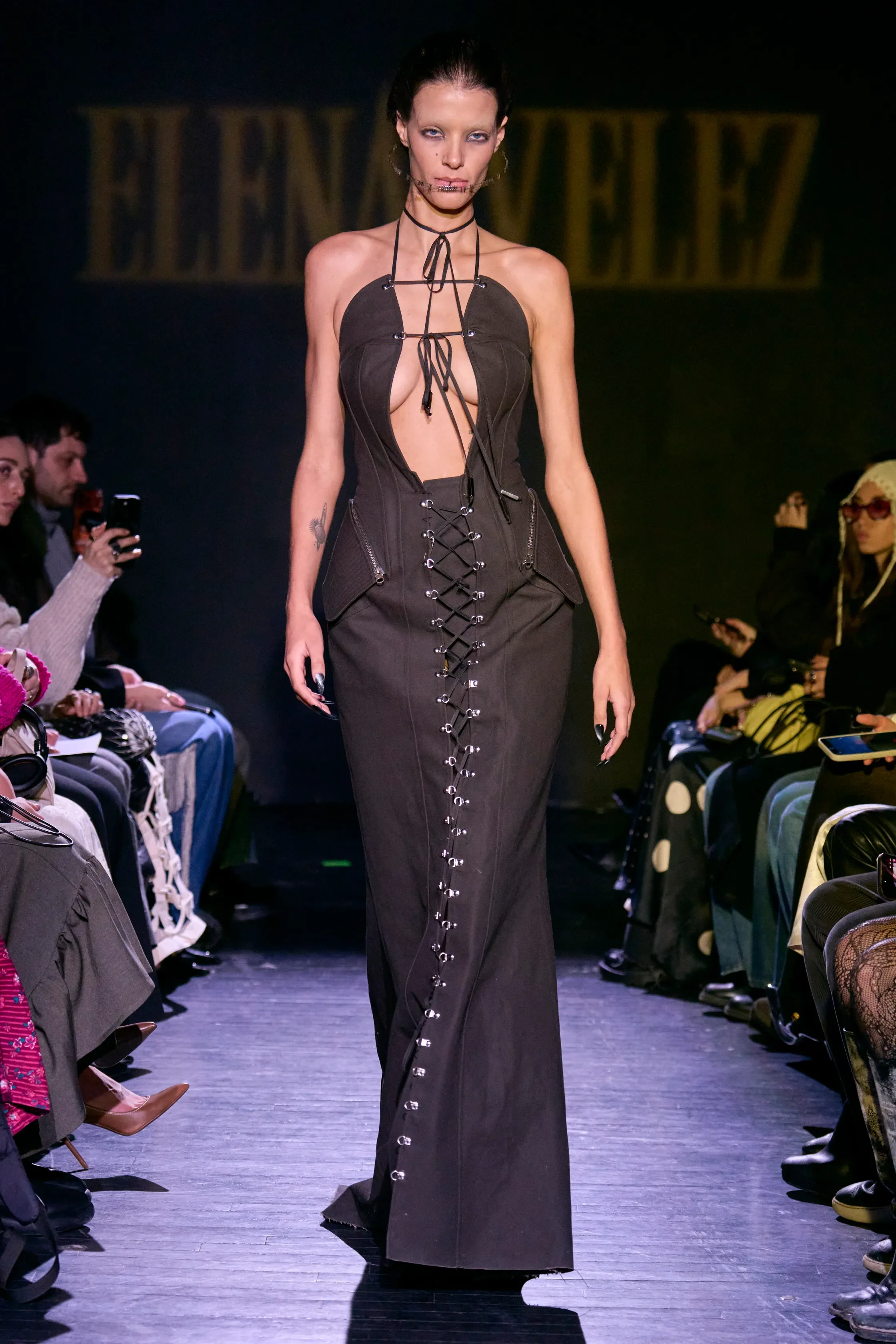
all images courtesy of ELENA VELEZ
At Elena Velez, the clothes have rarely existed without a larger narrative. Once celebrated as one of New York’s most promising voices, the Milwaukee-born designer built her reputation on a striking tension between industrial severity and romantic fragility. That binary remains central to her work, though in recent seasons the conversation surrounding the brand has often overshadowed the garments themselves.
For Fall 2026, Velez drew inspiration from the online phenomenon of “looksmaxxing,” exploring the contemporary obsession with self-optimization and manufactured beauty. Corsetry once again formed the structural backbone of the collection, appearing in rigid metal-framed pieces paired with cropped trousers or layered beneath distressed knits and pleated skirts.
The designer’s familiar language of structure versus decay persisted in frayed edges, distressed surfaces, and sculptural silhouettes. Yet the collection also revisited motifs that have long populated Velez’s universe — corsets, dramatic shapes, and dystopian textures.
Velez remains a polarising presence on the New York schedule. Whether viewed as provocation or performance, her work continues to raise the same question: where does fashion end and spectacle begin?