
PARIS FASHION WEEK FALL/WINTER 2026: DAY 5
MUGLER
review by MAREK BARTEK
all images courtesy of MUGLER
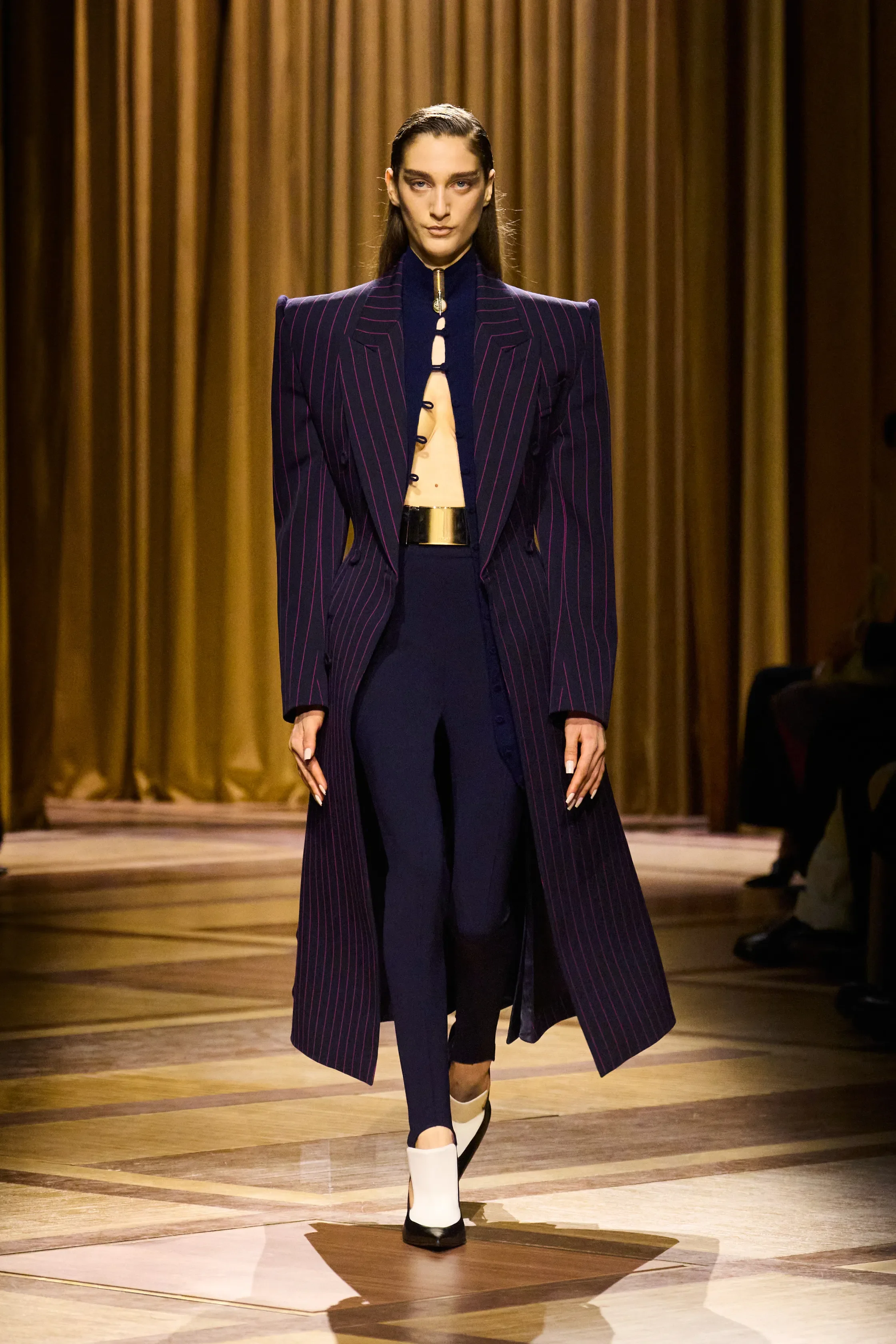
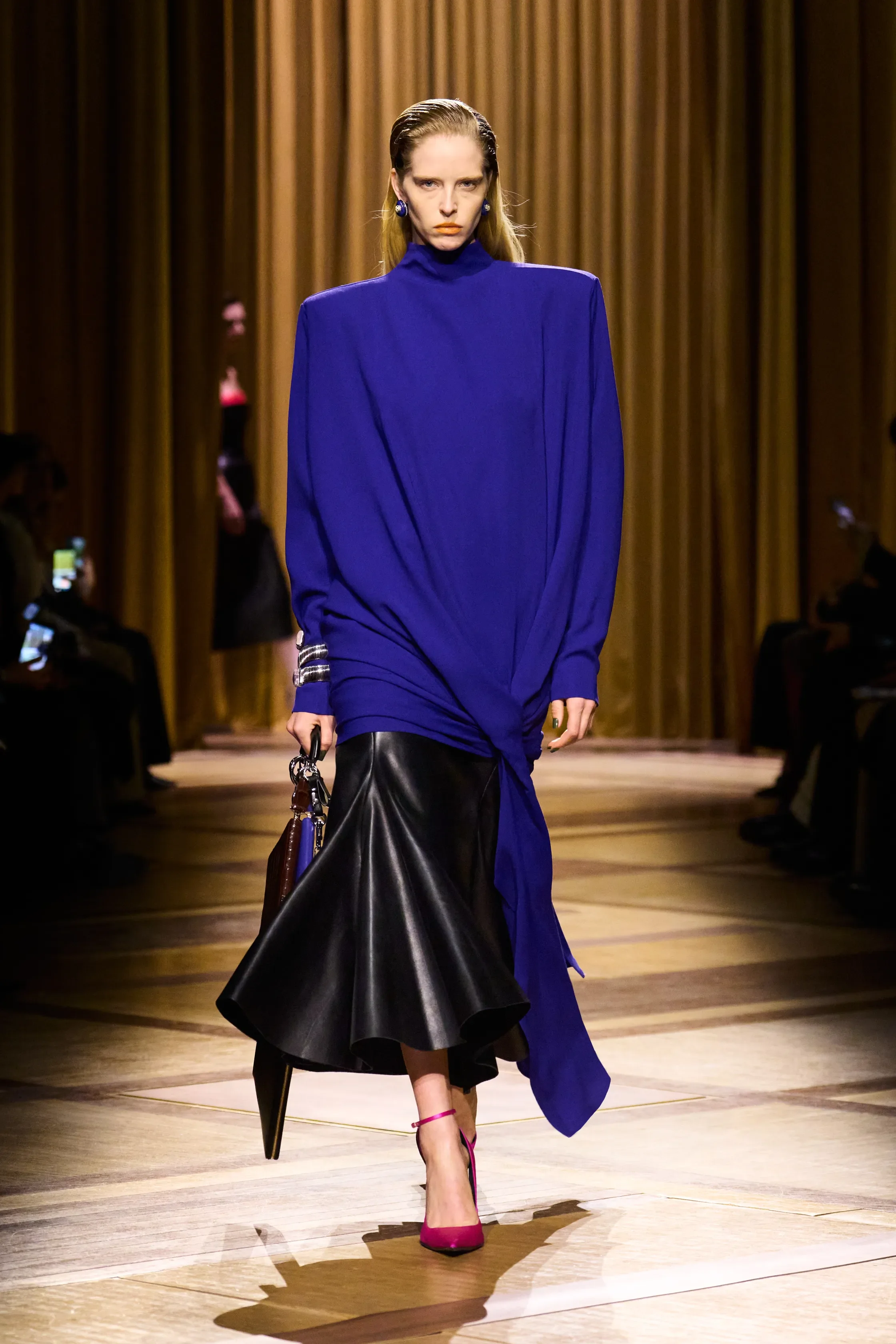
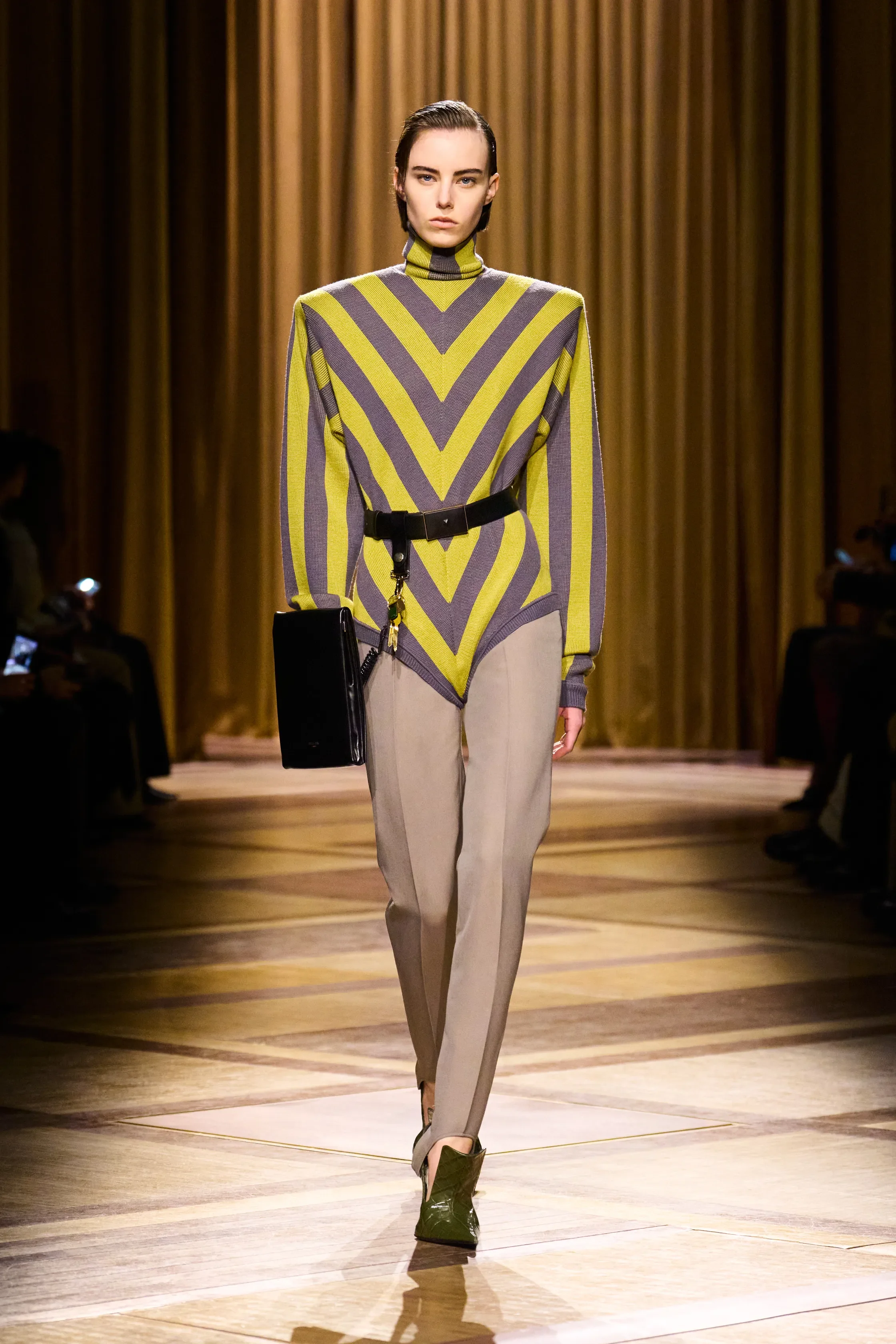
Tell me a better way to spend your Friday morning than attending the Mugler show, I’ll wait. For his second collection of the emblematic French house, Portuguese designer Miguel Castro Freitas dived into the joyous side of brand’s archives.
Purple — the colour inseparable from the Maison — ran through the entire collection, shifting from dark violet to warmer plum tones and punctuating a lineup built on Mugler’s signature obsession: the body. Silhouettes were snatched, shoulders sharp and architectural, and waists cinched tight with belts amplifying the long, sculptural line of the leg. Tailoring was showcased through an array of military-inspired jackets, lean pencil skirts, and elongated coats that felt both commanding.
A recurring chevron stripe pattern sliced across knit bodysuits and blouses, visually pulling the eye toward the waist and reinforcing that hourglass figure. Elsewhere, pleated skirts and draped jersey pieces introduced movement, while flashes of metallic leather and glossy fabrics injected the lineup with a futuristic edge that Mugler has always worn well.
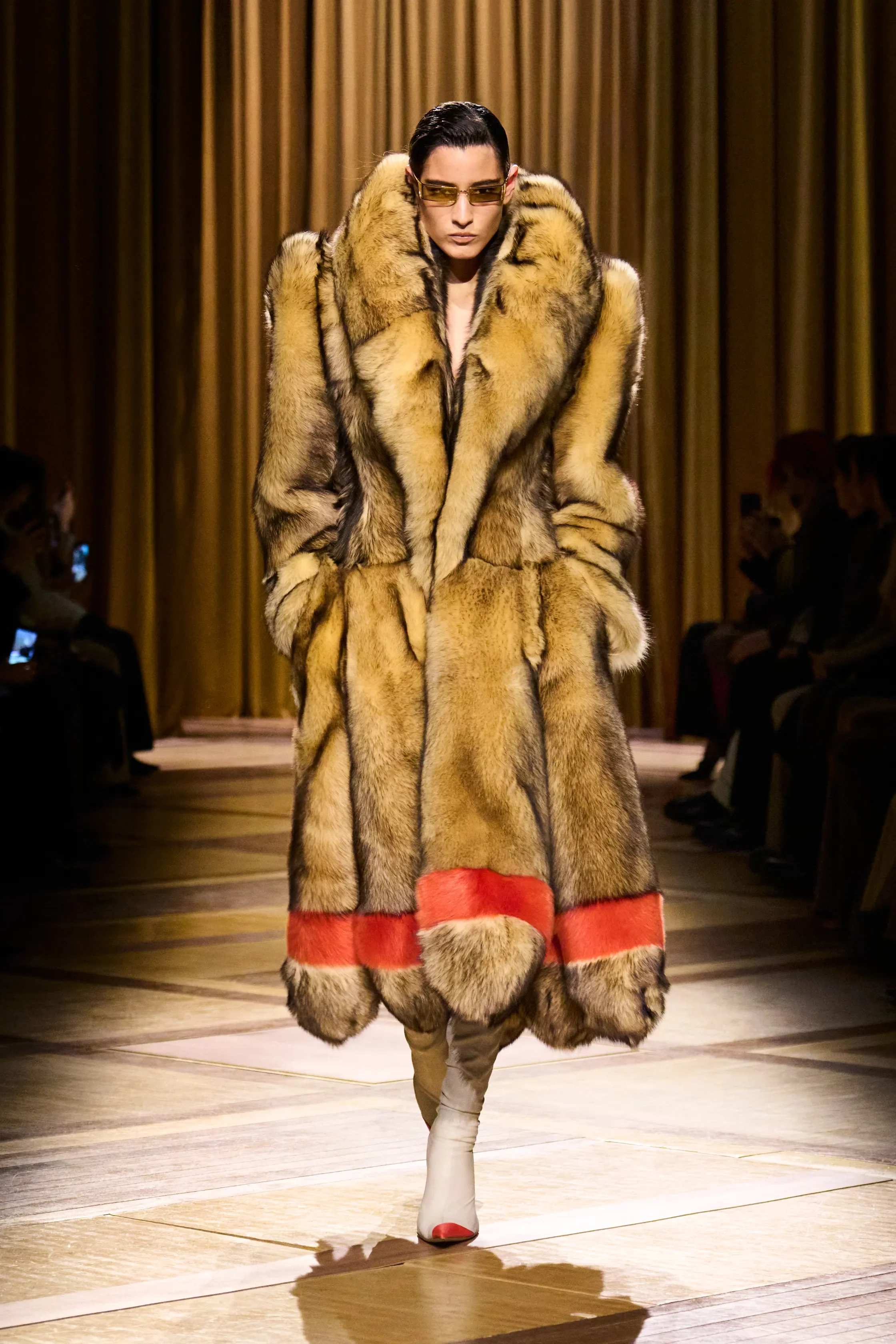
But if there’s one look from the show to remember, it was the fur coat so dramatic it practically stole the room. Its exaggerated volume clashed beautifully against the collection’s otherwise razor-sharp tailoring. It was a reminder that at Mugler, precision and shocking glamour have always gone hand in hand.
Castro Freitas clearly understands the assignment: sharpen the silhouette, heighten the drama, and above all, let the body lead in a collection we can’t wait to wear.
LOEWE
review by ANOUK WOUDT
all images courtesy of LOEWE
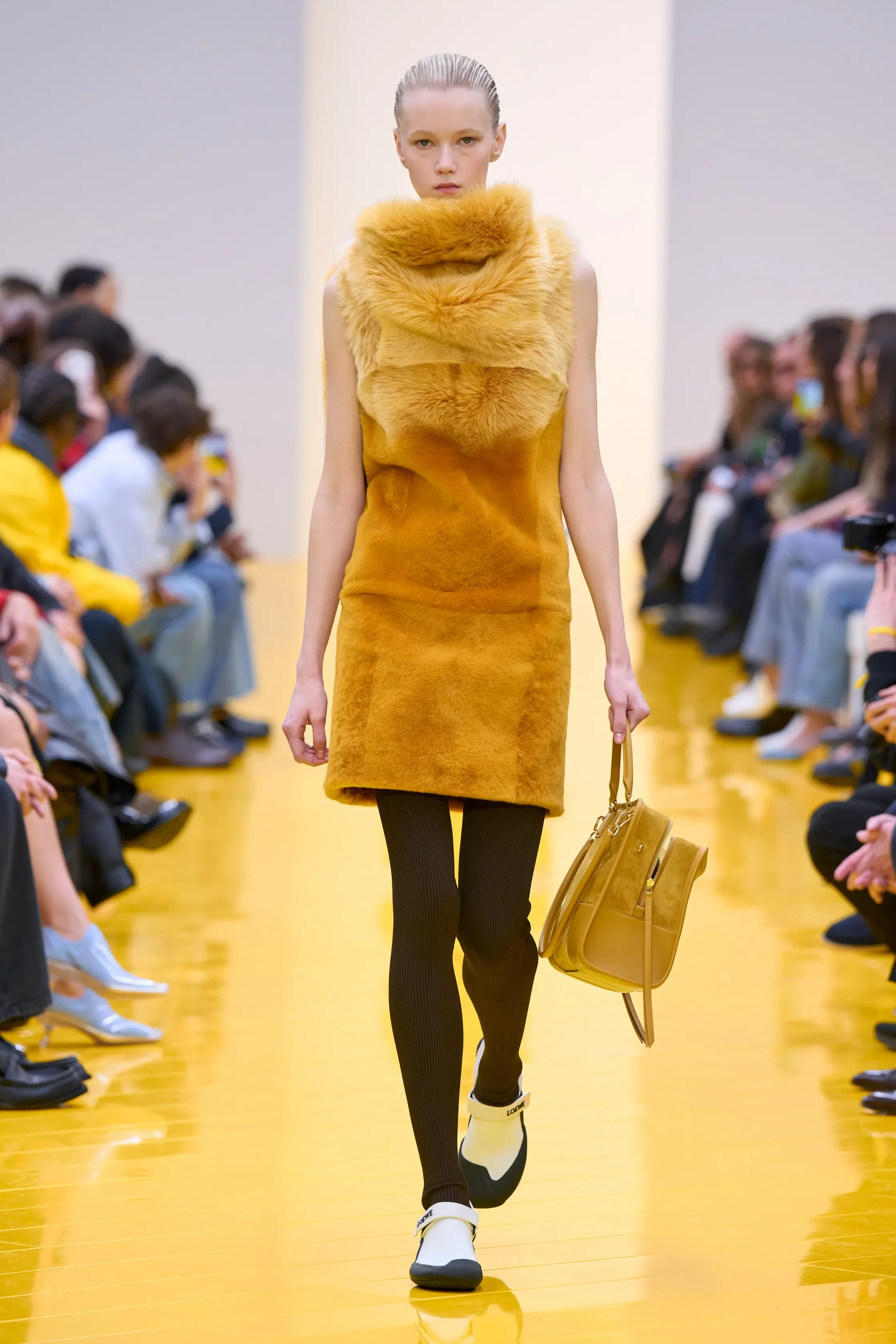
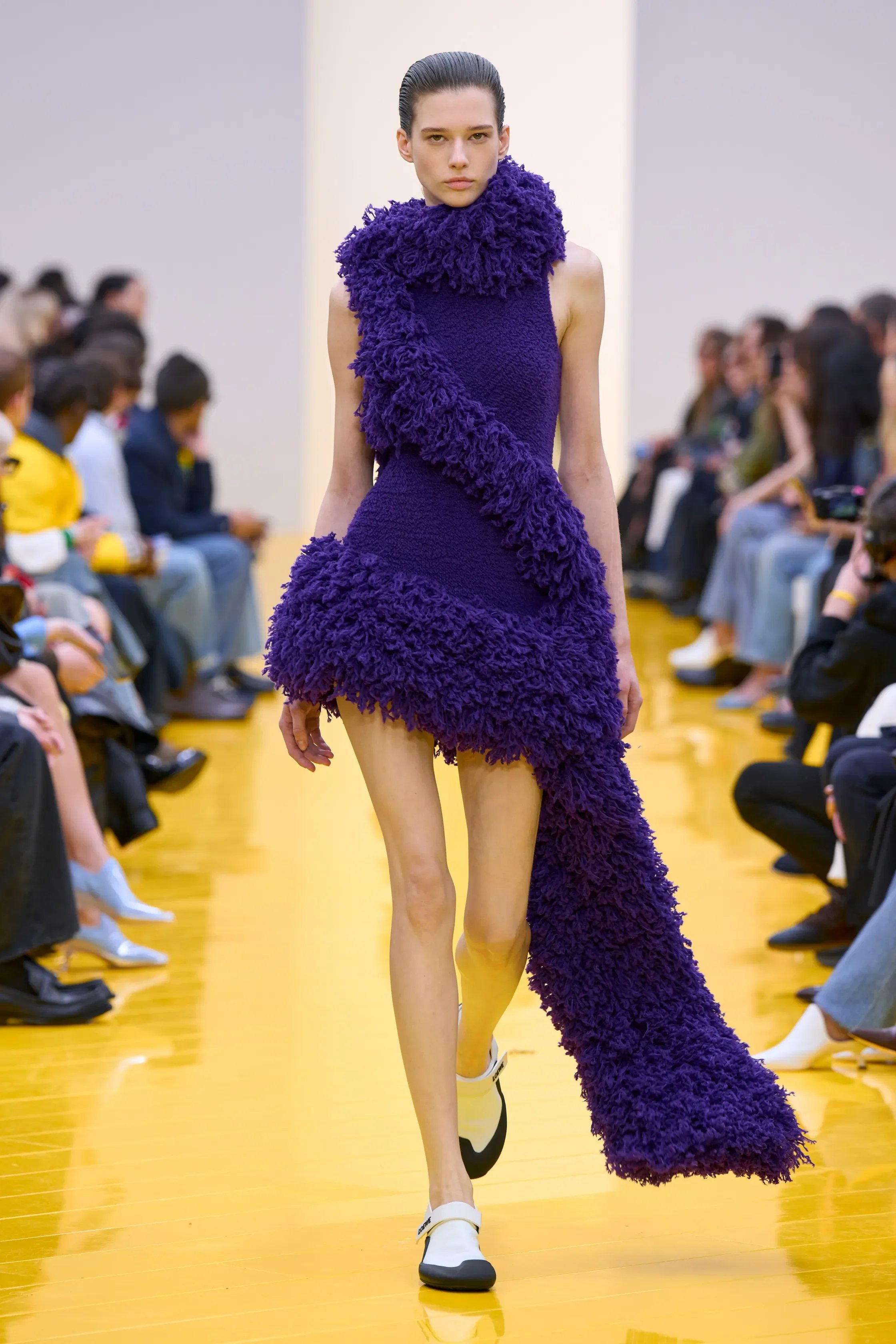
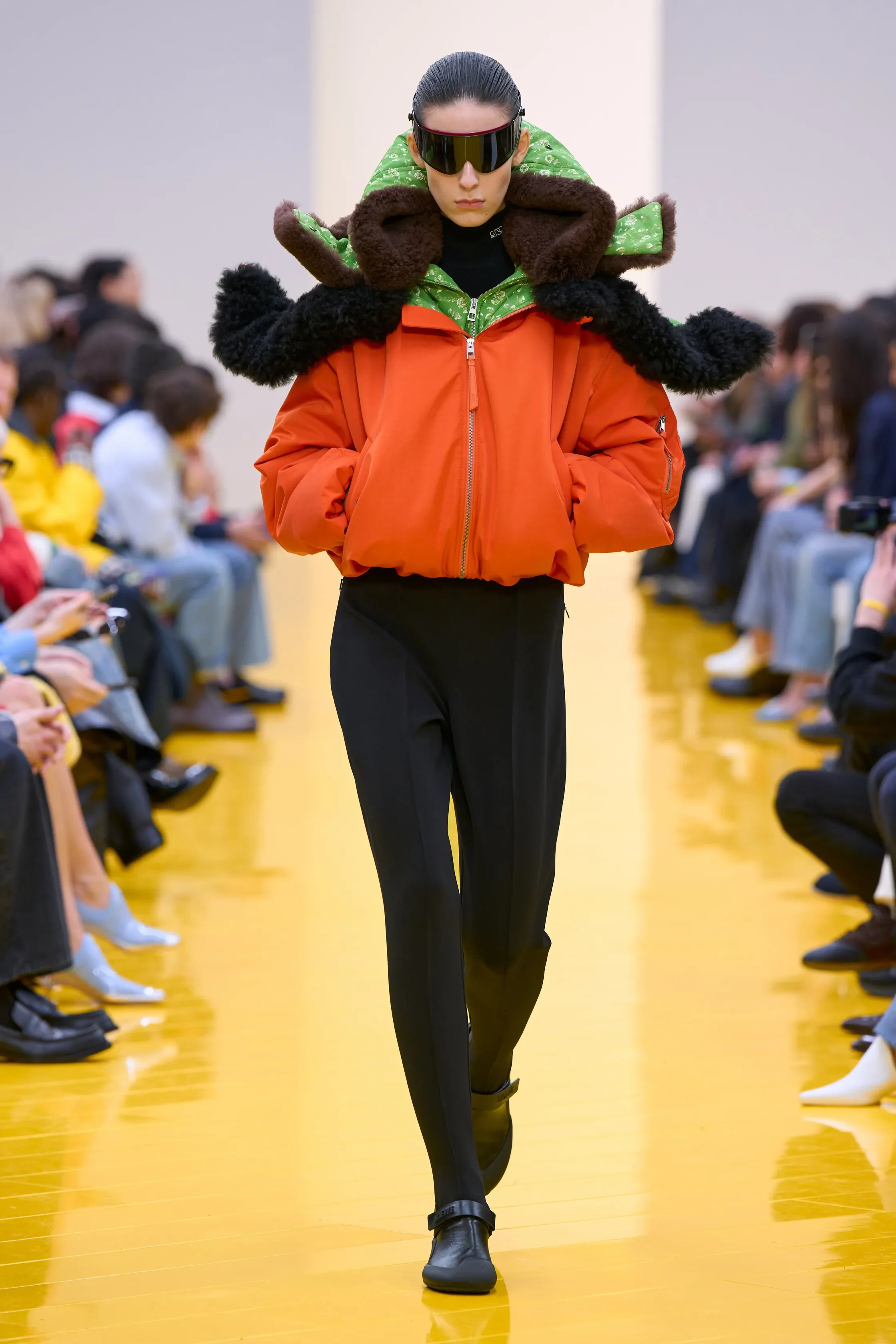
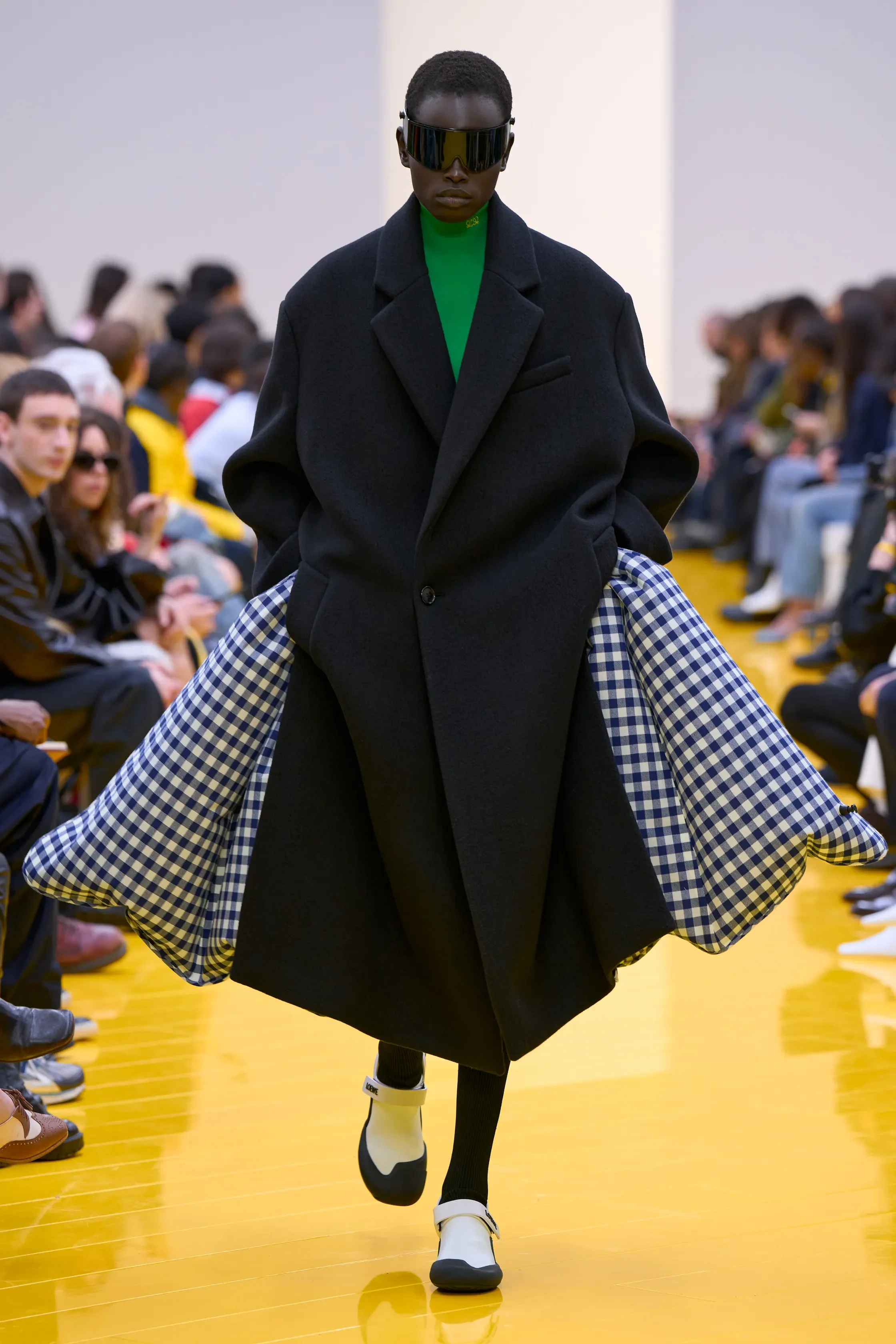
Loewe’s new identity is slowly beginning to form with the installation of its second collection under Jack McCollough and Lazaro Hernandez. It’s a distinct departure from Anderson’s Loewe while still keeping the brand’s signature whimsy, through an overwhelmingly bright colour palette mixed with hints of sportswear. Wraparound sunglasses that resembled ski goggles topped off nearly every look, along with inflated outerwear that cartoonishly engulfed silhouettes. The show’s energy embodied a flamboyant version of gorpcore, featuring exaggerated hooded rainwear and hiking-esque shoes.
Created with influence from German contemporary artist Cosima von Bonin, the show is infused with a vibrant playfulness that feels fitting to the brand’s Spanish heritage. The setting of the show itself is decorated in her style, with giant plush sculptures of hounds and whales sitting alongside onlookers and a neon yellow flooring that matches the clothes. A light-hearted sprinkle of humor is key in this collection, as well as von Bonin’s style, which was a key reason for their partnership.
Furriness also came to play in the form of blocky jackets, abstract hoods, or bodice trims. Asymmetrically draped dresses also made a few appearances, similar to cuts in their springtime debut, but with a woollen sponge-like texture. A similarly intriguing texture made for full-length ponchos and tube dresses that were swarmed in a bundle of roped fringes. All of these elements combine to create a world guided by child-like wonder– parallel to McCollough and Hernandez’s freshman collection– giving us a better glimpse at what we can expect for this new era of Loewe.
ISSEY MIYAKE
review by ELIANA CASA
all images courtesy of ISSEY MIYAKE
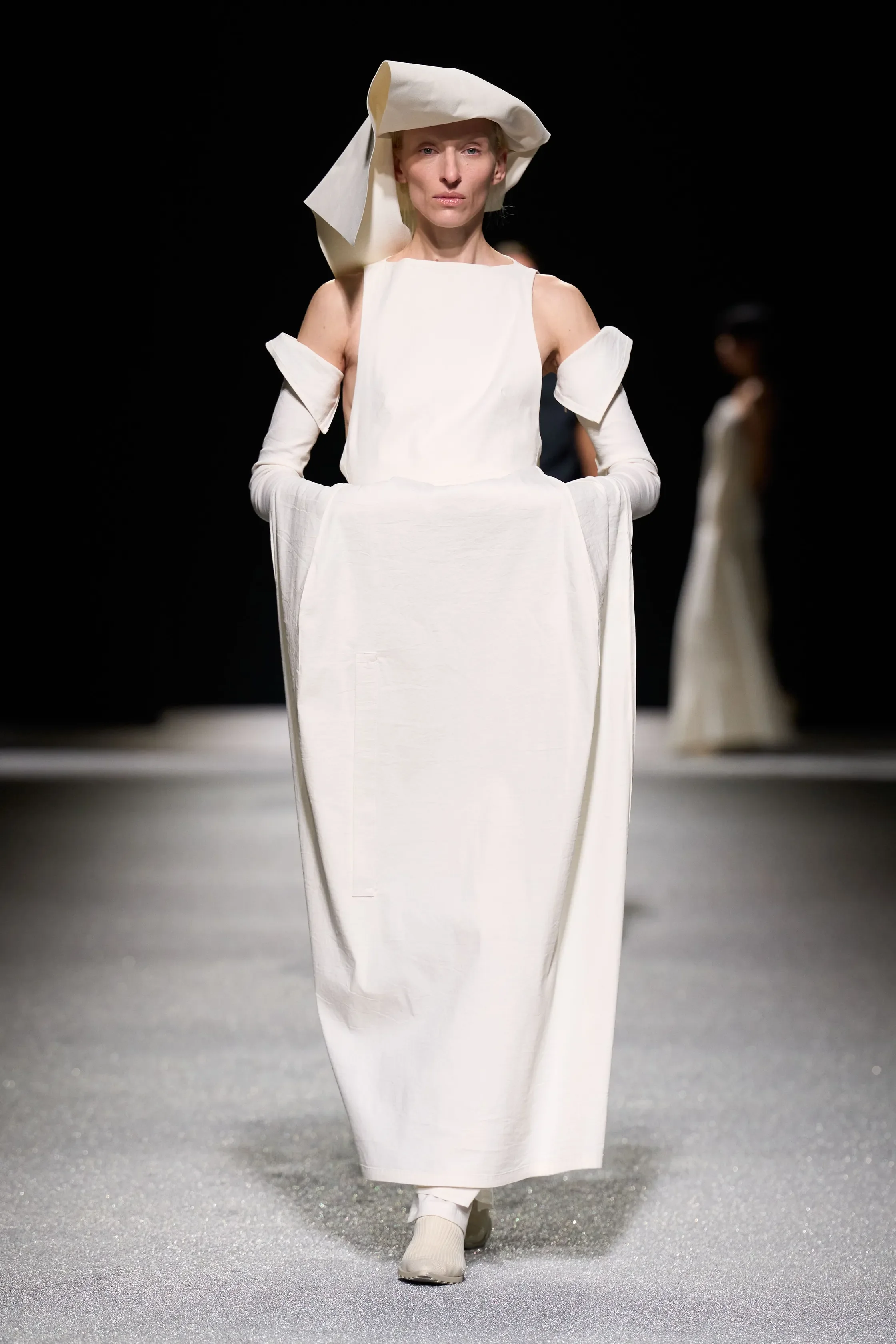
Japanese designer Satoshi Kondo understands the sensibility that lies behind every garment, “the will to create and to allow,” and to simply exist in the moment. That philosophy unfolded today inside the rooms of the Louvre Museum, where the FW26 women’s collection for Issey Miyake was presented in an atmosphere where silence spoke through layered constructions and sculptural silhouettes.
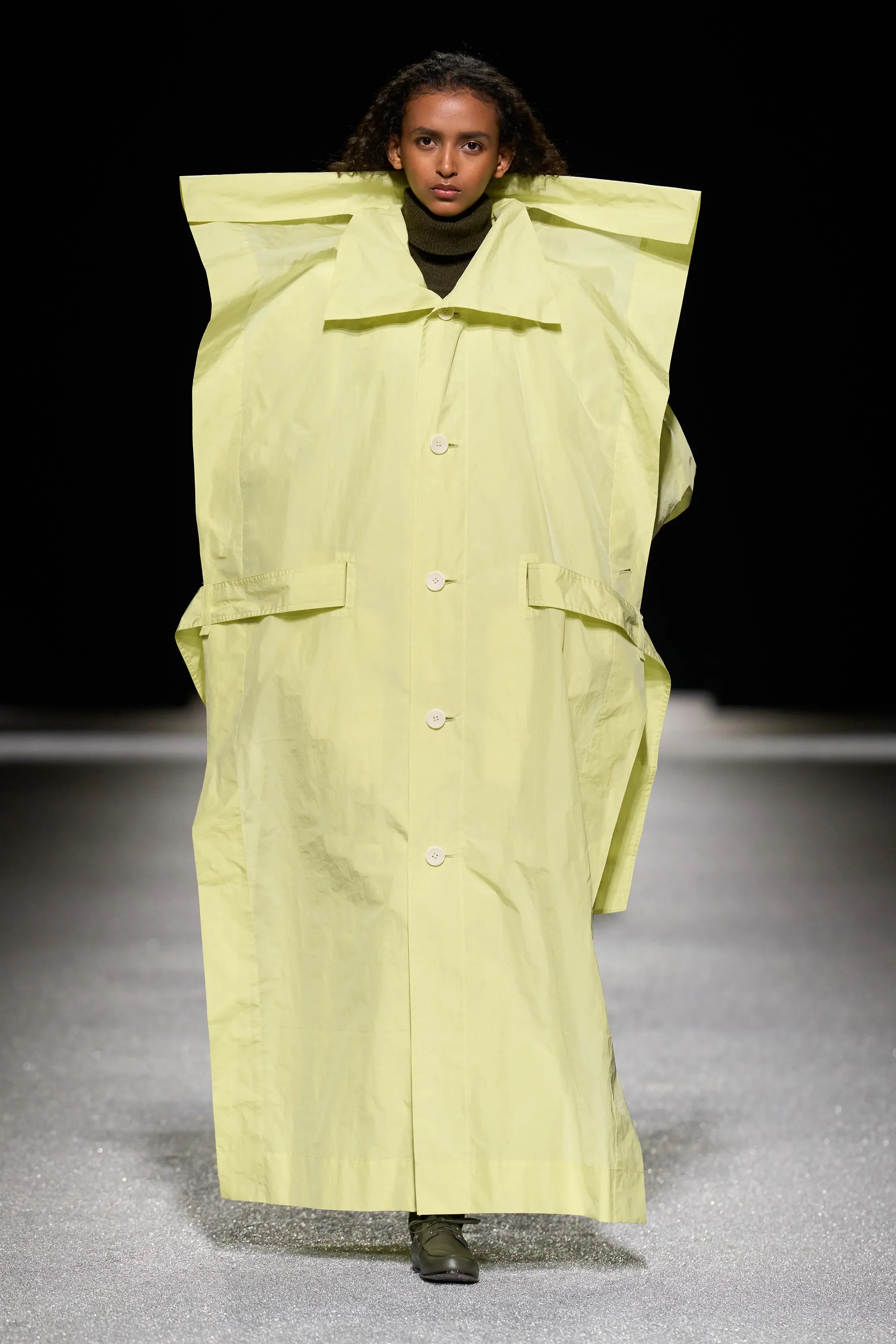
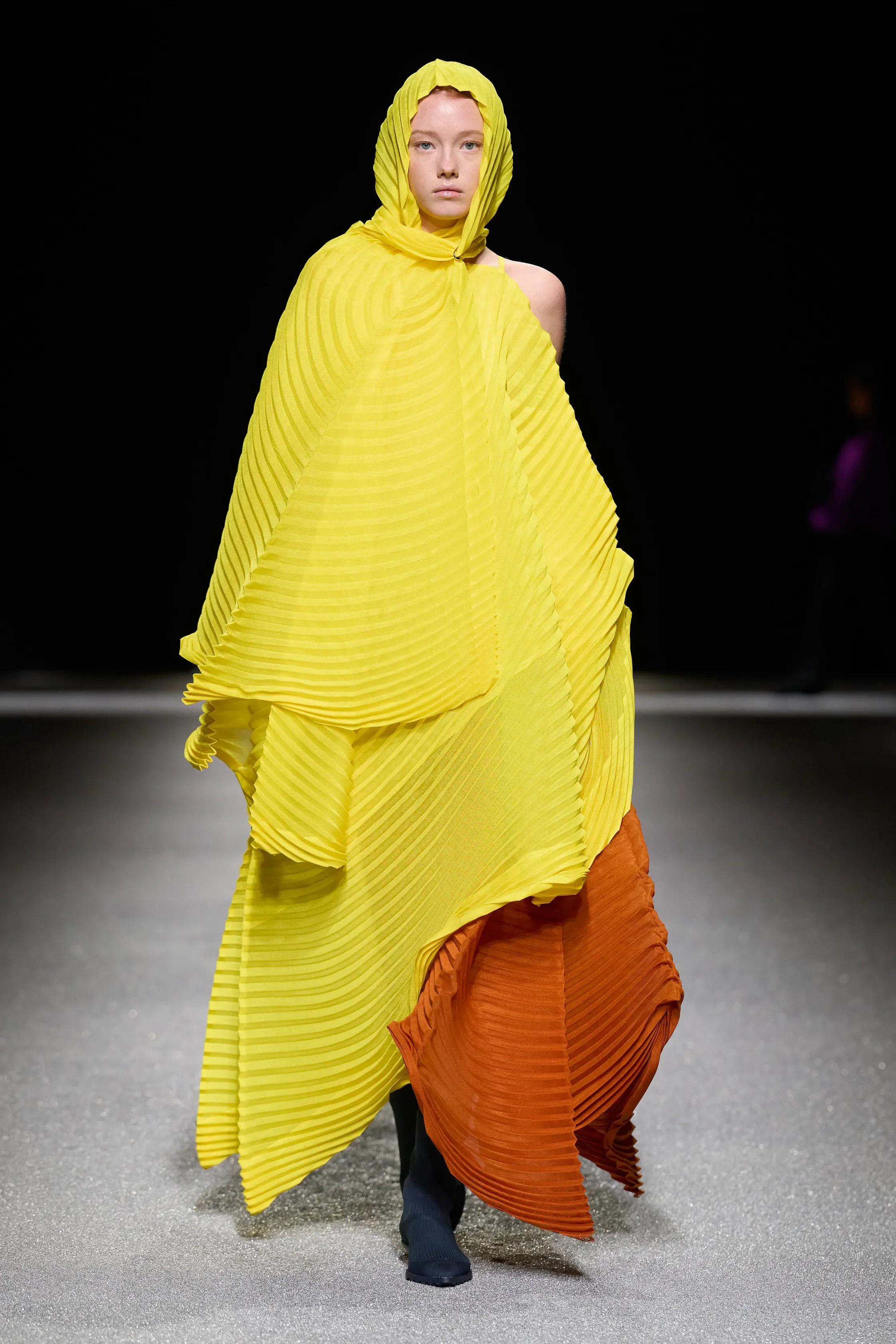
Silver dust falling from the ceiling signalled the beginning, anticipating the models’ entrance. One look after another reinterpreted familiar forms in unexpected ways. Some garments filled the space through bold proportions—brightly coloured parkas and architectural gowns—while others spoke through the lightness and delicacy of their fabrics. Each piece seemed to move between structure and fluidity, a balance that has long defined the house.
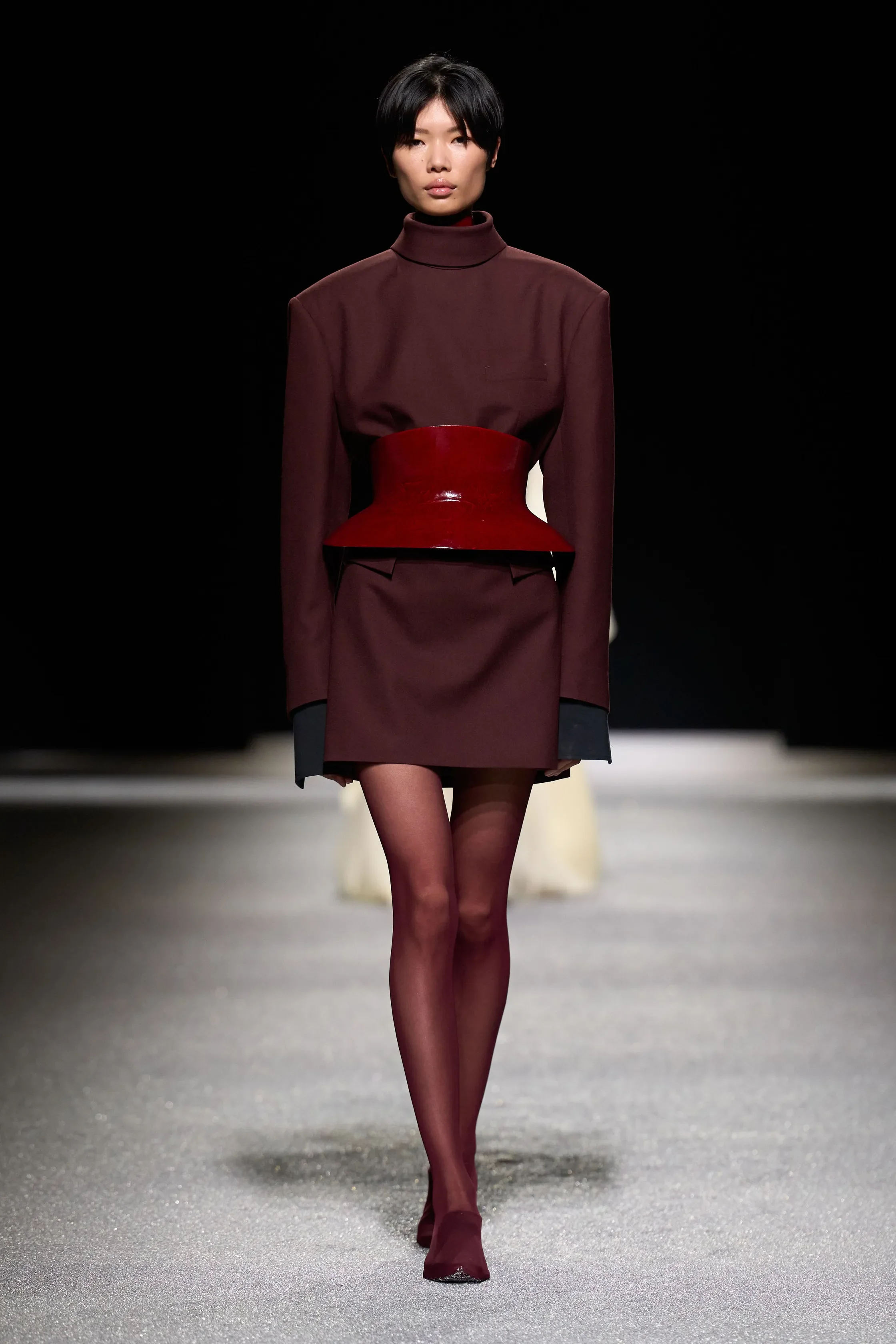
Within this dialogue between past and present, Kondo invited the audience to listen to that quiet inner voice—the one that awakens memories when faced with the unfamiliar. With subtlety and respect, he referenced the FW80–81 collection, bringing back its iconic plastic bustiers in vivid red, electric blue, and black. The show closed with the same striking ‘breastplate’ that once ended the original show.
Fashion, after all, is a constant return. Cycles repeat themselves, yet never in quite the same way. In that gentle repetition, between memory, reinvention, and the present moment, lies the promise of the indefinite.
VAILLANT
review by ANOUK WOUDT
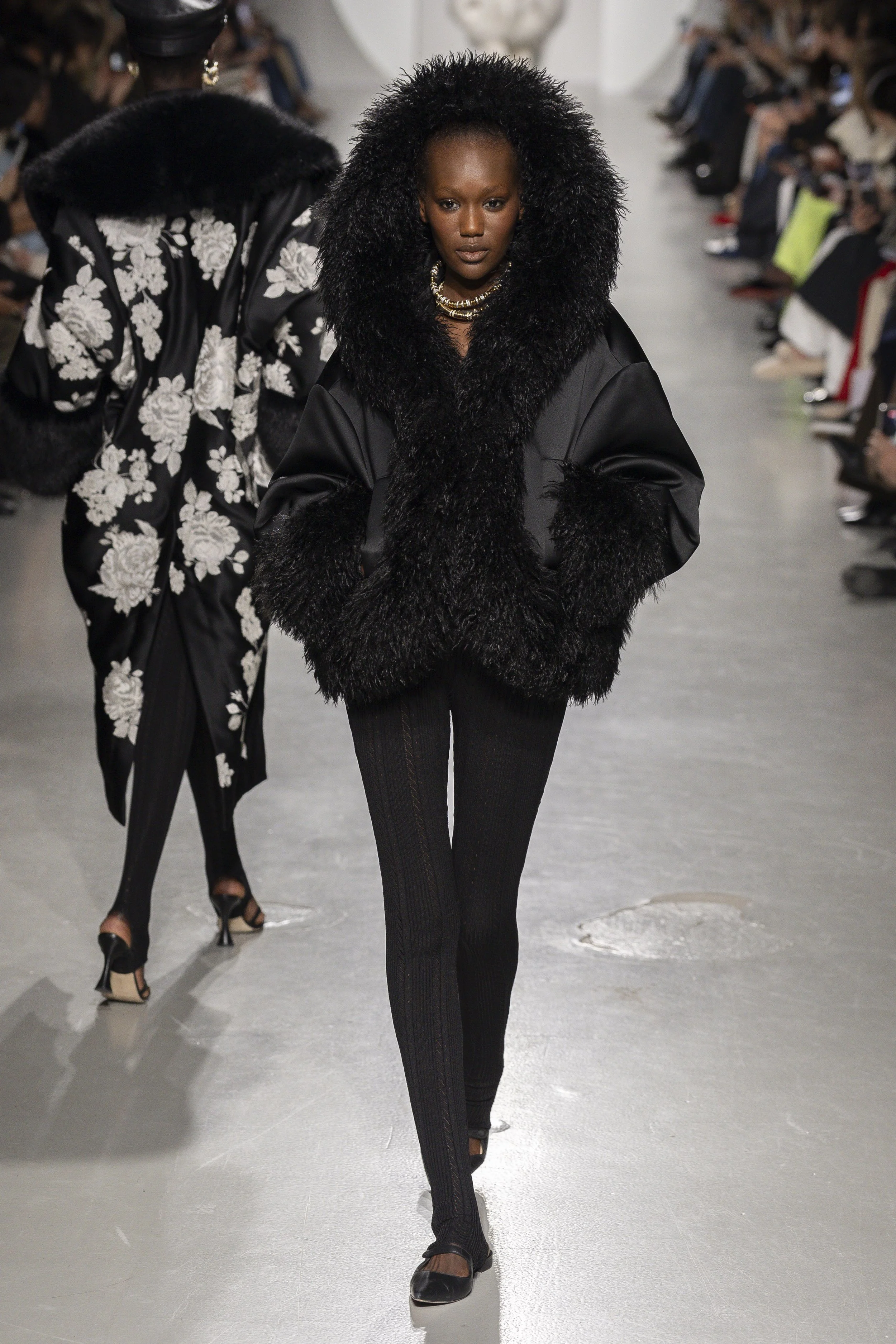
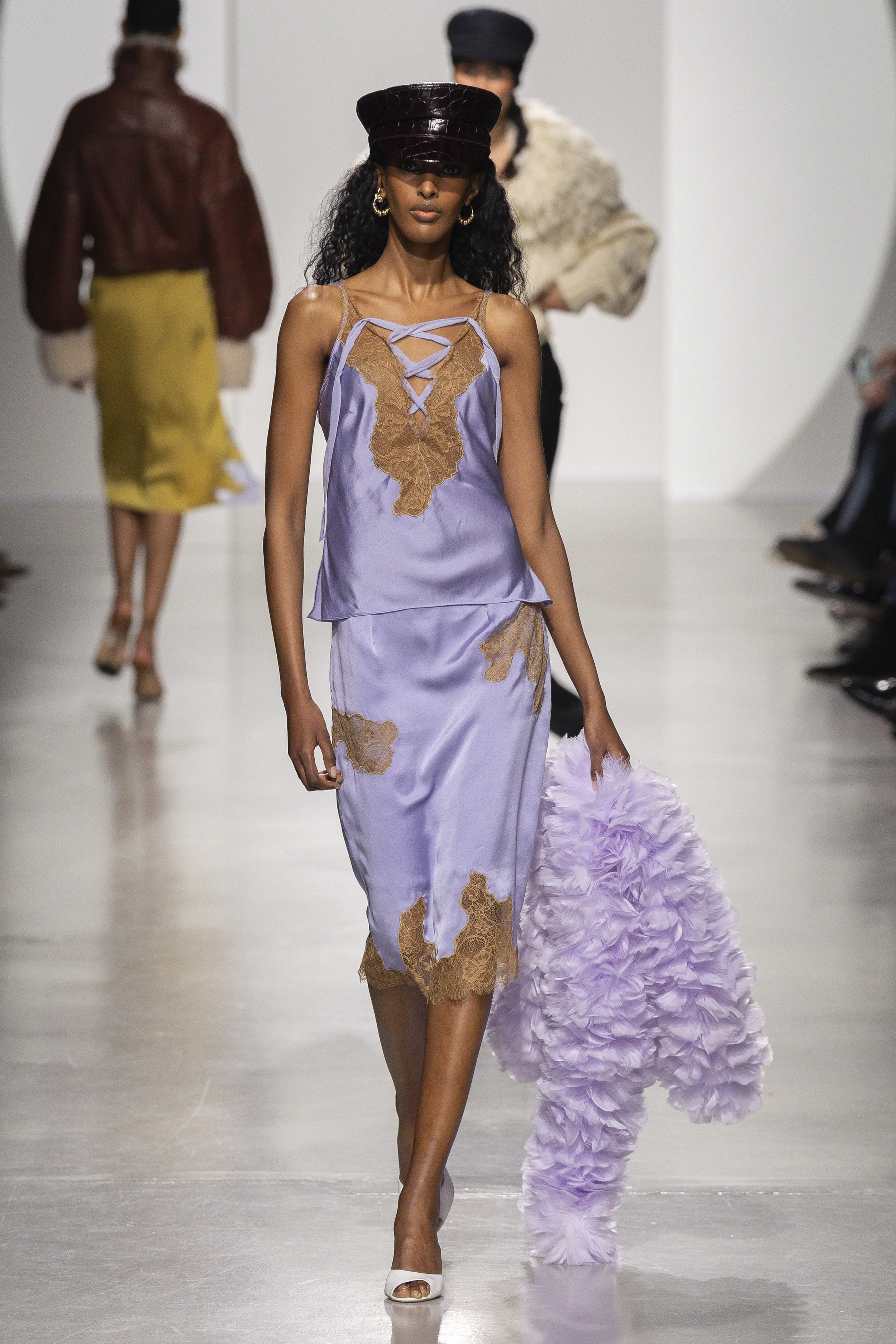
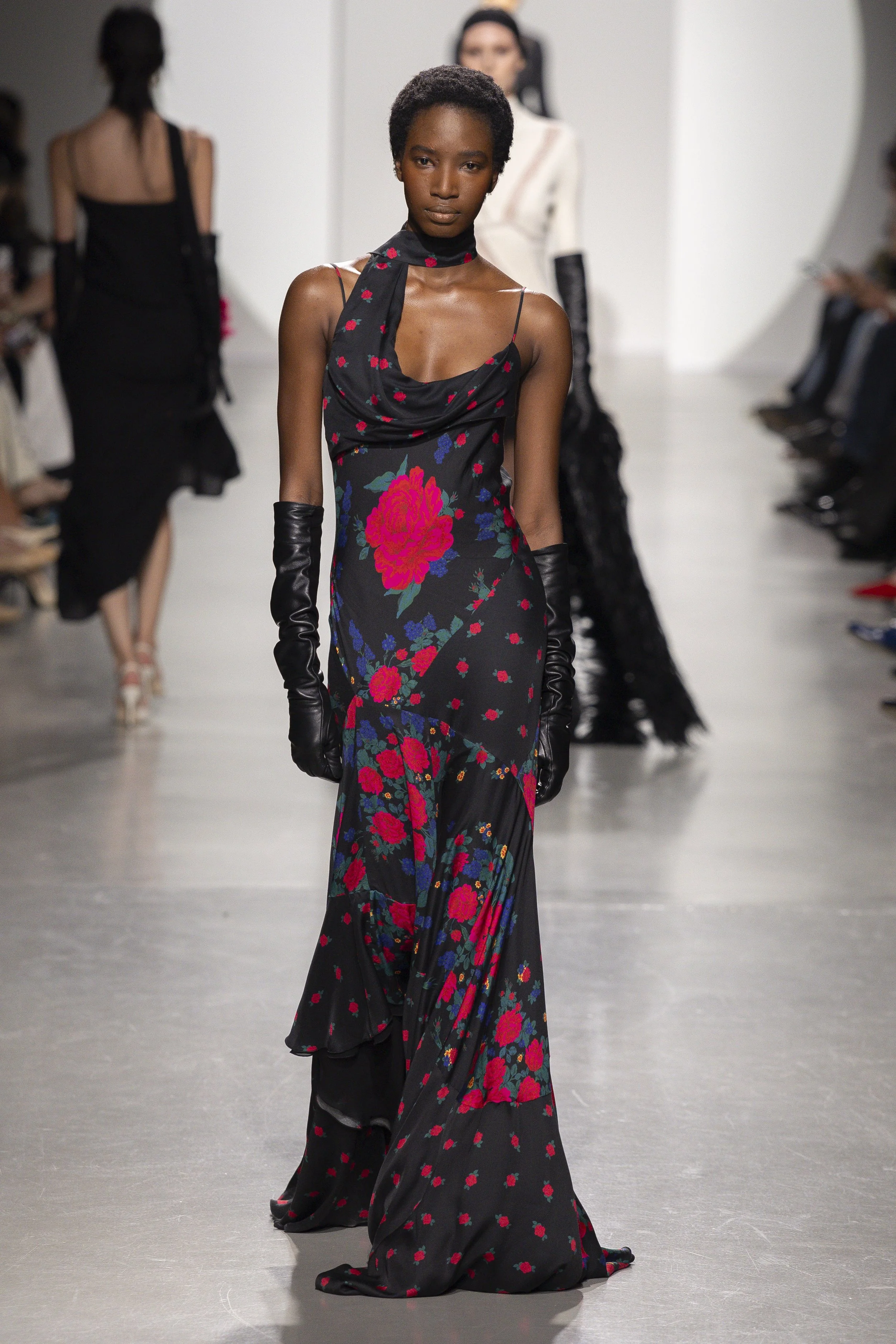
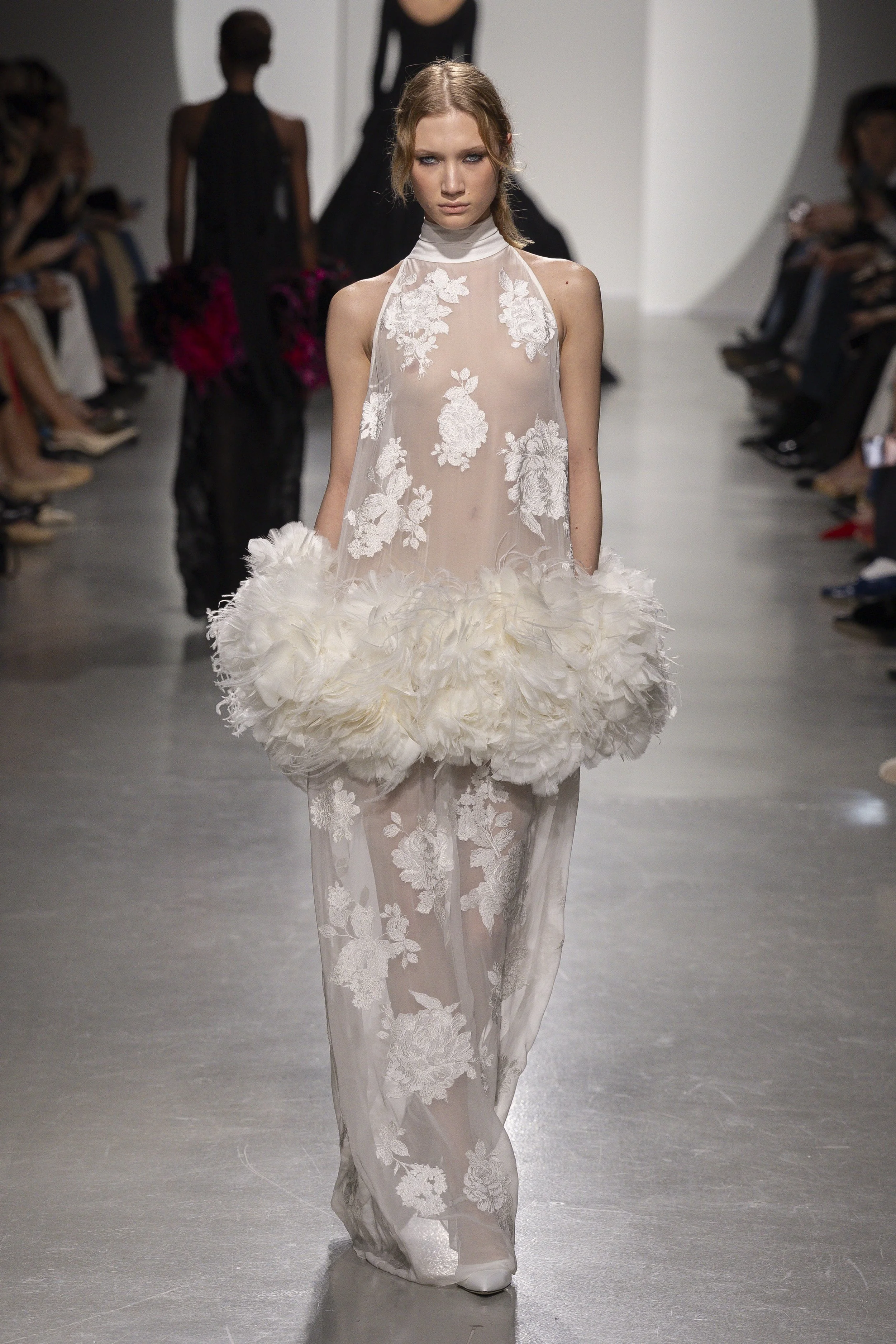
all images courtesy of VAILLANT
A soft, feminine glamour resonates throughout Vaillant’s fall 2026 collection, through pearly satins and floral motifs as prints or feathery appliqués. Aptly titled Le Rendez Vous, this collection outlines a meeting between an estranged ballerina and Paris in the midst of The Année Folles. Luxurious velvety furs blanketed collars and heads in the form of poofed ushankas, personifying an elegant Slavic charm. On the other hand, sailor caps sat pretty atop all kinds of looks, bringing forth the stylish French dimension in this love letter to Paris and its women.
Slip-style influences also made an entrance, with lace trims along high slits and delicate fabrics, paired with petaled boas adorning the arms. This texture is echoed by feathery florals that belted the hips of sheer floor-length maxi dresses. Knit bodysuits with structured stitches emerged in several looks, along with juxtaposed graphic stripes. Leather jackets and workwear styles also burst through to give a bit of structure, while keeping a cozy casualness with fluffy trims.
In a cutsesy break from the drama, a graphic tee saunters in, printed with the words “Vaillants is for lovers” adorned with a heart. Paired with high leather gloves and a swishing silken skirt, it embodies the brand’s identity in its flirtatiousness and subdued French cool.
GIVENCHY
review by ANOUK WOUDT
all images courtesy of GIVENCHY
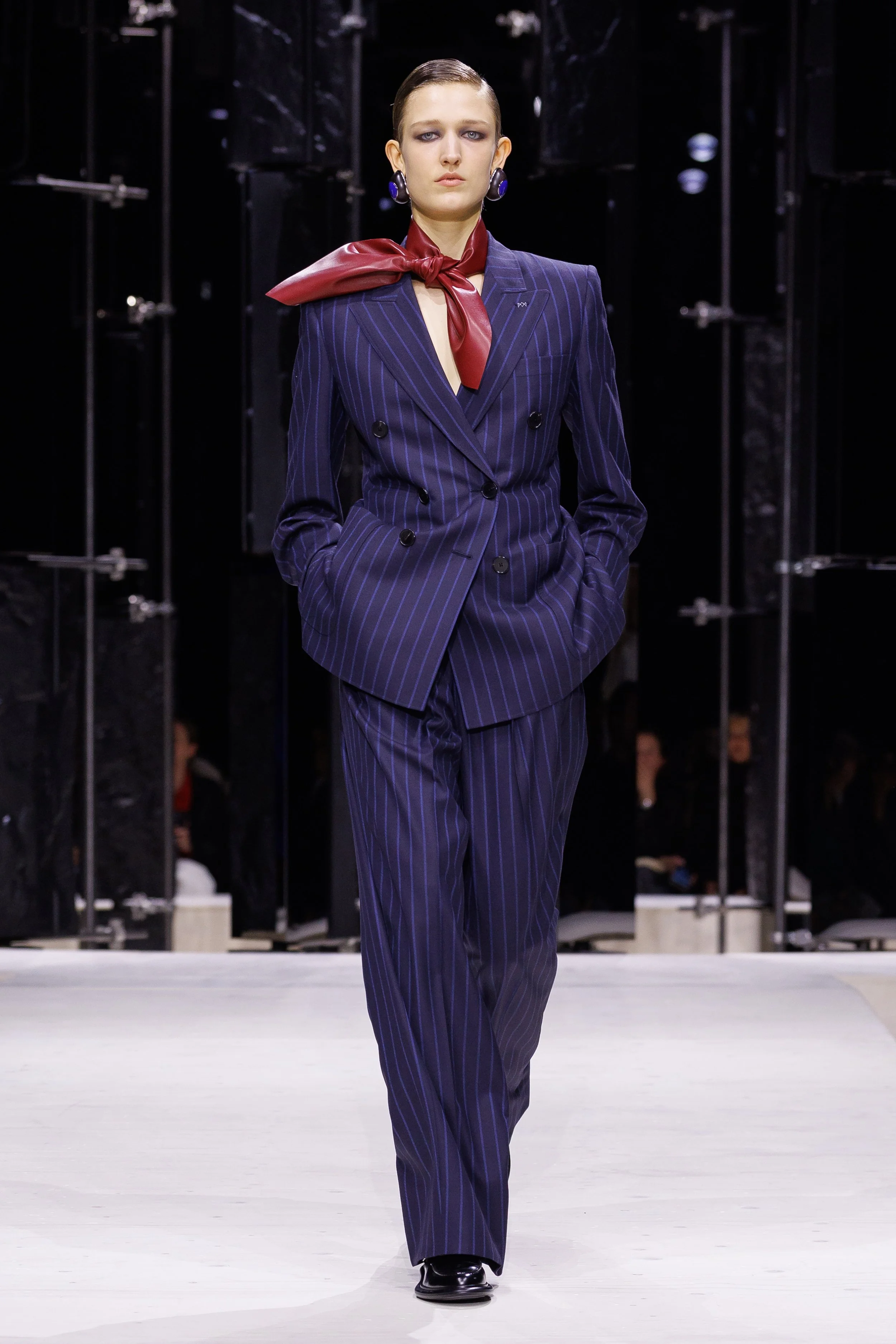
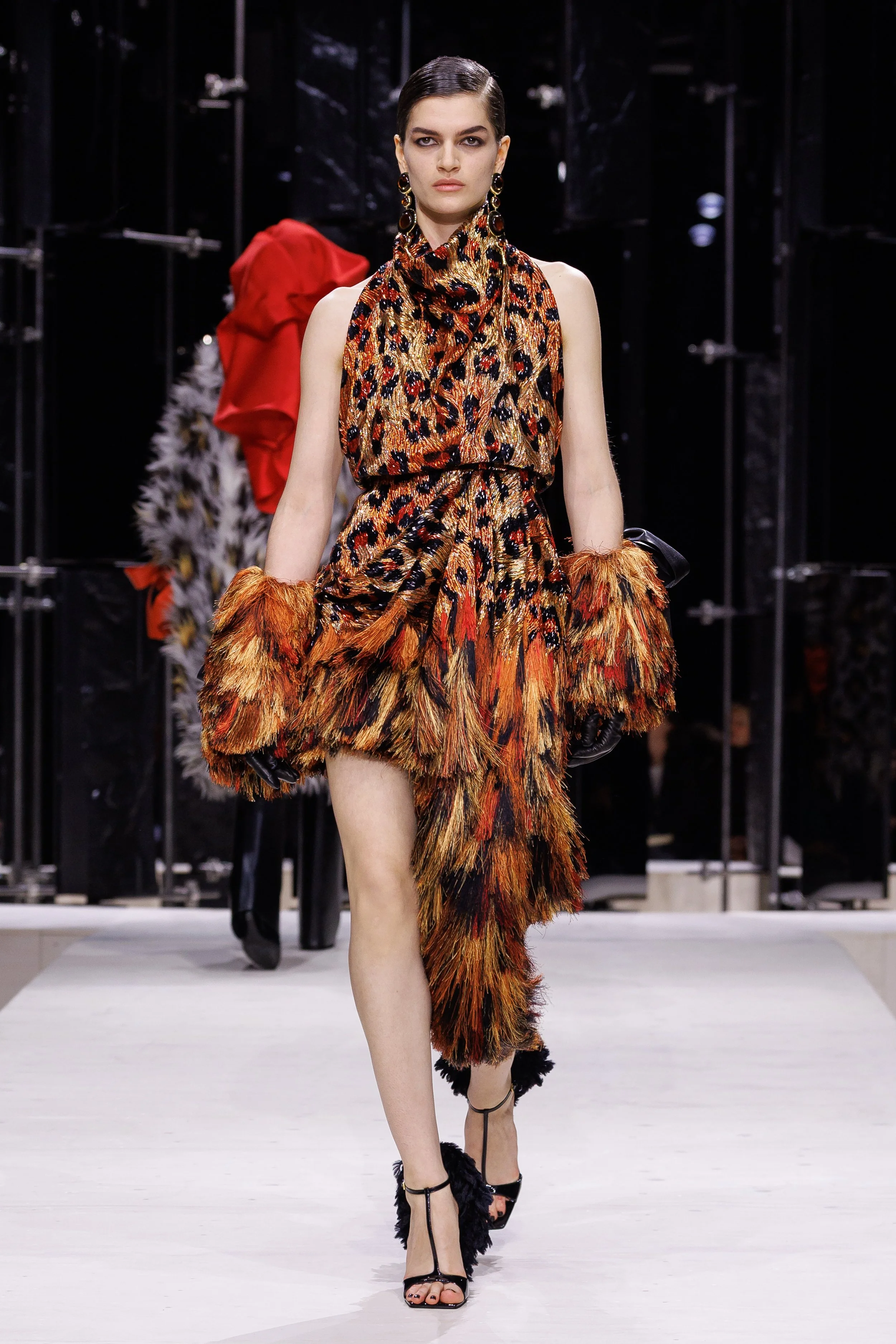
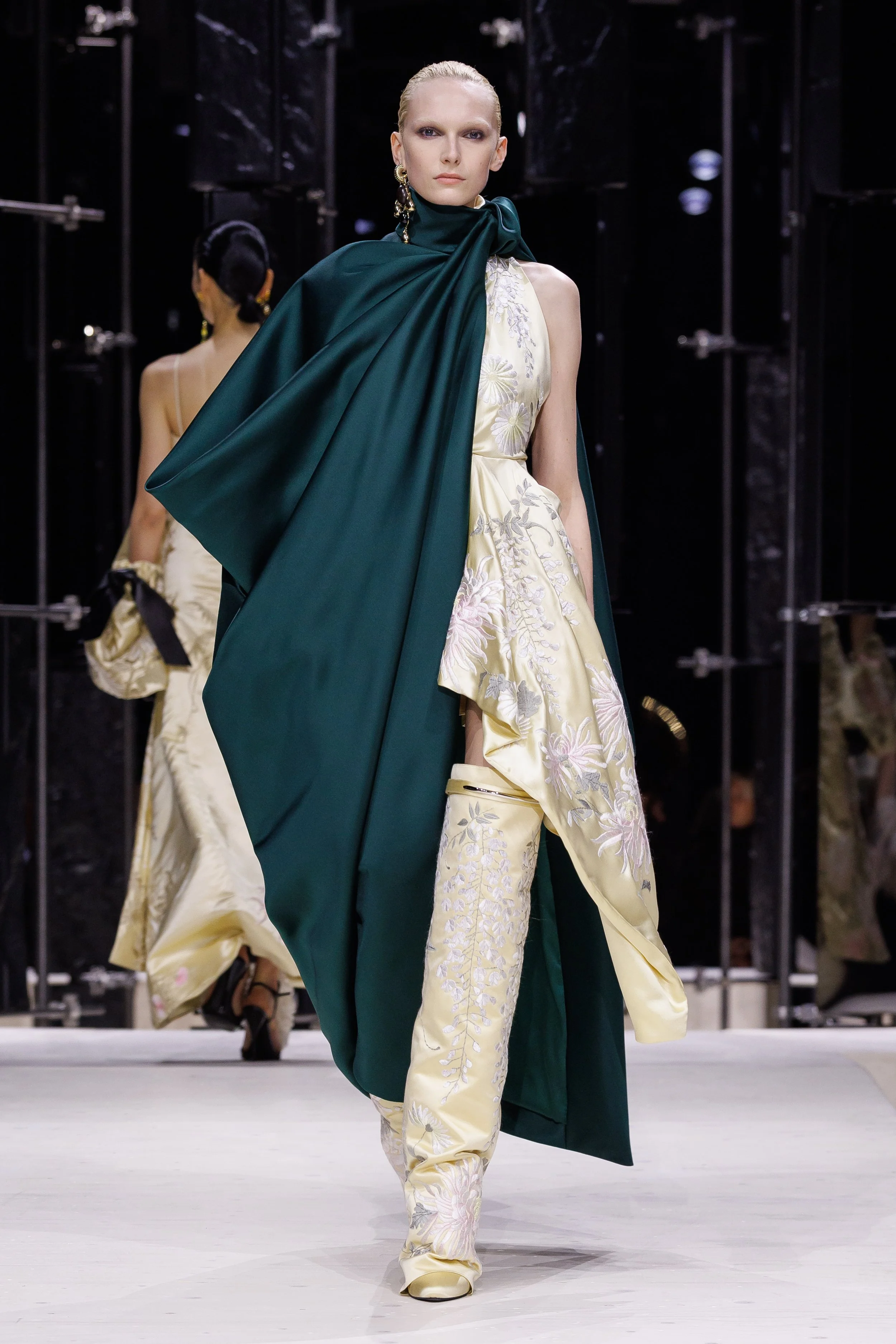
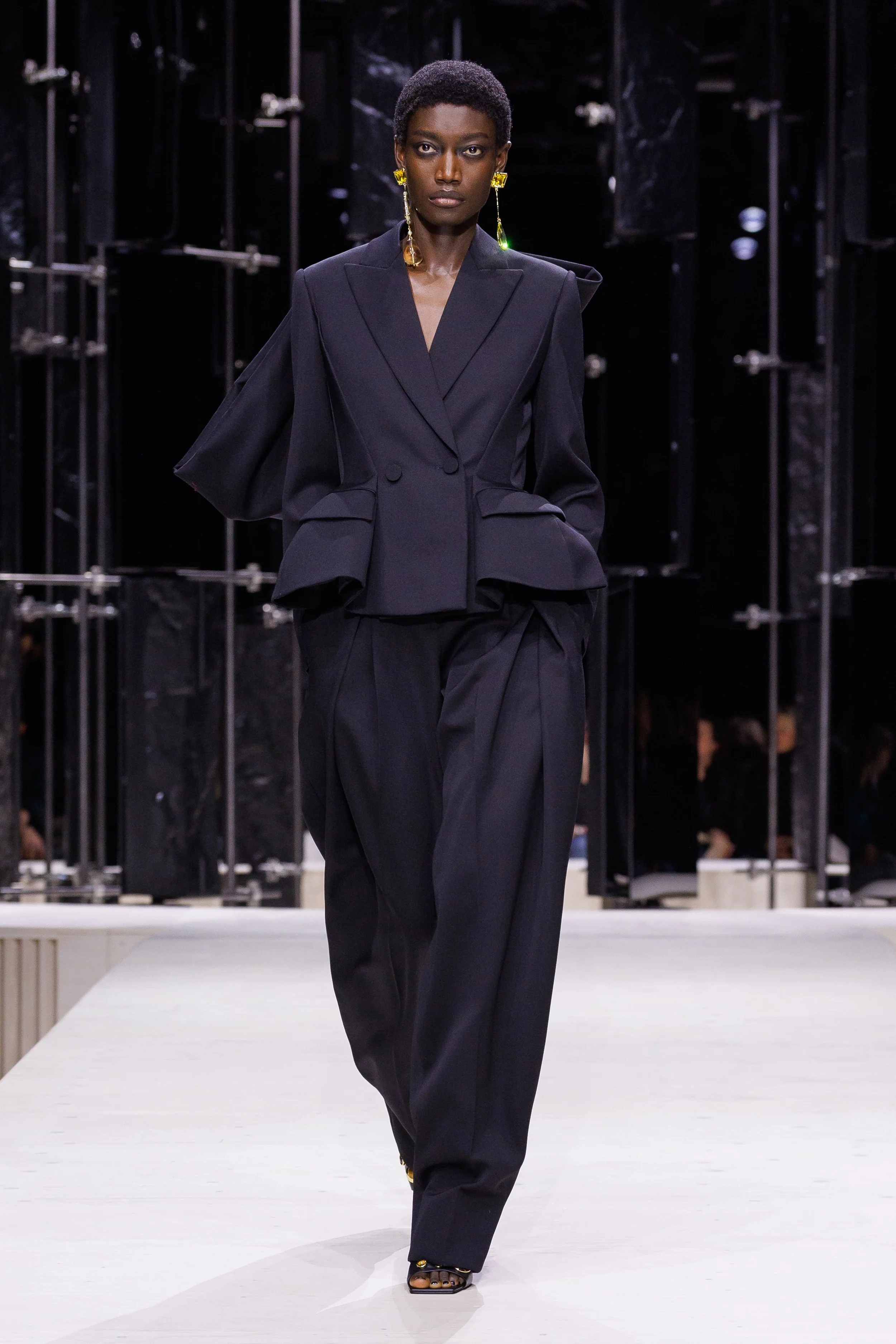
This season, Sarah Burton’s Givenchy felt delightfully paradoxical. Simple tailoring and silhouettes allowed accessories to have their moment to shine in an almost obtrusive way. Hair bonnets engulfed heads, stiff bows jutted from dresses and neckties, and jewelry took the form of massive crystals and heavy chains. Stilettos came swarmed in ruffles or the same leathered bows that appeared on garments. Ballooned cuffs billowed around gloved hands, whilst bags emerged dangling with ties or cushy florals.
The color palette was just as juxtaposed, with pops of bright primaries that stole attention against black and navy-blue suits and ties. Amongst that, clementine orange and leopard print brought a clashy loudness that added to the gaudiness of it all. Another noteworthy moment came with angular thigh-high boots paired with gold-cinched outerwear— pieces that almost gave the illusion of being worn backwards —creating a stunning silhouette across a few looks.
References from the Dutch Golden Age were subtly woven into the collection. The recurring combination of flopped headscarves and bulbous earrings bared a striking resemblance to the Vermeer classic, The Girl With The Pearl Earring. Ornate embroidered florals that melted into undone strings— definitely one of the most memorable pieces of the collection —also completely mimicked Rachel Ruysch’s bouquet still-lifes, which are also a staple of the Netherlands’ 17th-century art scene. Dresses wrapped in a painted lace print also recalled Flemish art, referencing the intricately rendered lacework often seen in this time period.
The collection is obviously inspired by Burton’s own love of art history, grounding its theatrics in a historical context, while embracing the artistic ingenuity of fashion, in a nod to both her days at Alexander McQueen and Givenchy’s legacy.
JAVIER GUIJARRO
review by FRANCESCO PIZZUTI
all images courtesy of JAVIER GUIJARRO
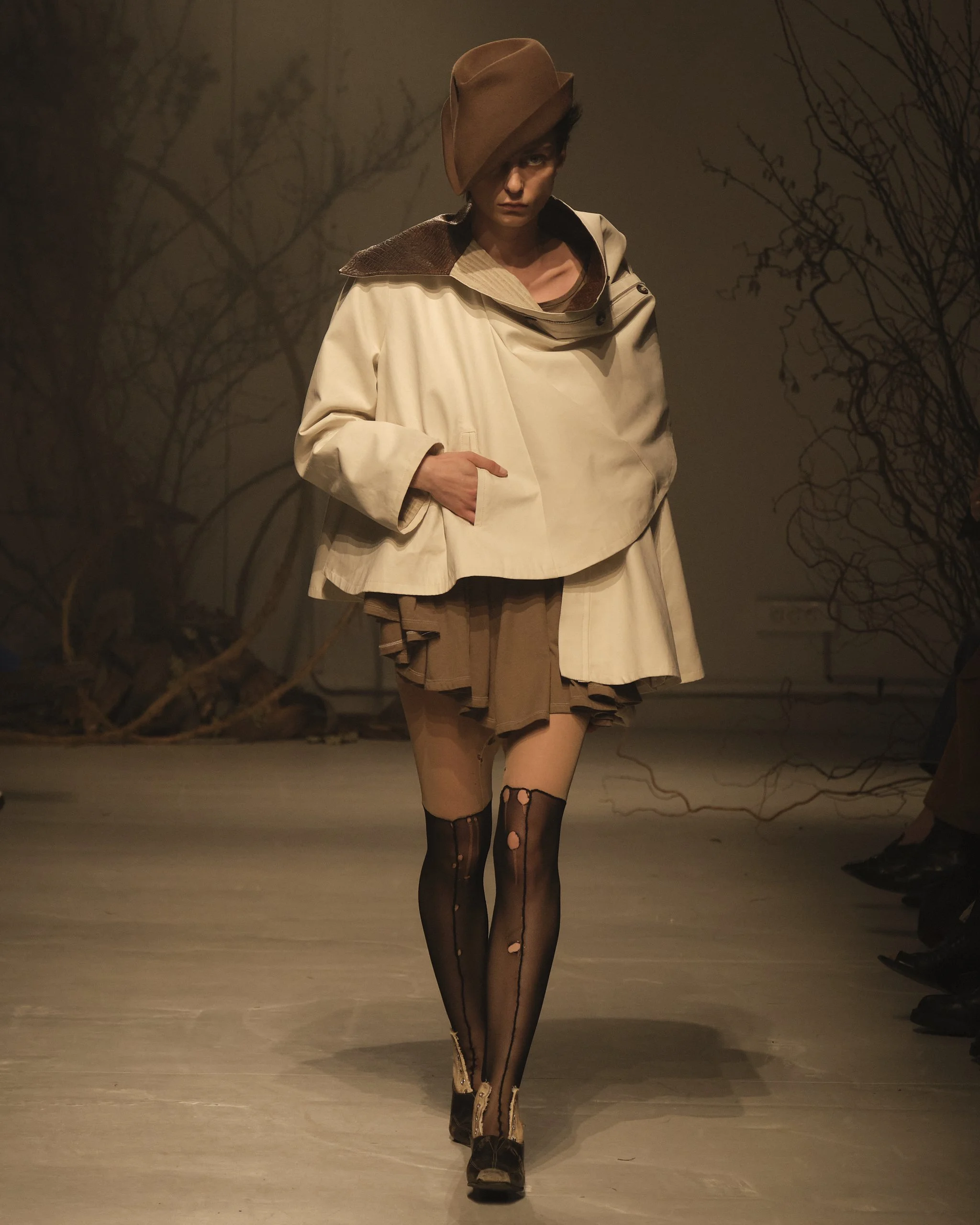
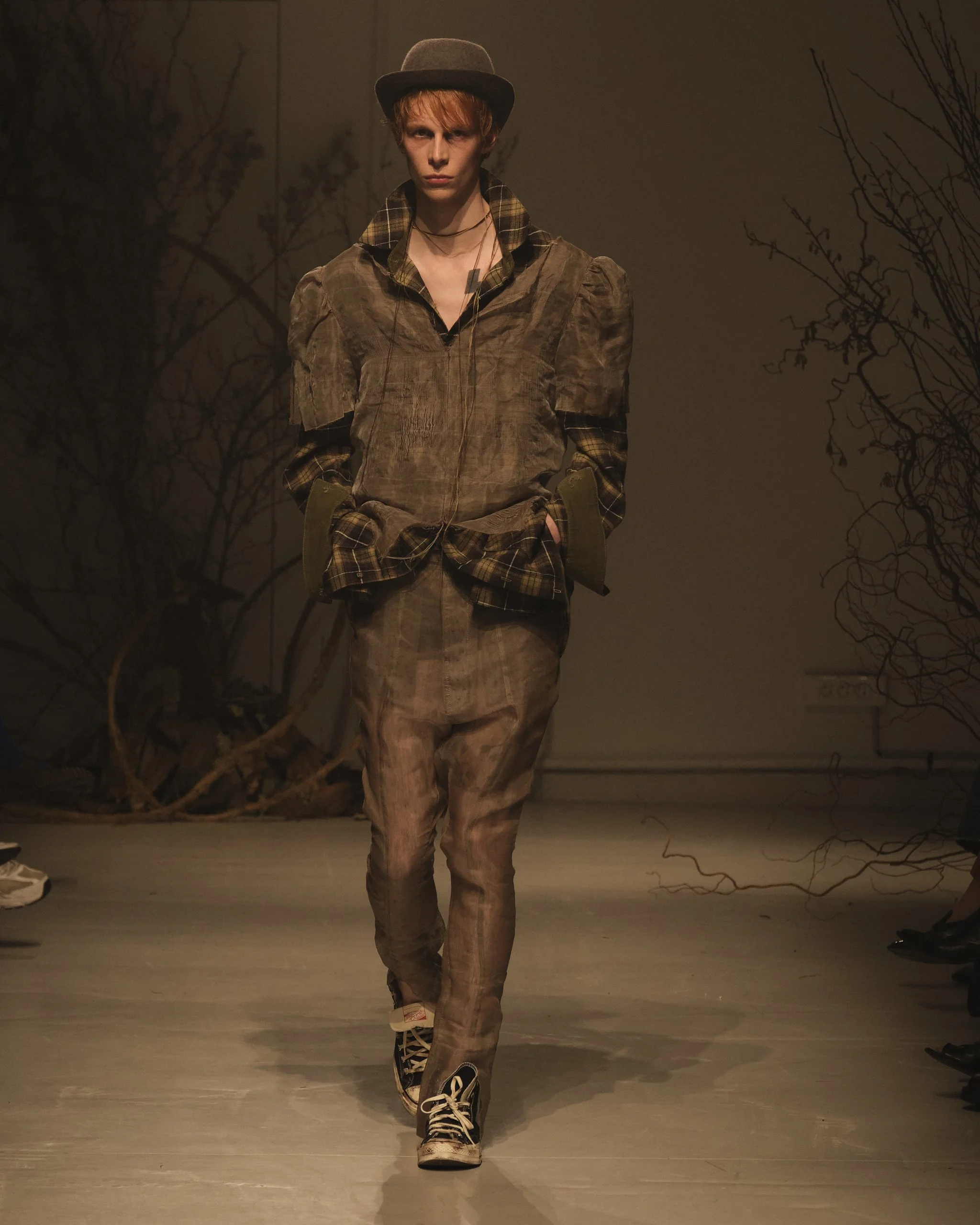
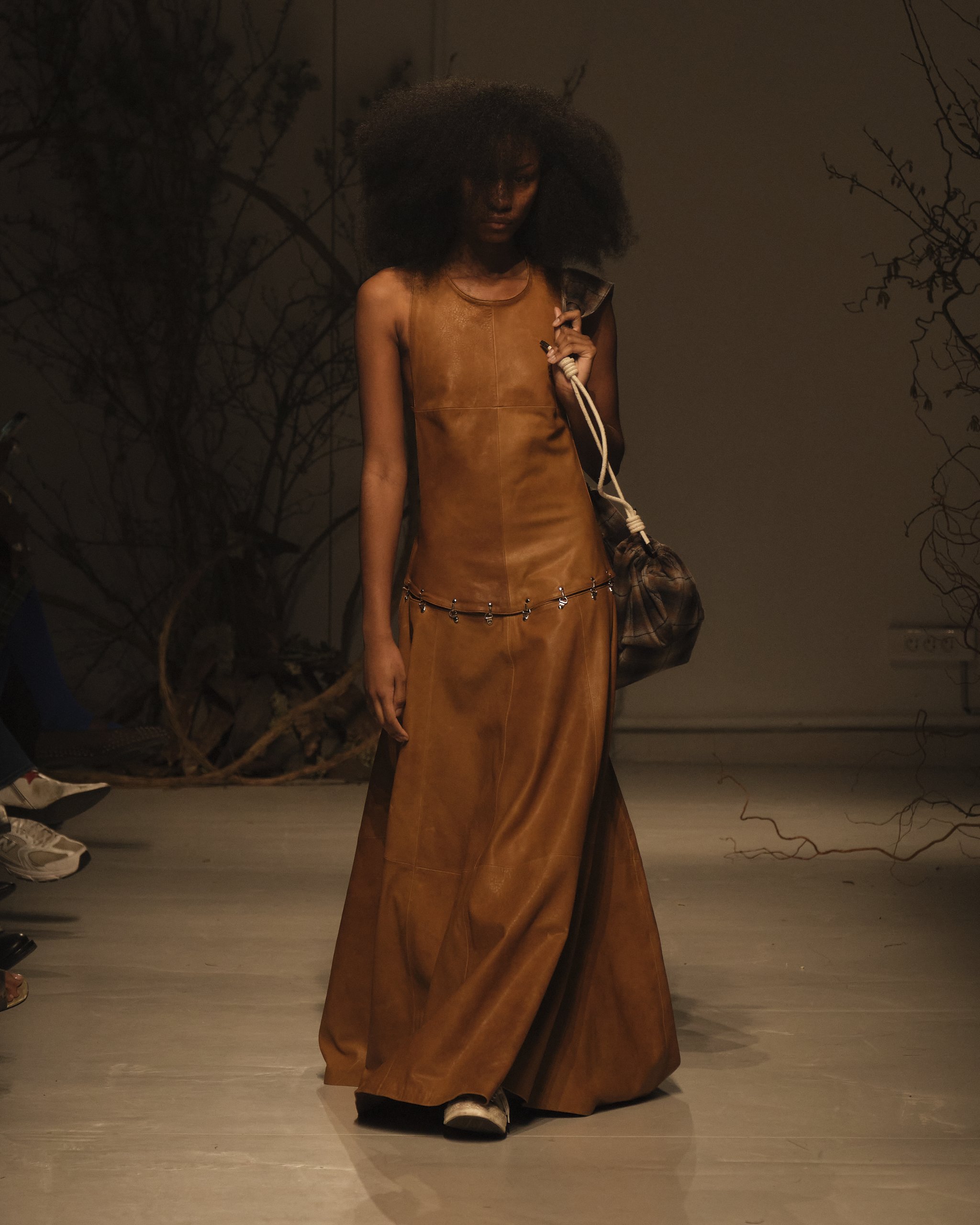
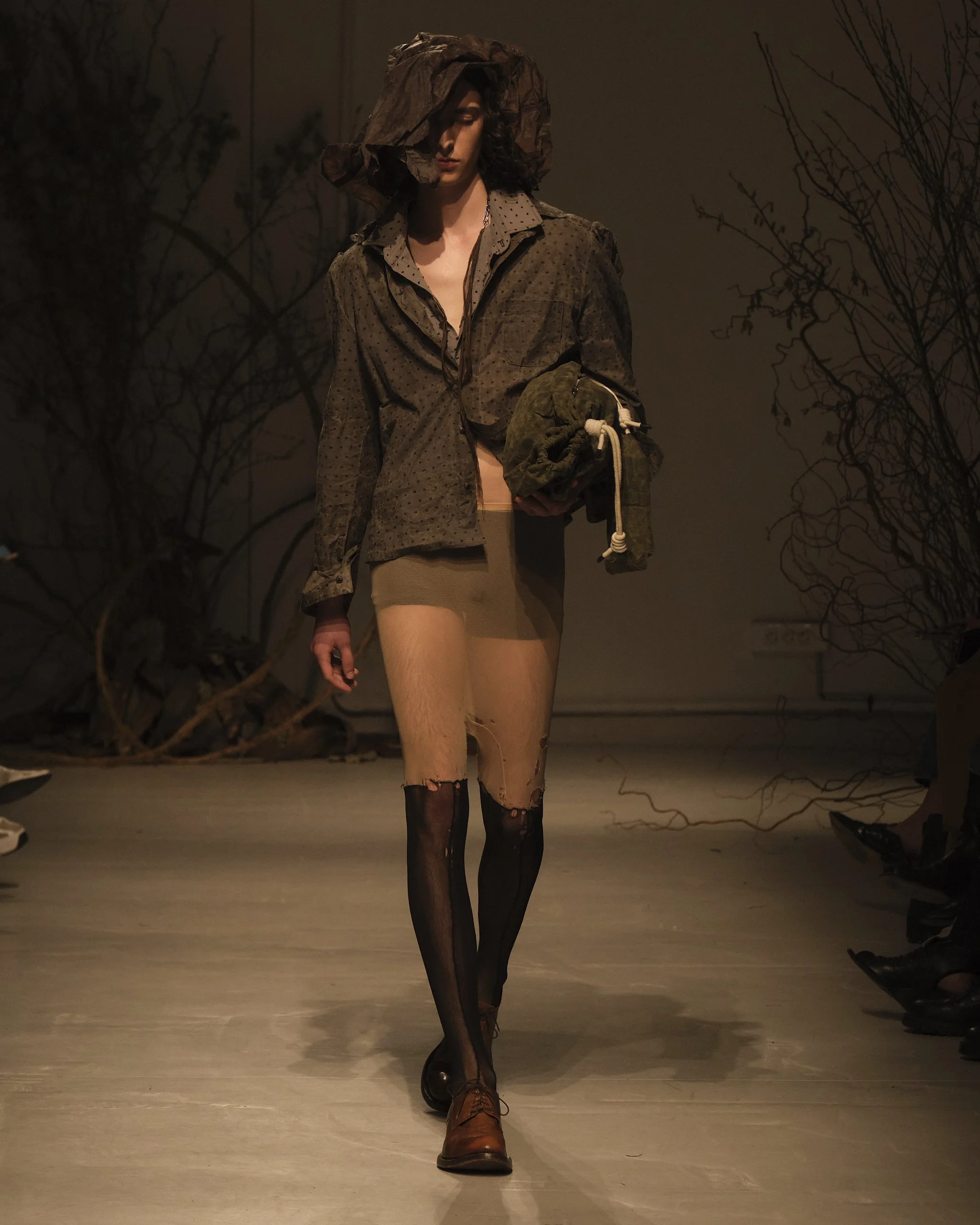
Somewhere between a medieval fable and a teenage daydream, Javier Guijarro’s Fall 26 collection brings tradition and rebellion — an almost oxymoronic pair — into a profoundly material common ground; one rooted in forests, folklore, and the beautiful messiness of youth.
Javier Guijarro’s show unfolded like stepping into a forest at dusk, uncertain, quiet, strangely comforting in its primal nature. Dry branches adorned the space, giving life to the forest, the emotional landscape of the collection; a place outside judgment, a place of instinct, intimacy, and slow transformation. Guijarro reimagines the classic wardrobe; checked fabrics, wool, leather, and silk, evolving through waxed textures and functional outerwear, translating rural heritage into something playful and more contemporary. The silhouettes carry medieval whispers with bycocket-like hats elongated into slightly mischievous points that shadow the face, and soft linen caps collapsing over the head like deconstructed ancestors of the baseball cap. Some pants balloon lightly, while dresses open into large cuts and fringes, airy and pirate-like.
Styled by Alba Melendo, the looks’ lived-inness feels altered by their environment rather than fabricated. Sleeves are softly rolled just at the cuff, as if mid-gesture. Leather strings — one of Guijarro’s signatures — adorn necks and garments, tangled with mismatched buttons and fragments of material, like small knots of memory or hair caught in the wind. There’s tactility everywhere. The palette stayed close to the earth: browns, blueish greys, greenish tones, washed oranges, occasionally interrupted by moments of white that felt incredibly luminous. A thin white skirt, punctured with tiny holes and wrapped around the waist almost like a sheet. A leather jacket, ruffled, deconstructed, that rendered more like a cape.
Footwear, developed through an organic collaboration with Converse, reworked the classic Chuck Taylor silhouette. Some appeared untouched, dusty, and worn. Others skillfully mutated: warped silver rings, loose threads, or, even further, proper leather extensions turning the sneaker into something between a boot and a low heel — a true metamorphosis. Bags resembled sacks; canvas or leather shaped somewhere between a military duffel and a bindle tied to a stick. Childlike, almost mythic imagery: the traveler leaving home with everything they need tied in a cloth.
In a visual landscape obsessed with clean lines and sterile perfection, Guijarro gives us messiness, romance, and spontaneity. The feeling of grabbing whatever is near the door before running outside in a rush — like one oversized boot on one foot, one half-worm sneaker on the other — yet everything here is so well thought out in perfect alignment to the brand’s vision. The result feels luxurious in its youthfulness and freedom. A freedom rooted in the comfort of tradition, but never trapped by it. Clothes that make you want to wear them, move with them, run in a field, and disappear into the woods for a while.
YOHJI YAMAMOTO
review by FRANCESCO PIZZUTI
all images courtesy of YOHJI YAMAMOTO
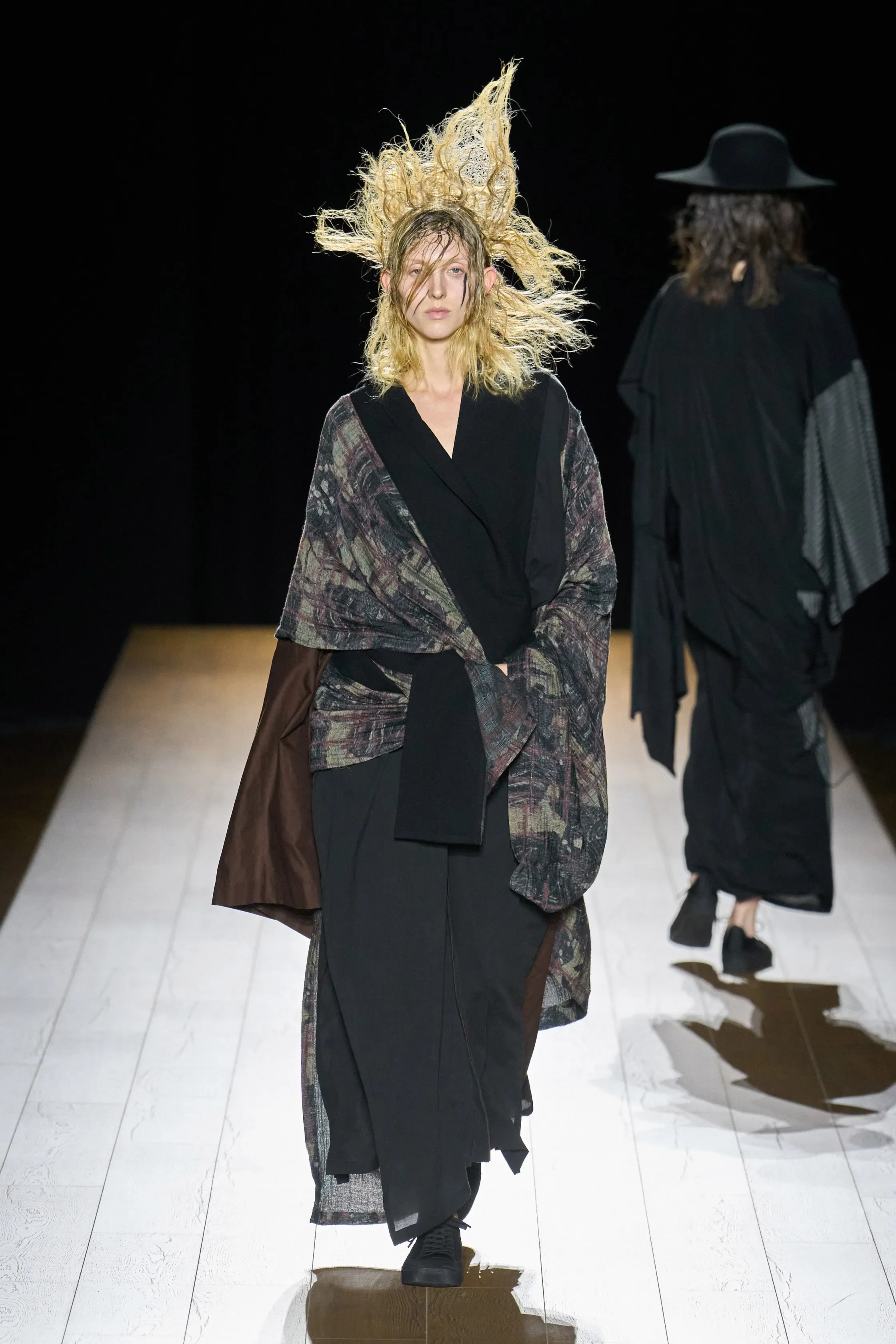
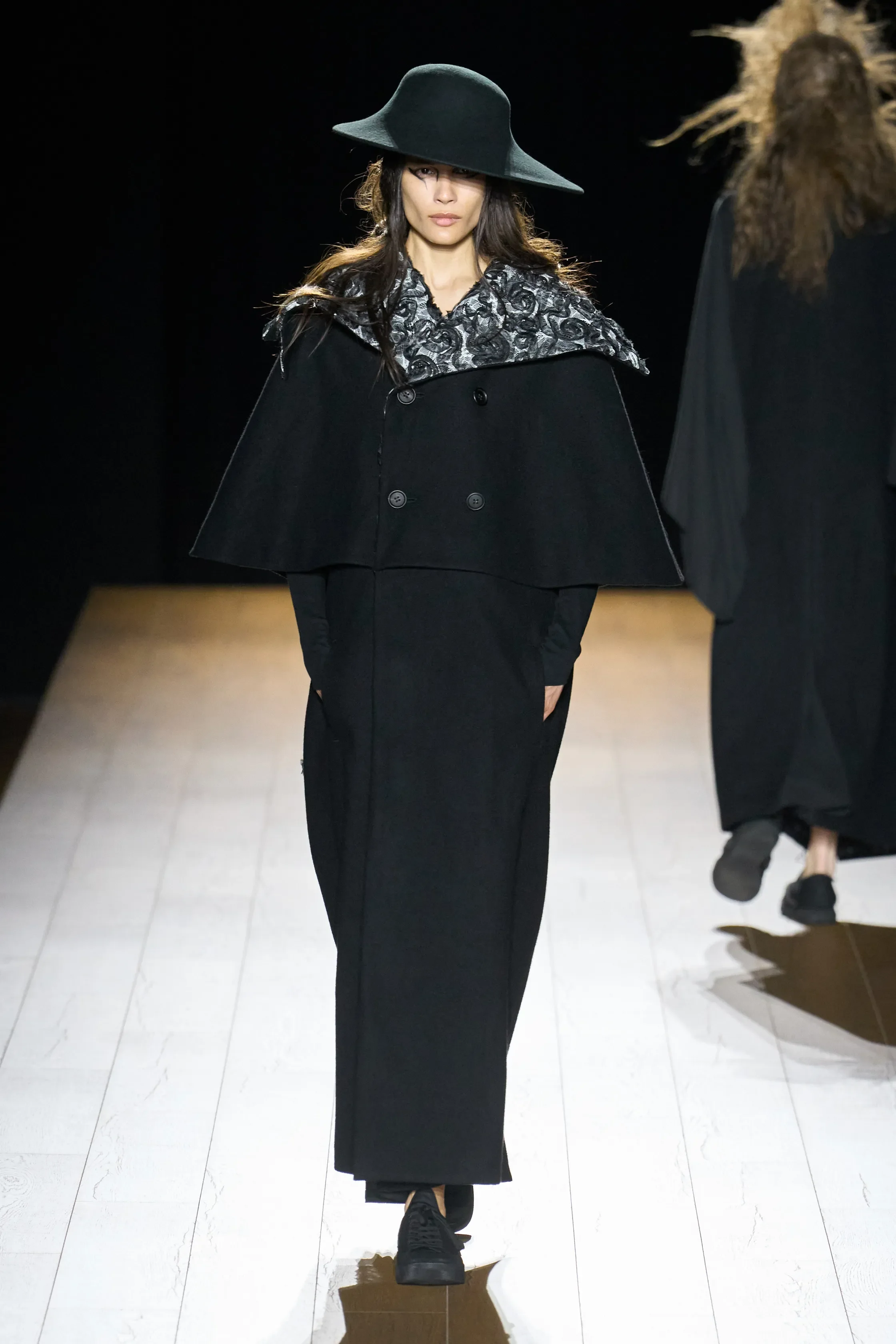
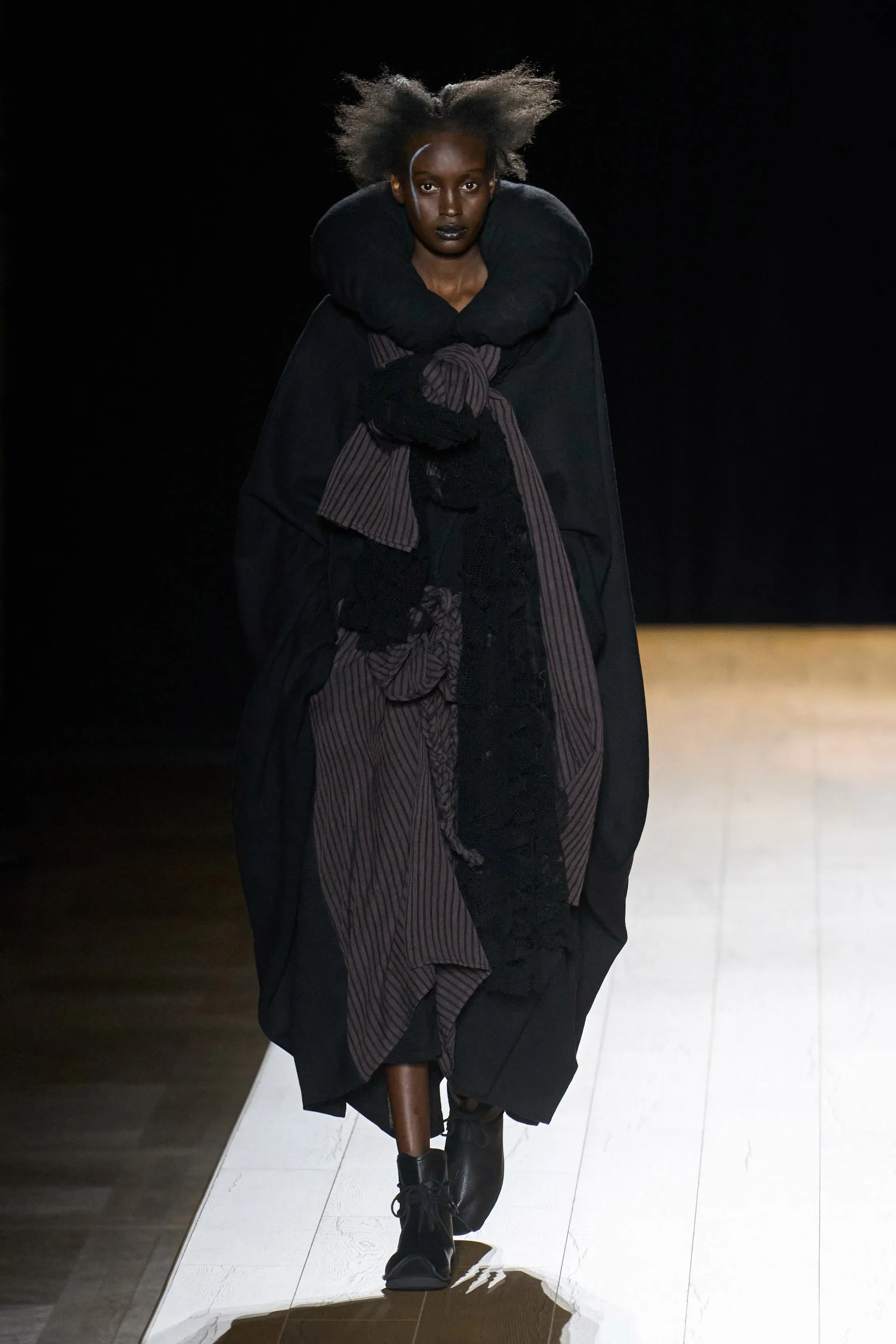
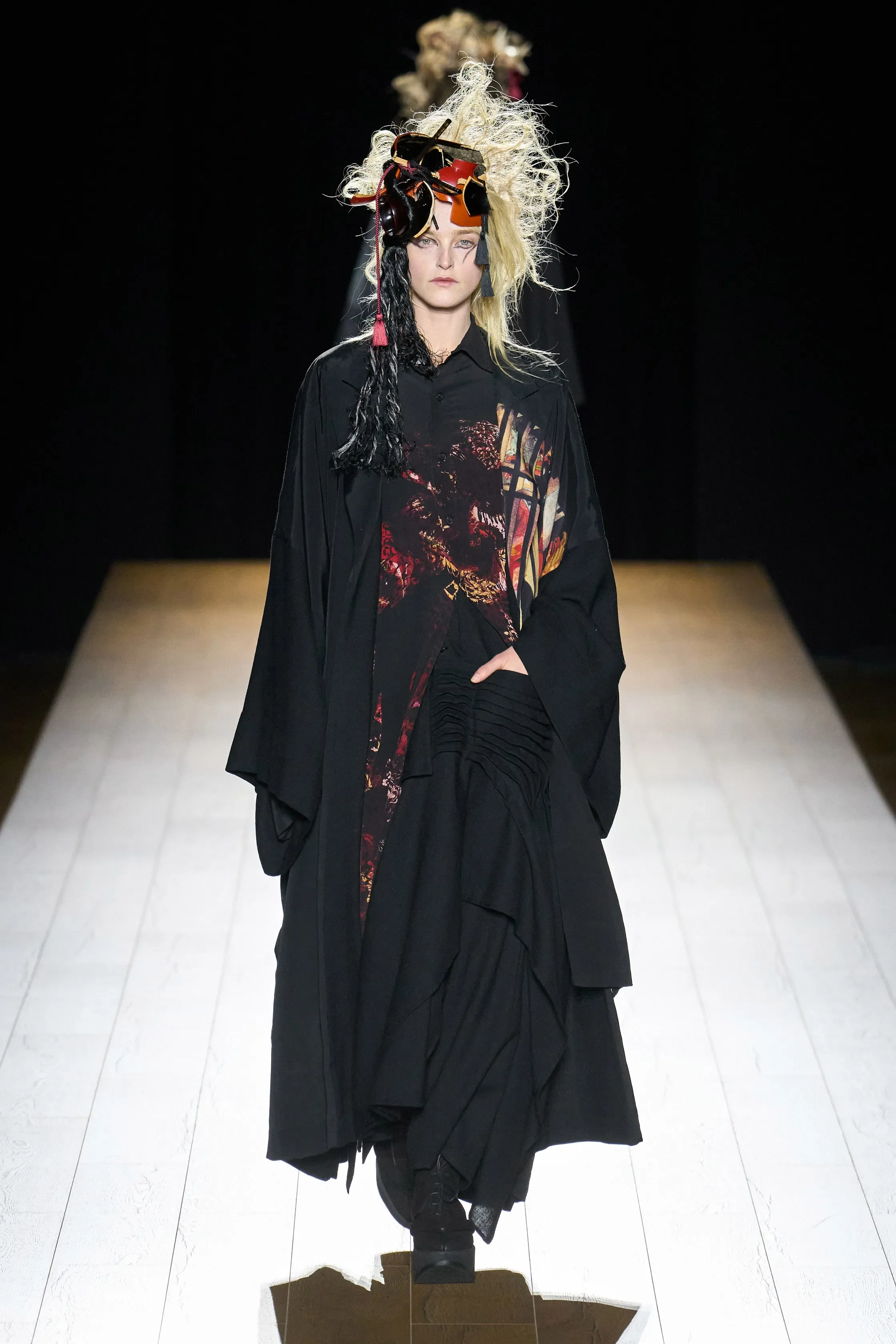
Yohji Yamamoto is proof that you never stop learning and evolving. For Fall 2026, the designer staged a slow descent of layered silhouettes; a quiet, inspired dialogue with the kimono. The show’s slow rhythm insisted on staying with the garments long enough to actually see them.
And there was much to see. Fabric, everywhere. Fluid silk slipped against heavier linens and damask, textures colliding and folding into one another like crumpled-up pages in a book. Obi sashes cinched and draped the body, while Carrick coats appeared with sharper edges. The softness of the kimono-inspired layering, its looseness, and its deconstruction were punctuated by exaggerated, large wing collars that extended dramatically, often asymmetrical or stacked.
Beauty played a role in the garments’ tension. Black lipstick and inky stripes slashed across lips and eyes like scars. Hair jutted out upwards, flattened, deliberately disheveled — bed-rotting chic. Some styles hardened into matted, mohawk-like shapes; others held objects, like the classic Japanese fans, or fragments of fabrics, tangled up in a productive tension with the perfectly polished hairstyles of the Japanese tradition.
On the feet, humble grounding. Sandals with socks, or low sneakers; practicality for a collection made of complex structures that unfold slowly, layer by layer.
VICTORIA BECKHAM
review by FRANCESCO PIZZUTI
all images courtesy of VICTORIA BECKHAM
Victoria Beckham Fall 26 show felt a little bit like being in a painter’s studio. Beckham was inspired by the sharp glamour of Tamara de Lempicka, the Polish artist famous for sculpting women into sleek, almost metallic figures, to rethink what power dressing could look like now.
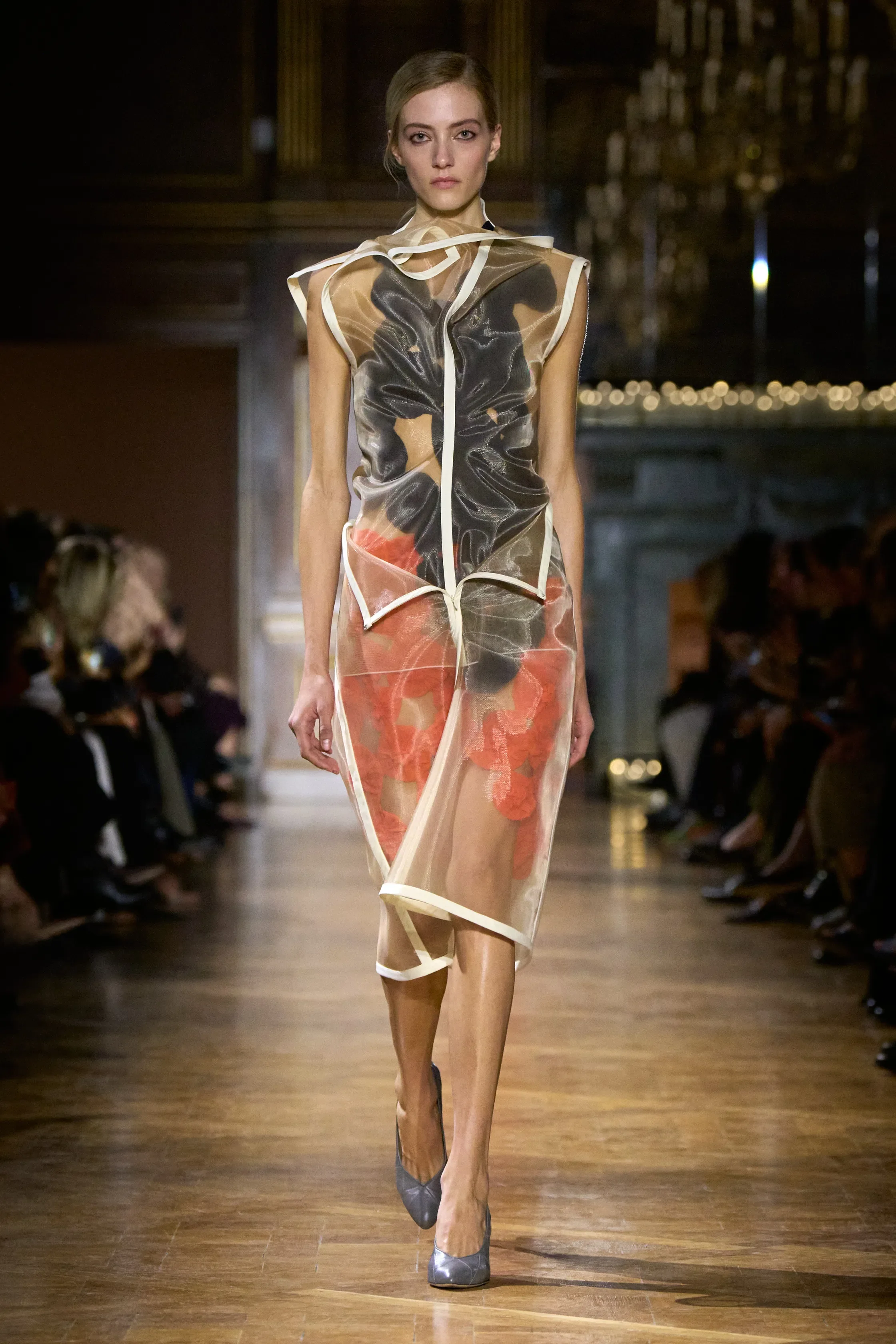
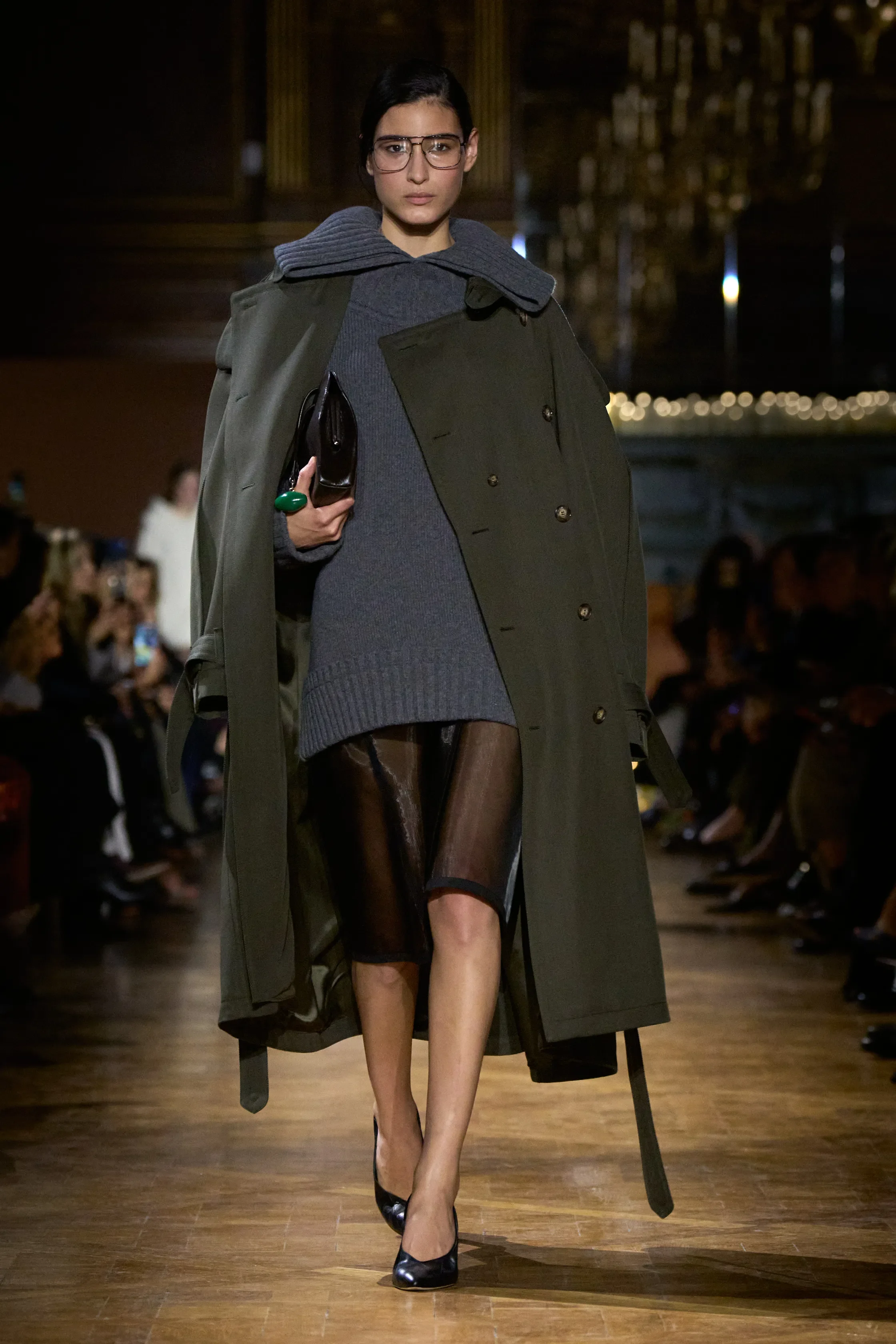
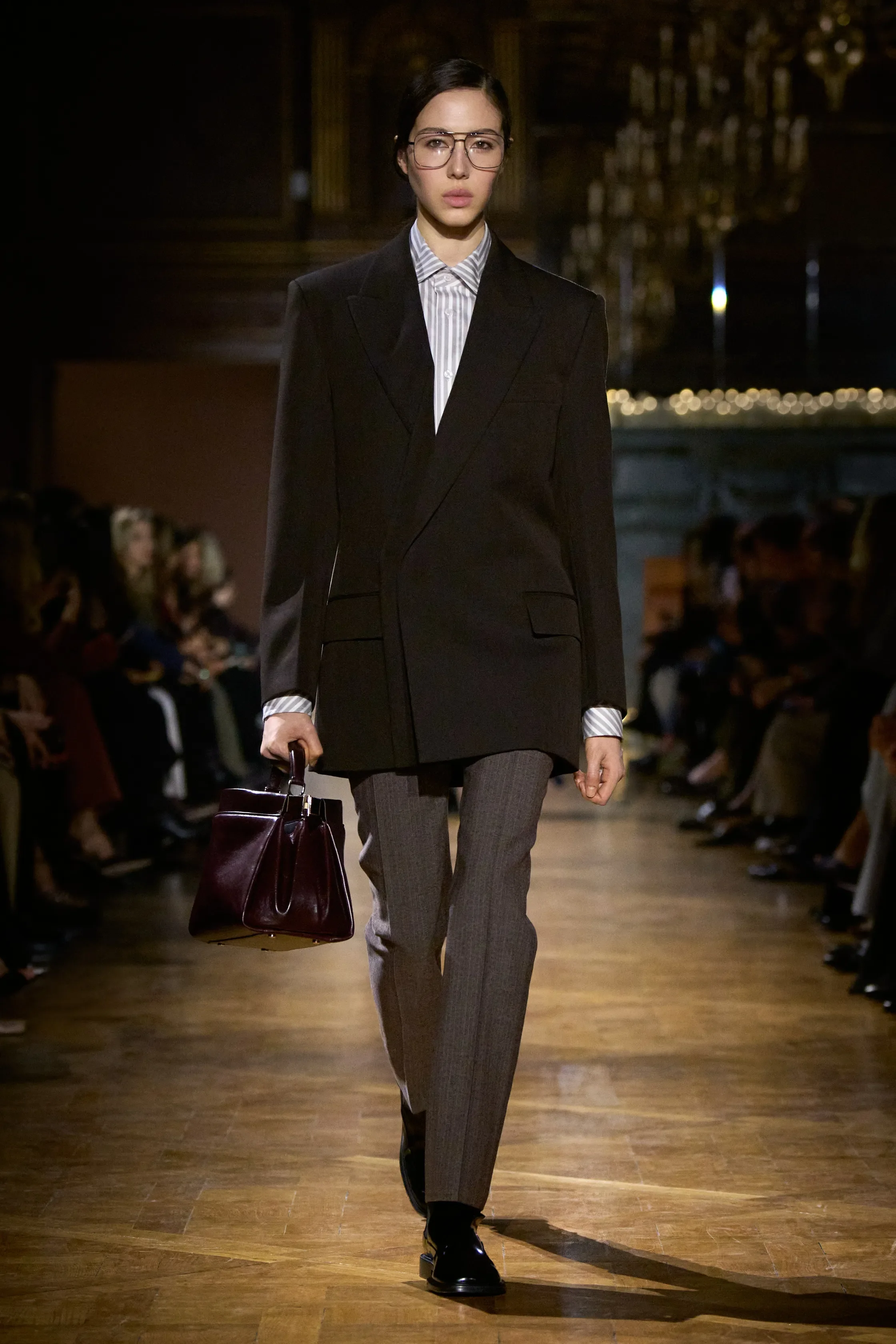
The collection felt like dressing as painting. Bodies were treated as canvases through clean lines, saturated tones, and silhouettes that adorned the curves with precision. Sculptural tailored suits felt secure, paired with collared shirts, waistcoats, and ties for a casual authority. Trousers were slim and neat, with small, angular pockets that subtly echoed the geometric Art Deco language.
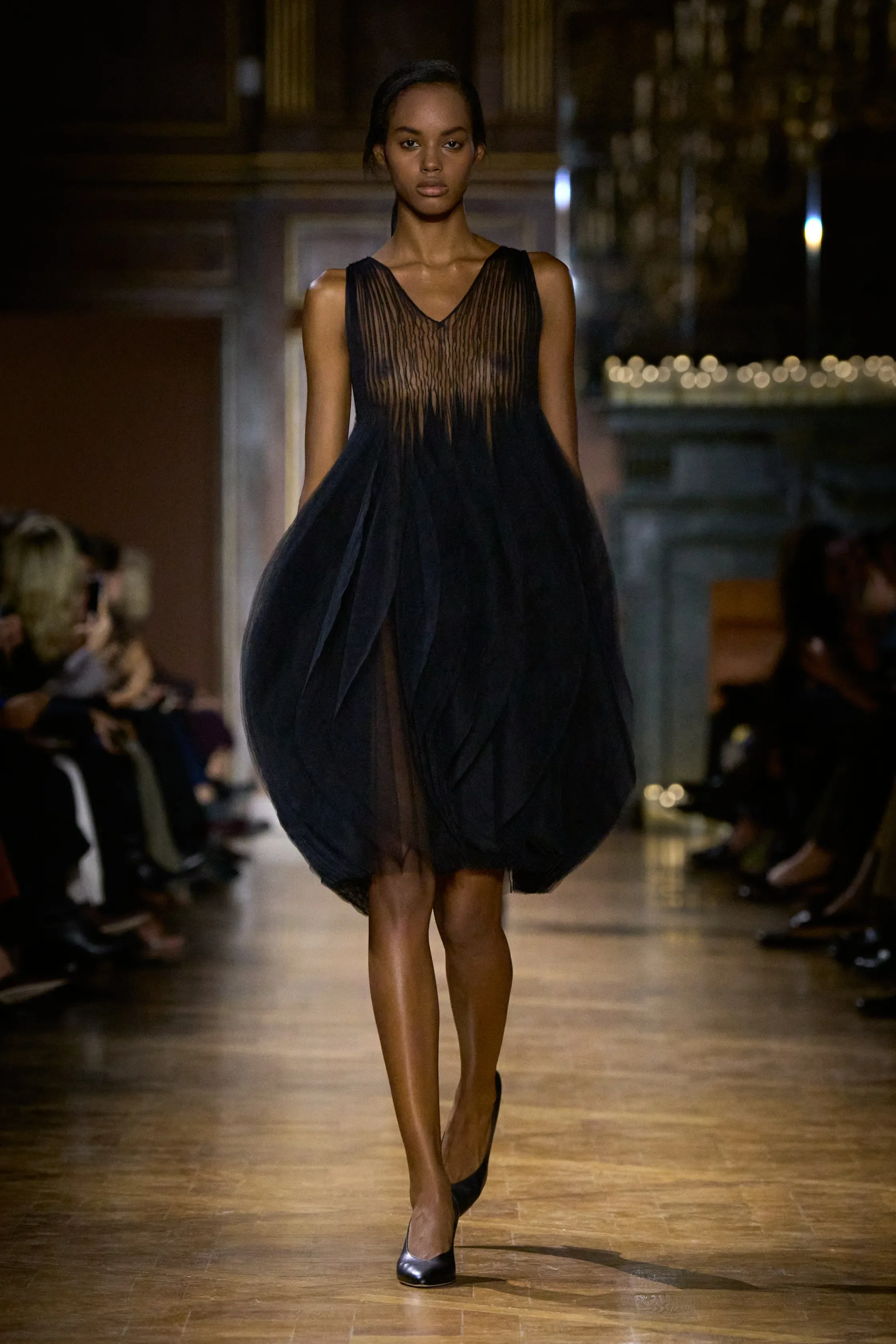
The severity was softened — but not weakened — with slip dresses and organza gowns floating around; some with delicate pleats, others punctuated by cascading fabric roses. Structured coats, navy trenches, and shearling elements grounded the romance.The palette stayed loyal to rich colors: forest greens, navy, cream, rust, and muted blues. Toward the end, evening gowns appeared with sculpted bodices and sharp cut-outs, sensual but controlled.
The result was a study in strength and fragility, armor and softness. Beckham’s version of power dressing is composed, confident, and at times seductive.