
PARIS FASHION WEEK FALL/WINTER 2026: DAY 8
ZADIG & VOLTAIRE
review by MAREK BARTEK


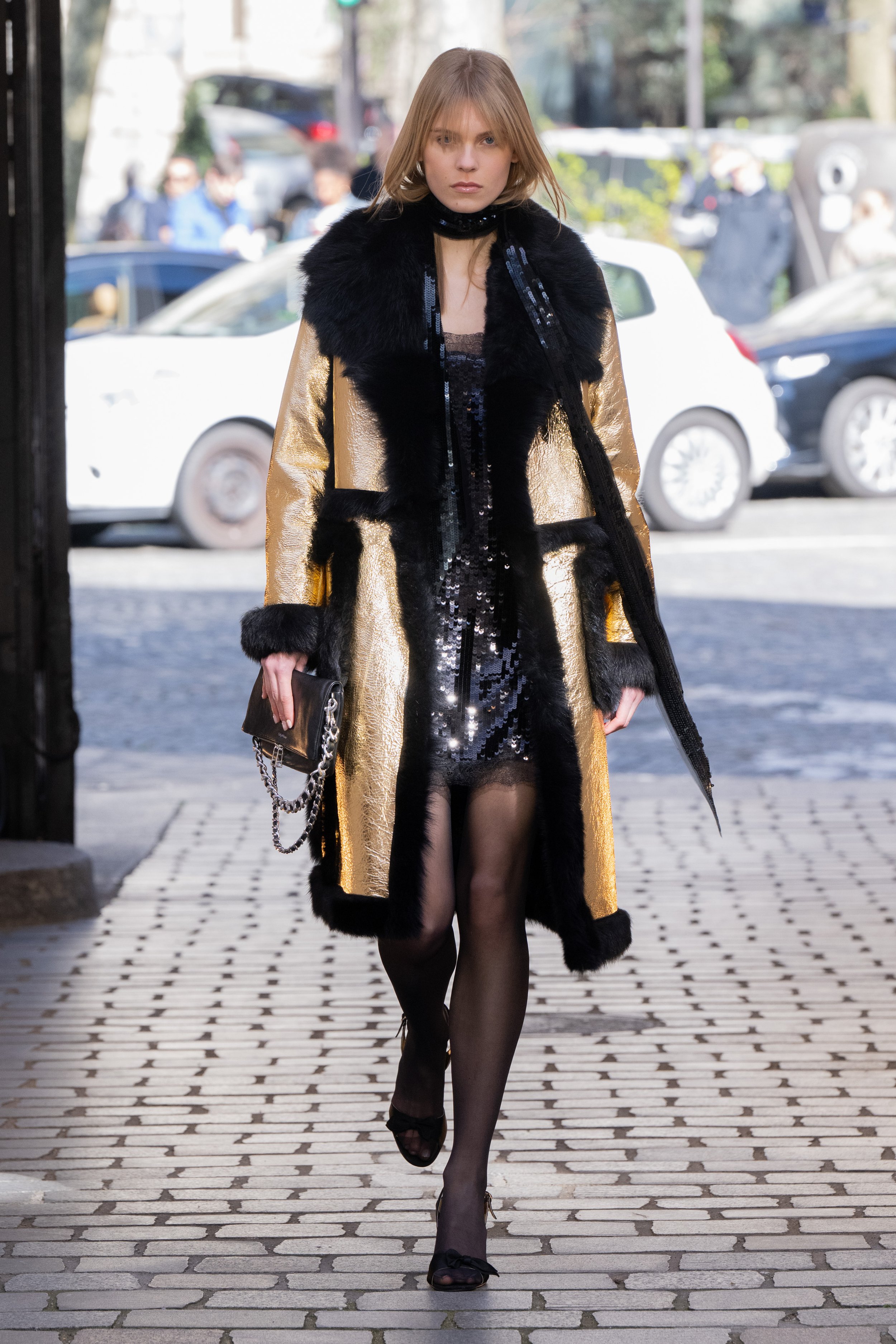
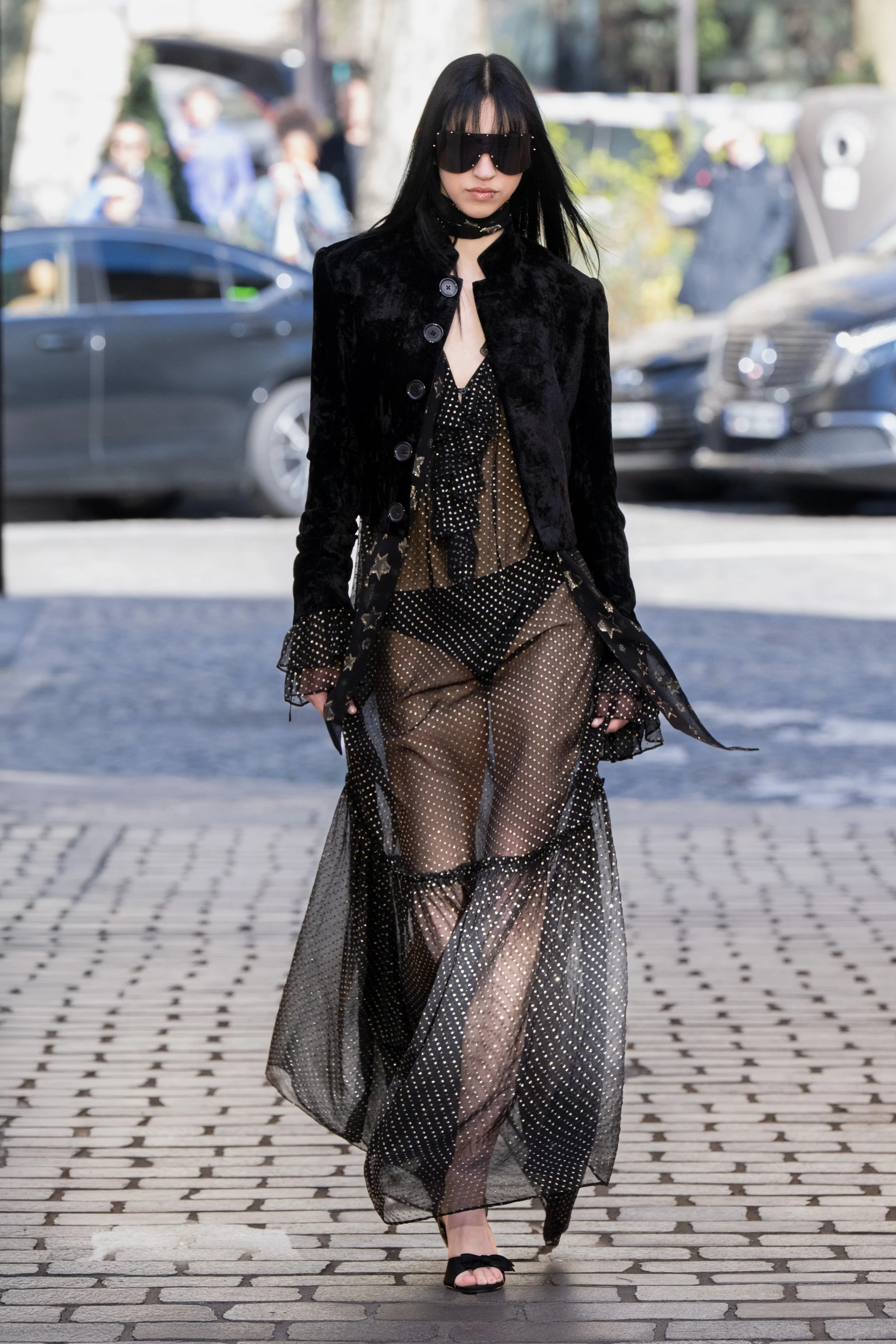
For Fall/Winter 2026, Zadig & Voltaire doubled down on the effortless Parisian cool that has long defined the brand. Presented on a cobbled runway, the collection leaned into a wardrobe built for real life — albeit one with a distinctly rock-and-roll attitude.
The show offered a strong outerwear proposition. Cropped leather jackets, sharp knee-length coats, and oversized shearling pieces set the tone, often layered over delicate lace camisoles or sheer dresses. This tension between toughness and fragility has always been part of Zadig & Voltaire’s language, and here it felt particularly convincing. Evening entered the picture through flashes of shimmer and transparency. Sequinned dressed, gauzy tops, and lace slips added a sensual edge, while gold accents—seen in metallic coat, chain bags, and slender scarves — brought a sense of understated glamour.
Accessories played a central role. Oversized sunglasses, studded berets, star-printed scarves and beanies, and chain-strap bags reinforced the brand’s signature rock aesthetic. On the other hand, relaxed denim and slim tailoring kept the looks grounded. Menswear echoed the same mood, with leather bombers, dark tailoring, and understated layering creating a similarly effortless silhouette.
Nothing here tried to radically reinvent the brand. Instead, Zadig & Voltaire refined what it does best: delivering a confident, slightly rebellious wardrobe for those who like their Parisian chic with a hint of attitude.
KIKO KOSTADINOV
review by FRANCESCO PIZZUTI
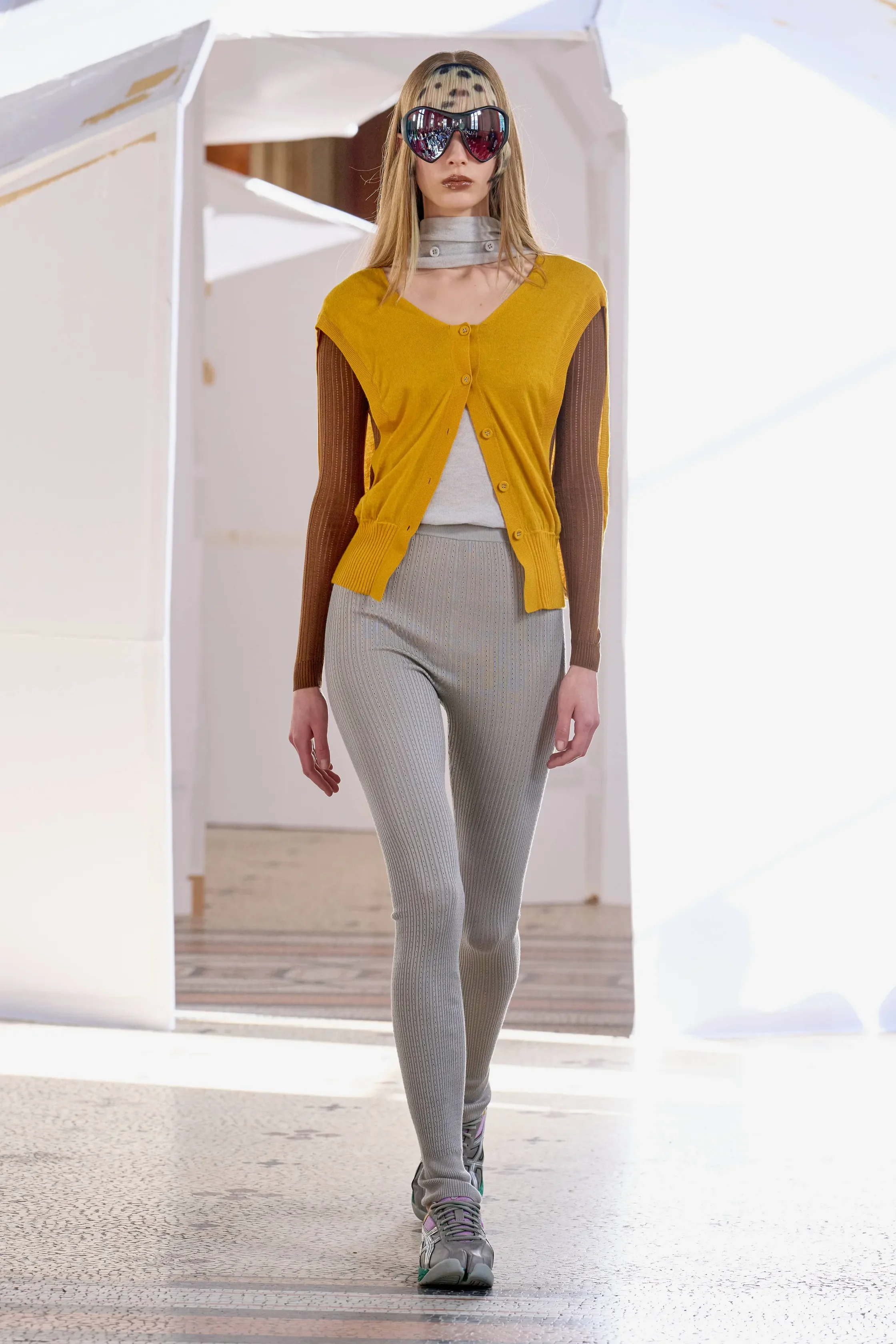
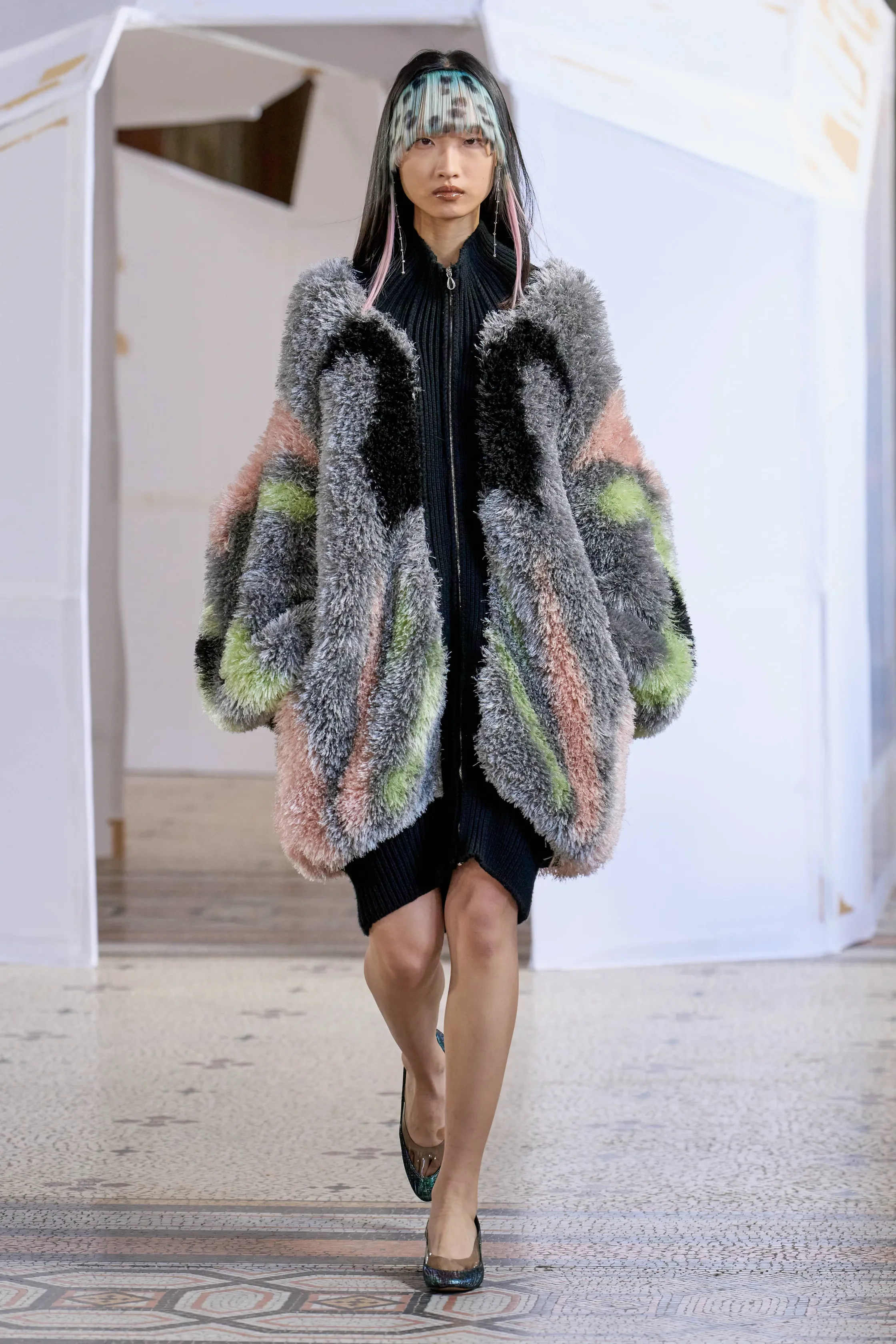
all images courtesy of KIKO KOSTADINOV
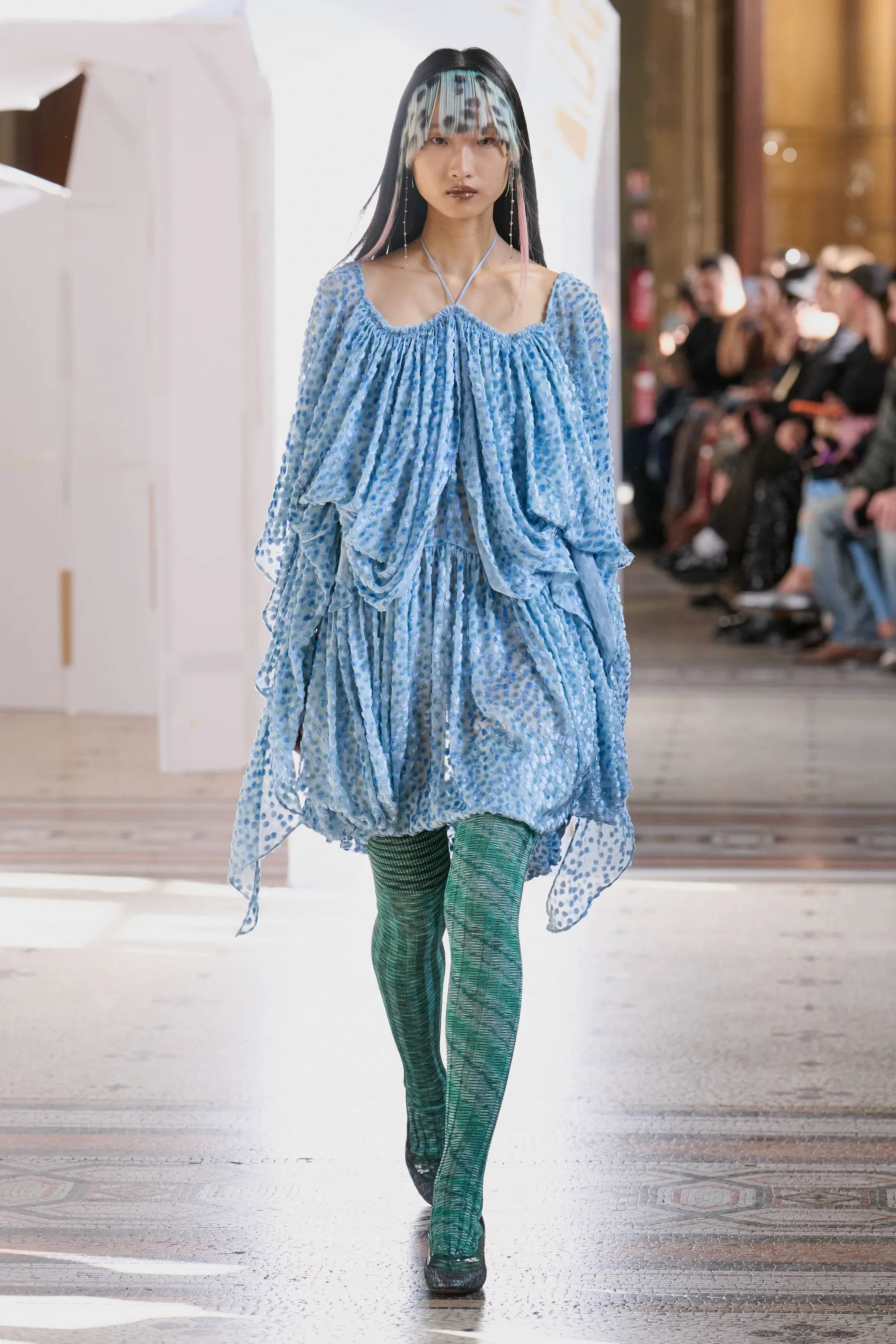
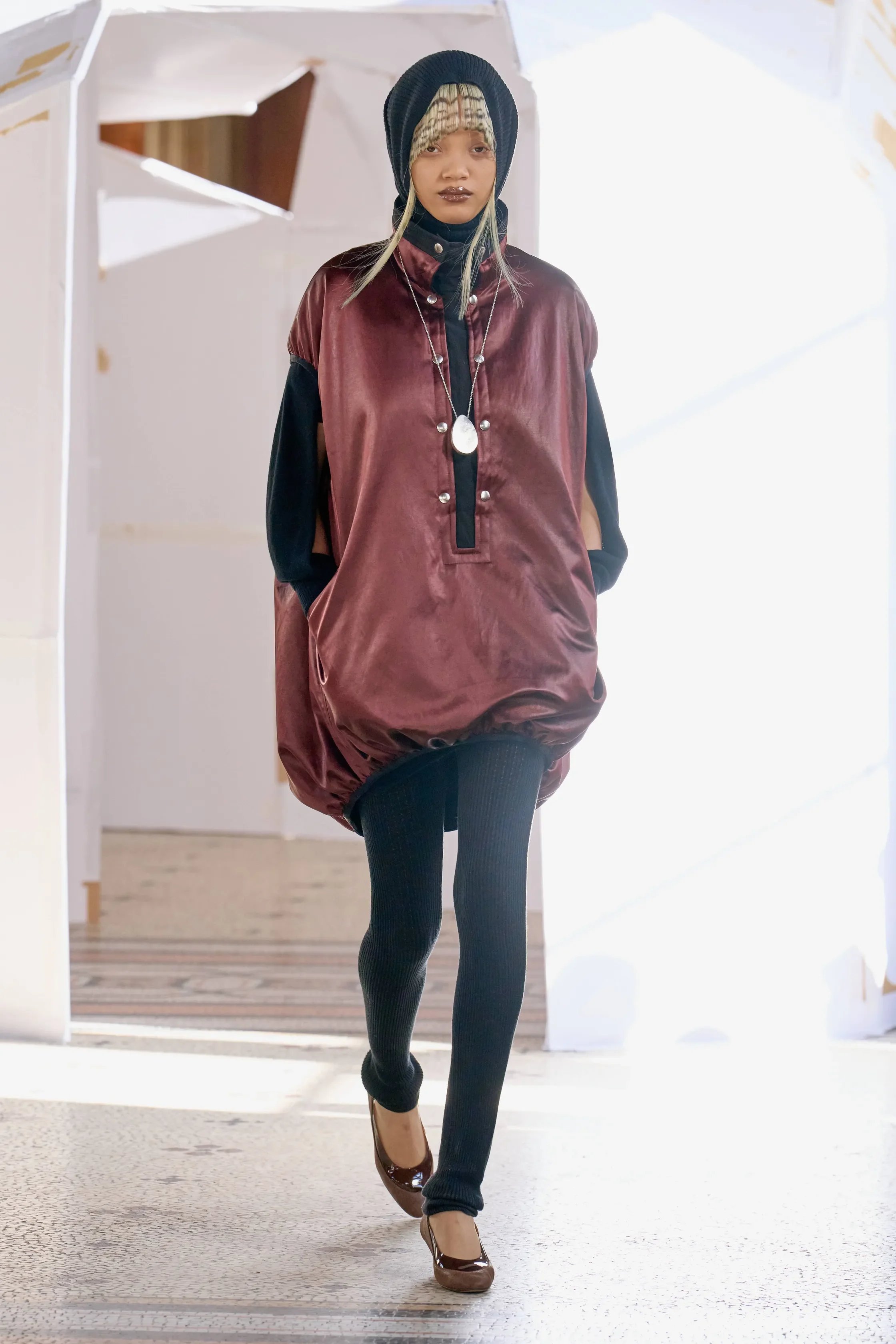
If National Geographic got an avant-garde fashion makeover, it would look like something out of the new Kiko Kostadinov Fall 26 show. Designed by sisters Laura Fanning and Deanna Fanning, the collection played with the idea of seeing and being seen; think urban birdwatching, but make it chic.
The silhouettes were drapey and architectural; playful in their eccentricity. Workwear archetypes like utility trousers and modular knits were twisted into stranger shapes. Sleeves curved outward like wings mid-flap; fabrics shimmered, echoing pigeon feathers under streetlight. Accessories leaned into a kind of mystical practicality. Long amulet-like necklaces swung over structured jackets, while headscarves and elongated silhouettes gave the models an almost nomadic vibe. Strings with different-colored feathers were a constant, usually attached to the models’ hair, flowing in the air as they walked past.
The set, created by Oscar Tuazon, doubled down on the theme. His cardboard-and-tape tent-like sculptures mirrored Kiko Kostadinov’s logic of visible construction, and the collection’s play on wildlife, gaze, direction, and observation.
What keeps Kiko Kostadinov interesting is its profound groundedness in practicality without, however, abandoning intellectual resistance. There’s always a sense of wearability, of garments engineered for real bodies moving through real space, yet re-engineering workwear is a lot more than making it cool. It stretches the limits of garments in their conceptual sense as well, reflecting on the labour that they inherently carry within, foregrounding workwear and uniforms as political vessels and not just captivating costumes.
CHANEL
review by MARIA MOTA
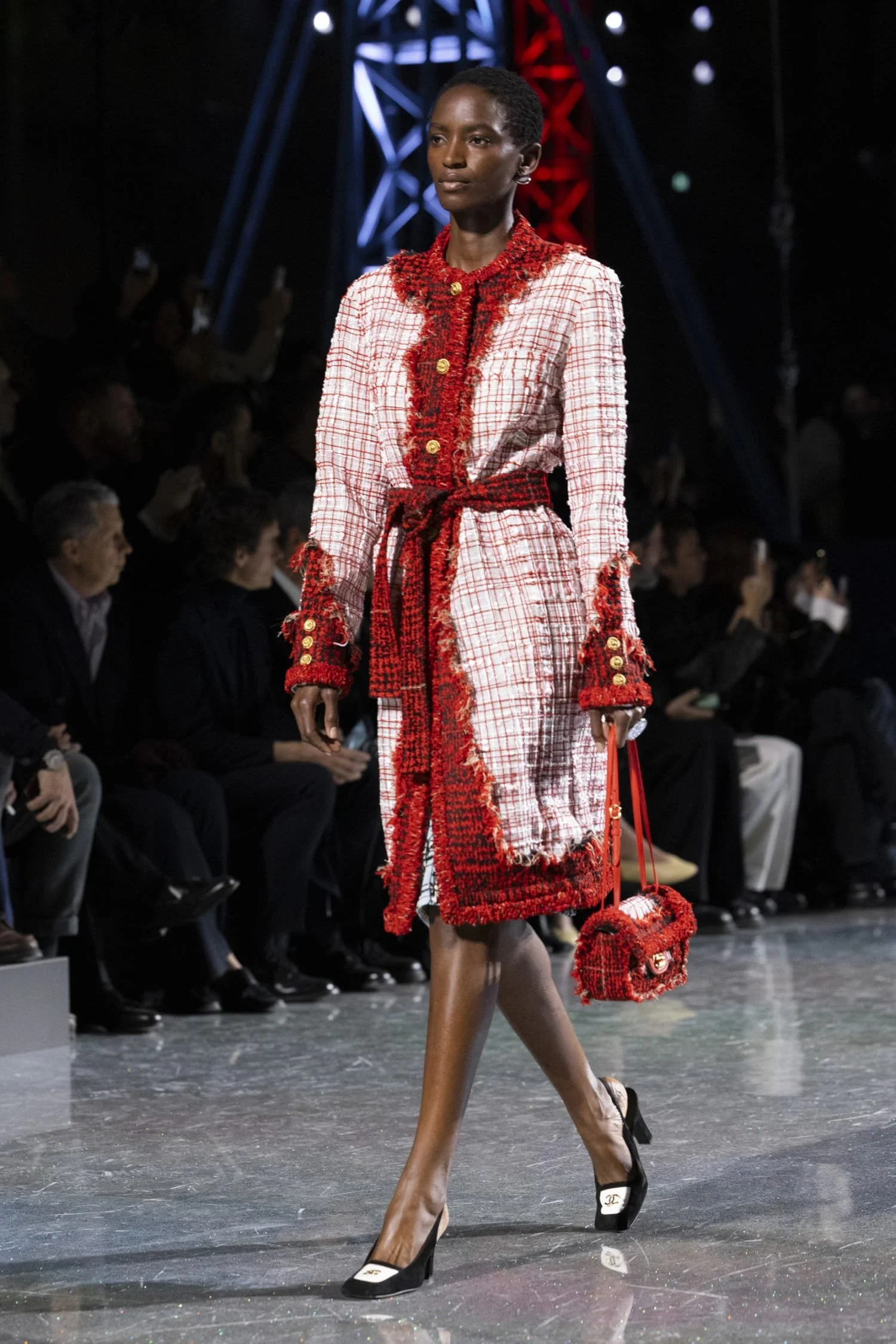
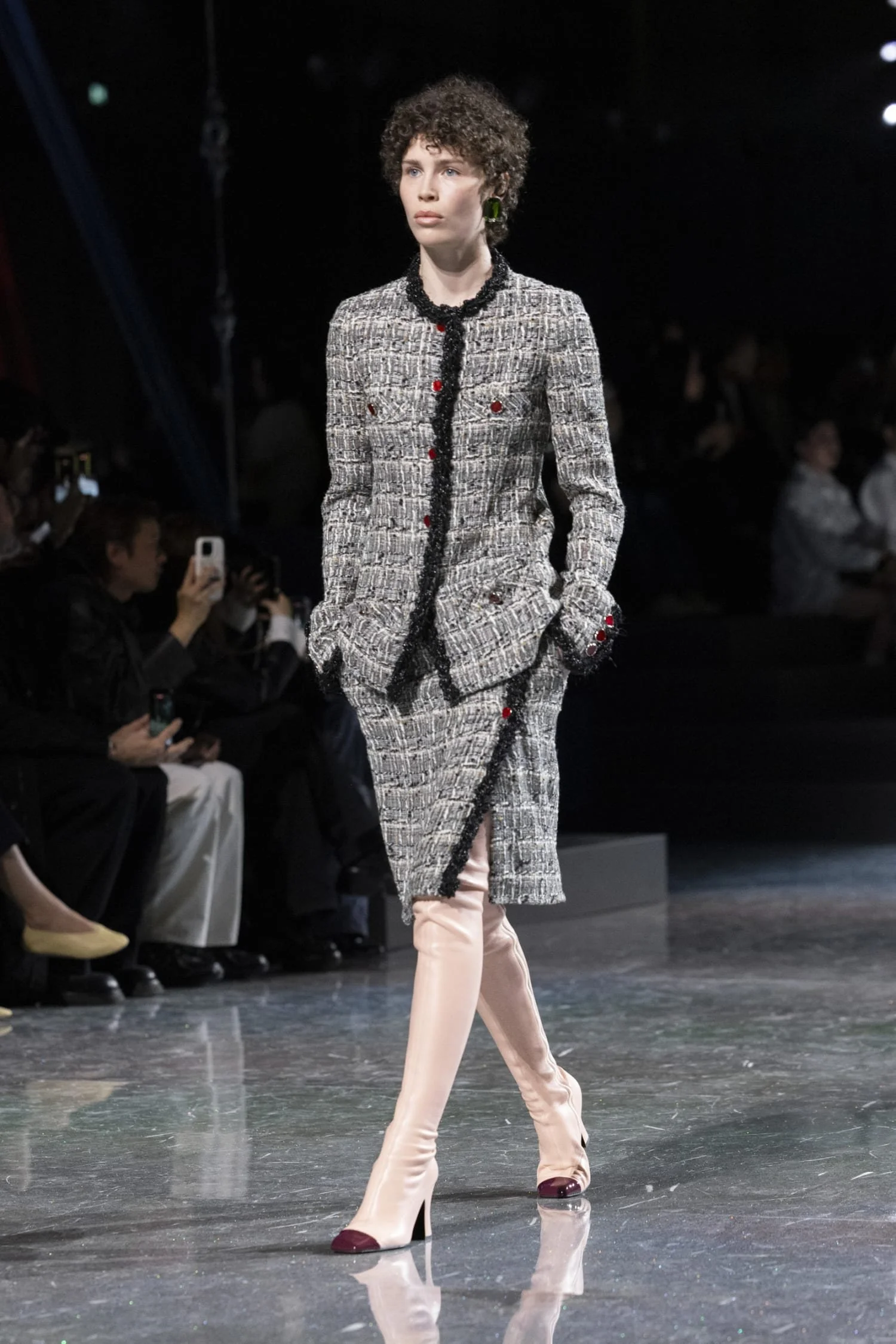

all images courtesy of CHANEL
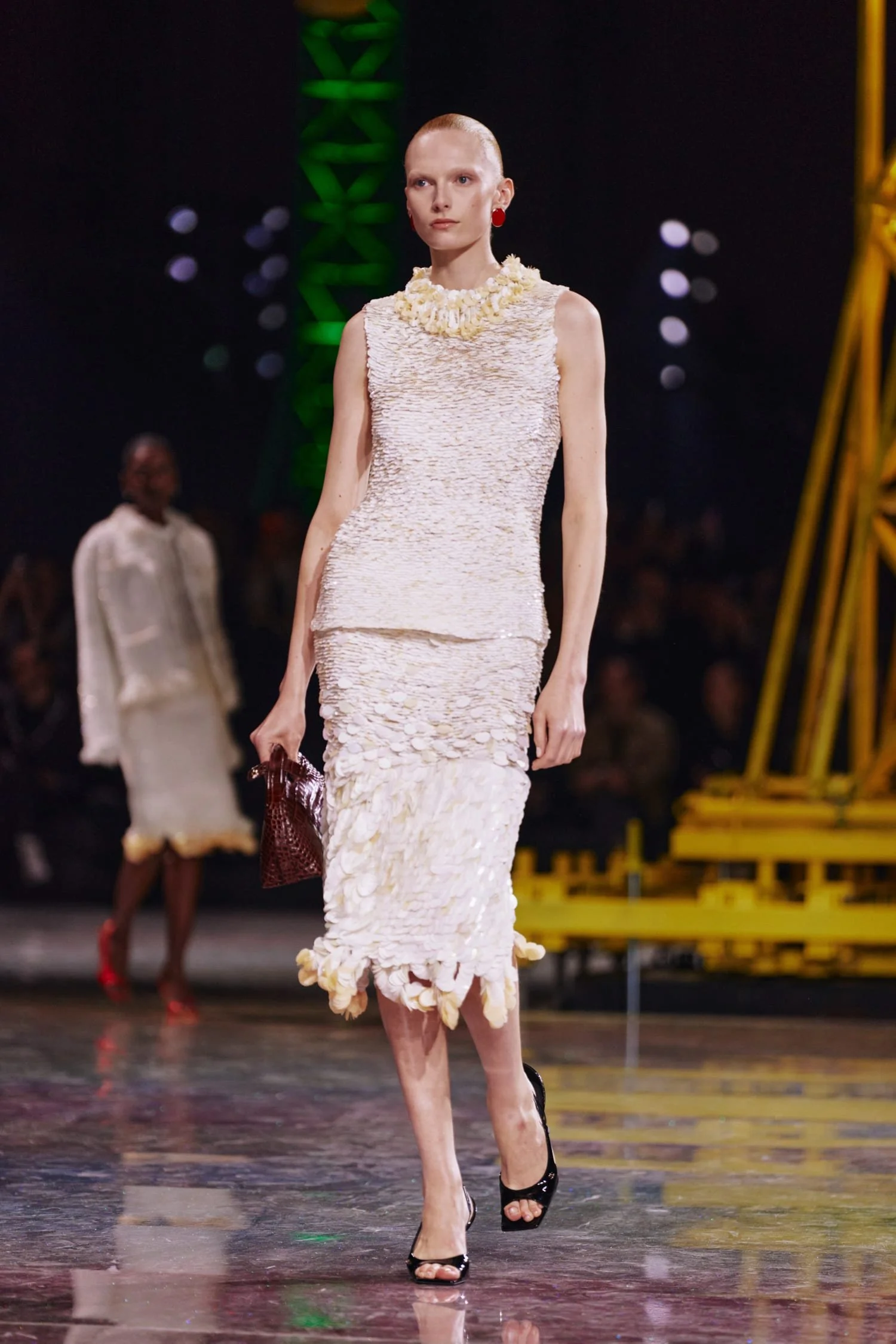
Echoing the show invitation, the Grand Palais was transformed into a surreal building site for Chanel’s Fall/Winter 2026 show, with cranes glowing in primary colors hovering above the runway. It felt deliberate, almost poetic. As Matthieu Blazy continues to shape his vision at Chanel, the house itself is rebuilding in real time.
The glittering runway hinted immediately at what was to come. This was a collection alive with energy, joyful, whimsical, and slightly otherworldly.
It began quietly. Black skirt suits in ribbed merino wool and silk with gold buttons grounded the opening looks in Chanel’s familiar precision. But slowly the collection began to expand outward, like a galaxy forming. Metallics flashed. Color erupted. Glitter caught the light with every step.
Waists dropped dramatically low, belts fastening mini skirts and dresses, elongating the torso into something flapper-like, loose, relaxed, echoing Chanel’s play between day and night, function and fantasy. Beneath structured shoulders, the lower halves of the looks floated with airy softness. The tension between architecture and fluidity gave the clothes a sense of rhythm. These were pieces designed to move, to dance, to live in.
And dance they did. As Gaga’s Just Dance pulsed through the space, metallic chainmail hand-painted to resemble tweed shimmered under the lights. Tweed itself appeared splattered with thick drops of paint, an homage to the action paintings of Jackson Pollock. Florals nodded softly to Claude Monet, while mother-of-pearl paillettes glimmered across dresses and details. Chains and punkish touches threaded through devoured-like fabrics. Maximalist, yes, but entirely wearable. Each look felt like its own small universe of textures and techniques, layered into a single silhouette.
The dialogue between real and artificial culminated in the accessories. Bags, shoes, and jewellery appeared adorned with nature’s smallest touches: a flower, a bird, a mushroom, as if they had wandered into the pieces and made them their home. From the familiar suede flap bag to the new kinetic lock bag, iridescent surfaces, and the extravagant pomegranate minaudière, the accessories were playful, inventive, and immersive.
The collection draws on Gabrielle Chanel’s quote from the 1950s: “Fashion is both caterpillar and butterfly. Be a caterpillar by day and a butterfly by night. We need dresses that crawl and dresses that fly. The butterfly doesn’t go to the market, and the caterpillar doesn’t go to the ball.”
Blazy understands the paradox intimately. She can do both. She is ready to dance all night and run the world the next morning.